
About Richard W. Brown

After almost 48 years, I recently lost my wife, Jan Lilien. Like The Little Prince, Jan and I believed that “The most beautiful things in the world cannot be seen or touched, they are felt with the heart.” This blog is a collection of my random thoughts on love, grief, life, and all things considered.

On Jan Lilien’s 3rd Yahrzeit,
A Ritual Helps Me Embrace the Future!

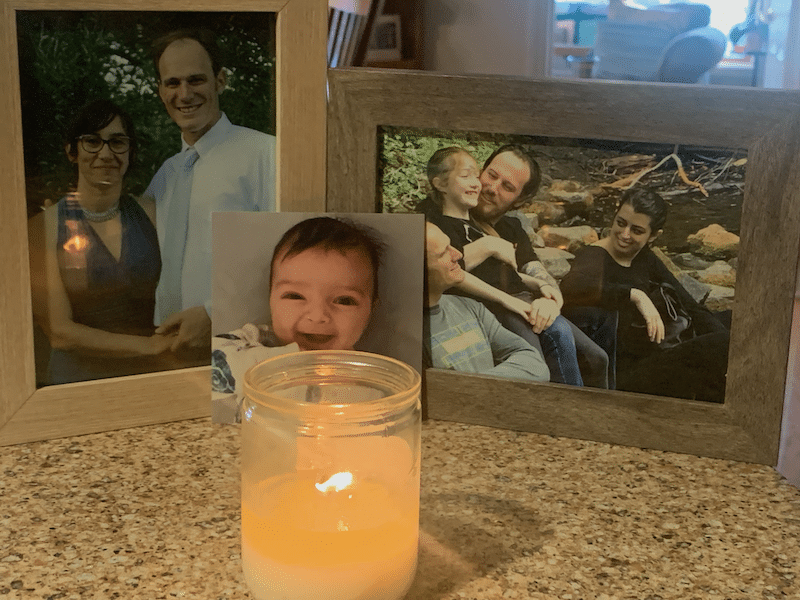
The soft, flickering glow of the Yahrzeit Candle paints a poignant tableau on the walls, ceiling, and floor of my kitchen, creating a serene atmosphere. For the last two years, I’ve placed this candle before a photo of my beloved wife, Jan. Tonight, I’ve encircled it with three images that capture precious moments of our sons, their wives, and our two grandchildren. Each image is a gateway to a cherished memory, stirring a deep nostalgia and a profound love that defies time constraints. Have you ever found yourself lost in a sea of photos, searching for the perfect ones? As I was doing so, I realized that I still had thousands of digital pictures of Wes waiting to be printed and framed. Keeping up with the life changes requires time and effort.

Continue reading →

I Am OK Walking Into the
Unknowable Future

I woke up at 5:30 AM this morning, just like my Apple Watch alarm rings daily. As I left bed, my watch greeted me with a friendly “Good Morning, Richard” message. Since I live alone, I responded to my watch and put on my walking clothes. Even though the sky was dark and dismal, the predicted rain did not arrive, and it was dry outside. I’ve been doing this for three years and never let the weather affect my mood.

Continue reading →

I Have Survived Grief,
and I Am OK!

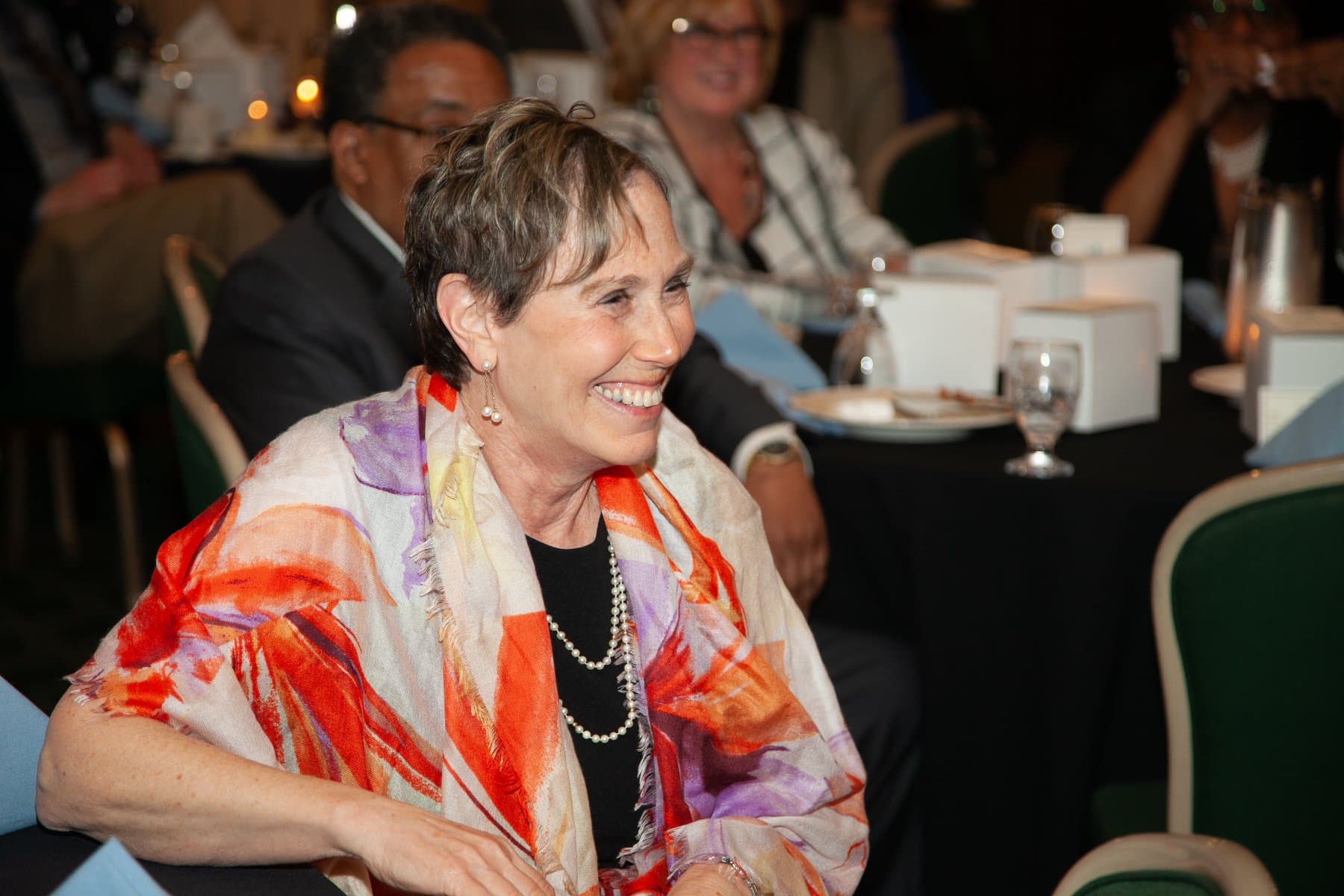
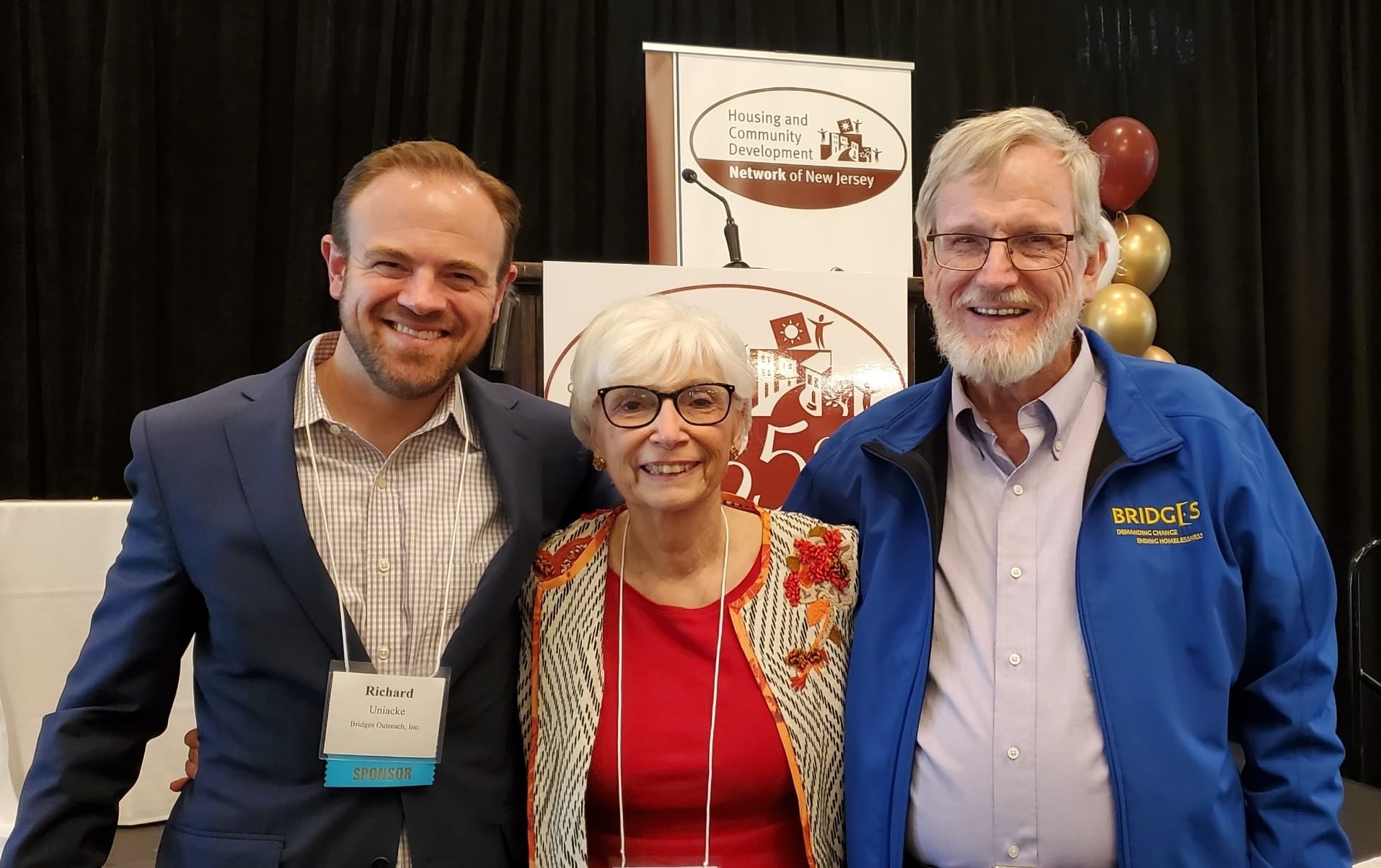
Upon returning to Forsgate Country Club after a five-year absence, I immediately felt a sense of familiarity. As I entered the venue, I noticed two disoriented women standing in the foyer, trying to find their way to the Housing and Community Development Network of NJ‘s 35th-anniversary event. Despite clear signage and staff assistance, the women needed guidance on where to go. I greeted them and offered to lead them to the event. During my previous visit five years ago, I attended the organization’s 30th-anniversary event at the same venue. However, I felt disoriented and neglected at that time.

Continue reading →

From One Rose to a
Home Full of Flowers

My beloved wife, Jan, was arriving home for the last time on April 10, 2021. I asked her how I could make her last trip home more comfortable, and she replied that she wanted to be surrounded by flowers upon her arrival. However, two days before her release from the hospital, Rabbi Renee, my sons, and Dr. Saksena delivered the heartbreaking news that hospice care was the only option left. Dr. Strair, her other oncologist, had explained that they couldn’t effectively treat Jan’s Lymphoma due to COVID-19, and the Lymphoma prevented them from treating COVID-19. He stated that her Lymphoma was very aggressive, and they had tried three treatments, but the efficacy of each new treatment had declined. Dr. Strair said there was little they could do even without COVID-19.

Continue reading →

The Jan Lilien Education Fund!

Hostage: A Memoir

Read: October 2025

Get this book

Hostage: A Memoir

by Eli Sharabi

In a raw and unflinching memoir, Eli Sharabi, a survivor of 491 days in Hamas captivity, recounts his harrowing ordeal in “Hostage: A Memoir.” He was abducted from Kibbutz Be’eri on October 7, 2023. In this powerful narrative, he shares the profound loss of his wife and daughters along with his unwavering determination to survive. Comparisons can be drawn to Elie Wiesel‘s “Night” and Laura Hillenbrand‘s “Unbroken.” “Hostage” stands as a significant testimony to history, ensuring that his experience will neither be forgotten nor erased.

“I refuse to let myself drown in pain. I am surviving. I am a hostage in the heart of Gaza, a stranger in this unfamiliar land, living with a family that supports Hamas. And I am getting out of here. I have to. I’m getting out of here. I’m coming home.” — Eli Sharabi.

On October 7, 2023, Hamas terrorists stormed Kibbutz Be’eri, shattering the peaceful life Eli Sharabi had built with his British wife, Lianne, and their teenage daughters, Noiya and Yahel. Dragged barefoot out his front door while his family watched in horror, Sharabi was plunged deep into the suffocating darkness of Gaza’s tunnels. As war raged above him, he endured a grueling 491 days in captivity, all the while holding onto the hope that he would one day be reunited with his loved ones.

Eli Sharabi‘s story is one of hunger and heartache, of physical pain, longing, loneliness, and a helplessness that threatens to destroy the soul. But it is also a story of strength, of resilience, and of the human spirit’s refusal to surrender. It is about the camaraderie forged in captivity, the quiet power of faith, and one man’s unrelenting decision to choose life, time and time again.

In the first memoir by a released Israeli hostage, and the fastest-selling book in Israel’s history, Sharabi offers a searing firsthand account of survival under unimaginable conditions—starvation, isolation, physical beatings, and psychological abuse at the hands of his captors.


Franklin Foer‘s essay –The Existential Heroism of the Israeli Hostages – was written about Hostage. His closing paragraph eloquently summarizes how hope can persist even in our darkest days. 

“This weekend, on the cusp of the release of the last 20 living hostages in Gaza, Donald Trump’s son-in-law Jared Kushner stood in the plaza in front of the Tel Aviv Museum of Art, dubbed Hostages Square, to address a jubilant throng. He called the hostages’ release the end of a nightmare. In reality, the nightmare never ends; trauma that endures for generations is the surest outcome of this war. But we also know that the hostages are going home, living proof that hope can persist even in the darkest hole.”


Eli Sharabi is a former hostage who survived 491 days in Hamas captivity after being abducted from Kibbutz Be’eri on October 7, 2023. Since his release, Sharabi has become a global advocate for the remaining hostages. He has met with world leaders, including former US President Donald Trump, spoken at the United Nations, and shared his story with audiences around the world. His memoir, *Hostage*, which is the first published account by a released Israeli hostage, quickly became a number one bestseller in Hebrew and the fastest-selling book in Israeli history.

Born in Tel Aviv to Yemenite and Moroccan parents, Sharabi moved to Be’er Sheva as a teenager. He later married Lianne, a British woman, and they have two daughters, Noiya and Yahel, aged sixteen and thirteen. A longtime resident of Be’eri, Sharabi worked as the Kibbutz’s business manager and served as the Chief Financial Officer for Be’eri Printing and other private companies in Israel. He continues to work tirelessly as a leader in the campaign for the release of captives.


Discover your next favorite book and dive into a world of curated, exciting reads by purchasing through my links. You’ll have access to a diverse selection of books that I’ve personally vetted to ensure quality and enjoyment. Additionally, by supporting these selections, you’ll help me continue to provide you with more personalized recommendations. I earn a small commission from your purchase, which allows me to buy and share even more books with you. Your support truly makes a difference!


×
Bodily Harm

Read: June 2021

Get this book

Bodily Harm

by Margaret Atwood

Bodily Harm by Margaret Atwood is one of the books I picked up from our bookshelf in the first few months after Jan’s death. Being someone who has always fantasized about being a journalist, I found it very interesting.

A powerfully and brilliantly crafted novel, Bodily Harm is the story of Rennie Wilford, a young journalist whose life has begun to shatter around the edges.  Rennie flies to the Caribbean to recuperate, and on the tiny island of St. Antoine she is confronted by a world where her rules for survival no longer apply.  By turns comic, satiric, relentless, and terrifying, Margaret Atwood’s Bodily Harm is ultimately an exploration of the lust for power, both sexual and political, and the need for compassion that goes beyond what we ordinarily mean by love.

Bodily Harm may be the bleakest book that Ms. Atwood has written. One of her common themes is “the violence that human beings inflict on one another and their isolation in an uncaring world. It holds out some hope in the form of compassion to be shared by those who are victims of bodily harm in any form. The novel suggests that every person falls into this category. All are victims. There is no exemption, no escape for anyone.”

I recommend this book.

Subscribe

Contact Us

×
Three Summers

Read: February 2025

Get this book

Three Summers: A Novel

by Margarita Liberaki

Today, I began reading Margarita Liberaki‘s Three Summers, translated by Karen Van Dyck. This edition features a detailed introduction by Ms. Van Dyck, in which she shares her experiences meeting Ms. Liberaki and collaborating with her on the translation. The original novel, written in Greek, was titled The Straw Hats, but Ms. Van Dyck felt that this title would not resonate with foreign readers similarly.

Three Summers is the story of three sisters who grew up in the countryside near Athens before the outbreak of the Second World War. The sisters live in a large, old house surrounded by a beautiful garden. The oldest sister, Maria, is adventurous and eager to settle down and start her own family. The middle sister, Infanta, is gorgeous but emotionally distant. Katerina, the narrator, and the youngest sister is dreamy and rebellious.

Throughout three summers, the sisters share and keep secrets, fall in and out of love, and try to understand their parents and other adult figures. They also observe the peculiar behaviors of friends and neighbors while worrying about and discovering their identities. Karen Van Dyck’s translation beautifully captures the light and warmth of this modern Greek classic.

Margarita Liberaki (1919-2001) was born in Athens and raised by her grandparents, who owned the Fexis bookstore and publishing house. In addition to her novel Three Summers, she authored The Other Alexander (1950) and The Mystery (1976). She also wrote several plays, including Candaules’ Wife (1955) and The Danaïds (1956), part of a cycle she called Mythical Theater. Furthermore, she contributed screenplays, such as Jules Dassin’s Phaedra (1962) and Diaspora (1999), which focused on Greek intellectuals in exile in Paris during the junta. Her novel Three Summers is now a standard part of public education in Greece and Cyprus and was adapted into a television miniseries in 1995.

Karen Van Dyck is the Kimon A. Doukas Professor of Modern Greek Literature at Columbia University. Her research focuses on modern Greek literature, diaspora literature, gender studies, and translation. She has edited or co-edited several poetry anthologies, including A Century of Greek Poetry (2004), The Greek Poets: Homer to the Present (2010), and Austerity Measures: The New Greek Poetry (2017) for NYRB Poets. Additionally, her translations have appeared in Brooklyn Rail, Asymptote, and The Baffler.


When you purchase a book through one of my links, I earn a small commission that helps support my passion for reading. This contribution allows me to buy even more books to share with you, creating an incredible cycle of discovering great reads together! Your support truly makes a difference!


×
Ahab's Wife: Or, The Star-gazer: A Novel

Read: August 2021

Get this book

Ahab’s Wife: Or, The Star-gazer

by Sena Jeter Naslund

Ahab’s Wife: Or, The Star-gazer by Sena Jeter Naslund is a book I could not put down once I finished the first chapter. “Captain Ahab was neither my first husband nor my last.” is one of the most-recognized first sentences in literature–along with “Call me Ishmael.”

Sena Jeter Naslund has created a transcendent heroine – Una Spenser – who is as memorable as Ahab. Una’s universe spans a time that begins to redefine both women and men.

After a spellbinding opening scene, the tale flashes back to Una’s childhood in Kentucky; her idyllic adolescence with her aunt and uncle’s family at a lighthouse near New Bedford; her adventures disguised as a cabin boy on a whaling ship; her first marriage to a fellow survivor who descends into violent madness; courtship and marriage to Ahab; life as mother and a rich captain’s wife in Nantucket; involvement with Frederick Douglass; and a man who is in Nantucket researching his novel about his adventures on her ex-husband’s ship.

Ahab’s Wife is a breathtaking, magnificent, and uplifting story of one woman’s spiritual journey, informed by the spirit of the greatest American novel, but taking it beyond tragedy to redemptive triumph.

Having read this book, I can easily understand why my wife loved the book and encouraged me to read it. Her life story was much like Una’s, an uplifting story of her spiritual journey and her quest to repair the world.

Subscribe

Contact Us

×
Still Life: A GMA Book Club Pick: A Novel

Read: January 2025

Get this book

Still Life: A Novel

by Sarah Winman

I began reading “Still Life,” a GMA Book Club pick by Sarah Winman. This captivating and bighearted novel weaves a rich tapestry of stories about people connected by love, war, art, flood, and the ghost of E.M. Forster. Kristen V. Brown, in The Atlantic Magazine’s Culture Survey, describes “Still Life” as the best novel she has recently read and considers it the best nonfiction work.

In Tuscany in 1944, as Allied troops advance and bombs fall around deserted villages, a young English soldier, Ulysses Temper, finds himself in the wine cellar of an abandoned villa. There, he encounters Evelyn Skinner, a middle-aged art historian who has come to Italy to salvage paintings from the ruins and recall long-forgotten memories of her youth. In each other, Ulysses and Evelyn find a kindred spirit amidst the rubble of war-torn Italy and set off on a course of events that will shape Ulysses’s life for the next four decades.

As Ulysses returns home to London, reimmersing himself in his crew at The Stoat and Parot—a motley mix of pub crawlers and eccentrics—he carries his time in Italy. And when an unexpected inheritance brings him back to where it all began, Ulysses knows better than to tempt fate and returns to the Tuscan hills.

With beautiful prose, extraordinary tenderness, and bursts of humor and light, Still Life is a sweeping portrait of unforgettable individuals who come together to make a family and a deeply drawn celebration of beauty and love in all its forms.


When you purchase a book through one of my links, I earn a small commission that helps support my passion for reading. This contribution allows me to buy even more books to share with you, creating an incredible cycle of discovering great reads together! Your support truly makes a difference!


×
The Letter Carrier

Read: July 2025

Get this book

The Letter Carrier: A Novel

by Francesca Giannone

In the bestselling novel that has captivated readers in Italy, The Letter Carrier by Francesca Giannone depicts a small town in southern Italy that reflects the experiences of many others. It portrays the lives of women and men—husbands and wives, fathers and sons, mothers and daughters—as they strive to navigate the world while remaining true to their hearts. The Letter Carrier explores the universal theme of connection and examines the consequences that arise when those connections occur at the wrong time.

Salento, Italy, June 1934: A coach stops in the main square of Lizzanello, a tight-knit village where everyone knows each other. A couple gets off: The man, Carlo, a Southerner, is happy to be back home after a long time away; the woman, Anna—his wife—is a Northerner. Carlo’s brother is there to meet them, and he, along with everyone else, can’t help but notice that Anna is as beautiful as a Greek statue.

But Anna is not like the other wives. She doesn’t gossip or attend church. She reads books no one else has ever heard of, exploring ideas that some find threatening. She even wears pants, just like a man, and thinks a woman should have rights, just like a man.

There aren’t many options for a woman with Anna’s sensibilities, so when she learns that the post office is hiring, she leaps at the opportunity. A female letter carrier? It is unthinkable! But Anna passes the postal exam and soon becomes the invisible thread connecting the town as she delivers letters between clandestine lovers, families waiting to hear news of loved ones away at war, and even helps those who can’t read.

Letters connect people, conveying both information and emotion. But for some in Lizzanello, letters are too little and too late.


Francesca Giannone holds a degree in communication science and studied at the CSC, the oldest film school in Europe, located in Rome. She has published several short stories in literary magazines, both in print and online. Currently, Giannone resides in Milan, but her heart remains in her hometown of Lizzanello, a seaside town in the Salento region of Italy. She hopes to return there to live one day.


Elettra Pauletto translated The Letter Carrier. After earning her MFA from Columbia University, she has split her time between writing about her experiences in Africa—specifically in the Democratic Republic of the Congo, Rwanda, and Senegal—and translating fiction and nonfiction works from Italian and French into English. In both her writing and translations, she heavily relies on her background as a former political risk analyst who covered Sub-Saharan Africa, the Middle East, and Europe.


When you purchase a book through one of my links, I earn a small commission that helps support my passion for reading. This contribution allows me to buy even more books to share with you, creating an incredible cycle of discovering great reads together! Your support truly makes a difference!

Enjoy a limited-time offer of 20% off your next book purchase at Bookshop.org!


×