
Reading is Vital to My Conscientious Resilience!

Estimated reading time: 27 minutes, 0 seconds
Are We Doomed?

Dystopian stories have long captivated audiences in Hollywood, reflecting our deepest fears and anxieties. With the world grappling with bizarre weather patterns, raging wildfires, devastating floods, and climate crises, today’s reality can feel more chilling than even the darkest novel or film. So, what’s the draw of reading dystopian literature when our future seems so precarious? It’s about discovering valuable lessons on safeguarding our only planet. After all, there’s no Planet B – and perhaps the narratives from these fictional worlds can inspire us to take action before it’s too late.

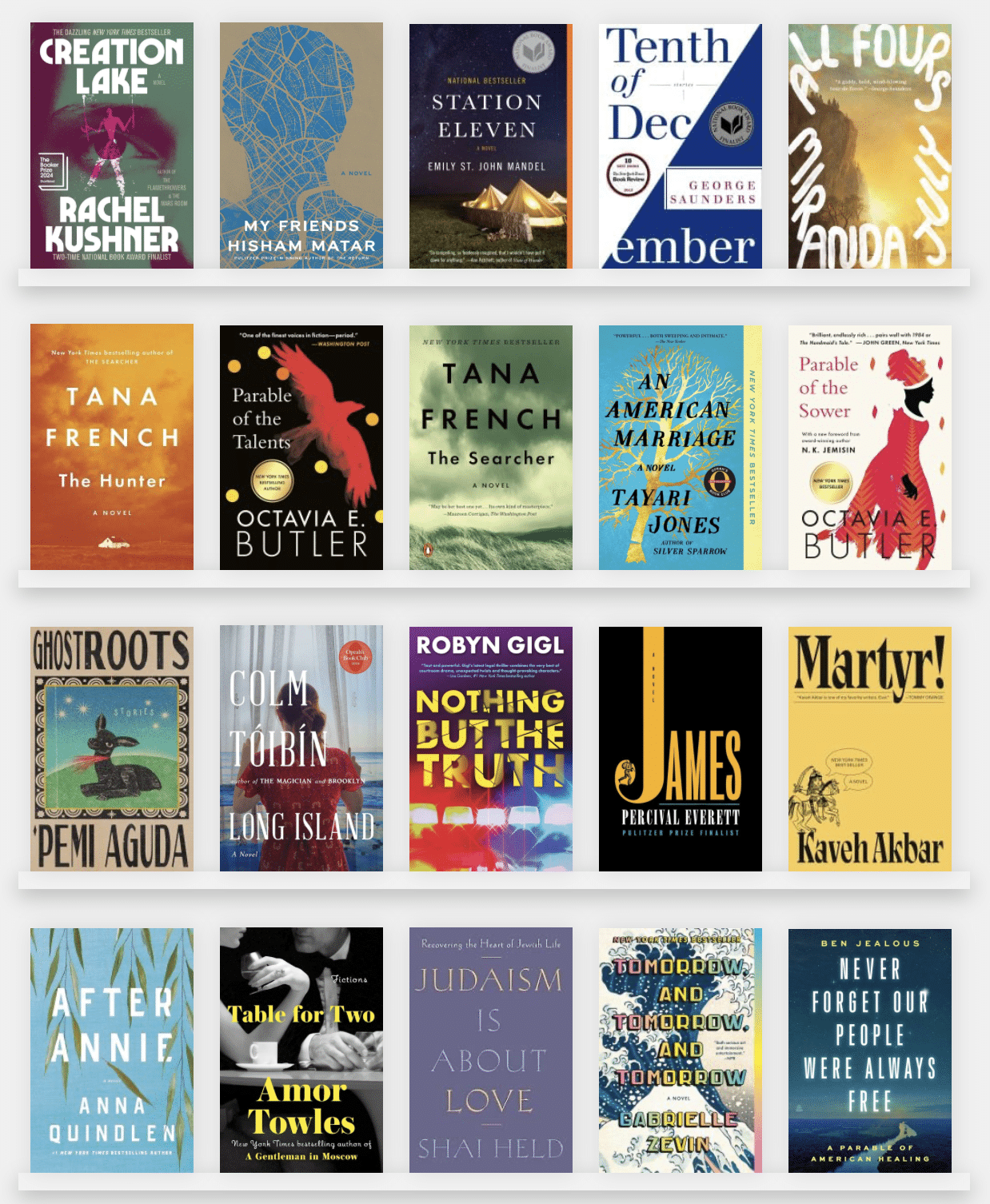
Parable of the Sower and the Talents

At the beginning of last year, I read Octavia E. Butler’s acclaimed post-apocalyptic novel, “Parable of the Sower.” The story depicts a world where global climate change and economic crises have led to social chaos, particularly in California. Despite the grim setting, the novel conveys a message of hope. It follows the journey of Lauren Olamina, a fifteen-year-old girl who lives with her preacher father, her family, and neighbors in a gated community that protects them from the surrounding turmoil. However, in a society where everyone is at risk, Lauren suffers from hyperempathy, a condition that makes her highly sensitive to the emotions of others.

After enjoying the first book, I immediately read “Parable of the Talents,” which was first published in 1998. Ms. Butler’s second book is even more relevant today than it was back then. The novel’s timely message of hope and resistance in the face of fanaticism is astonishingly prescient.

In 2032, Lauren Olamina survives the destruction of her home and family. She envisions a peaceful community in Northern California, one she establishes on the foundation of her newly founded faith, Earthseed. This settlement serves as a haven for outcasts facing persecution following the election of an ultra-conservative president. The new president pledges to “make America great again,” but the country becomes increasingly divided and dangerous. Lauren’s subversive colony, a minority religious faction led by a young Black woman, becomes a target for President Jarret’s oppressive regime, characterized by terror and discrimination.

Ms. Butler passed away in 2006 before completing the next book in her series. Ironically, as Essence reported, Butler “imagined a Los Angeles consumed by fires.” The cemetery where the iconic author is buried caught fire amid the ongoing wildfires that are affecting communities across Southern California. Additionally, Altadena, where she grew up and was known as “a sanctuary from discriminatory housing practices,” was devastated by the Eaton Fire.


Station Eleven

Station Eleven: A Novel” by Emily St. John Mandel is a notable dystopian science fiction work, recognized by The New York Times as one of the 100 Best Books of the Century. The story unfolds during the unsettling days of civilization’s collapse. It follows a Hollywood star, his potential savior, and a group of nomadic actors traveling through the scattered outposts of the Great Lakes region. They risk everything for the sake of art and humanity, reminding us of the enduring power of culture even in the most terrifying circumstances.

Kirsten Raymonde will never forget the night Arthur Leander, a famous Hollywood actor, had a heart attack on stage during a production of “King Lear.” That night, a devastating flu pandemic swept through the city, and within weeks, civilization as we know it came to an end. Little did she know that this event would shape the world’s future.

Twenty years later, Kirsten, a central figure in the story, travels through the settlements of this altered world with a small troupe of actors and musicians known as The Traveling Symphony. They have made it their mission to keep the remnants of art and humanity alive. Their encounters, particularly in St. Deborah by the Water, with a violent prophet threatening their existence, form a crucial part of the narrative. The story’s unique structure, which moves back and forth in time, vividly depicts life before and after the pandemic, showcasing the strange twists of fate that connect them all and keeping readers on the edge of their seats.


Pages: 1 2 3 4 5 6 7 8

5 comments add your comment

Share your thoughts and ideas

This site uses Akismet to reduce spam. Learn how your comment data is processed.

The Jan Lilien Education Fund!

Something About Living

Read: November 2024

Get this book

Something About Living

by Lena Khalaf Tuffaha

I recently read “Something About Living” by Lena Khalaf Tuffaha, a poet and essayist whose work resonates deeply. The book of poems won the 2024 National Book Award for Poetry and delved into Palestinian life through the lens of the American language, revealing a legacy of obfuscation and erasure. It questions what happens when language packages ongoing disasters for consumption and disposal.

As a Jew supporting a two-state solution, I initially hesitated to read this collection of poems. However, I was pleasantly surprised by the lyrical beauty of the verses, which explore love not just as an emotion but as a transformative force and “a radical act.” Every poem that genuinely resonated with me. “Something About Living” is a book I highly recommend for its depth and insight!

Ms. Khalaf Tuffaha has an incredible literary repertoire; her previous work, “Water & Salt,” earned the esteemed 2018 Washington State Book Award, while “Kaan & Her Sisters” was a finalist for the Firecracker Award. In addition, “Something About Living” also received the 2022 Akron Prize for Poetry. I’m excited to explore her profound insights and lyrical mastery!

Adrian Matejka, the author of “Somebody Else Sold the World,” has written about “Something About Living,”

“It’s nearly impossible to write poetry that simultaneously holds the human desire for joy and the insistent agitations of protest, but Lena Khalaf Tuffaha‘s gorgeous and wide-ranging new collection Something About Living does just that. Her poems interweave Palestine’s historic suffering, the challenges of living in this world full of violence and ill will, and the gentle delights we embrace to survive that violence. Khalaf Tuffaha’s elegant poems sing the fractured songs of Diaspora while remaining clear-eyed to the cause of the fracturing: the multinational hubris of colonialism and greed. This collection is her witness to our collective unraveling, vowel by vowel, syllable by syllable. “Let the plural be a return of us,” the speaker of “On the Thirtieth Friday We Consider Plurals” says and this plurality is our tenuous humanity and the deep need to hang on to kindness in our communities. In these poems Khalaf Tuffaha reminds us that love isn’t an idea; it is a radical act. Especially for those who, like this poet, travel through the world vigilantly, but steadfastly remain heart first.


When you purchase a book through one of my links, I earn a small commission that helps support my passion for reading. This contribution allows me to buy even more books to share with you, creating an incredible cycle of discovering great reads together! Your support truly makes a difference!


×
My Friends: A Novel

Read: October 2024

Get this book

My Friends: A Novel

by Hisham Matar'

Today, I started reading Hisham Matar’s “My Friends: A Novel.” It is a finalist for the 2024 National Book Award for Fiction and the winner of the Orwell Prize for Political Fiction. This novel explores themes of friendship, family, and the harsh realities of exile. Hisham Matar is also the Pulitzer Prize-winning author of “The Return.” The pages on my Kindle App on my iPad fly like autumn’s falling leaves.

One evening, a young boy named Khaled, growing up in Benghazi, hears a captivating short story read aloud on the radio. The story, about a man being eaten alive by a cat, leaves an indelible mark on Khaled, igniting a lifelong fascination with the power of words and the enigmatic author, Hosam Zowa. This transformative experience sets Khaled on a journey that will lead him far from home to the University of Edinburgh to pursue a life of the mind.

In a new and unfamiliar environment, Khaled finds himself far from his familiar life in Libya. His resilience is tested when he attends a protest against the Qaddafi regime in London. The event turns into a tragedy, leaving Khaled injured and unable to leave Britain. Despite the danger posed by monitored phone lines, his determination to communicate his situation to his parents is a testament to his strength.

When Khaled has a chance encounter with Hosam Zowa, the author of a life-changing short story, at a hotel, Khaled begins the most profound friendship of his life. This friendship sustains him and eventually compels him, as the Arab Spring unfolds, to confront complex tensions between revolution and safety, family and exile, and how to define his sense of self concerning those closest to him.

A profound exploration of friendship and family and how time can test and fray these bonds, ‘My Friends‘ is a work of literature that resonates with its readers. Hisham Matar’s novel is not just a story but an achingly beautiful reflection on life and relationships crafted by an author at the peak of his powers.


When you purchase a book through one of my links, I earn a small commission that helps support my passion for reading. This contribution allows me to buy even more books to share with you, creating an incredible cycle of discovering great reads together! Your support truly makes a difference!


×
Wintering: The Power of Rest and Retreat in Difficult Times

Read: October 2021

Get this book

Wintering: The Power of Rest and Retreat in Difficult Times

by Katherine May

Wintering: The Power of Rest and Retreat in Difficult Times by Katherine May is “an intimate, revelatory book exploring the ways we can care for and repair ourselves when life knocks us down.”

Two quotes that resonated with me were:

That’s what grief is – a yearning for that one last moment of contact that would settle everything.

We are in the habit of imagining our lives to be linear, a long march from birth to death in which we mass our powers, only to surrender them again, all the while slowly losing our youthful beauty. This is a brutal untruth. Life meanders through the woods. We have seasons when we flourish and seasons when the leaves fall upon us, revealing our bare bones. Given time they grow again.

May writes in a clear voice that conveys the importance of accepting the cycles of life instead of fighting them.

Sometimes you slip through the cracks: unforeseen circumstances like an abrupt illness, the death of a loved one, a breakup, or a job loss can derail a life. These periods of dislocation can be lonely and unexpected. For May, her husband fell ill, her son stopped attending school, and her own medical issues led her to leave a demanding job. Wintering explores how she not only endured this painful time but embraced the singular opportunities it offered.

A moving personal narrative shot through with lessons from literature, mythology, and the natural world, May’s story offers instruction on the transformative power of rest and retreat. Illumination emerges from many sources: solstice celebrations and dormice hibernation, C.S. Lewis and Sylvia Plath swimming in icy waters, and sailing arctic seas.

Ultimately Wintering invites us to change how we relate to our own fallow times. May models an active acceptance of sadness and finds nourishment in deep retreat, joy in the serene beauty of winter, and encouragement in understanding life as cyclical, not linear. A secular mystic, May forms a guiding philosophy for transforming the hardships that arise before the ushering in of a new season.

I recommend this book without reservation.


The Jan Lilien Education Fund sponsors ongoing sustainability and environmental awareness programs. Gifts made this month; I will match dollar-for-dollar. All donations are tax-deductible.

Subscribe

Contact Us

I receive a commission when you buy a book or product using a link on this page. Thank you for supporting Sharing Jan’s Love blog.


×
Kairos

Read: June 2023

Get this book

Kairos by Jenny Erpenbeck

by Jenny Erpenbeck

I’ve recently delved into the captivating novel Kairos by Jenny Erpenbeck, which has left a lasting impression on me. The book tells the story of a young woman named Katharina who falls in love with a married writer named Hans, whom she met in East Berlin during the late 1980s. The historical context of Germany’s reunification is already an intriguing topic, but the addition of a love story made this book a must-read.

As their intense and complicated relationship plays out against the backdrop of a declining GDR, the novel offers a unique perspective on the tumultuous period following the country’s dissolution in 1989. Erpenbeck’s writing style is unmistakable, and her sweeping portrayal of the two lovers’ journey is truly remarkable. We witness Katharina’s growth as she tries to reconcile the reality of her lousy romance with the disappearance of an entire world and its ideologies.

The Times Literary Supplement has praised Erpenbeck’s ability to capture the weight of history and the influence of cultural and subjective memory on individual identity. Her work acknowledges the complexity of the human experience and the nuances of historical events.

Jenny Erpenbeck is an epic storyteller and a highly respected voice in contemporary German literature. Her translator, Michael Hofmann, has described Kairos as a great post-Unification novel, and his translation has been praised for being both faithful to the original text and beautifully written. I highly recommend this book to anyone seeking a thought-provoking and engaging read.


The Jan Lilien Education Fund sponsors ongoing sustainability and environmental awareness programs. Gifts made this month; I will match dollar-for-dollar. All donations are tax-deductible.

Subscribe

Contact Us

I receive a commission when you buy a book or product using a link on this page. Thank you for supporting Sharing Jan’s Love blog.


×
The Lion's Den

Read: January 2023

Get this book

The Lion’s Den

by Anthony Marra

Today, I read The Lion’s Den by Anthony Marra. After a four and one-half Zoom meeting, I was looking for a book I could finish tonight, and the third book in the Inheritance, a collection of five stories about secrets, unspoken desires, and dangerous revelations between loved ones, seemed like the book to read. The Lion’s Den is the story of Michael, a son, his father’s transgressions in a tell-all were the ethical, righteous—and profitable—thing to do. What’s left but to slink back home for a humbling face-to-face with the man whose secrets he sold?

It was the perfect novel to read this evening. In the opening paragraph, when Michael’s father describes the automated customer service computer voice.” Siri’s dimwitted stepsister,” I knew I could enjoy this book.

Michael’s last-minute invitation to be the Ethics Symposium speaker at his parochial school was written in a way that was both bluntly honest and humorous.

Michael’s visits with his father to the lion’s den at the National Zoo were profoundly moving, and when the wheelchair was left there after his father’s death brought tears to my eyes.

I highly recommend The Lion’s Den, part of Inheritance, a collection of five stories about secrets, unspoken desires, and dangerous revelations between loved ones. Each Inheritance piece can be read or listened to in a single setting. By yourself, behind closed doors, or shared with someone you trust. This is the third one in the series I have read. The previous two were Everything My Mother Taught Me and Can You Feel This?

I have enjoyed all three and look forward to reading the final two.

The Goodreads summary provides an overview,

Exposing his father’s transgressions in a tell-all was the ethical, righteous—and profitable—thing to do. What’s left but to slink back home for a humbling face-to-face with the man whose secrets he sold?

He was a notorious government whistle-blower. Depending on whom you ask, he’s a treasonous felon, a folk hero, a validated patriot, or a national disgrace. To his son, Michael, he’s the father who threw his family into upheaval. Now, having moved back home at thirty-four, Michael is getting to know him as a man and getting nearer to understanding his motivations that have remained a mystery in this darkly humorous short story of sacrifice and betrayal by New York Times bestselling author Anthony Marra.


The Jan Lilien Education Fund sponsors ongoing sustainability and environmental awareness programs. Gifts made this month; I will match dollar-for-dollar. All donations are tax-deductible.

Subscribe

Contact Us

I receive a commission when you buy a book or product using a link on this page. Thank you for supporting Sharing Jan’s Love blog.


×
The Amen Effect

Read: March 2025

Get this book

The Amen Effect

by Sharon Brous

Sharon Brous, a prominent American rabbi, argues in The Amen Effect: Ancient Wisdom to Heal Our Hearts and Mend Our Broken World that the essential spiritual work of our time—though instinctual and often countercultural—focuses on connecting through celebration, sorrow, and solidarity. We must support one another in times of joy and pain, embracing vulnerability and possibility, nurturing relationships with shared purposes, and creating communities centered on care.

From one of our country’s most prominent rabbis comes this inspiring book about the power of community, based on one of her most impactful sermons. What will it take to mend our broken hearts and rebuild our society in a time of loneliness, isolation, social rupture, and alienation?

Brous contends that honoring our most basic human instinct—the yearning for authentic connection—is the way to reawaken our shared humanity and begin the healing process. This kind of sacred presence is captured by the word amen, a powerful ancient idea that we affirm the fullness of one another’s experience by demonstrating, in body and word: “I see you. You are not alone.”

An acclaimed preacher and storyteller, Brous pairs heart-driven anecdotes from her experience building and pastoring to a leading-edge faith community over the past two decades with ancient Jewish wisdom and contemporary science. The result is a clarion call: the sense of belonging engendered by our genuine presence is both a social and biological need, as well as a moral and spiritual necessity.

With original insights and practical tools, The Amen Effect translates foundational ideas into simple practices that connect us to our better angels, offering a blueprint for a more meaningful life and a more connected and caring world.

As she writes in the preface, after listing the joys and pains of life, weddings, births, and death,

It’s in these times that I feel the weight of the work, the privilege of being alive, the blessing of being so close to such raw beauty and pain. It’s there that I have learned the power of saying ‘Amen‘ to one another’s grief and joy, sorrow and celebration with our very presence. Of bearing witness to profound suffering and protesting injustice with our very presence. Of comforting and consoling, surviving and thriving with our very presence. What I’ve learned, during the years, is the meaning of sacred companionship. I have seen, in ways subtle and pronounced, a longing to connect with others who can help hold the pain, a need to share what we’ve learned in the trenches, and a desire to give, even when we ourselves have barely caught our breath. And I have seen how knowing that we’re not alone can both heighten our joy and help us endure unimaginable hardship.

Click here to read about my experience listening to Rabbi Brous at the Kol Tzedek Speakers Series at Temple Emanu-El in Westfield.


Sharon Brous is the senior and founding rabbi of IKAR, a leading-edge Jewish community based in Los Angeles, and the author of The Amen Effect: Ancient Wisdom to Heal Our Hearts and Mend Our Broken World, a national bestseller.

In 2013, Brous blessed President Obama and Vice President Biden at the Inaugural National Prayer Service, and in 2021, returned to bless President Biden and Vice President Harris and then led the White House Passover Seder 2021 and the Hanukkah candle lighting with the Vice President and Second Gentleman in 2023. She was ranked as the number one most influential Rabbi in America by Newsweek/The Daily Beast. She has also been recognized by The Forward and the Jerusalem Post as one of the most influential Jews alive today. Her work has appeared in prominent publications, including The New York Times, The Los Angeles Times, and The Washington Post. Additionally, her TED talk, “Reclaiming Religion,” has been viewed by over 1.5 million people.

Brous is part of the inaugural cohort of Auburn Seminary’s Senior Fellows program, which brings together top faith leaders working on the frontlines for justice. She sits on the faculty of REBOOT and serves on the International Council of the New Israel Fund, as well as the national steering committee for the Poor People’s Campaign.

A Columbia University graduate (holding both undergraduate and M.A. degrees in Human Rights), she was ordained by the Jewish Theological Seminary and resides in Los Angeles with her husband and children.


When you purchase a book through one of my links, I earn a small commission that helps support my passion for reading. This contribution allows me to buy even more books to share with you, creating an incredible cycle of discovering great reads together! Your support truly makes a difference!


×

Discover more from Sharing Jan’s Love

Subscribe now to keep reading and get access to the full archive.

Continue reading