
Reading is Vital to My Conscientious Resilience!

Estimated reading time: 27 minutes, 0 seconds
Crime Beat

The crime genre has always captivated me—a thrilling escape into a world of mystery and intrigue. I fondly recall those fleeting moments before a plane or train departure when I would roam the aisles of a bookstore, hunting for a new read to dive into during my journey. My mission was simple yet exhilarating: to uncover the culprit’s identity before the final pages revealed the truth. Although my travel adventures are now fewer and further between, my love for the genre has only deepened. I find myself more invested in the story’s richness and the characters’ lives, savoring the twists and turns that keep me guessing. The evolution of storytelling in crime fiction has made each experience more immersive and satisfying.

Nothing But the Truth

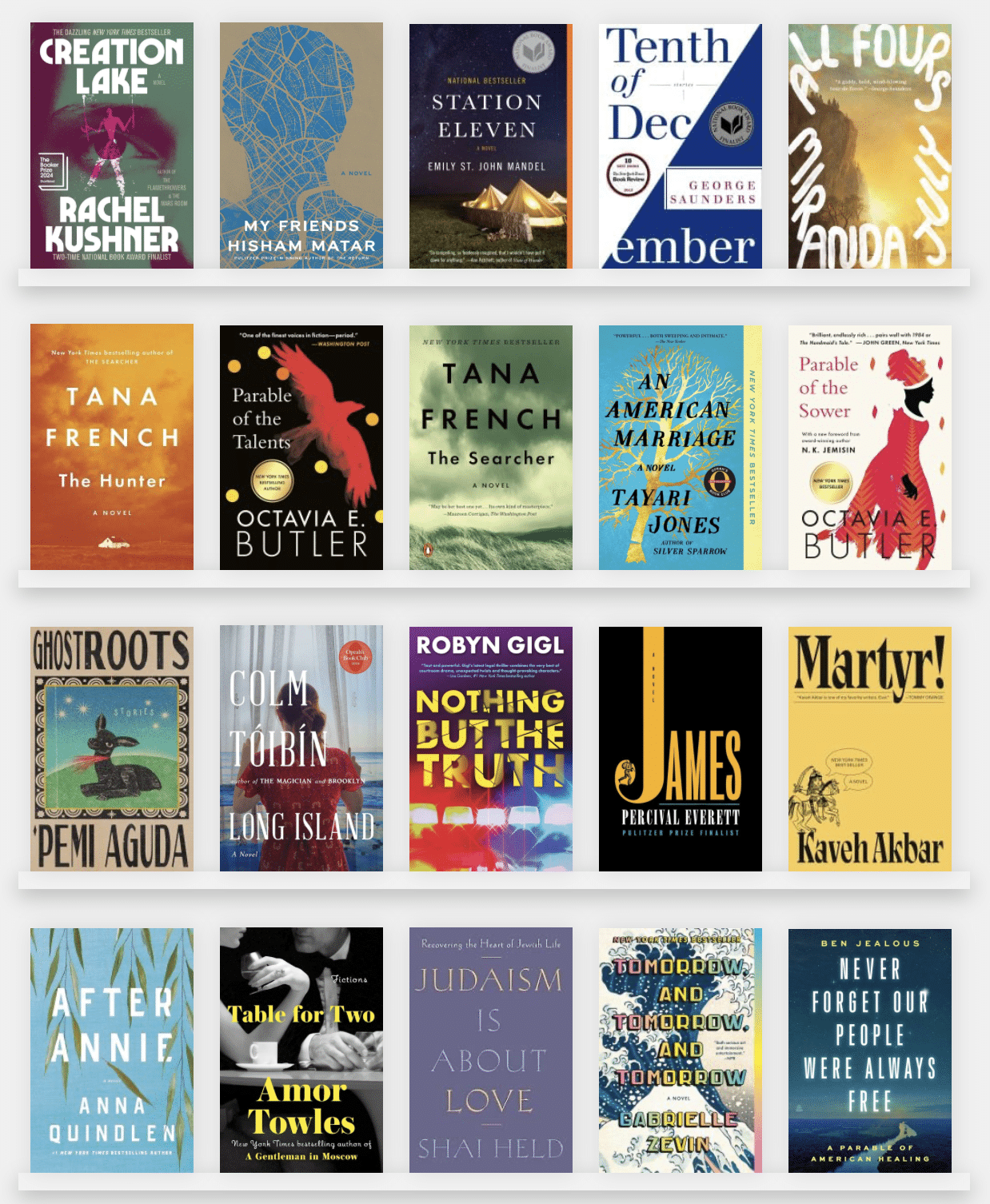
In 2024, I discovered four outstanding books that I highly recommend. The first is “Nothing But the Truth,” the fourth installment in Robyn Gigl‘s Erin McCabe Legal Thriller series. The New York Times has selected it as one of the Best Crime Novels 2024. Initially, I had placed it on my long list of books to read, but I moved it to the top after my friend Bernie Wagenblast recommended it and mentioned that the author is a Cranford neighbor.

One of the reasons I chose to read this novel is that it—and the entire series—primarily takes place in Union County, specifically in Cranford, my hometown! Erin McCabe and her law partner enjoy salads from the Gourmet Deli, and Erin dines with her husband at the Cranford Hotel. In this installment, Erin McCabe, a transgender attorney from the Garden State, learns that uncovering the truth can be deadly.

The novel is well-written and engaging. I wasn’t confident how it would end until I reached almost the last page. Erin and her partner, Duane Swisher, are attorneys representing their client, a gay New Jersey State Trooper. Erin’s backstory as a transgender woman planning a wedding and having a child adds significant depth to the narrative. If I were reading this book today, in light of the ongoing attacks on transgender neighbors, I might categorize it entirely differently—as a crime against humanity.


The Searcher and The Hunter

I read two crime novels by Tana French, often called the Queen of Irish crime fiction. The first was “The Searcher,” followed by “The Hunter,” also selected by The New York Times as one of the Best Crime Novels in 2024. Both novels focus on Cal Hooper, a retired Chicago police officer who moves to rural Ireland for a peaceful life. However, Cal soon discovers that even in a small, quiet Irish village, a detective’s work is never truly over. These novels present a nuanced, atmospheric exploration of what we are willing to do for our loved ones, the lengths we will go to for revenge, and the sacrifices that may arise when these motivations collide.

I should have read “The Searcher” first, as it is the prequel to “The Hunter.” However, reading them in reverse order enhanced my enjoyment. Both novels are gripping page-turners, and I look forward to exploring more of Ms. French’s work.


Creation Lake

Creation Lake: A Novel” by Rachel Kushner was featured in The New York Times as one of the Best Crime Novels in 2024. The story follows the journey of a secret agent, a thirty-four-year-old American woman known for her striking beauty and ruthless tactics. Her covert operations take place in France.

The narrator introduces herself as “Sadie Smith” upon arriving at a rural commune of French subversives, whom she secretly monitors. She also meets her lover, Lucien, a young and affluent Parisian, through a so-called “cold bump”—making him believe their encounter was accidental. Like everyone else she targets, Lucien is helpful to her and ultimately becomes manipulated by her.

Sadie operates with a combination of strategy and deception, following instructions from her contacts—shadowy figures in business and government. Initially, these contacts want her to provoke reactions. However, as the story unfolds, their demands grow more complex. Rachel Kushner’s interpretation of “noir” is both taut and dazzling.


Pages: 1 2 3 4 5 6 7 8

5 comments add your comment

Share your thoughts and ideas

This site uses Akismet to reduce spam. Learn how your comment data is processed.

The Jan Lilien Education Fund!

At the Villa Rose

Read: August 2022

Get this book

At the Villa Rose

by Major Alfred Edward Woodley Mason

At the Villa Rose by Major Alfred Edward Woodley Mason, initially published in 1910, is a mystery novel in which Major Mason introduced his French detective, Inspector Hanaud, who was an early template for Agatha Christie’s famous Hercule Poirot. Missing jewels, high adventure some one hundred and fifty kilometers from Geneva, a casino, and blind love are all factors in a complex case for Hanaud, which ultimately involves a gang of frightened murderers. If you enjoy deductive mysteries like me, I highly recommend At the Villa Rose.

The Goodreads summary,

In Aix les Bains during the early 20th century, Celia Harland, a beautiful (of course) young English girl down on her luck, is befriended by a wealthy widow, Madame Dauvray, an addict of “spiritualism,” and stages seances for her benefactrix, while knowing full well that the supposed manifestations from the spirit world are entirely bogus. This set-up supplies the opportunity for a criminal gang master-minded by Madame Dauvray’s maid, with their eyes on the widow’s jewelry collection, to engineer an introduction for one of their numbers, Adele Tacé (“Rossignol”), whose taunts of disbelief goad the old lady into allowing a seance to be held which, unsuspected by either Celia or her patron, will be the cover for murder and robbery.

The crux of the plot is that as a medium, Celia will be made their innocent victim, on whom suspicion is to be planted.


The Jan Lilien Education Fund sponsors ongoing sustainability and environmental awareness programs. All donations are tax-deductible.

Subscribe

Contact Us

I receive a commission when you buy a book or product using a link on this page. Thank you for supporting Sharing Jan’s Love blog.

×
The Anniversary

Read: July 2023

Get this book

The Anniversary

by Stephanie Bishop

I began reading Stephanie Bishop‘s novel, The Anniversary, today. The Anniversary is a brilliantly written novel with a gripping and fast-paced storyline. It poses some interesting questions: how blurred is the boundary between reality and fiction in a writer’s thoughts? How can we reject those we yearn for? And what are the consequences for ourselves, others, and our creativity if we don’t?

J.B. Blackwood, a novelist, is on a cruise with her husband, Patrick, to celebrate their wedding anniversary. Her husband is much older than her and was her former professor, film director, and cult figure. When they first met, he appeared ageless, like a god in the eyes of those who worship them. However, his success is dwindling, while J.B. is on the verge of winning a major literary prize. Previously, her husband always oversaw her art, but now it may overshadow him.

As they sail in the sun for days, with only dark water surrounding them, a storm unexpectedly strikes, and Patrick falls from the ship. J.B. is left alone, and the search for the truth about their marriage and what happened to Patrick begins.

The Anniversary is highly recommended for readers who enjoy Lisa Halliday and Susan Choi’s works. The story revolves around a talented writer who has to confront the unresolved death of her spouse and find the courage to stand on her own. It is a captivating page-turner that will keep you hooked till the end.


The Jan Lilien Education Fund sponsors ongoing sustainability and environmental awareness programs. Gifts made this month; I will match dollar-for-dollar. All donations are tax-deductible.

Subscribe

Contact Us

I receive a commission when you buy a book or product using a link on this page. Thank you for supporting Sharing Jan’s Love blog.


×
The New Wilderness

Read: October 2021

Get this book

The New Wilderness

by Diane Cook

The New Wilderness by Diane Cook. The New Wilderness is a timely book and one that resonated with me. When Jan and I met in 1973, it was a revolutionary time with movements encouraging communes and returning to the farm. Neither Jan nor I were interested in living in a commune. Reading this book helped reassure me that we made the correct choice.

The summary of the book is:

Margaret Atwood meets Miranda July in this wildly imaginative debut novel of a mother’s battle to save her daughter in a world ravaged by climate change; A prescient and suspenseful book from the author of the acclaimed story collection, Man V. Nature.

Bea’s five-year-old daughter, Agnes, is slowly wasting away, consumed by the smog and pollution of the overdeveloped metropolis that most of the population now calls home. If they stay in the city, Agnes will die. There is only one alternative: the Wilderness State, the last swath of untouched, protected land, where people have always been forbidden. Until now.

Bea, Agnes, and eighteen others volunteer to live in the Wilderness State, guinea pigs in an experiment to see if humans can exist in nature without destroying it. Living as nomadic hunter-gatherers, they slowly and painfully learn to survive in an unpredictable, dangerous land, bickering and battling for power and control as they betray and save one another. But as Agnes embraces the wild freedom of this new existence, Bea realizes that saving her daughter’s life means losing her in a different way. The farther they get from civilization, the more their bond is tested in astonishing and heartbreaking ways.

At once a blazing lament of our contempt for nature and a deeply humane portrayal of motherhood and what it means to be human, The New Wilderness is an extraordinary novel from a one-of-a-kind literary force.

When I finished this book, I read Pompeii Still Has Buried Secrets by  in The New Yorker. It reminded me of all of the threats to civilization that we face, who will be Pliny the Younger to be “the only surviving eyewitness account of the disaster.” Fleeing our cities for the wilderness is no longer an option!

Subscribe

Contact Us

When you buy a book or product using a link on this page, I receive a commission. Thank you for supporting Sharing Jan’s Love blog.

×
How the Word is Passed

Read: December 2021

Get this book

How the Word Is Passed: A Reckoning with the History of Slavery Across America

by Clint Smith

How the Word Is Passed: A Reckoning with the History of Slavery Across America by Clint Smith. This book was a gift from my son Jon. The New York Times selected How the Word is Passed as one of the best books published this year. Beginning in his hometown of New Orleans, Clint Smith leads the reader on an unforgettable tour of monuments and landmarks—those that are honest about the past and those that are not—that offer an intergenerational story of how slavery has been central in shaping our nation’s collective history, and ourselves.

How the Word is Passed is one of the best books I have read in 2021. I had read an excerpt in The Atlantic on the Whitney Plantation, one of the only former plantations devoted to preserving the experience of the enslaved people whose lives and work sustained it. Like most of us, I had placed the book on my to-read list, where it remained lost in the cobwebs. Fortunately, my son Jon purchased the book for me.

Secondly, the book rekindled my long-lost dream of being an American Studies professor. As soon as Jan and I met, I dropped plans to leave Brooklyn and start graduate school in the fall of 1974. I made that decision primarily because of how much I loved Jan. But it was also partly that I did not have a clear vision of what my life would be like as a professor. The book provided clear examples of people like Yvonne Holden at The Whitney Plantation redefining history to be more accurate and inclusive. I probably could not have done as well as she did, but I can now see that it might have resulted in a career for me that could have been impactful.

Goodreads provides this overview for those who still need to be convinced to read this book.

It is the story of the Monticello Plantation in Virginia, the estate where Thomas Jefferson wrote letters espousing the urgent need for liberty while enslaving over 400 people on the premises. It is the story of the Whitney Plantation, one of the only former plantations devoted to preserving the experience of the enslaved people whose lives and work sustained it. It is the story of Angola Prison in Louisiana, a former plantation named for the country from which most of its enslaved people arrived and which has since become one of the most gruesome maximum-security prisons in the world. And it is the story of Blandford Cemetery, the final resting place of tens of thousands of Confederate soldiers.

In a deeply researched and transporting exploration of the legacy of slavery and its imprint on centuries of American history, How the Word Is Passed illustrates how some of our country’s most essential stories are hidden in plain view-whether in places we might drive by on our way to work, holidays such as Juneteenth, or entire neighborhoods—like downtown Manhattan—on which the brutal history of the trade in enslaved men, women and children has been deeply imprinted.

Informed by scholarship and brought alive by the story of people living today, Clint Smith’s debut work of nonfiction is a landmark work of reflection and insight that offers a new understanding of the hopeful role that memory and history can play in understanding our country.

How the Word is Passed is one of the best books I have read this year and many prior ones. I encourage you to read it and share your comments.

Subscribe

Contact Us

When you buy a book or product using a link on this page, I receive a commission. Thank you for supporting Sharing Jan’s Love blog.

×
The Pursuit of Happiness

Read: January 2025

Get this book

The Pursuit of Happiness

by Jeffrey Rosen

Today, I started reading Jeffrey Rosen‘s book, “The Pursuit of Happiness: How Classical Writers on Virtue Inspired the Lives of the Founders.” This New York Times bestseller examines what “the pursuit of happiness” meant to our nation’s Founders, how that iconic phrase influenced their lives, and how it provided the foundation for our democracy—a quest for being good rather than merely feeling good.

The Declaration of Independence identifies “the pursuit of happiness” as one of our unalienable rights, alongside life and liberty. Jeffrey Rosen, president of the National Constitution Center, profiles six of the most influential Founding Fathers—Benjamin Franklin, George Washington, John Adams, Thomas Jefferson, James Madison, and Alexander Hamilton—to explore what pursuing happiness meant to them. This work provides “the best and most readable introduction to the ideas of the Founders that we have” (Gordon Wood, author of “Power and Liberty“).

By examining the classical Greek and Roman moral philosophers who inspired the Founders, Rosen illustrates how they understood the pursuit of happiness as a quest for being good rather than simply feeling good. It is about striving for lifelong virtue instead of seeking short-term pleasures. Among these virtues were the habits of industry, temperance, moderation, and sincerity, which the Founders regarded as essential components of personal growth, character development, and self-mastery. They believed that self-governance in politics required self-governance on an individual level. For all six Founders, the pursuit of virtue was fundamentally incompatible with the enslavement of African Americans, although the Virginians failed to uphold their principles in this regard.

Ken Burns describes “The Pursuit of Happiness” as “immensely readable and thoughtful. It is more than just an analysis of the famous phrase in the Declaration. It is a revealing journey into the Founders’ minds, offering a deep and fresh understanding of the foundations of our democracy.


When you purchase a book through one of my links, I earn a small commission that helps support my passion for reading. This contribution allows me to buy even more books to share with you, creating an incredible cycle of discovering great reads together! Your support truly makes a difference!


×
A Sovereign People: The Crises of the 1790s and the Birth of American Nationalism

Read: February 2019

Get this book

A Sovereign People: The Crises of the 1790s and the Birth of American Nationalism

by Carol Berkin

A Sovereign People: The Crises of the 1790s and the Birth of American Nationalism by Carol Berkin, Presidential Professor American Colonial and Revolutionary History; Women’s History Professor at Baruch College, focuses on four crises in the first decade. Most historians view these are part of the early partisan debates in America.

Professor Berkin takes a different perspective. She focuses on how the Whiskey Rebellion, the Genet Affair, the XYZ Affair, and the Alien and Sedition Acts helped build nationalism. Despite the partisan divisions, both sides could find solutions that helped America survive its first decade. The failure to resolve anyone of these could have doomed America to failure.

The Federalists – Washington, Hamilton, and Adams – were the leaders of that first decade and managed the successive crisis of sovereignty.

A Sovereign People is one of four books from my first One Day University class.

Subscribe

Contact Us

×

Discover more from Sharing Jan’s Love

Subscribe now to keep reading and get access to the full archive.

Continue reading