
Parable of the Sower

Estimated reading time: 1 minute, 21 seconds

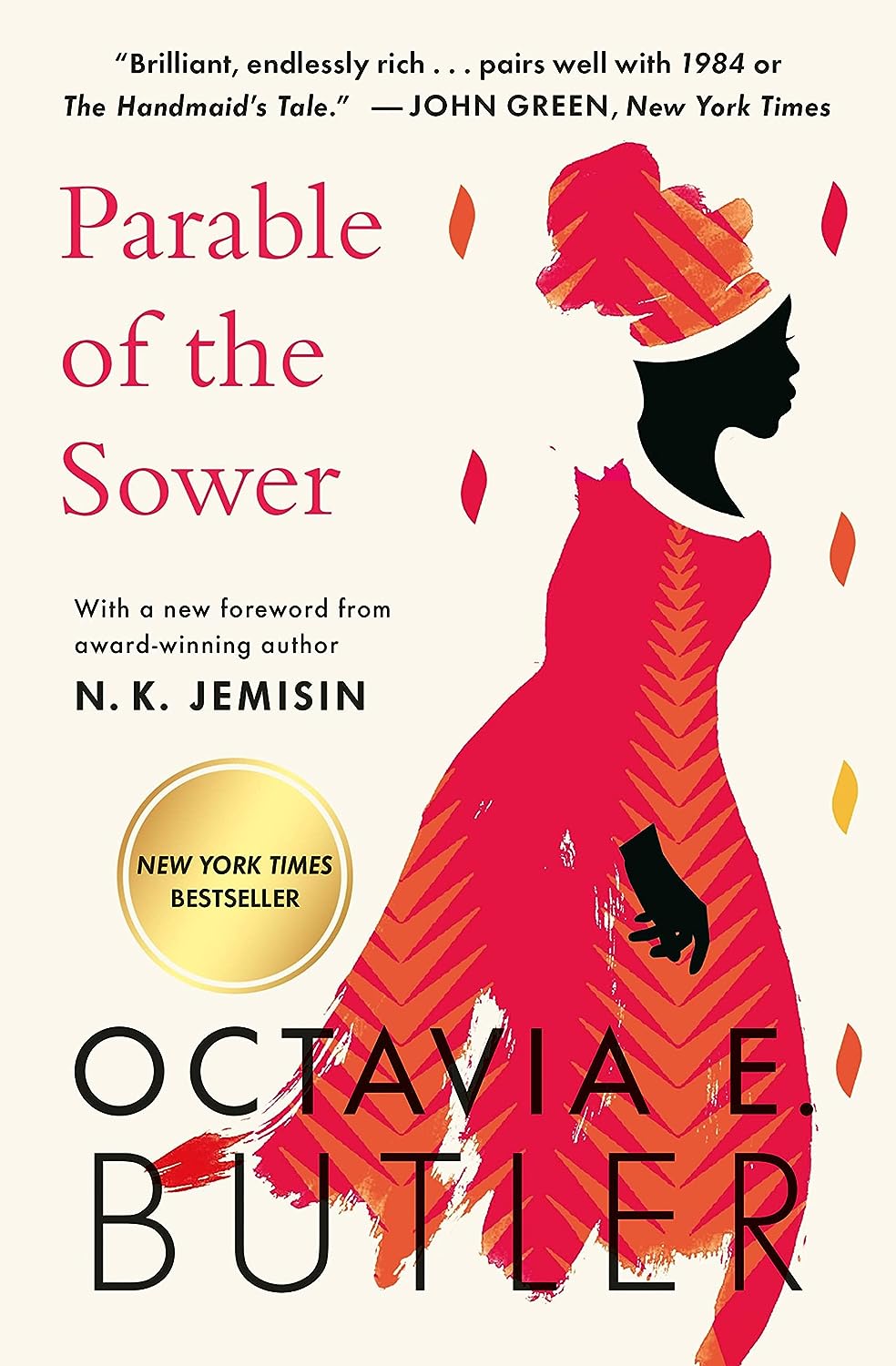
Today, I started reading Octavia E. Butler‘s acclaimed post-apocalyptic novel, “Parable of the Sower.” The book depicts a world in which global climate change and economic crises have led to social chaos, particularly in California. The state is plagued by dangers such as pervasive water shortages and masses of vagabonds who are willing to do whatever it takes to survive.

The novel provides a message of hope even in a gloomy environment. It tells the story of Lauren Olamina, a fifteen-year-old girl who lives with her preacher father, family, and neighbors in a gated community. They are protected from the chaos happening around them. However, in a society where everyone is at risk, Lauren suffers from hyperempathy, a condition that makes her highly sensitive to the emotions of others.

Lauren is a young girl who is wise beyond her years and acutely aware of the dangers that her community refuses to acknowledge. She must speak up to protect her loved ones from the impending disasters that could otherwise harm them. However, her fight for survival leads to something much bigger—the emergence of a new faith and a profound insight into humanity’s destiny.


The Jan Lilien Education Fund sponsors ongoing sustainability and environmental awareness programs. Gifts made this month; I will match dollar-for-dollar. All donations are tax-deductible.

Subscribe

Contact Us

I receive a commission when you buy a book or product using a link on this page. Thank you for supporting Sharing Jan’s Love blog.


The Jan Lilien Education Fund!

The Book of I

Read: October 2025

Get this book

The Book of I: A Novel

by David Greig

The Book of I” by David Greig is a remarkable debut novel from Scotland, shortlisted for both the Highland Book Prize and the Bookmark Book Festival Book of the Year. This unique work offers a philosophical exploration of themes such as guilt, redemption, humanity, love, and the beliefs we hold dear. Told with humor and enhanced by sharply vivid dialogue, David Greig skillfully bridges the gap between our contemporary world and the past.

Set in the year 825 CE, the story unfolds in the aftermath of a brutal attack by northern raiders, leaving an unlikely trio as the sole survivors on a remote Scottish island. The survivors include Brother Martin, a young monk who is the only member of the local monastery to escape martyrdom; Una, a beekeeper and mead maker who has freed herself from her violent husband during the chaos; and Grimur, an aging Norseman who digs himself out of a makeshift grave where his fellow raiders had left him, believing him to be dead.

As the seasons change in this wild and isolated environment, their initial distrust of one another evolves into a complex exploration of the distances and connections among them. “The Book of I” is a unique novel that serves as a philosophical commentary on guilt, redemption, humanity, love, and the beliefs we choose to embrace.


David Greig is a renowned Scottish writer whose plays have been performed extensively across the UK and internationally. His notable works for the theatre include The Strange Undoing of Prudencia Hart, Touching the Void, Midsummer, The Events, Charlie and the Chocolate Factory, Local Hero, and Macbeth (also known as Dunsinane). He served as the Artistic Director of Edinburgh’s Lyceum Theatre from 2015 to 2025. The Book of I marks his debut novel.


Discover your next favorite book and dive into a world of curated, exciting reads by purchasing through my links. You’ll have access to a diverse selection of books that I’ve personally vetted to ensure quality and enjoyment. Additionally, by supporting these selections, you’ll help me continue to provide you with more personalized recommendations. I earn a small commission from your purchase, which allows me to buy and share even more books with you. Your support truly makes a difference!


×
Stony The Road

Read: October 2019

Get this book

Stony the Road

by Henry Louis Gates Jr

Stony the Road: Reconstruction, White Supremacy, and the Rise of Jim Crow by Henry Louis Gates Jr. is a must-read book, especially with white nationalism on the rise.

I read this book when Jan began her chemotherapy. Although the book’s subject – the retreat from reconstruction – was one I studied in college, at times, I found it hard to focus on the material and my wife’s health at the same time. I stayed on the stony road as it is a subject we need to understand if we are going to correct the past failures.

As The New York Times wrote,

Henry Louis Gates Jr.’s “Stony the Road: Reconstruction, White Supremacy, and the Rise of Jim Crow,” an indispensable guide to the making of our times, addresses 2017’s mystifications. The book sets the Obama era beside Reconstruction and the Trump era beside the white supremacist terrorism of Redemption, the period beginning in 1877 during which Reconstruction’s nascent, biracial democracy was largely dismantled. Gates juxtaposes the optimism of Reconstruction, the despair of Redemption, and the promise of the New Negro movement — the effort by black Americans, starting around the turn of the 20th century, to craft a counternarrative to white supremacy. In doing so, “Stony the Road” presents a bracing alternative to Trump-era white nationalism.

Growing up in the Jim Crow south, I was well aware of white nationalism. This book is an essential read if we are going to make America a multi-racial democracy.

Subscribe

Contact Us

×
Neighbors and Other Stories

Read: February 2024

Get this book

Neighbors and Other Stories

by Diane Oliver

Today, I began reading Diane Oliver‘s Neighbors and Other Stories. It’s a powerful and eerie debut collection of stories that portrays the struggles of different characters as they face the everyday dangers of racism during the Jim Crow era. The book features an introduction by Tayari Jones.

Diane Oliver is an important yet often overlooked figure in African American literature of the 20th century. She was a gifted writer, ahead of her time, whose talent was cut short by her untimely death at 22 in 1966. Nevertheless, she left behind a remarkable collection of crisply written and often chilling tales that delve into race and racism in America during the 1950s and 60s. Oliver’s insightful stories remain relevant today; this is the only existing collection of her works. She has rightfully earned her place in the literary canon as a masterful storyteller.

The passage below describes several short stories with different themes. The first story, “The Closet on the Top Floor,” tells the story of Winifred, the first Black student in a newly integrated college. In this story, Winifred begins to disappear, creating a nightmarish scenario. The second story is titled “Mint Juleps not Served Here.” It’s about a couple who live deep in a forest with their son. They will go to bloody lengths to protect him from any danger. The third story, “Spiders Cry without Tears,” features a couple named Meg and Walt. They must confront prejudices and strains of interracial and extramarital love. Finally, the last story is the titular one, and it’s a high-tension narrative that follows a nervous older sister the night before her younger brother is set to desegregate his school.

These are powerful and personal depictions of African American families everyday struggles and moments of distress, illustrating how they utilize their abilities to overcome challenges. “Neighbors” is an enthralling compilation and a valuable historical and social document, displaying the remarkable literary skills of a previously overlooked author.

×
Station Eleven: A Novel

Read: August 2024

Get this book

Station Eleven: A Novel

by Emily St. John Mandel

Station Eleven: A Novel by Emily St. John Mandel, one of The New York Times’ 100 Best Books of the Century, is set in the unsettling days of civilization’s collapse and tells the captivating story of a Hollywood star, his potential savior, and a nomadic group of actors traveling through the scattered outposts of the Great Lakes region. They risk everything for art and humanity, reminding us of the enduring power of culture even in the most dire circumstances.

Kirsten Raymonde will never forget the night Arthur Leander, the famous Hollywood actor, had a heart attack on stage during a production of King Lear. That night, a devastating flu pandemic arrived in the city, and within weeks, civilization as we know it came to an end. Little did she know that this event would set events to shape the world’s future.

Twenty years later, Kirsten, a key figure in the story, traverses the settlements of the altered world with a small troupe of actors and musicians. They are The Traveling Symphony, a group that has made it their mission to keep the remnants of art and humanity alive. Their encounters, particularly in St. Deborah by the Water, with a violent prophet threatening their existence, form a crucial part of the narrative. The story’s unique structure, moving back and forth in time, vividly depicts life before and after the pandemic, and the strange twist of fate that connects them all will keep you on the edge of your seat.

×
Breathe

Read: September 2021

Get this book

Breathe

by Joyce Carol Oates

Celebrate JanReading Breathe by Joyce Carol Oates was a book I knew I needed to read once Jan was diagnosed. Although the book might trigger negative memories, I finally read Breathe. It was what I needed to read at this point in my journey.

Ms. Oates wrote the book in 2019 after her husband, Charlie Gross, died. The novel is a story of love, loss, and loneliness, topics that I write about on this blog. I needed to read the book both for my mental health and for the readers of Sharing Jan’s Love.

The protagonist, Michaela, loses her husband while they are on a sabbatical in New Mexico. Her husband, Gerard, writes a book and teaches a class on memories. Jan and I never considered relocating before her illness, but this book convinced me that it would have aggravated my grief journey.

One of the parallels I observed while reading the novel is the similarity between Gerard’s reluctance to let family, friends, and co-workers know of his illness. Jan shared that reluctance in the early days, but I convinced her that the only chance of beating cancer was with the help of family and friends.

This dialogue could easily be one that Jan and I had.

Of course you want to summon his family—his (adult) children—but quickly, he says no.

Still waiting.

But – When?

Just not yet.

He is not an alarmist. (You are the alarmist.)

The novel is written in two parts – The Vigil and the Post-Mortem.

The opening paragraphs set the tone.

A Hand is gripping yours. Warm, dry hand gripping your slippery, humid hand.

Whoever it is urging you – Breathe!

Leaning over you begging you – Breathe!

As one mourning the death of the love of his life, I found several phrases in the book helpful in understanding what I have gone through and will continue to confront.

Among them is grief-vise, which I have written about in this stream.

In the grip of the grief vise, all that you will do, all that you even imagine doing, will require many times more effort.. Hardly daring to breathe for the grief-vise will tighten around your chest, squeezing the very air out of your lungs.

In the early stages of grief, the vise was strangling me. Breathing was impossible, and weeping was constant at times.

Michaela struggles with her grief. Seeing her husband every time she sees a man alone, even if they are older or younger than he was. I know I have felt Jan’s presence and still expect her to walk into our apartment.

Her struggles with a grief counselor and overly helpful friends are an experience I have not had but are familiar to those suffering from losing a loved one.

The last chapters are ones in which time becomes confusing and chaotic. At times, I was uncertain about which were real or imagined. The end, like all good novels, was ambiguous.

These are some of the other phrases I have found useful and will include in posts.

  • If there is no one to love, do we merit existence?
  • Never come to the end of kissing.
  • The first principle of life is; Breathe.
  • Shy in the language of intimacy.
  • As if a life lived with strangers could compensate for the emptiness in your heart.
  • No purpose in your life. No compass.

What you love most, that you will lose. The price of your love is your loss.

I recommend this book to all readers, even those struggling with grief.

Subscribe

Contact Us

When you buy a book or product using a link on this page, I receive a commission. Thank you for supporting Sharing Jan’s Love blog.

×
Aftermirth

Read: August 2022

Get this book

Aftermirth by Hillary Jordan

by Hillary Jordan

Aftermirth by Hillary Jordan is a book about grief as the two protagonists take a road trip that is a darkly funny journey of healing that takes them deep into the heart of their suffering and others, and then beyond it, to a place of peace and laughter. I had just finished reading When She Woke by Ms. Jordan and having enjoyed that book, reading a second one by the same author seemed reasonable.

When I selected this short novel to read, I questioned if it was a good choice for me.

I found it easier to read and, in some ways, helpful. It was like meeting fellow widows from my Zoom grief groups in person at Camp Widow. The ability to laugh about our loss and cry openly is essential to meeting fellow benefits.

Michael Larssen, the narrator, raised a question I have not and still do not want to consider. What if I am still alive, Jan was a great love but is not the love of my life?

“You can’t know that he was the love of your life, and do you know why? Because guess what, you aren’t dead yet. You may feel dead right now, and believe me I’ve been there, but the fact is, until you’re lying under a tombstone of your own you can’t be sure about anything. You could prick your finger on one of your roses tomorrow, and as you’re climbing the stairs to get a Band-Aid, you trip over one of the pugs and tumble to your death. Or you could meet a man in the checkout line at the grocery store–hell, you could meet a woman even and fall madly in love with her and end up with six kids and twenty grandkids. Michael looks over at Elena, then back at George. You just don’t know, George. That’s the thing. None of us does.”— Aftermirth (Kindle Single) by Hillary Jordan

Despite my anxiety about considering this disturbing question, I highly recommend Aftermirth by Hillary Jordan.

The Goodreads summary provides an overview.

I stopped being funny the day my wife was electrocuted by her underwire bra.” So begins “Aftermirth,” a dark comedy that explores the absurdity of death through the eyes of thirty-one-year-old comedian, writer, and actor Michael Larssen. What is funny to the rest of the world is devastating to Michael, who loves his wife deeply, exceptionally her bright, rippling, abandoned laughter, which captivated him from the first time he heard it. In the aftermath of her death, he loses his sense of humor and his career.

Then, after two years of mourning her, he sees an article in the paper about a factory worker named Julio Santiago who fell into a giant vat of dough and was kneaded to death. For reasons Michael doesn’t understand, he decides to go to the man’s wake. There he meets and bonds with Julio’s twenty-nine-year-old daughter Elena, a law student who is reeling from her father’s unexpected and preposterous death.

Three months later, she calls him out of the blue and suggests that the two of them drive to North Carolina to speak with another survivor like themselves Elena has found on the Internet. Their road trip is a darkly funny journey of healing that takes them deep into the heart of their grief and others and then beyond it to a place of peace and laughter.


The Jan Lilien Education Fund sponsors ongoing sustainability and environmental awareness programs. All donations are tax-deductible.

Subscribe

Contact Us

I receive a commission when you buy a book or product using a link on this page. Thank you for supporting Sharing Jan’s Love blog.

×