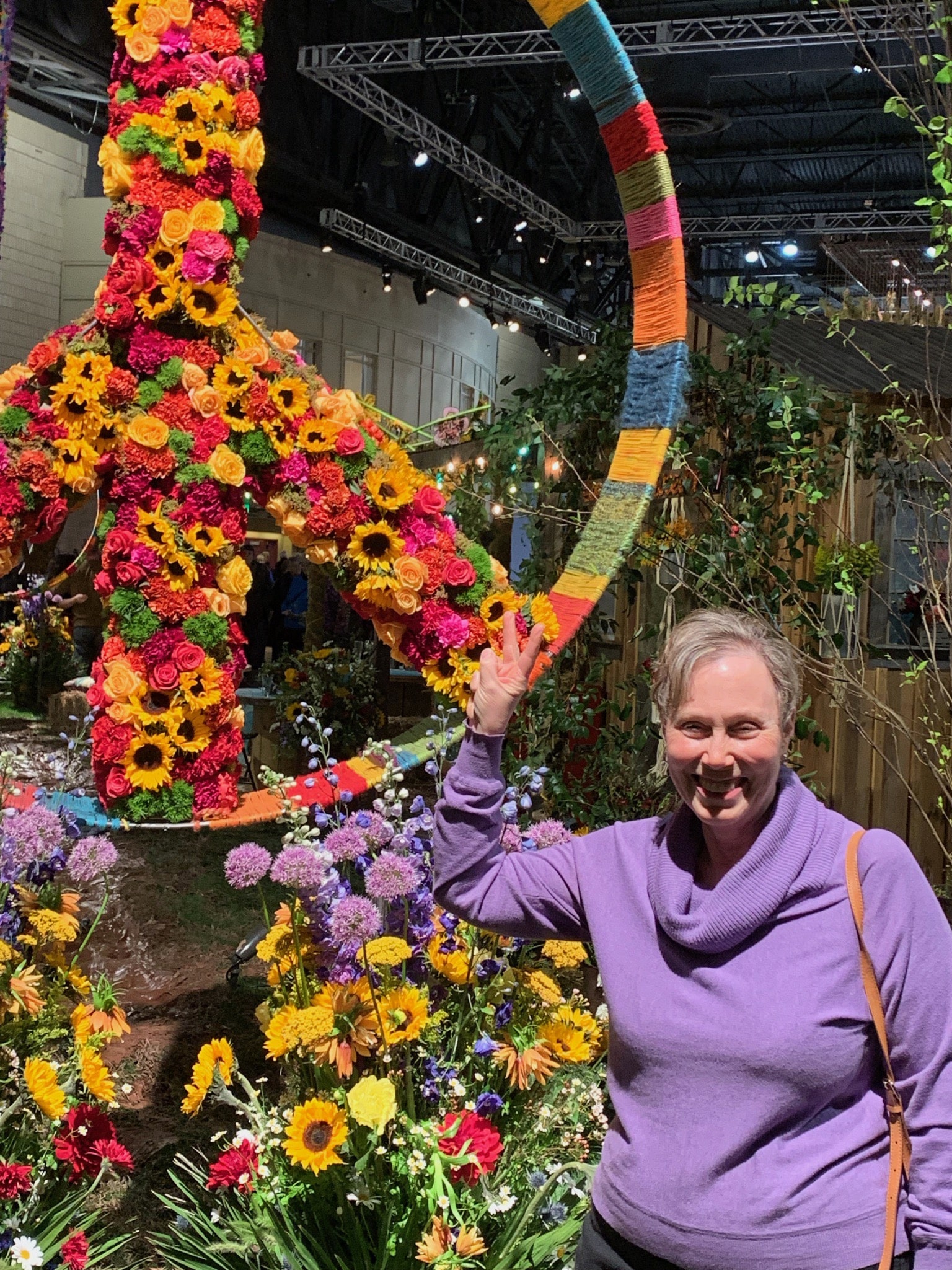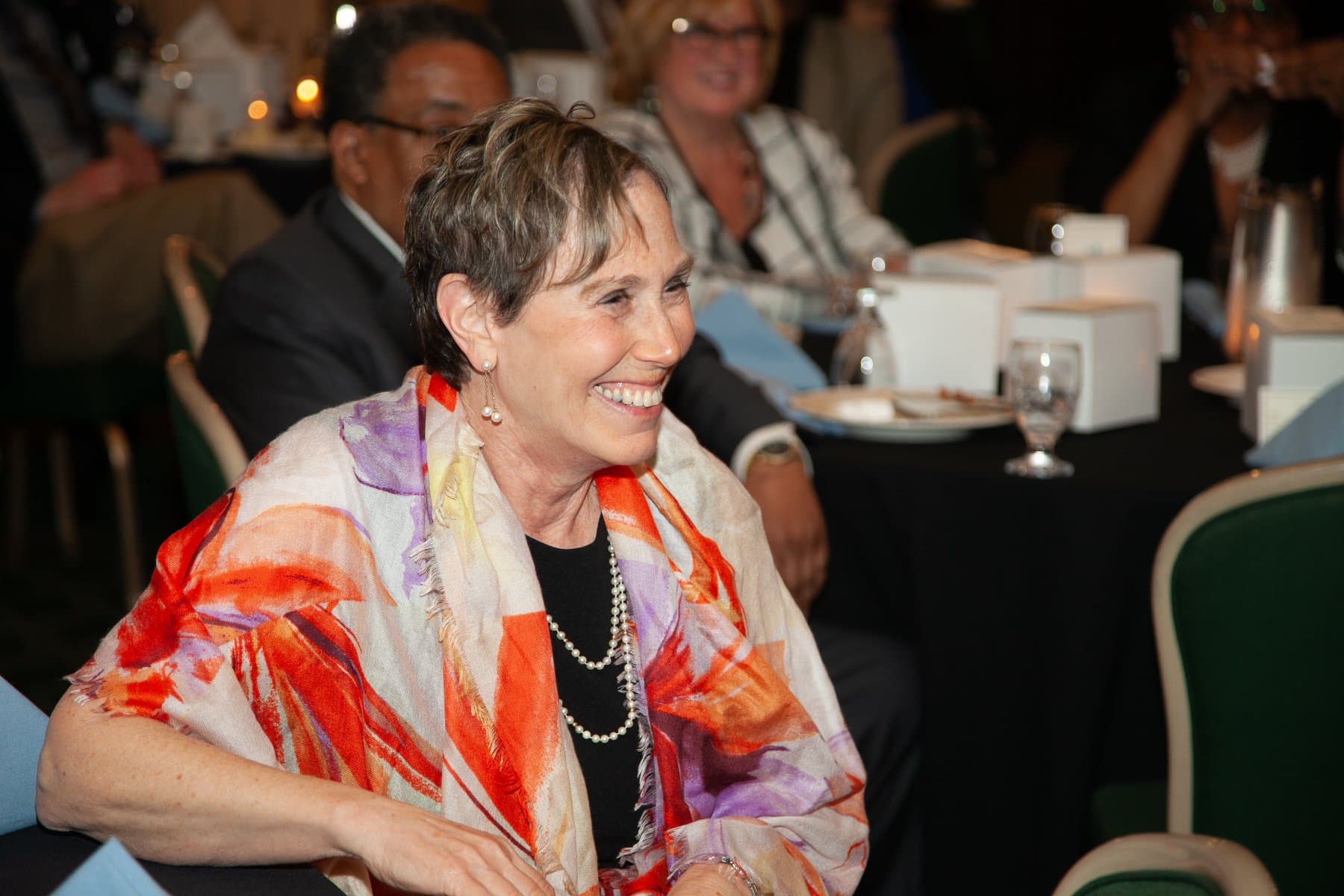

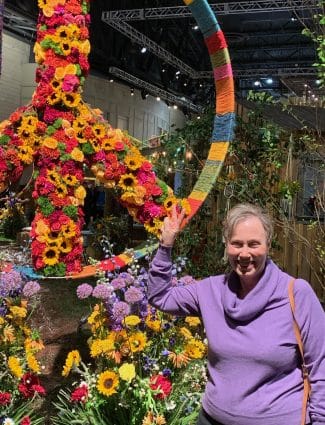
Jan Lilien at Philadelphia Flower Show 2019

Am I Alone in Apartment 3B?

Estimated reading time: 1 minute, 6 seconds
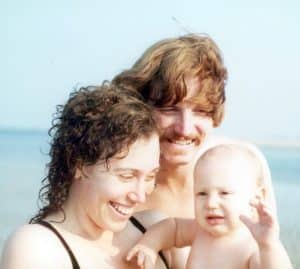
Jan, Jon and RichardAs I unpack in apartment 3B, I am alone, but I know Jan is still with me.

I am having trouble finding places for all the remembrances of decades of love. Each item I unwrap opens the floodgates of a lifetime of love.

It also reminds me of how fortunate I was and how Jan transformed my life.

This morning, I realized how critical timing was to our falling in love.

All the places I lived in before meeting Jan were not where we could have resided together, or she would have wanted to visit me.

I lived in a rectory when we briefly met at her VISTA training in December 1972.

When we finally met and fell in love, I lived in an unheated apartment and was on rent strike.

Neither was a place I could have invited her to visit me.

Ironically, I am now in my first “Batchelor” apartment and still happily married.

Our love will never die.


The Jan Lilien Education Fund sponsors ongoing sustainability and environmental awareness programs. All donations are tax-deductible.

Subscribe

Contact Us

I receive a commission when you buy a book or product using a link on this page. Thank you for supporting Sharing Jan’s Love blog.

Fourteen Moves, the First Without Jan

Since I graduated from college in 1971, I have lived in fourteen different places. After 1975, when Jan and I married, each move was with her by my side. When Jan and I moved into 3D, I told a new neighbor that I was looking forward to living in 3D as I had spent too […]

1 comment add your comment

Share your thoughts and ideas

This site uses Akismet to reduce spam. Learn how your comment data is processed.

The Jan Lilien Education Fund!

Jan Lilien at Philadelphia Flower Show 2019
×
Fourteen Days: A Collaborative Novel

Read: February 2024

Get this book

Fourteen Days: A Collaborative Novel

by Authors Guild

I started reading Fourteen Days: A Collaborative Novel today. It is set in a Lower East Side tenement during the early days of the COVID-19 lockdowns. Fourteen Days is a unique collaborative novel from the Authors Guild with a twist. A different, prominent literary voice has secretly written each character in this diverse cast of New York neighbors. These voices range from Margaret Atwood and Celeste Ng to Tommy Orange and John Grisham.

The novel’s story begins one week into the COVID-19 shutdown, where tenants of a Lower East Side apartment building in Manhattan have gathered on the rooftop to tell stories. As the nights pass, more and more neighbors join in, bringing chairs, milk crates, and overturned pails. Gradually, the tenants, some of whom have barely spoken to each other, become neighbors.

In this Decameron-like serial novel, general editors Margaret Atwood and Douglas Preston and a star-studded list of contributors create a beautiful ode to those trapped when the pandemic hit. Fourteen Days is a dazzling, heartwarming, and ultimately surprising narrative that reveals how some communities managed to become stronger despite the loss and suffering brought about by the pandemic.

Includes writing from: Charlie Jane Anders, Margaret Atwood, Joseph Cassara, Jennine Capó Crucet, Angie Cruz, Pat Cummings, Sylvia Day, Emma Donoghue, Dave Eggers, Diana Gabaldon, Tess Gerritsen, John Grisham, Maria Hinojosa, Mira Jacob, Erica Jong, CJ Lyons, Celeste Ng, Tommy Orange, Mary Pope Osborne, Douglas Preston, Alice Randall, Ishmael Reed, Roxana Robinson, Nelly Rosario, James Shapiro, Hampton Sides, R.L. Stine, Nafissa Thompson-Spires, Monique Truong, Scott Turow, Luis Alberto Urrea, Rachel Vail, Weike Wang, Caroline Randall Williams, De’Shawn Charles Winslow, and Meg Wolitzer!

×
The Sellout: A Novel

Read: August 2024

Get this book

The Sellout: A Novel

by Paul Beatty

Today, I embarked on the unique narrative journey of The Sellout: A Novel by Paul Beatty. This biting satire, which revolves around a young man’s isolated upbringing and the race trial that takes him to the Supreme Court, is a testament to Paul Beattys comic genius. The Sellout, a part of The New York Times’ 100 Best Books of the Century, is a must-read for those who appreciate a distinct narrative style.

The Sellout is a bold and thought-provoking work that challenges the sacred tenets of the United States Constitution, urban life, and the civil rights movement. It also explores the father-son relationship and the pursuit of racial equality, symbolized by the black Chinese restaurant. This social commentary is a vital aspect of The Sellout, making it a relevant and engaging read for those interested in contemporary issues.

Born in the “agrarian ghetto” of Dickens—on the southern outskirts of Los Angeles—the narrator of The Sellout resigns himself to the fate of lower-middle-class Californians: “I’d die in the same bedroom I’d grown up in, looking up at the cracks in the stucco ceiling that’s been there since ’68 quake.”

Raised by a single father, a controversial sociologist, he spent his childhood as the subject of racially charged psychological studies. Despite these challenges, he believes his father’s pioneering work will result in a memoir that will solve his family’s financial woes. But when his father is killed in a police shoot-out, he realizes there never was a memoir. All that’s left is the bill for a drive-thru funeral.

Fuelled by this deceit and the general disrepair of his hometown, the narrator sets out to right another wrong: Dickens has been removed from the map to save California from further embarrassment. Enlisting the help of the town’s most famous resident—the last surviving Little Rascal, Hominy Jenkins—he initiates the most outrageous action conceivable: reinstating slavery and segregating the local high school, which lands him in the Supreme Court. His determination to fight injustice is a powerful force that drives the narrative forward.

×
Invisible Child

Read: December 2021

Get this book

Invisible Child: Poverty, Survival & Hope in an American City

by Andrea Elliott

Invisible Child: Poverty, Survival & Hope in an American City by Andrea Elliott was a gift from my son Jon. The New York Times selected “Invisible Child” as one of the best books published this year. It is indeed one of the top books on my all-time list.

GoodReads summary provides a good overview,

The riveting, unforgettable story of a girl whose indomitable spirit is tested by homelessness, poverty, and racism in an unequal America—from Pulitzer Prize-winning journalist Andrea Elliott of The New York Times

Invisible Child follows eight dramatic years in the life of Dasani Coates, a child with imagination as soaring as the skyscrapers near her Brooklyn homeless shelter. Born at the turn of a new century, Dasani is named for the bottled water that comes to symbolize Brooklyn’s gentrification and the shared aspirations of a divided city. As Dasani grows up, moving with her tight-knit family from shelter to shelter, this story goes back to trace the passage of Dasani’s ancestors from slavery to the Great Migration north. When Dasani comes of age, New York City’s homeless crisis explodes as the chasm deepens between rich and poor.

In the shadows of this new Gilded Age, Dasani must lead her seven siblings through a thicket of problems: hunger, parental drug addiction, violence, housing instability, segregated schools, and the constant monitoring of the child-protection system. When, at age thirteen, Dasani enrolls at a boarding school in Pennsylvania, her loyalties are tested like never before. As she learns to “code switch” between the culture she left behind and the norms of her new town, Dasani starts to feel like a stranger in both places. Ultimately, she faces an impossible question: What if leaving poverty means abandoning the family you love?

By turns heartbreaking and revelatory, provocative and inspiring, Invisible Child tells an astonishing story about the power of resilience, the importance of family, and the cost of inequality. Based on nearly a decade of reporting, this book vividly illuminates some of the most critical issues in contemporary America through the life of one remarkable girl.

Jan and I were involved and knew that child poverty and homelessness needed repair. In addition, Jan lived on Washington Park across from Ft. Greene Park in 1974-75. We knew the neighborhood where much of the book’s story takes place. 

Before meeting Jan in 1973, I was both a community/tenant organizer and a youth worker. In the latter role, I made weekly hostel trips for eight to ten young boys from East Williamsburg during 1973. The trips were the first the boys had ever been outside of their neighborhood.

Many of them had imaginations like Dasani. They also had her instinct to fight. One of my first tasks was to check for any weapons.

Decades later, when I would see any of them, now adults, they would ask when we were going on another trip. I wish I had met Jan when I made those trips. She would have helped me improve them and document the impact. If I could re-write history, I would have her join me as the second adult on the hostel trips.

After that summer, it was clear my primary skills were as a community/tenant organizer. Over the next few years, my work focused on creating affordable and supportive housing.

Jan and I did meaningful work that made a difference, yet the need for a permanent solution to the crisis remains. The book highlights the crucial role of resilience, the importance of family, and the cost of inequality. As a nation, we cannot undermine those values by breaking up families, impeding resilience, and maintaining racial and economic inequality. 

The current debate in Washington over the Build Back Better legislation needs to focus not on how much we spend but on its impact on children and families

David Brooks, a conservative commentator, has supported these expenditures for what they can do to address this country’s cultural and economic crisis. 

These packages say to the struggling parents and the warehouse workers: I see you. Your work has dignity. You are paving your way. You are at the center of our national vision.

This is how you fortify a compelling moral identity, which is what all of us need if we’re going to be able to look in the mirror with self-respect. This is the cultural transformation that good policy can sometimes achieve. Statecraft is soulcraft.

If you can only read one book this year, this is the one to read. Child poverty, homelessness, and inequality impact all of us. Ending child poverty and homelessness will make us a healthier and more inclusive nation. It is time for a compelling moral call to action!

Subscribe

Contact Us

When you buy a book or product using a link on this page, I receive a commission. Thank you for supporting Sharing Jan’s Love blog.

×
The missing hours

Read: February 2022

Get this book

The Missing Hours

by Julia Dahl

The Missing Hours by Julia Dahl is a novel I chose to read as I was looking for something different from the recent books I have read, and a fellow reader recommended this one. The Missing Hours is a novel about obsession, privilege, and the explosive consequences of one violent act. Like a bomb exploding, the ripple effects of the novel’s primary event impact the victim and her family, friends, and the larger community.

A trigger warning to all readers, the violent act in the novel is a sexual assault that is filmed and shared. Claudia, the victim, has no memory initially of what happened. She had been drinking and wearing clothes that she liked to wear. None of her choices is an excuse for those who victimized her.

She cannot remember what happened until a friend receives the video.

Being wealthy and social media savvy, she is aware that reporting the assault before or after the video is released would only allow her to be re-victimized. Her choices and how she seeks to secure justice make this a book I enjoyed and highly recommended.

This is the Goodreads overview.

From a distance, Claudia Castro has it all: a famous family, a trust fund, thousands of Instagram followers, and a spot in NYU’s first-year class. But look closer, and things are messier: her parents are separating, she’s just been humiliated by a sleazy documentary, and her sister is about to have a baby with a man she barely knows.

Claudia starts the school year resolved to find a path toward something positive, maybe even meaningful – and then, one drunken night, everything changes. Reeling, her memory hazy, Claudia cuts herself off from her family, seeking solace in a new friendship. But when the rest of school comes back from spring break, Claudia is missing.

Suddenly, the whole city is trying to piece together the hours of that terrible night.

From the critically acclaimed author of Invisible City and Conviction, The Missing Hours is a novel about obsession, privilege, and the explosive consequences of one violent act.

Subscribe

Contact Us

When you buy a book or product using a link on this page, I receive a commission. Thank you for supporting Sharing Jan’s Love blog.

×
Whistler

Read: June 2026

Get this book

Whistler: A Novel

by Ann Patchett

Whistler, by Ann Patchett, tells the story of two adults reflecting on the choices they made and those made for them. It explores themes of bravery, memory, and the often small yet significant moments that shape our lives, as well as the inevitable loss that eventually touches us all. Beautiful in its simplicity, the novel ultimately reveals how love endures and how the experience of being truly known by another person—even for a brief time—can change everything.

When Daphne Fuller and her husband, Jonathan, visit the Metropolitan Museum of Art, they notice an older gentleman with white hair following them. This man turns out to be Eddie Triplett, Daphne’s former stepfather. He had been married to her mother for just over a year when Daphne was nine. Now fifty-three, Daphne hasn’t seen Eddie in many years, not since the event that changed the course of both their lives. Upon reuniting, time seems to vanish; despite their brief relationship, it had a profound impact on both of them, and now that they are together again, they have no intention of ever being separated again.


Ann Patchett is an accomplished author known for her novels, nonfiction works, and children’s books. Her most recent novel, Tom Lake, became a #1 New York Times bestseller. Patchett has received numerous awards, including the PEN/Faulkner Award, the Women’s Prize for Fiction in the UK, and the Book Sense Book of the Year Award.

Her novel The Dutch House was a finalist for the Pulitzer Prize. Her works have been translated into more than thirty languages, and Time magazine recognized her as one of the 100 Most Influential People in the World. In honor of her contributions to American culture, President Biden awarded her the National Humanities Medal. She resides in Nashville, Tennessee, where she owns Parnassus Books.


Discover your next favorite book and explore curated, exciting reads by purchasing through my links. Your support truly helps me share more meaningful stories and insights with you, enriching your reading journey.


×
Sun City

Read: February 2025

Get this book

Sun City by Tove Jansson

by Tove Jansson

Today, I began reading “Sun City” by Tove Jansson, translated by Thomas Teal. I found this book mentioned in Maya Chung‘s review in The Atlantic’s Book Briefings, and as an older man, it seemed like the perfect choice for me. In “The Summer Book” and “The True Deceiver,” as well as in her many short stories, Tove Jansson consistently explores the everyday lives of older adults.

She portrays them not as a separate group but as fully fleshed individuals who experience the same jealousies, desires, and joys as any other demographic. It’s no wonder that in her travels through America in the 1970s, she became fascinated with what was then a particularly American institution, the retirement home, where older people lived in their tightly knit worlds.

In Sun City, Jansson depicts these worlds in a group portrait of residents and employees at the Berkeley Arms in St. Petersburg, Florida. As the narrative moves from character to character, the characters move through an America riven by cultural divides, facing the death of its dream. The Berkeley Arms’s newest resident finds a place among the rocking chairs and endless chatter on the veranda while other residents long for past glories, mourning their losses and killing time. Meanwhile, one of their attendants, Bounty Joe, is eagerly awaiting a letter, or even just a postcard, alerting him to the imminent return of Jesus Christ. Nobody’s normal anymore,” the bartender says, “not the old geezers and not the newborn kids.”


When you purchase a book through one of my links, I earn a small commission that helps support my passion for reading. This contribution allows me to buy even more books to share with you, creating an incredible cycle of discovering great reads together! Your support truly makes a difference!


×