
Flowers Convert Apartment 3B Into a Home

The Naked Gardener

A Benefit of Living Alone?

Estimated reading time: 1 minute, 59 seconds

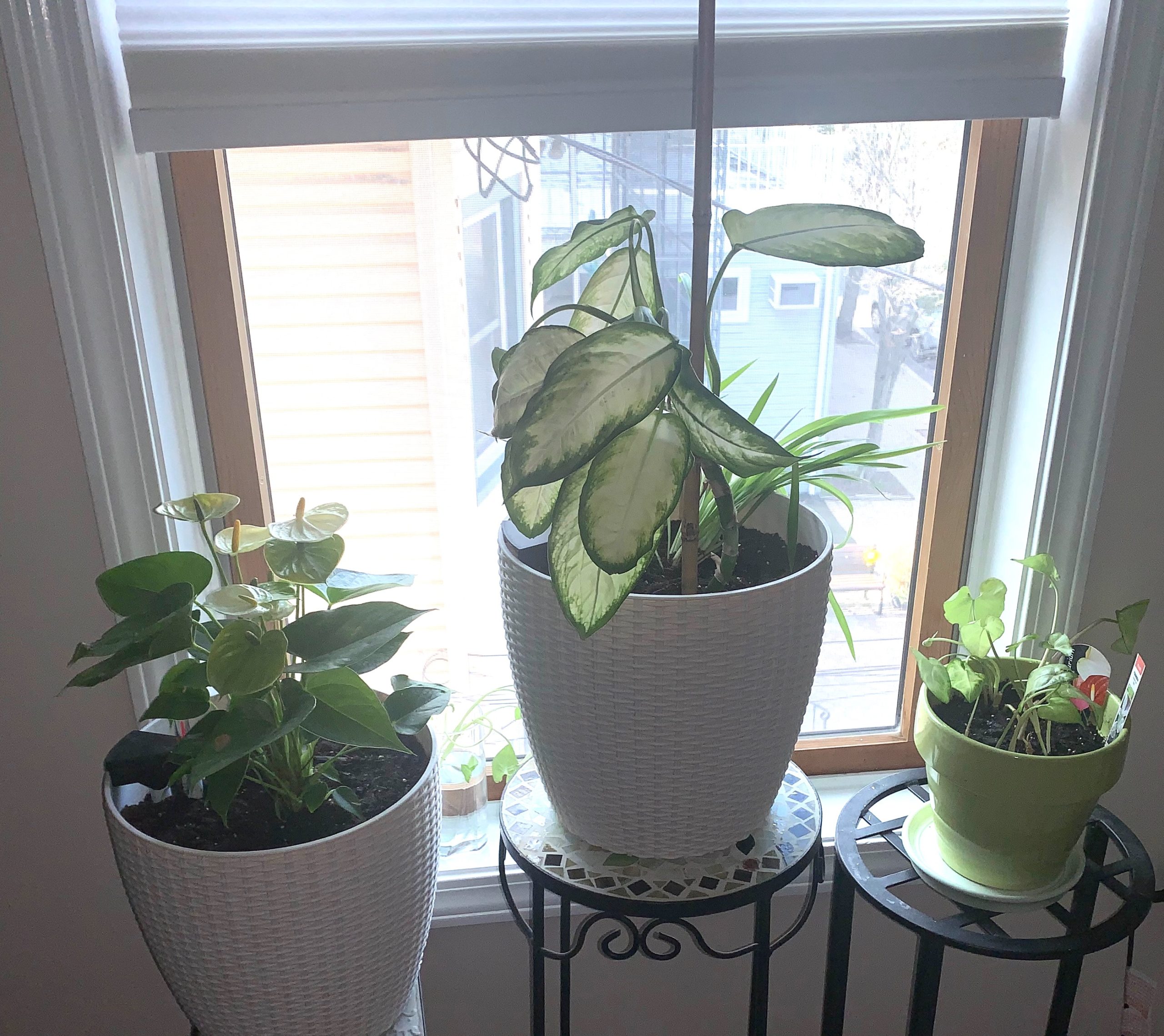
Thanks to my friend Deb, who is a master gardener, I’ve been able to transform my once barren Apartment 3B into a welcoming and green home. Deb expertly helped me choose and repot plants. Now, I proudly care for four self-watering plants and five others. Every Sunday, I spend time watering, misting, rotating, inspecting, and chatting with them. Recently, I’ve started tending to my plants before getting dressed on Sunday mornings. Living alone, I’ve become quite comfortable being a naked gardener.

The Vein of Love Endures Forever!In the time before my beloved wife’s passing, she lovingly tended to the plants in our home with her gifted green thumb. While I had the habit of overwatering, she had the magic touch to make the plants thrive. Our morning routine involved her first shower, allowing her to luxuriate in the warmth while I busied myself in the kitchen, catching up on the latest news. After her shower, she would water the plants in her underwear. I once playfully suggested that she tended to them in the nude, but she disagreed, stating that she couldn’t fathom anyone wanting to see her bare. Secretly, I often found the idea appealing, but I knew I had to tread carefully in expressing such thoughts.

To me, no pun intended, the natural flow of tasks led me to become the naked gardener. After my shower, I dried myself, did the laundry, and took care of other chores in my small home. It has always been the most efficient way to complete my Sunday morning routine.
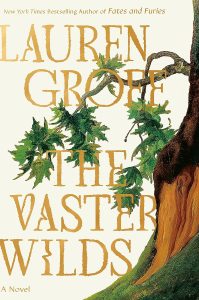
The Vaster Wilds: A NovelI’ve lived for three-quarters of a century, and I’m confident I wouldn’t choose to be a naked gardener if I didn’t live alone. However, as the sole occupant of Apartment 3B, it has become my standard operating system for many months. Living alone may have some rare and unanticipated benefits, but loneliness is not one of them. In her novel “The Vaster Wilds,” Lauren Groff wrote about the complexity of mastering the daily activities of living alone. She focuses on a servant girl who escapes from a colonial settlement in the wilderness. Towards the end of her life, she asks an emotional question, “To be alone and surviving is not the same as being alive.” Hopefully, my gardening sans clothes will end one day, and I can, as Groff writes, find “a hand to hold, a face to love. Humans were never meant to live alone.”
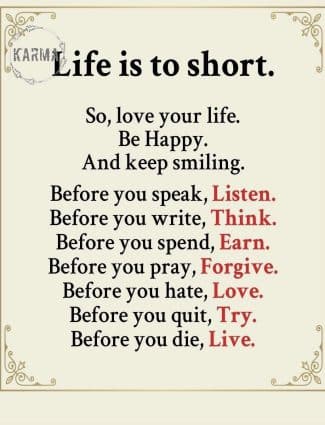
Life is Too Short!

I sometimes yearn for more from life than I have, but I also acknowledge that I have more than others. During my last conversation with my wife, she said she did not want me to be alone. "You are a good man and an excellent husband," she said. "You will be happier with someone than alone." Although I resisted, she was persistent. Now that I am alone, will I be content if I never find someone to love? Yes, but I know that Jan was right, and while I can live alone, I will always be less than entirely happy.

1 comment add your comment

Share your thoughts and ideas

This site uses Akismet to reduce spam. Learn how your comment data is processed.

The Jan Lilien Education Fund!

Flowers Convert Apartment 3B Into a Home
×
Invisible Child

Read: December 2021

Get this book

Invisible Child: Poverty, Survival & Hope in an American City

by Andrea Elliott

Invisible Child: Poverty, Survival & Hope in an American City by Andrea Elliott was a gift from my son Jon. The New York Times selected “Invisible Child” as one of the best books published this year. It is indeed one of the top books on my all-time list.

GoodReads summary provides a good overview,

The riveting, unforgettable story of a girl whose indomitable spirit is tested by homelessness, poverty, and racism in an unequal America—from Pulitzer Prize-winning journalist Andrea Elliott of The New York Times

Invisible Child follows eight dramatic years in the life of Dasani Coates, a child with imagination as soaring as the skyscrapers near her Brooklyn homeless shelter. Born at the turn of a new century, Dasani is named for the bottled water that comes to symbolize Brooklyn’s gentrification and the shared aspirations of a divided city. As Dasani grows up, moving with her tight-knit family from shelter to shelter, this story goes back to trace the passage of Dasani’s ancestors from slavery to the Great Migration north. When Dasani comes of age, New York City’s homeless crisis explodes as the chasm deepens between rich and poor.

In the shadows of this new Gilded Age, Dasani must lead her seven siblings through a thicket of problems: hunger, parental drug addiction, violence, housing instability, segregated schools, and the constant monitoring of the child-protection system. When, at age thirteen, Dasani enrolls at a boarding school in Pennsylvania, her loyalties are tested like never before. As she learns to “code switch” between the culture she left behind and the norms of her new town, Dasani starts to feel like a stranger in both places. Ultimately, she faces an impossible question: What if leaving poverty means abandoning the family you love?

By turns heartbreaking and revelatory, provocative and inspiring, Invisible Child tells an astonishing story about the power of resilience, the importance of family, and the cost of inequality. Based on nearly a decade of reporting, this book vividly illuminates some of the most critical issues in contemporary America through the life of one remarkable girl.

Jan and I were involved and knew that child poverty and homelessness needed repair. In addition, Jan lived on Washington Park across from Ft. Greene Park in 1974-75. We knew the neighborhood where much of the book’s story takes place. 

Before meeting Jan in 1973, I was both a community/tenant organizer and a youth worker. In the latter role, I made weekly hostel trips for eight to ten young boys from East Williamsburg during 1973. The trips were the first the boys had ever been outside of their neighborhood.

Many of them had imaginations like Dasani. They also had her instinct to fight. One of my first tasks was to check for any weapons.

Decades later, when I would see any of them, now adults, they would ask when we were going on another trip. I wish I had met Jan when I made those trips. She would have helped me improve them and document the impact. If I could re-write history, I would have her join me as the second adult on the hostel trips.

After that summer, it was clear my primary skills were as a community/tenant organizer. Over the next few years, my work focused on creating affordable and supportive housing.

Jan and I did meaningful work that made a difference, yet the need for a permanent solution to the crisis remains. The book highlights the crucial role of resilience, the importance of family, and the cost of inequality. As a nation, we cannot undermine those values by breaking up families, impeding resilience, and maintaining racial and economic inequality. 

The current debate in Washington over the Build Back Better legislation needs to focus not on how much we spend but on its impact on children and families

David Brooks, a conservative commentator, has supported these expenditures for what they can do to address this country’s cultural and economic crisis. 

These packages say to the struggling parents and the warehouse workers: I see you. Your work has dignity. You are paving your way. You are at the center of our national vision.

This is how you fortify a compelling moral identity, which is what all of us need if we’re going to be able to look in the mirror with self-respect. This is the cultural transformation that good policy can sometimes achieve. Statecraft is soulcraft.

If you can only read one book this year, this is the one to read. Child poverty, homelessness, and inequality impact all of us. Ending child poverty and homelessness will make us a healthier and more inclusive nation. It is time for a compelling moral call to action!

Subscribe

Contact Us

When you buy a book or product using a link on this page, I receive a commission. Thank you for supporting Sharing Jan’s Love blog.

×
Wait: A Novel

Read: May 2025

Get this book

Wait: A Novel

by Gabriella Burnham

Today, I began reading Wait: A Novel by Gabriella Burnham. This story is told with deep insight, humor, and an unexpected tenderness that will captivate you. The novel revolves around a family struggling against the societal issues that deteriorate their bonds, such as housing instability, immigration policies, and inherited wealth. At its core, it is also a tale about love, humor, and sisterhood, highlighting how two sisters lean on each other amid monumental changes while dreaming of a brighter future.

Elise is out dancing the night before her college graduation when her younger sister, Sophie, calls to inform her that their mother is missing. Elise promptly booked the next flight back to her childhood home on Nantucket Island, which she hadn’t visited in nearly four years.

Upon her return, the sisters are confronted with the harsh reality that their mother was stopped by the police while returning home from work and deported to São Paulo, Brazil. Despite the daunting odds, Elise boldly decides to stay fueled by her love for her mother and takes the same job she had during high school: monitoring endangered birds.

Meanwhile, her college best friend, Sheba—a lively socialite and heir to a famous children’s toy company—reveals that she has inherited her grandfather’s summer mansion on Nantucket. As Elise navigates her new reality, her worlds collide as she faces the emotional and material challenges that have fractured her family and the life in Brazil that her mother has been forced to leave behind.


Gabriella Burnham‘s debut novel, It Is Wood, It Is Stone, was named a best book of the year by Harper’s Bazaar, Marie Claire, Publishers Weekly, and Good Housekeeping. She holds an MFA in creative writing from St. Joseph’s College and has been awarded fellowships to Yaddo and MacDowell, where she was named a Harris Center Fellow. Her nonfiction writing has appeared in Harper’s Bazaar. Burnham and her partner live in Brooklyn, New York, with their rescue cats, Galleta and Franz.


When you purchase a book through one of my links, I earn a small commission that helps support my passion for reading. This contribution allows me to buy even more books to share with you, creating an incredible cycle of discovering great reads together! Your support truly makes a difference!

Enjoy a limited-time offer of 20% off your next book purchase at Bookshop.org!


×
The Swimmers: A Novel

Read: October 2022

Get this book

The Swimmers: A Novel

by Julie Otsuka

The Swimmers: A Novel by Julie Otsuka is a novel about what happens to a group of obsessed recreational swimmers when a crack appears at the bottom of their local pool. This searing, intimate story of mothers and daughters—and the sorrows of implacable loss—is the most commanding and unforgettable work yet from a modern master. I highly recommend The Swimmers: A Novel by Julie Otsuka.

The novel was a page-turner from the first to the last page. It had been on my to-read list for months, and I am happy to start reading The Swimmers: A Novel by Julie Otsuka

Memory loss is a frightening situation for anyone. Ms. Otuska writes powerfully and eloquently about Alice’s loss of her memory. I felt as if it was one of my loved ones.

The Goodreads summary provides an overview,

The swimmers are unknown to one another except through their private routines (slow lane, medium lane, fast lane) and the solace each takes in their morning or afternoon laps. But when a crack appears at the bottom of the pool, they are cast out into an unforgiving world without comfort or relief.

One of these swimmers is Alice, who is slowly losing her memory. The pool was a final stand against the darkness of her encroaching dementia for Alice. Without the fellowship of other swimmers and the routine of her daily laps, she is plunged into dislocation and chaos, swept into memories of her childhood and the Japanese American incarceration camp where she spent the war. Alice’s estranged daughter, reentering her mother’s life too late, witnesses her stark and devastating decline.


The Jan Lilien Education Fund sponsors ongoing sustainability and environmental awareness programs. Gifts made this month; I will match dollar-for-dollar. All donations are tax-deductible.

Subscribe

Contact Us

I receive a commission when you buy a book or product using a link on this page. Thank you for supporting Sharing Jan’sJan’s Love blog.

×
Good and Evil and Other Stories

Read: September 2025

Get this book

Good and Evil and Other Stories

by Samanta Schweblin

Good and Evil and Other Stories” by Samanta Schweblin, translated by Megan McDowell, explores characters who find themselves at a point of no return, captivated by the impending tragedy surrounding them. Vulnerable and deeply human, they become ensnared in moments when the uncanny intrudes upon their lives. Some characters transform, others find themselves isolated, and many oscillate between feelings of guilt and tenderness. All are driven by uncertainty.

Schweblin’s prose employs tension and truth to create a literary universe where the monsters of everyday life come so close that we can almost feel their breath. Her writing evokes both awe and discomfort, placing readers in a state of alarm while transporting them to a world that is both recognizable and strange.


Samanta Schweblin won the 2022 National Book Award for Translated Literature for her story collection Seven Empty Houses. Her debut novel, Fever Dream, was shortlisted for the International Booker Prize, while her book, Little Eyes, and her story collection, Mouthful of Birds, have both been longlisted for the same prize. Her books have been translated into over forty languages, and her stories have appeared in prestigious English publications, including The New Yorker, The Paris Review, Granta, and Harper’s Magazine. Originally from Buenos Aires, Schweblin currently lives in Berlin.

Megan McDowell is the recipient of a 2020 Award in Literature from the American Academy of Arts and Letters and has been short- or longlisted four times for the International Booker Prize. She resides in Santiago, Chile.


Discover your next favorite book and dive into a world of curated, exciting reads by purchasing through my links. You’ll have access to a diverse selection of books that I’ve personally vetted to ensure quality and enjoyment. Additionally, by supporting these selections, you’ll help me continue to provide you with more personalized recommendations. I earn a small commission from your purchase, which allows me to buy and share even more books with you. Your support truly makes a difference!


×
Sun City

Read: February 2025

Get this book

Sun City by Tove Jansson

by Tove Jansson

Today, I began reading “Sun City” by Tove Jansson, translated by Thomas Teal. I found this book mentioned in Maya Chung‘s review in The Atlantic’s Book Briefings, and as an older man, it seemed like the perfect choice for me. In “The Summer Book” and “The True Deceiver,” as well as in her many short stories, Tove Jansson consistently explores the everyday lives of older adults.

She portrays them not as a separate group but as fully fleshed individuals who experience the same jealousies, desires, and joys as any other demographic. It’s no wonder that in her travels through America in the 1970s, she became fascinated with what was then a particularly American institution, the retirement home, where older people lived in their tightly knit worlds.

In Sun City, Jansson depicts these worlds in a group portrait of residents and employees at the Berkeley Arms in St. Petersburg, Florida. As the narrative moves from character to character, the characters move through an America riven by cultural divides, facing the death of its dream. The Berkeley Arms’s newest resident finds a place among the rocking chairs and endless chatter on the veranda while other residents long for past glories, mourning their losses and killing time. Meanwhile, one of their attendants, Bounty Joe, is eagerly awaiting a letter, or even just a postcard, alerting him to the imminent return of Jesus Christ. Nobody’s normal anymore,” the bartender says, “not the old geezers and not the newborn kids.”


When you purchase a book through one of my links, I earn a small commission that helps support my passion for reading. This contribution allows me to buy even more books to share with you, creating an incredible cycle of discovering great reads together! Your support truly makes a difference!


×
One of Us

Read: March 2026

Get this book

One of Us: A Novel

by Elizabeth Day

One of Us,” written by Elizabeth Day, delivers sharp commentary on the hypocrisies of the elite. This engaging ensemble drama explores the dynamics among old friends entangled in dazzling wealth, highlighting the delicate balance between personal ambition and collective responsibility. With its gripping narrative and insightful themes, “One of Us” is a page-turner that combines elements of “The Wedding People” and “Succession.” It’s darkly comic and incisive, yet it also carries an unexpected sense of hope.

When Fliss, the eccentric adult daughter of the powerful Fitzmaurice clan, is found dead on a beach in Bali, what appears to be a tragic accident raises more suspicions than it resolves for those who have long engaged in a web of favors within her family.

Ben, Fliss’s brother, is eager to downplay his sister’s death, as it becomes evident he is the next in line to become Prime Minister. Meanwhile, Martin—Ben’s former best friend—sees Fliss’s memorial as an opportunity to reinsert himself into the Fitzmaurice circle, motivated by a desire for both revenge and acceptance. He also observes that Ben’s wife, Serena, has come to realize in middle age that her privileged life resembles more of a gilded cage. Additionally, Ben and Serena’s daughter, Cosima, has become an environmental activist, opposing everything her parents represent—a change her late aunt would have wholeheartedly supported.

Richard Take, Ben’s disgraced colleague who is determined to make a comeback, adds another layer of complexity to the situation. Lastly, Andrew Jarvis, a figure entwined with the family, raises questions about his role: has he been their loyal supporter, or has he manipulated his influence to keep them all in line?


Elizabeth Day is the author of “The Party” “The Vaster Wilds“, and several other books, and one of the most influential podcasters today. Her show, “How to Fail“, has become a major success, helping authors like Meg Mason and Glennon Doyle reach the UK bestseller list. She splits her time between London and Los Angeles.


Discover your next favorite book and dive into a world of curated, exciting reads by purchasing through my links. You’ll have access to a diverse selection of books that I’ve personally vetted to ensure quality and enjoyment. Supporting these selections not only helps me continue providing you with personalized recommendations but also ensures you get access to meaningful stories that enrich your life. Your support truly makes a difference in helping me share more books and insights with you!


×