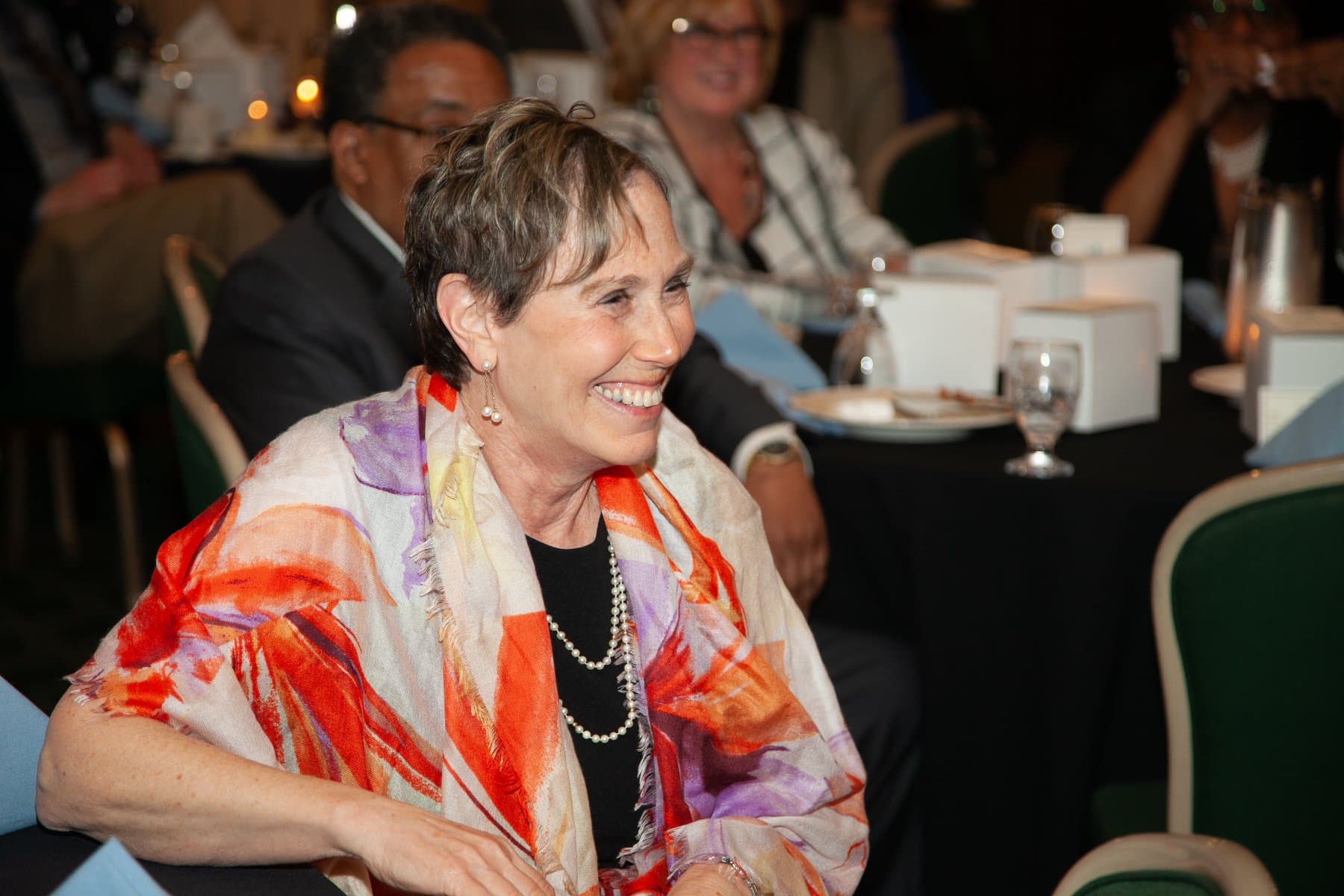


Matzoh Brei for Jan!

Matzoh Brei for Jan!

The Secret Ingredient Makes It the Best!

Estimated reading time: 2 minutes, 5 seconds

“Honey, I’m feeling pretty hungry,” Jan said as I handed her the morning medication.

As her loving husband and caregiver, I asked what she had in mind. “I’m really in the mood for some Matzoh Brei,” she replied.

I wasn’t sure how to make it, so I headed downstairs to find a recipe.

“Wait a minute, you’ve never made Matzoh Brei before and you don’t even like it,” she reminded me. Jan quickly jotted down a recipe for me to follow.

In the kitchen, I followed her instructions step by step, with the only change I put in all my love into the Matzoh Brei. After some time, I went back upstairs and served her breakfast. I said, “Here you go, my love. Do you require anything else?”

Jan was in the middle of a call and shook her head negatively, so I quietly left the room and headed downstairs. As I reached the first floor, I overheard Jan exclaiming, “Wow, this is the best Matzoh Brei I’ve ever had!

I smiled as I continued to our living room, remembering my grandmother’s lesson. Following Jan’s directions, I prepared the Matzoh Brei and added the secret ingredientlove!


I received the news that I hoped never to hear two years ago today.

“I’m sorry to say this, but the only option for Janice is hospice,” Dr. Strair said.

Hearing those words, my stomach flipped, and I felt like it had jumped out of the window. The call had been about planning for Jan’s recovery, but now we were discussing her death.

Today, 24 months later, I still can’t eat Matzoh Brei, but my love for Jan remains strong.

I’ve learned that love never dies, and I take it one day at a time. Even though I miss Jan, I strive to share her passion for life and kindle the light from her effervescent smiles to repair the world.

Love is the elusive yet essential ingredient that makes life complete and fulfilling.


The Jan Lilien Education Fund sponsors ongoing sustainability and environmental awareness programs. Gifts made this month; I will match dollar-for-dollar. All donations are tax-deductible.

Subscribe

Contact Us

I receive a commission when you buy a book or product using a link on this page. Thank you for supporting Sharing Jan’s Love blog.



Home for Hospice

I must focus all my attention on Jan, who will come home for hospice care. Although resources are limited, I will give Jan my utmost love and support.

Share your thoughts and ideas

This site uses Akismet to reduce spam. Learn how your comment data is processed.

The Jan Lilien Education Fund!

Matzoh Brei for Jan!
×
A Gentleman in Moscow

Read: November 2022

Get this book

A Gentleman in Moscow

by Amor Towles

A Gentleman in Moscow by Amor Towles is a transporting novel about a man sentenced by the government to spend the rest of his life inside a luxury hotel. In 1922, a Bolshevik tribunal deemed Count Alexander Rostov an unrepentant aristocrat. His house arrest in the Metropol, a grand hotel across the street from the Kremlin. Rostov, an indomitable man of erudition and wit, has never worked a day and must now live in an attic room while some of the most tumultuous decades in Russian history are unfolding outside the hotel’s doors.

During my grief journey, I have on occasion felt as if I was a prisoner in my apartment, so I found this novel to be one that provided me an alternative to understanding what it would have been like to be under house arrest as Count Rostov was.

A Gentleman in Moscow was a page-turner. The plot captures a unique historical time and how Count Rostov makes the best of a bad situation. I highly recommend this novel.

The Goodreads summary provides an overview.

With his breakout debut novel, Rules of Civility, Amor Towles established himself as a master of absorbing, sophisticated fiction, bringing late 1930s Manhattan to life with a splendid atmosphere and an excellent command of style. As NPR commented, readers and critics were enchanted, “Towles writes with grace and verve about the mores and manners of a society on the cusp of radical change.”

A Gentleman in Moscow immerses us in another elegantly drawn era with the story of Count Alexander Rostov. When, in 1922, he is deemed an unrepentant aristocrat by a Bolshevik tribunal, the count is sentenced to house arrest in the Metropol, a grand hotel across the street from the Kremlin. Rostov, an indomitable man of erudition and wit, has never worked a day. He must now live in an attic room while some of the most tumultuous decades in Russian history are unfolding outside the hotel’s doors. Unexpectedly, his reduced circumstances provide him a doorway into a much larger world of emotional discovery.

Brimming with humor, a glittering cast of characters, and one beautifully rendered scene after another, this singular novel casts a spell as it relates to the count’s endeavor to gain a deeper understanding of what it means to be a man of purpose.


The Jan Lilien Education Fund sponsors ongoing sustainability and environmental awareness programs. Gifts made this month; I will match dollar-for-dollar. All donations are tax-deductible.

Subscribe

Contact Us

I receive a commission when you buy a book or product using a link on this page. Thank you for supporting Sharing Jan’s Love blog.

×
The Spoiled Heart: A Novel

Read: May 2024

Get this book

The Spoiled Heart: A Novel

by Sunjeev Sahota

Today, I started reading The Spoiled Heart: A Novel by Sunjeev Sahota. Nayan Olak has been seeing Helen Fletcher around town. She has returned to live in the run-down house at the end of the lane with her teenage son. Though she seems guarded, Nayan cannot help but be drawn to her. He has not risked love since losing his young family in a terrible accident twenty years ago.

After Nayan’s tragedy, his labor union, a pillar of his community, became his refuge and purpose. It was his way of striving for a better and fairer world. Now, Nayan wants to become the leader of the union, a decision that sets the stage for a gripping conflict. His opponent, Megha, a newcomer, is a more formidable challenger than he could have anticipated. Nayan is now in a battle that could redefine his life and community. The differences between Nayan and Megha escalate and threaten the ideals he holds dear. He finds solace in his growing bond with Helen. Unbeknownst to him, their connection is not just a product of their present circumstances but a thread that weaves through their lives, holding secrets that could shatter them. The suspense builds, leaving the readers on the edge of their seats and eager to uncover the truth.

In one sense, The Spoiled Heart is a tragedy in the classic mold, tracing one man’s seemingly inevitable fall. However, it is also an explosively contemporary story of how a few words or a single action, which may appear careless to one person, can be charged for another, triggering a cascade of unimaginable consequences. It is a blazing achievement from one of Britain’s foremost living writers, a vivid and multilayered exploration of the mysteries of the heart, how community is forged and broken, and the shattering impact of secrets and assumptions alike.

×
Invisible Child

Read: December 2021

Get this book

Invisible Child: Poverty, Survival & Hope in an American City

by Andrea Elliott

Invisible Child: Poverty, Survival & Hope in an American City by Andrea Elliott was a gift from my son Jon. The New York Times selected “Invisible Child” as one of the best books published this year. It is indeed one of the top books on my all-time list.

GoodReads summary provides a good overview,

The riveting, unforgettable story of a girl whose indomitable spirit is tested by homelessness, poverty, and racism in an unequal America—from Pulitzer Prize-winning journalist Andrea Elliott of The New York Times

Invisible Child follows eight dramatic years in the life of Dasani Coates, a child with imagination as soaring as the skyscrapers near her Brooklyn homeless shelter. Born at the turn of a new century, Dasani is named for the bottled water that comes to symbolize Brooklyn’s gentrification and the shared aspirations of a divided city. As Dasani grows up, moving with her tight-knit family from shelter to shelter, this story goes back to trace the passage of Dasani’s ancestors from slavery to the Great Migration north. When Dasani comes of age, New York City’s homeless crisis explodes as the chasm deepens between rich and poor.

In the shadows of this new Gilded Age, Dasani must lead her seven siblings through a thicket of problems: hunger, parental drug addiction, violence, housing instability, segregated schools, and the constant monitoring of the child-protection system. When, at age thirteen, Dasani enrolls at a boarding school in Pennsylvania, her loyalties are tested like never before. As she learns to “code switch” between the culture she left behind and the norms of her new town, Dasani starts to feel like a stranger in both places. Ultimately, she faces an impossible question: What if leaving poverty means abandoning the family you love?

By turns heartbreaking and revelatory, provocative and inspiring, Invisible Child tells an astonishing story about the power of resilience, the importance of family, and the cost of inequality. Based on nearly a decade of reporting, this book vividly illuminates some of the most critical issues in contemporary America through the life of one remarkable girl.

Jan and I were involved and knew that child poverty and homelessness needed repair. In addition, Jan lived on Washington Park across from Ft. Greene Park in 1974-75. We knew the neighborhood where much of the book’s story takes place. 

Before meeting Jan in 1973, I was both a community/tenant organizer and a youth worker. In the latter role, I made weekly hostel trips for eight to ten young boys from East Williamsburg during 1973. The trips were the first the boys had ever been outside of their neighborhood.

Many of them had imaginations like Dasani. They also had her instinct to fight. One of my first tasks was to check for any weapons.

Decades later, when I would see any of them, now adults, they would ask when we were going on another trip. I wish I had met Jan when I made those trips. She would have helped me improve them and document the impact. If I could re-write history, I would have her join me as the second adult on the hostel trips.

After that summer, it was clear my primary skills were as a community/tenant organizer. Over the next few years, my work focused on creating affordable and supportive housing.

Jan and I did meaningful work that made a difference, yet the need for a permanent solution to the crisis remains. The book highlights the crucial role of resilience, the importance of family, and the cost of inequality. As a nation, we cannot undermine those values by breaking up families, impeding resilience, and maintaining racial and economic inequality. 

The current debate in Washington over the Build Back Better legislation needs to focus not on how much we spend but on its impact on children and families

David Brooks, a conservative commentator, has supported these expenditures for what they can do to address this country’s cultural and economic crisis. 

These packages say to the struggling parents and the warehouse workers: I see you. Your work has dignity. You are paving your way. You are at the center of our national vision.

This is how you fortify a compelling moral identity, which is what all of us need if we’re going to be able to look in the mirror with self-respect. This is the cultural transformation that good policy can sometimes achieve. Statecraft is soulcraft.

If you can only read one book this year, this is the one to read. Child poverty, homelessness, and inequality impact all of us. Ending child poverty and homelessness will make us a healthier and more inclusive nation. It is time for a compelling moral call to action!

Subscribe

Contact Us

When you buy a book or product using a link on this page, I receive a commission. Thank you for supporting Sharing Jan’s Love blog.

×
A House for Alice: A Novel

Read: September 2023

Get this book

A House for Alice: A Novel

by Diana Evans

I just started reading A House for Alice: A Novel by Diana Evans. The story is set against a complicated political backdrop but is filled with hope, humor, and humanity. A House for Alice explores the scars of grief and betrayal across generations and reveals the secrets we keep from our loved ones.

The novel opens with two tragedies that occur in London. The first is the Grenfell Tower fire, which took many lives. The second is the death of Cornelius Winston Pitt, a family patriarch who dies alone. A House for Alice is a beautiful and poignant story about a family of women shaken by loss and searching for closure.

The family matriarch, Alice, has lived in England for fifty years but longs to spend her remaining years in her homeland, Nigeria. Her three daughters are divided on the matter. The youngest daughter, Melissa, is also struggling with the aftermath of her failed relationship. The family’s foundational pillars of trust, love, and cultural identity begin to weaken as they navigate these difficult times.


The Jan Lilien Education Fund sponsors ongoing sustainability and environmental awareness programs. Gifts made this month; I will match dollar-for-dollar. All donations are tax-deductible.

Subscribe

Contact Us

I receive a commission when you buy a book or product using a link on this page. Thank you for supporting Sharing Jan’s Love blog.


×
Three Summers

Read: February 2025

Get this book

Three Summers: A Novel

by Margarita Liberaki

Today, I began reading Margarita Liberaki‘s Three Summers, translated by Karen Van Dyck. This edition features a detailed introduction by Ms. Van Dyck, in which she shares her experiences meeting Ms. Liberaki and collaborating with her on the translation. The original novel, written in Greek, was titled The Straw Hats, but Ms. Van Dyck felt that this title would not resonate with foreign readers similarly.

Three Summers is the story of three sisters who grew up in the countryside near Athens before the outbreak of the Second World War. The sisters live in a large, old house surrounded by a beautiful garden. The oldest sister, Maria, is adventurous and eager to settle down and start her own family. The middle sister, Infanta, is gorgeous but emotionally distant. Katerina, the narrator, and the youngest sister is dreamy and rebellious.

Throughout three summers, the sisters share and keep secrets, fall in and out of love, and try to understand their parents and other adult figures. They also observe the peculiar behaviors of friends and neighbors while worrying about and discovering their identities. Karen Van Dyck’s translation beautifully captures the light and warmth of this modern Greek classic.

Margarita Liberaki (1919-2001) was born in Athens and raised by her grandparents, who owned the Fexis bookstore and publishing house. In addition to her novel Three Summers, she authored The Other Alexander (1950) and The Mystery (1976). She also wrote several plays, including Candaules’ Wife (1955) and The Danaïds (1956), part of a cycle she called Mythical Theater. Furthermore, she contributed screenplays, such as Jules Dassin’s Phaedra (1962) and Diaspora (1999), which focused on Greek intellectuals in exile in Paris during the junta. Her novel Three Summers is now a standard part of public education in Greece and Cyprus and was adapted into a television miniseries in 1995.

Karen Van Dyck is the Kimon A. Doukas Professor of Modern Greek Literature at Columbia University. Her research focuses on modern Greek literature, diaspora literature, gender studies, and translation. She has edited or co-edited several poetry anthologies, including A Century of Greek Poetry (2004), The Greek Poets: Homer to the Present (2010), and Austerity Measures: The New Greek Poetry (2017) for NYRB Poets. Additionally, her translations have appeared in Brooklyn Rail, Asymptote, and The Baffler.


When you purchase a book through one of my links, I earn a small commission that helps support my passion for reading. This contribution allows me to buy even more books to share with you, creating an incredible cycle of discovering great reads together! Your support truly makes a difference!


×
Fourteen Days: A Collaborative Novel

Read: February 2024

Get this book

Fourteen Days: A Collaborative Novel

by Authors Guild

I started reading Fourteen Days: A Collaborative Novel today. It is set in a Lower East Side tenement during the early days of the COVID-19 lockdowns. Fourteen Days is a unique collaborative novel from the Authors Guild with a twist. A different, prominent literary voice has secretly written each character in this diverse cast of New York neighbors. These voices range from Margaret Atwood and Celeste Ng to Tommy Orange and John Grisham.

The novel’s story begins one week into the COVID-19 shutdown, where tenants of a Lower East Side apartment building in Manhattan have gathered on the rooftop to tell stories. As the nights pass, more and more neighbors join in, bringing chairs, milk crates, and overturned pails. Gradually, the tenants, some of whom have barely spoken to each other, become neighbors.

In this Decameron-like serial novel, general editors Margaret Atwood and Douglas Preston and a star-studded list of contributors create a beautiful ode to those trapped when the pandemic hit. Fourteen Days is a dazzling, heartwarming, and ultimately surprising narrative that reveals how some communities managed to become stronger despite the loss and suffering brought about by the pandemic.

Includes writing from: Charlie Jane Anders, Margaret Atwood, Joseph Cassara, Jennine Capó Crucet, Angie Cruz, Pat Cummings, Sylvia Day, Emma Donoghue, Dave Eggers, Diana Gabaldon, Tess Gerritsen, John Grisham, Maria Hinojosa, Mira Jacob, Erica Jong, CJ Lyons, Celeste Ng, Tommy Orange, Mary Pope Osborne, Douglas Preston, Alice Randall, Ishmael Reed, Roxana Robinson, Nelly Rosario, James Shapiro, Hampton Sides, R.L. Stine, Nafissa Thompson-Spires, Monique Truong, Scott Turow, Luis Alberto Urrea, Rachel Vail, Weike Wang, Caroline Randall Williams, De’Shawn Charles Winslow, and Meg Wolitzer!

×