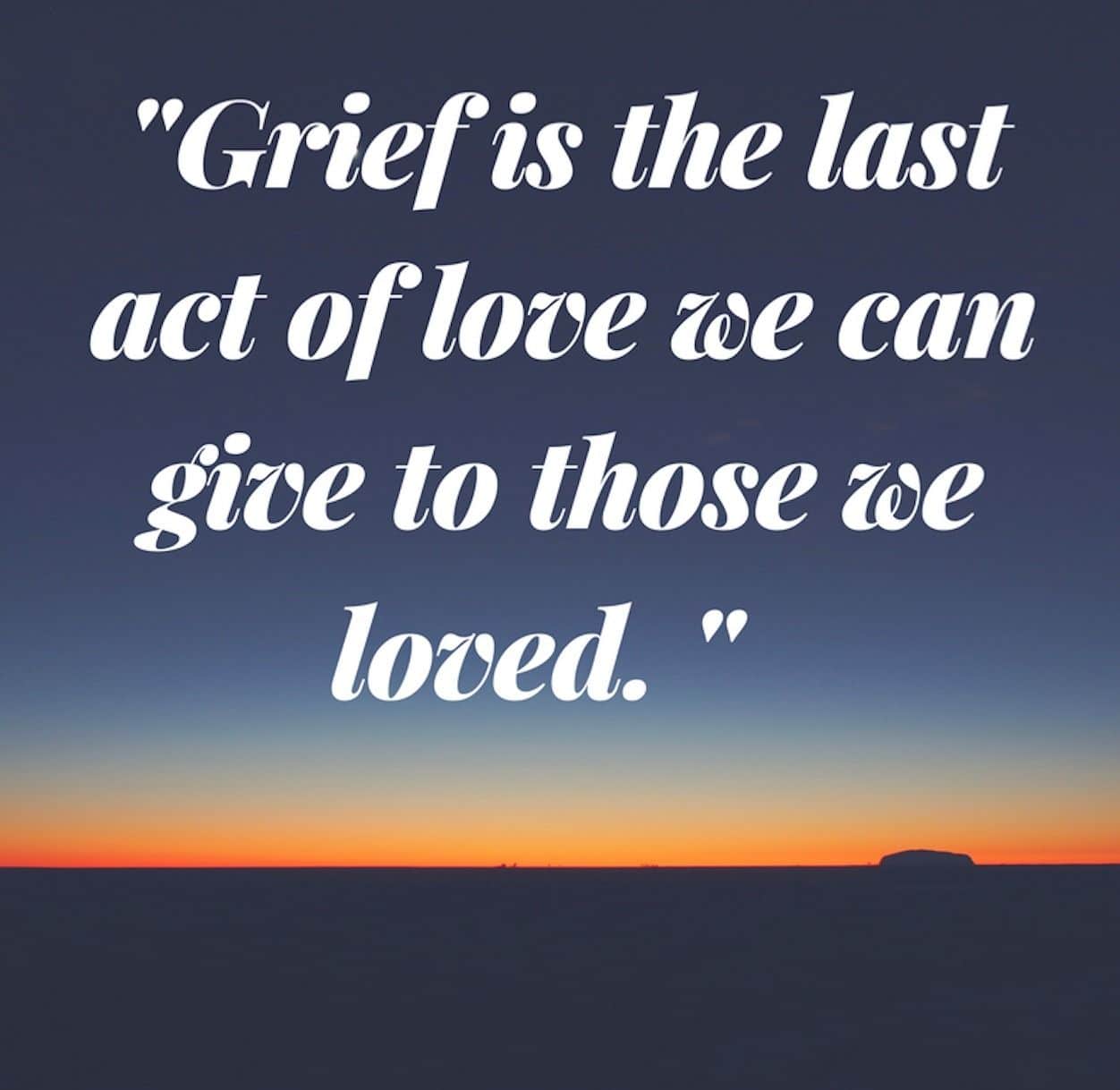

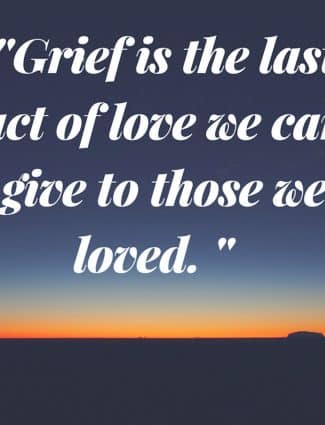
Grief is Love Without Guardrails

Grief is Love Without Guardrails

My Love for Jan Grows Stronger Every Day

Estimated reading time: 2 minutes, 21 seconds

When I met Jan, our love transformed us, and our souls merged.

We lived without boundaries and lived life fully as one untied soul.

She was the light that ignited my soul and made me a better person. I had never felt as alive or in love as I did with Jan.

Even true love, over time, establishes parameters as our lives become more complicated. Work and family imposed constraints, and our relationship made minor, mid-course adjustments.

Our love was strong enough that nothing diminished our joy; it simply placed it in a channel where it could bloom without the risk of being dimmed by a world that struggled to accept a love so strong.

When I became Jan’s caregiver, an act of selfless love, we became like a nation of two, entirely devoted to each other and committed to healing Jan’s cancer and our unified souls.

When Jan was in hospice in Apartment 3D, I began to pre-grieve while holding her hand.

In time, with the help of family, friends, widows, and Rabbi Renee, I learned that caregiving and grief, despite their pain, is love in its purest form.

Shabbat services at Temple Sha’arey Shalom helped me learn that grief is also a great teacher,

Thus, even when they are gone, the departed are with us, moving us to live as, in their higher moments, they themselves wished to live. We remember them now; they live in our hearts; they are an abiding blessing.

Today, I wake up in a world in which time, as Margaret Atwood writes in Old Babes in the Woods, is non-linear,

Time has ceased to be linear, with life events and memories in a chronological row, like beads on a string. It’s the strangest feeling, or experience, or rearrangement. I’m not sure I can explain it to you.

The first time that time folded back upon itself, I felt dizzy, as if I were losing not only Jan but my mind.

Once the dizziness ended, I realized there were no guardrails like when we first met, and our love could blossom forever like Jan’s Memorial Garden!

Knowing that love is unbounded gives me the strength to share her love freely.

Love never dies; people do. Jan’s love transformed me almost five decades ago, and its power continues unabated!

Hallelujah!


The Jan Lilien Education Fund sponsors ongoing sustainability and environmental awareness programs. Gifts made this month; I will match dollar-for-dollar. All donations are tax-deductible.

Subscribe

Contact Us

I receive a commission when you buy a book or product using a link on this page. Thank you for supporting Sharing Jan’s Love blog.
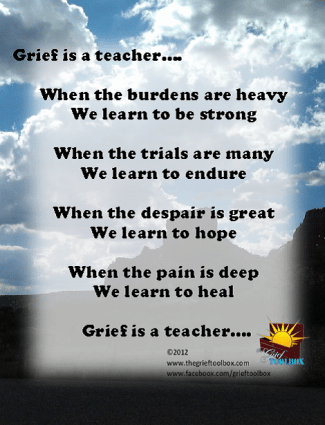


Grief is a Great Teacher

As I pray every week at Temple Sha'arey Shalom, when we remember those we lost in this passage, one of our readings is: "Grief is a great teacher when it sends us back to serve and bless the living. We learn how to counsel and comfort those who, like ourselves, are bowed with sorrow. We learn when to keep silent in their presence and when a word will assure them of our love and concern."

1 comment add your comment

Share your thoughts and ideas

This site uses Akismet to reduce spam. Learn how your comment data is processed.

The Jan Lilien Education Fund!

Grief is Love Without Guardrails
×
Victory City: A Novel

Read: February 2023

Get this book

Victory City: A Novel

by Salman Rushdie

Victory City: A Novel by Salman Rushdie is an epic tale of a woman who breathes a fantastical empire into existence, only to be consumed by it over the centuries from the transcendent imagination of Booker Prize-winning, internationally bestselling author Salman Rushdie. It is well written and was a page-turner from page one to the end. I highly recommend this novel and encourage everyone to read it.

Brilliantly styled as a translation of an ancient epic, this is a saga of love, adventure, and myth that is a testament to storytelling’s power. After witnessing her mother’s death, the grief-stricken Pampa Kampana becomes a vessel for the goddess Parvati, who begins to speak out of the girl’s mouth. I was hooked when Pampa Kampana provided the seeds that created Victory City out of thin air.

David Remnick’s interview with Salman Rushdie in The New Yorker provided background I would have missed.

“The first kings of Vijayanagara announced, quite seriously, that they were descended from the moon,” Rushdie said. “So when these kings, Harihara and Bukka, announce that they’re members of the lunar dynasty, they’re associating themselves with those great heroes. It’s like saying, ‘I’ve descended from the same family as Achilles.’ Or Agamemnon. And so I thought, Well, if you could say that, I can say anything.”

Above all, the book is buoyed by the character of Pampa Kampana, who, Rushdie says, “just showed up in my head” and gave him his story, his sense of direction. Rushdie’s pleasure in writing the novel was in “world building” and, at the same time, writing about a character building that world: “It’s me doing it, but it’s also her doing it.” The pleasure is infectious. “Victory City” is an immensely enjoyable novel. It is also an affirmation. At the end, with the great city in ruins, what is left is not the storyteller but her words:

I, Pampa Kampana, am the author of this book.
I have lived to see an empire rise and fall.
How are they remembered now, these kings, these queens?
They exist now only in words . . .
I myself am nothing now. All that remains is this city of words.
Words are the only victors.

The Goodreads summary provides a brief overview,

In the wake of an insignificant battle between two long-forgotten kingdoms in fourteenth-century southern India, a nine-year-old girl has a divine encounter that will change the course of history. After witnessing her mother’s death, the grief-stricken Pampa Kampana becomes a vessel for the goddess Parvati, who begins to speak out of the girl’s mouth. Granting her powers beyond Pampa Kampana’s comprehension, the goddess tells her that she will be instrumental in the rise of a great city called Bisnaga–literally victory city–the wonder of the world.

Over the next two hundred and fifty years, Pampa Kampana’s life becomes deeply interwoven with Bisnaga’s, from its literal sowing out of a bag of magic seeds to its tragic ruination in the most human of ways: the hubris of those in power. Whispering Bisnaga and its citizens into existence, Pampa Kampana attempts to make good on Parvati’s task: giving women equal agency in a patriarchal world. But all stories have a way of getting away from their creator, and Bisnaga is no exception. As years pass, rulers come and go, battles are won and lost, and allegiances shift, the very fabric of Bisnaga becomes an ever more complex tapestry–with Pampa Kampana at its center.


The Jan Lilien Education Fund sponsors ongoing sustainability and environmental awareness programs. Gifts made this month; I will match dollar-for-dollar. All donations are tax-deductible.

Subscribe

Contact Us

I receive a commission when you buy a book or product using a link on this page. Thank you for supporting Sharing Jan’s Love blog.


×
Ruth

Read: August 2025

Get this book

Ruth: A Novel

by Kate Riley

Ruth” by Kate Riley is a captivating and thought-provoking exploration of a woman’s journey through the complexities of life within a tightly-knit and devout community. The narrative intricately weaves together the nuances of faith, tradition, and individual desire, encouraging readers to confront their own deeply held beliefs about the nature of fulfillment and purpose.

Ruth was raised in a snow globe of Christian communism, a world without private property, television, or tolerance for idle questions. Every morning, she braids her hair and wears the same costume, sings the same breakfast song in a family room identical to every other family room in the community; every one of these moments is meant to be a prayer, but to Ruth, they remain puzzles.

Her life is seen in glimpses through childhood, marriage, and motherhood, as she tries to manage her own perilous curiosity in a community built on holy mystery. Is she happy? Is this happiness?


Kate Riley was raised in New York City, and this book is her final work.


When you purchase a book through one of my links, I earn a small commission that helps support my passion for reading. This contribution allows me to buy even more books to share with you, creating an incredible cycle of discovering great reads together! Your support truly makes a difference!

Enjoy a limited-time offer of 20% off your next book purchase at Bookshop.org!


×
Happiness Falls: A Novel

Read: September 2023

Get this book

Happiness Falls: A Novel

by Angie Kim

I highly recommend reading Happiness Falls, a book authored by Angie Kim. The story is about a family’s search for their missing father, which leads them to question their beliefs and relationships. The award-winning author of Miracle Creek writes this thrilling and emotionally profound book.

We didn’t call the police right away.” These are the first words of an extraordinary novel about a biracial Korean-American family in Virginia whose lives are upended when their beloved father and husband go missing.

Mia, the irreverent, hyper-analytical twenty-year-old daughter, has an explanation for everything—which is why she isn’t initially concerned when her father and younger brother Eugene don’t return from a walk in a nearby park. They must have lost their phone and or stopped for an errand somewhere. But by the time Mia’s brother runs through the front door bloody and alone, it becomes clear that the father in this tight-knit family is missing, and the only witness is Eugene, who has the rare genetic condition Angelman syndrome and cannot speak.

Happiness Falls is a gripping investigation that centers around a father’s disappearance and the intricate dynamics of his family. As the clock ticks, the family’s deepest secrets come to light, raising questions about love, communication, and the human experience. This novel is a thrilling blend of mystery, drama, and philosophical exploration, showcasing Angie Kim’s remarkable storytelling skills that garnered her numerous accolades for her debut novel, Miracle Creek. Through the family’s journey, Kim offers a fresh perspective on the missing person story, creating a memorable tale of a family that goes to great lengths to understand each other.


The Jan Lilien Education Fund sponsors ongoing sustainability and environmental awareness programs. Gifts made this month; I will match dollar-for-dollar. All donations are tax-deductible.

Subscribe

Contact Us

I receive a commission when you buy a book or product using a link on this page. Thank you for supporting Sharing Jan’s Love blog.


×
When We Cease to Understand the World

Read: September 2024

Get this book

When We Cease to Understand the World

by Benjamín Labatut

Today, I began reading When We Cease to Understand the World by Benjamín Labatut, translated by Adrian Nathan West. This book, listed on The New York Times 100 Best Books of the 21st Century, promises to be thought-provoking as it delves into the intricate connections between scientific and mathematical discovery, madness, and destruction.

In a world where scientific advancements often involve ethical dilemmas and societal implications, this book offers a unique perspective on the lives of scientists who have shaped our understanding of the world. Fritz Haber, Alexander Grothendieck, Werner Heisenberg, and Erwin Schrödinger are some of the luminaries whose troubled lives Benjamín Labatut deeply explores in his fictional examination. Labatut shows how these scientists and thinkers grappled with profound questions of existence, experiencing strokes of unparalleled genius, alienating friends and lovers, and descending into isolation and insanity. Their discoveries, some of which significantly improved human life, while others led to chaos and unimaginable suffering, continue to shape our world.

With a breakneck pace and a wealth of disturbing detail, Labatut uses fiction’s imaginative resources to tell the stories of the scientists and mathematicians who expanded our notions of the possible.

×
A Mercy

Read: November 2024

Get this book

A Mercy a Novel

by Toni Morrison

Today, I started reading “A Mercy” by Toni Morrison. The acclaimed Nobel Prize winner explores the complexities of slavery in this novel. Like “Beloved,” it tells the poignant story of a mother and her daughter—a mother who abandons her child to protect her and a daughter who struggles with that abandonment. “A Mercy” is also recognized as one of The New York Times’s 100 Best Books of the 21st Century.

In the 1680s, a tumultuous period in the Americas, the slave trade is still in its infancy. Jacob Vaark, an Anglo-Dutch trader and adventurer, navigates this harsh landscape with a small holding in the North. Despite his distaste for dealing in “flesh,” he takes a small slave girl in part payment for a bad debt from a plantation owner in Catholic Maryland. She is Florens, a girl who can read and write and might be helpful on his farm. Rejected by her mother, Florens embarks on a journey for love, first seeking it from Lina, an older servant woman at her new master’s house, and later from the handsome blacksmith, an African, never enslaved, who comes riding into their lives.

×
The Catch

Read: June 2025

Get this book

The Catch: A Novel

by Yrsa Daley-Ward

In “The Catch,” her captivating debut novel, Yrsa Daley-Ward creates a vibrant multiverse that delves into the complexities of daughterhood and mother-want. She explores the sacrifices women often make in their pursuit of self-actualization. The result is a remarkable novel that boldly poses the question: “How can it ever be a crime to choose yourself?”

Twin sisters Clara and Dempsey have always struggled to connect, their familial bond severed after their mother vanished into the Thames. As infants, they were adopted by different families: Clara went to live with a successful, upper-class couple, while a distant and unaffectionate city councilor took in Dempsey. As adults, the sisters have settled into a comfortable estrangement until Clara spots a woman on the streets of London who looks exactly like their mother. The twist? This version of Serene appears ageless and has lived a childless life — the very life she might have had if the girls had never been born.

As with most things, Clara and Dempsey cannot agree on the strange appearance of this woman. Clara, a celebrity author with a penchant for excessive drinking and one-night stands, is eager to welcome the confident and temperamental Serene into her home. In contrast, reclusive Dempsey, who makes a modest living doing menial data entry work from her apartment, is suspicious of the entire situation, believing it to be a cunning scheme by a con woman.

As the sisters clash over this stranger who increasingly intrudes into their lives, they hurtle toward a confrontation that threatens their very existence, ultimately forcing them to face their shared past together.


Yrsa Daley-Ward is a poet, writer, and actress. She is the author of The Howbone, and The Terrible, for which she won the PEN Ackerley Prize. She lives in Los Angeles.


When you purchase a book through one of my links, I earn a small commission that helps support my passion for reading. This contribution allows me to buy even more books to share with you, creating an incredible cycle of discovering great reads together! Your support truly makes a difference!

Enjoy a limited-time offer of 20% off your next book purchase at Bookshop.org!


×