Jan the Gardener

Jan’s Love Was Transformative

Estimated reading time: 0 minutes, 39 seconds

Celebrate JanThe love that Jan and I had was extraordinary. It was transformative and spiritual because we shared a portion of each other’s souls.

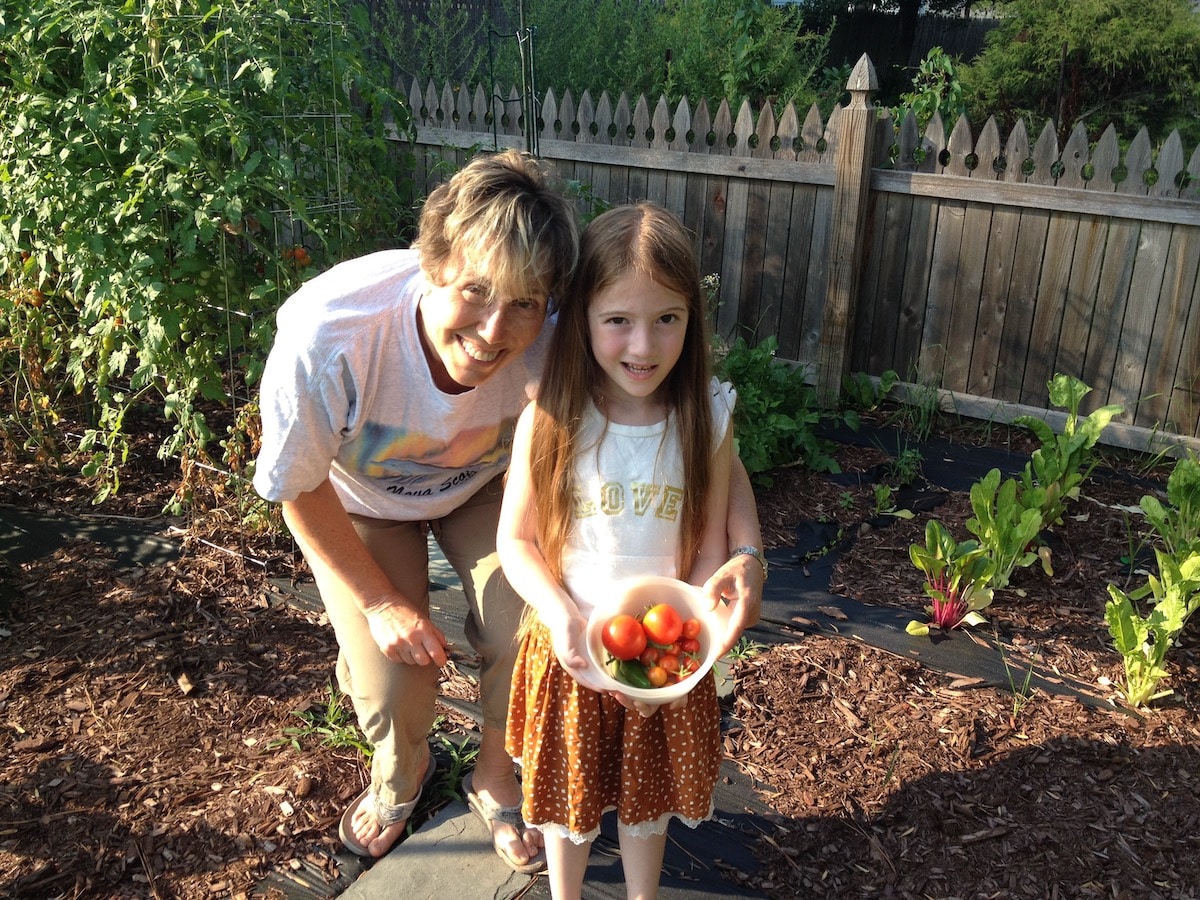
I am so grateful for Jan’s love; it has made me better. Even though Jan is no longer with me, her love continues to help me grow and heal.

While I still feel the pain of her absence, I can share her love with others and positively impact their lives.

The love Jan and I shared will always be a part of me and will never die.

Subscribe

Contact Us

I receive a commission when you buy a book or product using a link on this page. Thank you for supporting Sharing Jan’s Love blog.

Share your thoughts and ideas

This site uses Akismet to reduce spam. Learn how your comment data is processed.

The Jan Lilien Education Fund!

Jan the Gardener
×
Black River

Read: November 2024

Get this book

Black River: A Novel

by Nilanjana S. Roy

Today, I dove into the captivating pages of “Black River” by Nilanjana S. Roy, a standout selection from The New York Times’ 100 Notable Books of 2024. This compelling debut novel unfolds against contemporary India, a country grappling with rising religious intolerance. Roy’s storytelling is nothing short of mesmerizing, intricately weaving a narrative that vividly reflects the nation’s complexities and contradictions.

Teetapur, an unassuming village just a few hours outside bustling Delhi, is known for nothing—until the discovery of an 8-year-old girl named Munia, found dead and hanging from the branch of a Jamun tree. In this predominantly Hindu village, suspicion quickly falls on Mansoor, an itinerant Muslim man. The tension ignites like wildfire, intensified by the underlying religious discord.

The responsibility for uncovering the elusive truth—and preventing the lynching of the prime suspect—falls on the weary shoulders of Sub-Inspector Ombir Singh. With only one other officer under his command and a single working revolver between them, can he bring justice to a grieving father and an angry village? Or will Teetapur demand vengeance instead?

Black River” offers readers a gripping mystery and a sweeping analysis of the nation’s state, serving as a searing critique of modern India.


When you purchase a book through one of my links, I earn a small commission that helps support my passion for reading. This contribution allows me to buy even more books to share with you, creating an incredible cycle of discovering great reads together! Your support truly makes a difference!


×
Lincoln in the Bardo: A Novel

Read: August 2024

Get this book

Lincoln in the Bardo: A Novel

by George Saunders

My journey with “Lincoln in the Bardo: A Novel” by George Saunders began with recognition as one of The New York Times’ 100 Best Books of the Century. As I turned its pages, I was immersed in its profound exploration of living and loving in the face of inevitable endings. The book, which struck a personal chord with me after a loss, is a testament to Saunders’ storytelling prowess and a must-read for those interested in Abraham Lincoln.

February 1862. The Civil War is less than one year old. The fighting has begun in earnest, and the nation has already realized it is in for a long, bloody struggle. Meanwhile, President Lincoln’s beloved eleven-year-old son, Willie, lies upstairs in the White House, gravely ill. In a matter of days, despite predictions of a recovery, Willie dies and is laid to rest in a Georgetown cemetery. “My poor boy, he was too good for this earth,” the president says at the time. “God has called him home.” Newspapers report that a grief-stricken Lincoln returns, alone, to the crypt several times to hold his boy’s body.

From a seed of historical truth, George Saunders weaves an unforgettable tale of familial love and loss that transcends its realistic, historical framework. The story takes a daring leap into a realm that is hilarious and terrifyingly supernatural. Willie Lincoln’s journey in a strange purgatory, where ghosts mingle, gripe, commiserate, quarrel, and enact bizarre acts of penance, is a testament to Saunders’ imaginative prowess. The monumental struggle over young Willie’s soul in this transitional state, known as the bardo in the Tibetan tradition, is a narrative that will leave you spellbound.

Lincoln in the Bardo is an astonishing feat of imagination and a bold step forward from one of his generation’s most important and influential writers. Formally daring, generous in spirit, and deeply concerned with matters of the heart, it is a testament to fiction’s ability to speak honestly and powerfully about the things that matter to us. Saunders has invented a thrilling new form that deploys a kaleidoscopic, theatrical panorama of voices to ask a timeless, profound question: How do we live and love when we know everything we love must end?


George Saunders is the author of thirteen books, including the novel Lincoln in the Bardo, which won the Booker Prize, and five collections of stories, including Tenth of December, which was a finalist for the National Book Award, and the recent collection Liberation Day (selected by former President Obama as one of his ten favorite books of 2022).

Three of Saunders’s books—Pastoralia, Tenth of December, and Lincoln in the Bardo—were chosen for The New York Times’s list of the 100 Best Books of the 21st Century. Saunders hosts the popular Story Club on Substack, which grew out of his book, A Swim in a Pond in the Rain. In 2013, he was named one of Time’s 100 Most Influential People. He teaches in the creative writing program at Syracuse University.


Discover your next favorite book and dive into a world of curated, exciting reads by purchasing through my links. You’ll have access to a diverse selection of books that I’ve personally vetted to ensure quality and enjoyment. Additionally, by supporting these selections, you’ll help me continue to provide you with more personalized recommendations. I earn a small commission from your purchase, which allows me to buy and share even more books with you. Your support truly makes a difference!


×
Death Takes Me

Read: December 2025

Get this book

Death Takes Me: A Novel

by Cristina Rivera Garza

Originally written in Spanish by Cristina Rivera Garza, Death Takes Me is a thrilling masterpiece of literary fiction that turns the traditional crime narrative of gendered violence on its head. As sharp as the cuts on the bodies of the victims, the story unfolds with the dreamlike logic of a surreal experience, transitioning from the police station to a professor’s classroom and through the intricate worlds of Latin American poetry and art. It invites readers to explore the unstable terrains of desire and sexuality.

A city is always a cemetery.

In the narrative, a professor named Cristina Rivera Garza stumbles upon the corpse of a mutilated man in a dark alley and promptly reports it to the police. When shown a crime scene photo, she discovers a stark warning written in tiny print with coral nail polish on the brick wall beside the body: “Beware of me, my love / beware of the silent woman in the desert.”

The professor becomes the primary informant in the case, which is led by a detective who is newly obsessed with poetry and haunted by a list of past failures. But what has the professor truly witnessed? As more bodies of castrated men alongside lines of verse, the detective attempts to decipher the meaning of the poems in hopes of stopping the spreading violence throughout the city.


Cristina Rivera Garza is an acclaimed author known for works such as The Taiga Syndrome and The Iliac Crest. Her memoir, Liliana’s Invincible Summer, won the Pulitzer Prize and was a finalist for the National Book Award. She has received the MacArthur Fellowship and the Sor Juana Inés de la Cruz Prize. Currently, Rivera Garza holds the Hugh Roy and Lillie Cranz Cullen Distinguished Chair and serves as director of the PhD program in Creative Writing in Spanish at the University of Houston.

Sarah Booker is a teacher and a literary translator. Her translations include novels by Mónica Ojeda, Cristina Rivera Garza, and Gabriela Ponce. She is also an associate editor at Southwest Review.

Robin Myers is a poet and translator. Her translations encompass Andrés Neuman’s Bariloche, Claudia Peña Claros’s The Trees, Isabel Zapata’s In Vitro, Eliana Hernández-Pachón’s The Brush, and Cristina Rivera Garza’s The Restless Dead: Necrowriting and Disappropriation.


Discover your next favorite book and dive into a world of curated, exciting reads by purchasing through my links. You’ll have access to a diverse selection of books I’ve personally vetted for quality and enjoyment. Additionally, by supporting these selections, you’ll help me continue to provide you with more personalized recommendations. I earn a small commission from your purchase, which allows me to buy and share even more books with you. Your support truly makes a difference!


×
Working

Read: October 2019

Get this book

Working

by Robert A. Caro

Working by Robert A. Caro is a book of evocatively written essays on his life and work. Among the many valuable words of wisdom is his case that one needs to look at every piece of information, not just what we know when we begin. Far too often, people jump to conclusions without having learned all of the facts.

He describes what it was like to interview the mighty Robert Moses and to begin discovering the extent of the political power Moses wielded; the combination of discouragement and exhilaration he felt confronting the vast holdings of the Lyndon B. Johnson Library in Austin, Texas; his encounters with witnesses, including longtime residents wrenchingly displaced by the construction of Moses’ Cross-Bronx Expressway and Lady Bird Johnson acknowledging the beauty and influence of one of LBJ‘s mistresses. He gratefully remembers how, after years of working in solitude, he found a writers’ community at the New York Public Library, and details the ways he goes about planning and composing his books.

Caro recalls the moments at which he came to understand that he wanted to write not just about the men who wielded power but about the people and the politics that were shaped by that power. And he talks about the importance to him of the writing itself, of how he tries to infuse it with a sense of place and mood to bring characters and situations to life on the page. Taken together, these reminiscences–some previously published, some written expressly for this book–bring into focus the passion, the wry self-deprecation, and the integrity with which this brilliant historian has always approached his work.

I found this one of the best books I have read and recommend it to all readers.

Subscribe

Contact Us

×
Revolutionary Mothers

Read: February 2019

Get this book

Revolutionary Mothers

by Carol Berkin

Revolutionary Mothers by Carol Berkin, Presidential Professor of American Colonial and Revolutionary History; Women’s History Professor at Baruch College, is one of four books I purchased after my first One Day University Class on February 9, 2019. It should be required reading!

The book explains how women of the Revolution were most active at home, organizing boycotts of British goods, raising funds for the fledgling nation, and managing the family business while struggling to maintain a modicum of normalcy as husbands, brothers, and fathers died.

It was not just the men who fought on the front lines, as in the story of Margaret Corbin, who was crippled for life when she took her husband’s place beside a cannon at Fort Monmouth. She explains the mystery of Molly Pitcher (she was not a person but a group of women), camp followers, women who spied for their country, Loyalist women, and the impact on African American and Native women.

This intelligent and comprehensive history brings these forgotten stories to their rightful place in the struggle for American independence. Dr. Birkin also highlights how their efforts set the stage for the continuing campaign for gender equality.

Subscribe

Contact Us

×
Life After Life

Read: August 2024

Get this book

Life After Life

by Kate Atkinson

Today, I embarked on the journey of Kate Atkinson‘s ‘Life After Life,’ a novel that has secured its place among The New York Times 100 Best Books of the Century. The book presents a unique and thought-provoking premise: What if you could live multiple lives until you found the perfect one? With its darkly comic, startlingly poignant, and utterly original narrative, it’s a testament to Kate Atkinson‘s unparalleled storytelling prowess.

The story unfolds in a unique narrative structure, beginning on a cold and snowy night in 1910 when Ursula Todd is born to an English banker and his wife. She dies before drawing her first breath. However, on that same night, Ursula Todd is born again, lets out a loud cry, and starts a life that will be pretty unusual. As she grows up, she also dies repeatedly in various ways while the young century moves inexorably toward its second cataclysmic world war.

Could Ursula’s seemingly endless life be the key to altering the world’s inevitable destiny? The prospect is both thrilling and hopeful. Yet, the question lingers – if she possesses this power, will she choose to wield it?

×