
Fellow Travelers on Life's Journey

Widow Cabin Fever

Estimated reading time: 0 minutes, 49 seconds
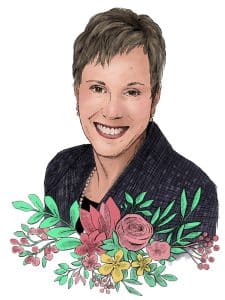
Jan Lilien

Artwork graciously provided by Emi Sato.

In this week’s issue, The New Yorker had an excellent essay on cabin fever. The subtitle was “entwined today with COVID is the age-old mental malady called cabin fever.” Cabin fever exists for those who have lost a loved one and is exacerbated by grief and COVID-19. My go-to strategy to overcome widow cabin fever is taking a six-mile walk each morning.

It helps, but I still find the walls shrinking around me, making my two-bedroom apartment feel like a studio.

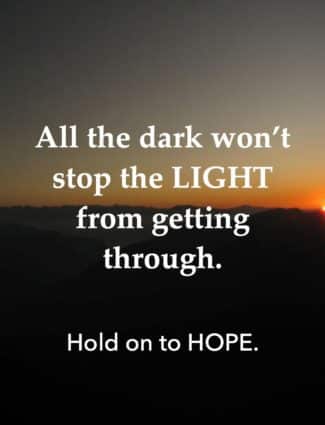
With Jan’s spirit by my side, I walk daily, one step at a time, to free myself from widow cabin fever.

Register to Attend Celebrate Jan Day

Subscribe

Contact Us

I receive a commission when you buy a book or product using a link on this page. Thank you for supporting Sharing Jan’s Love blog.

Walking for 1097 Days

For the past three years, I have been walking towards the future. I find joy in the little things that make up my daily routine, but sometimes, I feel a deep longing for companionship.

1 comment add your comment

Share your thoughts and ideas

This site uses Akismet to reduce spam. Learn how your comment data is processed.

The Jan Lilien Education Fund!

Fellow Travelers on Life's Journey
×
The Mango Tree: A Memoir of Fruit, Florida, and Felony

Read: April 2024

Get this book

The Mango Tree

by Annabelle Tometich

Today, I started reading Annabelle Tometich‘s The Mango Tree: A Memoir of Fruit, Florida, and Felony. The Mango Tree is not just a memoir but a profoundly emotional family saga. It takes us through the complexities of Annabelle’s life, from her childhood in a house filled with balikbayan boxes, vegetation, and luscious mangoes to her journey from aspiring medical student to restaurant critic.

It is a tribute to her fellow Filipino Americans, her younger self, and the mango tree symbolizing her family. Above all, it is a heartfelt homage to Annabelle’s mother, Josefina, who carved out a life and a home without whom Annabelle would not be who she is.

When journalist Annabelle Tometich picked up the phone one June morning, she wasn’t expecting a collect call from an inmate at the Lee County Jail. And when she accepts, she certainly isn’t prepared to hear her mother’s voice on the other end of the line. However, explaining the situation to her younger siblings afterward was easy; all she had to say was, “Mom shot at some guy. He was messing with her mangoes.” They immediately understood. Answering the questions of the breaking news reporter—at the same newspaper where Annabelle worked as a restaurant critic––proved more difficult. Annabelle decided to go with a variation of the truth: it was complicated.

Thus commences The Mango Tree, a memoir that deftly weaves a tapestry of a mixed-race Filipina’s life in suburban Florida. Annabelle’s journey is not linear but a series of interconnected stories that delve into her upbringing, her father’s tragic demise, her mother’s longing for her homeland, and her quest for identity.

×
How the Word is Passed

Read: December 2021

Get this book

How the Word Is Passed: A Reckoning with the History of Slavery Across America

by Clint Smith

How the Word Is Passed: A Reckoning with the History of Slavery Across America by Clint Smith. This book was a gift from my son Jon. The New York Times selected How the Word is Passed as one of the best books published this year. Beginning in his hometown of New Orleans, Clint Smith leads the reader on an unforgettable tour of monuments and landmarks—those that are honest about the past and those that are not—that offer an intergenerational story of how slavery has been central in shaping our nation’s collective history, and ourselves.

How the Word is Passed is one of the best books I have read in 2021. I had read an excerpt in The Atlantic on the Whitney Plantation, one of the only former plantations devoted to preserving the experience of the enslaved people whose lives and work sustained it. Like most of us, I had placed the book on my to-read list, where it remained lost in the cobwebs. Fortunately, my son Jon purchased the book for me.

Secondly, the book rekindled my long-lost dream of being an American Studies professor. As soon as Jan and I met, I dropped plans to leave Brooklyn and start graduate school in the fall of 1974. I made that decision primarily because of how much I loved Jan. But it was also partly that I did not have a clear vision of what my life would be like as a professor. The book provided clear examples of people like Yvonne Holden at The Whitney Plantation redefining history to be more accurate and inclusive. I probably could not have done as well as she did, but I can now see that it might have resulted in a career for me that could have been impactful.

Goodreads provides this overview for those who still need to be convinced to read this book.

It is the story of the Monticello Plantation in Virginia, the estate where Thomas Jefferson wrote letters espousing the urgent need for liberty while enslaving over 400 people on the premises. It is the story of the Whitney Plantation, one of the only former plantations devoted to preserving the experience of the enslaved people whose lives and work sustained it. It is the story of Angola Prison in Louisiana, a former plantation named for the country from which most of its enslaved people arrived and which has since become one of the most gruesome maximum-security prisons in the world. And it is the story of Blandford Cemetery, the final resting place of tens of thousands of Confederate soldiers.

In a deeply researched and transporting exploration of the legacy of slavery and its imprint on centuries of American history, How the Word Is Passed illustrates how some of our country’s most essential stories are hidden in plain view-whether in places we might drive by on our way to work, holidays such as Juneteenth, or entire neighborhoods—like downtown Manhattan—on which the brutal history of the trade in enslaved men, women and children has been deeply imprinted.

Informed by scholarship and brought alive by the story of people living today, Clint Smith’s debut work of nonfiction is a landmark work of reflection and insight that offers a new understanding of the hopeful role that memory and history can play in understanding our country.

How the Word is Passed is one of the best books I have read this year and many prior ones. I encourage you to read it and share your comments.

Subscribe

Contact Us

When you buy a book or product using a link on this page, I receive a commission. Thank you for supporting Sharing Jan’s Love blog.

×
Trust

Read: December 2022

Get this book

Trust by Hernan Diaz

by Hernan Diaz

Trust by Hernan Diaz is an elegant, multifaceted epic that recovers the voices buried under the myths that justify our foundational inequality; Trust is a literary triumph with a beating heart and urgent stakes. The novel is divided into four sections, each engaging and reminding us of the tremendous costs a fortune imposes on those who accumulate wealth. I highly recommend this novel as it is one of the best books I have ever read!

The first section is from Bonds, a successful novel about Benjamin and Helen Rask. Before finishing this section, I was so engrossed that I wanted their story to continue. The second is a memoir of Andrew Bevel, a successful fourth-generation financier, with notations on edits and corrections.

The third section is about Ida Partenza, an Italian-American novelist hired to flesh out Bevel’s memoir. The dynamics between her and Bevel, as well as her father and boyfriend, clarify the storyline and give it depth. Ms. Partenza seeks to find the truth, revealed in the fourth section, comprised of excerpts from Mildred’s diary. Suffice it to say; the admitted fact underscores the burdens of wealth and the antiquated views that limited women’s roles.

Trust is one of the NY Times’ top five fiction books of 2022. I have read four of them, Demon Copperhead, The Candy House, The Furrows, and Checkout 19. Trust was the fifth and the seventy-second book I have read this year. 

The Goodreads summary provides an overview.

Even though the roar and effervescence of the 1920s, everyone in New York has heard of Benjamin and Helen Rask. He is a legendary Wall Street tycoon; she is the brilliant daughter of eccentric aristocrats. Together, they have risen to the very top of seemingly endless wealth. But the secrets around their affluence and grandeur incite gossip. At what cost have they acquired their immense fortune? Rumors about Benjamin’s financial maneuvers and Helen’s reclusiveness start to spread–all as a decade of excess and speculation draws to an end.

This is the mystery at the center of a successful 1938 novel, Bonds, which all of New York seems to have read. But it isn’t the only version.

Hernan Diaz’s Trust brilliantly puts the story of these characters into conversation with other accounts–and in tension with the life and perspective of a young woman bent on disentangling fact from fiction. Provocative and propulsive, Trust engages the reader in a quest for the truth while confronting the reality-warping gravitational pull of money and how power often manipulates facts. The result is a novel that becomes more exhilarating and profound with each new layer and revelation.


The Jan Lilien Education Fund sponsors ongoing sustainability and environmental awareness programs. Gifts made this month; I will match dollar-for-dollar. All donations are tax-deductible.

Subscribe

Contact Us

I receive a commission when you buy a book or product using a link on this page. Thank you for supporting Sharing Jan’s Love blog.


×
The City We Became

Read: October 2021

Get this book

The City We Became: A Novel

by N. K. Jemisin

The City We Became: A Novel by N. K. Jemisin is my first science fiction and urban fantasy novel in quite some time. It is a story of culture, identity, magic, and myths in contemporary New York City. Jan and I had lived in New York City, and the book brought back fond memories.

Every great city has a soul. Some are ancient as myths, and others are as new and destructive as children.

But every City also has a dark side. A roiling, ancient evil stirs beneath the earth, threatening to destroy the City and her five protectors unless they can come together and stop it once and for all.

As Jemisin writes:

A city is never alone, not really — and this city seems less solitary than most. More like a family: many parts, frequently squabbling … but in the end, against enemies, they come together to protect one another. They must, or die.

The challenge is when evil forces threaten the City; the entire community needs to unite, and the City’s avatars for each of the five boroughs.

Initially, this is supposed to be one for each borough and one for the entire City. In the end, one of the avatars for the five boroughs chooses not to unite with the others. Without all six, they stand no chance to defeat the forces of evil.

How do they solve this? By adding the sixth borough – Jersey City.

I recommend this book without reservation.

When you buy a book or product using a link on this page, I receive a commission. Thank you for supporting Sharing Jan’s Love blog.

Subscribe

Contact Us

×
The Second Mountain: The Quest for a Moral Life

Read: May 2019

Get this book

The Second Mountain: The Quest for a Moral Life

by David Brooks

The Second Mountain: The Quest for a Moral Life by David Brooks is a book I often recommend. Mr. Brooks writes about the first mountain that most people climb. The book challenges the reader to “live for a cause greater than themselves.”

It is about “to be a success, make your mark, experience personal happiness.” Even when they reach the top of the mountain, most people find they are unhappy. The climb to the summit has become unsatisfying.

On the second mountain, life moves from self-centered to other-centered.” Life becomes interdependent, not independent; it becomes a life of commitment, not about us.

Mr. Brooks “explores the four commitments that define a life of meaning and purpose: to a spouse and family, to a vocation, to a philosophy or faith, and to a community.

We live in a society, Brooks argues, that celebrates freedom, that tells us to be true to ourselves, at the expense of surrendering to a cause, rooting ourselves in a neighborhood, binding ourselves to others by social solidarity and love. We have taken individualism to the extreme—and in the process we have torn the social fabric in a thousand different ways.

When I read The Second Mountain, it became clear that Jan and I never even attempted to climb the first mountain. We were constantly climbing the second mountain.

We had chosen to do work that repaired the world; we both had a faith community and lived in a community.

All we were missing as far as commitments when we met was each other. Our love for each other provided the missing link and allowed us to climb to the top of the second mountain.


The Jan Lilien Education Fund sponsors ongoing sustainability and environmental awareness programs. Gifts made this month; I will match dollar-for-dollar. All donations are tax-deductible.

Subscribe

Contact Us

I receive a commission when you buy a book or product using a link on this page. Thank you for supporting Sharing Jan’s Love blog.

×
The Midnight Bargain

Read: February 2022

Get this book

The Midnight Bargain

by C.L. Polk

The Midnight Bargain by C.L. Polk is about Beatrice Clayborn, a sorceress, who was the next book to read. She practices magic in secret, terrified of being locked into a marital collar that will cut off her powers to protect her unborn children. She dreams of becoming a full-fledged Magus and pursuing magic as her calling as men do. Still, her family has staked everything to equip her for Bargaining Season, when young men and women of means descend upon the city to negotiate the best marriages. The Clayborn’s are in severe debt, and only she can save them by securing a good match before their creditors call.

In a stroke of luck, Beatrice finds a grimoire that contains the key to becoming a Magus, but before she can purchase it, a rival sorceress swindles the book right out of her hands. Beatrice summons a spirit to help her get it back, but her new ally exacts a price: Beatrice’s first kiss . . . with her adversary’s brother, the handsome, compassionate, and fabulously wealthy Ianthe Lavan.

The more Beatrice is entangled with the Lavan siblings, the harder her decision becomes: If she casts the spell to become a Magus, she will devastate her family and lose the only man to ever see her for who she is, but if she marries—even for love—she will sacrifice her magic, her identity, and her dreams. But how can she choose just one, knowing she will forever regret the path not taken?

Subscribe

Contact Us

When you buy a book or product using a link on this page, I receive a commission. Thank you for supporting Sharing Jan’s Love blog.

×