
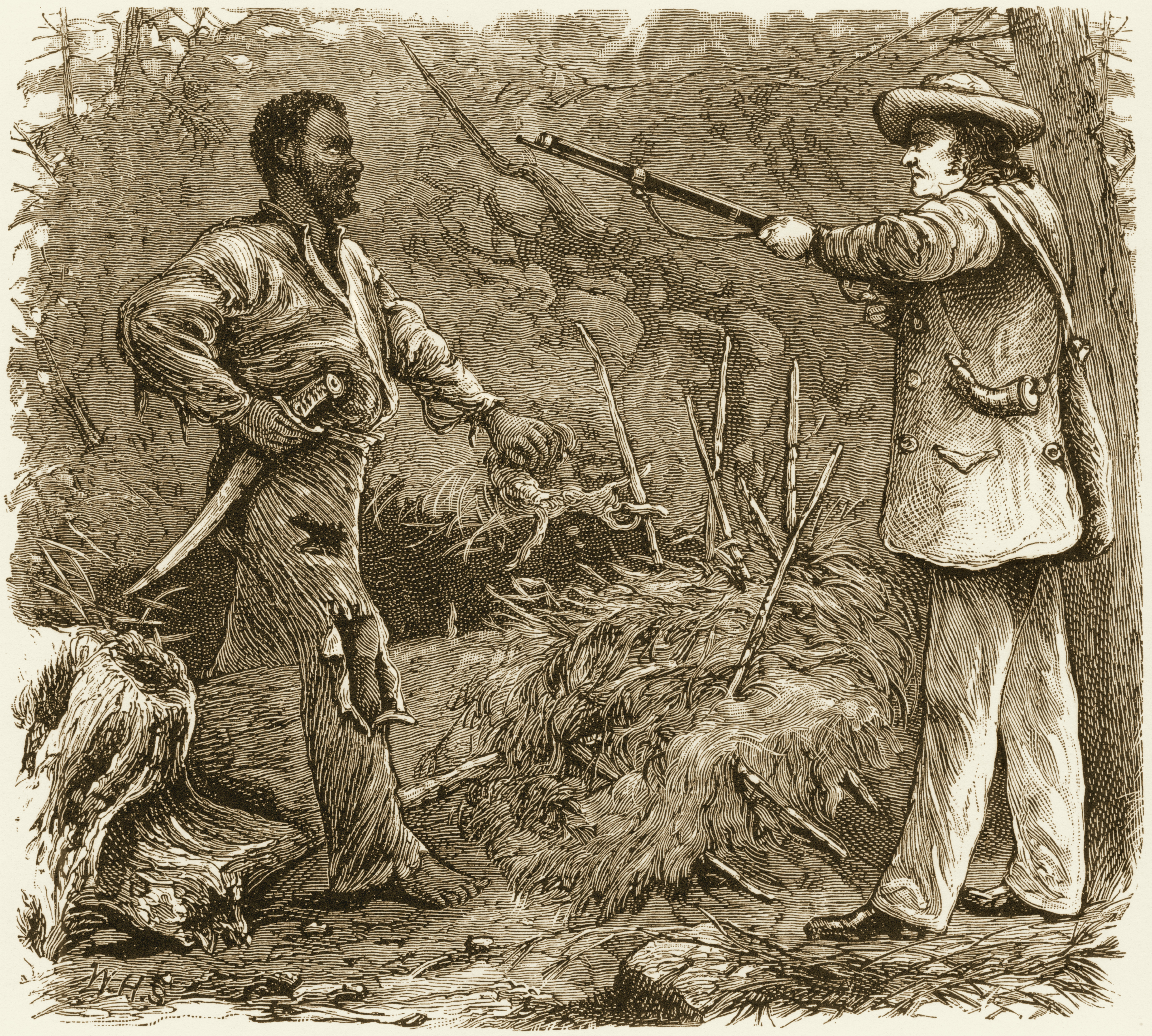
Nat Turner Rebellion, 1831

Nat Turner’s Legacy

Estimated reading time: 0 minutes, 36 seconds

One hundred and ninety years ago, “Nat Turner, an enslaved American, led about 70 of his enslaved and free Black neighbors in a rebellion to awaken his white neighbors to the inherent brutality of slaveholding and the dangers it presented to their own safety.”

Heather Cox Richardson ties together this event and the continued campaign to deny education to persons of color in today’s Letters from an American. We must address these issues. If you don’t subscribe to her email newsletter, you must read it; you can click here.

I am an amateur history buff concerned about current events and repairing the world.

Subscribe

Contact Us

Back to the University

For years I have seen the advertisements for One Day University and have waited too long to register. I finally took my first class on February 9, 2019! 250 Years of American Politics in a few hours

Share your thoughts and ideas

This site uses Akismet to reduce spam. Learn how your comment data is processed.

The Jan Lilien Education Fund!

Nat Turner Rebellion, 1831
×
Leadership: In Turbulent Times

Read: January 2019

Get this book

Leadership: In Turbulent Times

by Doris Kearns Goodwin

A Book for Our Turbulent Times

Leadership: In Turbulent Times by Doris Kearns Goodwin, one of America’s best presidential historians, offers an illuminating exploration of the early development, growth and exercise of leadership as demonstrated by Presidents Lincoln, Theodore Roosevelt, FDR and Johnson.

I received this book for Hanukkah from my granddaughter and son Mike and his girlfriend Elyssa. They know me very well. A book by Ms. Goodwin is always a must read. If you add in Lincoln, the two Roosevelt’s and LBJ, it is a book I cannot put down.

This NPR interview with Ms. Goodwin is worth listening to.

Subscribe

Contact Us

×
The Annual Banquet of the Gravediggers' Guild

Read: January 2024

Get this book

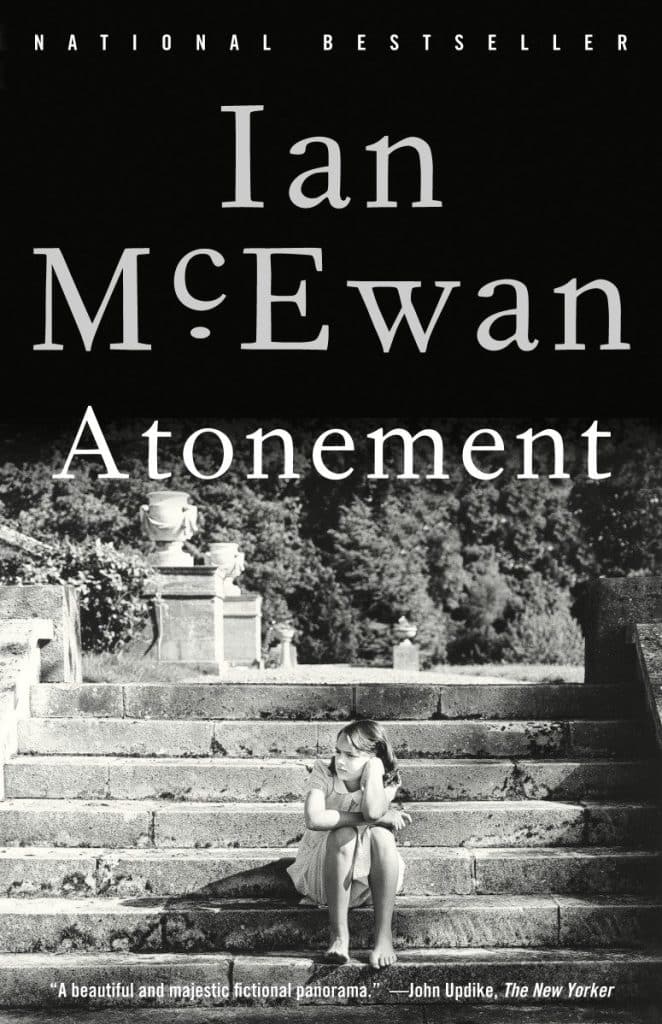
The Annual Banquet of the Gravediggers’ Guild

by Mathias Énard

Today, I started reading “The Annual Banquet of the Gravediggers’ Guild” by Mathias Énard. The book has been translated into English by Frank Wynne. This novel is full of Mathias Énard‘s characteristic humor and extensive knowledge. It is a lively book where the boundaries between past and present are constantly blurred, set against a backdrop of excess reminiscent of Rabelais’ writing.

David Mazon, an anthropology student, moves from Paris to La Pierre-Saint-Christophe, a village in the marshlands of western France, to research his thesis on contemporary agrarian life. He is determined to understand the essence of the local culture and spends his time scurrying around on his moped to interview the residents.

David must be made aware of the extraordinary events in an ordinary location. This place, where wars and revolutions once occurred, is now a dancefloor for Death. When something dies, its soul is recycled by the Wheel of Life and thrown back into the world as a microbe, human, or wild animal – sometimes in the past and sometimes in the future. Once a year, Death and the living agree to a temporary truce, during which gravediggers indulge in a three-day feast filled with food, drink, and conversation.

Mathias Énard’s novel, The Annual Banquet of the Gravediggers’ Guild, is a riotous and exciting comic masterpiece that won the prestigious Prix Goncourt award. The novel is set in the French countryside and is filled with Énard’s characteristic wit and encyclopedic brilliance. Against a backdrop of excess, the story blurs the lines between past and present, creating a Rabelaisian world of chaos and humor.


The Jan Lilien Education Fund sponsors ongoing sustainability and environmental awareness programs. Gifts made this month; I will match dollar-for-dollar. All donations are tax-deductible.

Subscribe

Contact Us

I receive a commission when you buy a book or product using a link on this page. Thank you for supporting Sharing Jan’s Love blog.


×
When She Woke

Read: August 2022

Get this book

When She Woke

by Hillary Jordan

When She Woke, a fable about a stigmatized woman struggling to navigate an America of a not-too-distant future by Hillary Jordan, Bellwether Prize WinnerHannah Payne, the protagonist, embarks on a path of self-discovery that forces her to question the values she once held and the righteousness of a country that politicizes faith. The premise of When She Woke seems to be happening as I read the novel. It is also the one hundred books I have read since the beginning of 2019 and the forty-fifth this year.

Hannah Payne, like Hester Prynne, is attacked for her actions by extreme religious beliefs. Instead of wearing a scarlet letter, Hannah’s chroming (i.e., having her skin altered) makes her skin red from head to toe. The chroming might have been a good theme for a science fiction novel. Still, Ms. Jordan has written a captivating book in which Hannah confronts who she is and, after questioning the values she once had, discovers that Hannah is more vital than she believed she could be.

I highly recommend this novel.

As Ms. Jordan describes the book,

Hannah Payne’s life has been devoted to church and family. But after she’s convicted of murder, she awakens to a nightmare: she finds herself lying on a table in a solitary confinement cell, her skin turned bright red. Cameras are broadcasting her every move to millions at home, for whom observing newly made “Chromes”—criminals whose skin color has been genetically altered to reflect their crime—is a sinister form of entertainment. Hannah is a Red, a murderess. The victim, says the state of Texas, was her unborn child, and she’s determined to protect the identity of the father, a public figure with whom she shared a fierce and forbidden love.

A powerful reimagining of The Scarlet Letter, When She Woke is a timely fable about a stigmatized woman struggling to navigate a dystopian America. In this not-too-distant future, the line between church and state has been eradicated and convicted felons are no longer imprisoned, but “chromed” and released back into the population to survive as best they can.

As she seeks a path to safety in an alien and hostile world, Hannah unknowingly embarks on a journey of self-discovery that forces her to question the values she once held true and the righteousness of a country that politicizes faith and love.


The Jan Lilien Education Fund sponsors ongoing sustainability and environmental awareness programs. All donations are tax-deductible.

Subscribe

Contact Us

I receive a commission when you buy a book or product using a link on this page. Thank you for supporting Sharing Jan’s Love blog.

×
Still Life: A GMA Book Club Pick: A Novel

Read: January 2025

Get this book

Still Life: A Novel

by Sarah Winman

I began reading “Still Life,” a GMA Book Club pick by Sarah Winman. This captivating and bighearted novel weaves a rich tapestry of stories about people connected by love, war, art, flood, and the ghost of E.M. Forster. Kristen V. Brown, in The Atlantic Magazine’s Culture Survey, describes “Still Life” as the best novel she has recently read and considers it the best nonfiction work.

In Tuscany in 1944, as Allied troops advance and bombs fall around deserted villages, a young English soldier, Ulysses Temper, finds himself in the wine cellar of an abandoned villa. There, he encounters Evelyn Skinner, a middle-aged art historian who has come to Italy to salvage paintings from the ruins and recall long-forgotten memories of her youth. In each other, Ulysses and Evelyn find a kindred spirit amidst the rubble of war-torn Italy and set off on a course of events that will shape Ulysses’s life for the next four decades.

As Ulysses returns home to London, reimmersing himself in his crew at The Stoat and Parot—a motley mix of pub crawlers and eccentrics—he carries his time in Italy. And when an unexpected inheritance brings him back to where it all began, Ulysses knows better than to tempt fate and returns to the Tuscan hills.

With beautiful prose, extraordinary tenderness, and bursts of humor and light, Still Life is a sweeping portrait of unforgettable individuals who come together to make a family and a deeply drawn celebration of beauty and love in all its forms.


When you purchase a book through one of my links, I earn a small commission that helps support my passion for reading. This contribution allows me to buy even more books to share with you, creating an incredible cycle of discovering great reads together! Your support truly makes a difference!


×
Losing Earth: A Recent History

Read: October 2019

Get this book

Losing Earth: A Recent History

by Nathaniel Rich

Losing Earth: A Recent History by Nathaniel Rich reminds us how close we were to halting the climate emergency, and our failure has resulted in our passing the tilting point. The book “reveals, in previously unreported detail, the birth of climate denialism and the genesis of the fossil-fuel industry’s coordinated effort to thwart climate policy through misinformation propaganda and political influence.”

By 1979, we knew nearly everything we understand today about climate change – including how to stop it. Over the next decade, a handful of scientists, politicians, and strategists, led by two unlikely heroes, risked their careers in a desperate, escalating campaign to convince the world to act before it was too late. Losing Earth is their story and ours.

The New York Times Magazine devoted an entire issue to Nathaniel Rich’s groundbreaking chronicle of that decade, which became an instant journalistic phenomenon – the subject of news coverage, editorials, and conversations all over the world. In its emphasis on the lives of the people who grappled with the significant existential threat of our age, it made vivid the moral dimensions of our shared plight.

Losing Earth tells the human story of climate change in even richer, more intimate terms. It reveals, in previously unreported detail, the birth of climate denialism and the genesis of the fossil-fuel industry’s coordinated effort to thwart climate policy through misinformation propaganda and political influence. The audiobook carries the story into the present day, wrestling with the long shadow of our past failures and asking crucial questions about how we make sense of our past, our future, and ourselves.

Like John Hersey’s Hiroshima and Jonathan Schell’s The Fate of the Earth, Losing Earth is the rarest of achievements: a riveting work of dramatic history that articulates a moral framework for understanding how we got here and how we must go forward.

Losing Earth is a must-read book!

Subscribe

Contact Us

×
The Mango Tree: A Memoir of Fruit, Florida, and Felony

Read: April 2024

Get this book

The Mango Tree

by Annabelle Tometich

Today, I started reading Annabelle Tometich‘s The Mango Tree: A Memoir of Fruit, Florida, and Felony. The Mango Tree is not just a memoir but a profoundly emotional family saga. It takes us through the complexities of Annabelle’s life, from her childhood in a house filled with balikbayan boxes, vegetation, and luscious mangoes to her journey from aspiring medical student to restaurant critic.

It is a tribute to her fellow Filipino Americans, her younger self, and the mango tree symbolizing her family. Above all, it is a heartfelt homage to Annabelle’s mother, Josefina, who carved out a life and a home without whom Annabelle would not be who she is.

When journalist Annabelle Tometich picked up the phone one June morning, she wasn’t expecting a collect call from an inmate at the Lee County Jail. And when she accepts, she certainly isn’t prepared to hear her mother’s voice on the other end of the line. However, explaining the situation to her younger siblings afterward was easy; all she had to say was, “Mom shot at some guy. He was messing with her mangoes.” They immediately understood. Answering the questions of the breaking news reporter—at the same newspaper where Annabelle worked as a restaurant critic––proved more difficult. Annabelle decided to go with a variation of the truth: it was complicated.

Thus commences The Mango Tree, a memoir that deftly weaves a tapestry of a mixed-race Filipina’s life in suburban Florida. Annabelle’s journey is not linear but a series of interconnected stories that delve into her upbringing, her father’s tragic demise, her mother’s longing for her homeland, and her quest for identity.

×