Richard W. Brown

Stream of Consciousness!

My random thoughts on Jan, love, grief, life, and all things considered.

1230 Posts Likes
Cleansing Tears of Joy

How Can I Be a Joyful Widow?

Choosing Joy Despite Loss is the Only Way!

Since becoming a widow almost forty-one months ago, many have stopped asking me how I find joy after such a loss. However, the unspoken question of how I can feel joy still lingers among friends and foes alike. Each day, as I walk, I make it a point to greet everyone with a cheerful “Good morning, have a nice day.”

Continue reading →

How Did I Grieve?

If grief has made me a better person, it's because God gave me the ability to listen, embrace, and move forward into the future. Although I miss Jan dearly, I am committed to living with courage, honoring her memory, and being my best father, grandfather, friend, and neighbor.
The Corrections: A Novel

The Corrections: A Novel

Today, I embarked on a profound exploration of the human condition through Jonathan Franzen's 'The Corrections: A Novel.' It guides us from the heart of the Midwest in the mid-century to the bustling streets of Wall Street and the enigmatic landscapes of Eastern Europe. It's no surprise that it's hailed as one of The New York Times 100 Best Books of the 21st Century.

Read book review Get this book All books

YWCA Fire

Five Years After the Fire

YWCA Rebuilds One Brick at a Time

“I was just putting in my eye drops when the fire alarm went off. Oh, great. Now I can’t leave,” my wife texted me at 5:41 p.m. I had been at home getting dinner ready. It was September 4, 2019, and Jan had just had her first cataract surgery. We had also received the news that she had lymphoma. My immediate concern was that she couldn’t drive after sunset due to the eye surgery. Both of us initially thought it was a test of the fire alarm system. Within fifteen minutes, she texted again, “We have a fire on the roof. Go ahead and eat something. I am trying to arrange emergency accommodations for families.”

Continue reading →

YWCA Union County Gala Photos

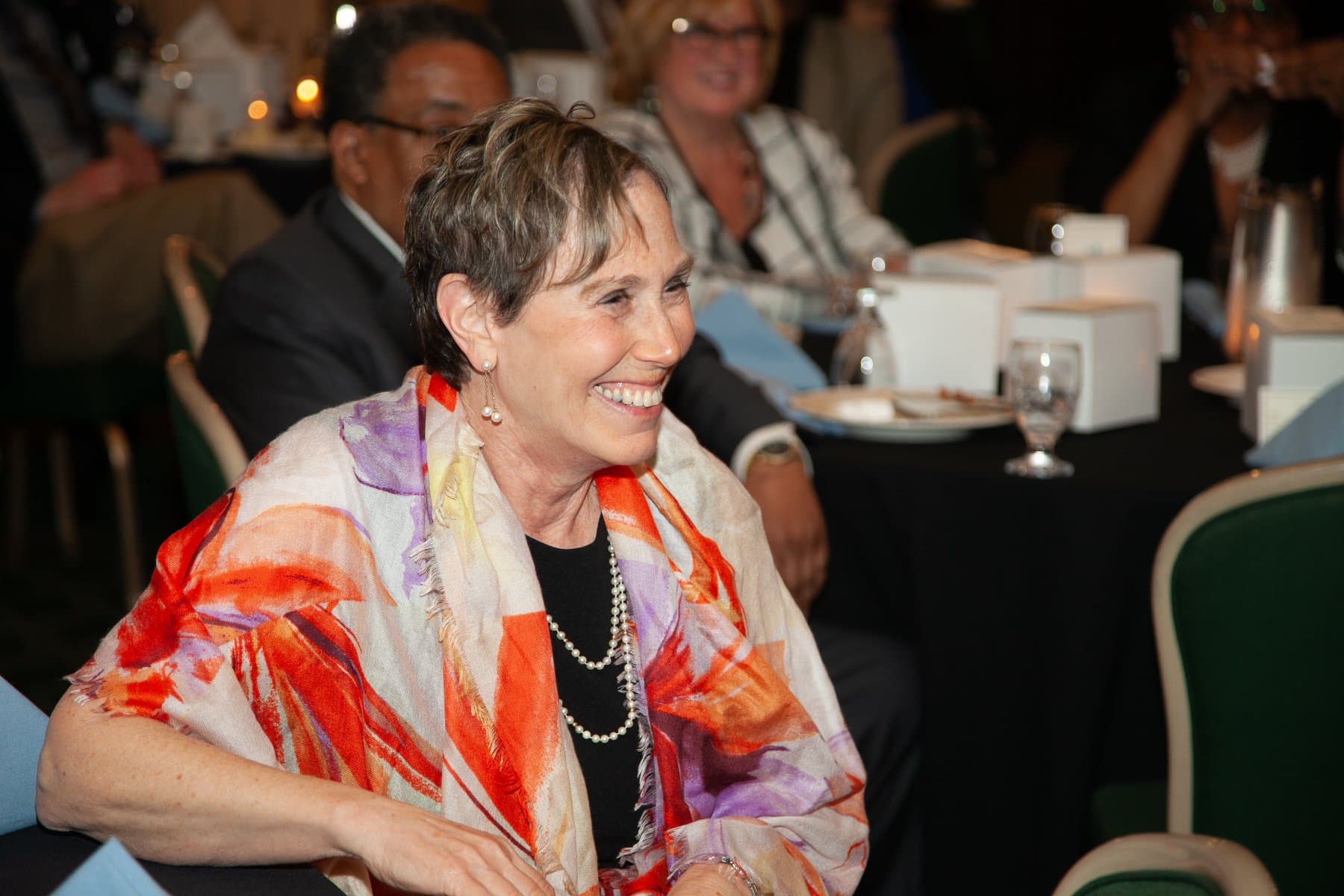
The photos from the YWCA Union County Gala are now available. These are two of my favorite pictures from the YWCA Union County Gala.

Hurricane Season

Hurricane Season

'Hurricane Season' by Fernanda Melchor, translated by Sophie Hughes, is a literary gem acknowledged by the New York Times as one of the 100 Best Books of the 21st Century. The story opens with the discovery of a dead witch in a village, leading to an investigation into her murder. As the novel unfolds, it offers a unique perspective on the lives of the villagers, each narrating the story from their point of view.

Read book review Get this book All books

My sister, my mom and me May 1949

My Mother’s Loving Legacy

Living in the Present Filled with Memories

As I was leaving Apartment 3B for my regular morning walk, I noticed the World Wildlife Fund calendar on the door. The peaceful image of a smiling Giant Panda calmed me as I prepared to head out. I glanced at September 2, 2024, just before turning off the light. This day is unique; it would have been my mother‘s 109th birthday. Balancing my hands full of recyclables, I walked down the hallway, lost in thought. It struck me that my mother had almost reached the remarkable age of 100 – a feat I had once hoped for her and me – ninety-eight years and nearly a half year more make up a rich, meaningful life.

Continue reading →

Love is a Magical Force!

Whenever I fall in love, I do so with all my heart and soul, leaving no room for half-steps. My love is unconditional and knows no boundaries. My wife knew and accepted me for who I am. Together, Jan and I created a legacy for ages to come.

Show thread (1)

Atonement: A Novel

Atonement: A Novel

Today, I started reading "Atonement: A Novel" by Ian McEwan, an acclaimed Booker Prize-winning author. This symphonic novel explores complex themes such as love and war, childhood and class, guilt and forgiveness. It has been recognized as one of the New York Times's 100 Best Books of the 21st Century, making it a must-read for those interested in these profound themes.

Read book review Get this book All books

These Feet Were Made for Walking

Frozen in the Darkest Hour of the Night

When Does a Recurring Daydeam Become Real?

Upon regaining consciousness, I was disoriented, trying to piece together my surroundings. The room was dimly lit and confined, making it difficult to discern my location or the time of day. I became aware of the chill as I lay on the cold tile floor and noticed my nudity. Struggling to lift my head, I realized I was in a bathroom, but the details of how I arrived there and which bathroom I was in eluded me.

Continue reading →

Twelve Hundred Days

I promise not to accept aging gracefully but to face it with an unwavering determination to make the most of the opportunities in my life. I will listen attentively, embrace wholeheartedly, and courageously step into the future!

The Jan Lilien Education Fund!

Cleansing Tears of Joy
×
The Corrections: A Novel

Read: September 2024

Get this book

The Corrections: A Novel

by Jonathan Franzen

Today, I embarked on a profound exploration of the human condition through Jonathan Franzen‘s ‘The Corrections: A Novel.’ It guides us from the heart of the Midwest in the mid-century to the bustling streets of Wall Street and the enigmatic landscapes of Eastern Europe. It’s no surprise that it’s hailed as one of The New York Times 100 Best Books of the 21st Century.

Jonathan Franzen‘s ‘The Corrections: A Novel‘ is not just a family saga but a profound critique of our modern society. It’s a work of art that delves into the issues of our new century, enlightening us with its insights. Franzen masterfully juxtaposes the old-fashioned America of freight trains, civic responsibility, and holiday treats with the modern absurdities of neuroscience, home surveillance, hands-off parenting, DIY mental health care, and the anti-gravity New Economy. It’s a narrative that will evoke laughter, tears, and deep contemplation. Through ‘The Corrections,’ Franzen establishes himself as one of the leading interpreters of American society and the American spirit.

Enid Lambert is distraught. She conceals her anxiety from her neighbors and adult children, but her husband, Alfred, is slipping into a world of his own. Whether it’s the medication for his Parkinson’s disease or his pessimism, he’s becoming increasingly detached. His days are spent brooding in the basement, engaging in mysterious, unsettling actions, and struggling to understand Enid’s words. The depth of their struggle is palpable, drawing the reader into their world.

Trouble also brews in the lives of Enid’s children. Her eldest son, Gary, a banker in Philadelphia, has become callous and materialistic, trying to push his parents out of their old home and into a small apartment. The middle child, Chip, has abruptly quit his exciting job as a professor at D—— College for no discernible reason. He moved to New York City, seemingly embracing a “transgressive” lifestyle while working on a screenplay. Meanwhile, the youngest, Denise, has left her disastrous marriage only to waste her youth and beauty on an affair with a married man—or so Gary implies.

Enid, a lover of life’s pleasures, still looks forward to a final family Christmas and the upcoming Nordic Pleasurelines Luxury Fall Color Cruise with Alfred. However, his growing confusion and instability threaten these remaining joys. As Alfred’s condition worsens, the Lamberts must confront their family’s past failures, secrets, and long-buried wounds. Yet, in this journey of confrontation and reconciliation, the hope for a better future emerges.

×
YWCA Fire
×
Hurricane Season

Read: September 2024

Get this book

Hurricane Season

by Fernanda Melchor

Hurricane Season‘ by Fernanda Melchor, translated by Sophie Hughes, is a literary gem acknowledged by the New York Times as one of the 100 Best Books of the 21st Century. The story opens with the discovery of a dead witch in a village, leading to an investigation into her murder. As the novel unfolds, it offers a unique perspective on the lives of the villagers, each narrating the story from their point of view.

This unique portrayal of the characters, each with flaws and virtues, uncovers new details and acts of depravity. Despite the characters being seen as irredeemable, Melchor extracts some shred of humanity from them, creating a lasting portrait of a doomed Mexican village. This deep connection to Mexican culture is a significant aspect of the novel that will surely resonate with readers interested in this topic.

Hurricane Season” draws significant literary inspiration from Roberto Bolaño‘s “2666” and Faulkner‘s novels. Like these works, it is set in a world filled with mythology and actual violence that seeps into the surroundings, creating a connection that makes it more terrifying the deeper you explore it.

×
My sister, my mom and me May 1949
×
Atonement: A Novel

Read: August 2024

Get this book

Atonement: A Novel

by Ian McEwan

Today, I started reading “Atonement: A Novel” by Ian McEwan, an acclaimed Booker Prize-winning author. This symphonic novel explores complex themes, including love and war, childhood and class, guilt and forgiveness. It has been recognized as one of the New York Times’s 100 Best Books of the 21st Century, making it a must-read for those interested in these profound themes.

The story begins on a scorching summer day in 1935, when thirteen-year-old Briony Tallis witnesses a moment of flirtation between her older sister, Cecilia, and Robbie Turner, the son of a servant and Cecilia’s childhood friend. Briony’s incomplete understanding of adult motives and her literary gifts lead to a crime that significantly impacts their lives, taking them on an emotional journey of love, guilt, and forgiveness.

The narrative tracks the repercussions of this crime through the chaos and carnage of World War II, a vivid historical backdrop that immerses the reader into the twentieth century’s close. “Atonement” has been acclaimed for engaging readers on multiple levels, marking it a genuine masterpiece from the Booker Prize-winning, internationally bestselling author Ian McEwan.


Ian McEwan is a critically acclaimed author known for his nineteen novels and two short story collections. His first published work, a collection of short stories titled “First Love, Last Rites,” won the Somerset Maugham Award.

His notable novels include “The Child in Time,” which won the Whitbread Novel of the Year Award in 1987; “The Cement Garden“; “Enduring Love;” “Amsterdam;” which won the Booker Prize in 1998; “Atonement;” “Saturday;” “On Chesil Beach;” “Solar;” “Sweet Tooth;” “The Children Act;” “Nutshell;” and “Machines Like Me,” which became a number-one bestseller.

Several of his works, including “Atonement,” “Enduring Love,” “The Children Act;,” and “On Chesil Beach,” have been adapted into films.


Discover your next favorite book and dive into a world of curated, exciting reads by purchasing through my links. You’ll have access to a diverse selection of books that I’ve personally vetted to ensure quality and enjoyment. Additionally, by supporting these selections, you’ll help me continue to provide you with more personalized recommendations. I earn a small commission from your purchase, which allows me to buy and share even more books with you. Your support truly makes a difference!


×
These Feet Were Made for Walking
×
Murder Bimbo

Read: February 2026

Get this book

Murder Bimbo: A Novel

by Rebecca Novack

Murder Bimbo by Rebecca Novack delivers a thrilling, unpredictable tale of a sex worker who morphs into a political assassin, thrust into a high-stakes game of survival. This captivating story weaves together elements of deception, murder, and the complexities of today’s political landscape, offering readers a fresh, gripping perspective that keeps them on the edge of their seats.

The protagonist, a thirty-two-year-old sex worker, is taken by surprise when undercover government agents approach her to assist in a top-secret plot to assassinate a politician known as Meat Neck. However, after the assassination, she realizes the harsh truth: she has been deemed 100% disposable.

Now holed up in an off-the-grid cabin in the woods, she has only two days, her wits, and a laptop to save her own life.

Her best chance is to reach out to the popular feminist investigative podcast, Justice for Bimbos. In a series of hastily typed emails, the newly dubbed Murder Bimbo reveals how she was recruited and trained by a group of covert U.S. agents to eliminate Meat Neck.

Next, she opens a new email addressed to her ex, where the facts present a different narrative.

Structured in three increasingly unhinged acts, each offering a more subversive version of the story than the last, Murder Bimbo is simultaneously a thrilling literary work, a satirical manifesto for vigilantes, or a raucous commentary on the political madness we experience daily. Regardless, it serves as a serious announcement of an electrifying new voice in American literature.


Rebecca Novack grew up in the Rocky Mountains. She has a master’s in theological studies from Harvard Divinity School.


Discover your next favorite book and dive into a world of curated, exciting reads by purchasing through my links. You’ll have access to a diverse selection of books that I’ve personally vetted to ensure quality and enjoyment. Additionally, by supporting these selections, you’ll help me continue to provide you with more personalized recommendations. I earn a small commission from your purchase, which allows me to buy and share even more books with you. Your support truly makes a difference!


×
Invisible Child

Read: December 2021

Get this book

Invisible Child: Poverty, Survival & Hope in an American City

by Andrea Elliott

Invisible Child: Poverty, Survival & Hope in an American City by Andrea Elliott was a gift from my son Jon. The New York Times selected “Invisible Child” as one of the best books published this year. It is indeed one of the top books on my all-time list.

GoodReads summary provides a good overview,

The riveting, unforgettable story of a girl whose indomitable spirit is tested by homelessness, poverty, and racism in an unequal America—from Pulitzer Prize-winning journalist Andrea Elliott of The New York Times

Invisible Child follows eight dramatic years in the life of Dasani Coates, a child with imagination as soaring as the skyscrapers near her Brooklyn homeless shelter. Born at the turn of a new century, Dasani is named for the bottled water that comes to symbolize Brooklyn’s gentrification and the shared aspirations of a divided city. As Dasani grows up, moving with her tight-knit family from shelter to shelter, this story goes back to trace the passage of Dasani’s ancestors from slavery to the Great Migration north. When Dasani comes of age, New York City’s homeless crisis explodes as the chasm deepens between rich and poor.

In the shadows of this new Gilded Age, Dasani must lead her seven siblings through a thicket of problems: hunger, parental drug addiction, violence, housing instability, segregated schools, and the constant monitoring of the child-protection system. When, at age thirteen, Dasani enrolls at a boarding school in Pennsylvania, her loyalties are tested like never before. As she learns to “code switch” between the culture she left behind and the norms of her new town, Dasani starts to feel like a stranger in both places. Ultimately, she faces an impossible question: What if leaving poverty means abandoning the family you love?

By turns heartbreaking and revelatory, provocative and inspiring, Invisible Child tells an astonishing story about the power of resilience, the importance of family, and the cost of inequality. Based on nearly a decade of reporting, this book vividly illuminates some of the most critical issues in contemporary America through the life of one remarkable girl.

Jan and I were involved and knew that child poverty and homelessness needed repair. In addition, Jan lived on Washington Park across from Ft. Greene Park in 1974-75. We knew the neighborhood where much of the book’s story takes place. 

Before meeting Jan in 1973, I was both a community/tenant organizer and a youth worker. In the latter role, I made weekly hostel trips for eight to ten young boys from East Williamsburg during 1973. The trips were the first the boys had ever been outside of their neighborhood.

Many of them had imaginations like Dasani. They also had her instinct to fight. One of my first tasks was to check for any weapons.

Decades later, when I would see any of them, now adults, they would ask when we were going on another trip. I wish I had met Jan when I made those trips. She would have helped me improve them and document the impact. If I could re-write history, I would have her join me as the second adult on the hostel trips.

After that summer, it was clear my primary skills were as a community/tenant organizer. Over the next few years, my work focused on creating affordable and supportive housing.

Jan and I did meaningful work that made a difference, yet the need for a permanent solution to the crisis remains. The book highlights the crucial role of resilience, the importance of family, and the cost of inequality. As a nation, we cannot undermine those values by breaking up families, impeding resilience, and maintaining racial and economic inequality. 

The current debate in Washington over the Build Back Better legislation needs to focus not on how much we spend but on its impact on children and families

David Brooks, a conservative commentator, has supported these expenditures for what they can do to address this country’s cultural and economic crisis. 

These packages say to the struggling parents and the warehouse workers: I see you. Your work has dignity. You are paving your way. You are at the center of our national vision.

This is how you fortify a compelling moral identity, which is what all of us need if we’re going to be able to look in the mirror with self-respect. This is the cultural transformation that good policy can sometimes achieve. Statecraft is soulcraft.

If you can only read one book this year, this is the one to read. Child poverty, homelessness, and inequality impact all of us. Ending child poverty and homelessness will make us a healthier and more inclusive nation. It is time for a compelling moral call to action!

Subscribe

Contact Us

When you buy a book or product using a link on this page, I receive a commission. Thank you for supporting Sharing Jan’s Love blog.

×
Lincoln in the Bardo: A Novel

Read: August 2024

Get this book

Lincoln in the Bardo: A Novel

by George Saunders

My journey with “Lincoln in the Bardo: A Novel” by George Saunders began with recognition as one of The New York Times’ 100 Best Books of the Century. As I turned its pages, I was immersed in its profound exploration of living and loving in the face of inevitable endings. The book, which struck a personal chord with me after a loss, is a testament to Saunders’ storytelling prowess and a must-read for those interested in Abraham Lincoln.

February 1862. The Civil War is less than one year old. The fighting has begun in earnest, and the nation has already realized it is in for a long, bloody struggle. Meanwhile, President Lincoln’s beloved eleven-year-old son, Willie, lies upstairs in the White House, gravely ill. In a matter of days, despite predictions of a recovery, Willie dies and is laid to rest in a Georgetown cemetery. “My poor boy, he was too good for this earth,” the president says at the time. “God has called him home.” Newspapers report that a grief-stricken Lincoln returns, alone, to the crypt several times to hold his boy’s body.

From a seed of historical truth, George Saunders weaves an unforgettable tale of familial love and loss that transcends its realistic, historical framework. The story takes a daring leap into a realm that is hilarious and terrifyingly supernatural. Willie Lincoln’s journey in a strange purgatory, where ghosts mingle, gripe, commiserate, quarrel, and enact bizarre acts of penance, is a testament to Saunders’ imaginative prowess. The monumental struggle over young Willie’s soul in this transitional state, known as the bardo in the Tibetan tradition, is a narrative that will leave you spellbound.

Lincoln in the Bardo is an astonishing feat of imagination and a bold step forward from one of his generation’s most important and influential writers. Formally daring, generous in spirit, and deeply concerned with matters of the heart, it is a testament to fiction’s ability to speak honestly and powerfully about the things that matter to us. Saunders has invented a thrilling new form that deploys a kaleidoscopic, theatrical panorama of voices to ask a timeless, profound question: How do we live and love when we know everything we love must end?


George Saunders is the author of thirteen books, including the novel Lincoln in the Bardo, which won the Booker Prize, and five collections of stories, including Tenth of December, which was a finalist for the National Book Award, and the recent collection Liberation Day (selected by former President Obama as one of his ten favorite books of 2022).

Three of Saunders’s books—Pastoralia, Tenth of December, and Lincoln in the Bardo—were chosen for The New York Times’s list of the 100 Best Books of the 21st Century. Saunders hosts the popular Story Club on Substack, which grew out of his book, A Swim in a Pond in the Rain. In 2013, he was named one of Time’s 100 Most Influential People. He teaches in the creative writing program at Syracuse University.


Discover your next favorite book and dive into a world of curated, exciting reads by purchasing through my links. You’ll have access to a diverse selection of books that I’ve personally vetted to ensure quality and enjoyment. Additionally, by supporting these selections, you’ll help me continue to provide you with more personalized recommendations. I earn a small commission from your purchase, which allows me to buy and share even more books with you. Your support truly makes a difference!


×
The Unfolding

Read: October 2022

Get this book

The Unfolding: A Novel

by A.M. Homes

The Unfolding by A.M. Homes is a darkly comic political parable braided with a Bildungsroman that takes us inside the heart of a divided country. The Unfolding is an alternative history that is terrifyingly prescient, profoundly tender, and devastatingly funny. Will this novel help me to understand how we became a nation that no longer shares the same definitions of truth, freedom, and democracy, much less a shared vision of the future?

Although I understand more clearly the crisis facing the US, I highly recommend this novel.

Ms. Homes has written a must-read book that compliments the January 6th Committee report and should make us all more vigilant.

The characters are so well defined that at the end of the novel, I wanted to continue to read about them, especially Meghan.

The Goodreads summary provides an overview,

The Big Guy loves his family, money, and country. Undone by the 2008 presidential election results, he taps a group of like-minded men to reclaim their version of the American Dream. As they build a scheme to disturb and disrupt, the Big Guy also faces turbulence within his family. His wife, Charlotte, grieves a life not lived, while his 18-year-old daughter, Meghan, realizes that her favorite subject–history–is not exactly what her father taught her.

In a story that is as much about the dynamics within a family as it is about the desire for those in power to remain in force, Homes presciently unpacks a dangerous rift in American identity, prompting a reconsideration of the definition of truth, freedom, and democracy–and exploring the explosive consequences of what happens when the exact words mean such different things to people living together under one roof.

In her first novel since the Women’s Prize award-winning May We Be Forgiven, A.M. Homes delivers us back to ourselves in this stunning alternative history that is both terrifyingly prescient, deeply tender, and devastatingly funny.


The Jan Lilien Education Fund sponsors ongoing sustainability and environmental awareness programs. Gifts made this month; I will match dollar-for-dollar. All donations are tax-deductible.

Subscribe

Contact Us

I receive a commission when you buy a book or product using a link on this page. Thank you for supporting Sharing Jan’s Love.

×
I Have Some Questions for You:

Read: February 2023

Get this book

I Have Some Questions for You

by Rebecca Makkai

I Have Some Questions for You by Rebecca Makkai is a book that, from page one, pulled me into the story and made me believe I was embedded with Bodie Kane as she returned to her boarding school and worked with students to review the murder of her roommate twenty-three years ago. I Have Some Questions for You was more than a page-turner as I was an unnamed participant. I highly recommend this book and, as Ms. Makkai does, buy it at an independent bookstore.

I had not heard of the book until I read a review in The New Yorker by Katty Waldman, who writes, “The new book, a murder mystery set at an élite boarding school, is being marketed as an irresistible whodunnit. But it also joins a growing number of critiques of true crime.” Once I finished the review, I ordered the book and did not put it down until I finished the novel.

Do not “read this book if you”are looking for a whodunnit. It is a critique of true crime and an assessment of the “me too” era. How do we judge the past by the standards of the present?

Every book I have read since Jan died is one I wanted to discuss with her. But I Have Some Questions is one that would have been helpful for both of us to read simultaneously and share our thoughts. Jan’s work with the YWCA of Union County’s Domestic Violence program would have given her a unique perspective. But my lifetime efforts to free me from male blindness would have been a good counterpoint.

Please read this book, share it, and discuss it.

The Goodreads summary provides an overview,

A successful film professor and podcaster, Bodie Kane is content to forget her past—the family tragedy that marred her adolescence, her four largely miserable years at a New Hampshire boarding school, and her former roommate, Thalia Keith, in the spring of their senior year. Though the circumstances surrounding Thalia’s murder and the conviction of the school’s trainer, Omar Evans, are online, Bodie prefers—needs—to let sleeping dogs lie.

But when the Granby School invites her back to teach a course, Bodie is inexorably drawn to the case and its increasingly apparent flaws. As she falls down the rabbit hole she was so determined to avoid, Bodie begins to wonder if she wasn’t an outsider at Granby as she’d thought, perhaps, back in 1995, she knew something that might have held the key to solving the case. In their rush to convict Omar, did the school and the police overlook other suspects? Is the real killer still out there?

In I Have Some Questions for You, award-winning author Rebecca Makkai has crafted her most irresistible novel yet: a stirring investigation, timely, hypnotic, and populated with a cast of unforgettable characters, I Have Some Questions for You is at once a compulsive page-turner and a literary triumph.


The Jan Lilien Education Fund sponsors ongoing sustainability and environmental awareness programs. Gifts made this month; I will match dollar-for-dollar. All donations are tax-deductible.

Subscribe

Contact Us

I receive a commission when you buy a book or product using a link on this page. Thank you for supporting Sharing Jan’s Love blog.


×
1944: FDR and the Year That Changed History

Read: October 2019

Get this book

1944: FDR and the Year That Changed History

by Jay Winik

1944: FDR and the Year That Changed History by Jay Winik is a book that I had put off reading several times. When I finally did read it, I could not remember why I had not read it sooner. Had I gone to graduate school and become a professor, it might have been the type of book I might write, and I certainly would have had on my list of books for my classes. 

As The NY Times wrote, “Jay Winik brings to life in gripping detail the year 1944, which determined the outcome of World War II and put more pressure than any other on an ailing yet determined President Roosevelt.” Reading a book about events five years before my birth that transformed the world I live in becomes an easy page-turner.

It was not inevitable that World War II would end as it did or that it would even end well. Nineteen forty-four was a year that could have stymied the Allies and cemented Hitler’s waning power. Instead it saved those democracies – but with a fateful cost. Now, in a superbly told story, Jay Winik, the acclaimed author of April 1865 and The Great Upheaval, captures the epic images and extraordinary history as never before.

1944 witnessed a series of titanic events: FDR at the pinnacle of his wartime leadership as well as his reelection, the planning of Operation Overlord with Churchill and Stalin, the unprecedented D-Day invasion, the liberation of Paris, and the horrific Battle of the Bulge, and the tumultuous conferences that finally shaped the coming peace. But on the way, millions of more lives were still at stake as President Roosevelt was exposed to mounting evidence of the most grotesque crime in history, the Final Solution. Just as the Allies were landing in Normandy, the Nazis were accelerating the killing of millions of European Jews.

Winik shows how escalating pressures fell on an all but dying Roosevelt, whose rapidly deteriorating health was a closely guarded secret. Here then, as with D-Day, was a momentous decision for the president. Was winning the war the best way to rescue the Jews? Was a rescue even possible? Or would it get in the way of defeating Hitler? In a year when even the most audacious undertakings were within the world’s reach, including the liberation of Europe, one challenge – saving Europe’s Jews – seemed to remain beyond Roosevelt’s grasp.

I recommend this book.

Subscribe

Contact Us

×