
My Life Feels Out of Sync

Estimated reading time: 8 minutes, 19 seconds
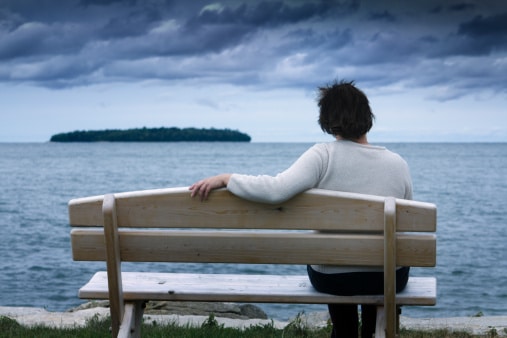
Being Out of Sync Highlights the Importance of Life’s Markers

On Walkdate 1019 (19 February 2024), I woke up feeling out of sync and disconnected from the world around me. As I opened my eyes, I realized that I was in an empty apartment, a place that had become my home since my wife died. Despite being used to this routine, I couldn’t help but feel a sense of unease. The inside temperature was at 64 degrees Fahrenheit and falling, reminding me of how my life had become unsynchronized and how I needed to find a way to get back on track.

Life Can Change on a Dime

My family and friends often criticize me for being too attached to my routines, which they believe inhibited my potential. However, the last thirty-six hours have given me a new perspective. Being out of sorts helped me understand the essential guardrails that gave structure to my life and the areas where I could afford to be more flexible. Finding the right balance between the two was vital to achieving my goals and living a fulfilling life.

On a peaceful Saturday morning, I stood outside my house, waiting for the ride to take me to the Temple. While waiting, I received a text message from a fellow widow seeking my support. I felt a sense of warmth and enthusiasm as I replied, telling her I would be happy to meet her after the services and call her as soon as I returned home to confirm whether she needed me to come over or not.

Rav Uri delivered an inspiring sermon about the Palace of Light. His words touched me deeply and challenged me to reflect on improving my life. I felt a strong urge to talk to him about his words and seek guidance, but unfortunately, I had to leave the Oneg, the gathering after the service, quickly. Nevertheless, I couldn’t stop thinking about his words and how they could assist me in my journey.

As the car dropped me off in front of my apartment building, I quickly pulled out my phone to call my friend. She answered on the first ring, and I asked if I could come over to help her. She responded with an immediate yes, and I breathed a sigh of relief. As I started to walk across Alden Street, I could feel my heart rate slowing down a bit, knowing that I would soon be on my way to help my friend.

Once inside my apartment, I made a beeline for my bedroom to gather some clothes and personal items. I knew I needed to leave the house as quickly as possible. After grabbing what I needed, I pulled up the transit app on my phone to check the train schedule. Luckily, I saw that I had just enough time to make it to the train station.

I exited my apartment and sprinted down the street to the station. The train was pulling into the station as I arrived, and I quickly jumped on board. I was relieved to have made it on time but still felt anxious about what was coming next.

Helping a Friend Helps Me
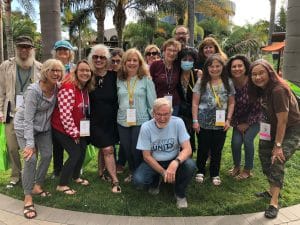
When I arrived at my friend’s house, she awaited me at the front door. We hugged tightly, and I could feel the tension in our bodies dissipate. I did my best to provide her with the support and comfort she needed, listening to her as she talked about what was happening in her life.

As the night wore on, we both became too tired to talk, and I grabbed a set of sheets and a blanket to sleep on the couch. However, I found the sofa quite uncomfortable and tossed and turned throughout the night. Despite the discomfort, I tried to stay present and engaged in the conversation, listening to my friend talk about her fears and worries.

In the middle of the night, I woke up, momentarily disoriented. But as I looked around the room, I remembered where I was and what had happened. I could hear my friend breathing steadily in her bed, and I knew I had slept on the couch so she could have a good night’s sleep.

In the morning, I noticed her refrigerator was almost empty, except for a few expired items. I saw an unopened water bottle and asked her if I could drink from it. She agreed, and I took a big sip. I then asked if she had any toothpaste, as I had brought a temporary toothbrush. Unfortunately, she didn’t have any. We chatted for a bit, and I helped her order some food. Later, another friend came over, and I got ready to leave. Before I went, the new arrival warned me to be careful because the snow outside was fresh but wet.

I Am Trying to Resync My Life

The idea of stopping at a diner for breakfast lingered in my mind. However, the slushy snow had made it impossible to walk. So, I opted to catch the train, which got me home late in the morning. I was ravenous by then and decided to have a light breakfast of orange juice, a banana, and an English muffin. After that, I switched into my comfortable walking clothes and shoes. Even though it was six hours later than my usual walk, I was determined to take it. The sidewalks were a mix of clear and icy patches that would only worsen after sunset unless treated. Despite the challenging conditions, I maintained my customary positivity and greeted the shovelers I encountered. It made the walk feel like any other, even though it was surreal given the unusual circumstances.

As I made my way home, the sun was already high in the sky, and I realized I had missed breakfast. So, I decided to have it for lunch instead. After finishing my meal, I took a relaxing shower and started doing the laundry. I hoped to have a typical day, but my plans derailed. When it was time for dinner, I went to the fridge to look for some leftovers, but to my surprise, I couldn’t find any. I was too tired to cook and realized I was out of sync.

After finishing up my thirteenth book for the year, I went to bed early, hoping to catch up on some rest. However, the child next door was still up, and I feared the noise would keep me awake. I checked my watch and discovered I had been awake for twenty hours. My head was heavy as I lay down on the pillow, and I slept so soundly that I didn’t even wake up to go to the bathroom.

Pages: 1 2

1 comment add your comment

Share your thoughts and ideas

This site uses Akismet to reduce spam. Learn how your comment data is processed.

The Jan Lilien Education Fund!

The Hidden Habits of Genius

Read: September 2019

Get this book

The Hidden Habits of Genius

by Craig Wright

The Hidden Habits of Genius: Beyond Talent, IQ, and Grit―Unlocking the Secrets of Greatness by Craig Wright, Ph.D., I got through my membership in One Day University.

Dr. Wright raises many important questions as he analyses fourteen (14) critical traits of genius. Professor Craig Wright, creator of Yale University’s famous “Genius Course,” explores what we can learn from brilliant minds that have changed the world.

What we often presume about a genius does not match reality. Among other interesting observations, Dr. Wright reminds the reader that Picasso could not pass a fourth-grade math test, and Steve Jobs’s high school GPA was 2.65. He questions why to teach children to behave and play by the rules when transformative geniuses do not.

Examining the lives of transformative individuals ranging from Charles Darwin and Marie Curie to Leonardo Da Vinci and Andy Warhol to Toni Morrison and Elon Musk, Wright identifies more than a dozen drivers of genius, characteristics and patterns of behavior common to great minds throughout history. He argues that genius is about more than intellect and work ethic and that the famed “eureka” moment is a Hollywood fiction. Brilliant insights that change the world are never sudden, but rather, they are the result of unique modes of thinking and lengthy gestation.

I found the book to be a fascinating read and raised more questions for future thought and reading. Professor Wright argues that the habits of mind that produce great thinking and discovery can be actively learned and cultivated. In the book, he explains how. He notes that reading the book will not make you a genius but can “make you more strategic, creative, and successful, and, ultimately, happier.

Subscribe

Contact Us

×
Salvage the Bones: A Novel

Read: September 2024

Get this book

Salvage the Bones: A Novel

by Jesmyn Ward

I’ve started reading “Salvage the Bones: A Novel” by Jesmyn Ward, a two-time National Book Award winner and author of “Sing, Unburied, Sing.” The book delivers a gritty yet tender story about family and poverty in the days leading up to Hurricane Katrina. Hurricane Helene’s devastation makes it the perfect time to read this book. The novel is among The New York Times’ 100 Best Books of the 21st Century.

The story is set in Bois Sauvage, Mississippi, where a hurricane is building over the Gulf of Mexico, threatening the city. Esch’s father is growing concerned, although he is often absent and a heavy drinker. Esch and her three brothers are stocking food, but there is little to save. Esch, who is fourteen, is pregnant and struggling to keep down the little food she gets. Her brother Skeetah is trying to care for his pit bull’s new litter, which is dying one by one. Meanwhile, brothers Randall and Junior struggle with family dynamics and lack parental guidance.

As the twelve days that make up the novel’s framework yield their dramatic conclusion, this unforgettable family – motherless children sacrificing for one another, protecting and nurturing where love is scarce – pulls itself up to face another day. The novel is a big-hearted story about familial love and community against all odds, offering a wrenching look at the lonesome, brutal, and restrictive realities of rural poverty. “Salvage the Bones” is a revelatory, honest, and poignant exploration of social issues, filled with poetry and emotional depth.

×
These Summer Storms

Read: July 2025

Get this book

These Summer Storms

by Sarah MacLean

These Summer Storms by Sarah MacLean is a poignant and thoughtful story about the transformative power of grief, love, and family—the novel delves into past secrets, present truths, and futures shaped by wild summer storms. Alice Storm has not been welcome at her family’s magnificent private island off the Rhode Island coast for five years—not since she was cast out and built her life apart from the Storm name, its influence, and untold billions.

However, the shocking death of her larger-than-life father changes everything. Alice plans to keep a low profile, pay her final respects (as complicated as they are), and leave as soon as the funeral concludes. Unfortunately, her father had other plans. The eccentric and manipulative patriarch left his family a final challenge—an inheritance game designed to disrupt their lives. The rules are straightforward: spend one week on the island, complete their assigned tasks, and receive the inheritance.

Spending an entire week on Storm Island presents challenges for Alice. The old house is chaotic in every corner: her older sister’s secret love affair, her brother displays unwavering arrogance, and her younger sister is constantly analyzing the “vibes.” All of this is under the stern, watchful gaze of Jack Dean, her father’s intriguing and too-handsome second-in-command. It will take a miracle for Alice to escape unscathed.


Sarah MacLean is the author of sixteen New York Times bestselling novels, translated into more than twenty-five languages. She co-hosts the weekly romance novel podcast Fated Mates and is a prominent voice in the romance genre. A product of Rhode Island summers and New England storms, MacLean now lives with her family in New York City.


When you purchase a book through one of my links, I earn a small commission that helps support my passion for reading. This contribution allows me to buy even more books to share with you, creating an incredible cycle of discovering great reads together! Your support truly makes a difference!

Enjoy a limited-time offer of 20% off your next book purchase at Bookshop.org!


×
We the Animals

Read: July 2024

Get this book

We the Animals

by Justin Torres

Today, I embarked on the literary journey of We the Animals by Justin Torres. This novel, listed among the New York Times’ 100 Best Books of the Century, is a groundbreaking work of art. The author of Blackouts immerses us in the tumultuous heart of a family, the intense bonds of three brothers, and the mythic impact of this fierce love on the individuals we are destined to become.

The narrative unfolds as three brothers navigate their way through childhood, a journey filled with emotional highs and lows, from playful acts like smashing tomatoes on each other to finding solace in each other’s company during their parents’ conflicts and even tiptoeing around the house as their mother rests after her graveyard shift. Paps and Ma, hailing from Brooklyn—he’s Puerto Rican, she’s white—share a profound and challenging love, shaping and reshaping the family numerous times. Life in this family is intense and all-consuming, filled with disorder, heartache, and the ecstasy of belonging to each other.

From the intense familial unity, a child feels to the profound alienation he endures as he begins to see the world, this beautiful novel doesn’t just tell a coming-of-age story; it reinvents it in a sly and punch-in-the-stomach powerful way. It delves into themes such as love, the meaning of family, and heartache, adding another layer of depth and complexity to the story.

×
We Do Not Part

Read: March 2025

Get this book

We Do Not Part: A Novel

by Han Kang

Today, I explored “We Do Not Part,” the latest novel by Han Kang, the 2024 Nobel Prize in Literature laureate. Translated by the talented e. yaewon and Paige Aniyah Morris, this book offers a remarkable journey. The New York Times has called it Kang’s most revealing work since her acclaimed novel, “The Vegetarian.” What captivates me the most is how it intricately weaves the story of two women’s friendship while shedding light on a hidden chapter of Korean history.

One winter morning, Kyungha receives an urgent message from her friend Inseon, asking her to visit a hospital in Seoul. Inseon has injured herself in an accident and begs Kyungha to return to Jeju Island, where she lives, to save her beloved pet—a white bird named Ama. A snowstorm hits the island when Kyungha arrives. At all costs, she must reach Inseon’s house, but the icy wind and blizzards slow her down as night falls. She wonders if she will arrive in time to save the animal—or even survive the terrible cold that envelops her with every step. Lost in a world of snow, she does not yet suspect the vertiginous plunge into darkness that awaits her at her friend’s house.

Blurring the boundaries between dream and reality, “We Do Not Part” powerfully illuminates a forgotten chapter of Korean history buried for decades, bringing to light the lost voices of the past to prevent them from fading into oblivion. It is both a tribute to enduring friendship and a plea for remembrance. The novel tells a story of profound love in the face of unspeakable violence and celebrates life, however fragile.


Han Kang was born in 1970 in South Korea. She is the author of The Vegetarian, which I have read, and winner of the International Booker Prize,  Human ActsThe White BookGreek Lessons, and We Do Not Part. In 2024, she received the Nobel Prize in Literature.

e. yaewon is based in Korea and translates from and into Korean, including titles by Hwang Jungeun, Deborah Levy, and Samuel Beckett.

Paige Aniyah Morris divides her time between the United States and Korea. Recent translations include works by Pak Kyongni, Ji-min Lee, and Chang Kang-myoung.


When you purchase a book through one of my links, I earn a small commission that helps support my passion for reading. This contribution allows me to buy even more books to share with you, creating an incredible cycle of discovering great reads together! Your support truly makes a difference!


×
The Fraud: A Novel

Read: December 2023

Get this book

The Fraud: A Novel

by Zadie Smith

I started reading The Fraud: A Novel by Zadie Smith today. The book is a kaleidoscopic work of historical fiction that revolves around a legal trial that divided Victorian England. The story is set in 1873, where Mrs. Eliza Touchet, a Scottish housekeeper and cousin by marriage of a once-famous novelist, William Ainsworth, lives with him for thirty years. Mrs. Touchet is interested in literature, justice, abolitionism, class, and her cousin’s wives.

However, she is skeptical of her cousin’s talent, Mr. Charles Dickens’ character, and England’s facades, in which nothing is as it seems.

On the other hand, Andrew Bogle grew up enslaved on the Hope Plantation in Jamaica. He knows that every lump of sugar comes at a human cost, that the rich deceive the poor, and that people are more easily manipulated than they realize. When Bogle finds himself in London, a star witness in a celebrated case of imposture, he knows that his future depends on telling the right story.

The “Tichborne Trial” captivates Mrs. Touchet and all of England. The trial involves a lower-class butcher from Australia who claimed he was the rightful heir of a sizable estate and title. The question is whether Sir Roger Tichborne is genuinely who he says he is or whether he’s a fraud. In a world of hypocrisy and self-deception, deciding what’s real is complicated for Mrs. Touchet and Mr. Bogle.

The Fraud is a dazzling novel about truth and fiction, Jamaica and Britain, fraudulence and authenticity, and the mystery of “other people.” It’s based on historical events.


The Jan Lilien Education Fund sponsors ongoing sustainability and environmental awareness programs. Gifts made this month; I will match dollar-for-dollar. All donations are tax-deductible.

Subscribe

Contact Us

I receive a commission when you buy a book or product using a link on this page. Thank you for supporting Sharing Jan’s Love blog.


×

Discover more from Sharing Jan’s Love

Subscribe now to keep reading and get access to the full archive.

Continue reading