
Choosing to Participate Fully in Life!

Choosing to Participate Fully in Life!

Estimated reading time: 1 minute, 40 seconds
“Living alone is difficult,” she stated with conviction. “Since my husband died, my life has been empty.”

Not sure how to respond, I said, “I remember what Teddy Roosevelt said on Valentine’s Day 1884 when he lost his wife and mother. ‘The light has gone out of my life.'”

“Yes, that is how I feel.”

But he grieved and then chose to grow…


As I approach two years without Jan, I often consider how I have managed grief.

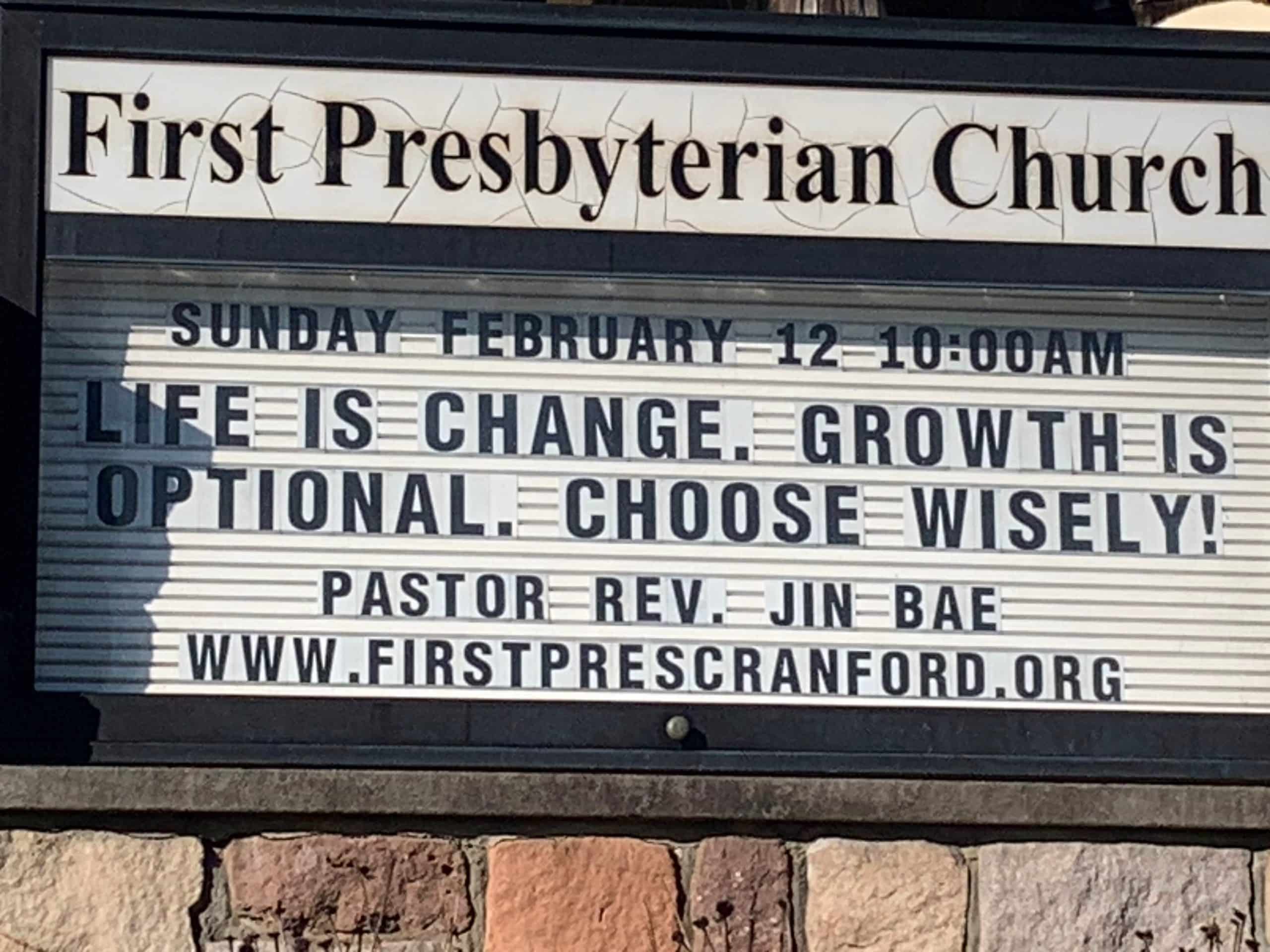
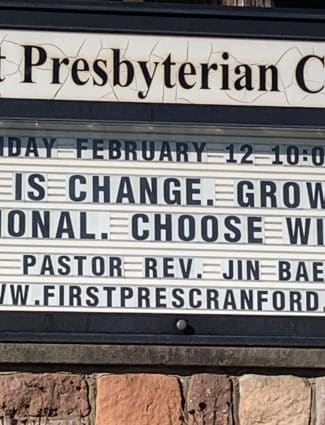
On my morning walks, I read the following message on the marquee at the First Presbyterian Church in Cranford,

LIFE IS CHANGE. GROWTH IS OPTIONAL. CHOOSE WISELY!

Unlike Roosevelt, I did not have a ranch in the Dakota Territory, so my grieving turned me into a bobblehead tossed, turned, and swallowed by the Rhaway River.

Afraid grief would destroy me, I chose to grow and actively participate in my life.

I celebrated Jan’s life and helped build a memorial garden in Hanson Park.

Each of those baby steps helped me thru the darkest days of my grief.

By accepting that grief has been an outstanding teacher, I have learned to live life fully.

It is also why I focus on mensch-in-training activities.

By living fully, I know I am not only doing what Jan wanted me to do, but if we were to meet now, she would see someone she could love, not someone so drained by a loss that they are an empty shell.

Have I chosen wisely?


The Jan Lilien Education Fund sponsors ongoing sustainability and environmental awareness programs. Gifts made this month; I will match dollar-for-dollar. All donations are tax-deductible.

Subscribe

Contact Us

I receive a commission when you buy a book or product using a link on this page. Thank you for supporting Sharing Jan’s Love blog.



Bringing Jan With Me!

Although I focused on what I had lost in the initial hours and days after Jan died, the only way forward was to focus on what I gained, not what I lost.

My addition calculation begins with Merrit Malloy's poem Epitaph, which was read at Jan's funeral and will be a part of mine.

Love doesn't die, People do. So, when all that's left of me Is love, Give me away.

Share your thoughts and ideas

This site uses Akismet to reduce spam. Learn how your comment data is processed.

The Jan Lilien Education Fund!

Choosing to Participate Fully in Life!
×
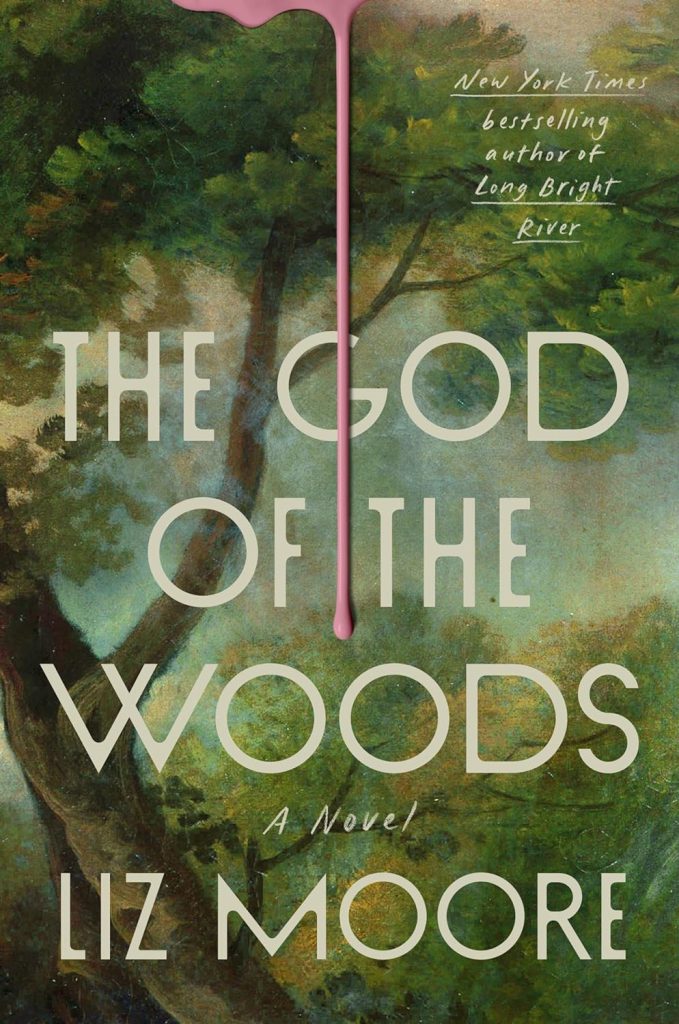
The God of the Woods: A Novel

Read: July 2024

Get this book

The God of the Woods: A Novel

by Liz Moore

I started reading “The God of the Woods: A Novel” by Liz Moore today. Several reviews recommended it as a great summer read. The story is set in August 1975, the same month and year my spouse Jan and I married. Liz Moore weaves a multi-threaded story, inviting readers into a rich and gripping dynasty of secrets and second chances.

The novel begins with a camp counselor discovering an empty bunk at an Adirondack summer camp belonging to thirteen-year-old Barbara Van Laar, who has mysteriously vanished. Barbara is not just any teenager; she is the daughter of the family that owns the camp and employs many residents. What makes this disappearance even more intriguing is that Barbara’s older brother went missing similarly fourteen years ago and was never found.

As the search for Barbara begins, the novel unfolds into a thrilling drama, delving into the deeply buried secrets of the Van Laar family and the blue-collar community working in its shadow. This novel is said to be Liz Moore’s most ambitious and wide-reaching work yet.

×
Bonding

Read: July 2025

Get this book

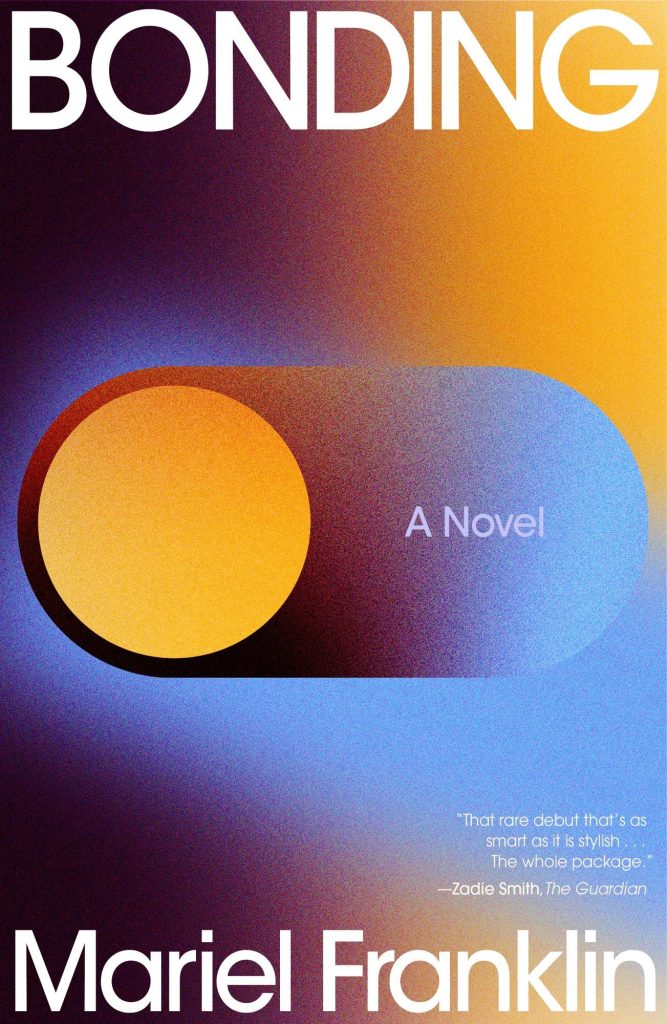
Bonding: A Novel

by Mariel Franklin

Mariel Franklin‘s debut novel, “Bonding,” is electrifying, sharp, and darkly humorous. It delves into the intersections of sex, technology, and pharmaceuticals in our digitally-driven world. The protagonist, Mary, is weary from a constant cycle of casual relationships and unstable jobs. After facing yet another career setback, she decides to escape to Ibiza.

There, at a party, she meets Tom, a brilliant chemist on the verge of launching a drug made to cure the anxieties of modern life.

Back in London after a heady trip, Mary runs into her volatile and driven sort-of-ex Lara, who has channeled her ambitions into an innovative dating app designed to revolutionize the industry.

When Mary begins working for Lara and falling for Tom, tech and pharma collide with shocking consequences, forcing her to question what love and success mean in a world that is hurtling out of control. A searing, elegiac satire of the way we live and work, Mariel Franklin‘s perceptive and unnerving Bonding heralds the arrival of a blazing new talent.


Mariel Franklin lives and works in London. She has an MA in English from Edinburgh University and later went on to study fine art at Goldsmiths. After graduating, she spent several years working in data administration in the tech industry. Bonding is her first novel.


When you purchase a book through one of my links, I earn a small commission that helps support my passion for reading. This contribution allows me to buy even more books to share with you, creating an incredible cycle of discovering great reads together! Your support truly makes a difference!

Enjoy a limited-time offer of 20% off your next book purchase at Bookshop.org!


×
Hello Beautiful

Read: March 2023

Get this book

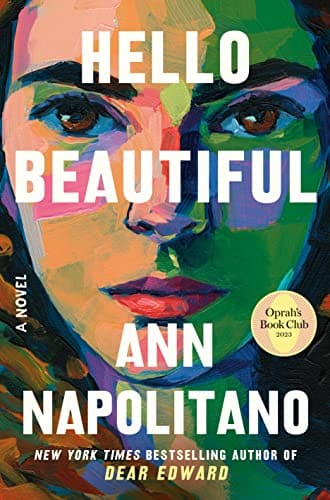
Hello Beautiful

by Ann Napolitano

Hello Beautiful by Ann Napolitano is a gorgeous, profoundly moving portrait of what’s possible when we choose to love someone, not despite who they are but because of it. Although several sources recommended Hello Beautiful, I chose the novel based on the title as it is how I always greeted Jan. I highly recommend this book as it is one of the best I have ever read.

Hello Beautiful is an exquisite homage to Louisa May Alcott’s timeless classic, Little Women. Knowing it was not him, William Waters’s experience growing up as an only child was an engaging character in the early portion of the novel. However, my hero was Sylvie, the dreamer who pursued true love and found it in a place one would less expect to find it. The consequences of her love reverberate over decades in their families

The following passage is one example of a well-written book.

We’re separated from the world by our own edges,” Charlie Padavano says to Sylvie in “Hello Beautiful.” He continues, “We’re all interconnected, and when you see that, you see how beautiful life is.

The interconnections of the characters make this novel one of the best I have read. If only more of us could learn the lessons that Charlie Padavano shared with Sylvie.

As a man on a lifetime grief journey, this exchange echoes my experience.

When an old person dies,” Kent said, “even if that person is wonderful, he or she is still somewhat ready, and so are the people who loved them. They’re like old trees, whose roots have loosened in the ground. They fall gently. But when someone like your aunt Sylvie dies—before her time—her roots get pulled out and the ground is ripped up. Everyone nearby is in danger of being knocked over.”

Grief is love.” Now Alice thought: Forgiveness is too.

The Goodreads summary provides an overview,

William Waters grew up in a house silenced by tragedy, where his parents could hardly bear to look at him, much less love him. So it’s a relief when his skill on the basketball court earns him a scholarship to college, far away from his childhood home. He soon meets Julia Padavano, a spirited and ambitious young woman who surprises William with her appreciation of his quiet steadiness. With Julia comes her family; she is inseparable from her three younger sisters: Sylvie, the dreamer, is happiest with her nose in a book and imagines a future different from the expected path of wife and mother; Cecelia, the family’s artist; and Emeline, who patiently takes care of all of them. Happily, the Padavanos fold Julia’s new boyfriend into their loving, chaotic household.

But then darkness from William’s past surfaces, jeopardizing not only Julia’s carefully orchestrated plans for their future, but the sisters’ unshakeable loyalty to one another. The result is a catastrophic family rift that changes their lives for generations. Will the loyalty that once rooted them be strong enough to draw them back together when it matters most?


The Jan Lilien Education Fund sponsors ongoing sustainability and environmental awareness programs. Gifts made this month; I will match dollar-for-dollar. All donations are tax-deductible.

Subscribe

Contact Us

I receive a commission when you buy a book or product using a link on this page. Thank you for supporting Sharing Jan’s Love blog.


×
Breathe

Read: September 2021

Get this book

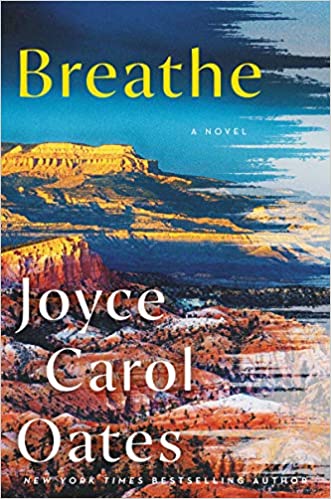
Breathe

by Joyce Carol Oates

Celebrate JanReading Breathe by Joyce Carol Oates was a book I knew I needed to read once Jan was diagnosed. Although the book might trigger negative memories, I finally read Breathe. It was what I needed to read at this point in my journey.

Ms. Oates wrote the book in 2019 after her husband, Charlie Gross, died. The novel is a story of love, loss, and loneliness, topics that I write about on this blog. I needed to read the book both for my mental health and for the readers of Sharing Jan’s Love.

The protagonist, Michaela, loses her husband while they are on a sabbatical in New Mexico. Her husband, Gerard, writes a book and teaches a class on memories. Jan and I never considered relocating before her illness, but this book convinced me that it would have aggravated my grief journey.

One of the parallels I observed while reading the novel is the similarity between Gerard’s reluctance to let family, friends, and co-workers know of his illness. Jan shared that reluctance in the early days, but I convinced her that the only chance of beating cancer was with the help of family and friends.

This dialogue could easily be one that Jan and I had.

Of course you want to summon his family—his (adult) children—but quickly, he says no.

Still waiting.

But – When?

Just not yet.

He is not an alarmist. (You are the alarmist.)

The novel is written in two parts – The Vigil and the Post-Mortem.

The opening paragraphs set the tone.

A Hand is gripping yours. Warm, dry hand gripping your slippery, humid hand.

Whoever it is urging you – Breathe!

Leaning over you begging you – Breathe!

As one mourning the death of the love of his life, I found several phrases in the book helpful in understanding what I have gone through and will continue to confront.

Among them is grief-vise, which I have written about in this stream.

In the grip of the grief vise, all that you will do, all that you even imagine doing, will require many times more effort.. Hardly daring to breathe for the grief-vise will tighten around your chest, squeezing the very air out of your lungs.

In the early stages of grief, the vise was strangling me. Breathing was impossible, and weeping was constant at times.

Michaela struggles with her grief. Seeing her husband every time she sees a man alone, even if they are older or younger than he was. I know I have felt Jan’s presence and still expect her to walk into our apartment.

Her struggles with a grief counselor and overly helpful friends are an experience I have not had but are familiar to those suffering from losing a loved one.

The last chapters are ones in which time becomes confusing and chaotic. At times, I was uncertain about which were real or imagined. The end, like all good novels, was ambiguous.

These are some of the other phrases I have found useful and will include in posts.

  • If there is no one to love, do we merit existence?
  • Never come to the end of kissing.
  • The first principle of life is; Breathe.
  • Shy in the language of intimacy.
  • As if a life lived with strangers could compensate for the emptiness in your heart.
  • No purpose in your life. No compass.

What you love most, that you will lose. The price of your love is your loss.

I recommend this book to all readers, even those struggling with grief.

Subscribe

Contact Us

When you buy a book or product using a link on this page, I receive a commission. Thank you for supporting Sharing Jan’s Love blog.

×
The Antidote

Read: October 2025

Get this book

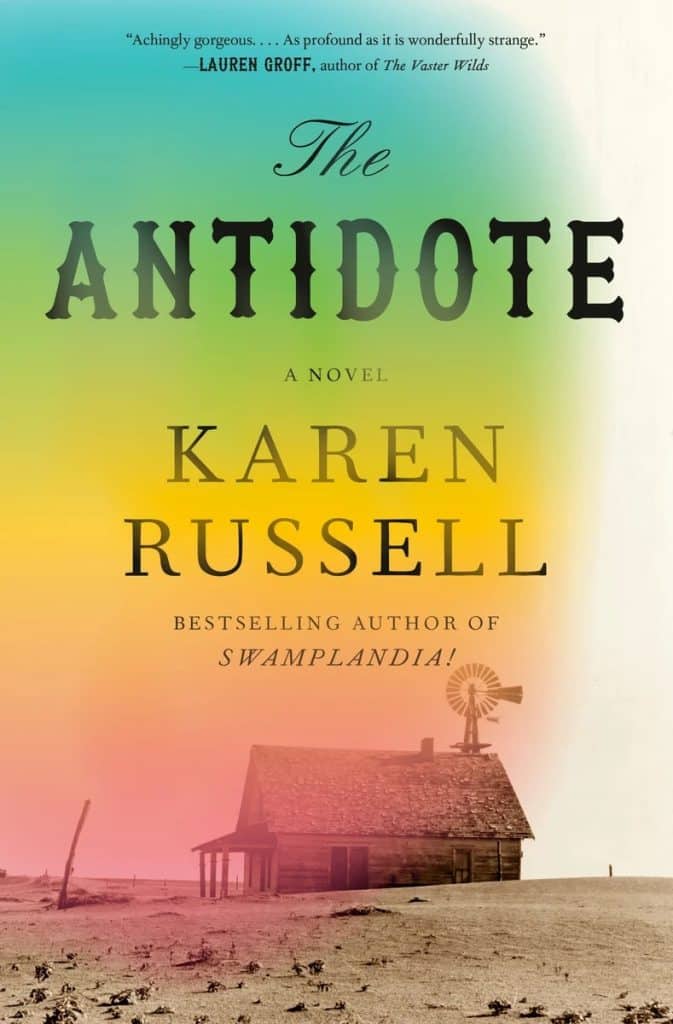
The Antidote: A Novel

by Karen Russell

Karen Russell‘s The Antidote, a finalist in the fiction category for the 2025 National Book Award, serves as a profound reckoning with a nation’s tendency to forget. It addresses the settler amnesia and deliberate omissions that have been passed down through generations, revealing not only horrors but also shimmering possibilities. The Antidote resonates with urgent warnings about our current climate emergency, prompting readers to reflect on what might have been and what is still possible.

The Antidote opens on Black Sunday, as a historic dust storm ravages the fictional town of Uz, Nebraska. But Uz is already collapsing—not just under the weight of the Great Depression and the Dust Bowl drought but beneath its own violent histories.

The Antidote follows a “Prairie Witch,” whose body serves as a bank vault for peoples’ memories and secrets; a Polish wheat farmer who learns how quickly a hoarded blessing can become a curse; his orphan niece, a basketball star and witch’s apprentice in furious flight from her grief; a voluble scarecrow; and a New Deal photographer whose time-traveling camera threatens to reveal both the town’s secrets and its fate.


Karen Russell is the author of six fiction books, including the New York Times bestsellers Swamplandia! and Vampires in the Lemon Grove. She is a MacArthur Fellow, a Guggenheim Fellow, and a Pulitzer Prize finalist.

She has received two National Magazine Awards for Fiction, the Shirley Jackson Award, the 2023 Bottari Lattes Grinzane Prize, and the 2024 Mary McCarthy Prize, and was selected for the National Book Foundation’s 5 Under 35 award and The New Yorker’s 20 Under 40 list (she is now decisively over forty).

She serves on the board of Street Books, a mobile library for people living outdoors. Born and raised in Miami, Florida, she lives in Portland, Oregon, with her husband, son, and daughter.


Discover your next favorite book and dive into a world of curated, exciting reads by purchasing through my links. You’ll have access to a diverse selection of books that I’ve personally vetted to ensure quality and enjoyment. Additionally, by supporting these selections, you’ll help me continue to provide you with more personalized recommendations. I earn a small commission from your purchase, which allows me to buy and share even more books with you. Your support truly makes a difference!


×
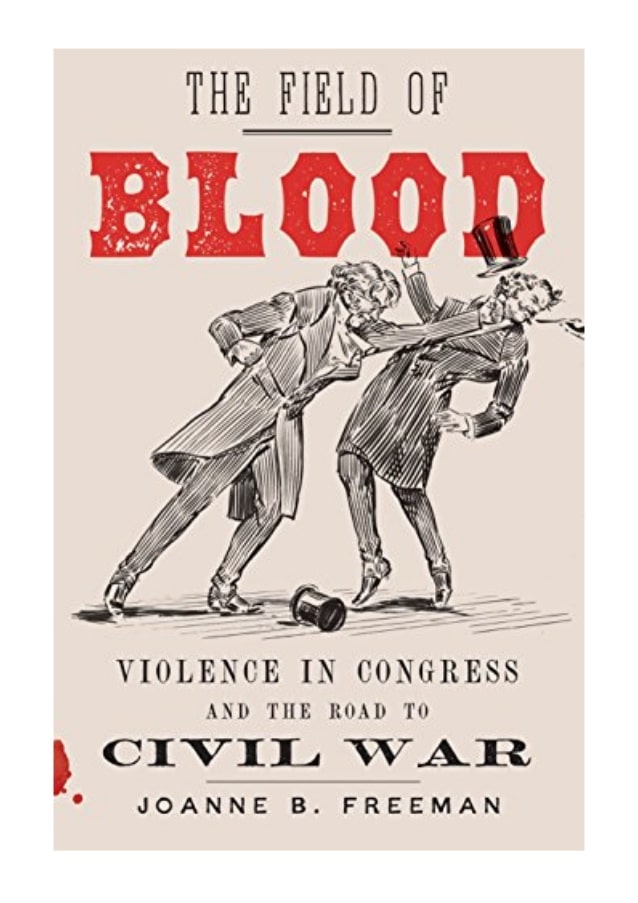
The Field of Blood: Violence in Congress and the Road to Civil War

Read: March 2019

Get this book

The Field of Blood

by Joanne B. Freeman

The Field of Blood: Violence in Congress and the Road to Civil War by Joanne B. Freeman, Professor of History and American Studies at Yale University, is a must-read in our hyper-partisan times. The partisanship and divisiveness of the period before the Civil War have many parallels to our time, and the difference is the violence of the Civil War era. Professor Freeman recovers the long-lost story of physical violence on the floor of the U.S. Congress.

She can do this by first source materials from Benjamin Brown French. He was never elected to office but was an acquaintance of twelve consecutive presidents, from Andrew Jackson to Ulysses S. Grant. In addition, he maintained a diary for forty years that highlighted the violence and his and the nation’s political transformation.

During much of this period, he was the Clerk in the House.  His diary documents the violence that did not get covered by the press. Legislative sessions included mortal threats, canings, flipped desks, and all-out slugfests. When debate broke down, members of Congress drew pistols and waved Bowie knives. One representative even killed another in a duel. Many were beaten and bullied in an attempt to intimidate them into compliance, particularly on the issue of slavery.

The Field of Blood is one of four books I purchased after my first One Day University class.

Subscribe

Contact Us

×