
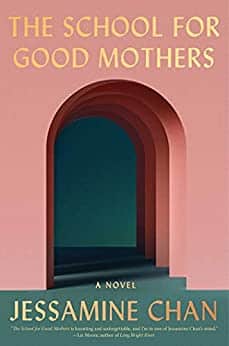
The School for Good Mothers

Estimated reading time: 2 minutes, 35 seconds

The School for Good Mothers by Jessamine Chan is a searing page-turner that is also a transgressive novel of ideas about the perils of “perfect” upper-middle-class parenting; the violence enacted upon women by both the state and, at times, one another; the systems that separate families; and the boundlessness of love, The School for Good Mothers introduces, in Frida, an everywoman for the ages.

Although it has been forty-two years since I became a parent, I still remember the anxiety of being a father. What if I could not be a good dad? Fortunately, I never had a bad like Frida. or lived in an age where parents would be sent to “a Big Brother-like institution that measures the success or failure of a mother’s devotion.”

Reading The School for Good Mothers was a reminder that solutions like this are possible unless we are willing to invest in families so that the skills and support are there to resolve any issues in the home. As a widow, I found Frida’s inner dialogue comparable to the early stages of my grief journey—the total isolation and fear of failing dominated my first months of mourning.

The School for Good Mothers had been on my book list since the middle of last year. I recommend it without reservations! Jan would have already read it, and we would be debating its fine points.

The Goodreads summary provides an overview,

In this taut and explosive debut novel, one lapse in judgement lands a young mother in a government reform program where custody of her child hangs in the balance.

Frida Liu is struggling. She doesn’t have a career worthy of her Chinese immigrant parents’ sacrifices. She can’t persuade her husband, Gust, to give up his wellness-obsessed younger mistress. Only with Harriet, their cherubic daughter, does Frida finally attain the perfection expected of her. Harriet may be all she has, but she is just enough.

Until Frida has a very bad day.

The state has its eyes on mothers like Frida. The ones who check their phones, letting their children get injured on the playground; who let their children walk home alone. Because of one moment of poor judgment, a host of government officials will now determine if Frida is a candidate for a Big Brother-like institution that measures the success or failure of a mother’s devotion.

Faced with the possibility of losing Harriet, Frida must prove that a bad mother can be redeemed. That she can learn to be good.

Using dark wit to explore the pains and joys of the deepest ties that bind us, Chan has written a modern literary classic.


The Jan Lilien Education Fund sponsors ongoing sustainability and environmental awareness programs. Gifts made this month; I will match dollar-for-dollar. All donations are tax-deductible.

Subscribe

Contact Us

I receive a commission when you buy a book or product using a link on this page. Thank you for supporting Sharing Jan’s Love blog.


The Jan Lilien Education Fund!

Autocracy, Inc.: The Dictators Who Want to Run the World

Read: January 2025

Get this book

Autocracy, Inc.

by Anne Applebaum

Today, I plunged into the captivating world of “Autocracy, Inc.: The Dictators Who Want to Run the World” by Anne Applebaum. I listened to an engaging discussion between her and the Executive Director of the YIVO Institute for Jewish Research, Jonathan Brent. Their insights left me eager for more, and I couldn’t resist making this book my next read. I’m thrilled to dive deeper into her thought-provoking perspective!

This compelling New York Times bestseller by the Pulitzer Prize-winning author paints a chilling picture of how autocratic regimes join forces to erode democracy globally. Applebaum sheds light on this pressing issue and offers insights on how we can unite to fight back.

We think we know what an autocratic state looks like: An all-powerful leader is at the top. He controls the police. The police threaten the people with violence. There are evil collaborators and maybe some brave dissidents.

But in the 21st century, that bears little resemblance to reality. Nowadays, autocracies are underpinned not by one dictator but by sophisticated networks composed of kleptocratic financial structures, surveillance technologies, and professional propagandists, all of which operate across multiple regimes, from China to Russia to Iran. Corrupt companies in one country do business with corrupt companies in another. The police in one country can arm and train the police in another, and propagandists share resources and themes, pounding home the same messages about the weakness of democracy and the evil of America.

International condemnation and economic sanctions cannot move the autocrats. Even popular opposition movements, from Venezuela to Hong Kong to Moscow, don’t stand a chance. The members of Autocracy, Inc. aren’t linked by a unifying ideology, like communism, but rather by a common desire for power, wealth, and impunity. In this urgent treatise, which evokes George Kennan’s essay calling for “containment” of the Soviet Union, Anne Applebaum calls for the democracies to reorient their policies to fight a new threat fundamentally.


In the video, Jonathan Brent asks Anne Applebaum to read the last paragraph of “Autocracy, Inc.: The Dictators Who Want to Run the World.”

There is no liberal world order anymore, and the aspiration to create one no longer seems real. But there are liberal societies, open and free countries that offer a better chance for people to live useful lives than closed dictatorships do. They are hardly perfect. Those that exist have deep flaws, profound divisions, and terrible historical scars. But that’s all the more reason to defend and protect them. So few of them have existed across human history; so many have existed for a short time and then failed. They can be destroyed from the outside and from the inside, too, by division and demagogues. Or they can be saved. But only if those of us who live in them are willing to make the effort to save them.

After finishing Autocracy, Inc.: The Dictators Who Want to Run the World,” this closing paragraph should be a call to action. Failure to respond to the challenge will doom our future to an unacceptable one. I recommend this book and encourage people to read it, discuss its contents, and take action to save our collective future.


When you purchase a book through one of my links, I earn a small commission that helps support my passion for reading. This contribution allows me to buy even more books to share with you, creating an incredible cycle of discovering great reads together! Your support truly makes a difference!


×
Parable of the Talents

Read: January 2024

Get this book

Parable of the Talents

by Octavia E. Butler

This morning, I completed reading Octavia E. Butler‘s acclaimed post-apocalyptic novel Parable of the Sower and immediately started reading its sequel, Parable of the Talents, initially published in 1998. This second book is even more relevant today than it was back then. The novel’s timely message of hope and resistance in the face of fanaticism is shockingly prescient.

In 2032, Lauren Olamina survived the destruction of her home and family. She envisioned a peaceful community in Northern California, which she established based on her newly founded faith, Earthseed. This new settlement provides a haven for outcasts who face persecution following the election of an ultra-conservative president. The new president pledges to “make America great again,” but the country becomes increasingly divided and dangerous. Lauren’s subversive colony, a minority religious faction led by a young black woman, becomes a target for President Jarret’s oppressive regime characterized by terror and discrimination.

In the future, Asha Vere discovers the journals of her mother, Lauren Olamina, whom she never met. As she delves into her mother’s writings, she grapples with the conflict between Lauren’s responsibilities to her chosen family and her mission to guide humanity toward a brighter tomorrow.


The Jan Lilien Education Fund sponsors ongoing sustainability and environmental awareness programs. Gifts made this month; I will match dollar-for-dollar. All donations are tax-deductible.

Subscribe

Contact Us

I receive a commission when you buy a book or product using a link on this page. Thank you for supporting Sharing Jan’s Love blog.


×
Sing, Unburied, Sing

Read: October 2024

Get this book

Sing, Unburied, Sing

by Jesmyn Ward

I started reading Jesmyn Ward‘s novel Sing, Unburied, Sing today. The New York Times selected it as one of the best books of the 21st century and awarded it the National Book Award. According to The New York Times, Jesmyn Ward‘s historic second National Book Award winner is “perfectly poised for the moment.” It’s an intimate portrait of three generations of a family and an epic tale of hope and struggle.

Jojo is thirteen years old and is trying to understand what it means to be a man. He has several father figures to learn from, including his Black grandfather, Pop. However, Jojo’s understanding is complicated by other men in his life: his absent White father, Michael, who is being released from prison; his absent White grandfather, Big Joseph, who refuses to acknowledge him; and the memories of his deceased uncle, Given, who died as a teenager.

His mother, Leonie, is inconsistent in her and her toddler daughter’s lives. She is a flawed mother in constant conflict with herself and those around her. She is Black, and her children’s father is White. She wants to be a better mother but struggles to prioritize her children over her own needs, particularly her drug use. Tormented and comforted by visions of her deceased brother, which only come to her when she’s high, Leonie is embattled in ways that reflect the harsh reality of her circumstances.

When their father is released from prison, Leonie takes her kids and a friend in her car and drives north to Mississippi and Parchman Farm, the State Penitentiary. At Parchman, there is another thirteen-year-old boy, the ghost of a deceased inmate who carries the ugly history of the South with him in his wanderings. With his supernatural presence, this ghostly figure also has something to teach Jojo about fathers and sons, legacies, violence, and love.

Described as a majestic and unforgettable family story, ‘Sing, Unburied, Sing‘ is rich with Ward‘s distinctive, lyrical language. As noted by The Philadelphia Inquirer, her unique narrative style takes readers on ‘an odyssey through rural Mississippi’s past and present.’

×
Yellowface

Read: June 2023

Get this book

Yellowface: A Novel

by R.F. Kuang

I began reading Yellowface, a novel by R.F. Kuang, today. The storyline has been captivating as I scroll through the pages on my Kindle App. The book explores important themes such as cultural diversity, racism, the negative impact of cultural appropriation, and the alienation caused by social media. I find the protagonist, June Hayward, relatable and enjoyable to read about while experiencing Yellowface on my Kindle App.

June and Athena were both talented writers, but Athena’s success overshadowed June’s. After Athena’s sudden death, June rashly steals her completed manuscript, a groundbreaking novel about the Chinese laborers who contributed to World War I. June edits the book and takes credit for it, even going so far as to change her name and ethnicity for marketing purposes. She believes the story deserves to be told, regardless of who tells it.

As June’s book becomes a bestseller, she is haunted by the guilt of stealing Athena’s work. Her secret becomes harder to keep as evidence of her theft surfaces. June must confront her actions and decide how far she will go to protect her newfound success.


The Jan Lilien Education Fund sponsors ongoing sustainability and environmental awareness programs. Gifts made this month; I will match dollar-for-dollar. All donations are tax-deductible.

Subscribe

Contact Us

I receive a commission when you buy a book or product using a link on this page. Thank you for supporting Sharing Jan’s Love blog.


×
Being Mortal

Read: August 2019

Get this book

Being Mortal

by Atul Gawande

Before departing for Toronto to celebrate our 44th Wedding Anniversary, I went through the e-library. Everything on my list that I wanted to read was not available except for this book. Being Mortal by Atul Gawande is the book I read on our vacation before Jan’s diagnosis of non-Hodgkin Large B-cell Lymphoma.

Selecting Being Mortal might seem an accidental choice to some, and I believe it was a divine intervention. It prepared me to be a caregiver to my wife over the nineteen months of her fight with cancer. It helped me focus on the good life that my wife lived and not the pain and suffering.

Atul Gawande describes his book as “riveting, honest, and humane. Being Mortal shows that the ultimate goal is not a good death but a good life – to the very end.”

When I read the book, I wondered what I could have done to help my mother in her final years. The book offers an excellent overview of how nursing homes and assisted living facilities have struggled to meet the needs of their residents.

Dr. Gawande provides an in-depth overview of the benefits of hospice care. Although I knew of this option, reading this book helped me understand that I was ready for hospice when my wife came home for the last time.

He reminds us that “when it comes to the inescapable realities of aging and death, what medicine can do often runs counter to what it should.” As he writes in the book, the current system does not work and, in many cases, actually shortens life.

This book has had a lasting impact on my life. It allowed me to be a loving caregiver to my wife when she needed it more than anything else. I read it when it would be most beneficial to me.

I highly recommend this book.


Atul Gawande is the author of several bestselling books: Complications, a finalist for the National Book Award; Better; The Checklist Manifesto; and Being Mortal. He is also a surgeon at Brigham and Women’s Hospital in Boston, a staff writer for The New Yorker, and a professor at Harvard Medical School and the Harvard School of Public Health. He has won the Lewis Thomas Prize for Writing about Science, a MacArthur Fellowship, and two National Magazine Awards. In his work in public health, he is the Founder and Chair of Ariadne Labs, a joint center for health systems innovation, and Lifebox, a nonprofit organization dedicated to making surgery safer globally. He is also the chair of Haven, where he served as CEO from 2018 to 2020. He and his wife have three children and live in Newton, Massachusetts.


When you purchase a book through one of my links, I earn a small commission that helps support my passion for reading. This contribution allows me to buy even more books to share with you, creating an incredible cycle of discovering great reads together! Your support truly makes a difference!

Enjoy a limited-time offer of 20% off your next book purchase at Bookshop.org!


×
When I'm Gone, Look for Me in the East

Read: January 2023

Get this book

When I’m Gone, Look for Me in the East

by Quan Barry

When I’m Gone, Look for Me in the East by Quan Barry is a luminous novel that moves across a windswept Mongolia as a pair of estranged twin brothers make a journey of duty, conflict, and renewed understanding. Since Jan died, I have been sharing her love and not looking for her, so this novel attracted me as it was a counter-narrative. Are our lives our own, or do we belong to something more significant?

When I’m Gone, Look for Me in the East is a stunningly far-flung examination of our struggle to retain our convictions and discover meaning in a fast-changing world, as well as a meditation on accepting what is.

Although I know only a limited amount about Buddhism and even less about Mongolia, I found When I’m Gone, Look for Me in the East a fascinating page-turner of a novel.

Coincidently, while en route to see Memorial, we stopped to eat at a Mexican-Peruvian restaurant on Tenth Avenue in NYC. On the television was a continuous loop of a travelogue on Mongolia.

I found several quotes that I have used in other posts already.

  • “Sometimes faith is the only medicine available.”
  • “When the only hope is a boat and there is no boat, I will be the boat.”

I plan to use others in future posts.

Love never dies, and this quote echoed my belief.

“Love is neither created nor destroyed. It exists at all times and in all dimensions. Love is not something we create—it is something that wells up in us, like sap in a tree. It is an element in the fabric of the universe. Even on that distant day when sentient beings no longer exist, Love carries on. Perhaps our personal relationship to Love is impermanent, but Love itself is not.”

I highly recommend When I’m Gone, Look for Me in the East.

The Goodreads summary provides an overview,

Tasked with finding the reincarnation of a great lama somewhere in the vast Mongolian landscape, the young monk Chuluun seeks the help of his identical twin, Mun, who was recognized as a reincarnation himself as a child but has since renounced their once shared monastic life.

Harking back to her vivid and magical first novel set in Vietnam, Quan Barry carries us across a landscape as unforgiving as it is beautiful and culturally varied, from the stark Gobi Desert to the ancient capital of Chinggis Khan. As their country stretches before them, questions of the immortal soul, along with more earthly matters of love, sex, and brotherhood, haunt the twins, who can hear each other’s thoughts.


The Jan Lilien Education Fund sponsors ongoing sustainability and environmental awareness programs. Gifts made this month; I will match dollar-for-dollar. All donations are tax-deductible.

Subscribe

Contact Us

I receive a commission when you buy a book or product using a link on this page. Thank you for supporting Sharing Jan’s Love blog.


×