
The Infamous Walker Limps Home

Estimated reading time: 16 minutes, 57 seconds

Will My Heel Pain Stop My Daily Walking Streak?

“Richard!” A familiar voice called out just as I was about to step into the narrow alleyway between Sofia Color Lounge and the soon-to-open coffee shop where Beadsmith once stood. I turned around and saw—Eric! A genuine smile spread across my face as I recognized him. He was pushing a stroller, his daughter peeking out with bright, curious eyes.

His pregnant wife and in-laws gathered around him, creating a lively scene filled with laughter and warmth. It was a spontaneous moment of joy and connection, a beautiful reminder of the bonds we share in our community, even amid my foot pain. Their presence felt like a comforting balm to my aching heel, a testament to the healing power of human connection.

If my left foot hadn’t been hurting, I wouldn’t have met Eric’s wife and in-laws because I would have already been home. The throbbing pain felt as if a six-inch spike had been embedded in my heel, making me walk slower than my two grandsons, who are three and one years old. For the third day in a row, my left foot felt as if it belonged to someone else. This pain, a constant companion, had started to affect my daily routine, making even simple tasks like walking to the store a daunting challenge.

“Eric told us about you,” his mother-in-law said. “You are infamous.” My smile began to fade until Eric’s wife clarified, “Eric has said many great things about you—much better than being infamous.” I chuckled and congratulated her on the upcoming arrival of their second daughter. “I am ready for the baby to arrive,” she said.

As they continued their way home, I wished them blessings of joy and happiness.

Hobbling home through the alley that led to the parking lot, I started to wonder how much longer I could keep walking and talking with my neighbors. The emotional weight of this pain was heavy, making me feel like my world was shrinking around me, like the days after 9/11 when airplanes were grounded. Have my long, wandering walks come to an end?

After a quick self-assessment with the help of DuckDuckGo, I diagnosed myself with plantar fasciitis. This condition, which causes a stabbing pain near the heel, tends to be worse in the morning or after long periods of standing. My wife experienced a similar episode a decade ago, and I remembered both the pain she went through and her eventual improvement. Was this another delayed gift from her? I wondered whimsically. I read several articles and watched a few videos online to learn more about the condition, and the symptoms matched what I was experiencing.

As it was a holiday weekend, I drafted an email to my primary care physician, Dr. Gomathy Subramanian, through the patient portal. I carefully detailed my symptoms, the self-diagnosis I had made, and the steps I had taken to alleviate the pain. I also asked for her guidance on whether I should schedule an appointment with her or if she would recommend seeing a specialist. I mentioned the physical therapist in my building, whom I have used previously, and asked if they could be part of the treatment plan. I made sure to include all the necessary information for Dr. Subramanian to make an informed decision about my case.

Walking for 1097 Days

Confident in my self-diagnosis, I, like many men throughout history—especially widows—chose to treat myself. I visited Walgreens and bought support socks and a shoe insert to relieve my discomfort. I based this decision on my wife’s experience with a similar condition and my research. Although the socks were the most expensive I had ever purchased, they significantly improved my ability to walk pain-free around the house. I also researched and followed a regimen of foot exercises and stretches I found online, believing in the power of self-care and proactive management.

Testing the inserts by taking a quick walk around the block, I felt a surge of relief as they brought my pace back to nearly normal without any pain. I also found relief by soaking my feet in Epsom salts and doing a few stretches I discovered online. The relief I experienced was a powerful testament to the effectiveness of self-care and proactive management. It gave me a sense of control and reassurance, empowering me to take charge of my health and affirming that I was on the right track. The feeling of power and relief from self-care was like a beacon of hope amid my health challenges.

However, on Monday morning, my walking pace dropped to an all-time low of 1.7 miles per hour, and I could only manage a two-mile walk before returning home, pain and fear taking over. I received a message through the portal of Summit Internal Medicine from Dr. Gomathy Subramanian, who suggested I see a podiatrist. I called the first one, which fortunately accepted my insurance, but the earliest appointment was four days away.

After adding the appointment details to my calendar, I began pondering a question I had been avoiding: Has my walking streak, a symbol of my resilience and vital for my physical, emotional, and mental health, ended at 1,524 days? The uncertainty weighed heavily on me, casting a shadow over my usual optimism.

Pages: 1 2 3 4 5 6 7

4 comments add your comment

Share your thoughts and ideas

This site uses Akismet to reduce spam. Learn how your comment data is processed.

Previous Post:

Next Post:

The Jan Lilien Education Fund!

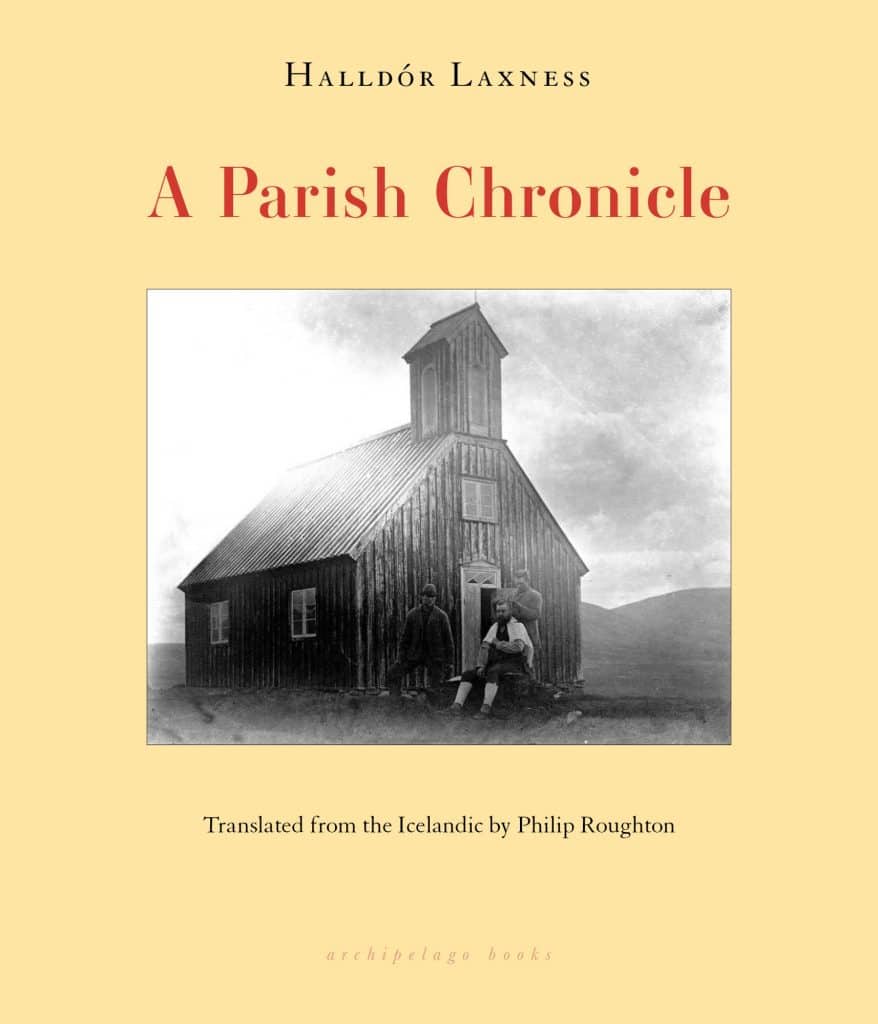
A Parish Chronicle

Read: February 2026

Get this book

A Parish Chronicle

by Halldór Laxness

In “A Parish Chronicle,” celebrated novelist Halldór Laxness weaves an essayistic tale about the unlikely miracles that keep a church—destined to disappear time and again—rooted on the same hillside. Laxness explores the minutiae of history, from the location of the ancient burial mound of national hero Egill Skallagrímsson to the end of the 19th century, where weak-sighted Ólafur and boisterous farmhand Gunna each play unexpected roles in the parish’s enduring survival.

1882. In the still of morning, Ólafur sharpens his scythe on the bone-dry pavestones that separate his farmhouse from the rest of Mosfell Valley, where life revolves around sheep. The sound of his hammer rings out like a high-pitched bell over the tussocky fields. Across the valley, perched on a hill that receives more sunshine than others, stands Mosfell Church. Nearby, the parish priest’s maid Gunna pours her “slosh,” a weak cup of coffee. Further afield in Reykjavík (“down south” as the locals say), the general assembly decides to revisit an old plan to cut costs by consolidating small parishes and calls for the demolition of Mosfell. Yet today a church stands on that same hillside—its sharp steeple silhouetted against the clouds, its crown bell hanging to the left of the altar.

This intimate tribute to life in Laxness‘s home valley also offers a thoughtful commentary on how the peculiarities of certain individuals can shape history. “A Parish Chronicle” is rich with life and detail.


Halldór Laxness (1902-1998) is the undisputed master of modern Icelandic fiction. He was awarded the Nobel Prize in Literature in 1955, “for his vivid epic power which has renewed the great narrative art of Iceland.” His body of work includes novels, essays, poems, plays, stories, and memoirs: more than sixty books in all. His works available in English include Independent People, The Fish Can Sing, World Light, Under the Glacier, Iceland’s Bell, and Paradise Reclaimed.

Philip Roughton has translated the work of Halldór Laxness, Jón Kalman Stefánsson, Kristín Marja Baldursdóttir, and many others. He has twice been awarded the American-Scandinavian Foundation Translation Prize for his renderings of Halldór Laxness‘s work, in 2001 for Iceland’s Bell and in 2015 for Wayward Heroes. He also received the 2016 Oxford-Weidenfeld Prize for his translation of Jón Kalman Stefánsson’s The Heart of Man. He lives in Iceland. Translator Residence: Akureyri, Iceland

Salvatore Scibona is the recipient of a Mildred and Harold Strauss Living Award from the American Academy of Arts and Letters. His first novel, The End, was a finalist for the National Book Award and winner of the Young Lions Fiction Award. His second novel, The Volunteer, was called a “masterpiece” by the New York Times and won the Ohioana Book Award. His books have been translated into ten languages. His work has won a Guggenheim Fellowship, a Pushcart Prize, an O. Henry Award, and a Whiting Award, and the New Yorker named him one of its “20 Under 40” fiction writers. He is the Sue Ann and John Weinberg Director of the Cullman Center for Scholars and Writers at the New York Public Library.


Discover your next favorite book and dive into a world of curated, exciting reads by purchasing through my links. You’ll have access to a diverse selection of books I’ve personally vetted for quality and enjoyment. Additionally, by supporting these selections, you’ll help me continue to provide you with more personalized recommendations. I earn a small commission from your purchase, which allows me to buy and share even more books with you. Your support truly makes a difference!


×
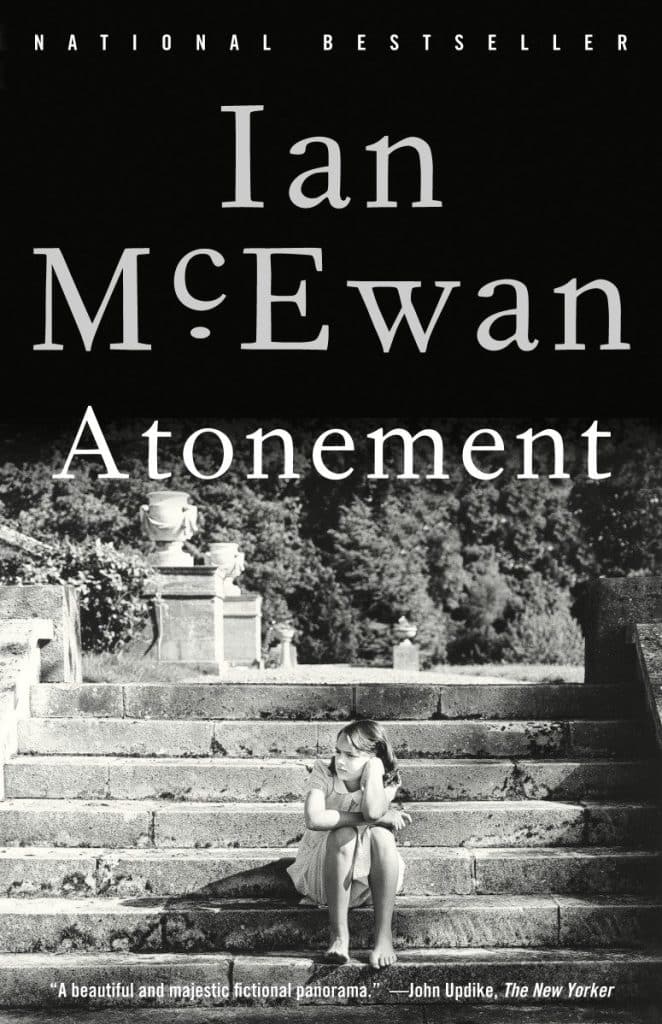
Atonement: A Novel

Read: August 2024

Get this book

Atonement: A Novel

by Ian McEwan

Today, I started reading “Atonement: A Novel” by Ian McEwan, an acclaimed Booker Prize-winning author. This symphonic novel explores complex themes, including love and war, childhood and class, guilt and forgiveness. It has been recognized as one of the New York Times’s 100 Best Books of the 21st Century, making it a must-read for those interested in these profound themes.

The story begins on a scorching summer day in 1935, when thirteen-year-old Briony Tallis witnesses a moment of flirtation between her older sister, Cecilia, and Robbie Turner, the son of a servant and Cecilia’s childhood friend. Briony’s incomplete understanding of adult motives and her literary gifts lead to a crime that significantly impacts their lives, taking them on an emotional journey of love, guilt, and forgiveness.

The narrative tracks the repercussions of this crime through the chaos and carnage of World War II, a vivid historical backdrop that immerses the reader into the twentieth century’s close. “Atonement” has been acclaimed for engaging readers on multiple levels, marking it a genuine masterpiece from the Booker Prize-winning, internationally bestselling author Ian McEwan.


Ian McEwan is a critically acclaimed author known for his nineteen novels and two short story collections. His first published work, a collection of short stories titled “First Love, Last Rites,” won the Somerset Maugham Award.

His notable novels include “The Child in Time,” which won the Whitbread Novel of the Year Award in 1987; “The Cement Garden“; “Enduring Love;” “Amsterdam;” which won the Booker Prize in 1998; “Atonement;” “Saturday;” “On Chesil Beach;” “Solar;” “Sweet Tooth;” “The Children Act;” “Nutshell;” and “Machines Like Me,” which became a number-one bestseller.

Several of his works, including “Atonement,” “Enduring Love,” “The Children Act;,” and “On Chesil Beach,” have been adapted into films.


Discover your next favorite book and dive into a world of curated, exciting reads by purchasing through my links. You’ll have access to a diverse selection of books that I’ve personally vetted to ensure quality and enjoyment. Additionally, by supporting these selections, you’ll help me continue to provide you with more personalized recommendations. I earn a small commission from your purchase, which allows me to buy and share even more books with you. Your support truly makes a difference!


×
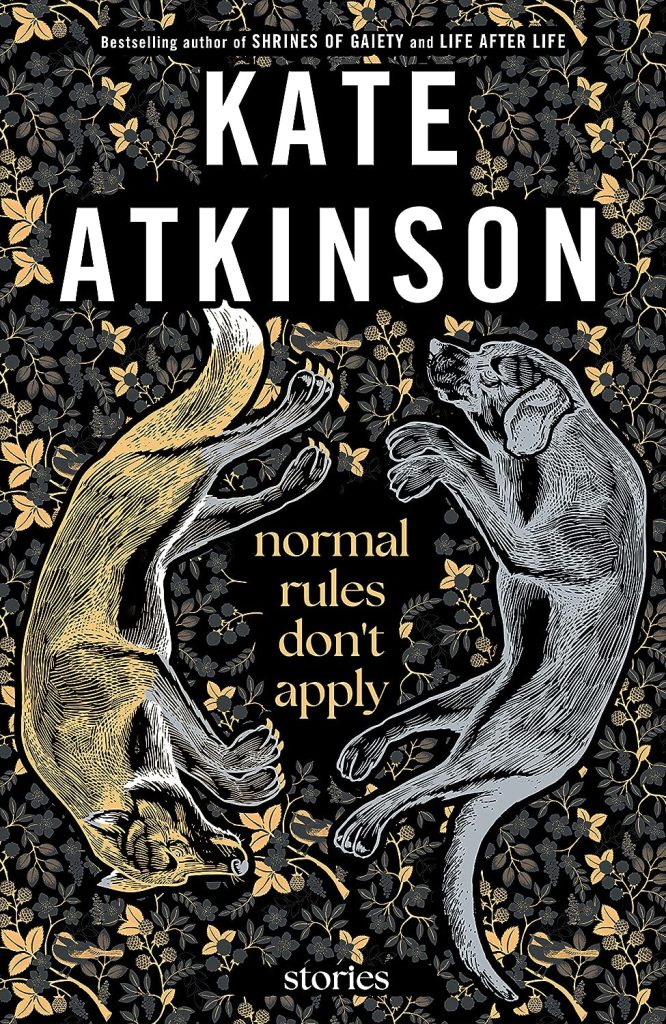
Normal Rules Don't Apply: Stories

Read: September 2023

Normal Rules Don’t Apply: Stories

by Kate Atkinson

Today, I commended reading Normal Rules Don’t Apply: Stories by Kate Atkinson, is a dazzling collection of eleven interconnected stories from the bestselling, award-winning author of Shrines of Gaiety and Life After Life, with everything that readers love about her novels—the inventiveness, the verbal felicity, the sharp observations on human nature, and the deeply satisfying emotional wallop.

Nothing is quite as it seems in this collection of eleven dazzling stories. We meet a queen who makes a bargain she cannot keep, a secretary who watches over the life she has just left, and a man who bets on a horse that may—or may not—have spoken to him. Everything that readers love about the novels of Kate Atkinson is here—the inventiveness, the verbal felicity, the sharp observations on human nature, and the deeply satisfying emotional wallop.

A startling and funny feast for the imagination, these stories conjure a multiverse of subtly connected worlds while illuminating the webs of chance and connection among us all.


The Jan Lilien Education Fund sponsors ongoing sustainability and environmental awareness programs. Gifts made this month; I will match dollar-for-dollar. All donations are tax-deductible.

Subscribe

Contact Us

I receive a commission when you buy a book or product using a link on this page. Thank you for supporting Sharing Jan’s Love blog.


×
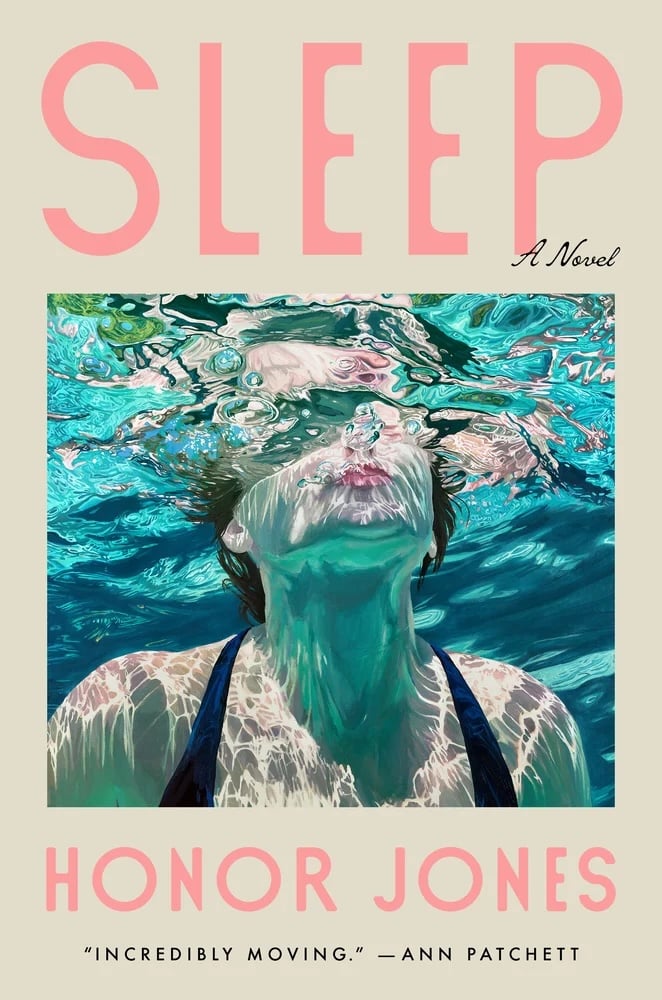
Sleep: A Novel

Read: May 2025

Get this book

Sleep: A Novel

by Honor Jones

Sleep: A Novel” by Honor Jones captivates readers with its heartfelt narrative and deep insights into the human experience. This debut novel offers a genuine insight into the complex dynamics of motherhood and childhood, weaving together themes of love, secrets, and the vast array of possibilities that life can hold beyond silence.

Every parent exists in two families simultaneously: the one they were born into and the one they have created.

Ten-year-old Margaret, much like many of us, hides beneath a blackberry bush in her family’s lush backyard while her brother searches for her in a game of flashlight tag. Her childhood is filled with sunlit swimming pools, Saturday morning pancakes, and a devoted best friend. However, her family life requires careful navigation. Her mother can be as brittle and demanding as she is loving, while her father and brother embody familiar, if uncomfortable, models of masculinity. Then, late one summer, everything changes. After a series of confusing events, the simple joys of girlhood begin to fade away.

Twenty-five years later, Margaret hides under her parents’ bed, waiting for her young daughters to find her in a game of hide and seek. Newly divorced, she is learning to navigate her life as a co-parent while also discovering the pleasures of a new relationship. Yet part of her remains under the blackberry bush, frozen in time. As she strives to be a mother to her daughters and a daughter to her mother, she must confront the echoes and reflections of her past in light of her present. She grapples with what it means to keep a child safe and how much of our lives we experience in solitude.

Jones presents these emotional cycles with generosity and unflinching honesty, making the novel a compelling read that resonates on multiple levels.


Honor Jones, a senior editor at The Atlantic and formerly at The New York Times, brings her wealth of experience and insight to this novel. She lives in Brooklyn with her three children, a life experience that undoubtedly enriches her storytelling.


When you purchase a book through one of my links, I earn a small commission that helps support my passion for reading. This contribution allows me to buy even more books to share with you, creating an incredible cycle of discovering great reads together! Your support truly makes a difference!

Don’t miss out on this exciting opportunity! Enjoy a limited-time offer of 20% off your next book purchase at Bookshop.org! It’s the perfect chance to add this compelling novel to your collection.


×
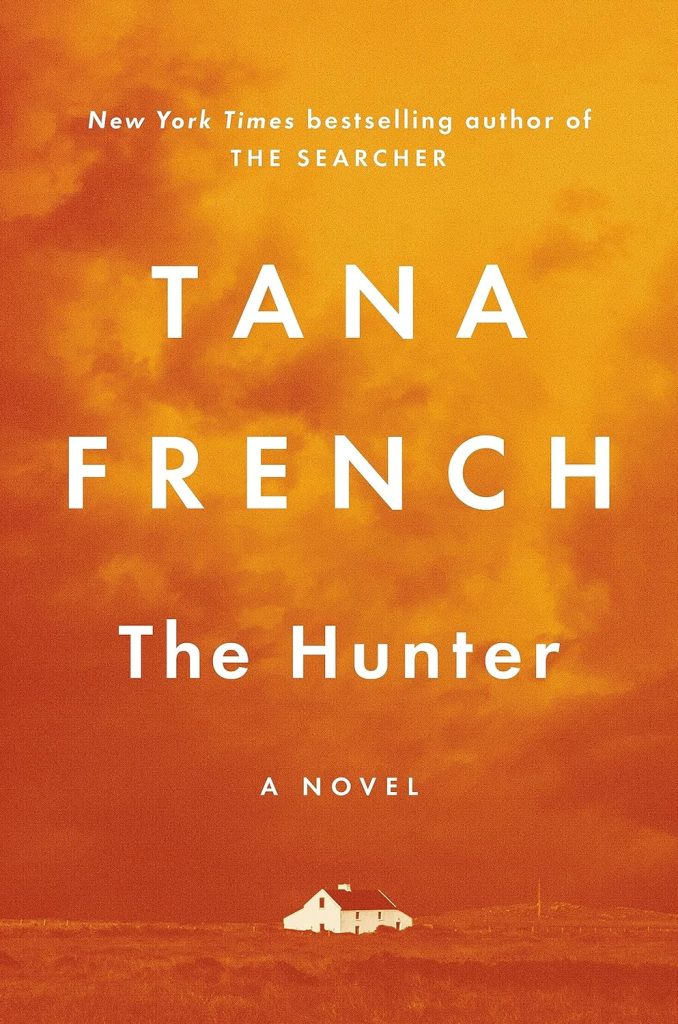
The Hunter: A Novel

Read: March 2024

Get this book

The Hunter: A Novel

by Tana French

Today, I began reading “The Hunter: A Novel” by Tana French, often called the Queen of Irish crime fiction. The story takes place in a small village in the West of Ireland during a hot summer. Two men arrive, one returning home and the other seeking riches. However, one of them is also seeking death.

Cal Hooper is a retired Chicago police officer who moved to rural Ireland for a peaceful life. He has built a relationship with a local woman named Lena and has been mentoring Trey Reddy, a troubled teenager on a better path. But when Trey’s long-lost father returns, accompanied by an English millionaire and a plan to find gold in the townland, everything they have built is threatened. Cal and Lena are willing to do whatever it takes to protect Trey, but Trey is not interested in protection. What she wants is revenge.

This novel, written by the acclaimed author described by The New York Times as “in a class by herself,” tells a nuanced and atmospheric tale about what we are willing to do for our loved ones, what we will do for revenge, and what we may have to sacrifice when the two collide.

×
The Annual Banquet of the Gravediggers' Guild

Read: January 2024

Get this book

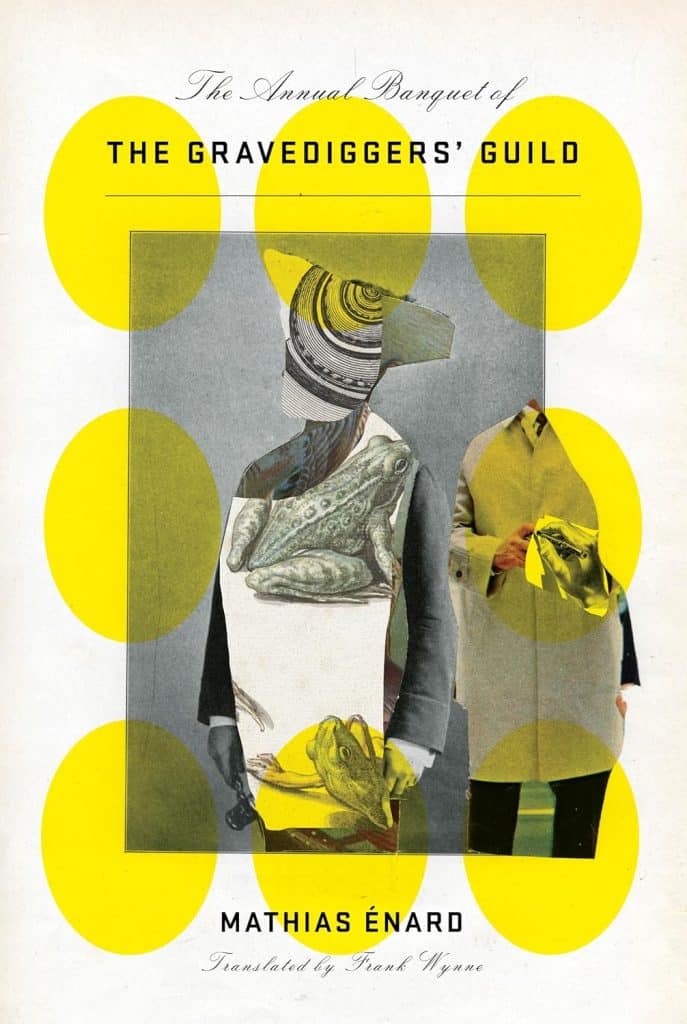
The Annual Banquet of the Gravediggers’ Guild

by Mathias Énard

Today, I started reading “The Annual Banquet of the Gravediggers’ Guild” by Mathias Énard. The book has been translated into English by Frank Wynne. This novel is full of Mathias Énard‘s characteristic humor and extensive knowledge. It is a lively book where the boundaries between past and present are constantly blurred, set against a backdrop of excess reminiscent of Rabelais’ writing.

David Mazon, an anthropology student, moves from Paris to La Pierre-Saint-Christophe, a village in the marshlands of western France, to research his thesis on contemporary agrarian life. He is determined to understand the essence of the local culture and spends his time scurrying around on his moped to interview the residents.

David must be made aware of the extraordinary events in an ordinary location. This place, where wars and revolutions once occurred, is now a dancefloor for Death. When something dies, its soul is recycled by the Wheel of Life and thrown back into the world as a microbe, human, or wild animal – sometimes in the past and sometimes in the future. Once a year, Death and the living agree to a temporary truce, during which gravediggers indulge in a three-day feast filled with food, drink, and conversation.

Mathias Énard’s novel, The Annual Banquet of the Gravediggers’ Guild, is a riotous and exciting comic masterpiece that won the prestigious Prix Goncourt award. The novel is set in the French countryside and is filled with Énard’s characteristic wit and encyclopedic brilliance. Against a backdrop of excess, the story blurs the lines between past and present, creating a Rabelaisian world of chaos and humor.


The Jan Lilien Education Fund sponsors ongoing sustainability and environmental awareness programs. Gifts made this month; I will match dollar-for-dollar. All donations are tax-deductible.

Subscribe

Contact Us

I receive a commission when you buy a book or product using a link on this page. Thank you for supporting Sharing Jan’s Love blog.


×

Discover more from Sharing Jan’s Love

Subscribe now to keep reading and get access to the full archive.

Continue reading