
Have My Daily Routines Become a Habit?

Let Me Watch You Walk

Full-Length Orthotics Gives Me Hope

Estimated reading time: 2 minutes, 30 seconds

As Dr. Limido stepped into Curalta Health‘s examination room, I couldn’t help but smile. “It’s a pleasure to meet you finally,” I said, feeling a rush of anticipation after four long days confined to slow, diminutive walks. The thought of getting a proper assessment from a podiatrist was like a glimmer of hope for my foot health. The anticipation was palpable, and I was ready to take the next step towards recovery.

She chuckled, admitting that she usually doesn’t receive such a warm welcome. I seized the moment to share a bit about my situation: the nagging pain, my love for long walks, and how she was the first name that jumped out from Dr. Subramanian‘s list of recommendations, not to mention the fact that she accepted my insurance. It felt good to be taking a step towards recovery, finally!

HopeDr. Limido asked me questions to clarify my situation while examining my feet. “It looks like you have plantar fasciitis,” she said. Noticing the concern on my face, she added, “It is treatable, especially since you have a high arch.” When she mentioned the arch, my mind wandered to images of high-arch railroad bridges. She brought me back to reality by saying that she needed to take some X-rays and wanted to observe my walking. She picked up my shoes and asked me to walk barefoot down the hall. Her diagnosis was a relief, but the thought of a treatment plan was daunting.

As someone who is used to looking at dental images, I found it interesting to see X-rays of my feet and toes. Dr. Limido explained the pictures and emphasized that, aside from the plantar fasciitis, my feet were in good condition. She pointed out a small bone spur but clarified that it was not the cause of my problem. I wanted to ask a question, but I hesitated. Would that have granted me a draft exemption?

She asked for my foot size and said she would be back shortly with a pair of full-length orthotics from PowerStep. Picking up my shoes, Dr. Limido explained that I would need to remove my current insole inserts and replace them. I nodded in agreement, and before I could count to three, she had taken out the old ones and put in the new ones. She then showed me a few exercises I needed to do daily. Then she instructed me to “Walk down the hall while I prepare the prescription for the physical therapist.”

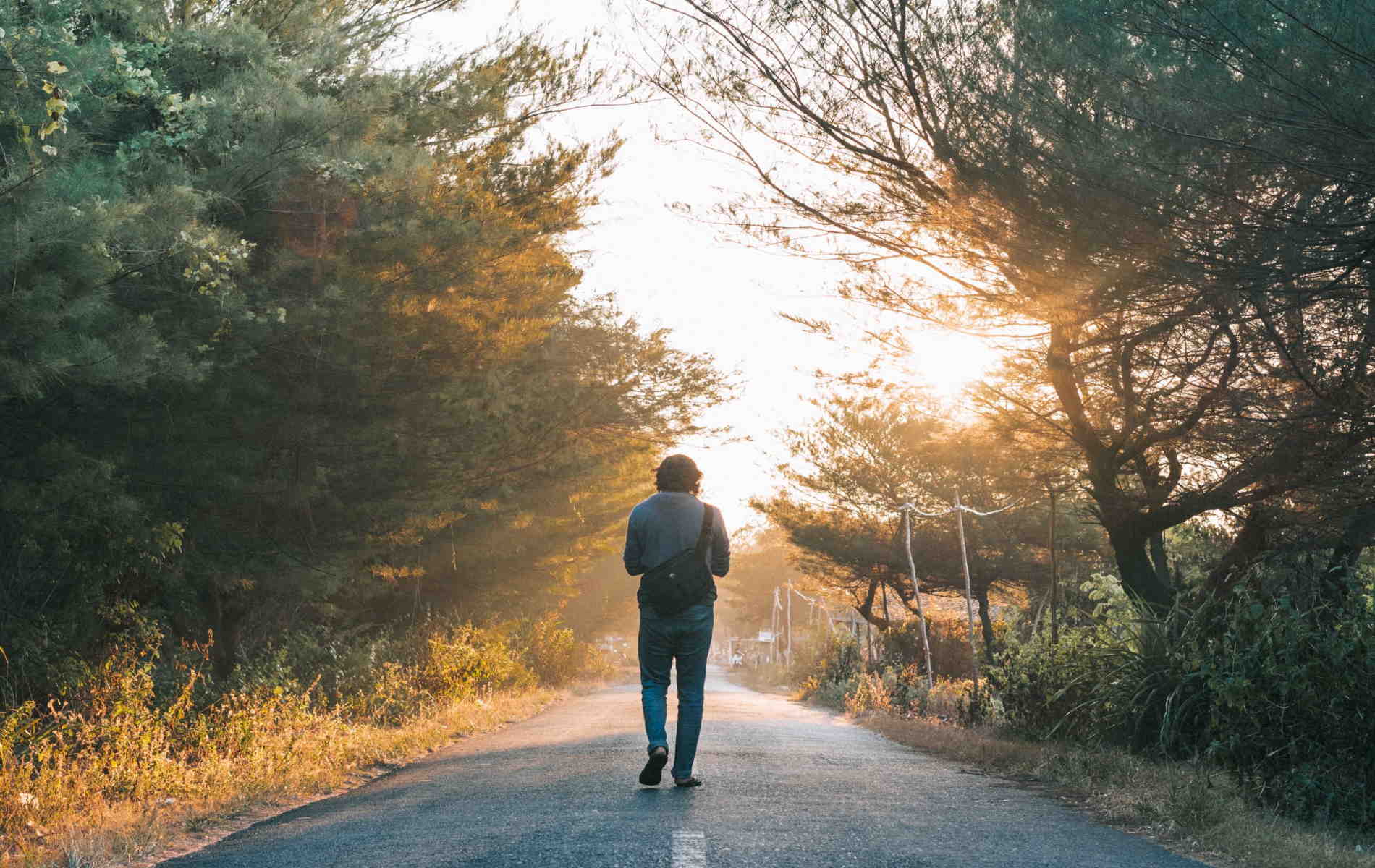
My feet glided down the hallway as I felt pain-free for the first time in a week. If there had been a door at the end of the hallway, I would have walked around the block while Dr. Limido finished the paperwork. When she caught up with me on my fourth or fifth lap, she said, “If you want to keep those, they are $60.” I smiled and agreed to the purchase, as it was the first time in a week I felt confident I could walk again.
An Infamous Man Strolls Along

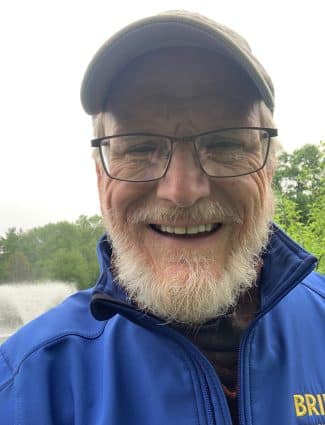
"Richard!" A familiar voice called out just as I was about to step into the narrow alleyway between Sofia Color Lounge and the soon-to-open coffee shop where Beadsmith once stood. I turned around, and there he was—Eric! A smile broke across my face as I recognized him. He was pushing a stroller, with his daughter peeking out with curious eyes. Family surrounded him, including his pregnant wife and in-laws, creating a vibrant scene full of laughter and warmth. It was a moment of unexpected joy and connection amid my foot pain, a reminder of the beautiful bonds we share in our community.

The Jan Lilien Education Fund!

Have My Daily Routines Become a Habit?
×
Wild Houses: A Novel

Read: April 2024

Get this book

Wild Houses: A Novel

by Colin Barrett

Today, I started reading “Wild Houses: A Novel” by Colin Barrett and was impressed by the author’s ability to blend dark humor and intense emotions. Colin Barrett, the award-winning author of “Homesickness” and “Young Skins,” has crafted a debut novel that takes readers on a rollercoaster ride of crimes committed out of desperation, abandoned dreams, and small-town secrets that won’t stay hidden. The story is presented with a wry wit that adds to its appeal.

The story is set in the quaint town of Ballina, located in picturesque west Ireland, as it prepares for its biggest weekend of the year. The simmering feud between small-time dealer Cillian English and County Mayo’s fraternal enforcers, Gabe and Sketch Ferdia, spills over into violence and an ugly ultimatum, painting a vivid picture of the town’s underbelly.

The story’s protagonist, Dev, is a reclusive man unwillingly drawn into the Ferdias’ revenge fantasy when he answers the door and finds Doll, Cillian’s bruised, sullen teenage brother, in the clutches of Gabe and Sketch. With the help of his dead mother’s dog, Dev is jostled by his nefarious cousins and is struck by spinning lights as he is goaded into their plan.

Meanwhile, seventeen-year-old Nicky can’t shake the feeling that something terrible has happened to her boyfriend, Doll. Hungover, reeling from a fractious Friday night and plagued by ghosts, Nicky sets out to save Doll, even as she questions her future in Ballina.

Wild Houses is a beautifully crafted and thrillingly told story of two outsiders striving to find themselves as their worlds collapse in chaos and violence. It is the long-anticipated debut novel from award-winning and critically acclaimed short story writer Colin Barrett.

×
Bluff: Poems

Read: December 2024

Get this book

Bluff: Poems

by Danez Smith

Today, I began reading Bluff: Poems by Danez Smith, which was selected as one of The New York Times 100 Notable Books of 2024. This collection emerged after two years of artistic silence, during which the world slowed due to the COVID-19 pandemic, and Minneapolis became the epicenter of protests following the murder of George Floyd. In Bluff, Danez Smith powerfully reflects on their role and responsibilities as a poet and their connection to their hometown of the Twin Cities.

This book addresses the awakening from violence, guilt, shame, and critical pessimism to a sense of wonder, envisioning how we might strive for a new existence in a world that seems to be descending into desolate futures.

Smith infuses these poems with a startling urgency; their questions demand a new language, deep self-scrutiny, and virtuosic textual shapes. A series of ars poetica gives way to “anti-poetica” and “ars America,” implicating poetry in collusion with unchecked capitalism. A photographic collage builds across a sequence, illustrating the consequences of America’s acceptance of mass shootings. Additionally, a brilliant long poem—part map, part annotation, part visual argument—offers the history of Saint Paul’s vibrant Rondo neighborhood before and after officials decided to route an interstate directly through it.

Bluff is a manifesto of artistic resilience, even when time feels fleeting and the places we hold dear—both given and created—are in turmoil. In this powerful collection, Smith turns to honesty, hope, rage, and imagination to envision possible futures.


When you purchase a book through one of my links, I earn a small commission that helps support my passion for reading. This contribution allows me to buy even more books to share with you, creating an incredible cycle of discovering great reads together! Your support truly makes a difference!


×
Three Days in June

Read: February 2025

Get this book

Three Days in June

by Anne Tyler

Today, I dove into the enchanting world of “Three Days in June” by Anne Tyler, a novel that promises to become an instant classic. It beautifully captures the experience of a socially awkward mother-of-the-bride as she navigates the whirlwind of emotions before and after her daughter’s wedding. After shuffling through the frosty morning air on my walk, wrapping myself in the warmth of Tyler‘s words about three sun-soaked days in June felt like the perfect escape. What a delightful contrast!

Gail Baines is having a bad day. First, she loses her job—or quits, depending on whom you ask. Tomorrow, her daughter, Debbie, is getting married, and she hasn’t even been invited to the spa day organized by the groom’s mother. Then, Gail’s ex-husband, Max, arrives unannounced on her doorstep, carrying a cat, without a place to stay or even a suit.

However, the crisis occurs when Debbie shares a secret she has just learned about her husband-to-be with her parents. This will not only throw the wedding into question but also stir up Gail and Max’s past.

Told with deep sensitivity and a tart sense of humor and full of the joys and heartbreaks of love, marriage, and family life, “Three Days in June” is a triumph and shows the perennially bestselling, Pulitzer Prize-winning writer at the height of her powers.


When you purchase a book through one of my links, I earn a small commission that helps support my passion for reading. This contribution allows me to buy even more books to share with you, creating an incredible cycle of discovering great reads together! Your support truly makes a difference!


×
Victory City: A Novel

Read: February 2023

Get this book

Victory City: A Novel

by Salman Rushdie

Victory City: A Novel by Salman Rushdie is an epic tale of a woman who breathes a fantastical empire into existence, only to be consumed by it over the centuries from the transcendent imagination of Booker Prize-winning, internationally bestselling author Salman Rushdie. It is well written and was a page-turner from page one to the end. I highly recommend this novel and encourage everyone to read it.

Brilliantly styled as a translation of an ancient epic, this is a saga of love, adventure, and myth that is a testament to storytelling’s power. After witnessing her mother’s death, the grief-stricken Pampa Kampana becomes a vessel for the goddess Parvati, who begins to speak out of the girl’s mouth. I was hooked when Pampa Kampana provided the seeds that created Victory City out of thin air.

David Remnick’s interview with Salman Rushdie in The New Yorker provided background I would have missed.

“The first kings of Vijayanagara announced, quite seriously, that they were descended from the moon,” Rushdie said. “So when these kings, Harihara and Bukka, announce that they’re members of the lunar dynasty, they’re associating themselves with those great heroes. It’s like saying, ‘I’ve descended from the same family as Achilles.’ Or Agamemnon. And so I thought, Well, if you could say that, I can say anything.”

Above all, the book is buoyed by the character of Pampa Kampana, who, Rushdie says, “just showed up in my head” and gave him his story, his sense of direction. Rushdie’s pleasure in writing the novel was in “world building” and, at the same time, writing about a character building that world: “It’s me doing it, but it’s also her doing it.” The pleasure is infectious. “Victory City” is an immensely enjoyable novel. It is also an affirmation. At the end, with the great city in ruins, what is left is not the storyteller but her words:

I, Pampa Kampana, am the author of this book.
I have lived to see an empire rise and fall.
How are they remembered now, these kings, these queens?
They exist now only in words . . .
I myself am nothing now. All that remains is this city of words.
Words are the only victors.

The Goodreads summary provides a brief overview,

In the wake of an insignificant battle between two long-forgotten kingdoms in fourteenth-century southern India, a nine-year-old girl has a divine encounter that will change the course of history. After witnessing her mother’s death, the grief-stricken Pampa Kampana becomes a vessel for the goddess Parvati, who begins to speak out of the girl’s mouth. Granting her powers beyond Pampa Kampana’s comprehension, the goddess tells her that she will be instrumental in the rise of a great city called Bisnaga–literally victory city–the wonder of the world.

Over the next two hundred and fifty years, Pampa Kampana’s life becomes deeply interwoven with Bisnaga’s, from its literal sowing out of a bag of magic seeds to its tragic ruination in the most human of ways: the hubris of those in power. Whispering Bisnaga and its citizens into existence, Pampa Kampana attempts to make good on Parvati’s task: giving women equal agency in a patriarchal world. But all stories have a way of getting away from their creator, and Bisnaga is no exception. As years pass, rulers come and go, battles are won and lost, and allegiances shift, the very fabric of Bisnaga becomes an ever more complex tapestry–with Pampa Kampana at its center.


The Jan Lilien Education Fund sponsors ongoing sustainability and environmental awareness programs. Gifts made this month; I will match dollar-for-dollar. All donations are tax-deductible.

Subscribe

Contact Us

I receive a commission when you buy a book or product using a link on this page. Thank you for supporting Sharing Jan’s Love blog.


×
Judaism Is About Love

Read: October 2024

Get this book

Judaism Is About Love

by Rabbi Shai Held

Today, I embarked on a transformative journey with Rabbi Shai Held’s book, “Judaism Is About Love.Rav Uri‘s mention of this book during this year’s Yom Kippur service at Temple Sha’arey Shalom sparked a profound connection to the Divine, as echoed in my writings “Love Can Conquer Even Death” and “High Holiday Meditation Cleanses My Soul.” Rabbi Held’s book, which focuses on love, meaning, purpose, and faith, has guided my quest to become the best version of myself.

“Judaism Is About Love” is a beacon of understanding, offering a profound and groundbreaking perspective on Jewish life. It challenges a long-standing misinterpretation that has shaped the Western narrative: Christianity is the religion of love, while Judaism is the religion of law. Rabbi Shai Held, a leading Jewish thinker in America, passionately argues for correcting this misconception. He asserts that love is not just a part of Judaism but a fundamental aspect, thus reclaiming the heart of the Jewish tradition.

With a unique blend of intellectual rigor, respect for tradition, and a vibrant Judaism, Held’s aim is clear: to reclaim Judaism in its authentic form. He illustrates that love is the foundation of the true Jewish faith, influencing our unique perspectives on injustice, protest, grace, family life, responsibilities toward neighbors and enemies, and chosenness.

Judaism Is About Love” is a work of ambition and revelation. It serves as a beacon, illuminating the true essence of Judaism. More than just a book, it is an act of restoration from within, reclaiming the authentic form of Judaism.


When you purchase a book through one of my links, I earn a small commission that helps support my passion for reading. This contribution allows me to buy even more books to share with you, creating an incredible cycle of discovering great reads together! Your support truly makes a difference!


×
Chess Story

Read: April 2026

Get this book

Chess Story: A Novella

by Stefan Zweig

Chess Story,” also known as “The Royal Game,” is the final work of Austrian author Stefan Zweig. He completed it while in exile in Brazil and sent it to his American publisher just days before his suicide in 1942. This story is unique as it is the only one in which Zweig directly examines Nazism, portraying it through his characteristic focus on psychological themes.

The narrative follows travelers aboard a ship bound for Buenos Aires, where they encounter an arrogant, unfriendly world chess champion. Attempting to challenge him, they find themselves thoroughly defeated. However, a mysterious passenger steps forward to offer them advice, dramatically shifting their fortunes. The story delves into how this enigmatic figure acquired his extraordinary chess skills and the personal toll that it entailed.

This new translation of “Chess Story” highlights the work’s distinctive blend of high suspense and poignant reflection.


Stefan Zweig (1881–1942), novelist, biographer, poet, and translator, was born in Vienna into a wealthy Austrian Jewish family. During the 1930s, he was one of the best-selling writers in Europe and was among the most translated German-language writers before the Second World War. With the rise of Nazism, he moved from Salzburg to London (taking British citizenship), to New York, and finally to Brazil, where he committed suicide with his wife. New York Review Books has published Zweig’s novels The Post-Office Girl and Beware of Pity, as well as the novella Chess Story.

Peter Gay was Director of the Center for Scholars and Writers at the New York Public Library. He wrote Schnitzler’s Century: The Making of Middle-Class Culture, 1815–1914.


Discover your next favorite book and dive into a world of curated, exciting reads by purchasing through my links. You’ll have access to a diverse selection of books I’ve personally vetted for quality and enjoyment. Supporting these selections not only helps me continue to provide you with personalized recommendations but also ensures you have access to meaningful stories that enrich your life. Your support truly makes a difference in helping me share more books and insights with you!


×