
The Infamous Walker Limps Home

Estimated reading time: 16 minutes, 57 seconds

Is There Hope?

Two questions remain unanswered, like dust bunnies gathering under my bed. When I asked Dr. Limido about my chances of recovery, she responded clearly and reassuringly. “You are still early in the treatment. If you keep doing the stretches, resting, wearing better shoes or inserts, and using the night splint, you will recover.” Like many of us—especially men—I tend to be impatient and want an immediate fix rather than a gradual process. However, I have complete confidence in her and my physical therapist, viewing their guidance as the path forward.
But, dear reader, am I being dishonest when I say that I still walk, even though the distance and pace have fallen apart like a Lego house missing a foundation block? My walking streak has become my mantra. With each milestone—four years, fifteen hundred days, and more—I have celebrated triumphantly. If my walking streak ends, what would it mean to me?

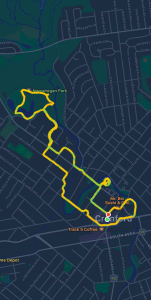
On my walk this morning, the pain was less, but my tears felt so full I worried that if I let them out, I would be a one-person flash flood. As I approached home and walked through Hanson Park, the impending downpour eased up, and I began to focus sharply on why I walk. Yes, the distance, pace, and records were enjoyable. I started walking not for those reasons. I took the first step into an unknowable future after my wife died. Looking at the Wind Sculpture as I left the park, I knew I was a better, healthier, and more resilient person.

My Apple Fitness app has accepted that, after an erratic month, my new daily average is four miles. For a man who will be seventy-six and a half during the High Holidays, that might be the best I can do. Some days, I might walk less. By the time I arrived home, I decided that as long as I can walk every day, my streak will continue.

Today was 1,555 days and counting!


The Jan Lilien Education Fund sponsors ongoing sustainability and environmental awareness programs. All donations are tax-deductible.


Contact Us
Subscribe

Creative Commons License

This work is licensed under a Creative Commons Attribution-NonCommercial 4.0 International License.


Pages: 1 2 3 4 5 6 7

4 comments add your comment

Share your thoughts and ideas

This site uses Akismet to reduce spam. Learn how your comment data is processed.

Previous Post:

Next Post:

The Jan Lilien Education Fund!

10/7: 100 Human Stories

Read: September 2025

Get this book

10/7: 100 Human Stories

by Lee Yaron

The speaker at the Selichot Service with VAAD at Congregation Beth Israel on September 13, 2025, will be Lee Yaron, the author of 10/7: 100 Human Stories. Yaron is the recipient of the National Jewish Book Awards’ 2024 Jewish Book of the Year and The Natan Fund’s Winter 2025 Notable Book Award. This book provides a definitive account of the 10/7 attacks, sharing the stories of the victims and the communities they called home.

On October 7, 2023—the Sabbath and the final day of the holiday of Sukkot—the Gaza-based terror group Hamas launched an unprecedented assault on the people of Israel. Crashing through the border, attacking from the sea and air, militants indiscriminately massacred civilians in what became one of the worst terror attacks in modern history, and the most lethal day for the Jewish people since the Holocaust.

A radically passionate work of investigative journalism and political critique by acclaimed Haaretz reporter Lee Yaron, 10/7 chronicles the massacre that ignited a war through the stories of more than 100 civilians. These stories are the result of extensive interviews with survivors, bereaved individuals, and first responders in Israel and around the world. The victims run the gamut from left-wing kibbutzniks and Burning Man-esque partiers to radical right-wingers, from Bedouins and Israeli Arabs to Thai and Nepalese guest workers, peace activists, elderly Holocaust survivors, refugees from Ukraine and Russia, pregnant women, and babies.

At a time when people are seeking a deeper understanding of the history of the Israeli-Palestinian conflict and how internal political turmoil in Israel has affected it, they predominantly encounter perspectives from the powerful—from politicians and military officers. 10/7 takes a fresh approach, offering answers through the stories of everyday people, those who lived tenuously on the border with Gaza.

Yaron profiles victims from a wide range of communities—depicting the fullness of their lives, not just their final moments—to honor their memories and reveal the way the attack ripped open Israeli society and put the entire Middle East on the precipice of disaster. Each chapter begins with a portrait of a community, interweaving history with broader political analysis of the Israeli-Palestinian conflict to provide context for the narratives that follow. Ultimately, 10/7 shows that the tragedy is much greater than the violence of the attacks, and in fact extends back through the entire Netanyahu era, which propagated a false image of Israel as a technologically advanced, militarily formidable powerhouse so essential to the region that it could continue to ignore and undermine Palestinian statehood indefinitely.


Lee Yaron has been a journalist with Haaretz, Israel’s oldest and most award-winning newspaper, for nearly a decade. Her investigative reporting has led to the establishment of state-level commissions and the revision of substantial bodies of Israeli policy and law. She is an elected member and representative of the Executive Committee of the Union of Israeli Journalists. She has also written and directed acclaimed theater productions notable for their use of found materials, including official governmental texts, to bring attention to marginalized communities both in Israel and throughout the Middle East. Born in Tel Aviv, Yaron splits her time between her native city and New York.

Joshua Cohen is the author of ten books, including the novels Book of Numbers, Moving Kings, and Witz. Called “a major American writer” by the New York Times and “an extraordinary prose stylist, surely one of the most prodigious at work in American fiction today” by the New Yorker, Cohen was awarded Israel’s 2013 Matanel Prize, and in 2017 was named one of Granta’s Best Young American Novelists. His book, The Netanyahus, won the 2021 National Jewish Book Award for Fiction and the 2022 Pulitzer Prize for Fiction.


Discover your next favorite book and dive into a world of curated, exciting reads by purchasing through my links. You’ll have access to a diverse selection of books that I’ve personally vetted to ensure quality and enjoyment. Additionally, by supporting these selections, you’ll help me continue to provide you with more personalized recommendations. I earn a small commission from your purchase, which allows me to buy and share even more books with you. Your support truly makes a difference!


×
A Sovereign People: The Crises of the 1790s and the Birth of American Nationalism

Read: February 2019

Get this book

A Sovereign People: The Crises of the 1790s and the Birth of American Nationalism

by Carol Berkin

A Sovereign People: The Crises of the 1790s and the Birth of American Nationalism by Carol Berkin, Presidential Professor American Colonial and Revolutionary History; Women’s History Professor at Baruch College, focuses on four crises in the first decade. Most historians view these are part of the early partisan debates in America.

Professor Berkin takes a different perspective. She focuses on how the Whiskey Rebellion, the Genet Affair, the XYZ Affair, and the Alien and Sedition Acts helped build nationalism. Despite the partisan divisions, both sides could find solutions that helped America survive its first decade. The failure to resolve anyone of these could have doomed America to failure.

The Federalists – Washington, Hamilton, and Adams – were the leaders of that first decade and managed the successive crisis of sovereignty.

A Sovereign People is one of four books from my first One Day University class.

Subscribe

Contact Us

×
The Invisible Hour: A Novel

Read: August 2023

Get this book

The Invisible Hour: A Novel

by Alice Hoffman

Today I started reading The Invisible Hour by Alice Hoffman. It’s a story about love, heartbreak, self-discovery, and the magic of books. The Invisible Hour is the story of one woman’s dream. For a little while, it came true. Nathaniel Hawthorne wrote: “A single dream is more powerful than a thousand realities.

Mia Jacob finds hope in the power of words on a brilliant June day. She reads The Scarlet Letter, a novel written almost two hundred years earlier, which mirrors her life. Mia and her mother, Ivy, live inside an oppressive cult in western Massachusetts called the Community, where contact with the outside world is forbidden, and books are considered evil. Nathaniel Hawthorne’s words perfectly capture the pain and loss that Mia carries inside her.

As Mia journeys through heartbreak and time, she breaks free from the rules of her Community. Along the way, she discovers the power of reading to transport and connect people, the fluidity of time, and the strength of love to overcome any obstacle.

As a young girl, Mia fell in love with a book. Now as a woman, she falls for a writer as she travels back in time. But what if Nathaniel Hawthorne never wrote “The Scarlet Letter”? What if Mia never found the book on the day she planned to end her life?


The Jan Lilien Education Fund sponsors ongoing sustainability and environmental awareness programs. Gifts made this month; I will match dollar-for-dollar. All donations are tax-deductible.

Subscribe

Contact Us

I receive a commission when you buy a book or product using a link on this page. Thank you for supporting Sharing Jan’s Love blog.


×
Last House: A Novel

Read: May 2024

Get this book

Last House: A Novel

by Jessica Shattuck

I started reading “Last House: A Novel” by Jessica Shattuck today. She is an esteemed New York Times bestselling author known for her work “The Women in the Castle.” This sweeping narrative, perfect for “The Dutch House” and “Great Circle” fans, explores a nation’s rise to power and a family’s complex ties to the resources that shaped their wealth. It also delves into the events that led to their greatest tragedy, a secret that threatens to tear them apart.

In 1953, a World War II veteran turned company lawyer, Nick Taylor, saw oil as the key to the future. He commutes to the city for work and returns to the peaceful suburbs to be with his wife, Bet, a former codebreaker now a housewife, and their two children, Katherine and Harry. Nick, who comes from humble origins, can provide for his family, including their secluded country escape called Last House, thanks to his work for American Oil. Last House, deep in the Vermont mountains, offers the Taylors a retreat from the stresses of modern life. Bet no longer worries about the Russian H-bombs that haunt her dreams, and the children can roam freely in the woods. Last House is a place that seems capable of surviving the end of the world.

1968, a turning point in American history, where the nation teeters on the brink of transformation. The streets pulsate with protestors challenging everything from the Vietnam War to racism and even the country’s reliance on Big Oil. As Katherine enters adulthood, she finds herself caught in the era’s tide, struggling to reconcile her ideals with the privileged upbringing her parents, part of the Greatest Generation, toiled to provide. But when the Movement takes a secure, more radical turn, each member of the Taylor family must face the repercussions of their choices for the causes they believed in. This rich historical backdrop infuses the Taylor family’s narrative with depth and intrigue, leaving us hungry for more about this transformative era.

Last House” spans multiple generations and nearly eighty years, telling the story of one American family during a time of grand ideals and significant downfalls. It explores themes of family dynamics, the impact of wealth, and the societal changes that shaped America. Set against the backdrop of our nation’s history, this emotional tour de force delves deeply into questions of inheritance and what we owe each other. It captures the gravity of time, the double edge of progress, and the hubris of empire to stunning effect.

×
Revolutionary Mothers

Read: February 2019

Get this book

Revolutionary Mothers

by Carol Berkin

Revolutionary Mothers by Carol Berkin, Presidential Professor of American Colonial and Revolutionary History; Women’s History Professor at Baruch College, is one of four books I purchased after my first One Day University Class on February 9, 2019. It should be required reading!

The book explains how women of the Revolution were most active at home, organizing boycotts of British goods, raising funds for the fledgling nation, and managing the family business while struggling to maintain a modicum of normalcy as husbands, brothers, and fathers died.

It was not just the men who fought on the front lines, as in the story of Margaret Corbin, who was crippled for life when she took her husband’s place beside a cannon at Fort Monmouth. She explains the mystery of Molly Pitcher (she was not a person but a group of women), camp followers, women who spied for their country, Loyalist women, and the impact on African American and Native women.

This intelligent and comprehensive history brings these forgotten stories to their rightful place in the struggle for American independence. Dr. Birkin also highlights how their efforts set the stage for the continuing campaign for gender equality.

Subscribe

Contact Us

×
The Emperor of Gladness

Read: May 2025

Get this book

The Emperor of Gladness

by Ocean Vuong

In “The Emperor of Gladness,” Ocean Vuong explores the interconnected themes of history, memory, and time, revealing how love, labor, and loneliness are the foundation of American life. At its core, the narrative presents a courageous epic that examines what it means to live on the margins of society and confront the wounds that affect our shared humanity. It highlights the lengths we are willing to go to grasp one of life’s most fleeting gifts: a second chance.

One late summer evening in the post-industrial town of East Gladness, Connecticut, nineteen-year-old Hai stands on the edge of a bridge in pelting rain, ready to jump, when he hears someone shout across the river. The voice belongs to Grazina, an elderly widow succumbing to dementia, who convinces him to take another path. Bereft and out of options, he quickly becomes her caretaker. Over the year, the unlikely pair develops a life-altering bond, one built on empathy, spiritual reckoning, and heartbreak, with the power to transform Hai’s relationship with himself, his family, and a community on the brink.

Hallmarks of Ocean Vuong‘s writing—formal innovation, syntactic dexterity, and the ability to twin grit with grace through tenderness—are on full display in this story.


Ocean Vuong is the author of the critically acclaimed poetry collections Night Sky with Exit Wounds and Time Is a Mother, as well as the New York Times bestselling novel On Earth We’re Briefly Gorgeous. A recipient of the MacArthur Fellowship and the American Book Award, he once worked as a fast-food server, which inspired The Emperor of Gladness. Born in Saigon, Vietnam, he currently splits his time between Northampton, Massachusetts, and New York City.


When you purchase a book through one of my links, I earn a small commission that helps support my passion for reading. This contribution allows me to buy even more books to share with you, creating an incredible cycle of discovering great reads together! Your support truly makes a difference!


×

Discover more from Sharing Jan’s Love

Subscribe now to keep reading and get access to the full archive.

Continue reading