
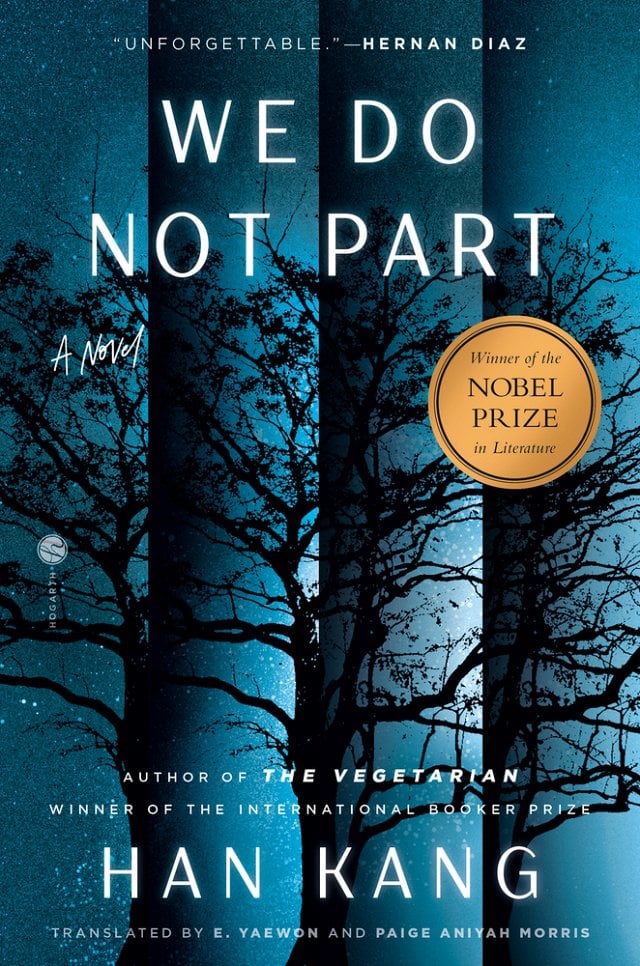
We Do Not Part: A Novel

Estimated reading time: 2 minutes, 3 seconds

Today, I explored “We Do Not Part,” the latest novel by Han Kang, the 2024 Nobel Prize in Literature laureate. Translated by the talented e. yaewon and Paige Aniyah Morris, this book offers a remarkable journey. The New York Times has called it Kang’s most revealing work since her acclaimed novel, “The Vegetarian.” What captivates me the most is how it intricately weaves the story of two women’s friendship while shedding light on a hidden chapter of Korean history.

One winter morning, Kyungha receives an urgent message from her friend Inseon, asking her to visit a hospital in Seoul. Inseon has injured herself in an accident and begs Kyungha to return to Jeju Island, where she lives, to save her beloved pet—a white bird named Ama. A snowstorm hits the island when Kyungha arrives. At all costs, she must reach Inseon’s house, but the icy wind and blizzards slow her down as night falls. She wonders if she will arrive in time to save the animal—or even survive the terrible cold that envelops her with every step. Lost in a world of snow, she does not yet suspect the vertiginous plunge into darkness that awaits her at her friend’s house.

Blurring the boundaries between dream and reality, “We Do Not Part” powerfully illuminates a forgotten chapter of Korean history buried for decades, bringing to light the lost voices of the past to prevent them from fading into oblivion. It is both a tribute to enduring friendship and a plea for remembrance. The novel tells a story of profound love in the face of unspeakable violence and celebrates life, however fragile.


Han Kang was born in 1970 in South Korea. She is the author of The Vegetarian, which I have read, and winner of the International Booker Prize,  Human Acts, The White Book, Greek Lessons, and We Do Not Part. In 2024, she received the Nobel Prize in Literature.

e. yaewon is based in Korea and translates from and into Korean, including titles by Hwang Jungeun, Deborah Levy, and Samuel Beckett.

Paige Aniyah Morris divides her time between the United States and Korea. Recent translations include works by Pak Kyongni, Ji-min Lee, and Chang Kang-myoung.


When you purchase a book through one of my links, I earn a small commission that helps support my passion for reading. This contribution allows me to buy even more books to share with you, creating an incredible cycle of discovering great reads together! Your support truly makes a difference!


The Jan Lilien Education Fund!

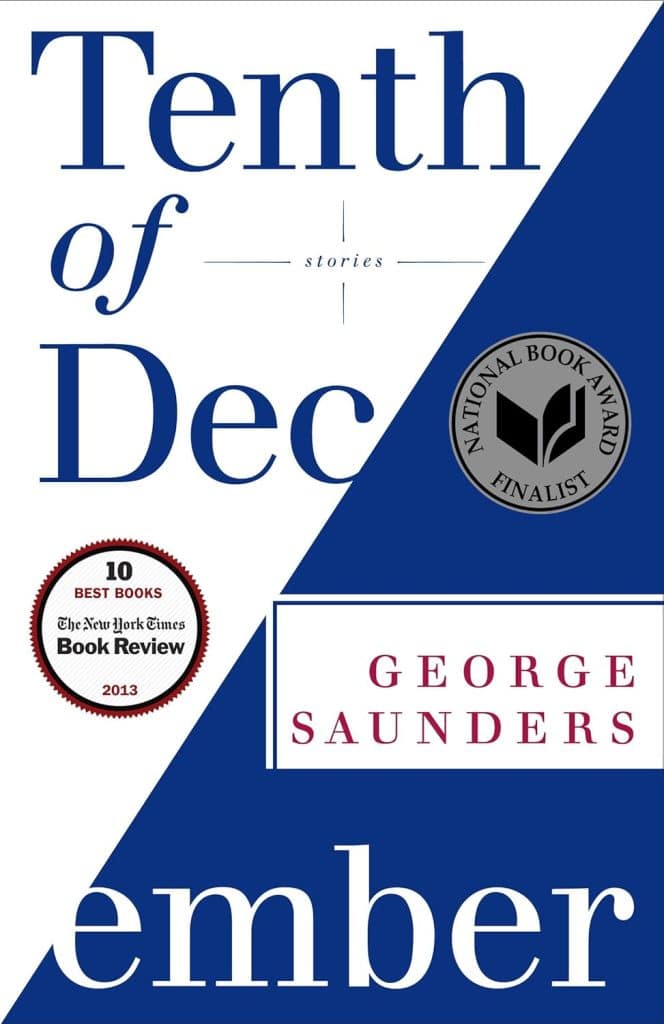
Tenth of December: Stories

Read: July 2024

Get this book

Tenth of December: Stories

by George Saunders

One of the most important and blazingly original writers of his generation, George Saunders, is an undisputed master of the short story. The Tenth of December is his most honest, accessible, and moving collection yet. It is one of the New York Times’ 100 Best Books of the Century. The book is structured as a collection of short stories, each offering a unique and compelling narrative.

In the taut opener, “Victory Lap,” a boy witnesses the attempted abduction of the girl next door and is faced with a harrowing choice: Does he ignore what he sees or override years of smothering advice from his parents and act?

In “Home,” a combat-damaged soldier moves back in with his mother and struggles to reconcile the world he left behind with the one he has returned to.

In the title story, a stunning meditation on imagination, memory, and loss, a middle-aged cancer patient walks into the woods to commit suicide, only to encounter a troubled young boy who, throughout a fateful morning, gives the dying man a final chance to recall who he is.

An unfortunate, deluded owner of an antique store; two mothers struggling to do the right thing; a teenage girl whose idealism is challenged by a brutal brush with reality; a man tormented by a series of pharmaceutical experiments that force him to lust, to love, to kill—the unforgettable characters that populate the pages of Tenth of December are vividly and lovingly infused with Saunders’s signature blend of exuberant prose, deep humanity, and stylistic innovation.

Writing brilliantly and profoundly about class, sex, love, loss, work, despair, and war, Saunders cuts to the core of the contemporary experience. These stories take on the big questions and explore the fault lines of our morality, delving into what makes us suitable and what makes us human. They are not just stories but profound explorations that will stimulate your intellect and make you ponder.

Unsettling, insightful, and hilarious, the stories in Tenth of December—through their manic energy, their focus on what is redeemable in human beings, and their generosity of spirit—not only entertain and delight but also fulfill Chekhov’s dictum that art should “prepare us for tenderness.” The humor in these stories will keep you entertained and laughing, even as they delve into profound themes.


George Saunders is the author of thirteen books, including the novel Lincoln in the Bardo, which won the Booker Prize, and five collections of stories, including Tenth of December, which was a finalist for the National Book Award, and the recent collection Liberation Day (selected by former President Obama as one of his ten favorite books of 2022).

Three of Saunders’s books—Pastoralia, Tenth of December, and Lincoln in the Bardo—were chosen for The New York Times’s list of the 100 Best Books of the 21st Century. Saunders hosts the popular Story Club on Substack, which grew out of his book, A Swim in a Pond in the Rain. In 2013, he was named one of Time’s 100 Most Influential People. He teaches in the creative writing program at Syracuse University.


When you purchase a book through one of my links, I earn a small commission that helps support my passion for reading. This contribution allows me to buy even more books to share with you, creating an incredible cycle of discovering great reads together! Your support truly makes a difference!

×
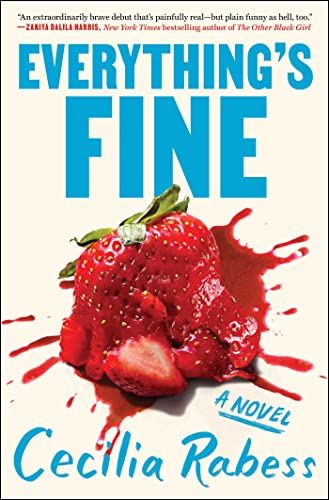
Everything's Fine

Read: June 2023

Get this book

Everything’s Fine

by Cecilia Rabess

I started reading Everything’s Fine by Cecilia Rabess today, a stunning debut introducing a talented new author. However, I found it easier to decide to read it after reading in the New York Times that some reviewers on Goodreads criticized the book’s premise without reading it. It’s unfair to criticize something after experiencing it first-hand.

On Jess’s first day at Goldman Sachs, she’s disappointed to learn that she’ll be working with Josh, a white conservative she used to argue with in college. Josh enjoys playing devil’s advocate and can be challenging to deal with.

But when Jess realizes she’s the only Black woman on the team and is being overlooked, Josh offers his support in imperfect but meaningful ways. As they develop an unlikely friendship with undeniable chemistry, it eventually becomes an electrifying romance that shocks them both.

Despite their differences, their attraction brings them together, and Jess starts to question whether happiness is more important than being right. However, as the cultural and political landscape shifts in 2016, Jess, who is just discovering herself, must decide what she’s willing to compromise for love and if everything is excellent. This poignant and sharp novel by Cecilia Rabess asks if they will and if they should.


The Jan Lilien Education Fund sponsors ongoing sustainability and environmental awareness programs. Gifts made this month; I will match dollar-for-dollar. All donations are tax-deductible.

Subscribe

Contact Us

I receive a commission when you buy a book or product using a link on this page. Thank you for supporting Sharing Jan’s Love blog.


×
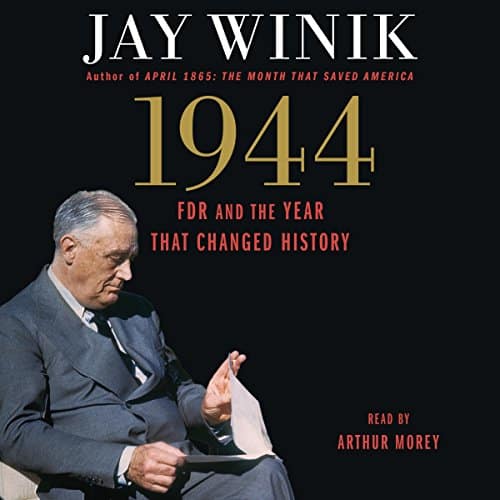
1944: FDR and the Year That Changed History

Read: October 2019

Get this book

1944: FDR and the Year That Changed History

by Jay Winik

1944: FDR and the Year That Changed History by Jay Winik is a book that I had put off reading several times. When I finally did read it, I could not remember why I had not read it sooner. Had I gone to graduate school and become a professor, it might have been the type of book I might write, and I certainly would have had on my list of books for my classes. 

As The NY Times wrote, “Jay Winik brings to life in gripping detail the year 1944, which determined the outcome of World War II and put more pressure than any other on an ailing yet determined President Roosevelt.” Reading a book about events five years before my birth that transformed the world I live in becomes an easy page-turner.

It was not inevitable that World War II would end as it did or that it would even end well. Nineteen forty-four was a year that could have stymied the Allies and cemented Hitler’s waning power. Instead it saved those democracies – but with a fateful cost. Now, in a superbly told story, Jay Winik, the acclaimed author of April 1865 and The Great Upheaval, captures the epic images and extraordinary history as never before.

1944 witnessed a series of titanic events: FDR at the pinnacle of his wartime leadership as well as his reelection, the planning of Operation Overlord with Churchill and Stalin, the unprecedented D-Day invasion, the liberation of Paris, and the horrific Battle of the Bulge, and the tumultuous conferences that finally shaped the coming peace. But on the way, millions of more lives were still at stake as President Roosevelt was exposed to mounting evidence of the most grotesque crime in history, the Final Solution. Just as the Allies were landing in Normandy, the Nazis were accelerating the killing of millions of European Jews.

Winik shows how escalating pressures fell on an all but dying Roosevelt, whose rapidly deteriorating health was a closely guarded secret. Here then, as with D-Day, was a momentous decision for the president. Was winning the war the best way to rescue the Jews? Was a rescue even possible? Or would it get in the way of defeating Hitler? In a year when even the most audacious undertakings were within the world’s reach, including the liberation of Europe, one challenge – saving Europe’s Jews – seemed to remain beyond Roosevelt’s grasp.

I recommend this book.

Subscribe

Contact Us

×
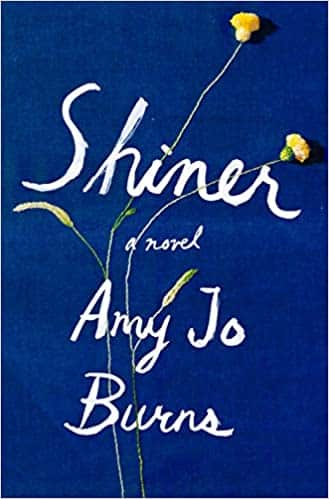
Shiner: A Novel

Read: March 2022

Get this book

Shiner: A Novel

by Amy Jo Burns

Shiner: A Novel by Amy Jo Burns was my twenty-second of the year, and I achieved my Goodreads 2022 Reading Challenge. An hour from the closest West Virginia mining town, fifteen-year-old Wren Bird lives in a secluded mountain cabin with her parents. They have no car, mailbox, or visitors- except for her mother’s lifelong best friend.

Wren’s narration of her discoveries of the secrets of the past over one summer drives the novel and makes it a page-turner. Her mother, Ruby, and her best friend, Ivy, are two strong women who dreamed of escaping the West Virginia mountains. The male characters play secondary roles in the novel, as they should. Shiner is a feminist book about how women can and must take back their stories and lives from men whose power is an illusion.

I highly recommend this novel and look forward to reading other books by Amy Jo Burns. It was the perfect book to finish my reading challenge. As I continue to read this year, I hope to find another of her books on my shelf.

Goodreads provides an overview.

Every Sunday, Wren’s father delivers winding sermons in an abandoned gas station. He takes up serpents and praises the Lord for his blighted white eye, proof of his divinity and key to his hold over the community, Wren, and her mother.

But over the course of one summer, a miracle performed by Wren’s father quickly turns to tragedy. As the order of her world begins to shatter, Wren must uncover the truth of her father’s mysterious legend and her mother’s harrowing history and complex bond with her best friend. And with that newfound knowledge, Wren can imagine a different future for herself than she has been told to expect.

Rich with epic love and epic loss, and diving deep into a world that is often forgotten but still part of America, Shiner reveals the hidden story behind two generations’ worth of Appalachian heartbreak and resolve. Amy Jo Burns brings us a smoldering, taut debut novel about modern female myth-making in a land of men-and one young girl who must ultimately open her eyes.

Register to Attend Celebrate Jan Day

Subscribe

Contact Us

When you buy a book or product using a link on this page, I receive a commission. Thank you for supporting Sharing Jan’s Love blog.

×
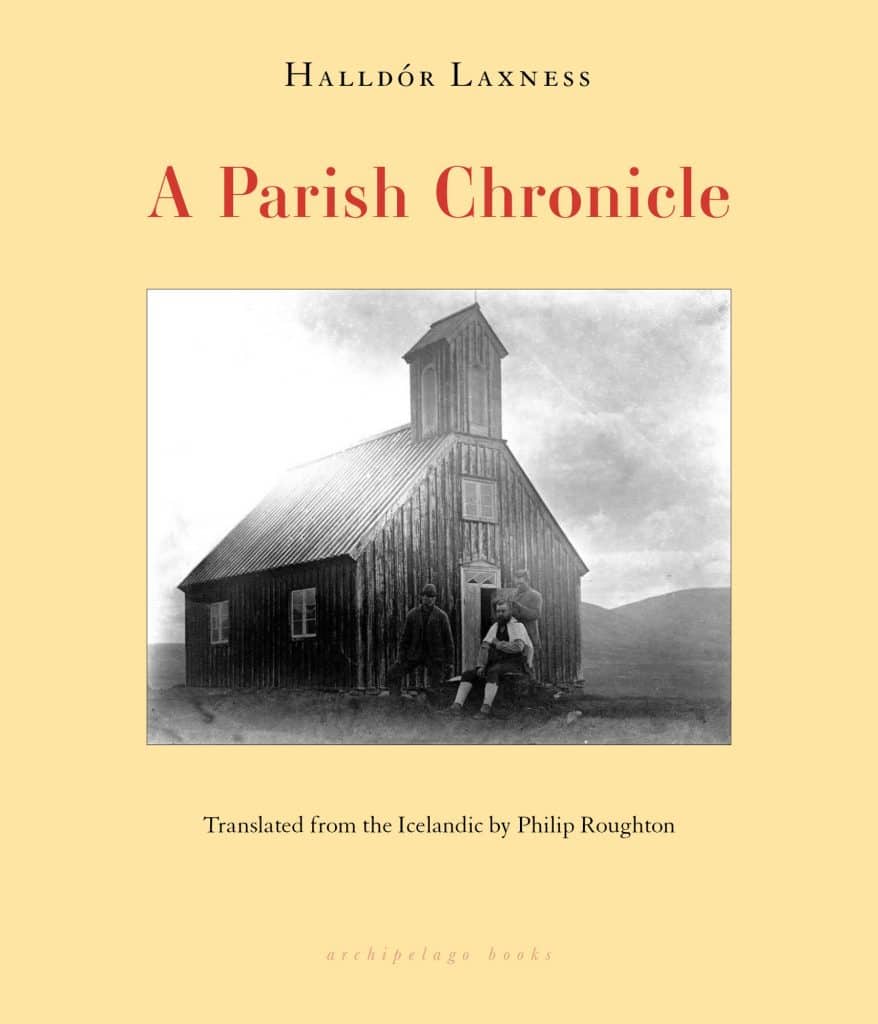
A Parish Chronicle

Read: February 2026

Get this book

A Parish Chronicle

by Halldór Laxness

In “A Parish Chronicle,” celebrated novelist Halldór Laxness weaves an essayistic tale about the unlikely miracles that keep a church—destined to disappear time and again—rooted on the same hillside. Laxness explores the minutiae of history, from the location of the ancient burial mound of national hero Egill Skallagrímsson to the end of the 19th century, where weak-sighted Ólafur and boisterous farmhand Gunna each play unexpected roles in the parish’s enduring survival.

1882. In the still of morning, Ólafur sharpens his scythe on the bone-dry pavestones that separate his farmhouse from the rest of Mosfell Valley, where life revolves around sheep. The sound of his hammer rings out like a high-pitched bell over the tussocky fields. Across the valley, perched on a hill that receives more sunshine than others, stands Mosfell Church. Nearby, the parish priest’s maid Gunna pours her “slosh,” a weak cup of coffee. Further afield in Reykjavík (“down south” as the locals say), the general assembly decides to revisit an old plan to cut costs by consolidating small parishes and calls for the demolition of Mosfell. Yet today a church stands on that same hillside—its sharp steeple silhouetted against the clouds, its crown bell hanging to the left of the altar.

This intimate tribute to life in Laxness‘s home valley also offers a thoughtful commentary on how the peculiarities of certain individuals can shape history. “A Parish Chronicle” is rich with life and detail.


Halldór Laxness (1902-1998) is the undisputed master of modern Icelandic fiction. He was awarded the Nobel Prize in Literature in 1955, “for his vivid epic power which has renewed the great narrative art of Iceland.” His body of work includes novels, essays, poems, plays, stories, and memoirs: more than sixty books in all. His works available in English include Independent People, The Fish Can Sing, World Light, Under the Glacier, Iceland’s Bell, and Paradise Reclaimed.

Philip Roughton has translated the work of Halldór Laxness, Jón Kalman Stefánsson, Kristín Marja Baldursdóttir, and many others. He has twice been awarded the American-Scandinavian Foundation Translation Prize for his renderings of Halldór Laxness‘s work, in 2001 for Iceland’s Bell and in 2015 for Wayward Heroes. He also received the 2016 Oxford-Weidenfeld Prize for his translation of Jón Kalman Stefánsson’s The Heart of Man. He lives in Iceland. Translator Residence: Akureyri, Iceland

Salvatore Scibona is the recipient of a Mildred and Harold Strauss Living Award from the American Academy of Arts and Letters. His first novel, The End, was a finalist for the National Book Award and winner of the Young Lions Fiction Award. His second novel, The Volunteer, was called a “masterpiece” by the New York Times and won the Ohioana Book Award. His books have been translated into ten languages. His work has won a Guggenheim Fellowship, a Pushcart Prize, an O. Henry Award, and a Whiting Award, and the New Yorker named him one of its “20 Under 40” fiction writers. He is the Sue Ann and John Weinberg Director of the Cullman Center for Scholars and Writers at the New York Public Library.


Discover your next favorite book and dive into a world of curated, exciting reads by purchasing through my links. You’ll have access to a diverse selection of books I’ve personally vetted for quality and enjoyment. Additionally, by supporting these selections, you’ll help me continue to provide you with more personalized recommendations. I earn a small commission from your purchase, which allows me to buy and share even more books with you. Your support truly makes a difference!

×
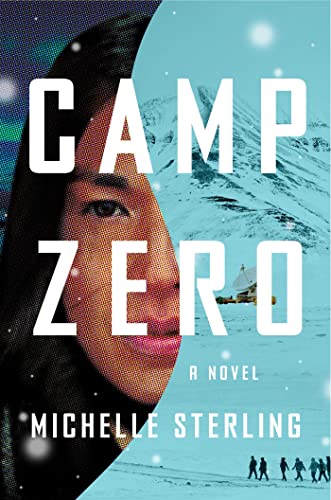
Camp Zero

Read: April 2023

Get this book

Camp Zero: A Novel

by Michelle Min Sterling

I recently read an incredible novel called Camp Zero by Michelle Min Sterling. The book tells the story of several climate change survivors in a near-future northern settlement and explores the intersection of gender, class, and migration. The novel is a page-turner and a masterful exploration of who and what will survive in a warming world.

The story follows Rose, a young woman who agrees to spy on the architect of an American building project in exchange for housing. She arrives at the same time as Grant, a college professor who is trying to escape his wealthy family’s dark legacy. As they begin to investigate the mysterious architect, they uncover a disturbing mystery lurking beneath the surface of the camp.

One of the most fascinating aspects of the novel is the inclusion of an elite group of women soldiers living and working at a nearby Cold War-era climate research station. The rumors surrounding their presence add more intrigue to an already compelling story.

If you’re looking for a captivating novel that will keep you on the edge of your seat, I highly recommend Camp Zero. The book is a mesmerizing and transportive read, perfect for fans of Station Eleven and The Power.


The Jan Lilien Education Fund sponsors ongoing sustainability and environmental awareness programs. Gifts made this month; I will match dollar-for-dollar. All donations are tax-deductible.

Subscribe

Contact Us

I receive a commission when you buy a book or product using a link on this page. Thank you for supporting Sharing Jan’s Love blog.


×