
Snow Angel Blessing

Estimated reading time: 2 minutes, 36 seconds
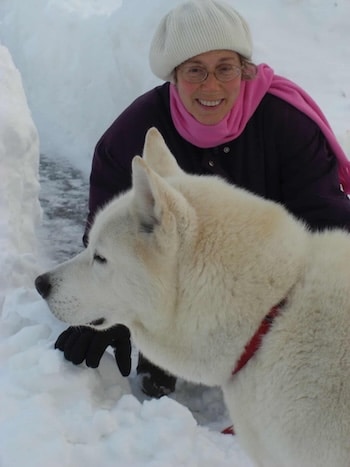
Love Warmed Our Heart on a Cold Lincoln’s Birthday in 1975

During the winter of 1975, just six months before our wedding, I went for a walk with Jan, my beloved partner, in the tranquil surroundings of Ft. Greene Park, across the street from her apartment. The air was frigid, and the ground was covered with a thick blanket of snow. The sudden winter storm had brought the heaviest snowfall of the year, with a whopping 7.8 inches of snow. Jan, a drug counselor at Brooklyn Automotive, had taken the day off for the holiday. Walking on the un-shoveled snow, it felt like we had stepped into a scene from the timeless classic novel and popular movie, “Dr. Zhivago.” The only sound we could hear was the crisp crunch of our boots on the icy terrain, which added to the serene and peaceful atmosphere.

Snow Angels

Jan lay on the ground and insisted, “Let’s make snow angels.” I joined her, and we made paired angels. I tried to help her stand up, but our feet kept slipping. Eventually, we succeeded, but as soon as I let go of her hand, she grabbed some snow and threw it at my face. I retaliated with a handful of snow, but we both laughed. We continued walking across the park, pretending to be Lara and Yuri and trying to maintain our balance on the snowy ground.

Six weeks earlier, Jan had excitedly told her parents we were getting married, but their response was far from positive. We traveled to New Jersey by bus to celebrate her mother’s birthday, but instead of congratulating her, we received a disappointed reaction: “You ruined my birthday.” Despite the opposition from her family, we both remained committed to getting married. However, my wife tended to be more pragmatic, while I was more inclined towards romance.
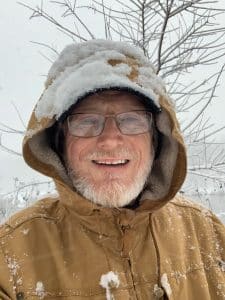
While walking in the snow, I couldn’t help but wonder about her decision regarding our future together. I was uncertain whether she would ultimately choose to marry me or accept her parent’s opposition. We discussed various things on our way, shared our thoughts, and enjoyed each other’s company. The sun was shining, and the breeze was cool, perfecting the atmosphere around us.

Love is a Powerful and Transformative Force.

Once we decided to leave the park, we walked up the four flights of stairs to her apartment. As we removed our coats, she turned to me, kissed me, and said, “I love you. I want to spend the rest of my life with you.” Her words filled my heart with joy, and I couldn’t help but hug her tightly and kiss her back. The moment was perfect, and I felt I was on top of the world.

After that, we spent the evening talking and laughing, enjoying each other’s company. Looking back, I realize it was a turning point in our almost half-century relationship. The rest, as they say, is history.


The Jan Lilien Education Fund sponsors ongoing sustainability and environmental awareness programs. All donations are tax-deductible.


Contact Us
Subscribe

Creative Commons License

This work is licensed under a Creative Commons Attribution-NonCommercial 4.0 International License.


4 comments add your comment

    • Thanks for your comment, Hugo. I appreciate your confidence in me being a nice guy. However, the truth is that being nice doesn’t always lead to success. In my case, Jan’s parents were not happy with me due to my appearance and religious differences. Despite Jan’s practical nature, we still got married, and I documented the experience in a post, “We Are Getting Married!“. The inspiration for the story you are referring to came from the light snowfall this week, which reminded me of the tension that can arise between a practical partner and a romantic one in a relationship. Being a romantic is a part of my DNA, and I will always embrace it as an inspiration.

    • Danny, thanks for your comment. In this modern era, the word love is often used casually and loses its true meaning. But to me, it is unlike any other word with four letters. It is the most potent force in the universe, capable of bringing about personal and collective salvation.

      Recently, I was blessed with the opportunity to experience love again, and it felt like a dream come true. However, I soon realized that love requires reciprocity. If it is not mutual, it is not the true love that I seek. I am unwilling to settle for anything less than what I once had.

      In a world where love can be fleeting and elusive, we must hold on to it with all our might. All we need is love, and with it, we can conquer any challenge that comes our way.

Leave a Reply to Richard W. BrownCancel reply

This site uses Akismet to reduce spam. Learn how your comment data is processed.

The Jan Lilien Education Fund!

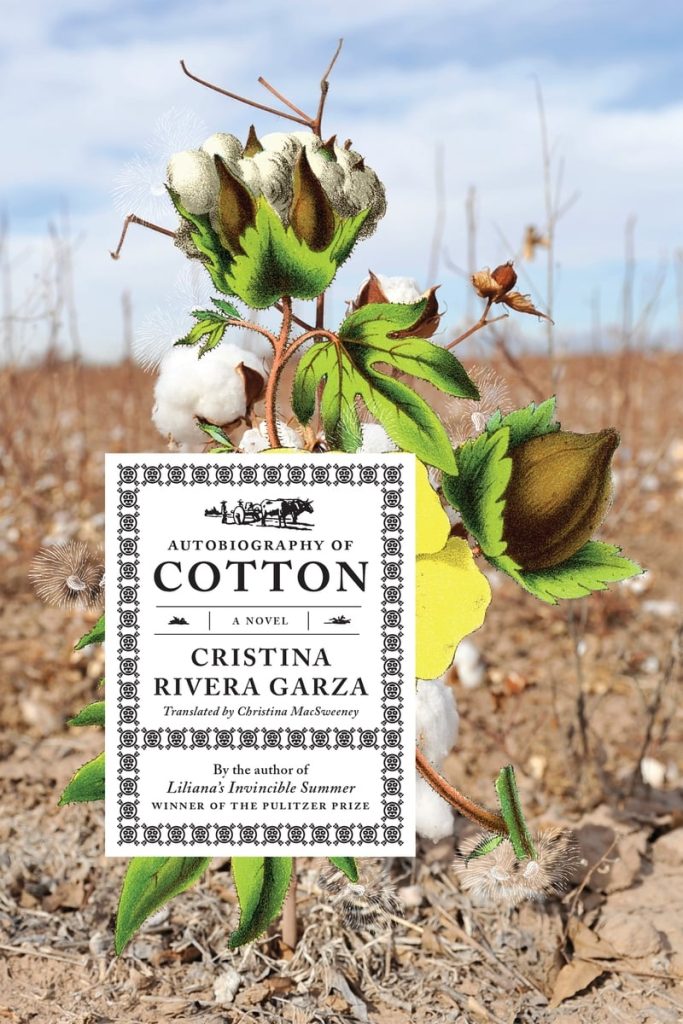
Autobiography of Cotton

Read: February 2026

Get this book

Autobiography of Cotton

by Cristina Rivera Garza

In 1934, a young José Revueltas traveled to Tamaulipas to support the cotton workers’ strike in Estación Camarón, which would later serve as the foundation for his landmark novel, Human Mourning. In her groundbreaking novel Autobiography of Cotton, Cristina Rivera Garza recounts her grandparents’ journey from mining towns to those same cotton fields. Her narrative intersects with Revueltas’s life and offers a vivid and evocative account of the history of cotton cultivation along the Mexico-U.S. border.

Through archival research and personal narrative, Rivera Garza explores how cotton transformed the borderlands by recounting the story of the cotton workers’ strike. She reveals how cycles of deprivation and environmental destruction continue to affect generations. Rivera Garza skillfully creates a new kind of border novel that illustrates how a fragile landscape drastically changed her grandparents’ lives and the territories they helped to develop. In this intimate fictionalization, Autobiography of Cotton offers a rich social history that encompasses agricultural colonization, labor activism, environmental degradation, and cross-border migration.

I recommend “Autobiography of Cotton,” but readers should be patient as the book shifts back and forth in time. Everything becomes clear as you continue reading.


Cristina Rivera Garza is the Pulitzer Prize–winning author of Liliana’s Invincible Summer. A MacArthur Fellow, she is the Hugh Roy and Lillie Cranz Cullen Distinguished Chair and founder of the University of Houston’s PhD in Creative Writing in Spanish.

Christina MacSweeney is the award-winning literary translator of works by Julián Herbert, Valeria Luiselli, and Elvira Navarro. She received the 2024 Sundial Literary Translation Award for her translation of Verónica Gerber Bicecci‘s The Company.


Discover your next favorite book and dive into a world of curated, exciting reads by purchasing through my links. You’ll have access to a diverse selection of books that I’ve personally vetted to ensure quality and enjoyment. Additionally, by supporting these selections, you’ll help me continue to provide you with more personalized recommendations. I earn a small commission from your purchase, which allows me to buy and share even more books with you. Your support truly makes a difference!


×
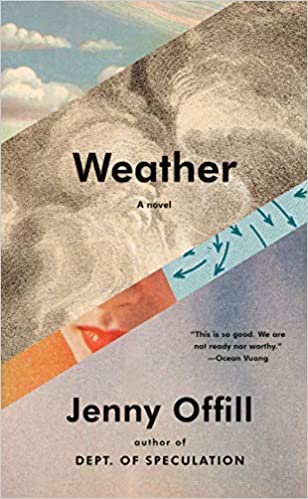
Weather

Read: March 2022

Get this book

Weather: A Novel

by Jenny Offil

Weather: A Novel by Jenny Offil was a book that I was confused and uncertain if I wanted to finish for the first few pages. I am delighted that I did, and I highly recommend this book. Its brief diary-like dispatches about life in our time when we sense that we may all be doomed to a climate catastrophe made this a book I truly enjoyed reading. The subtext of the rise of right-wing strongmen in the USA and abroad adds to the crisis her dispatches describe.

Her Obligatory Note of Hope challenges all of us to engage in solutions instead of accepting doom.

How can we contribute to the common good? There are people all over the world trying to answer these questions. In big ways but also in small ways. In grand leaps but also in fits and starts.

I always thought it was ridiculous to try and fight for social change when I couldn’t even get my own house in order. How could a meat-eating, plane-flying, march-hating person like me ever find a place in the climate justice movement? But then I started to read about all the different ways ordinary people were refusing to give into fatalism and were exploring the possibilities of what they could do, what they might fight for in this half-ruined world of ours.

There were saints among these accidental activists, but also stone-cold hypocrites like me. Slowly, I began to see collective action as the antidote to my dithering and despair.

There’s a way in for everyone. Aren’t you tired of all this fear and dread?

Goodreads provides an overview of the book if you are not yet convinced to read it.

 Lizzie Benson is a very relatable woman who slid into her job as a librarian without a traditional degree. But this gives her a vantage point from which to practice her other calling: a fake shrink. She has tended to her God-haunted mother and her recovering addict brother for years. They have both stabilized for the moment, but Lizzie has little chance to spend her new free time with her husband and son before her old mentor, Sylvia Liller, proposes. She wants to hire Lizzie to answer the mail she receives: left-wingers worried about climate change and right-wingers concerned about the decline of western civilization. Sylvia has become famous for her prescient podcast, Hell and High Water, and wants to hire Lizzie to answer the mail she receives: from left-wingers worried about climate change and right wingers worried about the decline of western civilization.

As Lizzie dives into this polarized world, she begins to wonder what it means to keep tending your own garden once you’ve seen the flames beyond its walls. When her brother becomes a father and Sylvia a recluse, Lizzie is forced to address the limits of her own experience. But she still tries to save everyone, using everything she’s learned about empathy and despair, conscience and collusion, floundering the library stacks her years of wa.. And all the while the voices of the city keep floating in—funny, disturbing, and increasingly mad.

Register to Attend Celebrate Jan Day

Subscribe

Contact Us

When you buy a book or product using a link on this page, I receive a commission. Thank you for supporting Sharing Jan’s Love blog.

×
The Annual Banquet of the Gravediggers' Guild

Read: January 2024

Get this book

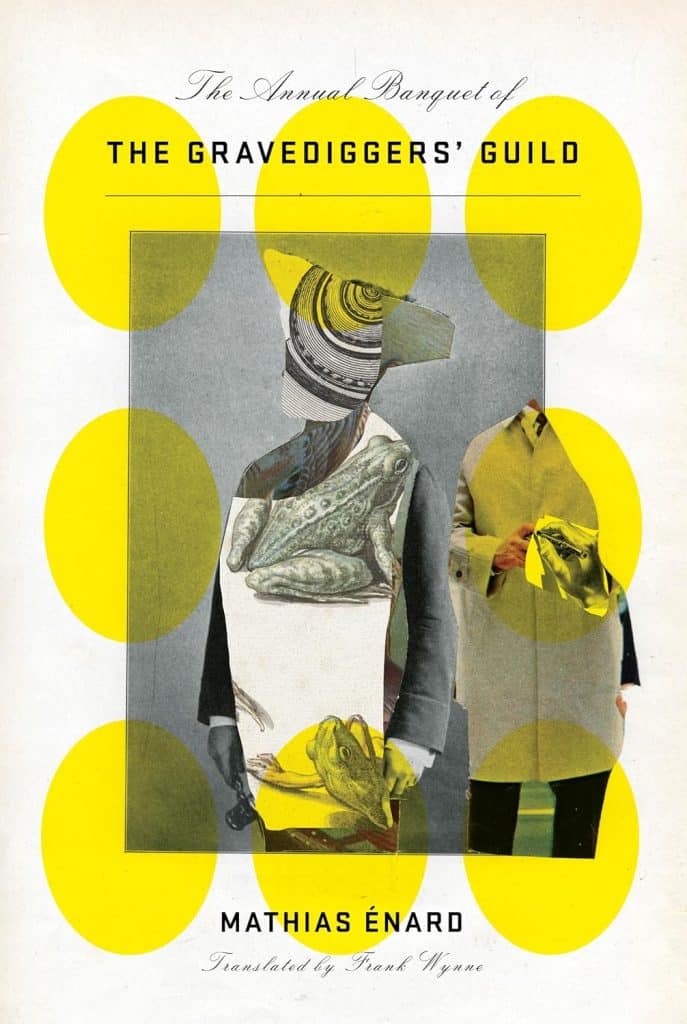
The Annual Banquet of the Gravediggers’ Guild

by Mathias Énard

Today, I started reading “The Annual Banquet of the Gravediggers’ Guild” by Mathias Énard. The book has been translated into English by Frank Wynne. This novel is full of Mathias Énard‘s characteristic humor and extensive knowledge. It is a lively book where the boundaries between past and present are constantly blurred, set against a backdrop of excess reminiscent of Rabelais’ writing.

David Mazon, an anthropology student, moves from Paris to La Pierre-Saint-Christophe, a village in the marshlands of western France, to research his thesis on contemporary agrarian life. He is determined to understand the essence of the local culture and spends his time scurrying around on his moped to interview the residents.

David must be made aware of the extraordinary events in an ordinary location. This place, where wars and revolutions once occurred, is now a dancefloor for Death. When something dies, its soul is recycled by the Wheel of Life and thrown back into the world as a microbe, human, or wild animal – sometimes in the past and sometimes in the future. Once a year, Death and the living agree to a temporary truce, during which gravediggers indulge in a three-day feast filled with food, drink, and conversation.

Mathias Énard’s novel, The Annual Banquet of the Gravediggers’ Guild, is a riotous and exciting comic masterpiece that won the prestigious Prix Goncourt award. The novel is set in the French countryside and is filled with Énard’s characteristic wit and encyclopedic brilliance. Against a backdrop of excess, the story blurs the lines between past and present, creating a Rabelaisian world of chaos and humor.


The Jan Lilien Education Fund sponsors ongoing sustainability and environmental awareness programs. Gifts made this month; I will match dollar-for-dollar. All donations are tax-deductible.

Subscribe

Contact Us

I receive a commission when you buy a book or product using a link on this page. Thank you for supporting Sharing Jan’s Love blog.


×
Mother Mary Comes to Me

Read: December 2025

Get this book

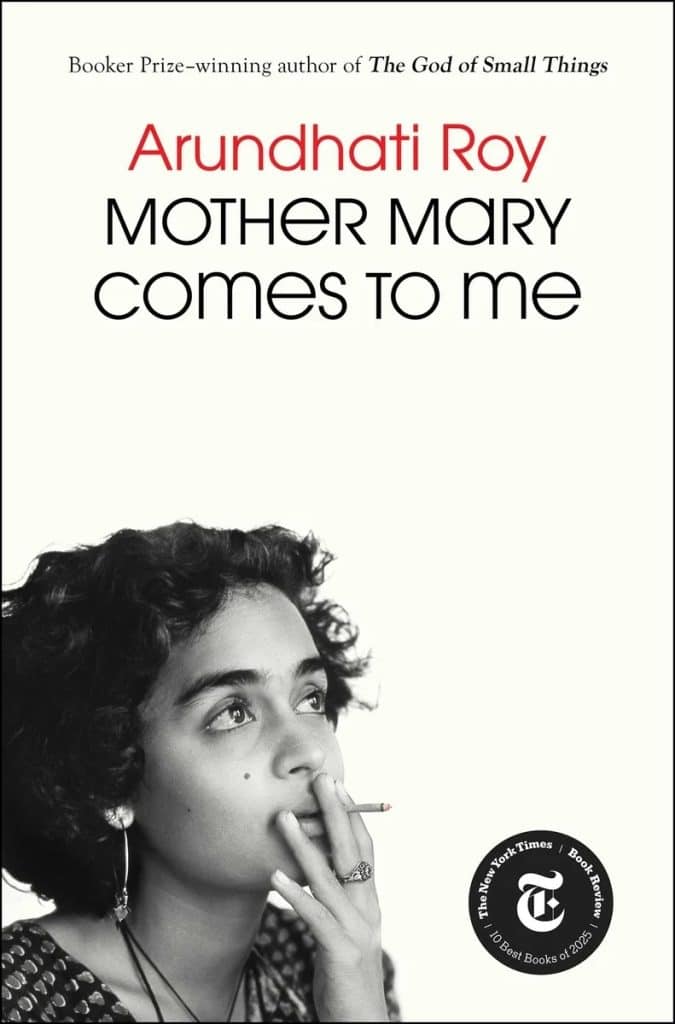
Mother Mary Comes to Me

by Arundhati Roy

Mother Mary Comes to Me,” Arundhati Roy‘s first memoir, is an intimate and inspiring account of how she became the person and writer she is today. It explores how her life was shaped by various circumstances, particularly her complex relationship with her extraordinary mother, whom she describes as “my shelter and my storm.” The book has been named one of the New York Times Book Review’s Top Ten Books of 2025 and is a finalist for the Kirkus Prize.

Devastated by her mother Mary’s death in September 2022, Roy experienced a mix of confusion and shame over the depth of her emotions. She began writing to understand her feelings for the mother she had distanced herself from at eighteen, not out of a lack of love, but to preserve her ability to love her. Her writing marks the beginning of an astonishing, often disturbing, and surprisingly humorous memoir that chronicles the author’s journey from her childhood in Kerala, India, where her single mother founded a school, to her accomplishments as a prize-winning novelist and essayist, and continues to the present day.

With the scope, richness, and emotional depth characteristic of her novels, “The God of Small Things” and “The Ministry of Utmost Happiness“, as well as the passion, political insight, and warmth found in her essays, “Mother Mary Comes to Me” serves as an ode to freedom and a tribute to complicated love and fierce grace—a memoir unlike any other.


Arundhati Roy is the author of “The God of Small Things,” which won the Booker Prize in 1997, and “The Ministry of Utmost Happiness,” a novel translated into more than 40 languages and longlisted for the Man Booker Prize in 2017. Roy has also published several nonfiction works, including “The End of Imagination,” “The Doctor and the Saint,” “My Seditious Heart,” and “Azadi.” In 2023, she received the prestigious European Essay Prize for lifetime achievement, and in 2024, she received the PEN Pinter Prize for telling “urgent stories of injustice with wit and beauty.” She resides in Delhi.


Discover your next favorite book and dive into a world of curated, exciting reads by purchasing through my links. You’ll have access to a diverse selection of books that I’ve personally vetted to ensure quality and enjoyment. Additionally, by supporting these selections, you’ll help me continue to provide you with more personalized recommendations. I earn a small commission from your purchase, which allows me to buy and share even more books with you. Your support truly makes a difference!


×
Never Forget Our People Were Always Free

Read: March 2024

Get this book

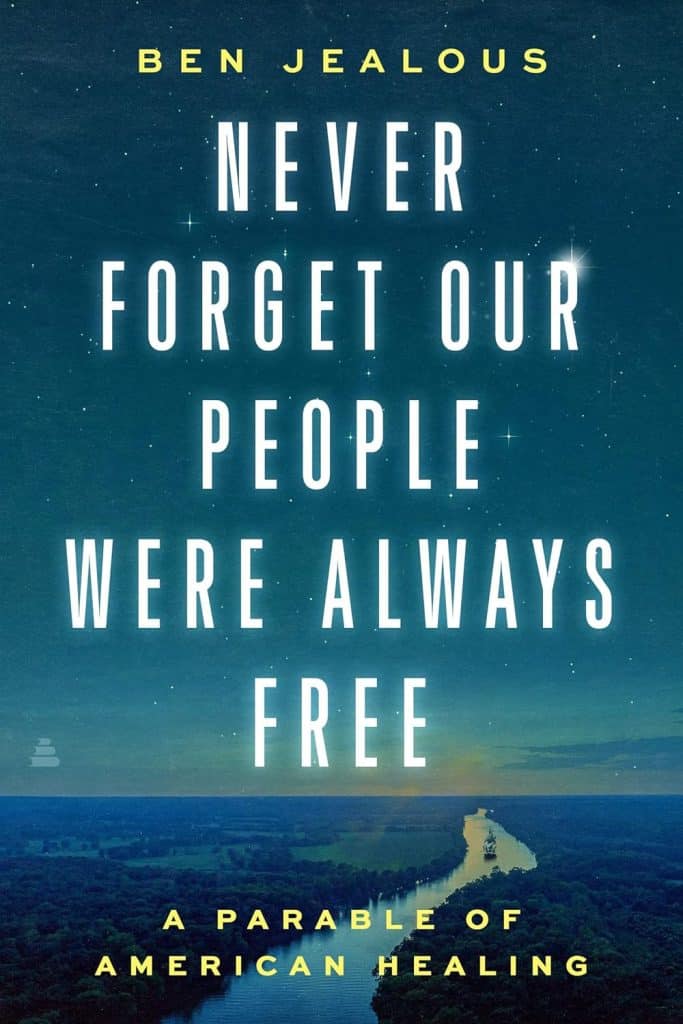
Never Forget Our People Were Always Free

by Ben Jealous

Today, I started reading “Never Forget Our People Were Always Free: A Parable of American Healing” by Ben Jealous, the Executive Director of the Sierra Club. The book highlights how the path to healing America’s broken heart begins with each of us having the courage to heal ourselves. According to Mr. Jealous, it would be transformative if every American treated each other as cousins.

Ben Jealous is the son of parents who had to leave Maryland because their cross-racial marriage was illegal.

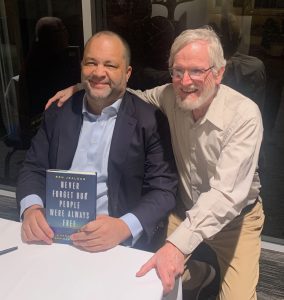
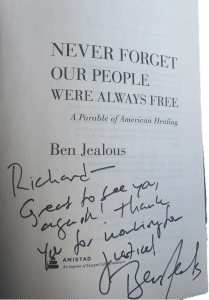
I briefly met Ben Jealous last May when I went to Washington with the Religious Action Center of Reform Judaism‘s Day of Action. When I saw Mr. Jealous speaking at Temple Emanu-El in neighboring Westfield, I immediately signed up to attend in person. He is an inspiration as an advocate for the environment, civil rights, and the healing of America’s broken heart.

His lively, courageous, and empathetic storytelling calls on every American to look past deeply cut divisions and recognize that we are all in the same boat now. Along the way, Jealous grapples with hidden American mysteries, including:

  • Why do white men die from suicide more often than black men die from murder?
  • How did racial profiling kill an American president?
  • What happens when a Ku Klux Klansman wrestles with what Jesus said?
  • How did Dave Chappelle know the DC Snipers were Black?
  • Why shouldn’t the civil rights movement give up on rednecks?
  • When is what we have collectively forgotten about race more important than what we know?
  • What do the most indecipherable things our elders say tell us about ourselves?

The book Never Forget Our People Were Always Free is told through parables. It features intimate glimpses of political and faith leaders such as Jack Kemp, Stacey Abrams, and the late Archbishop Desmond Tutu. The book also highlights unlikely heroes such as a retired constable, a female pirate from Madagascar, a long-lost Irishman, a death row inmate, and a man with a Confederate flag over his heart.
Never Forget Our People Were Always Free offers readers hope that America’s oldest wounds can heal and her oldest divisions can be overcome.

Although I have only read a handful of pages of the book, I highly recommend it!

×
A Parish Chronicle

Read: February 2026

Get this book

A Parish Chronicle

by Halldór Laxness

In “A Parish Chronicle,” celebrated novelist Halldór Laxness weaves an essayistic tale about the unlikely miracles that keep a church—destined to disappear time and again—rooted on the same hillside. Laxness explores the minutiae of history, from the location of the ancient burial mound of national hero Egill Skallagrímsson to the end of the 19th century, where weak-sighted Ólafur and boisterous farmhand Gunna each play unexpected roles in the parish’s enduring survival.

1882. In the still of morning, Ólafur sharpens his scythe on the bone-dry pavestones that separate his farmhouse from the rest of Mosfell Valley, where life revolves around sheep. The sound of his hammer rings out like a high-pitched bell over the tussocky fields. Across the valley, perched on a hill that receives more sunshine than others, stands Mosfell Church. Nearby, the parish priest’s maid Gunna pours her “slosh,” a weak cup of coffee. Further afield in Reykjavík (“down south” as the locals say), the general assembly decides to revisit an old plan to cut costs by consolidating small parishes and calls for the demolition of Mosfell. Yet today a church stands on that same hillside—its sharp steeple silhouetted against the clouds, its crown bell hanging to the left of the altar.

This intimate tribute to life in Laxness‘s home valley also offers a thoughtful commentary on how the peculiarities of certain individuals can shape history. “A Parish Chronicle” is rich with life and detail.


Halldór Laxness (1902-1998) is the undisputed master of modern Icelandic fiction. He was awarded the Nobel Prize in Literature in 1955, “for his vivid epic power which has renewed the great narrative art of Iceland.” His body of work includes novels, essays, poems, plays, stories, and memoirs: more than sixty books in all. His works available in English include Independent People, The Fish Can Sing, World Light, Under the Glacier, Iceland’s Bell, and Paradise Reclaimed.

Philip Roughton has translated the work of Halldór Laxness, Jón Kalman Stefánsson, Kristín Marja Baldursdóttir, and many others. He has twice been awarded the American-Scandinavian Foundation Translation Prize for his renderings of Halldór Laxness‘s work, in 2001 for Iceland’s Bell and in 2015 for Wayward Heroes. He also received the 2016 Oxford-Weidenfeld Prize for his translation of Jón Kalman Stefánsson’s The Heart of Man. He lives in Iceland. Translator Residence: Akureyri, Iceland

Salvatore Scibona is the recipient of a Mildred and Harold Strauss Living Award from the American Academy of Arts and Letters. His first novel, The End, was a finalist for the National Book Award and winner of the Young Lions Fiction Award. His second novel, The Volunteer, was called a “masterpiece” by the New York Times and won the Ohioana Book Award. His books have been translated into ten languages. His work has won a Guggenheim Fellowship, a Pushcart Prize, an O. Henry Award, and a Whiting Award, and the New Yorker named him one of its “20 Under 40” fiction writers. He is the Sue Ann and John Weinberg Director of the Cullman Center for Scholars and Writers at the New York Public Library.


Discover your next favorite book and dive into a world of curated, exciting reads by purchasing through my links. You’ll have access to a diverse selection of books I’ve personally vetted for quality and enjoyment. Additionally, by supporting these selections, you’ll help me continue to provide you with more personalized recommendations. I earn a small commission from your purchase, which allows me to buy and share even more books with you. Your support truly makes a difference!


×

Discover more from Sharing Jan’s Love

Subscribe now to keep reading and get access to the full archive.

Continue reading