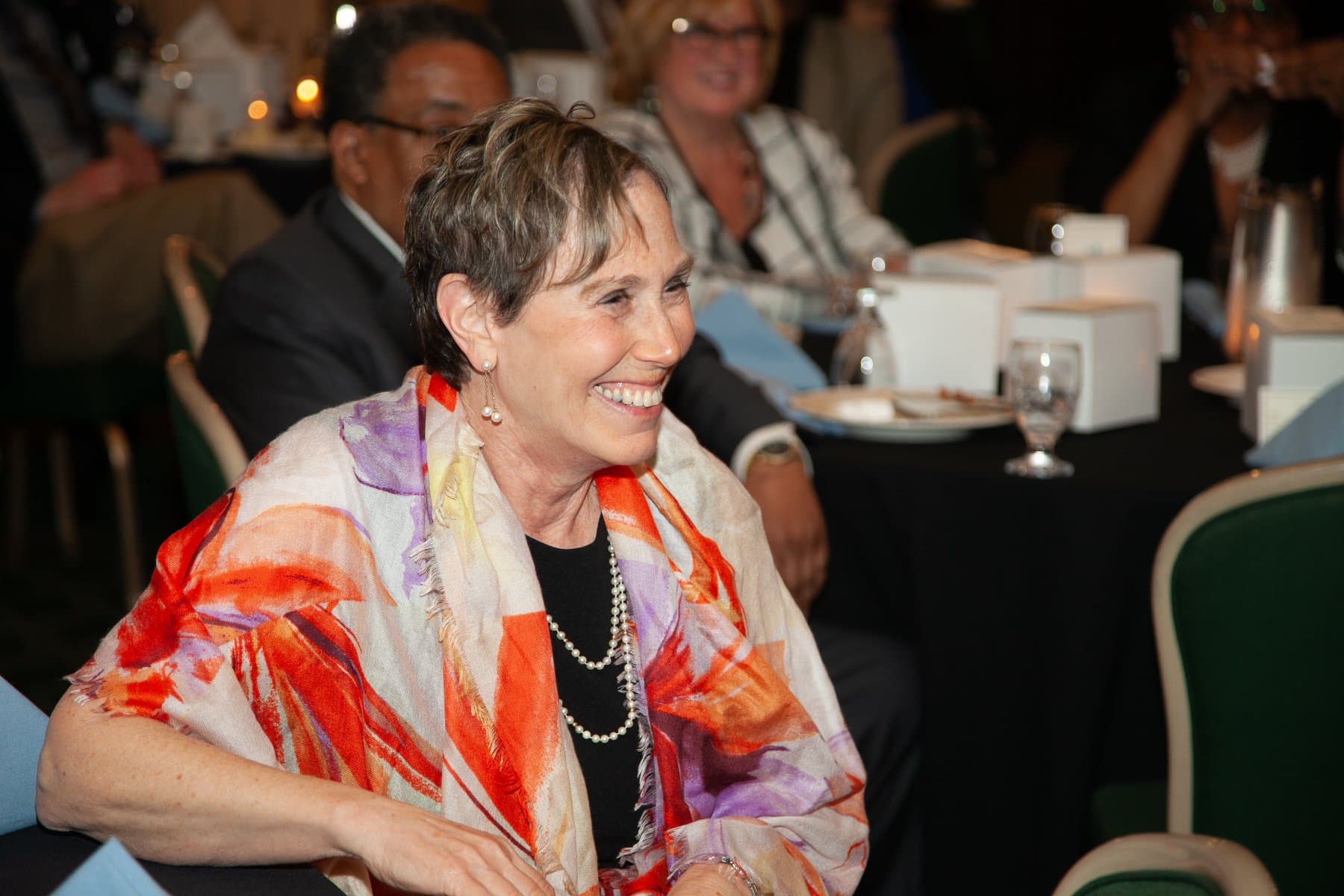

Snow Angel Blessing

Estimated reading time: 2 minutes, 36 seconds
Love Warmed Our Heart on a Cold Lincoln’s Birthday in 1975

During the winter of 1975, just six months before our wedding, I went for a walk with Jan, my beloved partner, in the tranquil surroundings of Ft. Greene Park, across the street from her apartment. The air was frigid, and the ground was covered with a thick blanket of snow. The sudden winter storm had brought the heaviest snowfall of the year, with a whopping 7.8 inches of snow. Jan, a drug counselor at Brooklyn Automotive, had taken the day off for the holiday. Walking on the un-shoveled snow, it felt like we had stepped into a scene from the timeless classic novel and popular movie, “Dr. Zhivago.” The only sound we could hear was the crisp crunch of our boots on the icy terrain, which added to the serene and peaceful atmosphere.

Snow Angels

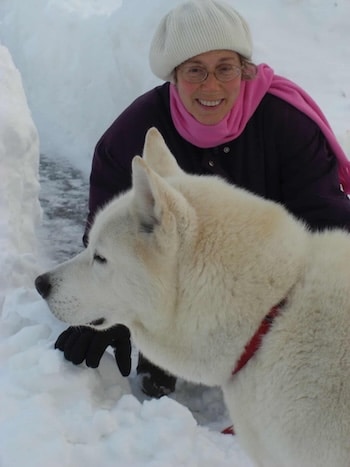
Jan lay on the ground and insisted, “Let’s make snow angels.” I joined her, and we made paired angels. I tried to help her stand up, but our feet kept slipping. Eventually, we succeeded, but as soon as I let go of her hand, she grabbed some snow and threw it at my face. I retaliated with a handful of snow, but we both laughed. We continued walking across the park, pretending to be Lara and Yuri and trying to maintain our balance on the snowy ground.

Six weeks earlier, Jan had excitedly told her parents we were getting married, but their response was far from positive. We traveled to New Jersey by bus to celebrate her mother’s birthday, but instead of congratulating her, we received a disappointed reaction: “You ruined my birthday.” Despite the opposition from her family, we both remained committed to getting married. However, my wife tended to be more pragmatic, while I was more inclined towards romance.

While walking in the snow, I couldn’t help but wonder about her decision regarding our future together. I was uncertain whether she would ultimately choose to marry me or accept her parent’s opposition. We discussed various things on our way, shared our thoughts, and enjoyed each other’s company. The sun was shining, and the breeze was cool, perfecting the atmosphere around us.

Love is a Powerful and Transformative Force.

Once we decided to leave the park, we walked up the four flights of stairs to her apartment. As we removed our coats, she turned to me, kissed me, and said, “I love you. I want to spend the rest of my life with you.” Her words filled my heart with joy, and I couldn’t help but hug her tightly and kiss her back. The moment was perfect, and I felt I was on top of the world.

After that, we spent the evening talking and laughing, enjoying each other’s company. Looking back, I realize it was a turning point in our almost half-century relationship. The rest, as they say, is history.


The Jan Lilien Education Fund sponsors ongoing sustainability and environmental awareness programs. All donations are tax-deductible.


Contact Us
Subscribe

Creative Commons License

This work is licensed under a Creative Commons Attribution-NonCommercial 4.0 International License.


4 comments add your comment

    • Thanks for your comment, Hugo. I appreciate your confidence in me being a nice guy. However, the truth is that being nice doesn’t always lead to success. In my case, Jan’s parents were not happy with me due to my appearance and religious differences. Despite Jan’s practical nature, we still got married, and I documented the experience in a post, “We Are Getting Married!“. The inspiration for the story you are referring to came from the light snowfall this week, which reminded me of the tension that can arise between a practical partner and a romantic one in a relationship. Being a romantic is a part of my DNA, and I will always embrace it as an inspiration.

    • Danny, thanks for your comment. In this modern era, the word love is often used casually and loses its true meaning. But to me, it is unlike any other word with four letters. It is the most potent force in the universe, capable of bringing about personal and collective salvation.

      Recently, I was blessed with the opportunity to experience love again, and it felt like a dream come true. However, I soon realized that love requires reciprocity. If it is not mutual, it is not the true love that I seek. I am unwilling to settle for anything less than what I once had.

      In a world where love can be fleeting and elusive, we must hold on to it with all our might. All we need is love, and with it, we can conquer any challenge that comes our way.

Share your thoughts and ideas

This site uses Akismet to reduce spam. Learn how your comment data is processed.

The Jan Lilien Education Fund!

How to Love Your Daughter

Read: August 2023

Get this book

How to Love Your Daughter

by Hila Blum

I started reading a novel called “How to Love Your Daughter,” written by Hila Blum and translated by Daniella Zamir today. The book explores a complicated relationship between a mother and her grown daughter. It raises the question of how much harm we can do to our loved ones when love blinds us.

The story takes place thousands of miles away from home, where a woman finds herself peeking through well-lit windows at her two granddaughters. She has never met them before, as they are the daughters of her estranged daughter, whom she hasn’t seen in years.

The book’s central theme revolves around the woman’s attempt to understand how a once-loving relationship between her and her daughter ended up in such a distant and unfathomable state. The story shifts past and present as the woman unravels her memories and long-buried emotions. She tries to make sense of the seemingly insignificant moments of parental care that, combined, may have undermined what she valued most.

The author, Blum, skillfully delves into the complexities of family life, where a parent can easily cross the line between protectiveness and possession without even realizing it. The story leaves us wondering whether it’s possible ever to find our way back from such a point.


The Jan Lilien Education Fund sponsors ongoing sustainability and environmental awareness programs. Gifts made this month; I will match dollar-for-dollar. All donations are tax-deductible.

Subscribe

Contact Us

I receive a commission when you buy a book or product using a link on this page. Thank you for supporting Sharing Jan’s Love blog.


×
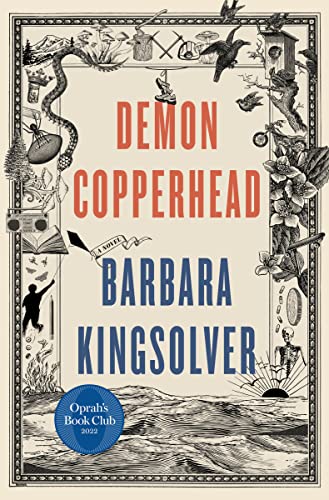
Demon Copperhead: A Novel

Read: December 2022

Get this book

Demon Copperhead: A Novel

by Barbara Kingsolver

Demon Copperhead: A Novel by Barbara Kingsolver is a must-read page-turner! Set in the mountains of southern Appalachia, this is the story of a boy born to a teenage single mother in a single-wide trailer, with no assets beyond his dead father’s good looks and copper-colored hair, a caustic wit, and a fierce talent for survival. Demon Copperhead speaks for a new generation of lost boys and all those born into beautiful, cursed places they can’t imagine leaving behind.

With more knowledge about the devastation of an economy that works for a few and the opioid crisis, I felt as if I was reading about people I knew. Although the book focuses on the impact on boys, it also details the devastation that girls experience.

If Jan had read Demon Copperhead, she would have encouraged me to read it. It reminds us of the work we must do to repair the world.

As a widow, it was a reminder of the long road that we must all take even after we have hit bottom.

WNYC’s All of it hosted an interview with Barbara Kingsolver in which she speaks about Demon Copperhead and her writing.

Demon Copperhead is one of the NYTimes’ top five fiction books of 2022. I have read three of them, The Candy House, The Furrows, and Checkout 19.

The Goodreads summary provides an overview.

In a plot that never pauses for breath, relayed in his unsparing voice, he braves the modern perils of foster care, child labor, derelict schools, athletic success, addiction, disastrous loves, and crushing losses. Through all of it, he reckons with his invisibility in a popular culture where even the superheroes have abandoned rural people in favor of cities.

Many generations ago, Charles Dickens wrote David Copperfield from his experience as a survivor of institutional poverty and its damage to children in his society. Those problems have yet to be solved in ours. Dickens is not a prerequisite for readers of this novel, but he provided its inspiration. In transposing a Victorian epic novel to the contemporary American South, Barbara Kingsolver enlists Dickens’ anger and compassion and, above all, his faith in the transformative powers of a good story. Demon Copperhead speaks for a new generation of lost boys and all those born into beautiful, cursed places they can’t imagine leaving behind.


The Jan Lilien Education Fund sponsors ongoing sustainability and environmental awareness programs. Gifts made this month; I will match dollar-for-dollar. All donations are tax-deductible.

Subscribe

Contact Us

I receive a commission when you buy a book or product using a link on this page. Thank you for supporting Sharing Jan’s Love blog.


×
Berlin- A Novel

Read: June 2023

Get this book

Berlin: A Novel by Bea Setton

by Bea Setton

I’ve begun reading Berlin: A Novel by Bea Setton. After finishing Kairos, a book set in a divided Berlin, Setton’s debut novel is witty and insightful, with a young woman battling a sense of emptiness who moves to Berlin for a fresh start. However, things go differently than planned.

Daphne, the protagonist, moves to Berlin hoping for a new beginning but deals with more drama than she left behind. She knows she needs to make friends, learn German, and navigate a new way of life. She even expects to spend long nights alone with Nutella and experience the difficulties of online dating in another language. But one night, something unexpected and unnerving happens in her apartment, and Daphne’s life suddenly turns dangerous.

Setton captures the modern female experience with sharp observations and wit, making Berlin a must-read for her generation.


The Jan Lilien Education Fund sponsors ongoing sustainability and environmental awareness programs. Gifts made this month; I will match dollar-for-dollar. All donations are tax-deductible.

Subscribe

Contact Us

I receive a commission when you buy a book or product using a link on this page. Thank you for supporting Sharing Jan’s Love blog.


×
The Boy from the Sea

Read: May 2025

Get this book

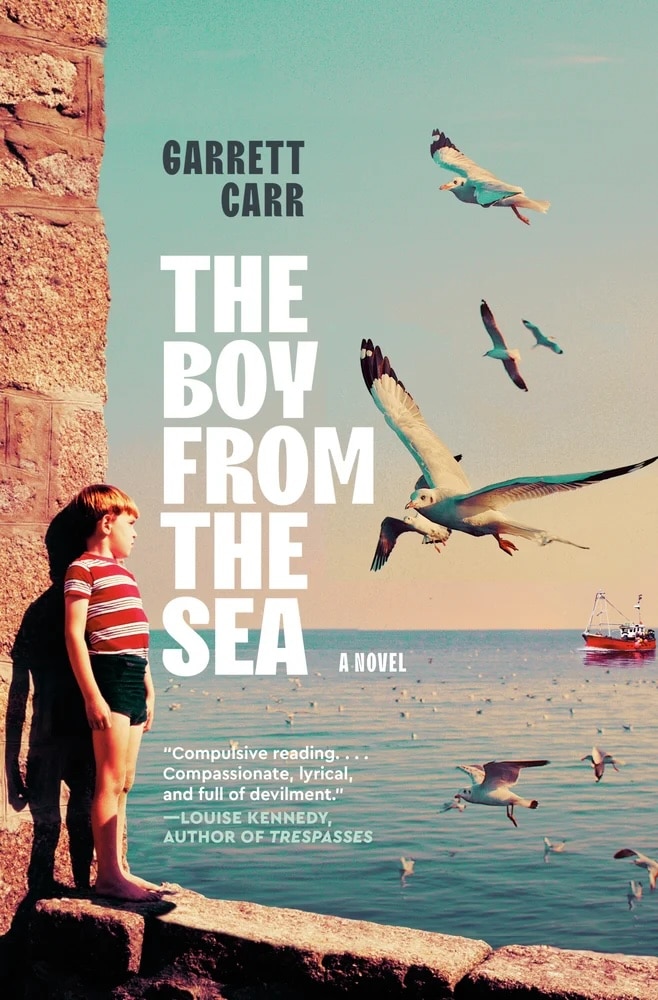
The Boy from the Sea

by Garrett Carr

The Boy from the Sea by Garrett Carr is set on the west coast of Ireland during the 1970s and 1980s. This captivating debut novel tells the story of a baby boy found on the beach near a small fishing town, narrated by the locals who become enchanted by him. Both outrageously funny and profoundly moving, The Boy from the Sea showcases the talent of an essential new voice in Irish literature.

In 1973, a baby boy was discovered on the beach of a close-knit fishing village in Ireland. Fisherman Ambrose Bonnar offers to bring the child into his family, which includes his son Declan, his wife Christine, and, up the lane, Christine’s sister and aging father. The townspeople remain fascinated by the baby, whom they name Brendan, as he grows into a strange yet charismatic young man.

The Boy from the Sea tells the story of a family and a community thrown into turmoil by Brendan’s arrival. The family’s fortunes rise and fall over the years, just as the town does because nothing happens to one family here without affecting them all. The forces of a voracious global economy and modernized commercial fishing wreak havoc on their way of life. In the village, Brendan and Declan are wildly different and often at odds; meanwhile, Ambrose worries about his children but cannot divert his attention from the brutal work that keeps his family afloat. As the world around them changes, the mystery of Brendan’s origins draws them toward a surprising and stormy fate.


Garrett Carr teaches creative writing at the Seamus Heaney Centre at Queen’s University Belfast and frequently contributes to The Guardian and The Irish Times. His nonfiction work, The Rule of the Land: Walking Ireland’s Border, was chosen as a BBC Radio 4 Book of the Week. The Boy from the Sea marks Carr’s debut novel.


When you purchase a book through one of my links, I earn a small commission that helps support my passion for reading. This contribution allows me to buy even more books to share with you, creating an incredible cycle of discovering great reads together! Your support truly makes a difference!

Don’t miss out on this exciting opportunity! Enjoy a limited-time offer of 20% off your next book purchase at Bookshop.org! It’s the perfect chance to add this compelling novel to your collection.


×
Invisible Child

Read: December 2021

Get this book

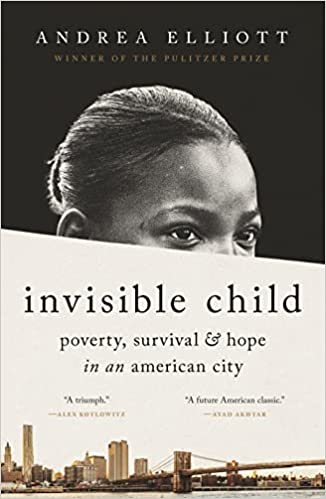
Invisible Child: Poverty, Survival & Hope in an American City

by Andrea Elliott

Invisible Child: Poverty, Survival & Hope in an American City by Andrea Elliott was a gift from my son Jon. The New York Times selected “Invisible Child” as one of the best books published this year. It is indeed one of the top books on my all-time list.

GoodReads summary provides a good overview,

The riveting, unforgettable story of a girl whose indomitable spirit is tested by homelessness, poverty, and racism in an unequal America—from Pulitzer Prize-winning journalist Andrea Elliott of The New York Times

Invisible Child follows eight dramatic years in the life of Dasani Coates, a child with imagination as soaring as the skyscrapers near her Brooklyn homeless shelter. Born at the turn of a new century, Dasani is named for the bottled water that comes to symbolize Brooklyn’s gentrification and the shared aspirations of a divided city. As Dasani grows up, moving with her tight-knit family from shelter to shelter, this story goes back to trace the passage of Dasani’s ancestors from slavery to the Great Migration north. When Dasani comes of age, New York City’s homeless crisis explodes as the chasm deepens between rich and poor.

In the shadows of this new Gilded Age, Dasani must lead her seven siblings through a thicket of problems: hunger, parental drug addiction, violence, housing instability, segregated schools, and the constant monitoring of the child-protection system. When, at age thirteen, Dasani enrolls at a boarding school in Pennsylvania, her loyalties are tested like never before. As she learns to “code switch” between the culture she left behind and the norms of her new town, Dasani starts to feel like a stranger in both places. Ultimately, she faces an impossible question: What if leaving poverty means abandoning the family you love?

By turns heartbreaking and revelatory, provocative and inspiring, Invisible Child tells an astonishing story about the power of resilience, the importance of family, and the cost of inequality. Based on nearly a decade of reporting, this book vividly illuminates some of the most critical issues in contemporary America through the life of one remarkable girl.

Jan and I were involved and knew that child poverty and homelessness needed repair. In addition, Jan lived on Washington Park across from Ft. Greene Park in 1974-75. We knew the neighborhood where much of the book’s story takes place. 

Before meeting Jan in 1973, I was both a community/tenant organizer and a youth worker. In the latter role, I made weekly hostel trips for eight to ten young boys from East Williamsburg during 1973. The trips were the first the boys had ever been outside of their neighborhood.

Many of them had imaginations like Dasani. They also had her instinct to fight. One of my first tasks was to check for any weapons.

Decades later, when I would see any of them, now adults, they would ask when we were going on another trip. I wish I had met Jan when I made those trips. She would have helped me improve them and document the impact. If I could re-write history, I would have her join me as the second adult on the hostel trips.

After that summer, it was clear my primary skills were as a community/tenant organizer. Over the next few years, my work focused on creating affordable and supportive housing.

Jan and I did meaningful work that made a difference, yet the need for a permanent solution to the crisis remains. The book highlights the crucial role of resilience, the importance of family, and the cost of inequality. As a nation, we cannot undermine those values by breaking up families, impeding resilience, and maintaining racial and economic inequality. 

The current debate in Washington over the Build Back Better legislation needs to focus not on how much we spend but on its impact on children and families

David Brooks, a conservative commentator, has supported these expenditures for what they can do to address this country’s cultural and economic crisis. 

These packages say to the struggling parents and the warehouse workers: I see you. Your work has dignity. You are paving your way. You are at the center of our national vision.

This is how you fortify a compelling moral identity, which is what all of us need if we’re going to be able to look in the mirror with self-respect. This is the cultural transformation that good policy can sometimes achieve. Statecraft is soulcraft.

If you can only read one book this year, this is the one to read. Child poverty, homelessness, and inequality impact all of us. Ending child poverty and homelessness will make us a healthier and more inclusive nation. It is time for a compelling moral call to action!

Subscribe

Contact Us

When you buy a book or product using a link on this page, I receive a commission. Thank you for supporting Sharing Jan’s Love blog.

×
Cloud Atlas: A Novel

Read: September 2024

Get this book

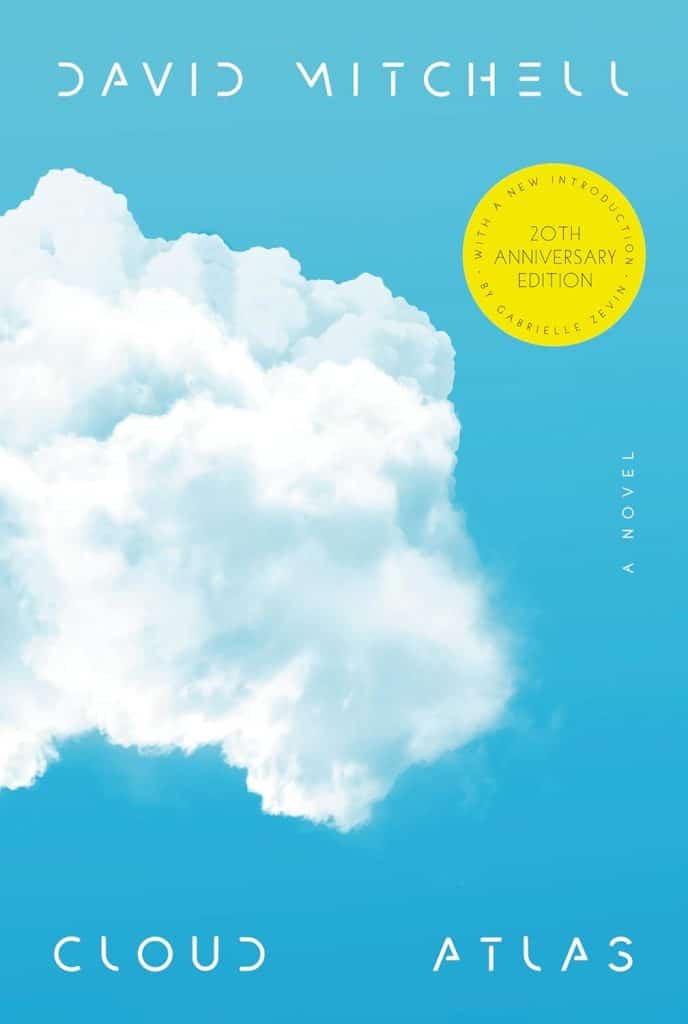
Cloud Atlas: A Novel

by David Mitchell

Today, I started reading Cloud Atlas: A Novel by David Mitchell, one of The New York Times’ 100 Best Books of the 21st Century. Cloud Atlas begins in 1850 with Adam Ewing, an American notary, voyaging from the Chatham Isles to his home in California. Ewing is befriended by a physician, Dr. Goose, who begins treating him for a rare species of brain parasite.

The novel careens, with dazzling virtuosity, to Belgium in 1931, the West Coast in the 1970s, an inglorious present-day England, a Korean superstate of the near future where neo-capitalism has run amok, and, finally, a postapocalyptic Iron Age Hawaii in the last days of history. But the story doesn’t end even there. What sets Cloud Atlas apart is its unique narrative structure, which boomerangs back through centuries and space, returning by the same route, in reverse, to its starting point. This journey reveals how the disparate characters connect, how their fates intertwine, and how their souls drift across time like clouds across the sky.

As wild as a video game, as mysterious as a Zen koan, Cloud Atlas is an unforgettable tour de force that, like its incomparable author, has transcended its cult classic status to become a worldwide phenomenon. The novel’s diverse settings and cultures, from 1850 Chatham Isles to a postapocalyptic Iron Age Hawaii, appeal to readers across the globe, offering a rich and varied reading experience.

×

Discover more from Sharing Jan’s Love

Subscribe now to keep reading and get access to the full archive.

Continue reading