
Home Alone in the Burg

Estimated reading time: 14 minutes, 24 seconds
The Mets Are in the World Series!

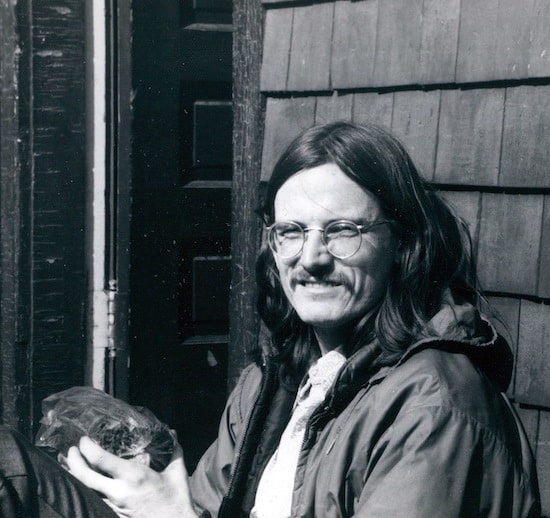
Mark and I finally got on the number 7 train at Shea Stadium after the fifth game of the World Series on Thursday, October 18, 1973. The Mets had won 2-0, and everyone on the train, including us, was confident that they would win the World Series now that they had a 3-2 lead in the series as it shifted to Oakland.

Entering the subway car, the smell of cheap beer turned my stomach to the point I was afraid I would regurgitate. Because it was so cold – 38 degrees at the start of the game, Mark and I had not purchased a beer.

The vendors’ cry of “Cold beer here!” fell on deaf ears. Wearing two sweaters, a winter coat, and gloves, drinking beer would have been difficult, if not impossible.

When we transferred from the elevated 7 Train, we both unzipped our coats as we went underground to catch the G.

“The Mets will win the World Series,” Mark predicted. He was more of a baseball fan than I was, and he kept talking about the key plays. I said as little as possible so I would not show my ignorance. 

Three weeks before, Mark and Roy spoke with me about attending the World Series.

“The Mets are amazing,” Mark had exclaimed. “We should go to the World Series!” Roy and I nodded our heads. “If they make it, they will play games, three, four, and five at Shea. If we can find three more to go with us, we could get six tickets, two for each game.” Roy and I nodded affirmatively again.

“I live in Queens and could go to the stadium and purchase the tickets,” Roy announced.

We quickly talked about potential partners and settled on a plan of action to secure tickets for the playoffs and the World Series.

Let’s exit at Metropolitan Avenue and walk on Lorimer Street to our apartment,” I said.

“I wonder if the Pizza shop between Devoe and Ainslie is still open,” Mark asked. The sign in the window said they were closed.

When we got home, I found two notes stuck to my door in Kathy’s handwriting. 

The first one read,

“Roy called. He says Jan, who was in our VISTA class, wants you to come to a party she is having on 11/10. He stressed she wants you to be there!”

First Phone Message

The second one read,

Blossom called and said she will be in NY in January and wants to see you. Who or what is a Blossom? Is/was she the imaginary girlfriend? Her number is _________. “

Second Phone Message

Roy had been the one who purchased the tickets to the World Series. I remember Jan. I presented on life as a VISTA at the training session in December 1973. I had given her my phone number and address, but she had never called me.

If it had not been for my imaginary girlfriend, I would have tracked down her phone number and called her. I will have to call him later and find out to make sure she wants me, not Mark or Kathy or someone else, to attend. 

Blossom! I had told her to call me if she was coming to NY, but that was before I knew our relationship was over. Should I wait for her to call me again? Or call her tomorrow?

Opening the door to my apartment, I grab the flashlight so that I can see. The heat and hot water problems persist, and I no longer have electricity. The rent strike continued as my tiny abode was not cold but dark.

Next Page

Pages: 1 2 3 4

6 comments add your comment

Share your thoughts and ideas

This site uses Akismet to reduce spam. Learn how your comment data is processed.

The Jan Lilien Education Fund!

Tell Me Everything: A Novel

Read: January 2025

Get this book

Tell Me Everything: A Novel

by Elizabeth Strout

Today, I dived into “Tell Me Everything: A Novel” by Elizabeth Strout, and I’m already captivated. This book made it onto NPR’s best books list for 2024 and caught the eye of Oprah’s Book Club—no small feat! Strout writes with such empathy and emotional depth that it reflects her incredible talent. Lucy beautifully captures this sentiment by stating, “Love comes in many different forms, but it is always love.”

With her profound understanding of the human condition and silences that convey deep emotions, Elizabeth Strout returns to the town of Crosby, Maine, reuniting with her beloved characters—Lucy Barton, Olive Kitteridge, Bob Burgess, and others—as they confront a shocking crime, navigate love while choosing to remain apart, and ponder the question, as Lucy Barton puts it, “What does anyone’s life mean?”

It’s autumn in Maine, and the town lawyer, Bob Burgess, finds himself entangled in a murder investigation, defending a lonely, isolated man accused of killing his mother. He has also developed a deep and abiding friendship with the acclaimed writer Lucy Barton, who lives nearby in a house by the sea with her ex-husband, William.

Lucy and Bob take walks and discuss their lives, fears, regrets, and what could have been. Meanwhile, Lucy is finally introduced to the iconic Olive Kitteridge, who now resides in a retirement community on the outskirts of town. They spend afternoons in Olive’s apartment, sharing stories about people they have known—what Olive calls “unrecorded lives,” which reanimate their experiences and imbue their lives with meaning.


When you purchase a book through one of my links, I earn a small commission that helps support my passion for reading. This contribution allows me to buy even more books to share with you, creating an incredible cycle of discovering great reads together! Your support truly makes a difference!


×
How Democracies Die

Read: January 2021

Get this book

How Democracies Die: What History Reveals About Our Future

by Steven Levitsky and Daniel Ziblatt

How Democracies Die: What History Reveals About Our Future by Steven Levitsky and Daniel Ziblatt was on my reading list for almost a year. In late December of last year, I started reading it and was in the final chapter on January 6, 2021. Like many of us, I never in my life expected to see a day like that in our country.

This type of event is one the authors talk about in their book.

According to the overview in GoodReads,

Donald Trump’s presidency has raised a question that many of us never thought we’d be asking: Is our democracy in danger? Harvard professors Steven Levitsky and Daniel Ziblatt have spent more than twenty years studying the breakdown of democracies in Europe and Latin America, and they believe the answer is yes. Democracy no longer ends with a bang–in a revolution or military coup–but with a whimper: the slow, steady weakening of critical institutions, such as the judiciary and the press, and the gradual erosion of long-standing political norms. The good news is that there are several exit ramps on the road to authoritarianism. The bad news is that, by electing Trump, we have already passed the first one.

Drawing on decades of research and a wide range of historical and global examples, from 1930s Europe to contemporary Hungary, Turkey, and Venezuela, to the American South during Jim Crow, Levitsky and Ziblatt show how democracies die–and how ours can be saved.

Our democracy is too valuable for us to have it die. We all need to work to preserve and strengthen it. How Democracies Die is a book that everyone needs to read!

Subscribe

Contact Us

×
Scarlet Carnation: A Novel

Read: March 2022

Get this book

Scarlet Carnation: A Novel

by Laila Ibrahim

Scarlet Carnation: A Novel by Laila Ibrahim is a book I enjoyed reading. Having read this book, I am now a fan of Laila Ibrahim and look forward to reading more of her novels. In addition, I am a fan of historical fiction, and this is one of the best I have read about the second decade of the twentieth century.

May and Naomi are related, but their lives are very relatable to the reader. The promises of equality and transformation of women’s roles resonate even now. Bringing together the myriad issues they confront – racism, shaming for decisions they made, peace, and the interlocking of their families from a plantation, make this a book that I highly recommend.

The only observation was my shock at reading that they were petitioning President Coolidge at the start of WW I. It is a minor issue as the story flows strongly from the first to the last page.

The Goodreads overview highlights the narrative of the book.

In an early twentieth-century America roiling with racial injustice, class divides, and WWI, two women fight for their dreams in a galvanizing novel by the bestselling author of Golden Poppies. 1915. May and Naomi are extended families, their grandmothers’ lives inseparably entwined on a Virginia plantation in the volatile time leading up to the Civil War. For both women, the twentieth century promises social transformation and equal opportunity.

May, a young white woman, is on the brink of achieving the independent life she’s dreamed of since childhood. Naomi, a nurse, mother, and leader of the NAACP, has fulfilled her own dearest desire: buying a home for her family. But they both are about to learn that dreams can be destroyed in an instant. May’s future is upended, and she is forced to rely once again on her mother. Meanwhile, the white-majority neighborhood into which Naomi has moved is organizing against her while her sons are away fighting for their country.

In the tumult of a changing nation, these two women—whose grandmothers survived the Civil War—support each other’s quest for liberation and dignity. Both find the strength to confront injustice and the faith to thrive on their chosen paths.

Register to Attend Celebrate Jan Day

Subscribe

Contact Us

When you buy a book or product using a link on this page, I receive a commission. Thank you for supporting Sharing Jan’s Love blog.

×
Never Forget Our People Were Always Free

Read: March 2024

Get this book

Never Forget Our People Were Always Free

by Ben Jealous

Today, I started reading “Never Forget Our People Were Always Free: A Parable of American Healing” by Ben Jealous, the Executive Director of the Sierra Club. The book highlights how the path to healing America’s broken heart begins with each of us having the courage to heal ourselves. According to Mr. Jealous, it would be transformative if every American treated each other as cousins.

Ben Jealous is the son of parents who had to leave Maryland because their cross-racial marriage was illegal.

I briefly met Ben Jealous last May when I went to Washington with the Religious Action Center of Reform Judaism‘s Day of Action. When I saw Mr. Jealous speaking at Temple Emanu-El in neighboring Westfield, I immediately signed up to attend in person. He is an inspiration as an advocate for the environment, civil rights, and the healing of America’s broken heart.

His lively, courageous, and empathetic storytelling calls on every American to look past deeply cut divisions and recognize that we are all in the same boat now. Along the way, Jealous grapples with hidden American mysteries, including:

  • Why do white men die from suicide more often than black men die from murder?
  • How did racial profiling kill an American president?
  • What happens when a Ku Klux Klansman wrestles with what Jesus said?
  • How did Dave Chappelle know the DC Snipers were Black?
  • Why shouldn’t the civil rights movement give up on rednecks?
  • When is what we have collectively forgotten about race more important than what we know?
  • What do the most indecipherable things our elders say tell us about ourselves?

The book Never Forget Our People Were Always Free is told through parables. It features intimate glimpses of political and faith leaders such as Jack Kemp, Stacey Abrams, and the late Archbishop Desmond Tutu. The book also highlights unlikely heroes such as a retired constable, a female pirate from Madagascar, a long-lost Irishman, a death row inmate, and a man with a Confederate flag over his heart.

Never Forget Our People Were Always Free offers readers hope that America’s oldest wounds can heal and her oldest divisions can be overcome.

Although I have only read a handful of pages of the book, I highly recommend it!

×
My Friends: A Novel

Read: October 2024

Get this book

My Friends: A Novel

by Hisham Matar'

Today, I started reading Hisham Matar’s “My Friends: A Novel.” It is a finalist for the 2024 National Book Award for Fiction and the winner of the Orwell Prize for Political Fiction. This novel explores themes of friendship, family, and the harsh realities of exile. Hisham Matar is also the Pulitzer Prize-winning author of “The Return.” The pages on my Kindle App on my iPad fly like autumn’s falling leaves.

One evening, a young boy named Khaled, growing up in Benghazi, hears a captivating short story read aloud on the radio. The story, about a man being eaten alive by a cat, leaves an indelible mark on Khaled, igniting a lifelong fascination with the power of words and the enigmatic author, Hosam Zowa. This transformative experience sets Khaled on a journey that will lead him far from home to the University of Edinburgh to pursue a life of the mind.

In a new and unfamiliar environment, Khaled finds himself far from his familiar life in Libya. His resilience is tested when he attends a protest against the Qaddafi regime in London. The event turns into a tragedy, leaving Khaled injured and unable to leave Britain. Despite the danger posed by monitored phone lines, his determination to communicate his situation to his parents is a testament to his strength.

When Khaled has a chance encounter with Hosam Zowa, the author of a life-changing short story, at a hotel, Khaled begins the most profound friendship of his life. This friendship sustains him and eventually compels him, as the Arab Spring unfolds, to confront complex tensions between revolution and safety, family and exile, and how to define his sense of self concerning those closest to him.

A profound exploration of friendship and family and how time can test and fray these bonds, ‘My Friends‘ is a work of literature that resonates with its readers. Hisham Matar’s novel is not just a story but an achingly beautiful reflection on life and relationships crafted by an author at the peak of his powers.


When you purchase a book through one of my links, I earn a small commission that helps support my passion for reading. This contribution allows me to buy even more books to share with you, creating an incredible cycle of discovering great reads together! Your support truly makes a difference!


×
The Day Tripper: A Novel

Read: April 2024

Get this book

The Day Tripper: A Novel

by James Goodhand

Today, I began reading “The Day Tripper: A Novel” by James Goodhand. The story centers around Alex Dean, who can travel through time but, unfortunately, always ends up in the wrong place at the wrong time. This book is a perfect read for a rainy April day. The story moves quickly in just the first few pages, with time flying by faster than it does for Alex.

It’s 1995, and Alex Dean has it all: a spot at Cambridge University next year, the love of a fantastic woman named Holly, and all the time ahead of him. That is, until a brutal encounter with a ghost from his past sees him beaten, battered, and almost drowning in the Thames.

The next day, he wakes to find himself in a messy, derelict room he’s never seen before, in grimy clothes Alex doesn’t recognize, with no idea how he got there. A glimpse in the mirror tells him he’s much older and has been living a hard life, his features ravaged by time and poor decisions. He snatches a newspaper and finds it’s 2010—fifteen years since the fight.

After finally drifting off to sleep, Alex wakes the following morning to find it’s now 2019, another nine years later. But the next day, it’s 1999. Never knowing which day is coming, he begins to piece together what happens in his life after that fateful night by the river.

But what exactly is going on? Why does his life look nothing like he thought it would? What about Cambridge and Holly? In this page-turning adventure, Alex must navigate the years to learn that small actions have an untold impact. And that might be all he needs to save the people he loves and, equally importantly, himself.

×

Discover more from Sharing Jan’s Love

Subscribe now to keep reading and get access to the full archive.

Continue reading