
Home Alone in the Burg

Estimated reading time: 14 minutes, 24 seconds
Why Did Jan Invite Me?

I said it was bitter cold,” I said as we stood on Grand Street in front of our building. The wind blew with gale force strength down Grand Street. The temperature, without the wind chill, was in the low teens. It was not as cold as when I walked Karen and Bob’s German Shepard earlier in the evening. “Should we take the train from Lorimer?”

“Grand Street is better as their is a liquor store by the entrance,” Mark declared.

Despite the bone-chilling wind, the four of us went toward the Grand Street subway entrance. If Jan had not personally, albeit indirectly, invited me to attend, I am not sure we would have subjected ourselves to the bitter weather.

Mark and Kathy went into the liquor store at the corner of Grand and Bushwick, fifty feet from the subway entrance for the Lazy L train.

They walked out with two bags.

“Should I call to make sure the party is still happening,” I asked.

Kathy, Becky, Mark, and Barbara laughed loudly. 

The party will not be over, and we will arrive in time,” said Becky. “It sounds like you are afraid you might get lucky….”

Everyone laughed. Even suited up for the cold, I blushed. 

“Let me just call…,” I said. 

“Let’s get out of the wind. Once we are in the station, you can call,” said Mark. 

For two weeks, I had been getting messages from Roy that Jan wanted me to attend. He said it was OK if my co-workers joined me, but he stressed that Jan wanted me to be there. He reminded me that Jan and I had met at the VISTA training last December that he attended. I remember meeting several people as I did a presentation on life as a VISTA.  

I strongly connected with Jan and gave her my phone number and address. She had never called me. If I had not had an imaginary girlfriend, I would have done whatever I needed to see her. 

I pulled a scrap of paper from my pocket with Jan’s phone number that Roy had given me on Friday. I dialed, and a woman’s voice answered. Could this be Jan?

“There is a group of us about to leave Williamsburg,” I said into the phone. “We wanted to make sure the party is still ….”

“Yes, it is!” the woman responds. “Is this Richard?”

Confirming my identity, I hoped the voice was Jan’s.

“This is Stern, Jan’s roommate. I will let her know you are on your way. She has been worried you had decided not to attend. You know she wants to see you?”

I responded yes and that we would be there by midnight. At least now I know I knew Jan wanted me at her party. But why does she want me to attend her party? 

The train pulled into the station, so I said bye, and we boarded the Lazy L. The car was almost empty. My friends begin to sing in unison.

“Richard’s going to get lucky tonight, lucky tonight….”

I moved to another part of the car and then into another car, but they kept singing until we got to 8th Avenue to switch to the A train. 

As we walked through the maze of tunnels to the A train, I wanted to tell them that getting lucky tonight or any night has never been my goal. If I had wanted to get lucky, there would have been dozens and dozens of opportunities that I chose not to pursue. I am not looking for lust but love. 

Granted, one of the reasons I avoided getting lucky was that I was in love with someone who had broken up with me almost two years ago. I had only accepted it was over at the beginning of September. 

Life is good, but it is never simple. 

When we reached the platform, we saw the uptown A train’s lights recede from us. They found a bench that is large enough for the four of them. I paced up and down the platform. 

My mind raced faster than the Concorde. Had Jan invited me to the party because she wanted to get lucky with me? Not likely. I could not imagine why anyone would ask me to a party in hopes of ending up in bed with me!

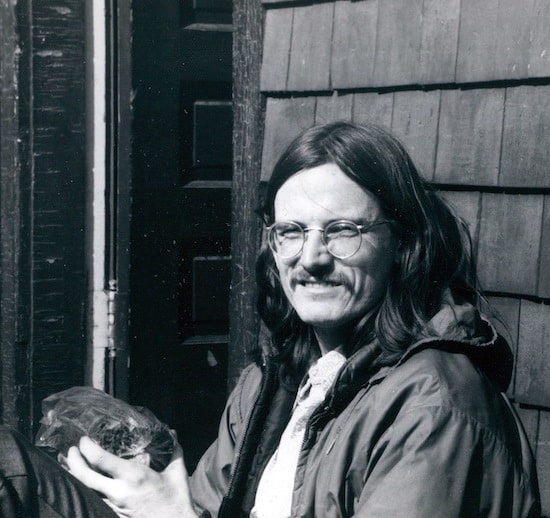
Of course, a few people said I looked a little like John Lennon with my long hair and wire-rimmed glasses. The operative word was only a little like him. No one would confuse me with Lennon.

Of course, there was a photo of me sitting in Central Park in my sandals and handmade poncho. The mid-western mom and her kids thought I looked like Jesus.

So, what does Jan see in me? She certainly would not be counting on me for a good time tonight if she knew how little experience – next to none – that I had with women. 

The train arrived, and we boarded the car. I worked my way to the front car, and my friends followed me. I stand and look out the window of the locked door. I always do this when I can, as I enjoy watching the subway as it finds its way through the dark tunnel. 

Why had Jan invited me to her party? Could it be that she was looking for love? My mind tossed out reasons why that could not be possible, but there was no other reason that made any sense. 

I would have called Jan if Roy had shared her number earlier. Instead, I did not have it until Friday. But what would I have said?

The A train stops at 168th street, and we have only one stop left. 

I start to focus on the lights in the tunnel and wonder what the answer from Jan will be when we arrive at the party. 

The sounds of the subway and my friends go silent. All I can hear are my thoughts. My breathing slowed, and my body entered a calm and serene state. 

There is nothing I can do now but wait.

It no longer matters why Jan invited me.

All I can do is wait and see if she notices I am there.

If the invite was not specific to me, there is nothing I can do.

If Jan has a boyfriend, I will be OK. 

But if she is happy to see me, what will I do?

Let it be, let it be, let it be, yeah, let it be
Oh, there will be an answer, let it be
Let it be, let it be, let it be, yeah, let it be
Oh, there will be an answer, let it be
Let it be, let it be, let it be, yeah, let it be
Whisper words of wisdom, let it be

Let it be, The Beatles

The Jan Lilien Education Fund sponsors ongoing sustainability and environmental awareness programs. All donations are tax-deductible.


Subscribe
Contact Us

Creative Commons License

This work is licensed under a Creative Commons Attribution-NonCommercial 4.0 International License.

Pages: 1 2 3 4

6 comments add your comment

Share your thoughts and ideas

This site uses Akismet to reduce spam. Learn how your comment data is processed.

The Jan Lilien Education Fund!

Being Mortal

Read: August 2019

Get this book

Being Mortal

by Atul Gawande

Before departing for Toronto to celebrate our 44th Wedding Anniversary, I went through the e-library. Everything on my list that I wanted to read was not available except for this book. Being Mortal by Atul Gawande is the book I read on our vacation before Jan’s diagnosis of non-Hodgkin Large B-cell Lymphoma.

Selecting Being Mortal might seem an accidental choice to some, and I believe it was a divine intervention. It prepared me to be a caregiver to my wife over the nineteen months of her fight with cancer. It helped me focus on the good life that my wife lived and not the pain and suffering.

Atul Gawande describes his book as “riveting, honest, and humane. Being Mortal shows that the ultimate goal is not a good death but a good life – to the very end.”

When I read the book, I wondered what I could have done to help my mother in her final years. The book offers an excellent overview of how nursing homes and assisted living facilities have struggled to meet the needs of their residents.

Dr. Gawande provides an in-depth overview of the benefits of hospice care. Although I knew of this option, reading this book helped me understand that I was ready for hospice when my wife came home for the last time.

He reminds us that “when it comes to the inescapable realities of aging and death, what medicine can do often runs counter to what it should.” As he writes in the book, the current system does not work and, in many cases, actually shortens life.

This book has had a lasting impact on my life. It allowed me to be a loving caregiver to my wife when she needed it more than anything else. I read it when it would be most beneficial to me.

I highly recommend this book.


Atul Gawande is the author of several bestselling books: Complications, a finalist for the National Book Award; Better; The Checklist Manifesto; and Being Mortal. He is also a surgeon at Brigham and Women’s Hospital in Boston, a staff writer for The New Yorker, and a professor at Harvard Medical School and the Harvard School of Public Health. He has won the Lewis Thomas Prize for Writing about Science, a MacArthur Fellowship, and two National Magazine Awards. In his work in public health, he is the Founder and Chair of Ariadne Labs, a joint center for health systems innovation, and Lifebox, a nonprofit organization dedicated to making surgery safer globally. He is also the chair of Haven, where he served as CEO from 2018 to 2020. He and his wife have three children and live in Newton, Massachusetts.


When you purchase a book through one of my links, I earn a small commission that helps support my passion for reading. This contribution allows me to buy even more books to share with you, creating an incredible cycle of discovering great reads together! Your support truly makes a difference!

Enjoy a limited-time offer of 20% off your next book purchase at Bookshop.org!


×
Brooklyn Crime Novel: A Novel

Read: October 2023

Brooklyn Crime Novel: A Novel

by Jonathan Lethem

I recently recommended reading “Brooklyn Crime Novel: A Novel” by Jonathan Lethem. The story is set in 1970s Brooklyn, where a daily ritual occurs on the streets. This ritual involves exchanging money, surrendering belongings, and asserting power. Violence is promised everywhere and becomes a currency itself.

Regardless of race, the street is like a stage in the shadows for the children. In the background, other players hide, including parents, cops, renovators, landlords, those who write the headlines, histories, and laws, and those who award this neighborhood its name.

Although the rules seem apparent initially, in memory’s prism, the roles of criminals and victims may appear to trade places. The voices of the past rise and gather as if in harmony, then war with one another. A street may seem to crack open and reveal what lies behind its shimmering facade. None who lived through it are ever permitted to forget.

Jonathan Lethem has written this story with kaleidoscopic verve and delirious wit, making it a breathtaking tour de force by a writer at the top of his powers. He has crafted an epic interrogation of how we fashion stories to contain the uncontainable: our remorse at the world we’ve made. He is known as “one of America’s greatest storytellers” by the Washington Post.


The Jan Lilien Education Fund sponsors ongoing sustainability and environmental awareness programs. Gifts made this month; I will match dollar-for-dollar. All donations are tax-deductible.

Subscribe

Contact Us

I receive a commission when you buy a book or product using a link on this page. Thank you for supporting Sharing Jan’s Love blog.


×
The Last White Man

Read: August 2022

Get this book

The Last White Man: A Novel

by Mohsin Hamid

The Last White Man by Mohsin Hamid is a story of love, loss, and rediscovery in a time of unsettling change. One morning, Anders, the novel’s protagonist,  wakes to find that his skin has turned dark, his reflection a stranger to him. At first, he tells only Oona, an old friend, newly a lover. Soon, reports of similar occurrences surface across the land.

In Mohsin Hamid’s “lyrical and urgent” prose (O Magazine), The Last White Man powerfully uplifts our capacity for empathy and the transcendence over bigotry, fear, and anger it can achieve.

I highly recommend this book. It was a page-turner that kept me thinking about love, loss, and rediscovery. All three are subjects close to my heart since Jan’s death.

I decided to read the book after hearing an interview with the author on All of It on WNYC.

The Goodreads summary provides a good overview,

One morning, Anders wakes to find that his skin has turned dark, his reflection a stranger to him. At first he tells only Oona, an old friend, newly a lover. Soon, reports of similar occurrences surface across the land. Some see in the transformations the long-dreaded overturning of an established order, to be resisted to a bitter end. In many, like Anders’s father and Oona’s mother, a sense of profound loss wars with profound love. As the bond between Anders and Oona deepens, change takes on a different shading: a chance to see one another, face to face, anew.

Hamid’s The Last White Man invites us to envision a future – our future – that dares to reimagine who we think we are, and how we might yet be together.


The Jan Lilien Education Fund sponsors ongoing sustainability and environmental awareness programs. Gifts made this month; I will match dollar-for-dollar. All donations are tax-deductible.

Subscribe

Contact Us

I receive a commission when you buy a book or product using a link on this page. Thank you for supporting Sharing Jan’s Love blog.

×
Vigil: A Novel

Read: January 2026

Get this book

Vigil: A Novel

by George Saunders 

With the wisdom, playfulness, and explosive imagination we’ve come to expect from George Saunders, Vigil addresses some of the most pressing issues of our time, including corporate greed, the toll of capitalism, and the environmental dangers associated with progress. In doing so, it weaves a narrative that explores themes of life and death, good and evil, and the complex question of absolution. The New York Times has listed it as one of “The Novels Everyone Will Be Talking About in 2026.”

Not for the first time, Jill “Doll” Blaine finds herself hurtling toward earth, reconstituting as she falls, right down to her favorite black pumps. She plummets towards her newest charge, yet another soul she must usher into the afterlife, and lands headfirst in the circular drive of his ornate mansion.

She has performed this sacred duty 343 times since her own death. Her charges, as a rule, have been greatly comforted in their final moments. But this charge, she soon discovers, isn’t like the others. The powerful K. J. Boone claims he has nothing to regret. He lived a big, bold, epic life, and the world is better for it. Isn’t it?

Vigil transports us, careening, through the wild final evening of a complicated man. Visitors begin to arrive (worldly and otherworldly, alive and dead), clamoring for a reckoning. Birds swarm the dying man’s room; a black calf grazes on the love seat; a man from a distant, drought-ravaged village materializes; two oil-business cronies from decades past show up with chilling plans for Boone’s post-death future.


George Saunders is the author of thirteen books, including the novel Lincoln in the Bardo, which won the Booker Prize, and five collections of stories, including Tenth of December, which was a finalist for the National Book Award, and the recent collection Liberation Day (selected by former President Obama as one of his ten favorite books of 2022).

Three of Saunders’s books—Pastoralia, Tenth of December, and Lincoln in the Bardo—were chosen for The New York Times’s list of the 100 Best Books of the 21st Century. Saunders hosts the popular Story Club on Substack, which grew out of his book, A Swim in a Pond in the Rain. In 2013, he was named one of Time’s 100 Most Influential People. He teaches in the creative writing program at Syracuse University.


Discover your next favorite book and dive into a world of curated, exciting reads by purchasing through my links. You’ll have access to a diverse selection of books that I’ve personally vetted to ensure quality and enjoyment. Additionally, by supporting these selections, you’ll help me continue to provide you with more personalized recommendations. I earn a small commission from your purchase, which allows me to buy and share even more books with you. Your support truly makes a difference!


×
Blue Skies: A Novel

Read: August 2023

Get this book

Blue Skies: A Novel

by T. C. Boyle

I started reading Blue Skies: A Novel by T. C. Boyle today. The book is an eco-thriller with comedic elements. It explores the relationships between humans and their habitats in a world where natural disasters frequently occur, where “the only truism seems to be that things always get worse.

Denied a dog, a baby, and even a faithful fiancé, Cat suddenly craves a snake: a glistening, writhing creature that can be worn like “jewelry, living jewelry” to match her black jeans. But when the budding social media star promptly loses the young “Burmie” she buys from a local pet store, she inadvertently sets a chain of increasingly dire and outrageous events threatening her survival.

Blue Skies follows the tradition of T. C. Boyle’s finest novels, combining high-octane plotting with biting wit and intelligent social commentary. Here Boyle, one of the most inventive voices in contemporary fiction, transports us to water-logged and heat-ravaged coastal America, where Cat and her hapless, nature-loving family—including her eco-warrior parents, Ottilie and Frank; her brother, Cooper, an entomologist; and her frat-boy-turned-husband, Todd—are struggling to adapt to the “new normal,” in which once-in-a-lifetime natural disasters happen once a week and drinking seems to be the only way to cope.

But there’s more than meets the eye to this compulsive family drama. Lurking beneath the bland façade of twenty-first-century Californians and Floridians attempting to preserve normalcy in the face of violent weather perturbations is a caricature of materialist American society that doubles as a prophetic warning about our planet’s future. Blue Skies deftly explores the often volatile relationships between humans and their habitats, from pet bees and cricket-dependent diets to massive species die-offs and pummeling hurricanes, in which “the only truism seems to be that things always get worse.


The Jan Lilien Education Fund sponsors ongoing sustainability and environmental awareness programs. Gifts made this month; I will match dollar-for-dollar. All donations are tax-deductible.

Subscribe

Contact Us

I receive a commission when you buy a book or product using a link on this page. Thank you for supporting Sharing Jan’s Love blog.


×
The Letter Carrier

Read: July 2025

Get this book

The Letter Carrier: A Novel

by Francesca Giannone

In the bestselling novel that has captivated readers in Italy, The Letter Carrier by Francesca Giannone depicts a small town in southern Italy that reflects the experiences of many others. It portrays the lives of women and men—husbands and wives, fathers and sons, mothers and daughters—as they strive to navigate the world while remaining true to their hearts. The Letter Carrier explores the universal theme of connection and examines the consequences that arise when those connections occur at the wrong time.

Salento, Italy, June 1934: A coach stops in the main square of Lizzanello, a tight-knit village where everyone knows each other. A couple gets off: The man, Carlo, a Southerner, is happy to be back home after a long time away; the woman, Anna—his wife—is a Northerner. Carlo’s brother is there to meet them, and he, along with everyone else, can’t help but notice that Anna is as beautiful as a Greek statue.

But Anna is not like the other wives. She doesn’t gossip or attend church. She reads books no one else has ever heard of, exploring ideas that some find threatening. She even wears pants, just like a man, and thinks a woman should have rights, just like a man.

There aren’t many options for a woman with Anna’s sensibilities, so when she learns that the post office is hiring, she leaps at the opportunity. A female letter carrier? It is unthinkable! But Anna passes the postal exam and soon becomes the invisible thread connecting the town as she delivers letters between clandestine lovers, families waiting to hear news of loved ones away at war, and even helps those who can’t read.

Letters connect people, conveying both information and emotion. But for some in Lizzanello, letters are too little and too late.


Francesca Giannone holds a degree in communication science and studied at the CSC, the oldest film school in Europe, located in Rome. She has published several short stories in literary magazines, both in print and online. Currently, Giannone resides in Milan, but her heart remains in her hometown of Lizzanello, a seaside town in the Salento region of Italy. She hopes to return there to live one day.


Elettra Pauletto translated The Letter Carrier. After earning her MFA from Columbia University, she has split her time between writing about her experiences in Africa—specifically in the Democratic Republic of the Congo, Rwanda, and Senegal—and translating fiction and nonfiction works from Italian and French into English. In both her writing and translations, she heavily relies on her background as a former political risk analyst who covered Sub-Saharan Africa, the Middle East, and Europe.


When you purchase a book through one of my links, I earn a small commission that helps support my passion for reading. This contribution allows me to buy even more books to share with you, creating an incredible cycle of discovering great reads together! Your support truly makes a difference!

Enjoy a limited-time offer of 20% off your next book purchase at Bookshop.org!


×

Discover more from Sharing Jan’s Love

Subscribe now to keep reading and get access to the full archive.

Continue reading