
How to Read a Book: A Novel

Estimated reading time: 1 minute, 9 seconds

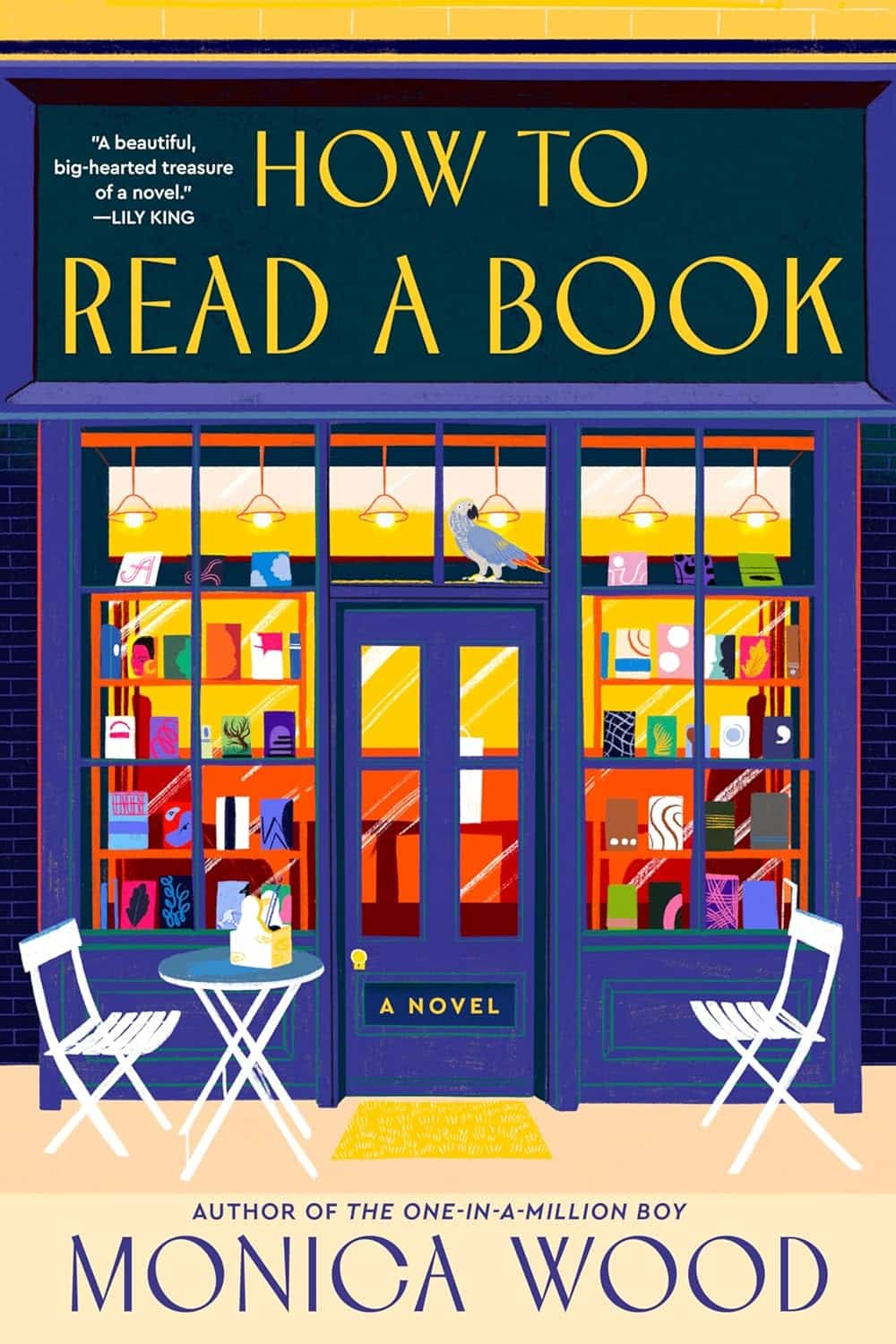
I started reading Monica Wood‘s “How to Read a Book: A Novel” today. It’s a heartfelt and uplifting story about a chance encounter at a bookstore—the novel delves into themes of redemption, unlikely friendships, and the life-changing power of sharing stories. With Monica Wood’s characteristic heart, wit, grace, and understanding, the novel illuminates the decisions that shape a life and the kindnesses that make life meaningful.

The story revolves around three characters: Violet Powell, a twenty-two-year-old from rural Abbott Falls, Maine, who is being released from prison after serving twenty-two months for a drunk-driving crash that killed a local kindergarten teacher; Harriet Larson, a retired English teacher who runs the prison book club and is facing the prospect of an empty nest; and Frank Daigle, a retired machinist who is struggling to come to terms with the complexities of his marriage to the woman Violet killed.

Their lives unexpectedly intersect one morning in a bookstore in Portland, Maine. Violet buys the novel she read in the prison book club before her release, Harriet selects the following title for the remaining women, and Frank fulfills his duties as the store handyman. Their encounters set off a chain of events that will profoundly change them.

How to Read a Book is a candid and hopeful story about releasing guilt, embracing second chances, and the profound impact of books on our lives.

The Jan Lilien Education Fund!

The Hidden Habits of Genius

Read: September 2019

Get this book

The Hidden Habits of Genius

by Craig Wright

The Hidden Habits of Genius: Beyond Talent, IQ, and Grit―Unlocking the Secrets of Greatness by Craig Wright, Ph.D., I got through my membership in One Day University.

Dr. Wright raises many important questions as he analyses fourteen (14) critical traits of genius. Professor Craig Wright, creator of Yale University’s famous “Genius Course,” explores what we can learn from brilliant minds that have changed the world.

What we often presume about a genius does not match reality. Among other interesting observations, Dr. Wright reminds the reader that Picasso could not pass a fourth-grade math test, and Steve Jobs’s high school GPA was 2.65. He questions why to teach children to behave and play by the rules when transformative geniuses do not.

Examining the lives of transformative individuals ranging from Charles Darwin and Marie Curie to Leonardo Da Vinci and Andy Warhol to Toni Morrison and Elon Musk, Wright identifies more than a dozen drivers of genius, characteristics and patterns of behavior common to great minds throughout history. He argues that genius is about more than intellect and work ethic and that the famed “eureka” moment is a Hollywood fiction. Brilliant insights that change the world are never sudden, but rather, they are the result of unique modes of thinking and lengthy gestation.

I found the book to be a fascinating read and raised more questions for future thought and reading. Professor Wright argues that the habits of mind that produce great thinking and discovery can be actively learned and cultivated. In the book, he explains how. He notes that reading the book will not make you a genius but can “make you more strategic, creative, and successful, and, ultimately, happier.

Subscribe

Contact Us

×
Victory City: A Novel

Read: February 2023

Get this book

Victory City: A Novel

by Salman Rushdie

Victory City: A Novel by Salman Rushdie is an epic tale of a woman who breathes a fantastical empire into existence, only to be consumed by it over the centuries from the transcendent imagination of Booker Prize-winning, internationally bestselling author Salman Rushdie. It is well written and was a page-turner from page one to the end. I highly recommend this novel and encourage everyone to read it.

Brilliantly styled as a translation of an ancient epic, this is a saga of love, adventure, and myth that is a testament to storytelling’s power. After witnessing her mother’s death, the grief-stricken Pampa Kampana becomes a vessel for the goddess Parvati, who begins to speak out of the girl’s mouth. I was hooked when Pampa Kampana provided the seeds that created Victory City out of thin air.

David Remnick’s interview with Salman Rushdie in The New Yorker provided background I would have missed.

“The first kings of Vijayanagara announced, quite seriously, that they were descended from the moon,” Rushdie said. “So when these kings, Harihara and Bukka, announce that they’re members of the lunar dynasty, they’re associating themselves with those great heroes. It’s like saying, ‘I’ve descended from the same family as Achilles.’ Or Agamemnon. And so I thought, Well, if you could say that, I can say anything.”

Above all, the book is buoyed by the character of Pampa Kampana, who, Rushdie says, “just showed up in my head” and gave him his story, his sense of direction. Rushdie’s pleasure in writing the novel was in “world building” and, at the same time, writing about a character building that world: “It’s me doing it, but it’s also her doing it.” The pleasure is infectious. “Victory City” is an immensely enjoyable novel. It is also an affirmation. At the end, with the great city in ruins, what is left is not the storyteller but her words:

I, Pampa Kampana, am the author of this book.
I have lived to see an empire rise and fall.
How are they remembered now, these kings, these queens?
They exist now only in words . . .
I myself am nothing now. All that remains is this city of words.
Words are the only victors.

The Goodreads summary provides a brief overview,

In the wake of an insignificant battle between two long-forgotten kingdoms in fourteenth-century southern India, a nine-year-old girl has a divine encounter that will change the course of history. After witnessing her mother’s death, the grief-stricken Pampa Kampana becomes a vessel for the goddess Parvati, who begins to speak out of the girl’s mouth. Granting her powers beyond Pampa Kampana’s comprehension, the goddess tells her that she will be instrumental in the rise of a great city called Bisnaga–literally victory city–the wonder of the world.

Over the next two hundred and fifty years, Pampa Kampana’s life becomes deeply interwoven with Bisnaga’s, from its literal sowing out of a bag of magic seeds to its tragic ruination in the most human of ways: the hubris of those in power. Whispering Bisnaga and its citizens into existence, Pampa Kampana attempts to make good on Parvati’s task: giving women equal agency in a patriarchal world. But all stories have a way of getting away from their creator, and Bisnaga is no exception. As years pass, rulers come and go, battles are won and lost, and allegiances shift, the very fabric of Bisnaga becomes an ever more complex tapestry–with Pampa Kampana at its center.


The Jan Lilien Education Fund sponsors ongoing sustainability and environmental awareness programs. Gifts made this month; I will match dollar-for-dollar. All donations are tax-deductible.

Subscribe

Contact Us

I receive a commission when you buy a book or product using a link on this page. Thank you for supporting Sharing Jan’s Love blog.


×
The White Hot

Read: November 2025

Get this book

The White Hot: A Novel

by Quiara Alegría Hudes

The White Hot” by Quiara Alegría Hudes is a letter from a mother to her daughter, reflecting on a moment of abandonment that stretches from ten days to ten years. It offers an explanation rather than an apology. Hudes tells April’s story—spiritual and sensual, fierce and humorous—using delicate lyricism and tough love. Through this narrative, Hudes transforms April’s struggle for self-discovery into an unforgettable short epic.

April is a young mother raising her daughter in a multigenerational home filled with unspoken secrets and loud arguments. Her only refuge is the locked bathroom, where she plugs her ears into an ambient soundscape and repeats a mantra: “dead inside.” This continues until one day, as she feels herself spiraling toward the volcanic rage she calls “the white hot,” an inner voice tells her to simply walk away.

She goes to a bus station and asks for a one-way ticket to the furthest destination. This ticket takes her from her Philadelphia home to the threshold of a wilderness, marking the start of a nameless quest—an accidental journey that awakens her, nearly kills her, and leads her to an impossible choice.

As April discovers the key to freeing herself and her family from a cycle of generational trauma through her painful and absurd journey,


Quiara Alegría Hudes is a Pulitzer Prize-winning playwright known for her plays “Water by the Spoonful” and “In the Heights,” the latter of which won the Tony Award for Best Musical. She also adapted this musical for the screen.

Her memoir, “My Broken Language,” was longlisted for the Andrew Carnegie Medal. Hudes has written essays published in prominent outlets, including The New York Times, The Washington Post, The Cut, The Nation, and American Theater Magazine. Additionally, she co-founded the prison writing program Emancipated Stories with her cousin Sean.


Discover your next favorite book and dive into a world of curated, exciting reads by purchasing through my links. You’ll have access to a diverse selection of books that I’ve personally vetted to ensure quality and enjoyment. Additionally, by supporting these selections, you’ll help me continue to provide you with more personalized recommendations. I earn a small commission from your purchase, which allows me to buy and share even more books with you. Your support truly makes a difference!


×
The Book of Love: A Novel

Read: March 2024

Get this book

The Book of Love: A Novel

by Kelly Link

I started reading “The Book of Love: A Novel” by Kelly Link today. The book showcases her exceptional writing skills, where she channels different forms of love, including friendships, romance, and family ties, with her trademark compassion, wit, and literary prowess. Readers can expect to experience joy, a little terror, and an affirmation that love endures despite challenges.

The story revolves around Laura, Daniel, and Mo, who mysteriously vanished from their hometown in Lovesend, Massachusetts, and were presumed dead. However, almost a year later, they find themselves in a high school classroom with their unremarkable music teacher. The teacher seems to know why they disappeared and what brought them back. They agree to undertake magical tasks to reclaim their lives, allowing them to return to their families and friends, but they can’t reveal where they’ve been. The tasks would lead to winners and losers.

Their resurrection attracts the attention of other supernatural beings with their agendas, which puts the community in danger and chaos. As Laura, Daniel, and Mo try to piece their lives together, and Laura’s sister Susannah tries to make sense of what she remembers, they must solve the mystery of their deaths to prevent a looming disaster.

The story takes place in Lovesend, where readers will experience love and loss, laughter and dread, magic, karaoke, and some delicious pizza.

×
10/7: 100 Human Stories

Read: September 2025

Get this book

10/7: 100 Human Stories

by Lee Yaron

The speaker at the Selichot Service with VAAD at Congregation Beth Israel on September 13, 2025, will be Lee Yaron, the author of 10/7: 100 Human Stories. Yaron is the recipient of the National Jewish Book Awards’ 2024 Jewish Book of the Year and The Natan Fund’s Winter 2025 Notable Book Award. This book provides a definitive account of the 10/7 attacks, sharing the stories of the victims and the communities they called home.

On October 7, 2023—the Sabbath and the final day of the holiday of Sukkot—the Gaza-based terror group Hamas launched an unprecedented assault on the people of Israel. Crashing through the border, attacking from the sea and air, militants indiscriminately massacred civilians in what became one of the worst terror attacks in modern history, and the most lethal day for the Jewish people since the Holocaust.

A radically passionate work of investigative journalism and political critique by acclaimed Haaretz reporter Lee Yaron, 10/7 chronicles the massacre that ignited a war through the stories of more than 100 civilians. These stories are the result of extensive interviews with survivors, bereaved individuals, and first responders in Israel and around the world. The victims run the gamut from left-wing kibbutzniks and Burning Man-esque partiers to radical right-wingers, from Bedouins and Israeli Arabs to Thai and Nepalese guest workers, peace activists, elderly Holocaust survivors, refugees from Ukraine and Russia, pregnant women, and babies.

At a time when people are seeking a deeper understanding of the history of the Israeli-Palestinian conflict and how internal political turmoil in Israel has affected it, they predominantly encounter perspectives from the powerful—from politicians and military officers. 10/7 takes a fresh approach, offering answers through the stories of everyday people, those who lived tenuously on the border with Gaza.

Yaron profiles victims from a wide range of communities—depicting the fullness of their lives, not just their final moments—to honor their memories and reveal the way the attack ripped open Israeli society and put the entire Middle East on the precipice of disaster. Each chapter begins with a portrait of a community, interweaving history with broader political analysis of the Israeli-Palestinian conflict to provide context for the narratives that follow. Ultimately, 10/7 shows that the tragedy is much greater than the violence of the attacks, and in fact extends back through the entire Netanyahu era, which propagated a false image of Israel as a technologically advanced, militarily formidable powerhouse so essential to the region that it could continue to ignore and undermine Palestinian statehood indefinitely.


Lee Yaron has been a journalist with Haaretz, Israel’s oldest and most award-winning newspaper, for nearly a decade. Her investigative reporting has led to the establishment of state-level commissions and the revision of substantial bodies of Israeli policy and law. She is an elected member and representative of the Executive Committee of the Union of Israeli Journalists. She has also written and directed acclaimed theater productions notable for their use of found materials, including official governmental texts, to bring attention to marginalized communities both in Israel and throughout the Middle East. Born in Tel Aviv, Yaron splits her time between her native city and New York.

Joshua Cohen is the author of ten books, including the novels Book of Numbers, Moving Kings, and Witz. Called “a major American writer” by the New York Times and “an extraordinary prose stylist, surely one of the most prodigious at work in American fiction today” by the New Yorker, Cohen was awarded Israel’s 2013 Matanel Prize, and in 2017 was named one of Granta’s Best Young American Novelists. His book, The Netanyahus, won the 2021 National Jewish Book Award for Fiction and the 2022 Pulitzer Prize for Fiction.


Discover your next favorite book and dive into a world of curated, exciting reads by purchasing through my links. You’ll have access to a diverse selection of books that I’ve personally vetted to ensure quality and enjoyment. Additionally, by supporting these selections, you’ll help me continue to provide you with more personalized recommendations. I earn a small commission from your purchase, which allows me to buy and share even more books with you. Your support truly makes a difference!


×
The Sunset Years of Agnes Sharp

Read: August 2023

Get this book

The Sunset Years of Agnes Sharp

by Leonie Swann

I began reading The Sunset Years of Agnes Sharp by Leonie Swann, translated by Amy Bojang. The book follows a unique group of senior citizens as they try to solve one murder while hiding another, all with the assistance of an innovative tortoise. The mystery is full of twists and turns and is cleverly written by the same author who wrote Three Bags Full, adding a darkly humorous touch to the plot.

It has been an eventful morning for Agnes Sharp and the other inhabitants of Sunset Hall, a house shared by the old and unruly in the sleepy English countryside. Although they have had some issues (misplaced reading glasses, conflicting culinary tastes, decreasing mobility, and gluttonous grandsons), nothing prepares them for an unexpected visit from a police officer with some shocking news. A body has been discovered next door. Everyone puts on a long face for show, but they are secretly relieved the body in question is not the one they’re currently hiding in the shed (sorry, Lillith).

The answer to their little problem with Lillith may have fallen right into their laps. All they have to do is find out who murdered their neighbor so they can pin Lillith’s death on them, thus killing two (old) birds with one stone (cold killer).

Agnes and her group of elderly friends are eager to begin their plan. They believe that creating a mystery will divert suspicion away from themselves. To investigate, they will venture out of their comfort zone and into the less-than-ideal village of Duck End. Along the way, they will encounter suspicious bakers, malfunctioning stairlifts, incompetent criminals, the local authorities, and their hidden secrets.


The Jan Lilien Education Fund sponsors ongoing sustainability and environmental awareness programs. Gifts made this month; I will match dollar-for-dollar. All donations are tax-deductible.

Subscribe

Contact Us

I receive a commission when you buy a book or product using a link on this page. Thank you for supporting Sharing Jan’s Love blog.


×