

Help Me Help, Jan

Estimated reading time: 10 minutes, 41 seconds

Jan’s Smile Melts Away My Fears

“I am here to see my wife. She was admitted to the ICU last night.” I gave them her name and mine.She is alive is all I could think about as I waited for approval to see Jan. “Do you know how to get to the ICU?” No. Walk to the main elevators and get off on the fifth floor.

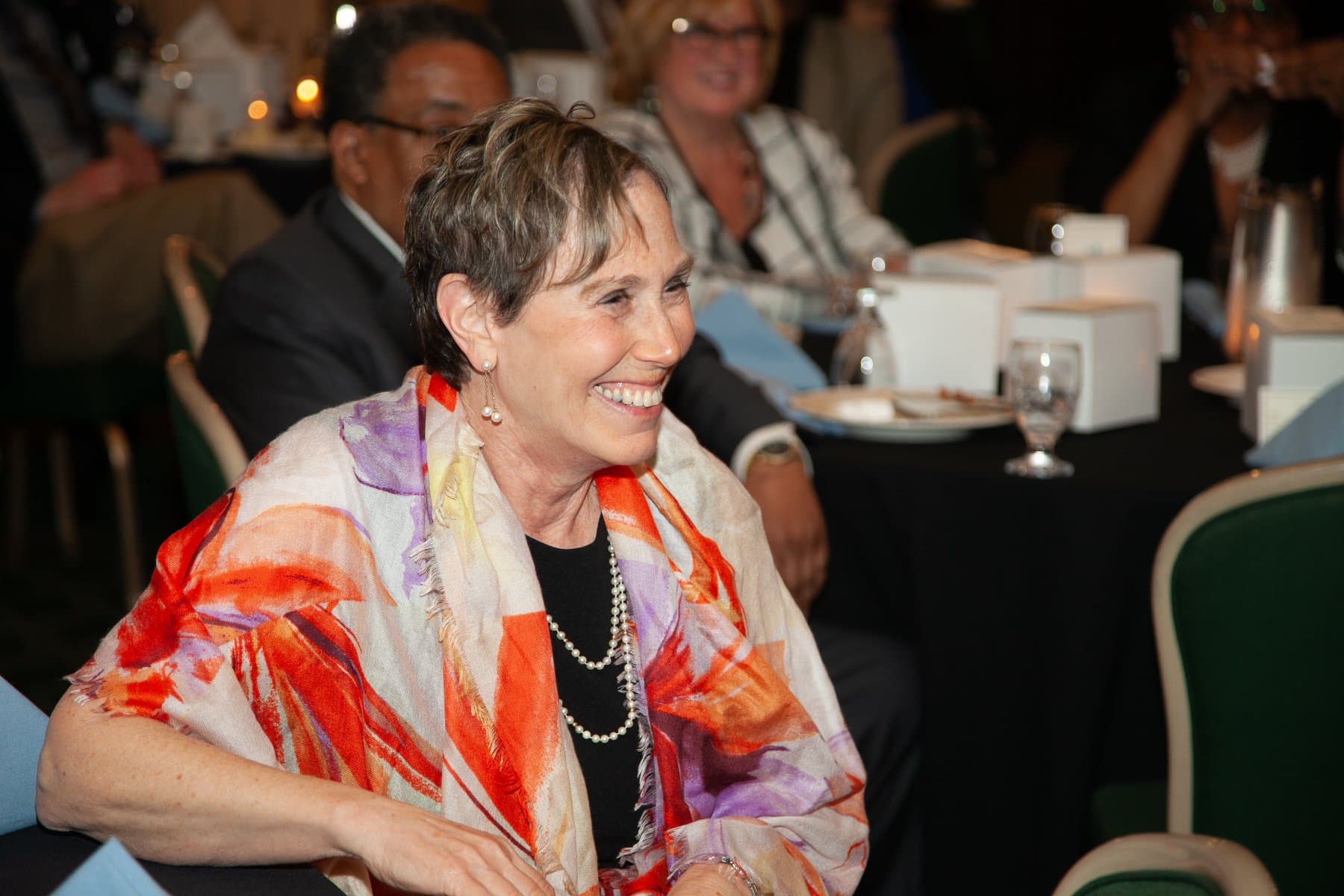
Jan greeted me with one of her big smiles

“I love you,” I said as I kissed her sweet lips.

“How did I get here? I remember Elyssa saying that I needed to go to the hospital.

I explained what had happened.Why did I wait to call for help if Jan did not remember anything? Did I risk her life waiting for her to agree I could call Mike?

I am so happy we could get you here and that the surgery worked.

“Me too! Do you have my iPhone?”

I searched the room and found her bag.

As soon as I handed it to her, the phone rang. 

“Jon, how are you? I’m fine. Your Dad is here with me.”

I knew Jon was flying east to be with her. 

“You do not need to come to see me. I am doing OK and will be home soon.

Listening to her talk to Jon and feeling the warmth of her smile, she seemed the healthiest she had been in years. Her voice was like the one I heard the day we met. Strong, confident, reassuring, and soothing. 

I felt we had avoided a fatal outcome and turned a corner. Jan’s alive and on the mend! Thank God she will live!

After she stopped talking to Jon, we chatted. 

Mid-afternoon, Jan looked at me and said, “you look exhausted.”

I am, my love, but I want to stay with you.

“You should go home and rest. I am OK now.”

I said no, but it was clear that having slept very little since the end of March, it was best to go home.

I love you and am so happy you are OK!

“I love you too!”

I texted my sons, Dr. Strair, the Rabbi, and critical friends as I left the hospital. 

They have stabilized her enough in the ICU that they plan to move her to the oncology unit as soon as a bed is available.

Saturday, April 3, 3:46 pm

Dr. Strair responded. She is an amazing woman!

On the way home, I repeated an edited version of the chorus to the Beatles singing All You Need is Love.

All I need is Jan’s love.

All You need is love, The Beatles

If you liked this post, you should read A Day of Fear and Hope, written a year ago.


The Jan Lilien Education Fund sponsors ongoing sustainability and environmental awareness programs. All donations are tax-deductible.


Contact Us
Subscribe
Creative Commons License

This work is licensed under a Creative Commons Attribution-NonCommercial 4.0 International License.

Pages: 1 2 3 4 5

5 comments add your comment

Share your thoughts and ideas

This site uses Akismet to reduce spam. Learn how your comment data is processed.

Previous Post:

Next Post:

The Jan Lilien Education Fund!

Invisible Child

Read: December 2021

Get this book

Invisible Child: Poverty, Survival & Hope in an American City

by Andrea Elliott

Invisible Child: Poverty, Survival & Hope in an American City by Andrea Elliott was a gift from my son Jon. The New York Times selected “Invisible Child” as one of the best books published this year. It is indeed one of the top books on my all-time list.

GoodReads summary provides a good overview,

The riveting, unforgettable story of a girl whose indomitable spirit is tested by homelessness, poverty, and racism in an unequal America—from Pulitzer Prize-winning journalist Andrea Elliott of The New York Times

Invisible Child follows eight dramatic years in the life of Dasani Coates, a child with imagination as soaring as the skyscrapers near her Brooklyn homeless shelter. Born at the turn of a new century, Dasani is named for the bottled water that comes to symbolize Brooklyn’s gentrification and the shared aspirations of a divided city. As Dasani grows up, moving with her tight-knit family from shelter to shelter, this story goes back to trace the passage of Dasani’s ancestors from slavery to the Great Migration north. When Dasani comes of age, New York City’s homeless crisis explodes as the chasm deepens between rich and poor.

In the shadows of this new Gilded Age, Dasani must lead her seven siblings through a thicket of problems: hunger, parental drug addiction, violence, housing instability, segregated schools, and the constant monitoring of the child-protection system. When, at age thirteen, Dasani enrolls at a boarding school in Pennsylvania, her loyalties are tested like never before. As she learns to “code switch” between the culture she left behind and the norms of her new town, Dasani starts to feel like a stranger in both places. Ultimately, she faces an impossible question: What if leaving poverty means abandoning the family you love?

By turns heartbreaking and revelatory, provocative and inspiring, Invisible Child tells an astonishing story about the power of resilience, the importance of family, and the cost of inequality. Based on nearly a decade of reporting, this book vividly illuminates some of the most critical issues in contemporary America through the life of one remarkable girl.

Jan and I were involved and knew that child poverty and homelessness needed repair. In addition, Jan lived on Washington Park across from Ft. Greene Park in 1974-75. We knew the neighborhood where much of the book’s story takes place. 

Before meeting Jan in 1973, I was both a community/tenant organizer and a youth worker. In the latter role, I made weekly hostel trips for eight to ten young boys from East Williamsburg during 1973. The trips were the first the boys had ever been outside of their neighborhood.

Many of them had imaginations like Dasani. They also had her instinct to fight. One of my first tasks was to check for any weapons.

Decades later, when I would see any of them, now adults, they would ask when we were going on another trip. I wish I had met Jan when I made those trips. She would have helped me improve them and document the impact. If I could re-write history, I would have her join me as the second adult on the hostel trips.

After that summer, it was clear my primary skills were as a community/tenant organizer. Over the next few years, my work focused on creating affordable and supportive housing.

Jan and I did meaningful work that made a difference, yet the need for a permanent solution to the crisis remains. The book highlights the crucial role of resilience, the importance of family, and the cost of inequality. As a nation, we cannot undermine those values by breaking up families, impeding resilience, and maintaining racial and economic inequality. 

The current debate in Washington over the Build Back Better legislation needs to focus not on how much we spend but on its impact on children and families

David Brooks, a conservative commentator, has supported these expenditures for what they can do to address this country’s cultural and economic crisis. 

These packages say to the struggling parents and the warehouse workers: I see you. Your work has dignity. You are paving your way. You are at the center of our national vision.

This is how you fortify a compelling moral identity, which is what all of us need if we’re going to be able to look in the mirror with self-respect. This is the cultural transformation that good policy can sometimes achieve. Statecraft is soulcraft.

If you can only read one book this year, this is the one to read. Child poverty, homelessness, and inequality impact all of us. Ending child poverty and homelessness will make us a healthier and more inclusive nation. It is time for a compelling moral call to action!

Subscribe

Contact Us

When you buy a book or product using a link on this page, I receive a commission. Thank you for supporting Sharing Jan’s Love blog.

×
Corey Fah Does Social Mobility

Read: February 2024

Get this book

Corey Fah Does Social Mobility

by Isabel Waidner

Today, I began reading “Corey Fah Does Social Mobility: A Novel” by Isabel Waidner. The book is about Corey Fah, a writer whose novel has just won the Fictionalization of Social Evils prize. Despite this achievement, the trophy and funds with the award still need to be in reach. The novel celebrates radical queer survival and challenges false notions of success.

Corey, their partner Drew, and their pet spider, Bambi Pavok, embark on a quest to find an elusive trophy with neon-beige color and UFO-like qualities. This journey takes them back to their childhood in the forest and includes a stint on a reality TV show. While facing the horrors of wormholes and time loops, Corey discovers the difference between a prize and a gift in a complex way.

Following the Goldsmiths Prize–winning Sterling Karat Gold, Isabel Waidner’s bold and buoyant new novel is about coming into one’s own, the labor of love, the tendency of history to repeat itself, and what ensues when a large amount of cultural capital is suddenly deposited in a place it has never been before.

×
Ripe: A Novel

Read: July 2023

Get this book

Ripe: A Novel by Sarah Rose Etter

by Sarah Rose Etter

I started reading “Ripe: A Novel” by Sarah Rose Etter today. This book has won awards and is highly praised by Roxane Gay for its uniqueness and brilliance. It tells the story of a woman in Silicon Valley who must choose how much she will sacrifice for success. Fans of “My Year of Rest and Relaxation” and “Her Body and Other Parties” will enjoy this surreal tale.

Cassie has worked at a Silicon Valley start-up for a year but feels stuck in a corporate nightmare. The long hours, toxic bosses, and unethical projects are taking a toll on her. She has a hard time reconciling the stark contrast between the abundance of wealth and the poverty and suffering that exist side by side in the city. Cassie observes Ivy League graduates complaining about snack options in a conference room overlooking unhoused people bathing in the bay. She’s witnessed start-up burnouts who throw themselves in front of commuter trains and men who light themselves on fire in the streets.

Even though Cassie is often by herself, she never feels entirely alone. Since she can remember, she has had a tiny black hole that is always with her. This black hole feeds off her feelings of sadness and worry, getting bigger or smaller depending on how much she struggles. While it watches her, it also waits patiently. Its powerful force keeps pulling Cassie closer as everything in her life seems to fall apart.

Cassie finds herself pregnant unexpectedly while dealing with her CEO’s illegal demands. She must weigh the benefits of Silicon Valley against the risks. Ripe follows the journey of one millennial woman through the absurdities of modern life, offering a sharp yet vulnerable, unsettling yet darkly comic commentary on our late-capitalist hellscape.


The Jan Lilien Education Fund sponsors ongoing sustainability and environmental awareness programs. Gifts made this month; I will match dollar-for-dollar. All donations are tax-deductible.

Subscribe

Contact Us

I receive a commission when you buy a book or product using a link on this page. Thank you for supporting Sharing Jan’s Love blog.


×
Rejection: Fiction

Read: December 2024

Get this book

Rejection: Fiction

by Tony Tulathimutte

Today, I dove into Tony Tulathimutte‘s “Rejection: Fiction,” and I’m already captivated! This book was longlisted for the 2024 National Book Award in Fiction and named a New York Times Best Book of the Year. Tulathimutte, known for his award-winning work “Private Citizens,” weaves together a series of electrifying linked stories that keenly examine how rejection weaves its way into the lives and relationships of his deeply intertwined characters.

With sharp observations and outrageous humor, *Rejection* delves into the most sensitive issues of modern life. This collection of seven interconnected stories transitions smoothly between the personal crises of a complex cast of characters and the comic tragedies associated with sex, relationships, identity, and the internet.

In “The Feminist,” a young man’s passionate allyship turns into furious nihilism as he realizes, after thirty lonely years, that his efforts are not leading to romantic success or even getting laid; in “Pics,” a young woman’s unrequited crush spirals into obsession, systematically eroding her sense of self. “Ahegao; or, The Ballad of Sexual Repression,” depicts a shy late bloomer whose fumbling attempts at a first relationship result in a life-changing mistake. As these characters intersect through dating apps, social media feeds, dimly lit bars, and bedrooms, they reveal how our delusions can distort our desire for connection.

These brilliant satires examine the understated sorrows of rejection with a modern classic’s authority and a manifesto’s frenetic energy. Bold and unforgettable, Rejection is a striking mosaic that redefines what it means to face rejection from lovers, friends, society, and oneself.


When you purchase a book through one of my links, I earn a small commission that helps support my passion for reading. This contribution allows me to buy even more books to share with you, creating an incredible cycle of discovering great reads together! Your support truly makes a difference!


×
The Mango Tree: A Memoir of Fruit, Florida, and Felony

Read: April 2024

Get this book

The Mango Tree

by Annabelle Tometich

Today, I started reading Annabelle Tometich‘s The Mango Tree: A Memoir of Fruit, Florida, and Felony. The Mango Tree is not just a memoir but a profoundly emotional family saga. It takes us through the complexities of Annabelle’s life, from her childhood in a house filled with balikbayan boxes, vegetation, and luscious mangoes to her journey from aspiring medical student to restaurant critic.

It is a tribute to her fellow Filipino Americans, her younger self, and the mango tree symbolizing her family. Above all, it is a heartfelt homage to Annabelle’s mother, Josefina, who carved out a life and a home without whom Annabelle would not be who she is.

When journalist Annabelle Tometich picked up the phone one June morning, she wasn’t expecting a collect call from an inmate at the Lee County Jail. And when she accepts, she certainly isn’t prepared to hear her mother’s voice on the other end of the line. However, explaining the situation to her younger siblings afterward was easy; all she had to say was, “Mom shot at some guy. He was messing with her mangoes.” They immediately understood. Answering the questions of the breaking news reporter—at the same newspaper where Annabelle worked as a restaurant critic––proved more difficult. Annabelle decided to go with a variation of the truth: it was complicated.

Thus commences The Mango Tree, a memoir that deftly weaves a tapestry of a mixed-race Filipina’s life in suburban Florida. Annabelle’s journey is not linear but a series of interconnected stories that delve into her upbringing, her father’s tragic demise, her mother’s longing for her homeland, and her quest for identity.

×
We Were Eight Years in Power

Read: September 2020

Get this book

We Were Eight Years in Power

by Ta-Nehisi Coates

We Were Eight Years in Power by Ta-Nehisi Coates is a collection featuring the landmark essay The Case for Reparations he wrote for The Atlantic. Even though I am a subscriber to The Atlantic and have read many of the pieces, this is a must-read book as it reflects on race, Barack Obama’s presidency, and its jarring aftermath, including the election of Donald Trump.

We were eight years in power as the lament of Reconstruction-era black politicians as the American experiment in multiracial democracy ended with the return of white supremacist rule in the South. In this sweeping collection of new and selected essays, Ta-Nehisi Coates explores the tragic echoes of that history in our own time: the unprecedented election of a black president followed by a vicious backlash that fueled the election of the man Coates argues is America’s first white president.

But the story of these present-day eight years is not just about presidential politics. This book also examines the new voices, ideas, and movements for justice that emerged over this period and the effects of the persistent, haunting shadow of our nation’s old and unreconciled history. Coates powerfully examines the events of the Obama era from his intimate and revealing perspective:” the point of view of a young writer who begins the journey in an unemployment office in Harlem and ends it in the Oval Office, interviewing a president.

We Were Eight Years in Power features Coatesa’s iconic essays first published in The Atlantic, including Fear of a Black President, The Case for Reparations, and The Black Family in the Age of Mass Incarceration, along with eight fresh essays that revisit each year of the Obama administration through Coate’s own experiences, observations, and intellectual development, capped by a bracingly original assessment of the election that fully illuminated the tragedy of the Obama era. We Were Eight Years in Power is a vital account of modern America, from one of the definitive voices of this historic moment.

I recommend this book to all readers.

Subscribe

Contact Us

×

Discover more from Sharing Jan’s Love

Subscribe now to keep reading and get access to the full archive.

Continue reading