
Jan’s Silk Scarf

Estimated reading time: 10 minutes, 52 seconds
You’ve Got a Friend

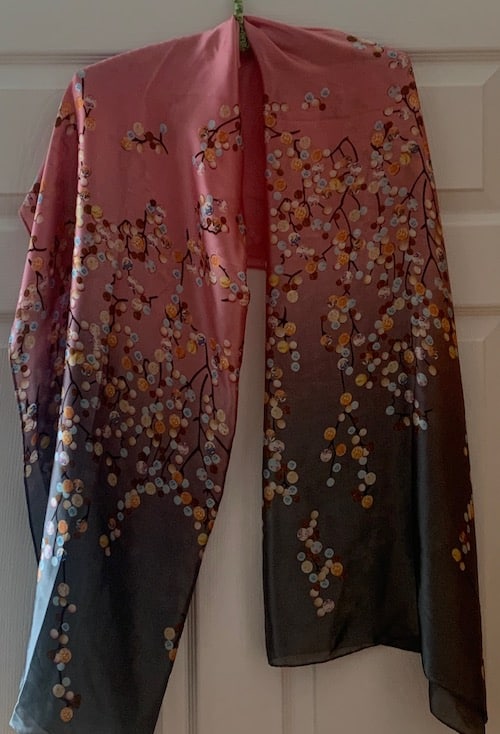
Do you want me to pack your new scarf for the trip?” “You said you would wear it the next time we went somewhere special.” not hearing a response, I stopped and looked at Jan. We were going into the city for the weekend to see the Beautiful the Carole King Musical and other shows” on Broadway.

Jan was sitting on the ottoman, struggling not to cry.

I knelt next to her and placed my arms around her. 

“Are you OK?”

She sniffled but could not speak. I hugged and kissed her lips. 

I want to wear the scarf, but not now,” Jan cried. “Is that OK?”

I nodded yes even though I did not know why she wanted to wait. 

Jan pulled herself together and kissed me.

Let’s save it until I am free from cancer, and we can celebrate!

“That’s fine with me. I love you so much and look forward to celebrating you’re cancer-free!“

Cleaning Up

Time has moved slowly in the nine months since Jan died. There are days when I am unsure of the day of the week or the month. I miss her very much even though I know her spirit is still with me now and forever. I walk, read, and write about her, but my life seems as if it is moving slower than I drive. 

Today I have tasked myself with sorting her clothes. Some cleanup work is more challenging than others. This one surprises me as it is not as difficult as I expected. 

However, after opening the dresser and picking up the silk scarf, tears started welling up in my eyes.  

I will wear it when I am free of cancer, and we can celebrate, echoed in my ears. 

Taking the scarf from the bag, I imagined I was about to place it on Jan’s shoulders before we left to celebrate her being cancer-free. 

My hands shook like leaves on a willow tree. I held onto the dresser for support. My legs started to feel wobbly. My legs bent as if I was about to do knee bends. I lowered my body, but my legs gave out like melted butter, and I ended up on the floor. Tears flowed like an open fire hose inside of my eyes.

It seemed like I was on the floor for hours before lifting myself to a standing position. Holding the scarf in my hands, I repeat a mantra, “Like Jan’s wedding dress, this will stay with me forever.”

Holding the scarf close to my chest, I realize that one day many years from now, my sons will clean up the apartment after I am gone. They will find the scarf. 

“Why is this still in a plastic bag from a store in Toronto?

If I could speak to them at that moment, this is what I would say to them. 

  • Life is priceless and far shorter than any of you want to believe.
  • Tell those you love how much you love them every day!
  • Jan’s silk scarf, my sons, is just a reminder that love never dies; it only grows stronger every day!”

Contact Us
Subscribe
Creative Commons License

This work is licensed under a Creative Commons Attribution-NonCommercial 4.0 International License.

Pages: 1 2 3 4

4 comments add your comment

Share your thoughts and ideas

This site uses Akismet to reduce spam. Learn how your comment data is processed.

Previous Post:

Next Post:

The Jan Lilien Education Fund!

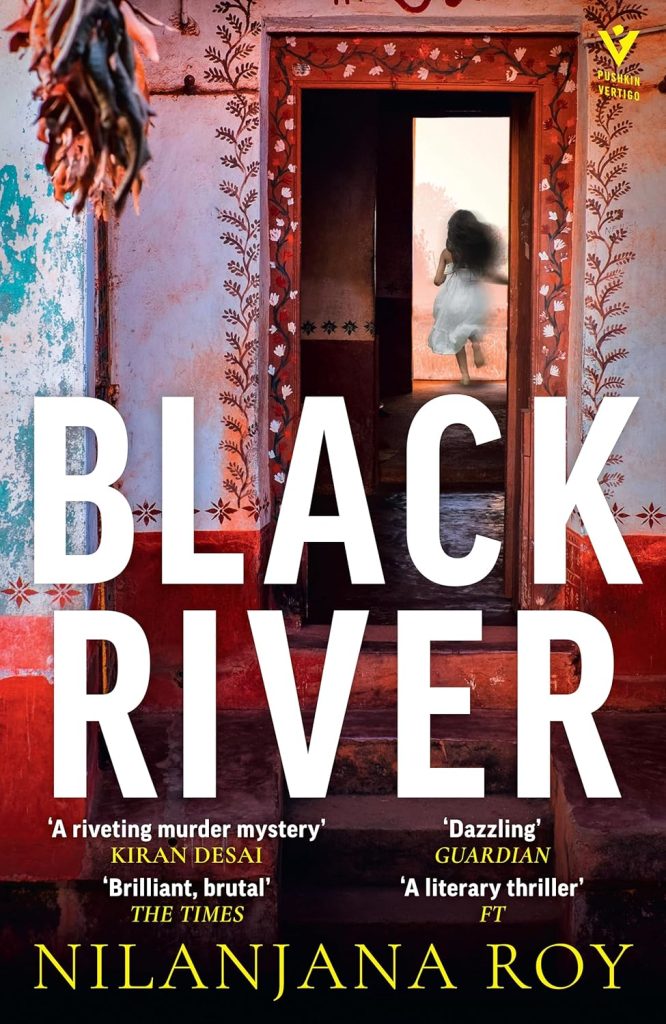
Black River

Read: November 2024

Get this book

Black River: A Novel

by Nilanjana S. Roy

Today, I dove into the captivating pages of “Black River” by Nilanjana S. Roy, a standout selection from The New York Times’ 100 Notable Books of 2024. This compelling debut novel unfolds against contemporary India, a country grappling with rising religious intolerance. Roy’s storytelling is nothing short of mesmerizing, intricately weaving a narrative that vividly reflects the nation’s complexities and contradictions.

Teetapur, an unassuming village just a few hours outside bustling Delhi, is known for nothing—until the discovery of an 8-year-old girl named Munia, found dead and hanging from the branch of a Jamun tree. In this predominantly Hindu village, suspicion quickly falls on Mansoor, an itinerant Muslim man. The tension ignites like wildfire, intensified by the underlying religious discord.

The responsibility for uncovering the elusive truth—and preventing the lynching of the prime suspect—falls on the weary shoulders of Sub-Inspector Ombir Singh. With only one other officer under his command and a single working revolver between them, can he bring justice to a grieving father and an angry village? Or will Teetapur demand vengeance instead?

“Black River” offers readers a gripping mystery and a sweeping analysis of the nation’s state, serving as a searing critique of modern India.


When you purchase a book through one of my links, I earn a small commission that helps support my passion for reading. This contribution allows me to buy even more books to share with you, creating an incredible cycle of discovering great reads together! Your support truly makes a difference!


×
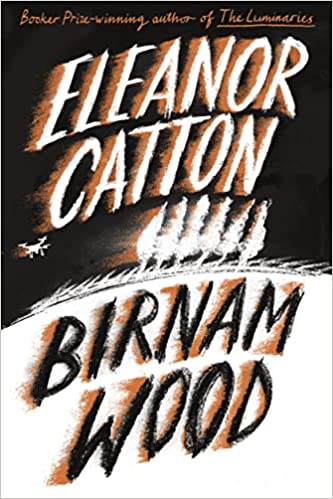
Birnam Wood: A Novel

Read: March 2023

Get this book

Birnam Wood: A Novel

by Eleanor Catton

Birnam Wood: A Novel by Eleanor Catton is a gripping psychological thriller from the Booker Prize-winning author of The Luminaries. Birnam Wood is Shakespearean in its wit, drama, and immersion in character. A brilliantly constructed consideration of intentions, actions, and consequences is an unflinching examination of the human impulse to ensure our survival. I highly recommend this novel.

The review in The New Yorker and a personal recommendation made this novel my next read.

At first, the conflict between the guerrilla gardening group and a wealthy American billionaire seemed like a story that had been told too many times. However, Ms. Catton has created a page-turner that is a must-read during our current climate emergency and the growing income gap. Although the end is foretold, it may surprise the reader while confirming the conviction that we must find an alternate way forward.

The Goodreads summary provides an overview,

Five years ago, Mira Bunting founded a guerrilla gardening group: Birnam Wood. An undeclared, unregulated, sometimes-criminal, sometimes-philanthropic gathering of friends, this activist collective plants crops wherever no one will notice: on the sides of roads, in forgotten parks, and in neglected backyards. For years, the group has struggled to break even. Then Mira stumbles on an answer, a way to finally set the group up for the long term: a landslide has closed the Korowai Pass, cutting off the town of Thorndike. A natural disaster has created an opportunity, a sizable farm seemingly abandoned.

But Mira is not the only one interested in Thorndike. Robert Lemoine, the enigmatic American billionaire, has snatched it up to build his end-times bunker–or so he tells Mira when he catches her on the property. Intrigued by Mira, Birnam Wood, and their entrepreneurial spirit, he suggests they work this land. But can they trust him? And, as their ideals and ideologies are tested, can they trust each other?


The Jan Lilien Education Fund sponsors ongoing sustainability and environmental awareness programs. Gifts made this month; I will match dollar-for-dollar. All donations are tax-deductible.

Subscribe

Contact Us

I receive a commission when you buy a book or product using a link on this page. Thank you for supporting Sharing Jan’s Love blog.


×
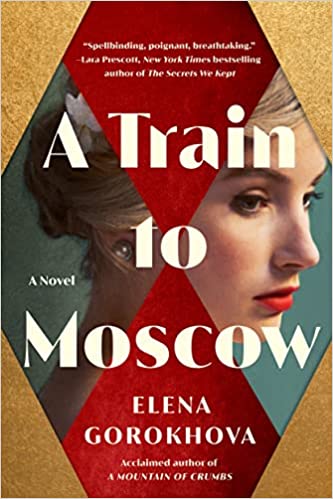
A Train to Moscow

Read: February 2022

Get this book

A Train to Moscow

by Elena Gorokhova

A Train to Moscow by Elena Gorokhova is set in post–World War II Russia; a girl, must reconcile a tragic past with her hope for the future in this powerful and poignant novel about family secrets, passion, loss, perseverance, and ambition. In a small, provincial town behind the Iron Curtain, Sasha lives in a house full of secrets, one of which is her dream of becoming an actress.

When she leaves for Moscow to audition for drama school, she defies her mother and grandparents and abandons her first love, Andrei.

Before she leaves, Sasha discovers the hidden war journal of her uncle Kolya, an artist still missing in action years after the war has ended. His pages expose the official lies and the forbidden truth of Stalin’s brutality. Kolya’s revelations and tragic love story guide Sasha through drama school and cement her determination to live a thousand lives onstage.

After graduation, she begins acting in Leningrad, where Andrei, now a Communist Party apparatchik, becomes a censor of her work. As a past secret comes to light, Sasha’s ambitions converge with Andrei’s duties, and Sasha must decide if her dreams are genuinely worth the necessary sacrifice and if, as her grandmother likes to say, all will indeed be well.

This was a page-turner, as I held my breath to find out the next steps that Sasha would take. Her ambition combined with the secrets she learns keeps the reader focused on the next page.

I recommend this book.

Subscribe

Contact Us

When you buy a book or product using a link on this page, I receive a commission. Thank you for supporting Sharing Jan’s Love blog.

×
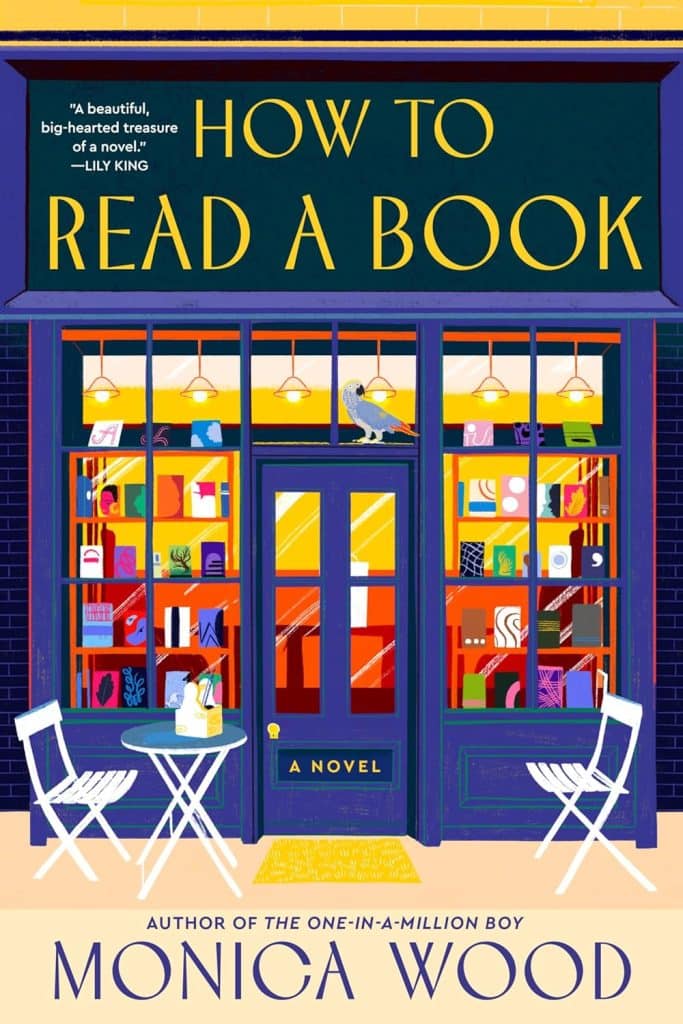
How to Read a Book: A Novel

Read: May 2024

Get this book

How to Read a Book: A Novel

by Monica Wood

I started reading Monica Wood‘s “How to Read a Book: A Novel” today. It’s a heartfelt and uplifting story about a chance encounter at a bookstore—the novel delves into themes of redemption, unlikely friendships, and the life-changing power of sharing stories. With Monica Wood’s characteristic heart, wit, grace, and understanding, the novel illuminates the decisions that shape a life and the kindnesses that make life meaningful.

The story revolves around three characters: Violet Powell, a twenty-two-year-old from rural Abbott Falls, Maine, who is being released from prison after serving twenty-two months for a drunk-driving crash that killed a local kindergarten teacher; Harriet Larson, a retired English teacher who runs the prison book club and is facing the prospect of an empty nest; and Frank Daigle, a retired machinist who is struggling to come to terms with the complexities of his marriage to the woman Violet killed.

Their lives unexpectedly intersect one morning in a bookstore in Portland, Maine. Violet buys the novel she read in the prison book club before her release, Harriet selects the following title for the remaining women, and Frank fulfills his duties as the store handyman. Their encounters set off a chain of events that will profoundly change them.

How to Read a Book“ is a candid and hopeful story about releasing guilt, embracing second chances, and the profound impact of books on our lives.

×
Invisible Child

Read: December 2021

Get this book

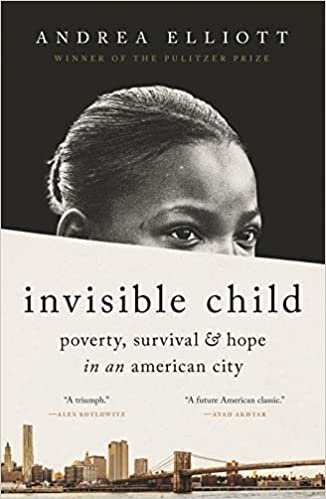
Invisible Child: Poverty, Survival & Hope in an American City

by Andrea Elliott

Invisible Child: Poverty, Survival & Hope in an American City by Andrea Elliott was a gift from my son Jon. The New York Times selected “Invisible Child” as one of the best books published this year. It is indeed one of the top books on my all-time list.

GoodReads summary provides a good overview,

The riveting, unforgettable story of a girl whose indomitable spirit is tested by homelessness, poverty, and racism in an unequal America—from Pulitzer Prize-winning journalist Andrea Elliott of The New York Times

Invisible Child follows eight dramatic years in the life of Dasani Coates, a child with imagination as soaring as the skyscrapers near her Brooklyn homeless shelter. Born at the turn of a new century, Dasani is named for the bottled water that comes to symbolize Brooklyn’s gentrification and the shared aspirations of a divided city. As Dasani grows up, moving with her tight-knit family from shelter to shelter, this story goes back to trace the passage of Dasani’s ancestors from slavery to the Great Migration north. When Dasani comes of age, New York City’s homeless crisis explodes as the chasm deepens between rich and poor.

In the shadows of this new Gilded Age, Dasani must lead her seven siblings through a thicket of problems: hunger, parental drug addiction, violence, housing instability, segregated schools, and the constant monitoring of the child-protection system. When, at age thirteen, Dasani enrolls at a boarding school in Pennsylvania, her loyalties are tested like never before. As she learns to “code switch” between the culture she left behind and the norms of her new town, Dasani starts to feel like a stranger in both places. Ultimately, she faces an impossible question: What if leaving poverty means abandoning the family you love?

By turns heartbreaking and revelatory, provocative and inspiring, Invisible Child tells an astonishing story about the power of resilience, the importance of family, and the cost of inequality. Based on nearly a decade of reporting, this book vividly illuminates some of the most critical issues in contemporary America through the life of one remarkable girl.

Jan and I were involved and knew that child poverty and homelessness needed repair. In addition, Jan lived on Washington Park across from Ft. Greene Park in 1974-75. We knew the neighborhood where much of the book’s story takes place. 

Before meeting Jan in 1973, I was both a community/tenant organizer and a youth worker. In the latter role, I made weekly hostel trips for eight to ten young boys from East Williamsburg during 1973. The trips were the first the boys had ever been outside of their neighborhood.

Many of them had imaginations like Dasani. They also had her instinct to fight. One of my first tasks was to check for any weapons.

Decades later, when I would see any of them, now adults, they would ask when we were going on another trip. I wish I had met Jan when I made those trips. She would have helped me improve them and document the impact. If I could re-write history, I would have her join me as the second adult on the hostel trips.

After that summer, it was clear my primary skills were as a community/tenant organizer. Over the next few years, my work focused on creating affordable and supportive housing.

Jan and I did meaningful work that made a difference, yet the need for a permanent solution to the crisis remains. The book highlights the crucial role of resilience, the importance of family, and the cost of inequality. As a nation, we cannot undermine those values by breaking up families, impeding resilience, and maintaining racial and economic inequality. 

The current debate in Washington over the Build Back Better legislation needs to focus not on how much we spend but on its impact on children and families. 

David Brooks, a conservative commentator, has supported these expenditures for what they can do to address this country’s cultural and economic crisis. 

These packages say to the struggling parents and the warehouse workers: I see you. Your work has dignity. You are paving your way. You are at the center of our national vision.

This is how you fortify a compelling moral identity, which is what all of us need if we’re going to be able to look in the mirror with self-respect. This is the cultural transformation that good policy can sometimes achieve. Statecraft is soulcraft.

If you can only read one book this year, this is the one to read. Child poverty, homelessness, and inequality impact all of us. Ending child poverty and homelessness will make us a healthier and more inclusive nation. It is time for a compelling moral call to action!

Subscribe

Contact Us

When you buy a book or product using a link on this page, I receive a commission. Thank you for supporting Sharing Jan’s Love blog.

×
The Emperor of Gladness

Read: May 2025

Get this book

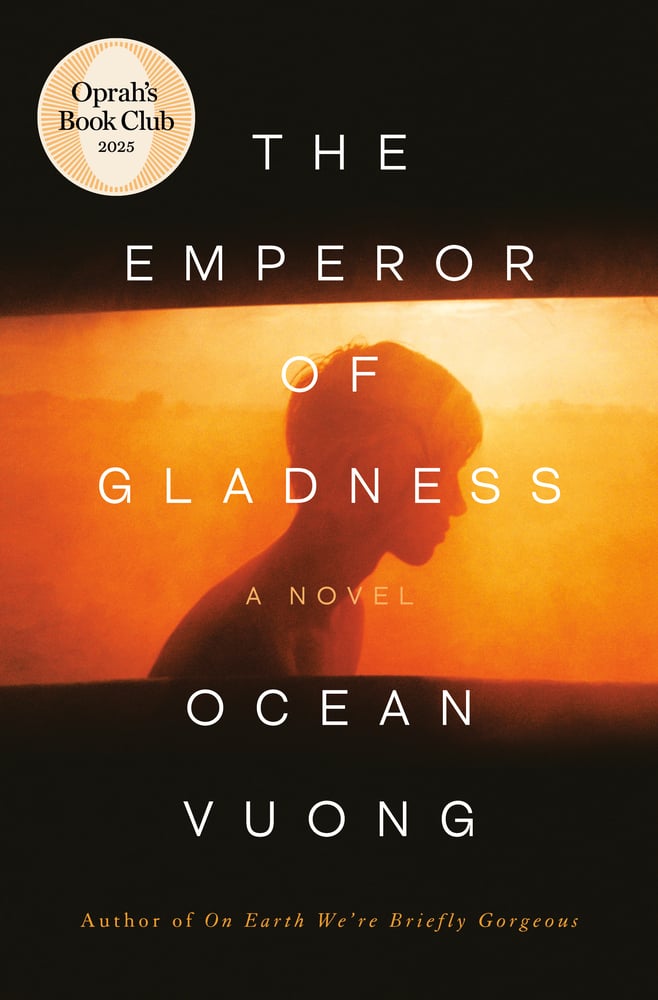
The Emperor of Gladness

by Ocean Vuong

In “The Emperor of Gladness,” Ocean Vuong explores the interconnected themes of history, memory, and time, revealing how love, labor, and loneliness are the foundation of American life. At its core, the narrative presents a courageous epic that examines what it means to live on the margins of society and confront the wounds that affect our shared humanity. It highlights the lengths we are willing to go to grasp one of life’s most fleeting gifts: a second chance.

One late summer evening in the post-industrial town of East Gladness, Connecticut, nineteen-year-old Hai stands on the edge of a bridge in pelting rain, ready to jump, when he hears someone shout across the river. The voice belongs to Grazina, an elderly widow succumbing to dementia, who convinces him to take another path. Bereft and out of options, he quickly becomes her caretaker. Over the year, the unlikely pair develops a life-altering bond, one built on empathy, spiritual reckoning, and heartbreak, with the power to transform Hai’s relationship with himself, his family, and a community on the brink.

Hallmarks of Ocean Vuong‘s writing—formal innovation, syntactic dexterity, and the ability to twin grit with grace through tenderness—are on full display in this story.


Ocean Vuong is the author of the critically acclaimed poetry collections Night Sky with Exit Wounds and Time Is a Mother, as well as the New York Times bestselling novel On Earth We’re Briefly Gorgeous. A recipient of the MacArthur Fellowship and the American Book Award, he once worked as a fast-food server, which inspired The Emperor of Gladness. Born in Saigon, Vietnam, he currently splits his time between Northampton, Massachusetts, and New York City.


When you purchase a book through one of my links, I earn a small commission that helps support my passion for reading. This contribution allows me to buy even more books to share with you, creating an incredible cycle of discovering great reads together! Your support truly makes a difference!


×

Discover more from Sharing Jan’s Love

Subscribe now to keep reading and get access to the full archive.

Continue reading