
Weird Weather

Nomehagan’s Weather Prognosticator

Estimated reading time: 1 minute, 18 seconds
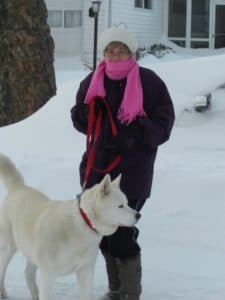
“It looks like we are good until April,” my fellow walker and weather prognosticator said as I petted his dog.

“I can’t beleive we got to the middle of February with only a dusting of snow,” he continued. “I raked my yard over the weekend and started preparing my garden.”

I nodded, and we both continued our walk in opposite directions.


I enjoy being able to walk without ice and snow on the ground, but I am apprehensive about the weird weather that has kept us snow-free.

If we are snow-free, how will it impact the reservoirs?

Is this one weird year or the beginning phase of a new, less human-friendly climate?

As I complete my morning perambulation, I realize that I am overdressed. Having left before sunrise when it was in the mid-thirties, I dressed for the cold. It is now mid-forties and rising.

Jan and I always wanted part of our inheritance to leave our children and grandchildren with a livable world.

All we can leave then now is our eternal love.


The Jan Lilien Education Fund sponsors ongoing sustainability and environmental awareness programs. Gifts made this month; I will match dollar-for-dollar. All donations are tax-deductible.

Subscribe

Contact Us

I receive a commission when you buy a book or product using a link on this page. Thank you for supporting Sharing Jan’s Love blog.
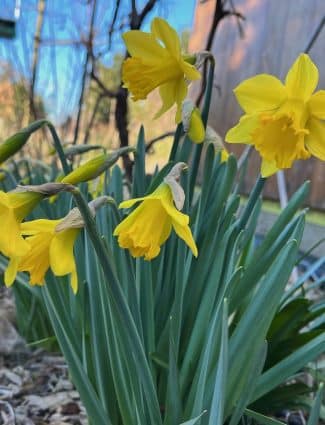


Spring’s First Weeping Willow Tree

Jan and I always found joy in the first sign of Spring.

Those signs could come anytime in an age of weird weather.

In Springfield and Teaneck, we had flower beds where the first daffodils would burst thru almost frozen ground to find the sun's warmth.

I often found them first but always let Jan be the first to see Spring.

This morning I saw the first yellowish hint in a weeping willow in Cranford despite freezing temperatures.


Show thread (1)

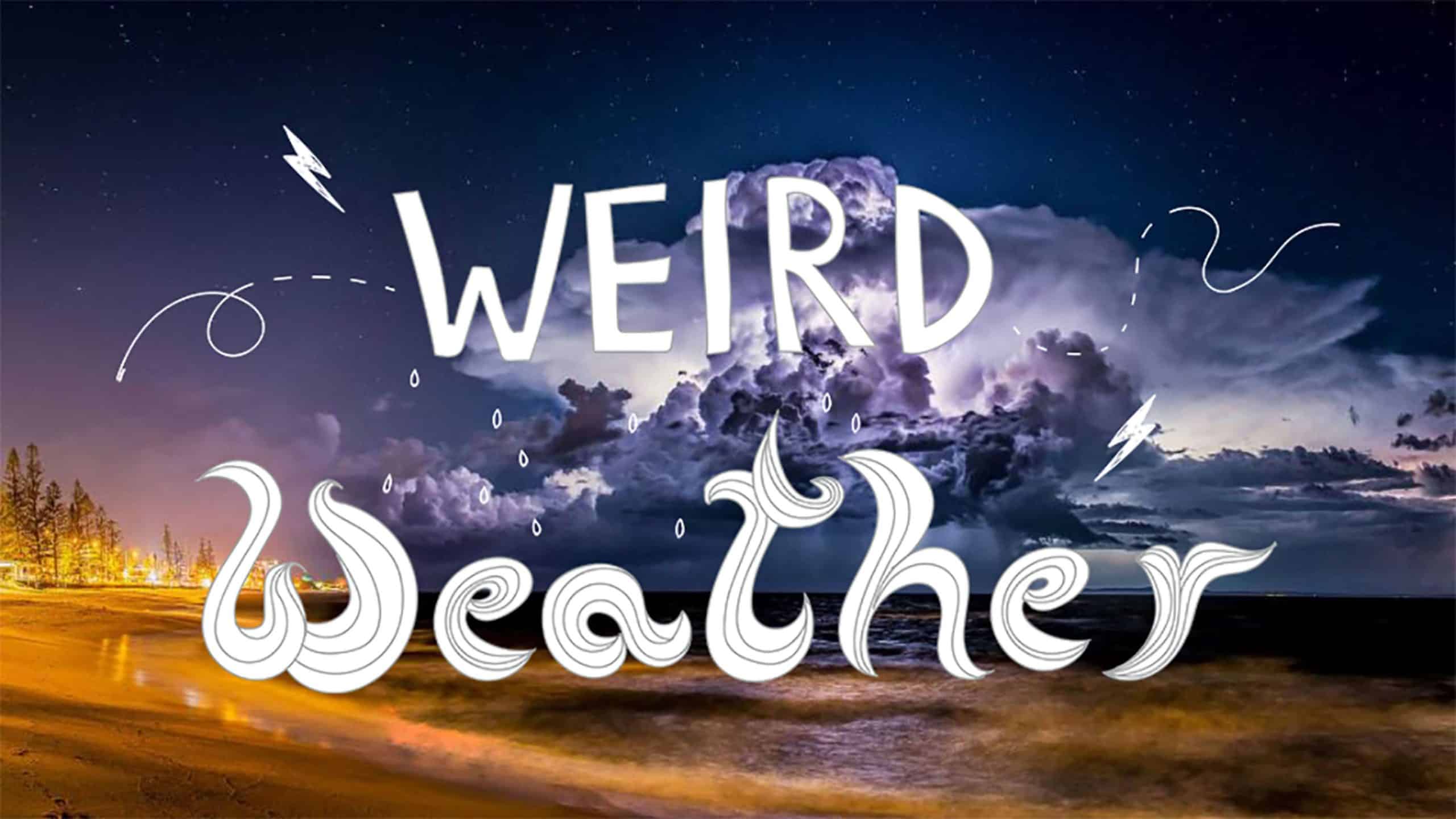
Weird Weather

Four Point Five Degrees Celsius!

Estimated reading time: 1 minute, 18 seconds

Thirty-five days into 2023, my backyard’s temperature has been 8.1 degrees Fahrenheit above normal.

The Paris Agreement established a goal to hold warming to less than 2 degrees Celsius or 3.6 degrees Fahrenheit. Hopefully, our current warming trend will not last. But so far this winter, we have increased by 4.5 degrees Celsius.

Is anyone surprised about the lack of snow
and the weird weather?

No Snow January

My backyard and New York City have gone three hundred twenty-five (325) days since the last measurable snowstorm.

The latest day for the first snow was fifty years ago today.

According to the Gothamist, "50-year-old record for the latest arriving measurable snowfall for a winter season, set on Jan. 29, 1973. If the pattern lasts beyond Feb. 4, it'll be the longest recorded period the city has gone without snow."

Share your thoughts and ideas

This site uses Akismet to reduce spam. Learn how your comment data is processed.

The Jan Lilien Education Fund!

Weird Weather
×
Weird Weather
×
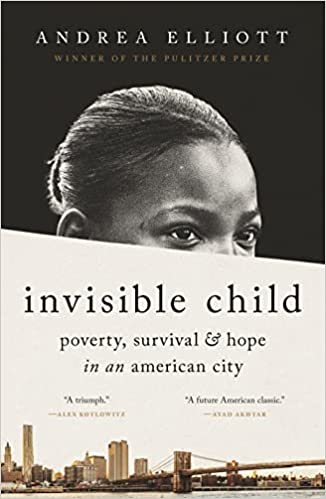
Invisible Child

Read: December 2021

Get this book

Invisible Child: Poverty, Survival & Hope in an American City

by Andrea Elliott

Invisible Child: Poverty, Survival & Hope in an American City by Andrea Elliott was a gift from my son Jon. The New York Times selected “Invisible Child” as one of the best books published this year. It is indeed one of the top books on my all-time list.

GoodReads summary provides a good overview,

The riveting, unforgettable story of a girl whose indomitable spirit is tested by homelessness, poverty, and racism in an unequal America—from Pulitzer Prize-winning journalist Andrea Elliott of The New York Times

Invisible Child follows eight dramatic years in the life of Dasani Coates, a child with imagination as soaring as the skyscrapers near her Brooklyn homeless shelter. Born at the turn of a new century, Dasani is named for the bottled water that comes to symbolize Brooklyn’s gentrification and the shared aspirations of a divided city. As Dasani grows up, moving with her tight-knit family from shelter to shelter, this story goes back to trace the passage of Dasani’s ancestors from slavery to the Great Migration north. When Dasani comes of age, New York City’s homeless crisis explodes as the chasm deepens between rich and poor.

In the shadows of this new Gilded Age, Dasani must lead her seven siblings through a thicket of problems: hunger, parental drug addiction, violence, housing instability, segregated schools, and the constant monitoring of the child-protection system. When, at age thirteen, Dasani enrolls at a boarding school in Pennsylvania, her loyalties are tested like never before. As she learns to “code switch” between the culture she left behind and the norms of her new town, Dasani starts to feel like a stranger in both places. Ultimately, she faces an impossible question: What if leaving poverty means abandoning the family you love?

By turns heartbreaking and revelatory, provocative and inspiring, Invisible Child tells an astonishing story about the power of resilience, the importance of family, and the cost of inequality. Based on nearly a decade of reporting, this book vividly illuminates some of the most critical issues in contemporary America through the life of one remarkable girl.

Jan and I were involved and knew that child poverty and homelessness needed repair. In addition, Jan lived on Washington Park across from Ft. Greene Park in 1974-75. We knew the neighborhood where much of the book’s story takes place. 

Before meeting Jan in 1973, I was both a community/tenant organizer and a youth worker. In the latter role, I made weekly hostel trips for eight to ten young boys from East Williamsburg during 1973. The trips were the first the boys had ever been outside of their neighborhood.

Many of them had imaginations like Dasani. They also had her instinct to fight. One of my first tasks was to check for any weapons.

Decades later, when I would see any of them, now adults, they would ask when we were going on another trip. I wish I had met Jan when I made those trips. She would have helped me improve them and document the impact. If I could re-write history, I would have her join me as the second adult on the hostel trips.

After that summer, it was clear my primary skills were as a community/tenant organizer. Over the next few years, my work focused on creating affordable and supportive housing.

Jan and I did meaningful work that made a difference, yet the need for a permanent solution to the crisis remains. The book highlights the crucial role of resilience, the importance of family, and the cost of inequality. As a nation, we cannot undermine those values by breaking up families, impeding resilience, and maintaining racial and economic inequality. 

The current debate in Washington over the Build Back Better legislation needs to focus not on how much we spend but on its impact on children and families

David Brooks, a conservative commentator, has supported these expenditures for what they can do to address this country’s cultural and economic crisis. 

These packages say to the struggling parents and the warehouse workers: I see you. Your work has dignity. You are paving your way. You are at the center of our national vision.

This is how you fortify a compelling moral identity, which is what all of us need if we’re going to be able to look in the mirror with self-respect. This is the cultural transformation that good policy can sometimes achieve. Statecraft is soulcraft.

If you can only read one book this year, this is the one to read. Child poverty, homelessness, and inequality impact all of us. Ending child poverty and homelessness will make us a healthier and more inclusive nation. It is time for a compelling moral call to action!

Subscribe

Contact Us

When you buy a book or product using a link on this page, I receive a commission. Thank you for supporting Sharing Jan’s Love blog.

×
Trouble the Saints

Read: January 2022

Get this book

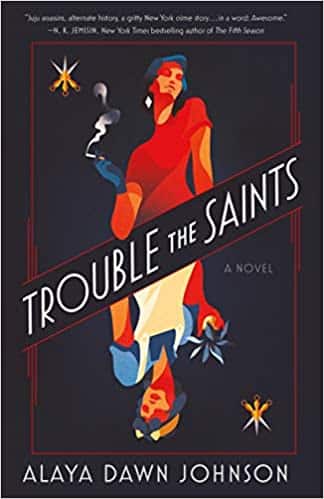
Trouble the Saints

by Alaya Dawn Johnson

Trouble the Saints by Alaya Dawn Johnson is one of NPR’s Books We Love from 2020. The dangerous magic of The Night Circus meets the powerful historical exploration of The Underground Railroad in this timely and unsettling novel, set against the darkly glamorous backdrop of New York City at the dawn of WWII. Amidst the whir of city life, a girl from Harlem is drawn into the glittering underworld of Manhattan, where she’s hired to use her knives to strike fear amongst its most dangerous denizens.

The book is written in three sections with different protagonists and voices. Phyllis, or Pea as her friends call her, is a black assassin for a white mob boss narrates the first section of the book. Her saint’s hands are the ability to use knives to commit murder. She can also pass as white as Phyllis, but she is a black woman from Harlem as Pea. The section she narrates is difficult at first to follow as she attempts to deal with the consequences of her actions. Can the past ever be the past?

Dev, Indian and Phyllis’s lover, narrates the second section. He is an undercover cop who protects her and helps her free herself from the mob boss. This section is located in the Hudson Valley and highlights the tensions before the war between whites and non-whites.

The third protagonist, Tamara, narrates this section. The war separates Phyllis and Dev. Phyllis is pregnant, and Dev and Tamara’s love interest are serving in the military. This section brings together the threads and reminds us that the past is never the past.

As Goodreads summarizes the book,

But the ghosts from her past are always by her side—and history has appeared on her doorstep to threaten the people she loves most.

Can one woman ever sacrifice enough to save an entire community?

Trouble the Saints is a dazzling, daring novel—a magical love story, a compelling chronicle of interracial tension, and an altogether brilliant and deeply American saga.

I recommend this book and encourage all readers to read it to the end.

Subscribe

Contact Us

When you buy a book or product using a link on this page, I receive a commission. Thank you for supporting Sharing Jan’s Love blog.

×
Flashlight

Read: August 2025

Get this book

Flashlight: A Novel

by Susan Choi

A monumental new novel by National Book Award winner Susan Choi, Flashlight spans decades and continents in a captivating and emotional exploration of family, loss, memory, and the ways we are influenced by what remains hidden. Longlisted for the 2025 Booker Prize, the novel follows the journey of a father’s disappearance over time, across nations, and within the realm of memory. This work comes from the author of Trust Exercise.

On a summer night, Louisa and her father take a walk along the breakwater. Her father is carrying a flashlight, but he cannot swim. Later, Louisa is found on the beach, soaked to the skin and barely alive. Her father is missing. She is only ten years old.

Louisa is the only child of parents who have distanced themselves from their pasts. Her father, Serk, is Korean but was born and raised in Japan. He lost touch with his family after they embraced the promises of postwar Pyongyang and relocated to North Korea. Her American mother, Anne, is estranged from her Midwestern family due to a reckless adventure in her youth. Then there’s Tobias, Anne’s illegitimate son, whose unexpected return will have profound consequences.

For now, it is just Anne and Louisa—Louisa and Anne—adrift and facing the challenges of everyday life in the aftermath of their immense loss. Bound together yet estranged, they struggle to cope with their shared grief and attempt to move forward. However, they cannot escape the haunting memories of that fateful night. What happened to Louisa’s father?

With shifting perspectives across time and character, and repeatedly revisiting that night by the sea, Flashlight explores the shockwaves of one family’s tragedy while also engaging with the invisible currents of history.


Susan Choi is the author of Trust Exercise, which won the National Book Award for fiction. She has also written the novels The Foreign Student, American Woman, A Person of Interest, and My Education.

Choi has received several prestigious awards, including the Asian American Literary Award for fiction, the PEN/W. G. Sebald Award, a Lambda Literary Award, and the Sunday Times Audible Short Story Award. Additionally, she has been awarded fellowships from the National Endowment for the Arts and the Guggenheim Foundation.

Currently, she teaches in the Writing Seminars at Johns Hopkins University and resides in Brooklyn, New York.


When you purchase a book through one of my links, I earn a small commission that helps support my passion for reading. This contribution allows me to buy even more books to share with you, creating an incredible cycle of discovering great reads together! Your support truly makes a difference!

Enjoy a limited-time offer of 20% off your next book purchase at Bookshop.org!


×
The missing hours

Read: February 2022

Get this book

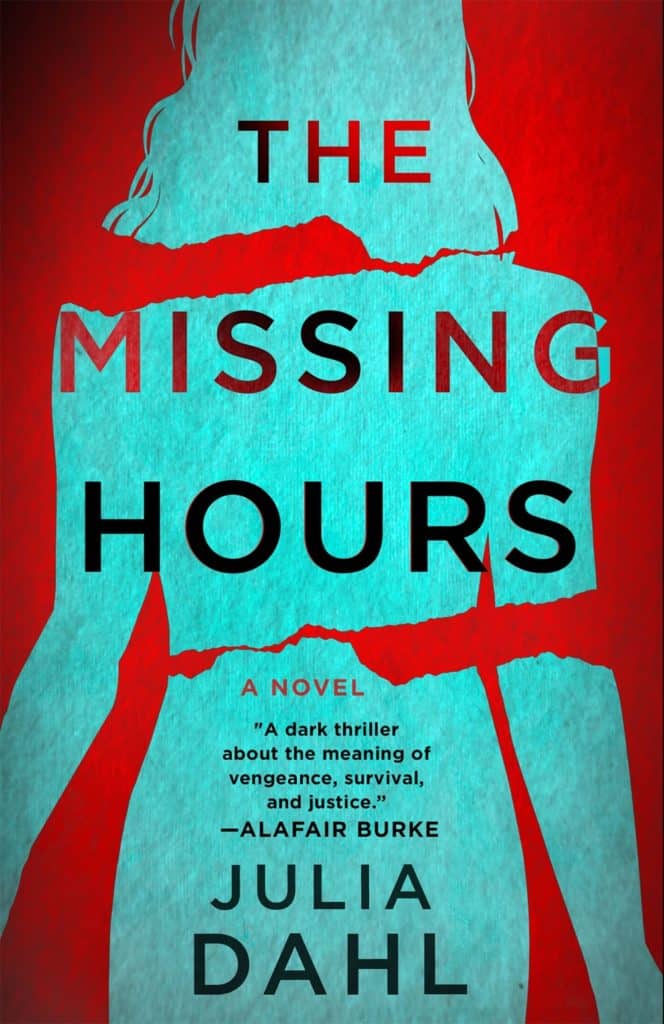
The Missing Hours

by Julia Dahl

The Missing Hours by Julia Dahl is a novel I chose to read as I was looking for something different from the recent books I have read, and a fellow reader recommended this one. The Missing Hours is a novel about obsession, privilege, and the explosive consequences of one violent act. Like a bomb exploding, the ripple effects of the novel’s primary event impact the victim and her family, friends, and the larger community.

A trigger warning to all readers, the violent act in the novel is a sexual assault that is filmed and shared. Claudia, the victim, has no memory initially of what happened. She had been drinking and wearing clothes that she liked to wear. None of her choices is an excuse for those who victimized her.

She cannot remember what happened until a friend receives the video.

Being wealthy and social media savvy, she is aware that reporting the assault before or after the video is released would only allow her to be re-victimized. Her choices and how she seeks to secure justice make this a book I enjoyed and highly recommended.

This is the Goodreads overview.

From a distance, Claudia Castro has it all: a famous family, a trust fund, thousands of Instagram followers, and a spot in NYU’s first-year class. But look closer, and things are messier: her parents are separating, she’s just been humiliated by a sleazy documentary, and her sister is about to have a baby with a man she barely knows.

Claudia starts the school year resolved to find a path toward something positive, maybe even meaningful – and then, one drunken night, everything changes. Reeling, her memory hazy, Claudia cuts herself off from her family, seeking solace in a new friendship. But when the rest of school comes back from spring break, Claudia is missing.

Suddenly, the whole city is trying to piece together the hours of that terrible night.

From the critically acclaimed author of Invisible City and Conviction, The Missing Hours is a novel about obsession, privilege, and the explosive consequences of one violent act.

Subscribe

Contact Us

When you buy a book or product using a link on this page, I receive a commission. Thank you for supporting Sharing Jan’s Love blog.

×
Creation Lake: A Novel

Read: November 2024

Get this book

Creation Lake: A Novel

by Rachel Kushner

Today, I started reading Creation Lake: A Novel by Rachel Kushner, a two-time finalist for the Booker Prize and the National Book Award. This novel follows a seductive and cunning American woman who infiltrates an anarchist collective in France. It is a gripping page-turner filled with dark humor. Creation Lake is Kushner‘s finest achievement—a work of high art, comedy, and unforgettable pleasure.

The story revolves around a secret agent, a thirty-four-year-old American woman who employs ruthless tactics and possesses striking beauty. She is sent to carry out covert operations in France. The narrator introduces herself as “Sadie Smith” when she arrives at a rural commune of French subversives, whom she is secretly monitoring, and to her lover, Lucien, a young and well-to-do Parisian whom she meets by so-called “cold bump”—making him believe their encounter was accidental. Like everyone else she targets, Lucien is helpful to her and ultimately manipulated by her. Sadie operates with strategy and deception, following instructions from her “contacts”—shadowy figures in business and government. Initially, these contacts want her to provoke reactions. As the story progresses, their demands become more complex.

In this region filled with ancient farms and prehistoric caves, Sadie becomes captivated by a mysterious figure named Bruno Lacombe. Bruno mentors young activists who believe that the path to emancipation lies not in revolt but in a return to the ancient past. Just as Sadie thinks she is the seductress and puppet master of those she surveils, Bruno enchants her with his ingenious counter-histories, poignant laments, and tragic narrative.

In brief, striking sections, Rachel Kushner‘s interpretation of “noir” is taut and dazzling.


When you purchase a book through one of my links, I earn a small commission that helps support my passion for reading. This contribution allows me to buy even more books to share with you, creating an incredible cycle of discovering great reads together! Your support truly makes a difference!


×
Sarah's Key

Read: January 2022

Get this book

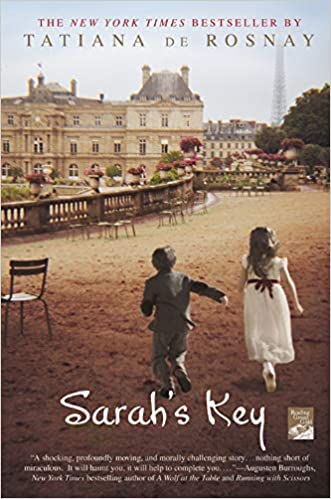
Sarah’s Key

by Tatiana de Rosnay

Sarah’s Key by Tatiana de Rosnay is the untold story of the roundup of the Jews in Paris in July 1942. The novel focuses on how the French were complicit in rounding up thousands of Jews in 1942. It is also a reminder that we can never allow another genocide. I finished this book the day before Holocaust Remembrance Day, January 27, the date on which the Auschwitz-Birkenau concentration and death camp complex was liberated in 1945.

Ten-year-old Sarah is brutally arrested with her family in the Vel’ d’Hiv’ roundup, the most notorious act of French collaboration with the Nazis. But before the police come to take them, Sarah locks her younger brother, Michel, in their favorite hiding place, a cupboard in the family’s apartment. She keeps the key, thinking she will be back within a few hours.

Paris, May 2002: On Vel’ d’Hiv’s sixtieth anniversary, Julia Jarmond, an American journalist, is asked by her Paris-based American magazine to write an article about this black day in France’s past. Julia has lived in Paris for nearly twenty-five years and married a Frenchman, and she is shocked both by her ignorance about the event and the silence that still surrounds it.

The twin narratives of Sarah and Julia hold the first two-thirds of the book together and make it a page-turner. Sarah’s memory reminds us during the final third of the book and ensures that the complete story of the Vel’ d’Hiv’ roundup and its lasting impact are told.

As Goodreads describes the novel,

In the course of her investigation, she stumbles onto a trail of long-hidden family secrets that connects her to Sarah. Julia finds herself compelled to retrace the girl’s ordeal, from the terrible days spent shut in at the Vel’ d’Hiv’ to the camps and beyond. As she probes into Sarah’s past, she begins to question her own place in France and to reevaluate her marriage and her life.

Writing about the fate of her country with a pitiless clarity, Tatiana de Rosnay offers us a brilliantly subtle, compelling portrait of France under occupation and reveals the taboos and denial surrounding this painful episode in French history.

I highly recommend the book.

Subscribe

Contact Us

When you buy a book or product using a link on this page, I receive a commission. Thank you for supporting Sharing Jan’s Love blog.

×