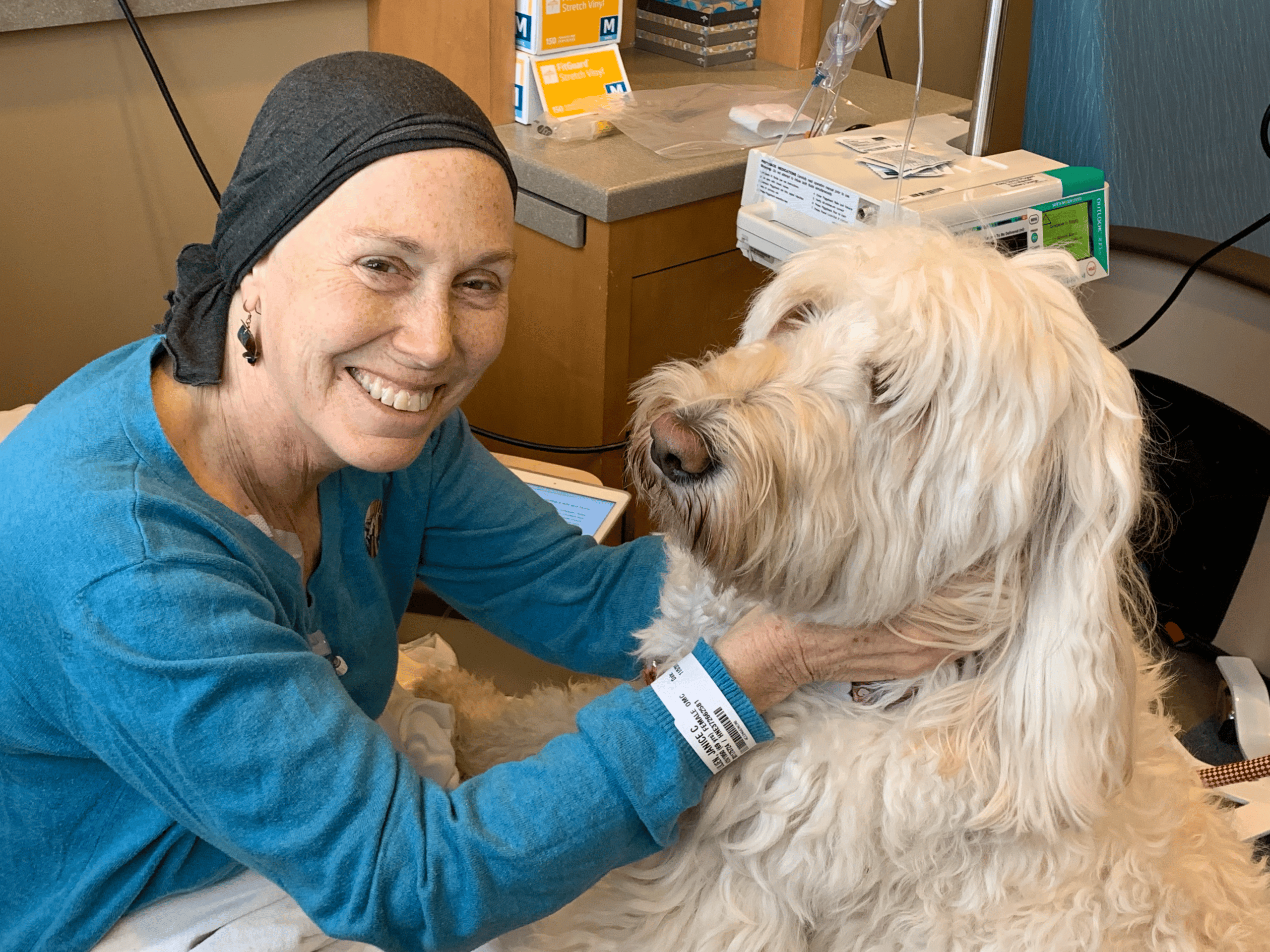

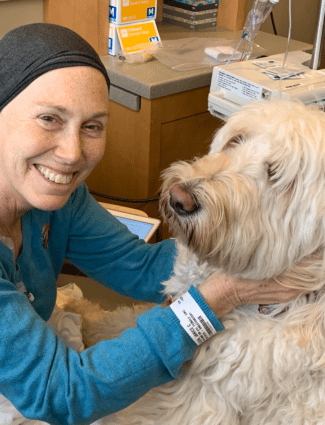
Jan with a Therapy Dog

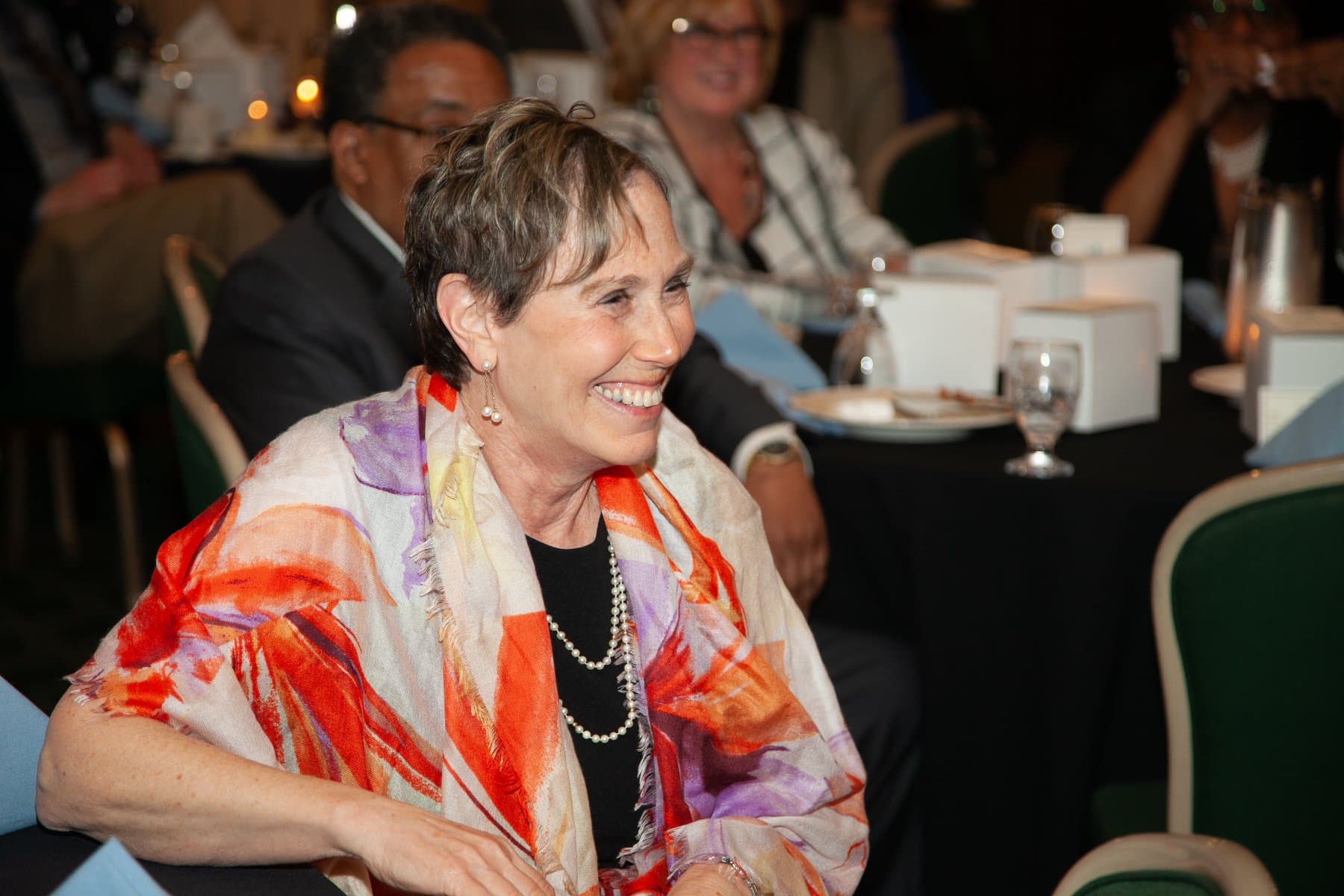
Jan Was a Wonderful Woman

We Have Work That Still Needs to Be Done!

Estimated reading time: 1 minute, 24 seconds

My car’s outdoor temperature reading shows 88 degrees Fahrenheit, but my weather app says it’s 86 degrees Fahrenheit. Despite the discrepancy, it’s sweltering for the first week of May. I arrived at a meeting with Bridges and a local community as the Board chair, and this is the purpose I’ve been looking for since building Jan’s Memorial Garden. I accidentally walked through the metal detector as nobody was there to stop me, causing it to beep loudly like a burst plastic shipping bag. The first person I met at the meeting asked how I was doing, and when I replied, “OK,” he persisted, asking, “How are you really?”

I explained that it had been three years since Jan died last Friday, and I am taking a step-by-step approach to move forward. I find it easier to answer questions about my progress now because I believe in transparency. Being honest and open about my progress has always been my default position.

He paused momentarily, took a deep breath, and said, “Jan was a wonderful woman.” His words were soothing, but they also reminded me of the pain I felt from her absence. However, he continued, “I know how much you miss her, but as she would have said, we still have work to do.” His words were a gentle reminder that life goes on, and we must keep moving forward.

As our conversation ended, we stood up, and he extended his hand for a handshake. However, we decided not to shake hands because he suffers from hay fever. Despite this, I felt a sense of comfort knowing that our conversation had provided me with a bit of solace and inspiration to carry on.
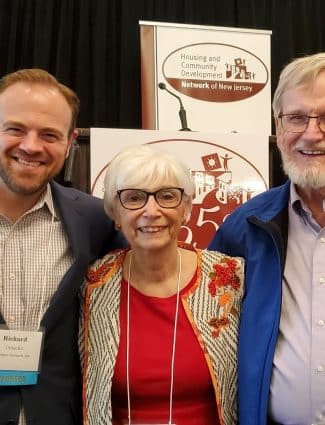
My Apolytus Moment

Despite the deep and abiding pain of missing my beloved wife daily, I have come to understand that it is essential that I continue living and finding joy in the present moment.

Show thread (1)

Walking for 1097 Days

We Have Work That Still Needs to Be Done!

Estimated reading time: 1 minute, 24 seconds
Walking for 1097 Days

For the past three years, I have been walking towards the future. I find joy in the little things that make up my daily routine, but sometimes, I feel a deep longing for companionship.

2 comments add your comment

Share your thoughts and ideas

This site uses Akismet to reduce spam. Learn how your comment data is processed.

The Jan Lilien Education Fund!

Jan with a Therapy Dog
×

Read: April 2026

Get this book

The Future Is Peace

by Aziz Abu Sarah and Maoz Inon

The Future Is Peace: A Shared Journey Across the Holy Land” explores the experiences of two lifelong peace activists, Aziz Abu Sarah and Maoz Inon, who serve as guides in Israel and Palestine. Both have personally endured loss due to the ongoing conflict. They lead readers on a profound and transformative journey through this sacred yet tumultuous land, revealing the historical, political, and personal narratives that both divide and connect their communities and peoples.

We do not see ourselves as Palestinians and Israelis, or as Jews and Arabs, but as human beings who believe in fostering a culture of dialogue, a culture of forgiveness, and a culture of peace. To those who see only division lines, we say: If you must divide us, let it be as those who believe in peace and equality and those who don’t… yet.”

Palestinian Aziz Abu Sarah and Maoz Inon forged a bond of brotherhood when the world expected them to be enemies. Both have lost family to the conflict. Both have known the bitterness of righteous anger. Yet, they chose a different path.

In The Future Is Peace, Sarah and Inon take readers on a transformative weeklong journey across a sacred and bloodstained land. Facing competing narratives, they explore how compassion and unity can pull humanity back from the precipice of blind hatred. Throughout their travels, they have been asked again and again: In the face of so much loss, how can we ever find hope? Their answer is always the same. One cannot find hope. We must create it.

This book is a rebuttal to a broken world and a bold challenge to the belief that more violence can ever bring security. Told with unflinching honesty, their story is proof that peace is not a naive dream, but a courageous choice—for reconciliation to heal the wounds of revenge, for partnerships to change a destiny of war, and for empathy to save us from drowning in sorrow.

Pairing unapologetic candor with inspirational prose, Sarah and Inon are sending an urgent message: the people have the power to make change. Peace is inevitable. For Palestinians, for Israelis, and for the world that awaits their example, it is not just possible—it is the future.


Aziz Abu Sarah serves as Co-CEO of InterAct International, a nonprofit organization dedicated to promoting peace in the Middle East. He is a peacebuilder, entrepreneur, National Geographic Explorer, TED Fellow, and a respected speaker and trainer in conflict resolution and responsible travel.

Aziz is also the co-founder of MEJDI Tours, a travel company aiming to transform tourism into a powerful tool for citizen diplomacy. He has received numerous accolades, including awards from the United Nations, the Institute of International Education, and the Explorers Club.

Recognized as one of the world’s 500 most influential Muslims by the Royal Islamic Strategic Studies Center in Jordan, Aziz has contributed opinion pieces to prominent publications such as The New York Times, The Washington Post, Al-Quds, and Haaretz.

Maoz Inon is the Co-CEO of InterAct International, a nonprofit organization dedicated to promoting peace in the Middle East. He is a peace activist from Israel and an entrepreneur. In recognition of his efforts, he has received the prestigious Franco-German Human Rights Prize and the Shared Living Award from Abraham Initiatives.

He has spoken before audiences on Capitol Hill, at universities across the United States, and in the European Parliament. Additionally, Inon has contributed articles to various publications, including The Washington Post, Al Jazeera, and Haaretz.

He has also founded several initiatives aimed at fostering peace in Israel and the Middle East, including the Jesus Trail, Fauzi Azar Inn, and the Abraham Hostel & Tour brands.


Discover your next favorite book and dive into a world of curated, exciting reads by purchasing through my links. You’ll have access to a diverse selection of books I’ve personally vetted for quality and enjoyment. Supporting these selections not only helps me continue to provide you with personalized recommendations but also ensures you have access to meaningful stories that enrich your life. Your support truly makes a difference in helping me share more books and insights with you!


×
How the Word is Passed

Read: December 2021

Get this book

How the Word Is Passed: A Reckoning with the History of Slavery Across America

by Clint Smith

How the Word Is Passed: A Reckoning with the History of Slavery Across America by Clint Smith. This book was a gift from my son Jon. The New York Times selected How the Word is Passed as one of the best books published this year. Beginning in his hometown of New Orleans, Clint Smith leads the reader on an unforgettable tour of monuments and landmarks—those that are honest about the past and those that are not—that offer an intergenerational story of how slavery has been central in shaping our nation’s collective history, and ourselves.

How the Word is Passed is one of the best books I have read in 2021. I had read an excerpt in The Atlantic on the Whitney Plantation, one of the only former plantations devoted to preserving the experience of the enslaved people whose lives and work sustained it. Like most of us, I had placed the book on my to-read list, where it remained lost in the cobwebs. Fortunately, my son Jon purchased the book for me.

Secondly, the book rekindled my long-lost dream of being an American Studies professor. As soon as Jan and I met, I dropped plans to leave Brooklyn and start graduate school in the fall of 1974. I made that decision primarily because of how much I loved Jan. But it was also partly that I did not have a clear vision of what my life would be like as a professor. The book provided clear examples of people like Yvonne Holden at The Whitney Plantation redefining history to be more accurate and inclusive. I probably could not have done as well as she did, but I can now see that it might have resulted in a career for me that could have been impactful.

Goodreads provides this overview for those who still need to be convinced to read this book.

It is the story of the Monticello Plantation in Virginia, the estate where Thomas Jefferson wrote letters espousing the urgent need for liberty while enslaving over 400 people on the premises. It is the story of the Whitney Plantation, one of the only former plantations devoted to preserving the experience of the enslaved people whose lives and work sustained it. It is the story of Angola Prison in Louisiana, a former plantation named for the country from which most of its enslaved people arrived and which has since become one of the most gruesome maximum-security prisons in the world. And it is the story of Blandford Cemetery, the final resting place of tens of thousands of Confederate soldiers.

In a deeply researched and transporting exploration of the legacy of slavery and its imprint on centuries of American history, How the Word Is Passed illustrates how some of our country’s most essential stories are hidden in plain view-whether in places we might drive by on our way to work, holidays such as Juneteenth, or entire neighborhoods—like downtown Manhattan—on which the brutal history of the trade in enslaved men, women and children has been deeply imprinted.

Informed by scholarship and brought alive by the story of people living today, Clint Smith’s debut work of nonfiction is a landmark work of reflection and insight that offers a new understanding of the hopeful role that memory and history can play in understanding our country.

How the Word is Passed is one of the best books I have read this year and many prior ones. I encourage you to read it and share your comments.

Subscribe

Contact Us

When you buy a book or product using a link on this page, I receive a commission. Thank you for supporting Sharing Jan’s Love blog.

×
Killing Stella

Read: July 2025

Get this book

Killing Stella

by Marlen Haushofer

Yesterday, I read “Killing Stella,” written by Marlen Haushofer and translated by Shaun Whiteside, which is a domestic horror story that culminates in an apocalyptic ending. This novella captures many of the themes present in Haushofer’s acclaimed novel, “The Wall,” presenting them within a claustrophobic, gothic, and striking narrative. It offers a gripping and incisive exploration of a fractured marriage, highlighting the remarkable talent of the author of “The Wall,” now available in English for the first time.

Main description: Left alone for the weekend while her husband and two children visit her in-laws, the narrator of “Killing Stella” recounts the addition of her friend’s daughter, Stella, to their already tense and tumultuous household. As she stares out the window at her garden, she worries about a baby bird in the linden tree, her husband Richard, who flits from one adulterous affair to another, her son’s gloomy demeanor, and her daughter’s obliviousness to everything. Most of all, she worries about Stella, a confused teenager who has met a sudden and disastrous end.


Marlen Haushofer (1920–1970) was an Austrian author known for her short stories, novels, radio plays, and children’s books. Her work has significantly influenced many German-speaking writers, including Nobel Prize winner Elfriede Jelinek, who dedicated one of her plays to Haushofer. One of her most notable works, “The Wall“, was adapted into a film in 2012, directed by Julian Pölsler and starring Martina Gedeck.

Shaun Whiteside is known for his translations of classic works from German, including those by Freud, Musil, and Nietzsche.


When you purchase a book through one of my links, I earn a small commission that helps support my passion for reading. This contribution allows me to buy even more books to share with you, creating an incredible cycle of discovering great reads together! Your support truly makes a difference!

Enjoy a limited-time offer of 20% off your next book purchase at Bookshop.org!


×
The Sorrow Apartments

Read: June 2024

Get this book

The Sorrow Apartments

by Andrea Cohen

Today, I explored “The Sorrow Apartments,” the eighth collection of poems by poet Andrea Cohen. Renowned poet Christian Wiman accurately describes Cohen’s work as a “cumulative force,” showcasing her deep attention, genuine intelligence, and soul. Cohen’s distinctive talents are featured in this collection, complemented by her characteristic sly humor, unwavering conciseness, and surprising moments of profound wisdom.

It’s astonishing how swiftly Cohen transports us:

Bunker

What would I
think, coming

up after
my world

had evaporated?
I’d wish

I were water.

The Sorrow Apartments house a collection of sparse and haunting poetry, each piece a captivating narrative of mystery, grief, and awe. These poems transport us not just across time but also through a spectrum of emotions. Cohen’s unique approach to illumination is evident in “Acapulco,” where an unanticipated companion muses, “as men tend to, / the stars comprising Orion’s belt — / as if it were the lustrous sparks and not / the leveling dark that connects us.” For a poet often deemed unfashionable, Cohen’s work proves that unfashionable can be beautiful.

×

Read: September 2025

Get this book

Buckeye: A Novel

by Patrick Ryan

Buckeye: A Novel” by Patrick Ryan takes readers on a captivating journey through a single town, where the lives of two families intertwine amidst a life-altering secret. With its sweeping narrative and intimate moments, the story delves deeply into the human experience, offering rich insights and a warmth that resonates with anyone seeking love, goodness, and yearning for connection.

In Bonhomie, Ohio, a stolen moment of passion, sparked in the exuberant aftermath of the Allied victory in Europe, binds Cal Jenkins, a man wounded not in war but by his inability to serve in it, to Margaret Salt, a woman trying to obscure her past. Cal’s wife, Becky, possesses a spiritual gift: she is a seer who can conjure the dead, helping families reconnect with those they’ve lost. Margaret’s husband, Felix, is serving on a Navy cargo ship, out of harm’s way—until a telegram suggests that the unthinkable might have happened.

Later, as the country reconstructs in the postwar boom, a secret grows in Bonhomie—but nothing stays buried forever in a small town. Against the backdrop of some of the most transformative decades in modern America, the consequences of that long-ago encounter ripple through the next generation of both families, compelling them to reexamine who they thought they were and what the future might hold.


Patrick Ryan is the author of the story collections The Dream Life of Astronauts and Send Me. The Dream Life of Astronauts was named one of the Best Books of the Year by the St. Louis Times-Dispatch, Literary Hub, Refinery29, and Electric Literature, and it was also longlisted for The Story Prize.

His work has been featured in The Best American Short Stories and the anthology Tales of Two Cities, among other publications. Ryan is the former associate editor of Granta and currently serves as the editor-in-chief of One Story. He resides in New York City.


Discover your next favorite book and dive into a world of curated, exciting reads by purchasing through my links. You’ll have access to a diverse selection of books that I’ve personally vetted to ensure quality and enjoyment. Additionally, by supporting these selections, you’ll help me continue to provide you with more personalized recommendations. I earn a small commission from your purchase, which allows me to buy and share even more books with you. Your support truly makes a difference!


×
Losing Earth: A Recent History

Read: October 2019

Get this book

Losing Earth: A Recent History

by Nathaniel Rich

Losing Earth: A Recent History by Nathaniel Rich reminds us how close we were to halting the climate emergency, and our failure has resulted in our passing the tilting point. The book “reveals, in previously unreported detail, the birth of climate denialism and the genesis of the fossil-fuel industry’s coordinated effort to thwart climate policy through misinformation propaganda and political influence.”

By 1979, we knew nearly everything we understand today about climate change – including how to stop it. Over the next decade, a handful of scientists, politicians, and strategists, led by two unlikely heroes, risked their careers in a desperate, escalating campaign to convince the world to act before it was too late. Losing Earth is their story and ours.

The New York Times Magazine devoted an entire issue to Nathaniel Rich’s groundbreaking chronicle of that decade, which became an instant journalistic phenomenon – the subject of news coverage, editorials, and conversations all over the world. In its emphasis on the lives of the people who grappled with the significant existential threat of our age, it made vivid the moral dimensions of our shared plight.

Losing Earth tells the human story of climate change in even richer, more intimate terms. It reveals, in previously unreported detail, the birth of climate denialism and the genesis of the fossil-fuel industry’s coordinated effort to thwart climate policy through misinformation propaganda and political influence. The audiobook carries the story into the present day, wrestling with the long shadow of our past failures and asking crucial questions about how we make sense of our past, our future, and ourselves.

Like John Hersey’s Hiroshima and Jonathan Schell’s The Fate of the Earth, Losing Earth is the rarest of achievements: a riveting work of dramatic history that articulates a moral framework for understanding how we got here and how we must go forward.

Losing Earth is a must-read book!

Subscribe

Contact Us

×