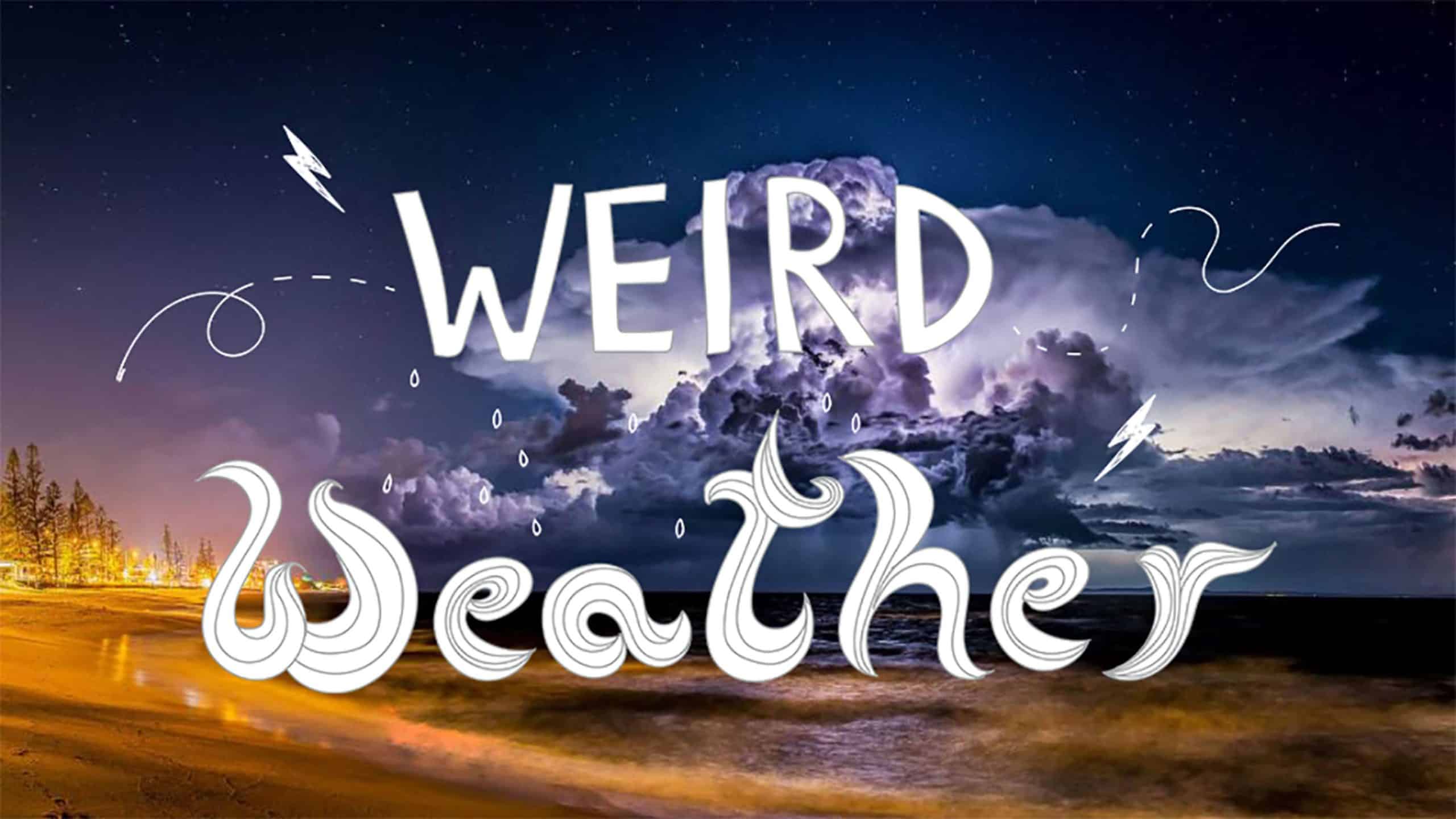
Weird Weather

Nomehagan’s Weather Prognosticator

Estimated reading time: 1 minute, 18 seconds
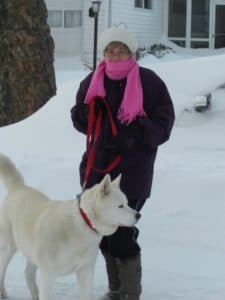
“It looks like we are good until April,” my fellow walker and weather prognosticator said as I petted his dog.

“I can’t beleive we got to the middle of February with only a dusting of snow,” he continued. “I raked my yard over the weekend and started preparing my garden.”

I nodded, and we both continued our walk in opposite directions.


I enjoy being able to walk without ice and snow on the ground, but I am apprehensive about the weird weather that has kept us snow-free.

If we are snow-free, how will it impact the reservoirs?

Is this one weird year or the beginning phase of a new, less human-friendly climate?

As I complete my morning perambulation, I realize that I am overdressed. Having left before sunrise when it was in the mid-thirties, I dressed for the cold. It is now mid-forties and rising.

Jan and I always wanted part of our inheritance to leave our children and grandchildren with a livable world.

All we can leave then now is our eternal love.


The Jan Lilien Education Fund sponsors ongoing sustainability and environmental awareness programs. Gifts made this month; I will match dollar-for-dollar. All donations are tax-deductible.

Subscribe

Contact Us

I receive a commission when you buy a book or product using a link on this page. Thank you for supporting Sharing Jan’s Love blog.


Spring’s First Weeping Willow Tree

Jan and I always found joy in the first sign of Spring.

Those signs could come anytime in an age of weird weather.

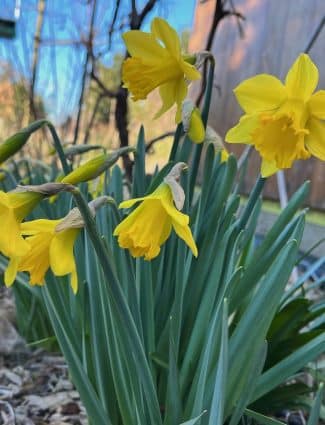
In Springfield and Teaneck, we had flower beds where the first daffodils would burst thru almost frozen ground to find the sun's warmth.

I often found them first but always let Jan be the first to see Spring.

This morning I saw the first yellowish hint in a weeping willow in Cranford despite freezing temperatures.


Show thread (1)

Weird Weather

Four Point Five Degrees Celsius!

Estimated reading time: 1 minute, 18 seconds

Thirty-five days into 2023, my backyard’s temperature has been 8.1 degrees Fahrenheit above normal.

The Paris Agreement established a goal to hold warming to less than 2 degrees Celsius or 3.6 degrees Fahrenheit. Hopefully, our current warming trend will not last. But so far this winter, we have increased by 4.5 degrees Celsius.

Is anyone surprised about the lack of snow
and the weird weather?
No Snow January

My backyard and New York City have gone three hundred twenty-five (325) days since the last measurable snowstorm.

The latest day for the first snow was fifty years ago today.

According to the Gothamist, "50-year-old record for the latest arriving measurable snowfall for a winter season, set on Jan. 29, 1973. If the pattern lasts beyond Feb. 4, it'll be the longest recorded period the city has gone without snow."

Share your thoughts and ideas

This site uses Akismet to reduce spam. Learn how your comment data is processed.

The Jan Lilien Education Fund!

Weird Weather
×
Weird Weather
×
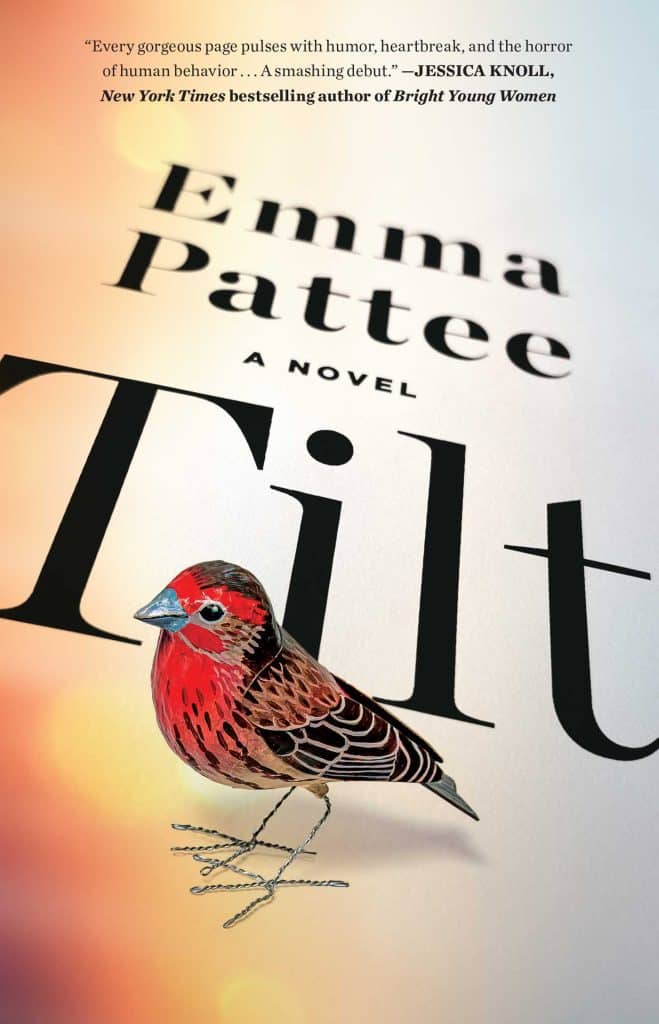
Tilt: A Novel

Read: March 2025

Get this book

Tilt: A Novel by Emma Pattee

by Emma Pattee

Today, I began reading “Tilt: A Novel” by Emma Pattee. Set over a single day, this electrifying debut novel features a potent new literary voice, according to Vogue. It follows one woman’s journey through a transformed city as she grapples with the weight of her past and holds fervent hope for the future. Tilt is a gripping narrative about our disappointments and desires, exploring the lengths we will go to for the people we love.

You and I were safe last night. Your father and I fought in the kitchen, but it felt like another universe.

Annie is nine months pregnant and shopping for a crib at IKEA when a massive earthquake strikes Portland, Oregon. She finds herself navigating a chaotic city without a way to reach her husband, a phone, or money.

As she goes through Portland’s wreckage, Annie encounters human desperation and kindness: strangers offering help, a riot at a grocery store, and an unexpected friendship with a young mother. Throughout her journey, Annie reflects on her struggling marriage, unsatisfying career, and anxiety about becoming a mother. Determined to change her life, she needs to make it home.


Emma Pattee is a climate journalist and fiction writer. Her work has been published in The Atlantic, The New York Times, The Washington Post, The Guardian, and elsewhere. She lives in Oregon.


When you purchase a book through one of my links, I earn a small commission that helps support my passion for reading. This contribution allows me to buy even more books to share with you, creating an incredible cycle of discovering great reads together! Your support truly makes a difference!


×
Stone Yard Devotional: A Novel

Read: February 2025

Get this book

Stone Yard Devotional: A Novel

by Charlotte Wood

Today, I dove into Charlotte Wood‘s captivating novel, “Stone Yard Devotional.” I couldn’t resist picking it up after discovering a glowing review by Joumana Khatib. She expressed her fondness for the book in the New York Times Book Review Newsletter, saying, “I’m still so enamored of Charlotte Wood’s novel.” It’s impressive that this work was a finalist for the Booker Prize last year! I’m eager to read the book to determine if it is a “love story,” as Ms. Khatib believes.

Burnt out and needing a retreat, a middle-aged woman leaves Sydney to return to her childhood home, taking refuge in a small religious community hidden away on the stark plains of rural Australia. She does not believe in God and is unfamiliar with the concept of prayer, finding herself living this strange, reclusive existence almost by accident.

However, her secluded life is disrupted by three significant events. First, a terrible mouse plague marks a new battle against the growing infestation daily. Second, the skeletal remains of a sister who disappeared decades ago and was presumed murdered return. Finally, a troubling visitor brings her further into her past.

Meditative, moving, and finely observed, “Stone Yard Devotional” is a seminal novel from a writer of rare power. It explores the meaning of retreating from the world, forgiveness’s true nature, and grief‘s lasting effects on the human soul.


When you purchase a book through one of my links, I earn a small commission that helps support my passion for reading. This contribution allows me to buy even more books to share with you, creating an incredible cycle of discovering great reads together! Your support truly makes a difference!


×
Enter Ghost

Read: May 2023

Enter Ghost: A Novel

by Isabella Hammad

Isabella Hammad‘s highly anticipated novel, Enter Ghost, takes readers on a unique journey through modern-day Palestine, exploring themes of displacement, diaspora, and the unbreakable bonds of family and shared resistance. Hammad’s passionate and thoughtful writing brings to life a timely and unforgettable story, shedding light on the struggles of artistry under occupation.

The novel follows Sonia Nasir, an actress who returns to Haifa after years away from her family’s homeland to visit her sister, Haneen. However, this is no ordinary trip for Sonia, as it marks her first visit since the second intifada and the deaths of her grandparents. Still recovering from a disastrous love affair and a dissolute marriage, Sonia finds her relationship with Palestine to be fragile, both bone-deep and new.

As opening night approaches, a troupe of Palestinian actors faces numerous violent obstacles. Sonia meets Mariam, a local director who ropes her into a production of Hamlet on the West Bank. She rehearses Gertrude’s lines in classical Arabic and spends more time in Ramallah than in Haifa, working alongside a group of dedicated men from all over historic Palestine. Despite their competing egos and priorities, each group member is united in their desire to bring Shakespeare to that side of the wall. Amidst it all, Sonia has the daunting yet exhilarating possibility of finding a new self in her ancestral home.


The Jan Lilien Education Fund sponsors ongoing sustainability and environmental awareness programs. Gifts made this month; I will match dollar-for-dollar. All donations are tax-deductible.

Subscribe

Contact Us

I receive a commission when you buy a book or product using a link on this page. Thank you for supporting Sharing Jan’s Love blog.


×
A Good Neighborhood

Read: September 2021

Get this book

A Good Neighborhood

by Therese Anne Fowler

A Good Neighborhood by Therese Anne Fowler is a book that was difficult to put down once I started it. A Good Neighborhood is a “gripping contemporary novel that examines the American dream through the lens of two families living side by side in an idyllic neighborhood, throughout one summer that changes their lives irrevocably.”

I selected the book as it focuses, among other issues, on gentrification and environmental degradation. But to say that is what it is about would be a disservice. It also includes a full range of the social issues of our time.

But with little in common except a property line, these two very different families quickly find themselves at odds: first, over an historic oak tree in Valerie’s yard, and soon after, the blossoming romance between their two teenagers. Told from multiple points of view, A Good Neighborhood asks big questions about life in America today ― what does it mean to be a good neighbor? How do we live alongside each other when we don’t see eye to eye? ― as it explores the effects of class, race, and heartrending star-crossed love in a story that’s as provocative as it is powerful.

Ms. Fowler narrates the book. Greek Chorus. By doing this, she ensures that we are part of the story as much as readers.

We need to find answers to the big questions if we are to be good neighbors.

  • What does it mean to be a good neighbor?
  • How do we live alongside each other when we don’t see eye to eye?

The effects of class, race, and heartrending star-crossed love make this a must-read book.

I recommend the book to all readers.

Subscribe

Contact Us

×
Losing Earth: A Recent History

Read: October 2019

Get this book

Losing Earth: A Recent History

by Nathaniel Rich

Losing Earth: A Recent History by Nathaniel Rich reminds us how close we were to halting the climate emergency, and our failure has resulted in our passing the tilting point. The book “reveals, in previously unreported detail, the birth of climate denialism and the genesis of the fossil-fuel industry’s coordinated effort to thwart climate policy through misinformation propaganda and political influence.”

By 1979, we knew nearly everything we understand today about climate change – including how to stop it. Over the next decade, a handful of scientists, politicians, and strategists, led by two unlikely heroes, risked their careers in a desperate, escalating campaign to convince the world to act before it was too late. Losing Earth is their story and ours.

The New York Times Magazine devoted an entire issue to Nathaniel Rich’s groundbreaking chronicle of that decade, which became an instant journalistic phenomenon – the subject of news coverage, editorials, and conversations all over the world. In its emphasis on the lives of the people who grappled with the significant existential threat of our age, it made vivid the moral dimensions of our shared plight.

Losing Earth tells the human story of climate change in even richer, more intimate terms. It reveals, in previously unreported detail, the birth of climate denialism and the genesis of the fossil-fuel industry’s coordinated effort to thwart climate policy through misinformation propaganda and political influence. The audiobook carries the story into the present day, wrestling with the long shadow of our past failures and asking crucial questions about how we make sense of our past, our future, and ourselves.

Like John Hersey’s Hiroshima and Jonathan Schell’s The Fate of the Earth, Losing Earth is the rarest of achievements: a riveting work of dramatic history that articulates a moral framework for understanding how we got here and how we must go forward.

Losing Earth is a must-read book!

Subscribe

Contact Us

×
When We Cease to Understand the World

Read: September 2024

Get this book

When We Cease to Understand the World

by Benjamín Labatut

Today, I began reading When We Cease to Understand the World by Benjamín Labatut, translated by Adrian Nathan West. This book, listed on The New York Times 100 Best Books of the 21st Century, promises to be thought-provoking as it delves into the intricate connections between scientific and mathematical discovery, madness, and destruction.

In a world where scientific advancements often involve ethical dilemmas and societal implications, this book offers a unique perspective on the lives of scientists who have shaped our understanding of the world. Fritz Haber, Alexander Grothendieck, Werner Heisenberg, and Erwin Schrödinger are some of the luminaries whose troubled lives Benjamín Labatut deeply explores in his fictional examination. Labatut shows how these scientists and thinkers grappled with profound questions of existence, experiencing strokes of unparalleled genius, alienating friends and lovers, and descending into isolation and insanity. Their discoveries, some of which significantly improved human life, while others led to chaos and unimaginable suffering, continue to shape our world.

With a breakneck pace and a wealth of disturbing detail, Labatut uses fiction’s imaginative resources to tell the stories of the scientists and mathematicians who expanded our notions of the possible.

×