
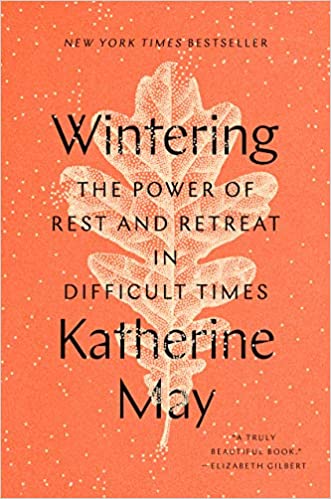
Wintering: The Power of Rest and Retreat in Difficult Times

Estimated reading time: 2 minutes, 7 seconds

Wintering: The Power of Rest and Retreat in Difficult Times by Katherine May is “an intimate, revelatory book exploring the ways we can care for and repair ourselves when life knocks us down.”

Two quotes that resonated with me were:

That’s what grief is – a yearning for that one last moment of contact that would settle everything.

We are in the habit of imagining our lives to be linear, a long march from birth to death in which we mass our powers, only to surrender them again, all the while slowly losing our youthful beauty. This is a brutal untruth. Life meanders through the woods. We have seasons when we flourish and seasons when the leaves fall upon us, revealing our bare bones. Given time they grow again.

May writes in a clear voice that conveys the importance of accepting the cycles of life instead of fighting them.

Sometimes you slip through the cracks: unforeseen circumstances like an abrupt illness, the death of a loved one, a breakup, or a job loss can derail a life. These periods of dislocation can be lonely and unexpected. For May, her husband fell ill, her son stopped attending school, and her own medical issues led her to leave a demanding job. Wintering explores how she not only endured this painful time but embraced the singular opportunities it offered.

A moving personal narrative shot through with lessons from literature, mythology, and the natural world, May’s story offers instruction on the transformative power of rest and retreat. Illumination emerges from many sources: solstice celebrations and dormice hibernation, C.S. Lewis and Sylvia Plath swimming in icy waters, and sailing arctic seas.

Ultimately Wintering invites us to change how we relate to our own fallow times. May models an active acceptance of sadness and finds nourishment in deep retreat, joy in the serene beauty of winter, and encouragement in understanding life as cyclical, not linear. A secular mystic, May forms a guiding philosophy for transforming the hardships that arise before the ushering in of a new season.

I recommend this book without reservation.


The Jan Lilien Education Fund sponsors ongoing sustainability and environmental awareness programs. Gifts made this month; I will match dollar-for-dollar. All donations are tax-deductible.

Subscribe

Contact Us

I receive a commission when you buy a book or product using a link on this page. Thank you for supporting Sharing Jan’s Love blog.


The Jan Lilien Education Fund!

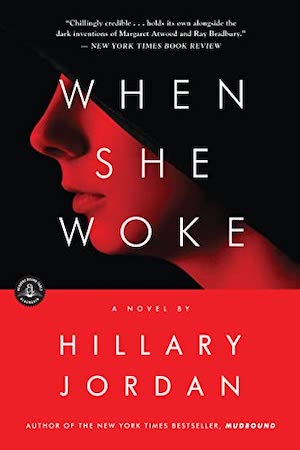
When She Woke

Read: August 2022

Get this book

When She Woke

by Hillary Jordan

When She Woke, a fable about a stigmatized woman struggling to navigate an America of a not-too-distant future by Hillary Jordan, Bellwether Prize WinnerHannah Payne, the protagonist, embarks on a path of self-discovery that forces her to question the values she once held and the righteousness of a country that politicizes faith. The premise of When She Woke seems to be happening as I read the novel. It is also the one hundred books I have read since the beginning of 2019 and the forty-fifth this year.

Hannah Payne, like Hester Prynne, is attacked for her actions by extreme religious beliefs. Instead of wearing a scarlet letter, Hannah’s chroming (i.e., having her skin altered) makes her skin red from head to toe. The chroming might have been a good theme for a science fiction novel. Still, Ms. Jordan has written a captivating book in which Hannah confronts who she is and, after questioning the values she once had, discovers that Hannah is more vital than she believed she could be.

I highly recommend this novel.

As Ms. Jordan describes the book,

Hannah Payne’s life has been devoted to church and family. But after she’s convicted of murder, she awakens to a nightmare: she finds herself lying on a table in a solitary confinement cell, her skin turned bright red. Cameras are broadcasting her every move to millions at home, for whom observing newly made “Chromes”—criminals whose skin color has been genetically altered to reflect their crime—is a sinister form of entertainment. Hannah is a Red, a murderess. The victim, says the state of Texas, was her unborn child, and she’s determined to protect the identity of the father, a public figure with whom she shared a fierce and forbidden love.

A powerful reimagining of The Scarlet Letter, When She Woke is a timely fable about a stigmatized woman struggling to navigate a dystopian America. In this not-too-distant future, the line between church and state has been eradicated and convicted felons are no longer imprisoned, but “chromed” and released back into the population to survive as best they can.

As she seeks a path to safety in an alien and hostile world, Hannah unknowingly embarks on a journey of self-discovery that forces her to question the values she once held true and the righteousness of a country that politicizes faith and love.


The Jan Lilien Education Fund sponsors ongoing sustainability and environmental awareness programs. All donations are tax-deductible.

Subscribe

Contact Us

I receive a commission when you buy a book or product using a link on this page. Thank you for supporting Sharing Jan’s Love blog.
×
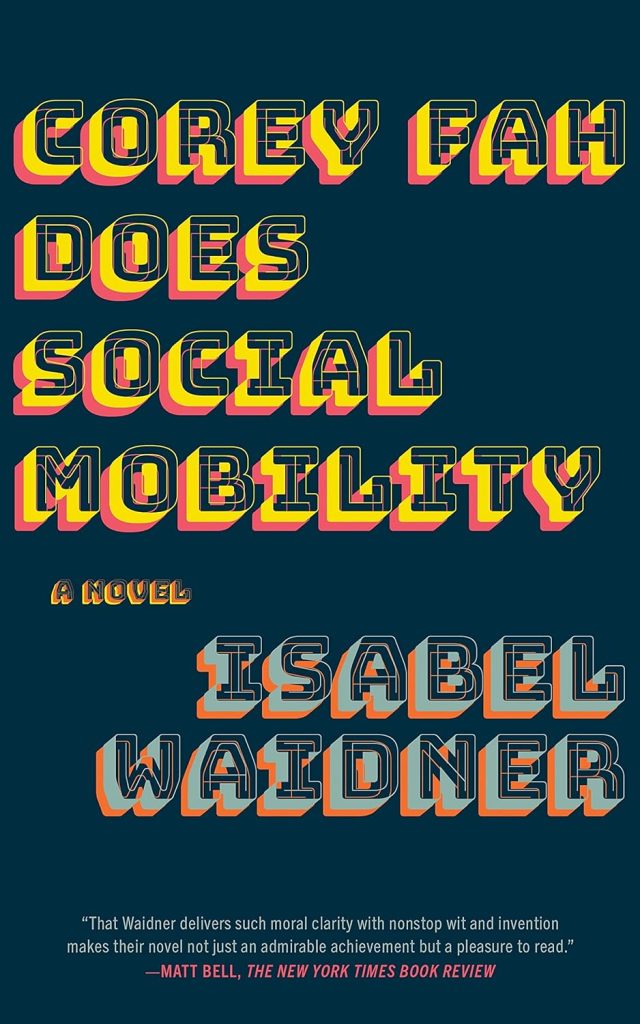
Corey Fah Does Social Mobility

Read: February 2024

Get this book

Corey Fah Does Social Mobility

by Isabel Waidner

Today, I began reading “Corey Fah Does Social Mobility: A Novel” by Isabel Waidner. The book is about Corey Fah, a writer whose novel has just won the Fictionalization of Social Evils prize. Despite this achievement, the trophy and funds with the award still need to be in reach. The novel celebrates radical queer survival and challenges false notions of success.

Corey, their partner Drew, and their pet spider, Bambi Pavok, embark on a quest to find an elusive trophy with neon-beige color and UFO-like qualities. This journey takes them back to their childhood in the forest and includes a stint on a reality TV show. While facing the horrors of wormholes and time loops, Corey discovers the difference between a prize and a gift in a complex way.

Following the Goldsmiths Prize–winning Sterling Karat Gold, Isabel Waidner’s bold and buoyant new novel is about coming into one’s own, the labor of love, the tendency of history to repeat itself, and what ensues when a large amount of cultural capital is suddenly deposited in a place it has never been before.

×
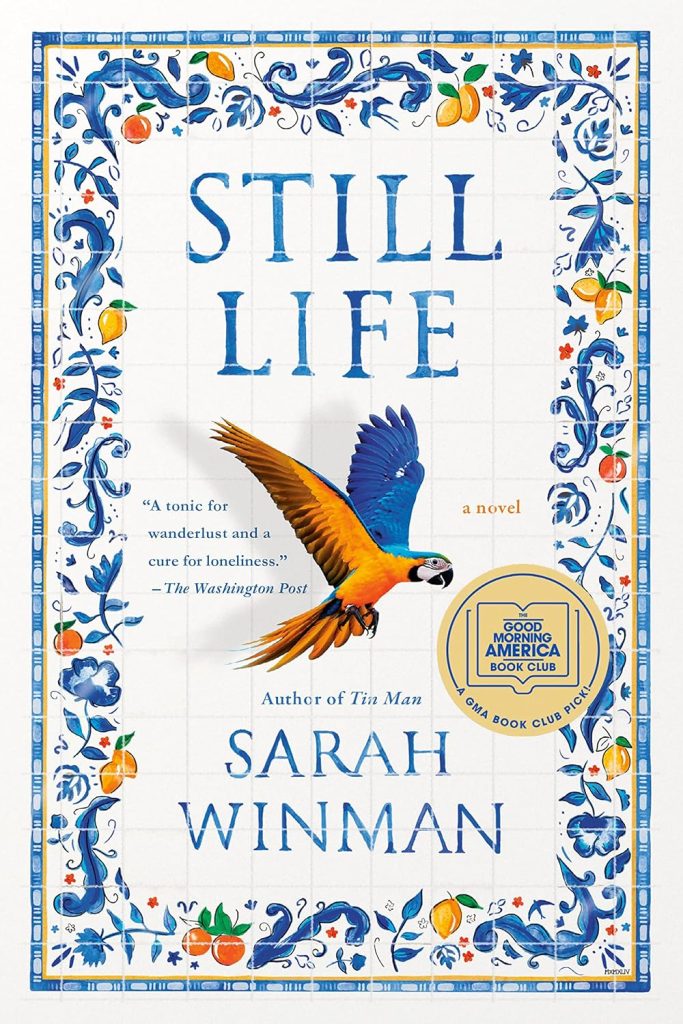
Still Life: A GMA Book Club Pick: A Novel

Read: January 2025

Get this book

Still Life: A Novel

by Sarah Winman

I began reading “Still Life,” a GMA Book Club pick by Sarah Winman. This captivating and bighearted novel weaves a rich tapestry of stories about people connected by love, war, art, flood, and the ghost of E.M. Forster. Kristen V. Brown, in The Atlantic Magazine’s Culture Survey, describes “Still Life” as the best novel she has recently read and considers it the best nonfiction work.

In Tuscany in 1944, as Allied troops advance and bombs fall around deserted villages, a young English soldier, Ulysses Temper, finds himself in the wine cellar of an abandoned villa. There, he encounters Evelyn Skinner, a middle-aged art historian who has come to Italy to salvage paintings from the ruins and recall long-forgotten memories of her youth. In each other, Ulysses and Evelyn find a kindred spirit amidst the rubble of war-torn Italy and set off on a course of events that will shape Ulysses’s life for the next four decades.

As Ulysses returns home to London, reimmersing himself in his crew at The Stoat and Parot—a motley mix of pub crawlers and eccentrics—he carries his time in Italy. And when an unexpected inheritance brings him back to where it all began, Ulysses knows better than to tempt fate and returns to the Tuscan hills.

With beautiful prose, extraordinary tenderness, and bursts of humor and light, Still Life is a sweeping portrait of unforgettable individuals who come together to make a family and a deeply drawn celebration of beauty and love in all its forms.


When you purchase a book through one of my links, I earn a small commission that helps support my passion for reading. This contribution allows me to buy even more books to share with you, creating an incredible cycle of discovering great reads together! Your support truly makes a difference!


×
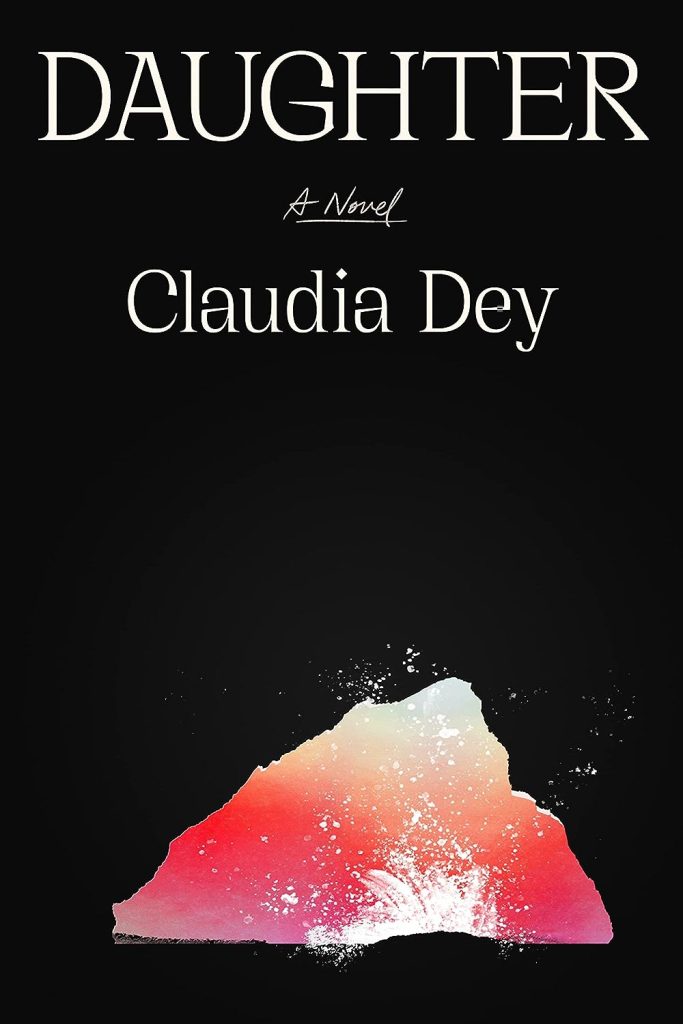
Daughter: A Novel

Read: September 2023

Get this book

Daughter: A Novel

by Claudia Dey

I started reading “Daughter: A Novel” by Claudia Dey today. According to Mona Dean, to be loved by your father is to be loved by God. Mona is a playwright, actress, and daughter of a man who is famous for a great novel. However, her father’s needs and insecurities significantly impact the women in his family, including Mona, her sister, her half-sister, and their mothers.

Mona’s father’s infidelity shattered her childhood, causing her to be in opposition to her stepmother, who also suffered from his actions. Mona’s father begins a new affair, and he confides in her. She enjoys his attention painfully and parasitically. When he confesses to his wife, Mona is blamed for the disruption, punished for her father’s actions, and kicked out of the family.

Mona’s life is chaotic, and she struggles to regain stability. Only when she experiences a profound and defining loss does she begin to replace absent love with real love? Pushed to the brink, she must decide how she wants to live, what Mona needs to say, and the risks she’s willing to take to say it.

Claudia Dey provides penetrating insight and devilish humor to chronicle our most intimate lives in “Daughter.” It’s an obsessive and blazing examination of the forces that drive us to become, create, and break free.

×
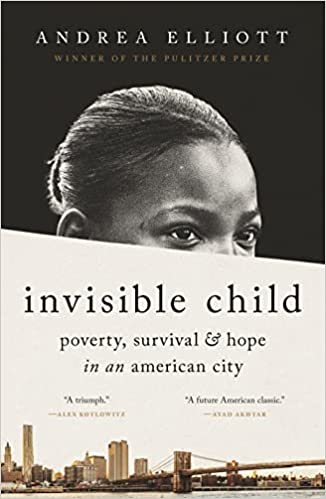
Invisible Child

Read: December 2021

Get this book

Invisible Child: Poverty, Survival & Hope in an American City

by Andrea Elliott

Invisible Child: Poverty, Survival & Hope in an American City by Andrea Elliott was a gift from my son Jon. The New York Times selected “Invisible Child” as one of the best books published this year. It is indeed one of the top books on my all-time list.

GoodReads summary provides a good overview,

The riveting, unforgettable story of a girl whose indomitable spirit is tested by homelessness, poverty, and racism in an unequal America—from Pulitzer Prize-winning journalist Andrea Elliott of The New York Times

Invisible Child follows eight dramatic years in the life of Dasani Coates, a child with imagination as soaring as the skyscrapers near her Brooklyn homeless shelter. Born at the turn of a new century, Dasani is named for the bottled water that comes to symbolize Brooklyn’s gentrification and the shared aspirations of a divided city. As Dasani grows up, moving with her tight-knit family from shelter to shelter, this story goes back to trace the passage of Dasani’s ancestors from slavery to the Great Migration north. When Dasani comes of age, New York City’s homeless crisis explodes as the chasm deepens between rich and poor.

In the shadows of this new Gilded Age, Dasani must lead her seven siblings through a thicket of problems: hunger, parental drug addiction, violence, housing instability, segregated schools, and the constant monitoring of the child-protection system. When, at age thirteen, Dasani enrolls at a boarding school in Pennsylvania, her loyalties are tested like never before. As she learns to “code switch” between the culture she left behind and the norms of her new town, Dasani starts to feel like a stranger in both places. Ultimately, she faces an impossible question: What if leaving poverty means abandoning the family you love?

By turns heartbreaking and revelatory, provocative and inspiring, Invisible Child tells an astonishing story about the power of resilience, the importance of family, and the cost of inequality. Based on nearly a decade of reporting, this book vividly illuminates some of the most critical issues in contemporary America through the life of one remarkable girl.

Jan and I were involved and knew that child poverty and homelessness needed repair. In addition, Jan lived on Washington Park across from Ft. Greene Park in 1974-75. We knew the neighborhood where much of the book’s story takes place. 

Before meeting Jan in 1973, I was both a community/tenant organizer and a youth worker. In the latter role, I made weekly hostel trips for eight to ten young boys from East Williamsburg during 1973. The trips were the first the boys had ever been outside of their neighborhood.

Many of them had imaginations like Dasani. They also had her instinct to fight. One of my first tasks was to check for any weapons.

Decades later, when I would see any of them, now adults, they would ask when we were going on another trip. I wish I had met Jan when I made those trips. She would have helped me improve them and document the impact. If I could re-write history, I would have her join me as the second adult on the hostel trips.

After that summer, it was clear my primary skills were as a community/tenant organizer. Over the next few years, my work focused on creating affordable and supportive housing.

Jan and I did meaningful work that made a difference, yet the need for a permanent solution to the crisis remains. The book highlights the crucial role of resilience, the importance of family, and the cost of inequality. As a nation, we cannot undermine those values by breaking up families, impeding resilience, and maintaining racial and economic inequality. 

The current debate in Washington over the Build Back Better legislation needs to focus not on how much we spend but on its impact on children and families

David Brooks, a conservative commentator, has supported these expenditures for what they can do to address this country’s cultural and economic crisis. 

These packages say to the struggling parents and the warehouse workers: I see you. Your work has dignity. You are paving your way. You are at the center of our national vision.

This is how you fortify a compelling moral identity, which is what all of us need if we’re going to be able to look in the mirror with self-respect. This is the cultural transformation that good policy can sometimes achieve. Statecraft is soulcraft.

If you can only read one book this year, this is the one to read. Child poverty, homelessness, and inequality impact all of us. Ending child poverty and homelessness will make us a healthier and more inclusive nation. It is time for a compelling moral call to action!

Subscribe

Contact Us

When you buy a book or product using a link on this page, I receive a commission. Thank you for supporting Sharing Jan’s Love blog.
×
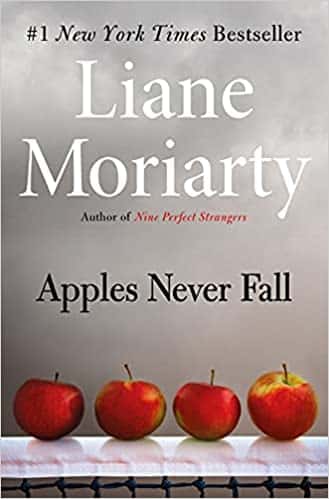
Apples Never Fall

Read: January 2022

Get this book

Apples Never Fall

by Liane Moriarty

Apples Never Fall by Liane Moriarty is a novel that looks at marriage, siblings, and how the people we love the most can hurt us the deepest. The Delaney family love one another dearly—it’s just that sometimes they want to murder each other.

If your mother was missing, would you tell the police? Even if the most obvious suspect was your father? The four grown Delaney siblings face this dilemma.

This book is a page-turner. With all of the characters having issues unrelated to their mission mother, they have a life with many mysteries and rivalries. I sometimes wanted to know more about their lives instead of the missing mum.

Although I will not reveal the conclusion, it is clear how a missing parent could appear to be the crime of the century.

According to Goodreads,

The Delaneys are fixtures in their community. The parents, Stan and Joy, are the envy of all of their friends. They’re killers on the tennis court, and off it, their chemistry is palpable. But after fifty years of marriage, they’ve finally sold their famed tennis academy and are ready to start what should be the golden years of their lives. So why are Stan and Joy so miserable?

The four Delaney children―Amy, Logan, Troy, and Brooke―were tennis stars in their own right, yet as their father will tell you, none of them had what it took to go all the way. But that’s okay, now that they’re all successful grown-ups. In addition, there is the beautiful possibility of grandchildren on the horizon.

One night a stranger named Savannah knocks on Stan and Joy’s door, bleeding after a fight with her boyfriend. The Delaneys are more than happy to give her the small kindness she sorely needs. If only that were all, she wanted.

Later, when Joy goes missing and Savannah is nowhere to be found, the police question the one person who remains: Stan. But for someone who claims to be innocent, he, like many spouses, seems to have a lot to hide. Two of the Delaney children think their father is innocent. Two are not so sure―but as the two sides square off against each other in perhaps their most important match ever, all of the Delaneys will start to reexamine their shared family history in a very new light.

I recommend this book.

Subscribe

Contact Us

When you buy a book or product using a link on this page, I receive a commission. Thank you for supporting Sharing Jan’s Love blog.
×