

Three Years and Three Months of Walking

Three Years and Three Months of Walking

A Journey of Personal Growth and Unyielding Resilience!

Estimated reading time: 2 minutes, 1 second

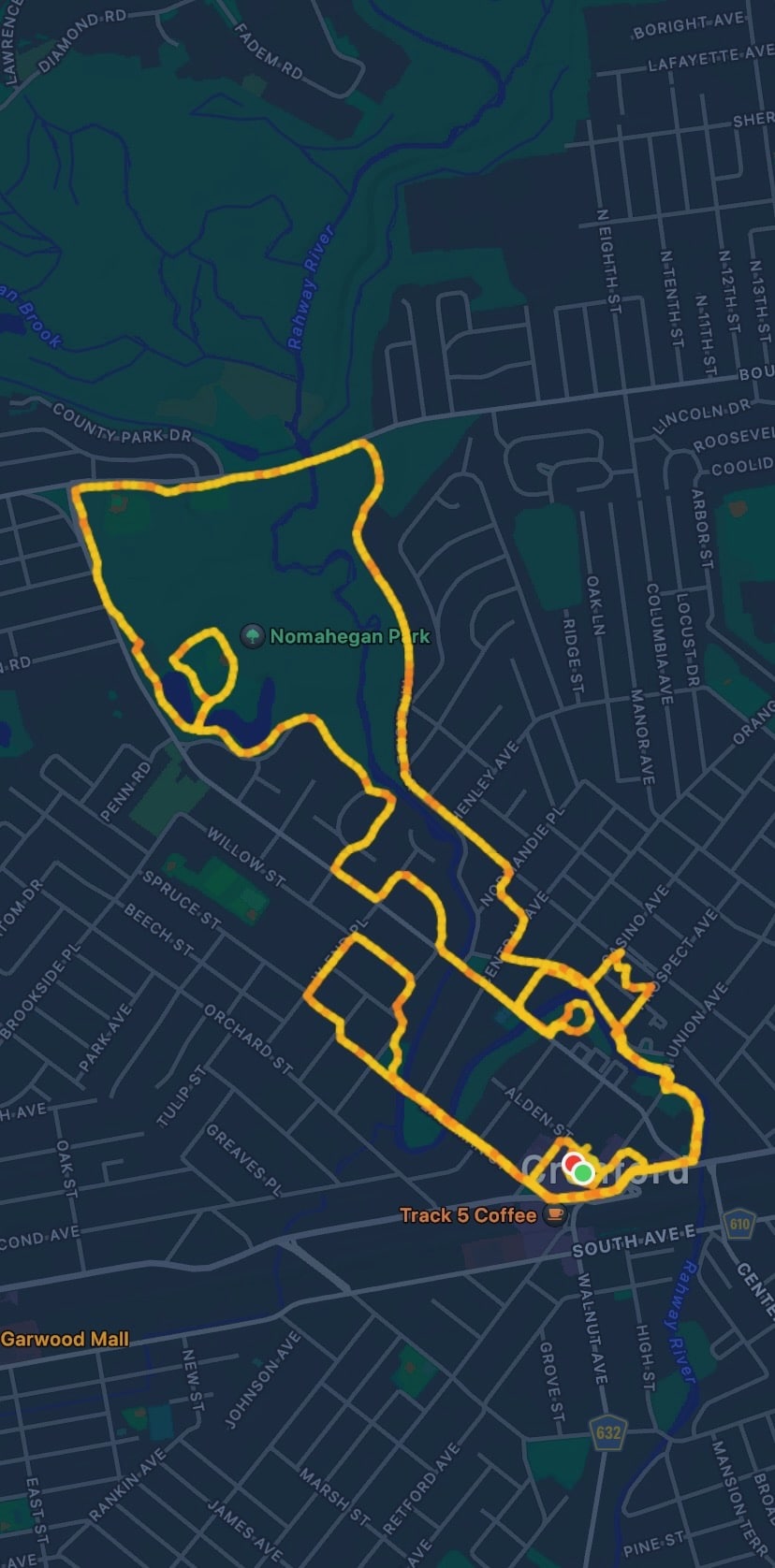
As I was trimming my toenails last week, a sudden, stabbing pain shot through my lower right back, catching me by surprise. It was reminiscent of the same intense pain I had experienced on the Friday morning before my wife’s last hospital visit. Each time, the pain in my back far exceeded the level when asked by the nurse on a scale from one to ten. This recent episode warranted a ten plus on that scale. To manage the discomfort, I resorted to using lidocaine patches, although applying them to the hard-to-reach area of my back proved to be quite a challenge. I wish the company producing these patches would offer a discount to older individuals living independently, as I discard about half of them due to this difficulty. Regardless of these hurdles, I remain committed to my daily walks, covering a distance of 7 to 8 miles every morning. However, enduring prolonged periods of sitting has proven to be quite trying.
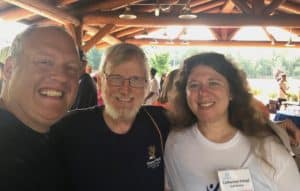
This morning, I marked my 1188th consecutive day of walking, three years and three months since the morning after the funeral. As I look back on that first-morning walk, I’m amazed by the unexpected, unguided journey it has become. It’s about more than just physical activity or connecting with the natural world. Unlike believing every journey must have a clear destination, I’ve always wandered. I roam along paths, wondering if I’ve been on them before, with no specific endpoint in mind as long as I ultimately make my way home. It’s a symbolic expression of my emotional journey, exploring the mysterious future ahead.

Lately, I’ve been experiencing noticeable changes in my physical and emotional well-being. I’ve observed a decrease in my weight and an increase in my energy levels. According to my annual check-ups, my blood pressure is consistently within the normal range, which is reassuring. Moreover, I’ve encountered new companions during my walks, and I feel more resilient and less burdened by anxiety.

While I’ve managed to overcome grief, I’ve also learned to allow myself moments of respite. Despite living alone, I’ve found a community among my cousins that gives me a sense of belonging and a reliable support system, making it easier to face the challenges of solitary living. Sometimes, I wonder if I’ve become a better version of myself or if I’m deceiving myself.
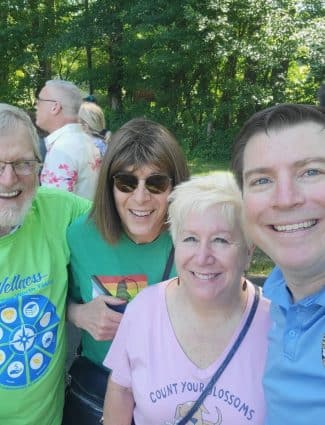
A Journey Worth Taking

We have been blessed with the incredible gifts of hearing, embracing, and walking into the future. I am dedicated to fearlessly approaching the future with determination, cherishing every moment, and striving to become the best version of myself.

6 comments add your comment

Share your thoughts and ideas

This site uses Akismet to reduce spam. Learn how your comment data is processed.

The Jan Lilien Education Fund!

Three Years and Three Months of Walking
×
The Field of Blood: Violence in Congress and the Road to Civil War

Read: March 2019

Get this book

The Field of Blood

by Joanne B. Freeman

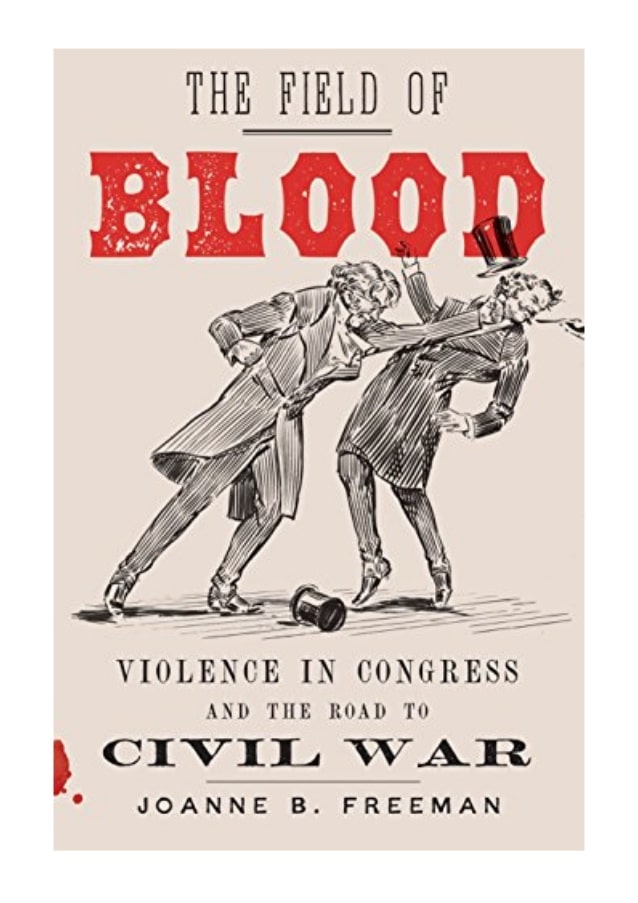
The Field of Blood: Violence in Congress and the Road to Civil War by Joanne B. Freeman, Professor of History and American Studies at Yale University, is a must-read in our hyper-partisan times. The partisanship and divisiveness of the period before the Civil War have many parallels to our time, and the difference is the violence of the Civil War era. Professor Freeman recovers the long-lost story of physical violence on the floor of the U.S. Congress.

She can do this by first source materials from Benjamin Brown French. He was never elected to office but was an acquaintance of twelve consecutive presidents, from Andrew Jackson to Ulysses S. Grant. In addition, he maintained a diary for forty years that highlighted the violence and his and the nation’s political transformation.

During much of this period, he was the Clerk in the House.  His diary documents the violence that did not get covered by the press. Legislative sessions included mortal threats, canings, flipped desks, and all-out slugfests. When debate broke down, members of Congress drew pistols and waved Bowie knives. One representative even killed another in a duel. Many were beaten and bullied in an attempt to intimidate them into compliance, particularly on the issue of slavery.

The Field of Blood is one of four books I purchased after my first One Day University class.

Subscribe

Contact Us

×
Let Us Descend: A Novel

Read: November 2023

Get this book

Let Us Descend: A Novel

by Jesmyn Ward

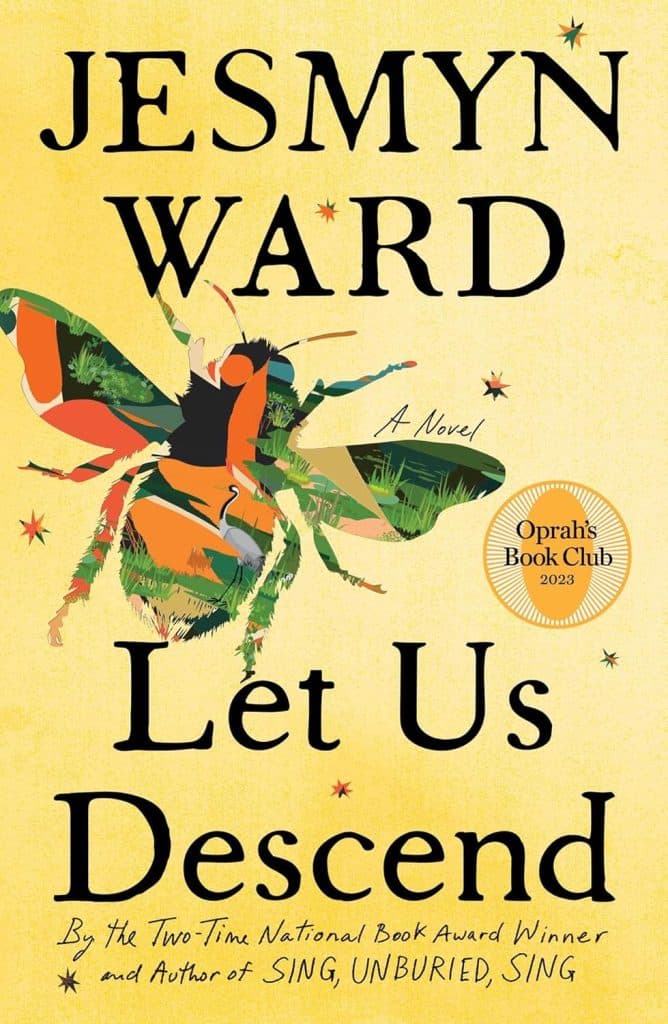
Today, I started reading Let Us Descend: A Novel by Jesmyn Ward. She is a two-time National Book Award winner, the youngest winner of the Library of Congress Prize for American Fiction, and a MacArthur Fellow. The book is a haunting masterpiece that is sure to become an instant classic. It tells the story of an enslaved girl in the years before the Civil War.

The book’s title is from Dante Alighieri’s Inferno: “‘Let us descend,’ the poet now began, ‘and enter this blind world.” Let Us Descend is a reimagining of American slavery, beautifully rendered yet heart-wrenching. The novel takes us on a journey from the rice fields of the Carolinas to the slave markets of New Orleans and into the fearsome heart of a Louisiana sugar plantation.

Annis is the reader’s guide through this hellscape, sold south by the white enslaver who fathered her. As Annis struggles through the miles-long march, she turns inward, seeking comfort from memories of her mother and stories of her African warrior grandmother. Throughout the journey, she opens herself to a world beyond this world, one teeming with spirits: of earth and water, of myth and history, spirits who nurture and give, and those who manipulate and take. While Ward leads readers through the descent, this, her fourth novel, is ultimately a story of rebirth and reclamation.

Let Us Descend is a magnificent novel that inscribes Black American grief and joy in the very land of the American South. Ward’s writing takes you through the rich but unforgiving forests, swamps, and rivers of the South, making this novel a masterwork for the ages.


The Jan Lilien Education Fund sponsors ongoing sustainability and environmental awareness programs. Gifts made this month; I will match dollar-for-dollar. All donations are tax-deductible.

Subscribe

Contact Us

I receive a commission when you buy a book or product using a link on this page. Thank you for supporting Sharing Jan’s Love blog.


×
The Book of I

Read: October 2025

Get this book

The Book of I: A Novel

by David Greig

The Book of I” by David Greig is a remarkable debut novel from Scotland, shortlisted for both the Highland Book Prize and the Bookmark Book Festival Book of the Year. This unique work offers a philosophical exploration of themes such as guilt, redemption, humanity, love, and the beliefs we hold dear. Told with humor and enhanced by sharply vivid dialogue, David Greig skillfully bridges the gap between our contemporary world and the past.

Set in the year 825 CE, the story unfolds in the aftermath of a brutal attack by northern raiders, leaving an unlikely trio as the sole survivors on a remote Scottish island. The survivors include Brother Martin, a young monk who is the only member of the local monastery to escape martyrdom; Una, a beekeeper and mead maker who has freed herself from her violent husband during the chaos; and Grimur, an aging Norseman who digs himself out of a makeshift grave where his fellow raiders had left him, believing him to be dead.

As the seasons change in this wild and isolated environment, their initial distrust of one another evolves into a complex exploration of the distances and connections among them. “The Book of I” is a unique novel that serves as a philosophical commentary on guilt, redemption, humanity, love, and the beliefs we choose to embrace.


David Greig is a renowned Scottish writer whose plays have been performed extensively across the UK and internationally. His notable works for the theatre include The Strange Undoing of Prudencia Hart, Touching the Void, Midsummer, The Events, Charlie and the Chocolate Factory, Local Hero, and Macbeth (also known as Dunsinane). He served as the Artistic Director of Edinburgh’s Lyceum Theatre from 2015 to 2025. The Book of I marks his debut novel.


Discover your next favorite book and dive into a world of curated, exciting reads by purchasing through my links. You’ll have access to a diverse selection of books that I’ve personally vetted to ensure quality and enjoyment. Additionally, by supporting these selections, you’ll help me continue to provide you with more personalized recommendations. I earn a small commission from your purchase, which allows me to buy and share even more books with you. Your support truly makes a difference!


×
Worry: A Novel

Read: May 2024

Get this book

Worry: A Novel

by Alexandra Tanner

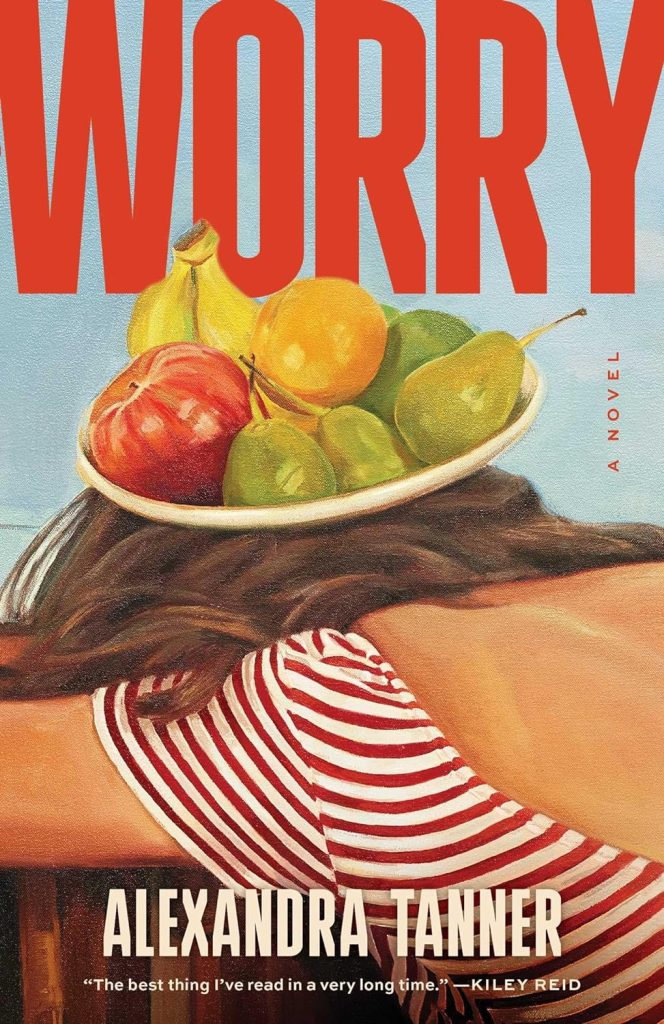
Today, I began reading Alexandra Tanner‘s debut novel, Worry: A Novel. The New Yorker praised it as “dryly witty,” The New York Times Book Review called it “fabulously revealing.” The story follows two siblings-turned-roommates who try to navigate an absurd world on the verge of calamity. It explores existentialism and sisterhood in a Seinfeldian style.

In March 2019, Jules Gold, a 28-year-old woman, felt anxious, frustrated with her art, and addicted to the internet. She lives alone in the apartment she used to share with her ex-fiancé. Her younger sister Poppy unexpectedly comes to stay with her indefinitely. Poppy, who attempted suicide a year and a half ago, is looking for work and purpose in Brooklyn. Meanwhile, Jules spends her days scrolling through the feeds of Mormon mommy bloggers and waiting for something to happen in her life.

Poppy’s hives, which she has had since childhood, flare up again. Jules has health problems with her uterus. Poppy adopts a poorly behaved-rescue dog named Amy Klobuchar. Poppy’s mother, who recently became a devout Messianic Jew, starts believing in the same deep-state conspiracy theories as Jules’ online mommies. Jules half-heartedly tries to find the source of her ennui and cruelly blames Poppy for not being a good enough friend, writer, or sister. As the year progresses and a new decade approaches, a disastrous trip back to Florida forces Jules and Poppy to question their futures and whether they want to spend them together or apart.

Worry is a darkly funny and deadpan portrayal of two sisters struggling through anxiety and uncertainty in America. A bold new voice in contemporary fiction writes it.

×
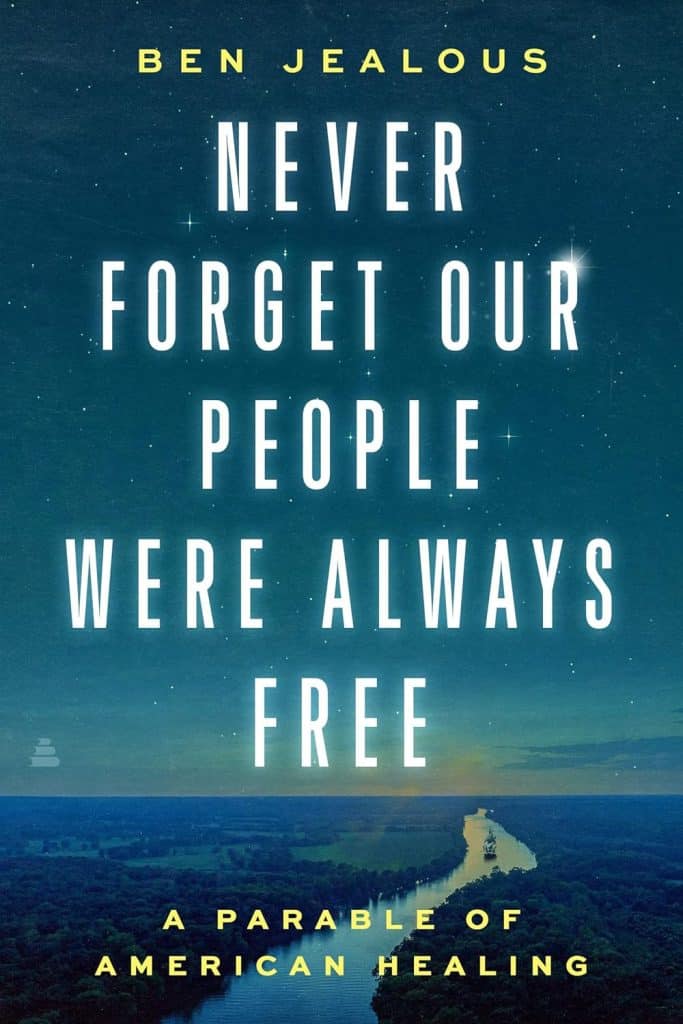
Never Forget Our People Were Always Free

Read: March 2024

Get this book

Never Forget Our People Were Always Free

by Ben Jealous

Today, I started reading “Never Forget Our People Were Always Free: A Parable of American Healing” by Ben Jealous, the Executive Director of the Sierra Club. The book highlights how the path to healing America’s broken heart begins with each of us having the courage to heal ourselves. According to Mr. Jealous, it would be transformative if every American treated each other as cousins.

Ben Jealous is the son of parents who had to leave Maryland because their cross-racial marriage was illegal.

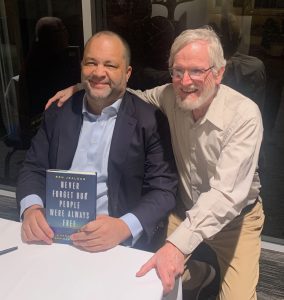
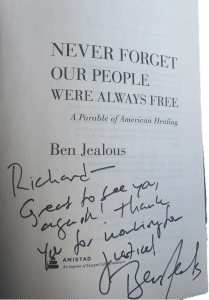
I briefly met Ben Jealous last May when I went to Washington with the Religious Action Center of Reform Judaism‘s Day of Action. When I saw Mr. Jealous speaking at Temple Emanu-El in neighboring Westfield, I immediately signed up to attend in person. He is an inspiration as an advocate for the environment, civil rights, and the healing of America’s broken heart.

His lively, courageous, and empathetic storytelling calls on every American to look past deeply cut divisions and recognize that we are all in the same boat now. Along the way, Jealous grapples with hidden American mysteries, including:

  • Why do white men die from suicide more often than black men die from murder?
  • How did racial profiling kill an American president?
  • What happens when a Ku Klux Klansman wrestles with what Jesus said?
  • How did Dave Chappelle know the DC Snipers were Black?
  • Why shouldn’t the civil rights movement give up on rednecks?
  • When is what we have collectively forgotten about race more important than what we know?
  • What do the most indecipherable things our elders say tell us about ourselves?

The book Never Forget Our People Were Always Free is told through parables. It features intimate glimpses of political and faith leaders such as Jack Kemp, Stacey Abrams, and the late Archbishop Desmond Tutu. The book also highlights unlikely heroes such as a retired constable, a female pirate from Madagascar, a long-lost Irishman, a death row inmate, and a man with a Confederate flag over his heart.
Never Forget Our People Were Always Free offers readers hope that America’s oldest wounds can heal and her oldest divisions can be overcome.

Although I have only read a handful of pages of the book, I highly recommend it!

×
Old Babes in the Wood: Stories

Read: March 2023

Get this book

Old Babes in the Wood: Stories

by Margaret Atwood

Old Babes in the Wood: Stories by Margaret Atwood is a collection of remarkable tales, which delight, illuminate, and are quietly devastating. I especially found the stories about Nell and Tig compelling and engaging. Widow describes a letter Nell almost wrote to a friend after Tig is gone. Nell sounded like me when she said, “the warping or folding of time. In some parts of this refolded time, Tig still exists, as much as he ever did.”

The letter Nell is writing to a friend she will never be sent because it speaks to the harsh reality that grief imposes upon us.

Margaret Atwood writes as Nell,

Have I gone into the dark tunnel, dressed in mourning black with gloves and a veil, and come out the other end, all cheery and wearing bright colors and loaded for bear?

No. Because it’s not a tunnel. There isn’t any other end. Time has ceased to be linear, with life events and memories in a chronological row, like beads on a string. It’s the strangest feeling, or experience, or rearrangement. I’m not sure I can explain it to you.

As much as it might have appeared that I was in a dark tunnel after Jan died, I was not and am not now. There is indeed no defined end to the grief journey.

We all must learn how to live without our loved ones. The pathway I have chosen may not work for anyone else.

The earlier Nell and Tig stories are memories about their lives, reminding me of how I wrote about how Jan and I met and eventually married.

I have always enjoyed reading Atwood‘s writing, including The Handmaid’s Tale and The Testaments. I highly recommend Old Babes in the Wood: Stories by Margaret Atwood!

Old Babes in the Wood was my twenty-third book of the year and fulfilled my Goodreads 2023 Reading Challenge, but it will not end my reading this year. 

The Goodreads summary provides an overview,

Margaret Atwood has established herself as one of the world’s most visionary and canonical authors. This collection of fifteen extraordinary stories–some of which have appeared in The New Yorker and The New York Times Magazine–explores the full warp and weft of experience, speaking to our unique times with Atwood’s characteristic insight, wit, and intellect.

The two brave sisters of the title story grapple with loss and memory on a perfect summer evening; “Impatient Griselda” explores alienation and miscommunication with a fresh twist on a folkloric classic; and “My Evil Mother” touches on the unbelievable, examining a mother-daughter relationship in which the mother purports to be a witch. At the heart of the collection are seven extraordinary stories that follow a married couple across the decades, the moments big and small that make up a long life of uncommon love–and what comes after.


The Jan Lilien Education Fund sponsors ongoing sustainability and environmental awareness programs. Gifts made this month; I will match dollar-for-dollar. All donations are tax-deductible.

Subscribe

Contact Us

I receive a commission when you buy a book or product using a link on this page. Thank you for supporting Sharing Jan’s Love blog.


×