
Counting My Blessings

The Importance of a Place to Call Home!

Where We Live Shapes Who We Are!

Estimated reading time: 1 minute, 39 seconds
Counting My Blessings

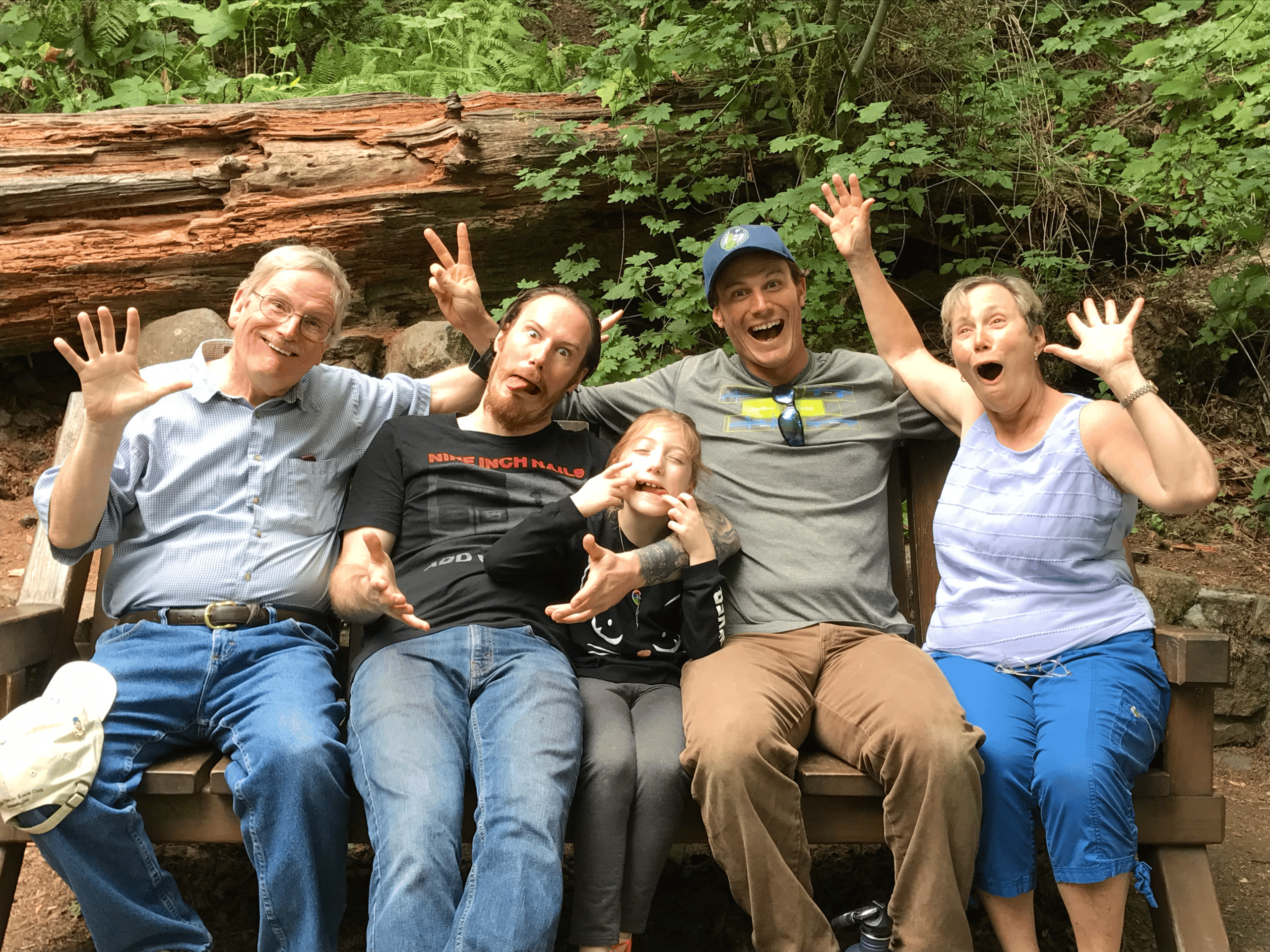
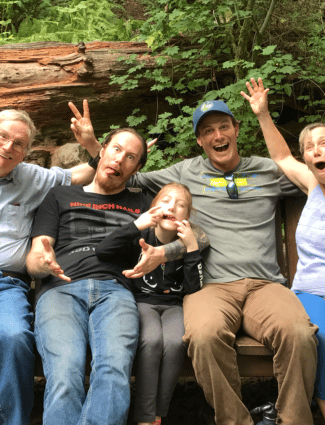
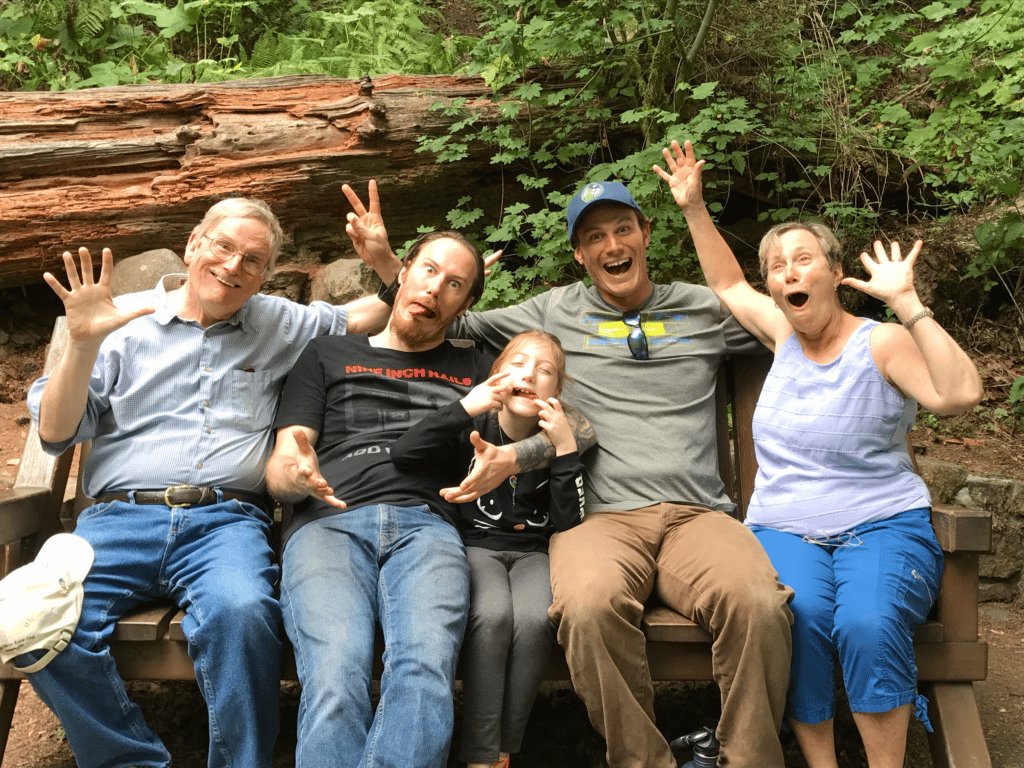
My Family Having Fun

Growing up, I realized the importance of having a place to call home. My family lived in the same house when I was a child. Although we briefly lived in another home for two years while saving to buy our permanent residence, I was too young to remember that house. After completing my studies at university, my parents relocated multiple times to find the most suitable place for their retirement.

Dedicated to helping others achieve their dream of owning a home, I have contributed to constructing and strengthening communities throughout my career. However, I’ve also lived a nomadic lifestyle, moving from place to place until I became a widow and realized the significance of location and our responsibilities to each other.

As a widow, I’ve discovered that my place of residence has become essential in managing my grief. I’ve actively enhanced my community as a tribute to my late partner, Jan’s love. Volunteering and making new friends have made me a vital part of a thriving community. Our place of residence shapes who we are and how we live, and I’m becoming stronger one day at a time, with my grief gradually fading away.

While no place is perfect, we must work together to improve our homes for future generations. The opening night performance of Eisenhower: This Piece of Ground reminded me of the work we must do to leave our homes in better condition for those who will call it their own.


The Jan Lilien Education Fund sponsors ongoing sustainability and environmental awareness programs. Gifts made this month; I will match dollar-for-dollar. All donations are tax-deductible.

Subscribe

Contact Us

I receive a commission when you buy a book or product using a link on this page. Thank you for supporting Sharing Jan’s Love blog.


Discovering Life’s Secret Sauce

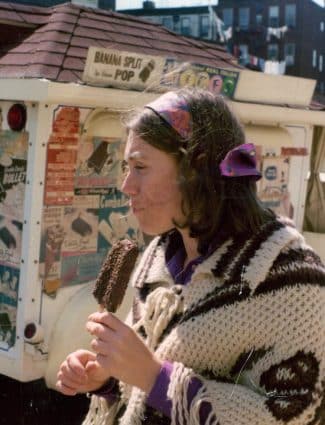
Jan requested that I prepare Matzoh Brie for her in her final days. I was unfamiliar with the recipe, but Jan kindly wrote it down. Following my grandmother's advice, I added a generous amount of love while preparing it. This addition made the Matzoh Brie exceptional, and Jan couldn't stop complimenting it as the most delicious meal she had ever eaten..

Even after Jan's death, her love continues to inspire me. I can overcome challenges with confidence and grace by following her passion for life and infusing everything I do with her love.

Show thread (1)

Eisenhower: This Piece of Ground

Where We Live Shapes Who We Are!

Estimated reading time: 1 minute, 39 seconds

The promotional clip for Eisenhower: This Piece of Ground.

Share your thoughts and ideas

This site uses Akismet to reduce spam. Learn how your comment data is processed.

The Jan Lilien Education Fund!

Counting My Blessings
×
The Hidden Life of Trees

Read: August 2021

Get this book

The Hidden Life of Trees

by Peter Wohlleben

The Hidden Life of Trees: What They Feel, How They Communicate ― Discoveries from A Secret World is a book I have wanted but had not had the time to read. In July of this year, when I was still in the early stages of my recovery journey, I talked to a friend of my wife’s (whom I now count as my friend) about our plans to plant a tree in Hanson Park.

As I talked about our plans, my friend suggested I read this book as it would help me understand the importance of trees. I will forever be grateful for her recommendation, as it made me read this book sooner than later.

To read that trees have a social network with more prominent, healthier trees concerned about the smaller, weaker ones. How is it that humans, a supposedly advanced species, have a social network that divides and weakens our community?

Are trees social beings? In The Hidden Life of Trees forester and author Peter Wohlleben convincingly makes the case that, yes, the forest is a social network. He draws on groundbreaking scientific discoveries to describe how trees are like human families: tree parents live together with their children, communicate with them, support them as they grow, share nutrients with those who are sick or struggling, and even warn each other of impending dangers. Wohlleben also shares his deep love of woods and forests, explaining the amazing processes of life, death, and regeneration he has observed in his woodland.

Having read this book, I am more sensitive to trees and have enjoyed my walks more than ever. In addition, when we plant Jan’s tree in Hanson Park, I will now have even more reasons to talk about the importance of trees to Jan, myself, and the community.

Subscribe

Contact Us

×
Birnam Wood: A Novel

Read: March 2023

Get this book

Birnam Wood: A Novel

by Eleanor Catton

Birnam Wood: A Novel by Eleanor Catton is a gripping psychological thriller from the Booker Prize-winning author of The Luminaries. Birnam Wood is Shakespearean in its wit, drama, and immersion in character. A brilliantly constructed consideration of intentions, actions, and consequences is an unflinching examination of the human impulse to ensure our survival. I highly recommend this novel.

The review in The New Yorker and a personal recommendation made this novel my next read.

At first, the conflict between the guerrilla gardening group and a wealthy American billionaire seemed like a story that had been told too many times. However, Ms. Catton has created a page-turner that is a must-read during our current climate emergency and the growing income gap. Although the end is foretold, it may surprise the reader while confirming the conviction that we must find an alternate way forward.

The Goodreads summary provides an overview,

Five years ago, Mira Bunting founded a guerrilla gardening group: Birnam Wood. An undeclared, unregulated, sometimes-criminal, sometimes-philanthropic gathering of friends, this activist collective plants crops wherever no one will notice: on the sides of roads, in forgotten parks, and in neglected backyards. For years, the group has struggled to break even. Then Mira stumbles on an answer, a way to finally set the group up for the long term: a landslide has closed the Korowai Pass, cutting off the town of Thorndike. A natural disaster has created an opportunity, a sizable farm seemingly abandoned.

But Mira is not the only one interested in Thorndike. Robert Lemoine, the enigmatic American billionaire, has snatched it up to build his end-times bunker–or so he tells Mira when he catches her on the property. Intrigued by Mira, Birnam Wood, and their entrepreneurial spirit, he suggests they work this land. But can they trust him? And, as their ideals and ideologies are tested, can they trust each other?


The Jan Lilien Education Fund sponsors ongoing sustainability and environmental awareness programs. Gifts made this month; I will match dollar-for-dollar. All donations are tax-deductible.

Subscribe

Contact Us

I receive a commission when you buy a book or product using a link on this page. Thank you for supporting Sharing Jan’s Love blog.


×
You Dreamed of Empires: A Novel

Read: December 2024

Get this book

You Dreamed of Empires: A Novel

by Álvaro Enrigue

Today, I began reading “You Dreamed of Empires: A Novel” by Álvaro Enrigue, translated by Natasha Wimmer. This book is from the visionary author of “Sudden Death,” a hallucinatory and revelatory tale of colonial revenge. It has been recognized as one of The New York Times’ 100 Notable Books of 2024 and included in the list of 10 Best Books of 2024. So far, I have read four of the top five fiction books of 2024: “All Fours,” “James,” “Martyr!,” and “Good Material.”

One morning in 1519, conquistador Hernán Cortés entered the city of Tenochtitlan, today’s Mexico City. Later that day, he will meet the emperor Moctezuma in a collision of two worlds, two empires, two languages, and two possible futures.

Cortés is accompanied by his captains, troops, prized horses, and two translators: Friar Aguilar, a taciturn friar, and Malinalli, an enslaved, strategic Nahua princess. After nearly bungling their entrance to the city, the Spaniards are greeted at a ceremonial welcome meal by the steely Aztec princess Atotoxtli, sister and wife of Moctezuma. As they await their meeting with the emperor – who is at a political and spiritual crossroads and relies on hallucinogens to get by – Cortés and his entourage are ensconced in the labyrinthine palace. Soon, one of Cortés’s captains, Jazmín Caldera, overwhelmed by the place’s grandeur, began questioning the ease with which they were welcomed into the city and wondered at the chances of getting out alive, much less conquering the empire. And what if… they don’t?

You Dreamed of Empires brings Tenochtitlan to life at its height and reimagines its destiny. The incomparably original Álvaro Enrigue sets afire the moment of conquest and turns it into a revolution, a restitutive, fantastical counterattack, in a novel so electric and unique that it feels like a dream.


When you purchase a book through one of my links, I earn a small commission that helps support my passion for reading. This contribution allows me to buy even more books to share with you, creating an incredible cycle of discovering great reads together! Your support truly makes a difference!


×
We Do Not Part

Read: March 2025

Get this book

We Do Not Part: A Novel

by Han Kang

Today, I explored “We Do Not Part,” the latest novel by Han Kang, the 2024 Nobel Prize in Literature laureate. Translated by the talented e. yaewon and Paige Aniyah Morris, this book offers a remarkable journey. The New York Times has called it Kang’s most revealing work since her acclaimed novel, “The Vegetarian.” What captivates me the most is how it intricately weaves the story of two women’s friendship while shedding light on a hidden chapter of Korean history.

One winter morning, Kyungha receives an urgent message from her friend Inseon, asking her to visit a hospital in Seoul. Inseon has injured herself in an accident and begs Kyungha to return to Jeju Island, where she lives, to save her beloved pet—a white bird named Ama. A snowstorm hits the island when Kyungha arrives. At all costs, she must reach Inseon’s house, but the icy wind and blizzards slow her down as night falls. She wonders if she will arrive in time to save the animal—or even survive the terrible cold that envelops her with every step. Lost in a world of snow, she does not yet suspect the vertiginous plunge into darkness that awaits her at her friend’s house.

Blurring the boundaries between dream and reality, “We Do Not Part” powerfully illuminates a forgotten chapter of Korean history buried for decades, bringing to light the lost voices of the past to prevent them from fading into oblivion. It is both a tribute to enduring friendship and a plea for remembrance. The novel tells a story of profound love in the face of unspeakable violence and celebrates life, however fragile.


Han Kang was born in 1970 in South Korea. She is the author of The Vegetarian, which I have read, and winner of the International Booker Prize,  Human ActsThe White BookGreek Lessons, and We Do Not Part. In 2024, she received the Nobel Prize in Literature.

e. yaewon is based in Korea and translates from and into Korean, including titles by Hwang Jungeun, Deborah Levy, and Samuel Beckett.

Paige Aniyah Morris divides her time between the United States and Korea. Recent translations include works by Pak Kyongni, Ji-min Lee, and Chang Kang-myoung.


When you purchase a book through one of my links, I earn a small commission that helps support my passion for reading. This contribution allows me to buy even more books to share with you, creating an incredible cycle of discovering great reads together! Your support truly makes a difference!


×
Parable of the Sower.

Read: January 2024

Get this book

Parable of the Sower

by Octavia E. Butler

Today, I started reading Octavia E. Butler‘s acclaimed post-apocalyptic novel, “Parable of the Sower.” The book depicts a world in which global climate change and economic crises have led to social chaos, particularly in California. The state is plagued by dangers such as pervasive water shortages and masses of vagabonds who are willing to do whatever it takes to survive.

The novel provides a message of hope even in a gloomy environment. It tells the story of Lauren Olamina, a fifteen-year-old girl who lives with her preacher father, family, and neighbors in a gated community. They are protected from the chaos happening around them. However, in a society where everyone is at risk, Lauren suffers from hyperempathy, a condition that makes her highly sensitive to the emotions of others.

Lauren is a young girl who is wise beyond her years and acutely aware of the dangers that her community refuses to acknowledge. She must speak up to protect her loved ones from the impending disasters that could otherwise harm them. However, her fight for survival leads to something much bigger—the emergence of a new faith and a profound insight into humanity’s destiny.


The Jan Lilien Education Fund sponsors ongoing sustainability and environmental awareness programs. Gifts made this month; I will match dollar-for-dollar. All donations are tax-deductible.

Subscribe

Contact Us

I receive a commission when you buy a book or product using a link on this page. Thank you for supporting Sharing Jan’s Love blog.


×
The New Wilderness

Read: October 2021

Get this book

The New Wilderness

by Diane Cook

The New Wilderness by Diane Cook. The New Wilderness is a timely book and one that resonated with me. When Jan and I met in 1973, it was a revolutionary time with movements encouraging communes and returning to the farm. Neither Jan nor I were interested in living in a commune. Reading this book helped reassure me that we made the correct choice.

The summary of the book is:

Margaret Atwood meets Miranda July in this wildly imaginative debut novel of a mother’s battle to save her daughter in a world ravaged by climate change; A prescient and suspenseful book from the author of the acclaimed story collection, Man V. Nature.

Bea’s five-year-old daughter, Agnes, is slowly wasting away, consumed by the smog and pollution of the overdeveloped metropolis that most of the population now calls home. If they stay in the city, Agnes will die. There is only one alternative: the Wilderness State, the last swath of untouched, protected land, where people have always been forbidden. Until now.

Bea, Agnes, and eighteen others volunteer to live in the Wilderness State, guinea pigs in an experiment to see if humans can exist in nature without destroying it. Living as nomadic hunter-gatherers, they slowly and painfully learn to survive in an unpredictable, dangerous land, bickering and battling for power and control as they betray and save one another. But as Agnes embraces the wild freedom of this new existence, Bea realizes that saving her daughter’s life means losing her in a different way. The farther they get from civilization, the more their bond is tested in astonishing and heartbreaking ways.

At once a blazing lament of our contempt for nature and a deeply humane portrayal of motherhood and what it means to be human, The New Wilderness is an extraordinary novel from a one-of-a-kind literary force.

When I finished this book, I read Pompeii Still Has Buried Secrets by  in The New Yorker. It reminded me of all of the threats to civilization that we face, who will be Pliny the Younger to be “the only surviving eyewitness account of the disaster.” Fleeing our cities for the wilderness is no longer an option!

Subscribe

Contact Us

When you buy a book or product using a link on this page, I receive a commission. Thank you for supporting Sharing Jan’s Love blog.

×