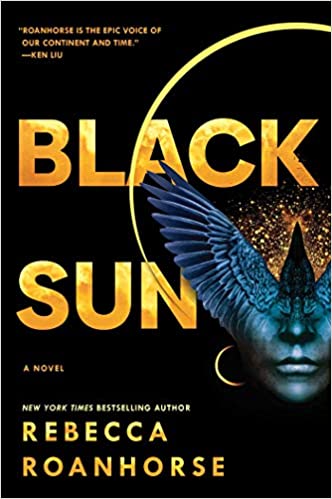

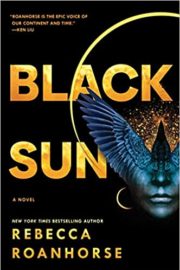
Black Sun by Rebecca Roanhorse. Black Sun is the first book in the Between Earth and Sky trilogy, inspired by the civilizations of the Pre-Columbian Americas and woven into a tale of celestial prophecies, political intrigue, and forbidden magic.

My random thoughts on Jan, love, grief, life, and all things considered.
Black Sun by Rebecca Roanhorse. Black Sun is the first book in the Between Earth and Sky trilogy, inspired by the civilizations of the Pre-Columbian Americas and woven into a tale of celestial prophecies, political intrigue, and forbidden magic.


 I am a sailor without a boat trying to leave the Island of Grief and return to the Community of Love.
Except for a few trips on a rented Sunfish with my dad, I do not know how to sail.
Yet, the only way across the troubled waters is to sail. The winds sometimes catch the sail, and I cruise smoothly across the sea.
Other times, my boat misses the wind, and I idly sit, hoping the breeze fills the sails. Sometimes the waves almost sink my ship.
Because love never dies, I persist in my journey!

Today, my grief feels like I have entered a new and exciting phase of my grief journey. Jan will always be with me, but I need to write the next chapter of my life without Jan.
I would do anything to avoid continuing the journey without her, but I had no choice. She will always be with me, and I will never forget her.
Although the blog announcement did not generate many responses, I will continue to write and publish.
Each word reminds me of how Jan transformed my life and helps me define the road ahead.

Two planets are talking to each other. One looks like a beautiful blue marble, the other a dirty brown ball. “What on earth happened to you?” the beautiful planet asks the brown one. “I had Homo sapiens,” answers the brown planet.

Time to Take Action On Climate Change
Despite the polluted air and the small red sun that was barely visible due to thick clouds from the forest fires in Canada, I had just finished my morning walk.

These are the two brands of walking shoes I am planning to purchase late this month. With as much walking as I do, shoes do not last very long, and I have had 184 consecutive days of 10,000 or more steps.
These are Hoka running shoes that my son Jon likes, and these are New Balance Men’s 990v5.
Need to decide soon!
My current walking shoes have done well, but they no longer have the support and comfort required to walk the distances I walk.

Today, my grief feels like I am doing what is best for Jan.
I went to the cemetery today and left flowers on our 48th anniversary. It is one of two places besides home where I feel the presence of her spirit.
I wept so much that I felt a chill from the autumn air. Happiness and sadness filled my heart.
The limited response to the blog and save the date is discouraging. But the ones I have heard from have been very positive.
Perhaps the audience will grow over time. Whatever happens, I will continue to tell Jan’s story because love never dies.

by Rebecca Roanhorse
Black Sun by Rebecca Roanhorse. Black Sun is the first book in the Between Earth and Sky trilogy, inspired by the civilizations of the Pre-Columbian Americas and woven into a tale of celestial prophecies, political intrigue, and forbidden magic.
I have always enjoyed fantasy novels like Black Sun, and this is the first one set in the Pre-Columbian Americas.
A god will return
When the earth and sky converge
Under the black sunIn the holy city of Tova, the winter solstice is usually a time for celebration and renewal, but this year, it coincides with a solar eclipse, a rare celestial event proscribed by the Sun Priest as an unbalancing of the world.
Meanwhile, a ship launches from a distant city bound for Tova and set to arrive on the solstice. The captain of the ship, Xiala, is a disgraced Teek whose song can calm the waters around her as quickly as it can warp a man’s mind. Her ship carries one passenger. Described as harmless, the passenger, Serapio, is a young man, blind, scarred, and cloaked in destiny. As Xiala well knows, when a man is described as harmless, he usually ends up being a villain.
Will Serapio be harmless or a villain? The answer, my friend, will be known when you read this book or perhaps the second one in the trilogy.
Before meeting and falling forever in love with Jan, I had dreamed of the life of an American Studies professor. Thousands of students are relieved to know I did not pursue that life. If I had opened that door, an area of focus would have been on Pre-Columbian Americas.
I recommend this book and will read the next two in the Between Earth and Sky trilogy.
When you buy a book or product using a link on this page, I receive a commission. Thank you for supporting Sharing Jan’s Love blog.
Subscribe to Sharing Jan's Love Newsletter!



by Geraldine Brooks
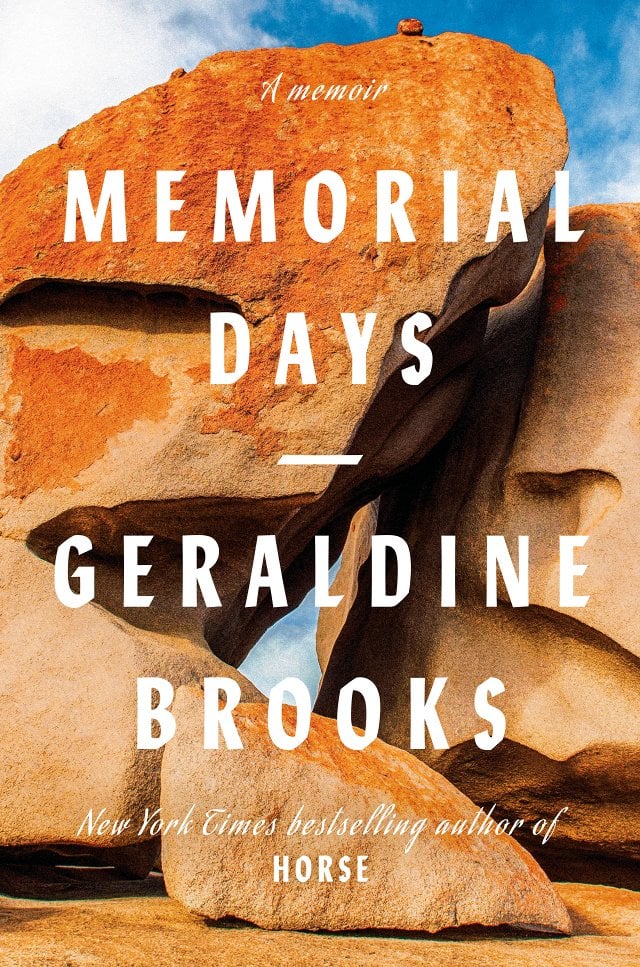
Today, I started reading “Memorial Days: A Memoir” by Geraldine Brooks, the bestselling Pulitzer Prize-winning author of “Horse”. In this poignant and beautifully written memoir, she explores sudden loss and the journey toward healing. Why do I choose to read novels and memoirs about loss and grief? Perhaps it’s because, as Martín Prechtel wrote in his book “The Smell of Rain on Dust”, “Grief is praise because it is the natural way love honors what it misses.”
Many cultural and religious traditions expect grieving people to withdraw from the world. In modern life, we frequently encounter bureaucratic obstacles and lengthy to-do lists. This is precisely what happened to Geraldine Brooks when her partner of more than thirty years, Tony Horwitz—just sixty years old and, to her knowledge, vigorous and healthy—collapsed and died on a sidewalk in Washington, D.C.
After spending their early years together in conflict zones as foreign correspondents, Geraldine and Tony settled down to raise two sons on Martha’s Vineyard. They lived a fulfilling life filled with meaningful work, good humor, and tenderness. Geraldine and Tony spent their days writing and evenings cooking family dinners or enjoying sunsets with friends at the beach. Their peaceful existence abruptly ended on Memorial Day 2019 when Geraldine received the dreaded phone call we all fear. The demands of life became immediate and overwhelming, leaving little room for grief. The sudden loss created a profound void in their lives.
Three years later, she booked a flight to a remote island off the coast of Australia to give herself the time to mourn finally. She often spent days alone in a shack on the pristine, rugged coast without seeing another person. It was a space for her to reflect on the various ways cultures grieve and consider which rituals might help her rebuild her life in the wake of Tony’s death.
“Memorial Days,” a spare and profoundly moving memoir, portrays a larger-than-life man and the timeless love between two souls. It exquisitely captures the joy, agony, and mystery of life.
Geraldine Brooks is the author of six novels, including “Horse,” “People of the Book,” “Year of Wonders,” and the Pulitzer Prize-winning “March.” She has also written acclaimed nonfiction works, including “Nine Parts of Desire” and “Foreign Correspondence.” Her books have been translated into more than thirty languages and have sold millions of copies worldwide. Born and raised in Australia, Brooks now divides her time between Sydney and Martha’s Vineyard.
My journey through grief has significantly helped me grow as a person by focusing on conscientious resilience. I make it a point to read and walk daily, engage in worship, and actively participate as a volunteer and a good neighbor in my community. Fourteen hundred days ago, I wasn’t sure if I could continue living or how to move forward. However, by concentrating on strengthening my resilience, I now lead a life filled with meaning and purpose. I choose to look back not on what I lost but on what I have gained.
As my friend Danny said nearly a year ago, “You are an incredible person! You are a new person! A better person! Although Jan is not here physically, she has done so much for you!
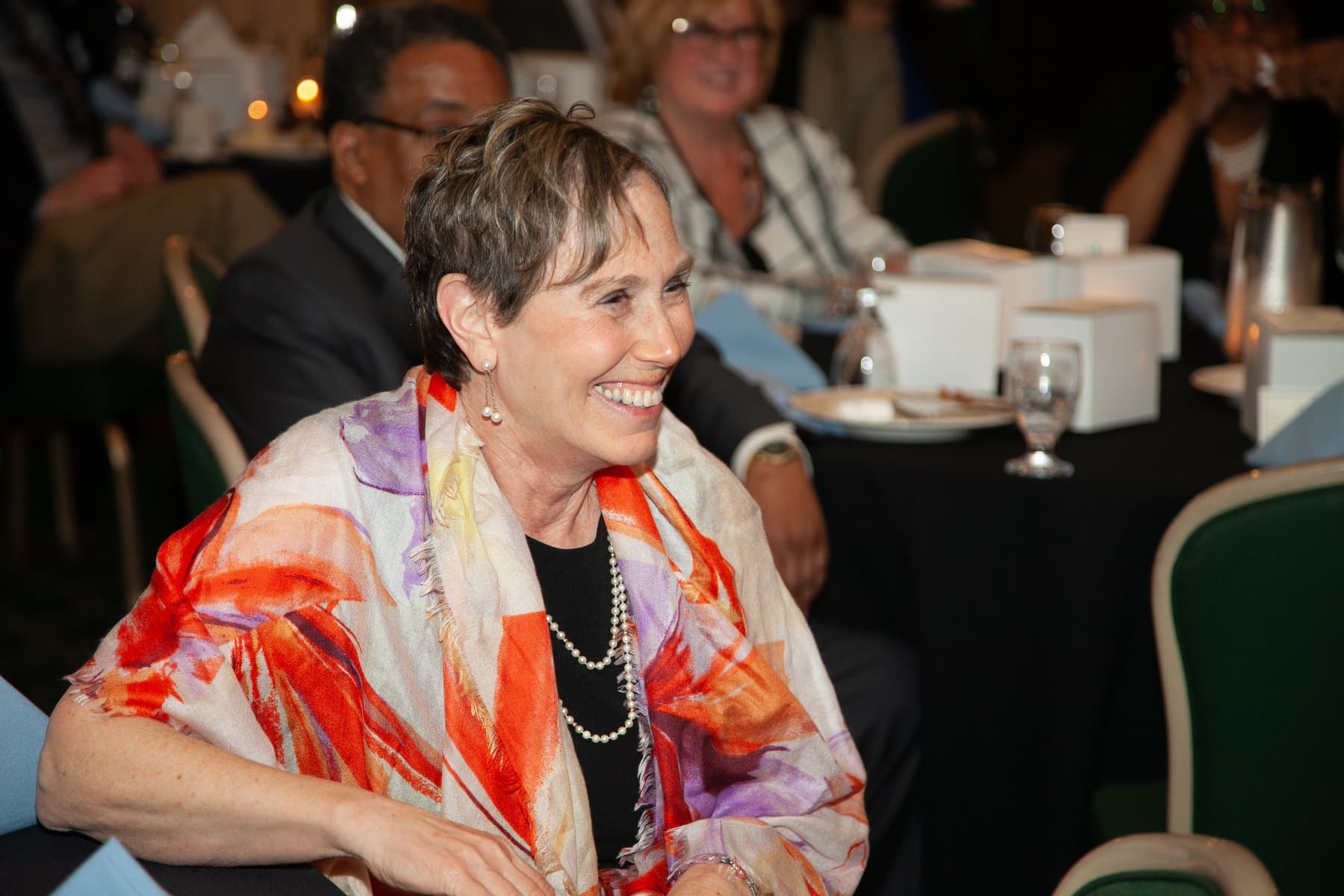
My Rabbi, Rav Uri, echoed similar sentiments during his remarks when I received the Rev. Dr. Martin Luther King, Jr. Distinguished Service Award. If their beliefs are true, much of my progress directly results from my conscientious resilience!
When you purchase a book through one of my links, I earn a small commission that helps support my passion for reading. This contribution allows me to buy even more books to share with you, creating an incredible cycle of discovering great reads together! Your support truly makes a difference!
by Craig Wright
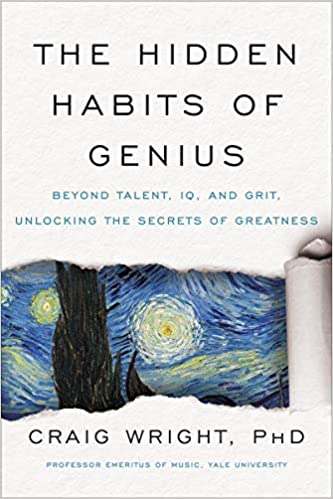
The Hidden Habits of Genius: Beyond Talent, IQ, and Grit―Unlocking the Secrets of Greatness by Craig Wright, Ph.D., I got through my membership in One Day University.
Dr. Wright raises many important questions as he analyses fourteen (14) critical traits of genius. Professor Craig Wright, creator of Yale University’s famous “Genius Course,” explores what we can learn from brilliant minds that have changed the world.
What we often presume about a genius does not match reality. Among other interesting observations, Dr. Wright reminds the reader that Picasso could not pass a fourth-grade math test, and Steve Jobs’s high school GPA was 2.65. He questions why to teach children to behave and play by the rules when transformative geniuses do not.
Examining the lives of transformative individuals ranging from Charles Darwin and Marie Curie to Leonardo Da Vinci and Andy Warhol to Toni Morrison and Elon Musk, Wright identifies more than a dozen drivers of genius, characteristics and patterns of behavior common to great minds throughout history. He argues that genius is about more than intellect and work ethic and that the famed “eureka” moment is a Hollywood fiction. Brilliant insights that change the world are never sudden, but rather, they are the result of unique modes of thinking and lengthy gestation.
I found the book to be a fascinating read and raised more questions for future thought and reading. Professor Wright argues that the habits of mind that produce great thinking and discovery can be actively learned and cultivated. In the book, he explains how. He notes that reading the book will not make you a genius but can “make you more strategic, creative, and successful, and, ultimately, happier.
by James McBride
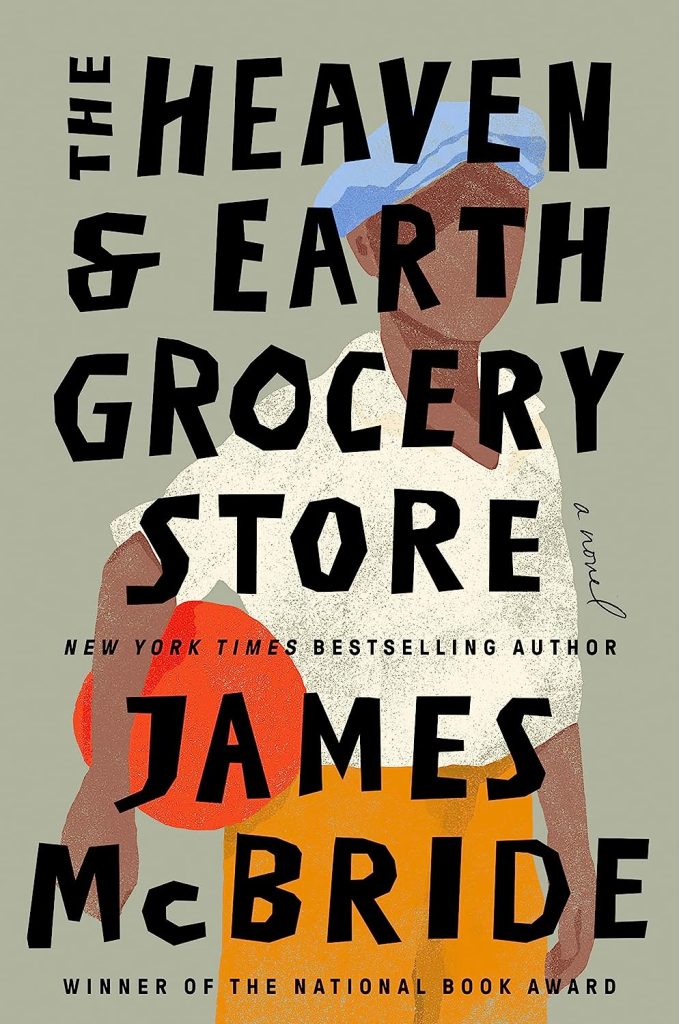
I started reading The Heaven & Earth Grocery Store: A Novel by James McBride today. It’s the seventy-first book I’ve read this year and the two hundredth since January 1, 2019. The novel’s narrative begins in 1972 when workers in Pottstown, Pennsylvania, were digging the foundations for a new development. They were surprised to find a skeleton at the bottom of the well. The identity of the skeleton and how it ended up there were long-held secrets that the residents of Chicken Hill kept.
Jewish immigrants and African Americans lived together in this run-down neighborhood and shared their aspirations and hardships. Moshe and Chona Ludlow resided in Chicken Hill when Moshe integrated his theatre, and Chona ran the Heaven & Earth Grocery Store. When the state officials searched for a deaf boy to institutionalize him, it was Chona and Nate Timblin, the Black janitor at Moshe’s theatre and the unofficial leader of the Black community on Chicken Hill, who collaborated to keep the boy safe.
As the stories of these characters intertwine and develop, it becomes evident how much the individuals living on the outskirts of white, Christian America struggle to survive and what they must do to make it through. As the truth is ultimately disclosed regarding the events that occurred on Chicken Hill, including the involvement of the town’s white establishment, McBride illustrates to us that, even in the darkest of times, love and community – the very essence of heaven and earth – help us endure.
Bringing his masterly storytelling skills and deep faith in humanity to The Heaven & Earth Grocery Store, James McBride has written a novel as compassionate as Deacon King Kong and as inventive as The Good Lord Bird.
The Jan Lilien Education Fund sponsors ongoing sustainability and environmental awareness programs. Regarding gifts made this month, I will match dollar for dollar. All donations are tax-deductible.
I receive a commission when you buy a book or product using a link on this page. Thank you for supporting Sharing Jan’s Love blog.
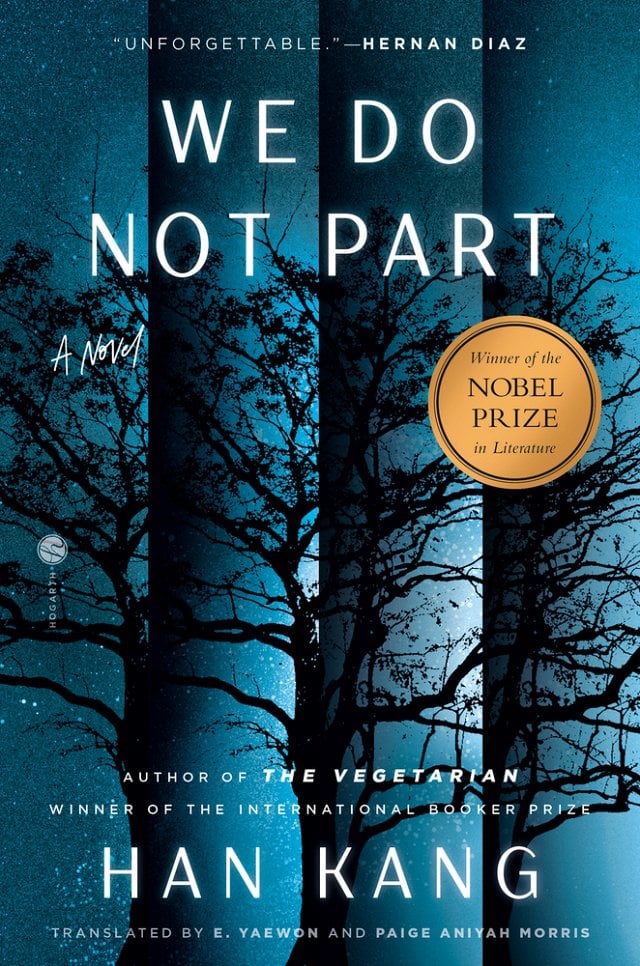
by Han Kang
Today, I explored “We Do Not Part,” the latest novel by Han Kang, the 2024 Nobel Prize in Literature laureate. Translated by the talented e. yaewon and Paige Aniyah Morris, this book offers a remarkable journey. The New York Times has called it Kang’s most revealing work since her acclaimed novel, “The Vegetarian.” What captivates me the most is how it intricately weaves the story of two women’s friendship while shedding light on a hidden chapter of Korean history.
One winter morning, Kyungha receives an urgent message from her friend Inseon, asking her to visit a hospital in Seoul. Inseon has injured herself in an accident and begs Kyungha to return to Jeju Island, where she lives, to save her beloved pet—a white bird named Ama. A snowstorm hits the island when Kyungha arrives. At all costs, she must reach Inseon’s house, but the icy wind and blizzards slow her down as night falls. She wonders if she will arrive in time to save the animal—or even survive the terrible cold that envelops her with every step. Lost in a world of snow, she does not yet suspect the vertiginous plunge into darkness that awaits her at her friend’s house.
Blurring the boundaries between dream and reality, “We Do Not Part” powerfully illuminates a forgotten chapter of Korean history buried for decades, bringing to light the lost voices of the past to prevent them from fading into oblivion. It is both a tribute to enduring friendship and a plea for remembrance. The novel tells a story of profound love in the face of unspeakable violence and celebrates life, however fragile.
Han Kang was born in 1970 in South Korea. She is the author of The Vegetarian, which I have read, and winner of the International Booker Prize, Human Acts, The White Book, Greek Lessons, and We Do Not Part. In 2024, she received the Nobel Prize in Literature.
e. yaewon is based in Korea and translates from and into Korean, including titles by Hwang Jungeun, Deborah Levy, and Samuel Beckett.
Paige Aniyah Morris divides her time between the United States and Korea. Recent translations include works by Pak Kyongni, Ji-min Lee, and Chang Kang-myoung.
When you purchase a book through one of my links, I earn a small commission that helps support my passion for reading. This contribution allows me to buy even more books to share with you, creating an incredible cycle of discovering great reads together! Your support truly makes a difference!
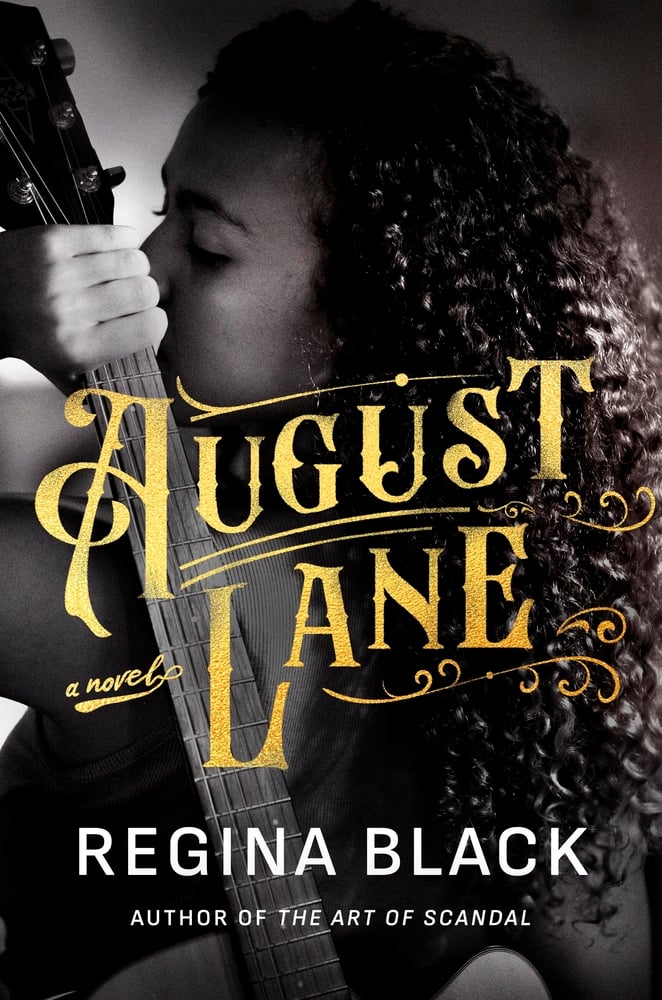
by Regina Black
“August Lane” by Regina Black is a captivating small-town romance that explores love, forgiveness, and the significance of Black women’s voices in country music. As the author of “The Art of Scandal,” Black brings her storytelling expertise to this narrative. Fans of “The Final Revival of Opal & Nev” by Dawnie Walton, which focuses on Black female empowerment, will find similar themes in “August Lane.”
Every Thursday night, former country music heartthrob Luke Randall has to sing “Another Love Song.” God, he hates that song. But performing his lone hit at an interstate motel lounge is the only regular money he still has. Following another lackluster performance at the rock bottom of his career, Luke receives the opportunity of his dreams, opening for his childhood idol–90’s era Black country music star, JoJo Lane, who’s being inducted into the Country Music Hall of Fame.
But the concert is in Arcadia, Arkansas, the small hometown he swore he’d never see again. Going back means facing a painful past of abuse and neglect. It also means facing JoJo’s daughter, August Lane — the woman who wrote the lyrics he’s always claimed as his own. This story holds personal significance for Regina Black, as it reflects her own experiences and struggles.
August also hates that song. But she hates Luke Randall even more. When he shows up ten years too late to apologize for his betrayal, she isn’t interested in making amends. Instead, she threatens to expose his lies unless he co-writes a new song with her and performs it at the concert, something she hopes will launch her out of her mother’s shadow and into a songwriting career of her own. Desperate to keep his secret, Luke agrees to put on the rogue performance, despite the risk of losing his shot at a new record deal.
When Luke’s guitar reunites with August’s soulful alto, neither can deny that the passionate bond they formed as teenagers is still there. As the concert nears, August will have to choose between an overdue public reckoning with the boy who betrayed her or trusting the man he’s become to write a different love song. This story is a testament to the transformative power of love and forgiveness, offering hope and optimism to all who read it.
Regina Black, a former civil litigator and current law school administrator, is a lifelong romance reader with a deep passion for the representation of Black women in popular culture. Her residence in Little Rock, Arkansas, with her husband and daughter, is a testament to her commitment to this cause.
When you purchase a book through one of my links, I earn a small commission that helps support my passion for reading. This contribution allows me to buy even more books to share with you, creating an incredible cycle of discovering great reads together! Your support truly makes a difference!
Enjoy a limited-time offer of 20% off your next book purchase at Bookshop.org!
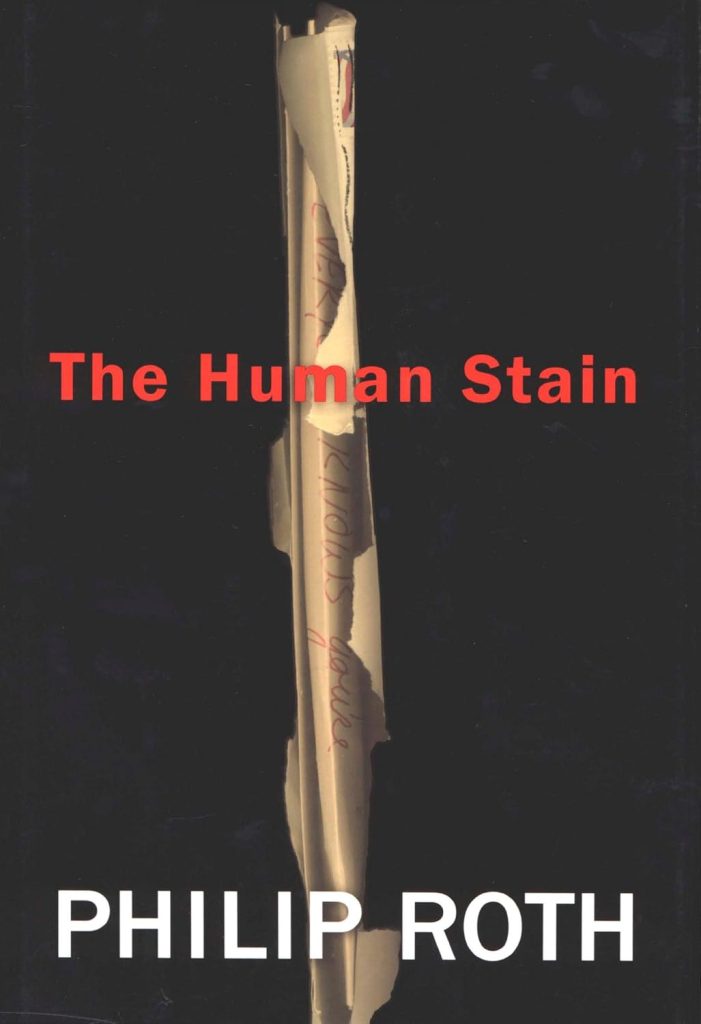
by Philip Roth
Today, I started reading The Human Stain: A Novel by Philip Roth. This book is considered a masterpiece and has earned its place among The New York Times’ 100 Best Books of the 21st Century. The story takes place in 1998, a significant year marked by a presidential impeachment that affected the entire nation. In a peaceful New England town, the respected classics professor Coleman Silk is forced into retirement due to false accusations of racism by his colleagues.
This accusation triggers a series of events that bring to light shocking revelations about Coleman, revelations that carry a profound societal significance. Coleman Silk harbors a secret, a secret that is not about his affair with Faunia Farley, a woman half his age with a troubled past, or the alleged racism that led to his downfall at the college where he was once a respected dean. It’s not even about misogyny, despite Professor Delphine Roux’s attempts to portray him as such. Coleman’s true secret, a secret he has guarded for fifty years from everyone in his life, including his wife, children, colleagues, and friends, is a defining aspect of his character and his relationships.
The Human Stain is a compelling portrayal of 1990s America, a time of clashing moralities and ideological divisions. Through public denunciations and rituals of purification, it delves into how the nation’s destiny and the ‘human stain’ that marks human nature shape the lives of postwar Americans. This potent and captivating novel is a fitting continuation of Philip Roth‘s earlier works, each set in a distinct historical period.