Subscribe to Sharing Jan's Love Newsletter!
by Geraldine Brooks
Today, I started reading “Memorial Days: A Memoir” by Geraldine Brooks, the bestselling Pulitzer Prize-winning author of “Horse”. In this poignant and beautifully written memoir, she explores sudden loss and the journey toward healing. Why do I choose to read novels and memoirs about loss and grief? Perhaps it’s because, as Martín Prechtel wrote in his book “The Smell of Rain on Dust”, “Grief is praise because it is the natural way love honors what it misses.”
Many cultural and religious traditions expect grieving people to withdraw from the world. In modern life, we frequently encounter bureaucratic obstacles and lengthy to-do lists. This is precisely what happened to Geraldine Brooks when her partner of more than thirty years, Tony Horwitz—just sixty years old and, to her knowledge, vigorous and healthy—collapsed and died on a sidewalk in Washington, D.C.
After spending their early years together in conflict zones as foreign correspondents, Geraldine and Tony settled down to raise two sons on Martha’s Vineyard. They lived a fulfilling life filled with meaningful work, good humor, and tenderness. Geraldine and Tony spent their days writing and evenings cooking family dinners or enjoying sunsets with friends at the beach. Their peaceful existence abruptly ended on Memorial Day 2019 when Geraldine received the dreaded phone call we all fear. The demands of life became immediate and overwhelming, leaving little room for grief. The sudden loss created a profound void in their lives.
Three years later, she booked a flight to a remote island off the coast of Australia to give herself the time to mourn finally. She often spent days alone in a shack on the pristine, rugged coast without seeing another person. It was a space for her to reflect on the various ways cultures grieve and consider which rituals might help her rebuild her life in the wake of Tony’s death.
“Memorial Days,” a spare and profoundly moving memoir, portrays a larger-than-life man and the timeless love between two souls. It exquisitely captures the joy, agony, and mystery of life.
Geraldine Brooks is the author of six novels, including “Horse,” “People of the Book,” “Year of Wonders,” and the Pulitzer Prize-winning “March.” She has also written acclaimed nonfiction works, including “Nine Parts of Desire” and “Foreign Correspondence.” Her books have been translated into more than thirty languages and have sold millions of copies worldwide. Born and raised in Australia, Brooks now divides her time between Sydney and Martha’s Vineyard.
My journey through grief has significantly helped me grow as a person by focusing on conscientious resilience. I make it a point to read and walk daily, engage in worship, and actively participate as a volunteer and a good neighbor in my community. Fourteen hundred days ago, I wasn’t sure if I could continue living or how to move forward. However, by concentrating on strengthening my resilience, I now lead a life filled with meaning and purpose. I choose to look back not on what I lost but on what I have gained.
As my friend Danny said nearly a year ago, “You are an incredible person! You are a new person! A better person! Although Jan is not here physically, she has done so much for you!
My Rabbi, Rav Uri, echoed similar sentiments during his remarks when I received the Rev. Dr. Martin Luther King, Jr. Distinguished Service Award. If their beliefs are true, much of my progress directly results from my conscientious resilience!
When you purchase a book through one of my links, I earn a small commission that helps support my passion for reading. This contribution allows me to buy even more books to share with you, creating an incredible cycle of discovering great reads together! Your support truly makes a difference!
by Brit Bennett
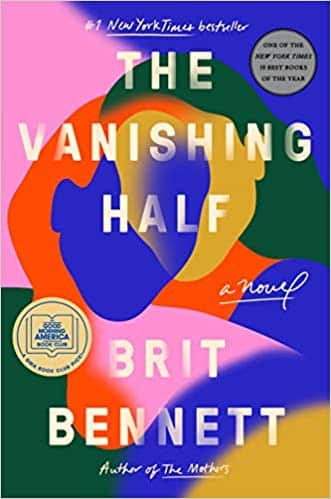
The Vanishing Half by Brit Bennett was a true page-turner, and I did not want to stop reading it even when I got to the last page. I am not a fan of sequels, but if I was ever going to change my mind, this is the book I would want to read a sequel.
Ms. Bennett focuses on two twins who run away from home at age 16. They have grown up in Mallard, a fictional town in Louisiana. “In Mallard, nobody married dark,” Bennett writes starkly. Over time, its prejudices deepened as its population became lighter and lighter, “like a cup of coffee steadily diluted with cream.” The twins, with their “creamy skin, hazel eyes, wavy hair,” would have delighted the town’s founder. One of the women chooses to pass as white while the other does not.
The Vignes twin sisters will always be identical. But after growing up together in a small, southern black community and running away at age sixteen, it’s not just the shape of their daily lives that is different as adults, it’s everything: their families, their communities, their racial identities. Many years later, one sister lives with her black daughter in the same southern town she once tried to escape. The other passes for white, and her white husband knows nothing of her past. Still, even separated by so many miles and just as many lies, the fates of the twins remain intertwined. What will happen to the next generation, when their own daughters’ storylines intersect?
Weaving together multiple strands and generations of this family, from the Deep South to California, from the 1950s to the 1990s, Brit Bennett produces a story that is at once a riveting, emotional family story and a brilliant exploration of the American history of passing. Looking well beyond issues of race, The Vanishing Half considers the lasting influence of the past as it shapes a person’s decisions, desires, and expectations, and explores some of the multiple reasons and realms in which people sometimes feel pulled to live as something other than their origins.
The question of why people choose to live differently than their origins is one that I often ponder. Growing up in a small town and living in a metropolis raises questions for me as to what my life is now and what was once.
I strongly recommend this book.
by Colm Tóibín
Today, I embarked on a literary journey into the distinct world of Long Island, a novel by the acclaimed author Colm Toibin. This captivating narrative continues the life of Eilis Lacey, a beloved character from Toibin’s celebrated work Brooklyn, but two decades have passed. Eilis, now in her forties, is married to Tony Fiorello, an Italian-American plumber, and they are raising two teenagers.
The novel offers a fresh perspective on Eilis’s life, struggles, and journey of self-discovery. She lives with Tony’s large and loving extended family on a cul-de-sac in Lindenhurst, Long Island, which plays a significant role in the story. Though Eilis feels connected to her Irish roots, she has yet to return to Ireland in many years.
One fateful day, a visitor arrives unannounced at Eilis’s doorstep, bringing with him a life-altering revelation. He reveals that his wife is carrying Tony’s child and plans to leave the baby with Eilis once it’s born. This unexpected twist throws Eilis into a maelstrom of emotions and a labyrinthine decision-making process. As the emotional core of Toibin’s narrative, this journey of self-discovery and emotional upheaval is sure to hold readers spellbound.
‘Long Island‘ is a poignant exploration of unfulfilled desires and the enigmatic secrets that shape our lives. Eilis’s reticence speaks volumes, and Toibin masterfully gives voice to her concealed yearnings and profound connections. For instance, Eilis often finds herself lost in memories of her life in Ireland, particularly her relationship with her mother. Though unspoken, these recollections lay bare her profound yearning for her homeland and family. This evocative tale of love, longing, and the quest for self-discovery is bound to enthrall readers.
NPR’s Mary Louise Kelly speaks with author Colm Toibin about his new novel Long Island.
When you purchase a book through one of my links, I earn a small commission that helps support my passion for reading. This contribution allows me to buy even more books to share with you, creating an incredible cycle of discovering great reads together! Your support truly makes a difference!
by Alyssa Cole
When No One Is Watching by Alyssa Cole is a novel where the gentrification of a Brooklyn neighborhood takes on a sinister new meaning.
Sydney Green is Brooklyn-born and raised, but her beloved neighborhood seems to change every time she blinks. Condos are sprouting like weeds, FOR SALE signs are popping up overnight, and the neighbors she’s known all her life are disappearing. To hold onto her community’s past and present, Sydney channels her frustration into a walking tour and finds an unlikely and unwanted assistant in one of the new arrivals to the block—her neighbor Theo.
But Sydney and Theo’s deep dive into history quickly becomes a dizzying descent into paranoia and fear. After all, their neighbors may not have moved to the suburbs, and the push to revitalize the community may be more deadly than advertised.
When does coincidence become a conspiracy? Where do people go when gentrification pushes them out? Can Sydney and Theo trust each other—or themselves—long enough to find out before they too disappear?
Having lived in Brooklyn and seen the impacts of gentrification, redlining, and other practices, I found this book one that I truly enjoyed. The book will provide a detailed history lesson if you are like Theo and have no thought of these issues.
I enjoyed the visit to Weeksville, as I have been there on several professional occasions. The history of that community needs to be told.
I recommend this book.
When you buy a book or product using a link on this page, I receive a commission. Thank you for supporting Sharing Jan’s Love blog.
by Susan Minot
Today, I began reading “Don’t Be a Stranger: A Novel” by Susan Minot, a captivating new work by the author of ‘Evening.’ Known for her lyrical prose and exploration of complex human relationships, Minot’s latest novel revolves around a woman involved in a love affair during midlife. It is a radiant tale that explores themes of erotic obsession, the desire for intimacy, communication, and oblivion, which will resonate with fans of Miranda July‘s ‘All Fours,’ a book I have also read.
Ivy Cooper is 52 years old when Ansel Fleming first enters her life. Twenty years her junior, a musician newly released from prison on a minor drug charge, Ansel’s beguiling good looks and quiet intensity instantly seduce her. Despite the gulf between their ages and experience, their physical chemistry is overpowering. Over the heady weeks and months that follow, Ivy finds her life bifurcated by his presence: On the surface, she is a responsible mother, managing the demands of friends, an ex-husband, and home, but emotionally, psychologically, sexually, she is consumed by desire and increasingly alive only in the stolen moments-out-of-time, with Ansel in her bed.
Don’t Be a Stranger is a gripping, sensual, and provocative work from one of the most remarkable voices in contemporary fiction.
by Helen Garner
Today, I began reading Monkey Grip: A Novel by Helen Garner. It’s a book that launched the career of one of Australia’s most celebrated writers. The story follows the infatuations of a young, single mother fascinated by the excesses of Melbourne’s late-70s counterculture. Monkey Grip is a seminal novel about Australia’s turbulent 1970s, including communal households, music, friendships, children, love, drugs, and sex.
Helen Garner is a renowned novelist, short-story writer, and journalist. She’s best known for her frank, unsparing, and intricate portrayals of Australian life, often drawn from the pages of her journals and diaries. A new US edition of her debut novel, which establishes Garner’s masterful and quietly radical literary voice, is now available.
The novel is set in Australia during the late 1970s and tells the story of Nora, a single mother and writer. Nora navigates Melbourne’s bohemian underground with her young daughter, Gracie, in tow. Nora falls in love with Javo, a flighty man trapped in his addiction. As their relationship disintegrates, Nora struggles to wean off a love that feels impossible to live without.
When Monkey Grip was first published in 1977, it caused a sensation. Critics praised Garner for her craft, but many criticized her gritty depictions of the human body, frankness about sex and drugs, the mess of motherhood, and her unabashed use of her own life as inspiration. Today, such criticism feels old-fashioned and glaringly gendered, and Monkey Grip is considered a modern masterpiece.