
IMG_1431
Estimated reading time: 0 minutes, 0 seconds
Subscribe to Sharing Jan's Love Newsletter!
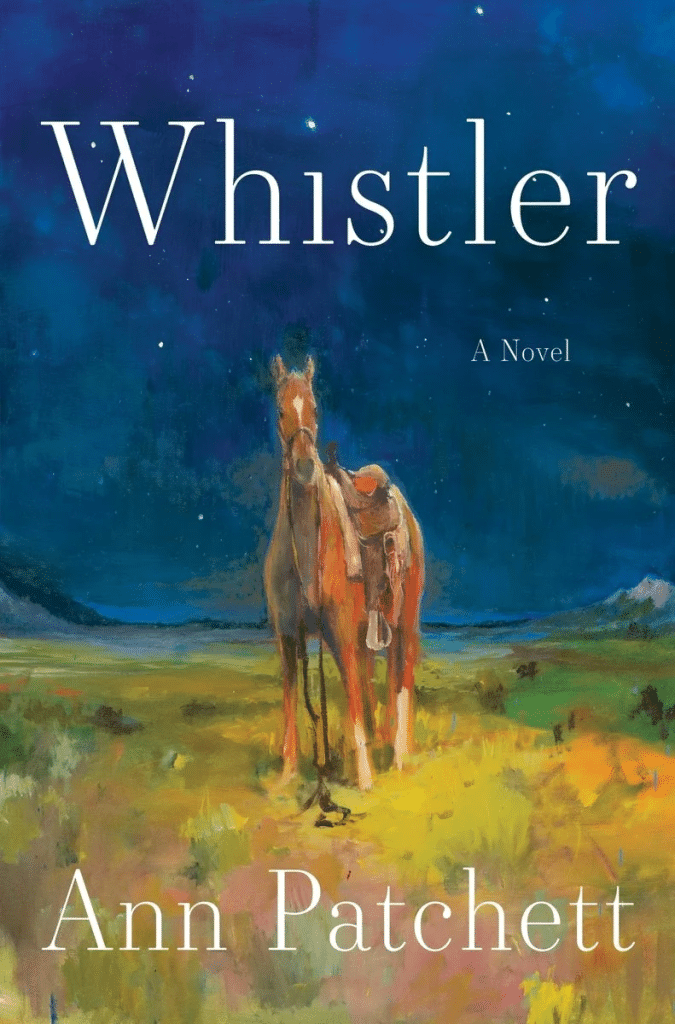
by Ann Patchett
Whistler, by Ann Patchett, tells the story of two adults reflecting on the choices they made and those made for them. It explores themes of bravery, memory, and the often small yet significant moments that shape our lives, as well as the inevitable loss that eventually touches us all. Beautiful in its simplicity, the novel ultimately reveals how love endures and how the experience of being truly known by another person—even for a brief time—can change everything.
When Daphne Fuller and her husband, Jonathan, visit the Metropolitan Museum of Art, they notice an older gentleman with white hair following them. This man turns out to be Eddie Triplett, Daphne’s former stepfather. He had been married to her mother for just over a year when Daphne was nine. Now fifty-three, Daphne hasn’t seen Eddie in many years, not since the event that changed the course of both their lives. Upon reuniting, time seems to vanish; despite their brief relationship, it had a profound impact on both of them, and now that they are together again, they have no intention of ever being separated again.
Ann Patchett is an accomplished author known for her novels, nonfiction works, and children’s books. Her most recent novel, Tom Lake, became a #1 New York Times bestseller. Patchett has received numerous awards, including the PEN/Faulkner Award, the Women’s Prize for Fiction in the UK, and the Book Sense Book of the Year Award.
Her novel The Dutch House was a finalist for the Pulitzer Prize. Her works have been translated into more than thirty languages, and Time magazine recognized her as one of the 100 Most Influential People in the World. In honor of her contributions to American culture, President Biden awarded her the National Humanities Medal. She resides in Nashville, Tennessee, where she owns Parnassus Books.
Discover your next favorite book and explore curated, exciting reads by purchasing through my links. Your support truly helps me share more meaningful stories and insights with you, enriching your reading journey.
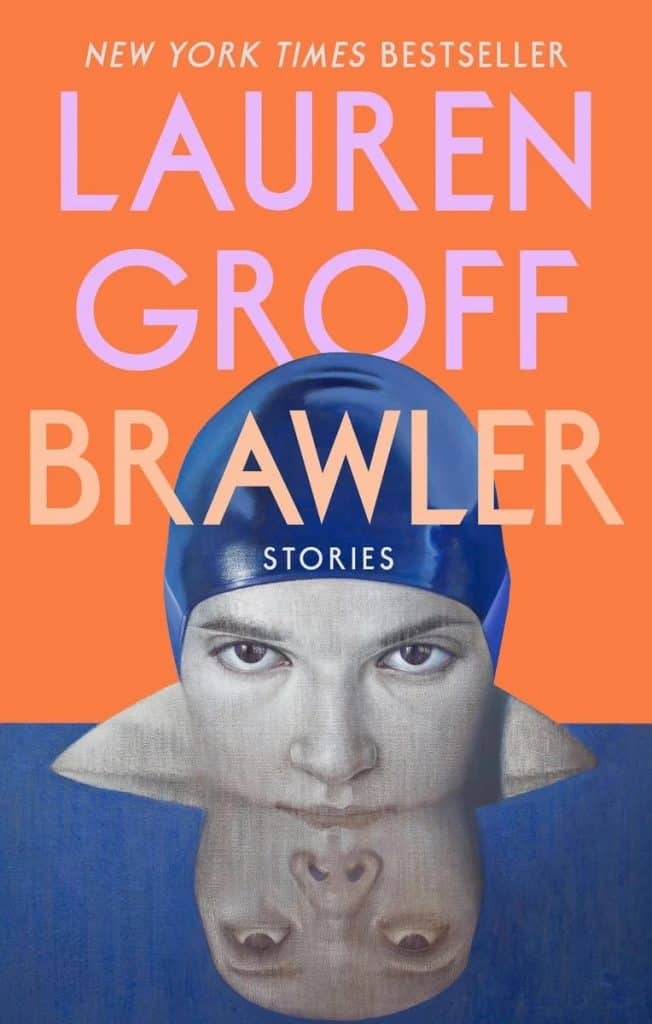
by Lauren Groff
In “Brawler: Stories,” Lauren Groff presents an electric collection in which each story stands as a powerful triumph—bold, agile, and intensely charged. When read together, these stories resonate in an exhilarating way. Spanning from the 1950s to the present and encompassing diverse ages, social classes, and regions—from New England to Florida and California—these nine stories reflect and explore a common theme: the ongoing struggle between the darker and lighter aspects of human nature.
“In every human being, there exists both an animal and a god, locked in a struggle for dominance,” one character tells us. Among those caught in this conflict are a young woman who suddenly becomes responsible for her disabled sibling, a hot-tempered high school swimmer in need of guidance, a mother grappling with the loss of her family, and a banking heir burdened by a different kind of inheritance. Motivated by love and hindered by the well-meaning intentions of others, they strive to do the right thing for as long as possible.
Brawler is precise, surprising, and thought-provoking, offering deep insights into human nature. It reveals the heartbreaking turning points between love and fear, compassion and violence, reason and instinct, altruism and the will to survive.
Lauren Groff is a three-time National Book Award finalist and the bestselling author of five novels, including Fates and Furies, Matrix, and The Vaster Wilds, as well as two story collections, including Florida. She has won The Story Prize and the Joyce Carol Oates Prize, and she has been a finalist for the National Book Critics Circle Award. Groff’s work frequently appears in prestigious publications such as The New Yorker and The Atlantic, and her books have been translated into 36 languages. She lives in Gainesville, Florida, where she and her husband own the independent bookstore The Lynx.
Discover your next favorite book and dive into a world of curated, exciting reads by purchasing through my links. You’ll have access to a diverse selection of books I’ve personally vetted for quality and enjoyment. Supporting these selections not only helps me continue to provide you with personalized recommendations but also ensures you have access to meaningful stories that enrich your life. Your support truly makes a difference in helping me share more books and insights with you!
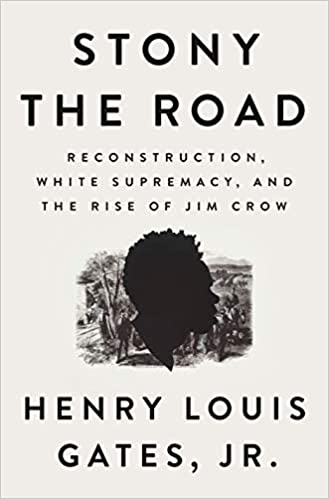
by Henry Louis Gates Jr
Stony the Road: Reconstruction, White Supremacy, and the Rise of Jim Crow by Henry Louis Gates Jr. is a must-read book, especially with white nationalism on the rise.
I read this book when Jan began her chemotherapy. Although the book’s subject – the retreat from reconstruction – was one I studied in college, at times, I found it hard to focus on the material and my wife’s health at the same time. I stayed on the stony road as it is a subject we need to understand if we are going to correct the past failures.
As The New York Times wrote,
Henry Louis Gates Jr.’s “Stony the Road: Reconstruction, White Supremacy, and the Rise of Jim Crow,” an indispensable guide to the making of our times, addresses 2017’s mystifications. The book sets the Obama era beside Reconstruction and the Trump era beside the white supremacist terrorism of Redemption, the period beginning in 1877 during which Reconstruction’s nascent, biracial democracy was largely dismantled. Gates juxtaposes the optimism of Reconstruction, the despair of Redemption, and the promise of the New Negro movement — the effort by black Americans, starting around the turn of the 20th century, to craft a counternarrative to white supremacy. In doing so, “Stony the Road” presents a bracing alternative to Trump-era white nationalism.
Growing up in the Jim Crow south, I was well aware of white nationalism. This book is an essential read if we are going to make America a multi-racial democracy.
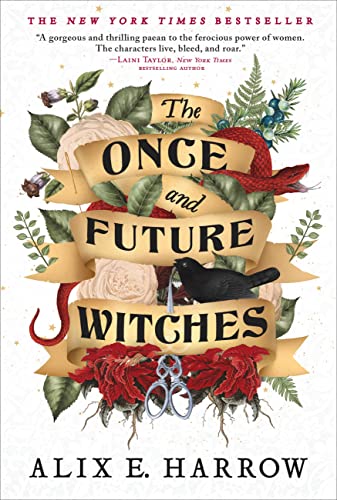
by Alix E. Harrow
The Once and Future Witches by Alix E. Harrow was on hold at my library for several weeks. It arrived today, and I could not imagine a better book to read for Women’s History Month. An homage to women’s invincible power and persistence, The Once and Future Witches reimagines stories of revolution, motherhood, and women’s suffrage—the lost ways are calling.
Although I found the book at times a slow read, I enjoyed it very much and highly recommend it. My only regret is that it had less to do with the suffrage movement than expected. In the late 1800s, three sisters used witchcraft to change the course of history in this powerful novel of magic, family, and the suffragette movement.
Goodreads summary provides an overview.
In 1893, there was no such thing as witches. There used to be, in the wild, dark days before the burnings began, but now witching is nothing but tidy charms and nursery rhymes. If the modern woman wants any measure of power, she must find it at the ballot box.
But when the Eastwood sisters―James Juniper, Agnes Amaranth, and Beatrice Belladonna―join the suffragists of New Salem, they begin to pursue the forgotten words and ways that might turn the women’s movement into the witch’s movement. Stalked by shadows and sickness, hunted by forces who will not suffer a witch to vote―and perhaps not even to live―the sisters will need to delve into the oldest magics, draw new alliances, and heal the bond between them if they want to survive.
There’s no such thing as witches. But there will be.
When you buy a book or product using a link on this page, I receive a commission. Thank you for supporting Sharing Jan’s Love blog.
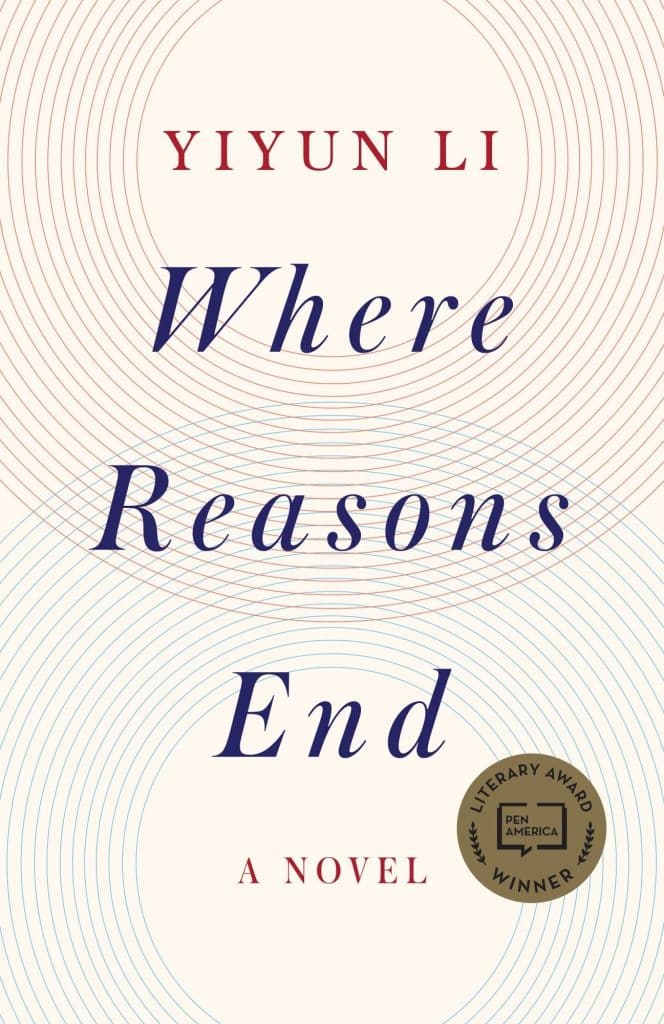
by Yiyun Li
Yiyun Li, grappling with life’s deepest sorrows, invites readers into a poignant conversation between a mother and child in a timeless world. Where Reasons End, composed in the aftermath of the loss of her son, ventures into the liminal space between life and death. Here, mother and child engage in conversations untethered from past images and narratives, a profoundly moving portrayal of the love and complexity of their relationship.
The narrator of Where Reasons End shares a profound insight, saying, “I clung to one delusion with all my might: We once gave Nikolai a life of flesh and blood; and I’m recreating it, this time through words.” This emotional journey of recreating a life through words is a central theme that resonates throughout the novel.
With a unique blend of originality, precision, and poise, Where Reasons End immerses readers in a world of intimacy, inescapable pain, and fierce love. The novel’s emotional impact is profound, leaving a lasting impression on those who delve into its pages.
Yiyun Li, a prolific author, has penned six works of fiction—Must I Go, Where Reasons End, Kinder Than Solitude, A Thousand Years of Good Prayers, The Vagrants, and Gold Boy, Emerald Girl—and the memoir Dear Friend, from My Life I Write to You in Your Life.
Her literary prowess has been recognized with numerous awards, including a PEN/Hemingway Award, a PEN/Jean Stein Book Award, a MacArthur Foundation fellowship, and a Windham-Campbell Prize.
She was also featured in The New Yorker’s 20 Under 40 fiction issue. Her work, which has been published in The New Yorker, A Public Space, The Best American Short Stories, and The O. Henry Prize Stories, among other publications, is a testament to her literary excellence.
Currently, she imparts her knowledge at Princeton University and resides in Princeton, New Jersey.
When you purchase a book through one of my links, I earn a small commission that helps support my passion for reading. This contribution allows me to buy even more books to share with you, creating an incredible cycle of discovering great reads together! Your support truly makes a difference!
Enjoy a limited-time offer of 20% off your next book purchase at Bookshop.org!
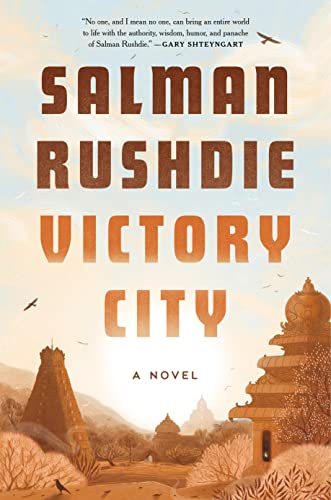
by Salman Rushdie
Victory City: A Novel by Salman Rushdie is an epic tale of a woman who breathes a fantastical empire into existence, only to be consumed by it over the centuries from the transcendent imagination of Booker Prize-winning, internationally bestselling author Salman Rushdie. It is well written and was a page-turner from page one to the end. I highly recommend this novel and encourage everyone to read it.
Brilliantly styled as a translation of an ancient epic, this is a saga of love, adventure, and myth that is a testament to storytelling’s power. After witnessing her mother’s death, the grief-stricken Pampa Kampana becomes a vessel for the goddess Parvati, who begins to speak out of the girl’s mouth. I was hooked when Pampa Kampana provided the seeds that created Victory City out of thin air.
David Remnick’s interview with Salman Rushdie in The New Yorker provided background I would have missed.
“The first kings of Vijayanagara announced, quite seriously, that they were descended from the moon,” Rushdie said. “So when these kings, Harihara and Bukka, announce that they’re members of the lunar dynasty, they’re associating themselves with those great heroes. It’s like saying, ‘I’ve descended from the same family as Achilles.’ Or Agamemnon. And so I thought, Well, if you could say that, I can say anything.”
Above all, the book is buoyed by the character of Pampa Kampana, who, Rushdie says, “just showed up in my head” and gave him his story, his sense of direction. Rushdie’s pleasure in writing the novel was in “world building” and, at the same time, writing about a character building that world: “It’s me doing it, but it’s also her doing it.” The pleasure is infectious. “Victory City” is an immensely enjoyable novel. It is also an affirmation. At the end, with the great city in ruins, what is left is not the storyteller but her words:
The Goodreads summary provides a brief overview,
In the wake of an insignificant battle between two long-forgotten kingdoms in fourteenth-century southern India, a nine-year-old girl has a divine encounter that will change the course of history. After witnessing her mother’s death, the grief-stricken Pampa Kampana becomes a vessel for the goddess Parvati, who begins to speak out of the girl’s mouth. Granting her powers beyond Pampa Kampana’s comprehension, the goddess tells her that she will be instrumental in the rise of a great city called Bisnaga–literally victory city–the wonder of the world.
Over the next two hundred and fifty years, Pampa Kampana’s life becomes deeply interwoven with Bisnaga’s, from its literal sowing out of a bag of magic seeds to its tragic ruination in the most human of ways: the hubris of those in power. Whispering Bisnaga and its citizens into existence, Pampa Kampana attempts to make good on Parvati’s task: giving women equal agency in a patriarchal world. But all stories have a way of getting away from their creator, and Bisnaga is no exception. As years pass, rulers come and go, battles are won and lost, and allegiances shift, the very fabric of Bisnaga becomes an ever more complex tapestry–with Pampa Kampana at its center.
The Jan Lilien Education Fund sponsors ongoing sustainability and environmental awareness programs. Gifts made this month; I will match dollar-for-dollar. All donations are tax-deductible.
I receive a commission when you buy a book or product using a link on this page. Thank you for supporting Sharing Jan’s Love blog.