
IMG_1425
Estimated reading time: 0 minutes, 0 seconds
Subscribe to Sharing Jan's Love Newsletter!
by B.L. Blanchard
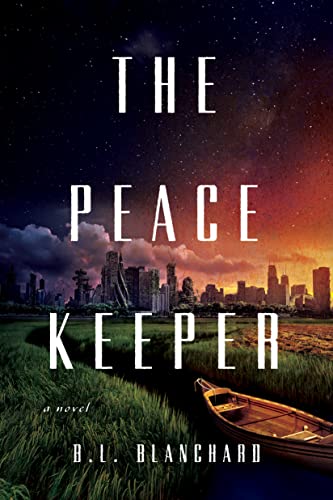
The Peacekeeper: A Novel by B.L. Blanchard is about North America, where The United States and Canada do not exist. After reading about Ethiopia during the ill-fated Italian invasion, I looked for an alternative history of my continent. An independent Ojibwe nation surrounding the Great Lakes is the change in venue that I was seeking.
Although crime mysteries are not my preferred genre, I found The Peacekeeper: A Novel by B.L. Blanchard a pageturner and a highly recommended book. Chibenashi’s works resolve a second murder twenty years after his mothers. The victim is his mother’s best friend. The search for truth will change his life and those close to him.
The Goodreads summary:
Against the backdrop of a never-colonized North America, a broken Ojibwe detective embarks on an emotional and twisting journey toward solving two murders, rediscovering family, and finding himself.
In the village of Baawitigong, a Peacekeeper confronts his devastating past.
Twenty years ago, Chibenashi’s mother was murdered, and his father confessed. Ever since caring for his still-traumatized younger sister has been Chibenashi’s privilege and penance. Now, another woman is slain on the same night of the Manoomin harvest—his mother’s best friend. The murder leads to a seemingly impossible connection that takes Chibenashi far from the only world he’s ever known.
The central city of Shikaakwa is home to the victim’s cruelly estranged family—and to two people Chibenashi never wanted to see again: his imprisoned father and the lover who broke his heart. As the questions mount, the answers will change his and his sister’s lives forever because Chibenashi is about to discover that everything about those lives has been a lie.
When you buy a book or product using a link on this page, I receive a commission. Thank you for supporting Sharing Jan’s Love blog.
by Juhea Kim
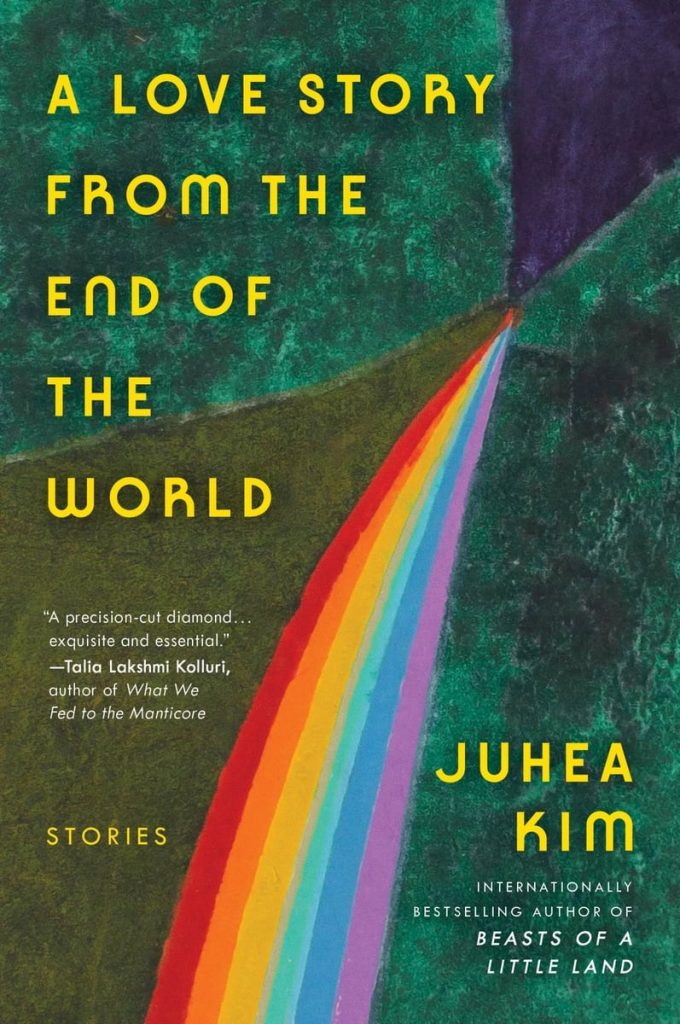
Juhea Kim, the acclaimed author of Beasts of a Little Land and City of Night Birds, presents an exquisite collection of stories that explores the delicate balance between humans and the natural world. With the clear-eyed reverence of Richard Powers and the sparkling sincerity of George Saunders, her first story collection, A Love Story from the End of the World, offers a breathtaking view of our fractured world—and our broken hearts. Through its passionate narrative, the collection serves as a poignant reminder that, as humans, we are nothing without nature.
Spanning multiple locales and time periods, and rendered in fine detail and vivid color, this transportive collection illustrates what it means to live as human inhabitants of our singular, miraculous planet.
Lyrical, at times hilarious, and always heartfelt, each of these ten stories reflects individual choices in the face of “man-made” apocalypses. In a near-future Seoul, where air pollution has become so severe that a translucent biodome has covered the city, a civil engineer responsible for its upkeep considers an arranged marriage. A painter, disenchanted with New York City, travels to the South of France and becomes romantically involved with an entrepreneur who claims to have invented a new color. Meanwhile, on an island where the Indian and Pacific Oceans converge, and where foreign countries have dumped their waste, causing a landfill mountain to form, a local boy facing daily hardships gains internet fame for his K-pop-inspired dances.
Juhea Kim is the author of the novel Beasts of a Little Land, which was a finalist for the Dayton Literary Peace Prize and the winner of the Yasnaya Polyana Literary Award, Russia’s most significant annual award in literature. It has been translated into many languages and is for television. She is also the author of City of Night Birds, which was a Reese’s Book Club pick.
A graduate of Princeton University, her writing has been published in Granta, the Times Literary Supplement, the Independent, Zyzzyva, Guernica<, and other outlets. She is an advocate for wildlife conservation, animal rights, and education and aid in Africa. Born in Korea and raised in Portland, Oregon, Kim now lives in London.
Discover your next favorite book and dive into a world of curated, exciting reads by purchasing through my links. You’ll have access to a diverse selection of books that I’ve personally vetted to ensure quality and enjoyment. Additionally, by supporting these selections, you’ll help me continue to provide you with more personalized recommendations. I earn a small commission from your purchase, which allows me to buy and share even more books with you. Your support truly makes a difference!
by Patrick Ryan
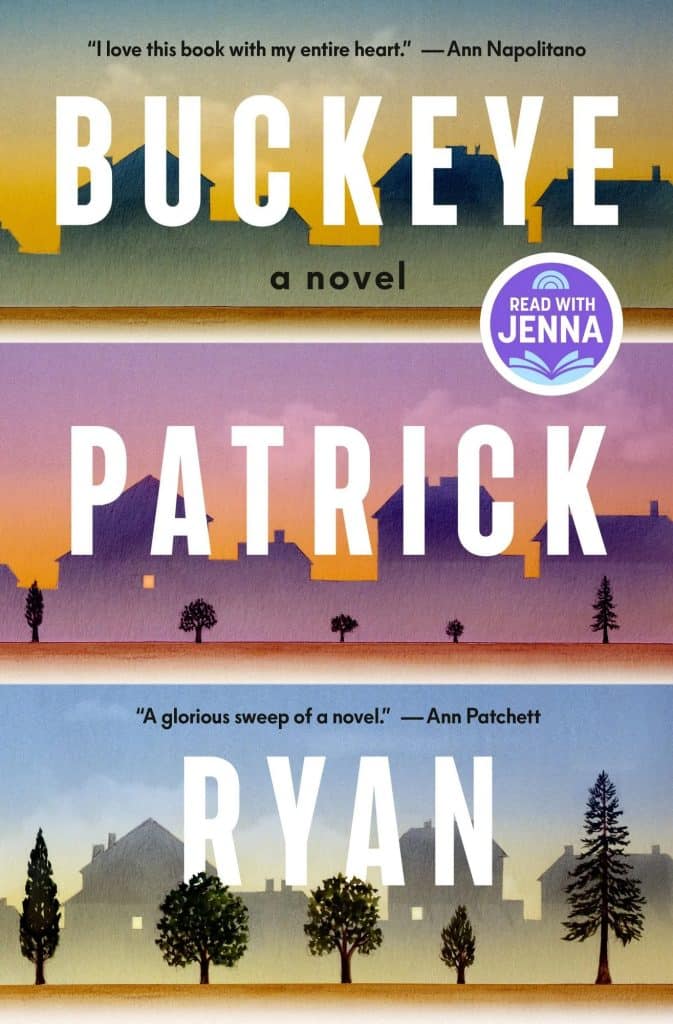
“Buckeye: A Novel” by Patrick Ryan takes readers on a captivating journey through a single town, where the lives of two families intertwine amidst a life-altering secret. With its sweeping narrative and intimate moments, the story delves deeply into the human experience, offering rich insights and a warmth that resonates with anyone seeking love, goodness, and yearning for connection.
In Bonhomie, Ohio, a stolen moment of passion, sparked in the exuberant aftermath of the Allied victory in Europe, binds Cal Jenkins, a man wounded not in war but by his inability to serve in it, to Margaret Salt, a woman trying to obscure her past. Cal’s wife, Becky, possesses a spiritual gift: she is a seer who can conjure the dead, helping families reconnect with those they’ve lost. Margaret’s husband, Felix, is serving on a Navy cargo ship, out of harm’s way—until a telegram suggests that the unthinkable might have happened.
Later, as the country reconstructs in the postwar boom, a secret grows in Bonhomie—but nothing stays buried forever in a small town. Against the backdrop of some of the most transformative decades in modern America, the consequences of that long-ago encounter ripple through the next generation of both families, compelling them to reexamine who they thought they were and what the future might hold.
Patrick Ryan is the author of the story collections The Dream Life of Astronauts and Send Me. The Dream Life of Astronauts was named one of the Best Books of the Year by the St. Louis Times-Dispatch, Literary Hub, Refinery29, and Electric Literature, and it was also longlisted for The Story Prize.
His work has been featured in The Best American Short Stories and the anthology Tales of Two Cities, among other publications. Ryan is the former associate editor of Granta and currently serves as the editor-in-chief of One Story. He resides in New York City.
Discover your next favorite book and dive into a world of curated, exciting reads by purchasing through my links. You’ll have access to a diverse selection of books that I’ve personally vetted to ensure quality and enjoyment. Additionally, by supporting these selections, you’ll help me continue to provide you with more personalized recommendations. I earn a small commission from your purchase, which allows me to buy and share even more books with you. Your support truly makes a difference!
by Lauren Groff
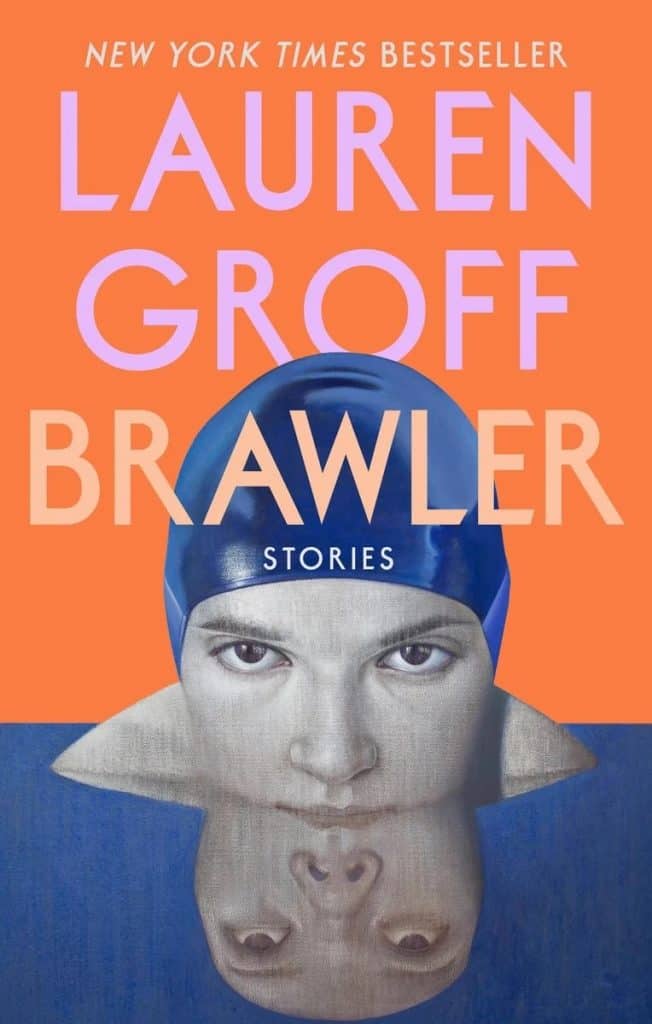
In “Brawler: Stories,” Lauren Groff presents an electric collection in which each story stands as a powerful triumph—bold, agile, and intensely charged. When read together, these stories resonate in an exhilarating way. Spanning from the 1950s to the present and encompassing diverse ages, social classes, and regions—from New England to Florida and California—these nine stories reflect and explore a common theme: the ongoing struggle between the darker and lighter aspects of human nature.
“In every human being, there exists both an animal and a god, locked in a struggle for dominance,” one character tells us. Among those caught in this conflict are a young woman who suddenly becomes responsible for her disabled sibling, a hot-tempered high school swimmer in need of guidance, a mother grappling with the loss of her family, and a banking heir burdened by a different kind of inheritance. Motivated by love and hindered by the well-meaning intentions of others, they strive to do the right thing for as long as possible.
Brawler is precise, surprising, and thought-provoking, offering deep insights into human nature. It reveals the heartbreaking turning points between love and fear, compassion and violence, reason and instinct, altruism and the will to survive.
Lauren Groff is a three-time National Book Award finalist and the bestselling author of five novels, including Fates and Furies, Matrix, and The Vaster Wilds, as well as two story collections, including Florida. She has won The Story Prize and the Joyce Carol Oates Prize, and she has been a finalist for the National Book Critics Circle Award. Groff’s work frequently appears in prestigious publications such as The New Yorker and The Atlantic, and her books have been translated into 36 languages. She lives in Gainesville, Florida, where she and her husband own the independent bookstore The Lynx.
Discover your next favorite book and dive into a world of curated, exciting reads by purchasing through my links. You’ll have access to a diverse selection of books I’ve personally vetted for quality and enjoyment. Supporting these selections not only helps me continue to provide you with personalized recommendations but also ensures you have access to meaningful stories that enrich your life. Your support truly makes a difference in helping me share more books and insights with you!
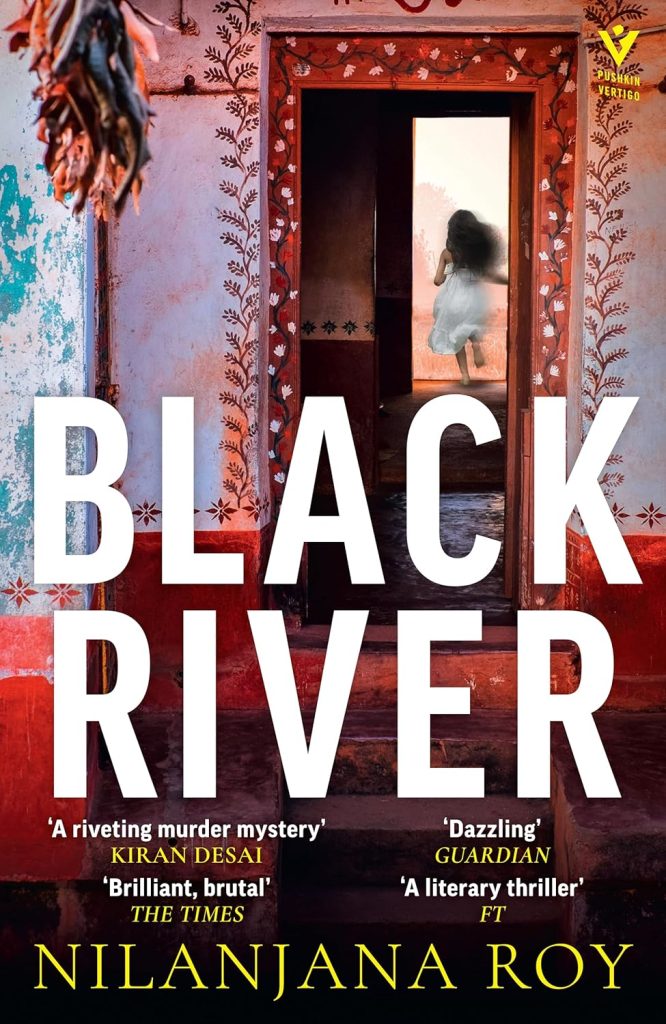
by Nilanjana S. Roy
Today, I dove into the captivating pages of “Black River” by Nilanjana S. Roy, a standout selection from The New York Times’ 100 Notable Books of 2024. This compelling debut novel unfolds against contemporary India, a country grappling with rising religious intolerance. Roy’s storytelling is nothing short of mesmerizing, intricately weaving a narrative that vividly reflects the nation’s complexities and contradictions.
Teetapur, an unassuming village just a few hours outside bustling Delhi, is known for nothing—until the discovery of an 8-year-old girl named Munia, found dead and hanging from the branch of a Jamun tree. In this predominantly Hindu village, suspicion quickly falls on Mansoor, an itinerant Muslim man. The tension ignites like wildfire, intensified by the underlying religious discord.
The responsibility for uncovering the elusive truth—and preventing the lynching of the prime suspect—falls on the weary shoulders of Sub-Inspector Ombir Singh. With only one other officer under his command and a single working revolver between them, can he bring justice to a grieving father and an angry village? Or will Teetapur demand vengeance instead?
“Black River” offers readers a gripping mystery and a sweeping analysis of the nation’s state, serving as a searing critique of modern India.
When you purchase a book through one of my links, I earn a small commission that helps support my passion for reading. This contribution allows me to buy even more books to share with you, creating an incredible cycle of discovering great reads together! Your support truly makes a difference!
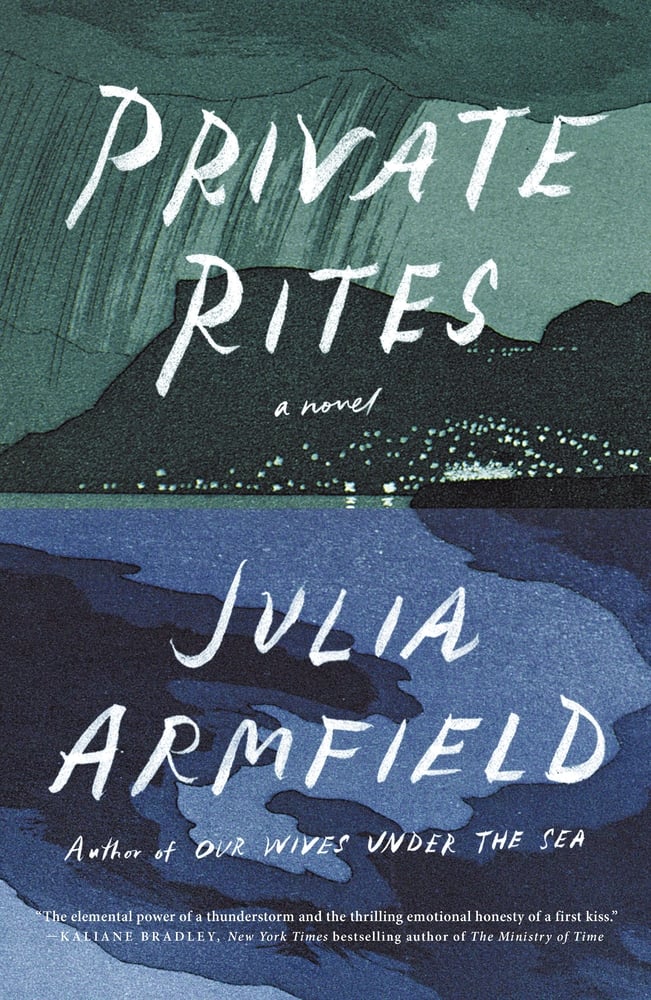
by Julia Armfield
From Julia Armfield, the beloved and award-winning author of Our Wives Under the Sea, comes a speculative reimagining of King Lear. Private Rites centers on three sisters navigating queer love and loss in a world that is drowning. It has been raining for so long that the landscape has reshaped itself, and old rituals and religions are beginning to resurface. Sisters Isla, Irene, and Agnes have not spoken to each other in some time.
However, when their father—an architect who was both cruel and revered—passes away, their lives are forever changed. His death offers the sisters an opportunity to come together in a new way. In the grand glass house they grew up in, their father’s most famous creation, the sisters sort through the secrets and memories he left behind, until a revelation in his will shatters their fragile bond.
The sisters are more estranged than ever, and their lives spin out of control: Irene’s relationship is straining at the seams, Isla’s ex-wife keeps calling, and cynical Agnes is falling in love for the first time. But something even more sinister might be unfolding, something related to their mother’s long-ago disappearance and the strangers who have always seemed unusually interested in the sisters’ lives. Soon, it becomes clear that the sisters were chosen for a very particular purpose, one with shattering implications for their family and their imperiled world.
Julia Armfield is the author of the novels Private Rites and Our Wives Under the Sea, which was a finalist for the Lambda Literary Award and the 2022 Goodreads Choice Award for Best Horror and Best Debut Novel, and the story collection salt slow. Her work has appeared in Granta, Lighthouse, Analog Magazine, Neon, and Best British Short Stories 2019 and 2021. She is the winner of the White Review Short Story Prize and a Pushcart Prize, and shortlisted for the Sunday Times Young Writer of the Year Awards in 2019. She lives and works in London.
Discover your next favorite book and dive into a world of curated, exciting reads by purchasing through my links. You’ll have access to a diverse selection of books I’ve personally vetted for quality and enjoyment. Additionally, by supporting these selections, you’ll help me continue to provide you with more personalized recommendations. I earn a small commission from your purchase, which allows me to buy and share even more books with you. Your support truly makes a difference!