
IMG_1438
Estimated reading time: 0 minutes, 0 seconds
Subscribe to Sharing Jan's Love Newsletter!
by Alyssa Cole
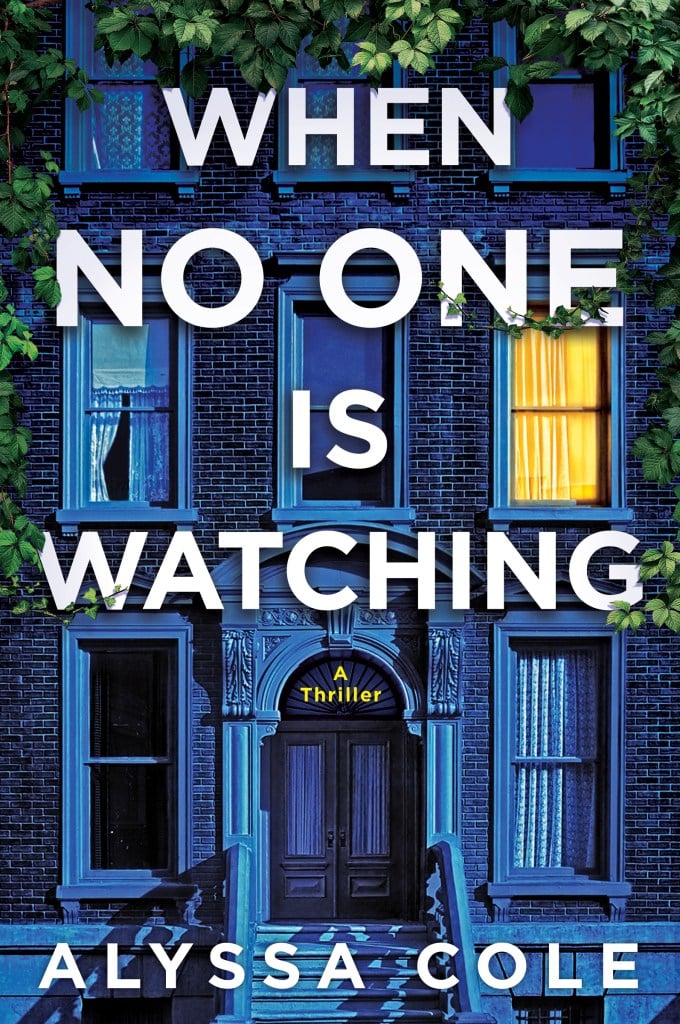
When No One Is Watching by Alyssa Cole is a novel where the gentrification of a Brooklyn neighborhood takes on a sinister new meaning.
Sydney Green is Brooklyn-born and raised, but her beloved neighborhood seems to change every time she blinks. Condos are sprouting like weeds, FOR SALE signs are popping up overnight, and the neighbors she’s known all her life are disappearing. To hold onto her community’s past and present, Sydney channels her frustration into a walking tour and finds an unlikely and unwanted assistant in one of the new arrivals to the block—her neighbor Theo.
But Sydney and Theo’s deep dive into history quickly becomes a dizzying descent into paranoia and fear. After all, their neighbors may not have moved to the suburbs, and the push to revitalize the community may be more deadly than advertised.
When does coincidence become a conspiracy? Where do people go when gentrification pushes them out? Can Sydney and Theo trust each other—or themselves—long enough to find out before they too disappear?
Having lived in Brooklyn and seen the impacts of gentrification, redlining, and other practices, I found this book one that I truly enjoyed. The book will provide a detailed history lesson if you are like Theo and have no thought of these issues.
I enjoyed the visit to Weeksville, as I have been there on several professional occasions. The history of that community needs to be told.
I recommend this book.
When you buy a book or product using a link on this page, I receive a commission. Thank you for supporting Sharing Jan’s Love blog.
by Kate Riley
“Ruth” by Kate Riley is a captivating and thought-provoking exploration of a woman’s journey through the complexities of life within a tightly-knit and devout community. The narrative intricately weaves together the nuances of faith, tradition, and individual desire, encouraging readers to confront their own deeply held beliefs about the nature of fulfillment and purpose.
Ruth was raised in a snow globe of Christian communism, a world without private property, television, or tolerance for idle questions. Every morning, she braids her hair and wears the same costume, sings the same breakfast song in a family room identical to every other family room in the community; every one of these moments is meant to be a prayer, but to Ruth, they remain puzzles.
Her life is seen in glimpses through childhood, marriage, and motherhood, as she tries to manage her own perilous curiosity in a community built on holy mystery. Is she happy? Is this happiness?
Kate Riley was raised in New York City, and this book is her final work.
When you purchase a book through one of my links, I earn a small commission that helps support my passion for reading. This contribution allows me to buy even more books to share with you, creating an incredible cycle of discovering great reads together! Your support truly makes a difference!
Enjoy a limited-time offer of 20% off your next book purchase at Bookshop.org!
by Álvaro Enrigue
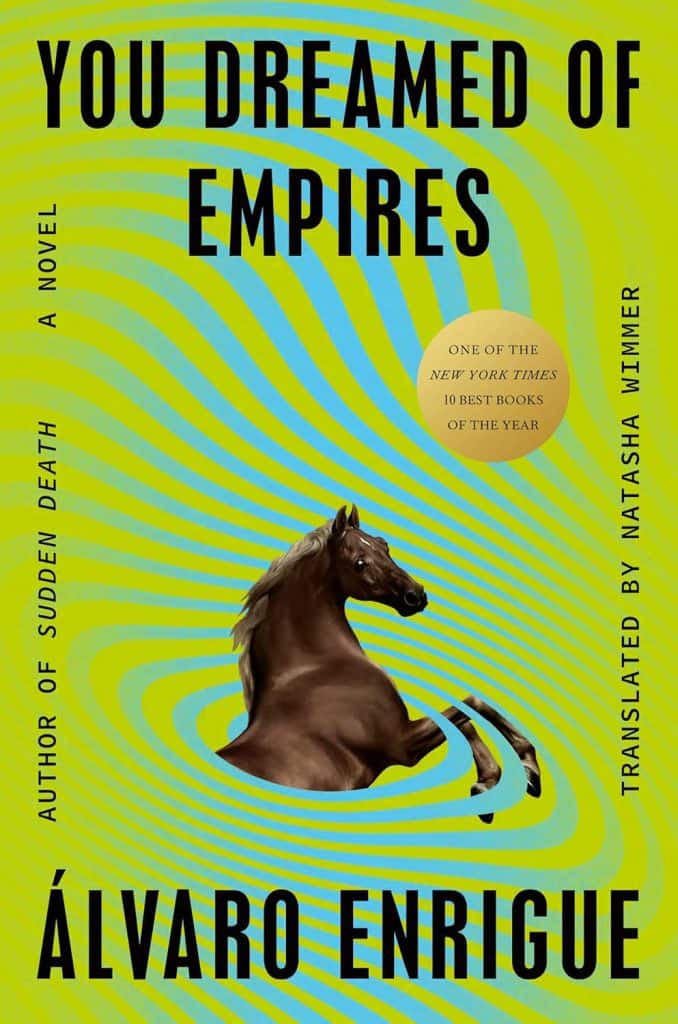
Today, I began reading “You Dreamed of Empires: A Novel” by Álvaro Enrigue, translated by Natasha Wimmer. This book is from the visionary author of “Sudden Death,” a hallucinatory and revelatory tale of colonial revenge. It has been recognized as one of The New York Times’ 100 Notable Books of 2024 and included in the list of 10 Best Books of 2024. So far, I have read four of the top five fiction books of 2024: “All Fours,” “James,” “Martyr!,” and “Good Material.”
One morning in 1519, conquistador Hernán Cortés entered the city of Tenochtitlan, today’s Mexico City. Later that day, he will meet the emperor Moctezuma in a collision of two worlds, two empires, two languages, and two possible futures.
Cortés is accompanied by his captains, troops, prized horses, and two translators: Friar Aguilar, a taciturn friar, and Malinalli, an enslaved, strategic Nahua princess. After nearly bungling their entrance to the city, the Spaniards are greeted at a ceremonial welcome meal by the steely Aztec princess Atotoxtli, sister and wife of Moctezuma. As they await their meeting with the emperor – who is at a political and spiritual crossroads and relies on hallucinogens to get by – Cortés and his entourage are ensconced in the labyrinthine palace. Soon, one of Cortés’s captains, Jazmín Caldera, overwhelmed by the place’s grandeur, began questioning the ease with which they were welcomed into the city and wondered at the chances of getting out alive, much less conquering the empire. And what if… they don’t?
You Dreamed of Empires brings Tenochtitlan to life at its height and reimagines its destiny. The incomparably original Álvaro Enrigue sets afire the moment of conquest and turns it into a revolution, a restitutive, fantastical counterattack, in a novel so electric and unique that it feels like a dream.
When you purchase a book through one of my links, I earn a small commission that helps support my passion for reading. This contribution allows me to buy even more books to share with you, creating an incredible cycle of discovering great reads together! Your support truly makes a difference!
by Alaya Dawn Johnson
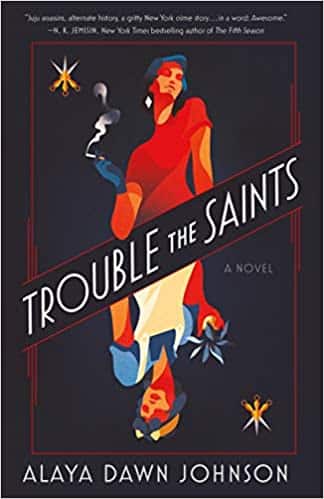
Trouble the Saints by Alaya Dawn Johnson is one of NPR’s Books We Love from 2020. The dangerous magic of The Night Circus meets the powerful historical exploration of The Underground Railroad in this timely and unsettling novel, set against the darkly glamorous backdrop of New York City at the dawn of WWII. Amidst the whir of city life, a girl from Harlem is drawn into the glittering underworld of Manhattan, where she’s hired to use her knives to strike fear amongst its most dangerous denizens.
The book is written in three sections with different protagonists and voices. Phyllis, or Pea as her friends call her, is a black assassin for a white mob boss narrates the first section of the book. Her saint’s hands are the ability to use knives to commit murder. She can also pass as white as Phyllis, but she is a black woman from Harlem as Pea. The section she narrates is difficult at first to follow as she attempts to deal with the consequences of her actions. Can the past ever be the past?
Dev, Indian and Phyllis’s lover, narrates the second section. He is an undercover cop who protects her and helps her free herself from the mob boss. This section is located in the Hudson Valley and highlights the tensions before the war between whites and non-whites.
The third protagonist, Tamara, narrates this section. The war separates Phyllis and Dev. Phyllis is pregnant, and Dev and Tamara’s love interest are serving in the military. This section brings together the threads and reminds us that the past is never the past.
As Goodreads summarizes the book,
But the ghosts from her past are always by her side—and history has appeared on her doorstep to threaten the people she loves most.
Can one woman ever sacrifice enough to save an entire community?
Trouble the Saints is a dazzling, daring novel—a magical love story, a compelling chronicle of interracial tension, and an altogether brilliant and deeply American saga.
I recommend this book and encourage all readers to read it to the end.
When you buy a book or product using a link on this page, I receive a commission. Thank you for supporting Sharing Jan’s Love blog.
by Walt Hunter
The Singing Word: 168 Years of Atlantic Poetry, edited by Walt Hunter, celebrates the people, land, and spirit of America. This remarkable collection showcases a wide range of contemporary and historical poetry from the 168-year archive of The Atlantic magazine. Since its first issue in 1857, the poetry published in The Atlantic has drawn attention to the nation’s ongoing journey of self-discovery.
The magazine’s verse has featured odes to American leaders and landscapes, laments for the dead, and calls for change, appealing to the enduring ideals of Atlantic readers.
This one-of-a-kind collection selects poems of rousing optimism, clear-eyed realism, and moving lyricism—poems infused with the language of America’s songs, myths, and history, from the Civil War up through the present in three rich parts: National Anthems, Natural Lines, and Personal Mythologies.
Curated by The Atlantic’s Poetry Editor, this anthology features both world-famous poets—from Longfellow to Limón, including Robert Frost, W. S. Merwin, Sylvia Plath, and Adrienne Rich—as well as poets whose work has never before been published outside of the magazine.
Offering readers an essential understanding of American canon and the evolving nation, its poets have yearned to capture—the poetry of The Atlantic is the poetry of America.
Walt Hunter is a professor of twentieth- and twenty-first-century literature and chair of the English department at Case Western Reserve University. He is also the fiction and poetry editor for The Atlantic.
Discover your next favorite book and dive into a world of curated, exciting reads by purchasing through my links. You’ll have access to a diverse selection of books that I’ve personally vetted to ensure quality and enjoyment. Additionally, by supporting these selections, you’ll help me continue to provide you with more personalized recommendations. I earn a small commission from your purchase, which allows me to buy and share even more books with you. Your support truly makes a difference!
by Jesmyn Ward
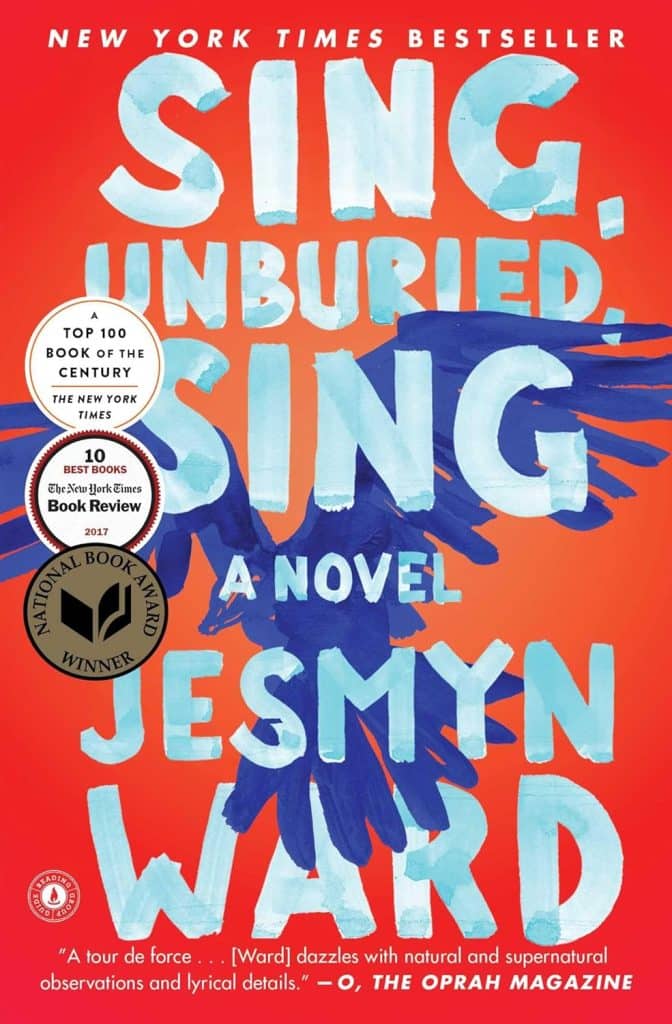
I started reading Jesmyn Ward‘s novel Sing, Unburied, Sing today. The New York Times selected it as one of the best books of the 21st century and awarded it the National Book Award. According to The New York Times, Jesmyn Ward‘s historic second National Book Award winner is “perfectly poised for the moment.” It’s an intimate portrait of three generations of a family and an epic tale of hope and struggle.
Jojo is thirteen years old and is trying to understand what it means to be a man. He has several father figures to learn from, including his Black grandfather, Pop. However, Jojo’s understanding is complicated by other men in his life: his absent White father, Michael, who is being released from prison; his absent White grandfather, Big Joseph, who refuses to acknowledge him; and the memories of his deceased uncle, Given, who died as a teenager.
His mother, Leonie, is inconsistent in her and her toddler daughter’s lives. She is a flawed mother in constant conflict with herself and those around her. She is Black, and her children’s father is White. She wants to be a better mother but struggles to prioritize her children over her own needs, particularly her drug use. Tormented and comforted by visions of her deceased brother, which only come to her when she’s high, Leonie is embattled in ways that reflect the harsh reality of her circumstances.
When their father is released from prison, Leonie takes her kids and a friend in her car and drives north to Mississippi and Parchman Farm, the State Penitentiary. At Parchman, there is another thirteen-year-old boy, the ghost of a deceased inmate who carries the ugly history of the South with him in his wanderings. With his supernatural presence, this ghostly figure also has something to teach Jojo about fathers and sons, legacies, violence, and love.
Described as a majestic and unforgettable family story, ‘Sing, Unburied, Sing‘ is rich with Ward‘s distinctive, lyrical language. As noted by The Philadelphia Inquirer, her unique narrative style takes readers on ‘an odyssey through rural Mississippi’s past and present.’