
Honeymoon Day Two!

Estimated reading time: 13 minutes, 22 seconds

Swimming In the Pond

Standing on the pond’s edge by the outlet stream, I put my hand into the water. It is not that cold, or maybe my hands are hot from holding you,” I said. As I stood up, I pointed to the rope swing tied to a tree on the left side. When I hiked with the boys, they wanted to go swimming, but no one had a swimsuit. The rope swing was tempting, but being naked in front of the others was a non-starter.

Jan sat down on the log and pulled off her boots and socks.

“Let me test the water and see how it feels.”

She lowered her toes and then her entire foot. 

“You are correct; the water is very mild. No one is here but the two of us. Do you want to go swimming?”

I nodded in the affirmative, and we quickly removed our clothing and swam like nymphs in a hidden pond.

We giggled and splashed in the water like young kids, not adult skinny dippers.

I stepped out and untied the rope swing. 

Do you think it is safe?”

I tested the rope and screamed like Tarzan as my body sailed across the pond and fell into the calm waters. 

Jan smiled at me and grabbed the rope. As she stepped out of the pond to try the swing, her wet naked body shimmered against the rays of sunlight that made their way thru the canopy of trees. 

“Wow, this is so much fun,” Jan yelled as she resurfaced. 

We frolicked in our paradise without a concern in the world.

“Should we try the swing together,” I asked.

“Is it strong enough to hold both of us?”

“I am not sure.”

Jan shook her head negatively.

“I enjoy watching you swing across the pond. I cannot believe I am married to a man with such a lovely body.

I dropped into the water when she said that to avoid a full-body blush.

Surfacing, I swam towards her and put my arms around her waist. 

As I kissed her belly button, Jan’s hips arched toward me. As I slowly kissed my way up her abdomen, she inhaled and then held her breath so that her chest expanded and her nipples swelled.

As I got to her mouth, I licked my lips, “I have always loved kissing you, but you taste sweeter today.”

Jan giggled, and French kissed me.

We hugged and continued to kiss. 

It feels like you have something in mind besides swimming.

“Not me.”

We both laughed and continued to swim in our birthday suits.


Next Page


Pages: 1 2 3 4 5 6

7 comments add your comment

  1. What a beautiful love affair-you were lucky to have found each other.

    What about this dog bite-were you okay? Did you have to have a shot?

    • Thanks, Sue, for your comment. Jan and I had a love that I always thought was like everyone else’s. Jan and I had our souls divided at birth, and finding each other allowed us to reunite our souls and have one soul, one love, now and forever.

      Regarding the dog bite, I wrote about it in detail in Road Trippin in 1973. The dig bite was severe and could have been worse if I had listened to the hostel manager and accepted her plan to use band-aids.

      “Pretty bad. If the bite had been a fraction of an inch higher, it would have cracked your rib cage. That would have been a serious life-threatening situation.”

      I swallowed to control the pain and accept how serious it was.

      They gave me the two injections and started to sew me up.

      “How many stitches?”

      “A baker’s dozen at least.”

Share your thoughts and ideas

This site uses Akismet to reduce spam. Learn how your comment data is processed.

Previous Post:

Next Post:

The Jan Lilien Education Fund!

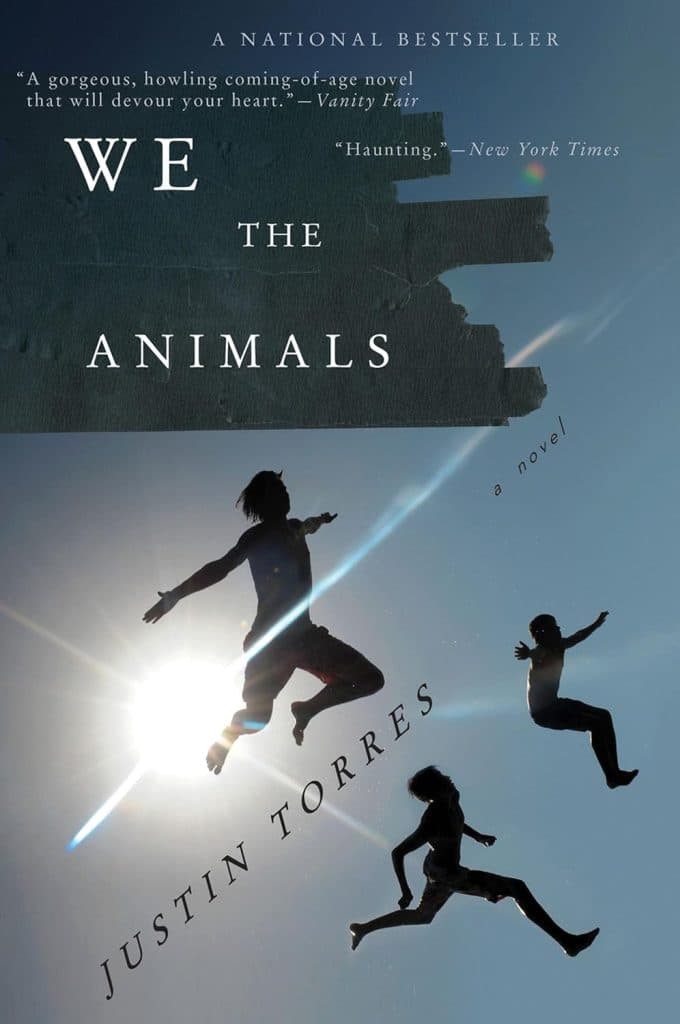
We the Animals

Read: July 2024

Get this book

We the Animals

by Justin Torres

Today, I embarked on the literary journey of We the Animals by Justin Torres. This novel, listed among the New York Times’ 100 Best Books of the Century, is a groundbreaking work of art. The author of Blackouts immerses us in the tumultuous heart of a family, the intense bonds of three brothers, and the mythic impact of this fierce love on the individuals we are destined to become.

The narrative unfolds as three brothers navigate their way through childhood, a journey filled with emotional highs and lows, from playful acts like smashing tomatoes on each other to finding solace in each other’s company during their parents’ conflicts and even tiptoeing around the house as their mother rests after her graveyard shift. Paps and Ma, hailing from Brooklyn—he’s Puerto Rican, she’s white—share a profound and challenging love, shaping and reshaping the family numerous times. Life in this family is intense and all-consuming, filled with disorder, heartache, and the ecstasy of belonging to each other.

From the intense familial unity, a child feels to the profound alienation he endures as he begins to see the world, this beautiful novel doesn’t just tell a coming-of-age story; it reinvents it in a sly and punch-in-the-stomach powerful way. It delves into themes such as love, the meaning of family, and heartache, adding another layer of depth and complexity to the story.

×
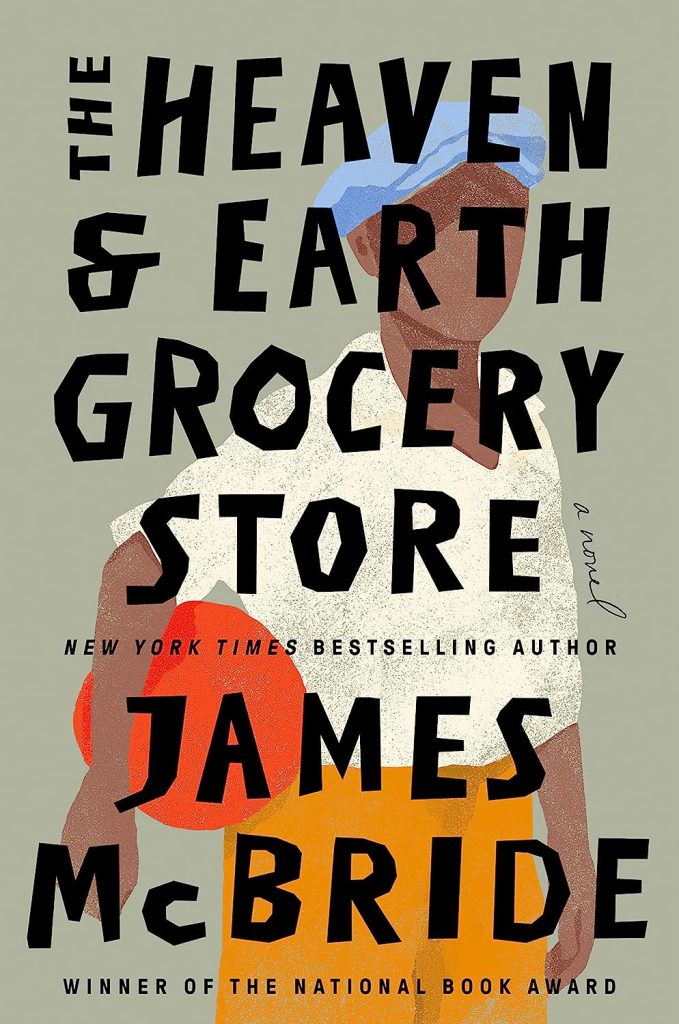
The Heaven & Earth Grocery Store

Read: November 2023

Get this book

The Heaven & Earth Grocery Store

by James McBride

I started reading The Heaven & Earth Grocery Store: A Novel by James McBride today. It’s the seventy-first book I’ve read this year and the two hundredth since January 1, 2019. The novel’s narrative begins in 1972 when workers in Pottstown, Pennsylvania, were digging the foundations for a new development. They were surprised to find a skeleton at the bottom of the well. The identity of the skeleton and how it ended up there were long-held secrets that the residents of Chicken Hill kept.

Jewish immigrants and African Americans lived together in this run-down neighborhood and shared their aspirations and hardships. Moshe and Chona Ludlow resided in Chicken Hill when Moshe integrated his theatre, and Chona ran the Heaven & Earth Grocery Store. When the state officials searched for a deaf boy to institutionalize him, it was Chona and Nate Timblin, the Black janitor at Moshe’s theatre and the unofficial leader of the Black community on Chicken Hill, who collaborated to keep the boy safe.

As the stories of these characters intertwine and develop, it becomes evident how much the individuals living on the outskirts of white, Christian America struggle to survive and what they must do to make it through. As the truth is ultimately disclosed regarding the events that occurred on Chicken Hill, including the involvement of the town’s white establishment, McBride illustrates to us that, even in the darkest of times, love and community – the very essence of heaven and earth – help us endure.

Bringing his masterly storytelling skills and deep faith in humanity to The Heaven & Earth Grocery Store, James McBride has written a novel as compassionate as Deacon King Kong and as inventive as The Good Lord Bird.

The Jan Lilien Education Fund sponsors ongoing sustainability and environmental awareness programs. Regarding gifts made this month, I will match dollar for dollar. All donations are tax-deductible.

Subscribe

Contact Us

I receive a commission when you buy a book or product using a link on this page. Thank you for supporting Sharing Jan’s Love blog.


×
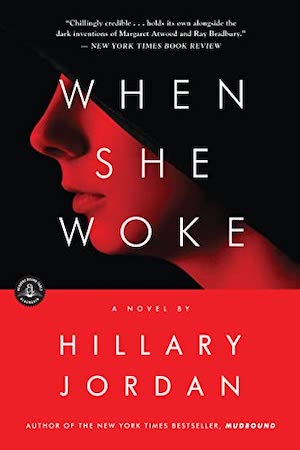
When She Woke

Read: August 2022

Get this book

When She Woke

by Hillary Jordan

When She Woke, a fable about a stigmatized woman struggling to navigate an America of a not-too-distant future by Hillary Jordan, Bellwether Prize WinnerHannah Payne, the protagonist, embarks on a path of self-discovery that forces her to question the values she once held and the righteousness of a country that politicizes faith. The premise of When She Woke seems to be happening as I read the novel. It is also the one hundred books I have read since the beginning of 2019 and the forty-fifth this year.

Hannah Payne, like Hester Prynne, is attacked for her actions by extreme religious beliefs. Instead of wearing a scarlet letter, Hannah’s chroming (i.e., having her skin altered) makes her skin red from head to toe. The chroming might have been a good theme for a science fiction novel. Still, Ms. Jordan has written a captivating book in which Hannah confronts who she is and, after questioning the values she once had, discovers that Hannah is more vital than she believed she could be.

I highly recommend this novel.

As Ms. Jordan describes the book,

Hannah Payne’s life has been devoted to church and family. But after she’s convicted of murder, she awakens to a nightmare: she finds herself lying on a table in a solitary confinement cell, her skin turned bright red. Cameras are broadcasting her every move to millions at home, for whom observing newly made “Chromes”—criminals whose skin color has been genetically altered to reflect their crime—is a sinister form of entertainment. Hannah is a Red, a murderess. The victim, says the state of Texas, was her unborn child, and she’s determined to protect the identity of the father, a public figure with whom she shared a fierce and forbidden love.

A powerful reimagining of The Scarlet Letter, When She Woke is a timely fable about a stigmatized woman struggling to navigate a dystopian America. In this not-too-distant future, the line between church and state has been eradicated and convicted felons are no longer imprisoned, but “chromed” and released back into the population to survive as best they can.

As she seeks a path to safety in an alien and hostile world, Hannah unknowingly embarks on a journey of self-discovery that forces her to question the values she once held true and the righteousness of a country that politicizes faith and love.


The Jan Lilien Education Fund sponsors ongoing sustainability and environmental awareness programs. All donations are tax-deductible.

Subscribe

Contact Us

I receive a commission when you buy a book or product using a link on this page. Thank you for supporting Sharing Jan’s Love blog.

×
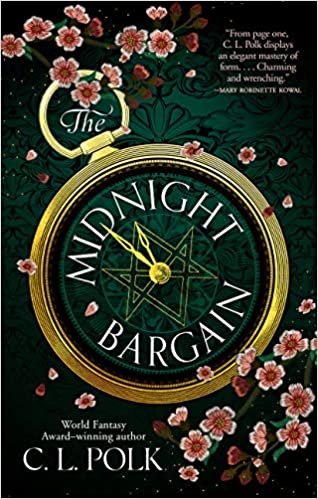
The Midnight Bargain

Read: February 2022

Get this book

The Midnight Bargain

by C.L. Polk

The Midnight Bargain by C.L. Polk is about Beatrice Clayborn, a sorceress, who was the next book to read. She practices magic in secret, terrified of being locked into a marital collar that will cut off her powers to protect her unborn children. She dreams of becoming a full-fledged Magus and pursuing magic as her calling as men do. Still, her family has staked everything to equip her for Bargaining Season, when young men and women of means descend upon the city to negotiate the best marriages. The Clayborn’s are in severe debt, and only she can save them by securing a good match before their creditors call.

In a stroke of luck, Beatrice finds a grimoire that contains the key to becoming a Magus, but before she can purchase it, a rival sorceress swindles the book right out of her hands. Beatrice summons a spirit to help her get it back, but her new ally exacts a price: Beatrice’s first kiss . . . with her adversary’s brother, the handsome, compassionate, and fabulously wealthy Ianthe Lavan.

The more Beatrice is entangled with the Lavan siblings, the harder her decision becomes: If she casts the spell to become a Magus, she will devastate her family and lose the only man to ever see her for who she is, but if she marries—even for love—she will sacrifice her magic, her identity, and her dreams. But how can she choose just one, knowing she will forever regret the path not taken?

Subscribe

Contact Us

When you buy a book or product using a link on this page, I receive a commission. Thank you for supporting Sharing Jan’s Love blog.

×
Losing Earth: A Recent History

Read: October 2019

Get this book

Losing Earth: A Recent History

by Nathaniel Rich

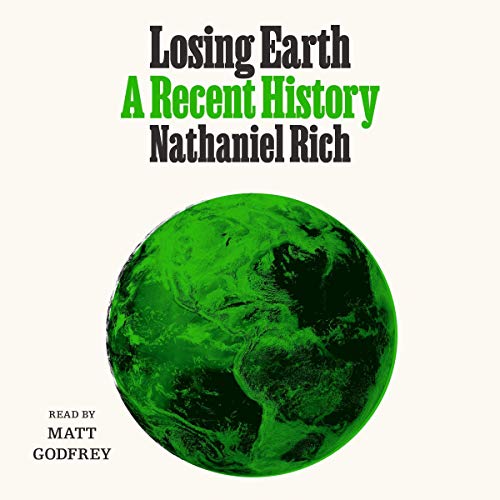
Losing Earth: A Recent History by Nathaniel Rich reminds us how close we were to halting the climate emergency, and our failure has resulted in our passing the tilting point. The book “reveals, in previously unreported detail, the birth of climate denialism and the genesis of the fossil-fuel industry’s coordinated effort to thwart climate policy through misinformation propaganda and political influence.”

By 1979, we knew nearly everything we understand today about climate change – including how to stop it. Over the next decade, a handful of scientists, politicians, and strategists, led by two unlikely heroes, risked their careers in a desperate, escalating campaign to convince the world to act before it was too late. Losing Earth is their story and ours.

The New York Times Magazine devoted an entire issue to Nathaniel Rich’s groundbreaking chronicle of that decade, which became an instant journalistic phenomenon – the subject of news coverage, editorials, and conversations all over the world. In its emphasis on the lives of the people who grappled with the significant existential threat of our age, it made vivid the moral dimensions of our shared plight.

Losing Earth tells the human story of climate change in even richer, more intimate terms. It reveals, in previously unreported detail, the birth of climate denialism and the genesis of the fossil-fuel industry’s coordinated effort to thwart climate policy through misinformation propaganda and political influence. The audiobook carries the story into the present day, wrestling with the long shadow of our past failures and asking crucial questions about how we make sense of our past, our future, and ourselves.

Like John Hersey’s Hiroshima and Jonathan Schell’s The Fate of the Earth, Losing Earth is the rarest of achievements: a riveting work of dramatic history that articulates a moral framework for understanding how we got here and how we must go forward.

Losing Earth is a must-read book!

Subscribe

Contact Us

×
Victory City: A Novel

Read: February 2023

Get this book

Victory City: A Novel

by Salman Rushdie

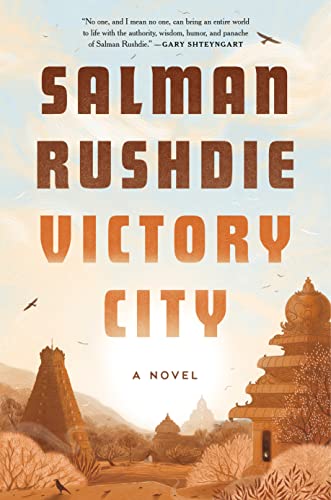
Victory City: A Novel by Salman Rushdie is an epic tale of a woman who breathes a fantastical empire into existence, only to be consumed by it over the centuries from the transcendent imagination of Booker Prize-winning, internationally bestselling author Salman Rushdie. It is well written and was a page-turner from page one to the end. I highly recommend this novel and encourage everyone to read it.

Brilliantly styled as a translation of an ancient epic, this is a saga of love, adventure, and myth that is a testament to storytelling’s power. After witnessing her mother’s death, the grief-stricken Pampa Kampana becomes a vessel for the goddess Parvati, who begins to speak out of the girl’s mouth. I was hooked when Pampa Kampana provided the seeds that created Victory City out of thin air.

David Remnick’s interview with Salman Rushdie in The New Yorker provided background I would have missed.

“The first kings of Vijayanagara announced, quite seriously, that they were descended from the moon,” Rushdie said. “So when these kings, Harihara and Bukka, announce that they’re members of the lunar dynasty, they’re associating themselves with those great heroes. It’s like saying, ‘I’ve descended from the same family as Achilles.’ Or Agamemnon. And so I thought, Well, if you could say that, I can say anything.”

Above all, the book is buoyed by the character of Pampa Kampana, who, Rushdie says, “just showed up in my head” and gave him his story, his sense of direction. Rushdie’s pleasure in writing the novel was in “world building” and, at the same time, writing about a character building that world: “It’s me doing it, but it’s also her doing it.” The pleasure is infectious. “Victory City” is an immensely enjoyable novel. It is also an affirmation. At the end, with the great city in ruins, what is left is not the storyteller but her words:

I, Pampa Kampana, am the author of this book.
I have lived to see an empire rise and fall.
How are they remembered now, these kings, these queens?
They exist now only in words . . .
I myself am nothing now. All that remains is this city of words.
Words are the only victors.

The Goodreads summary provides a brief overview,

In the wake of an insignificant battle between two long-forgotten kingdoms in fourteenth-century southern India, a nine-year-old girl has a divine encounter that will change the course of history. After witnessing her mother’s death, the grief-stricken Pampa Kampana becomes a vessel for the goddess Parvati, who begins to speak out of the girl’s mouth. Granting her powers beyond Pampa Kampana’s comprehension, the goddess tells her that she will be instrumental in the rise of a great city called Bisnaga–literally victory city–the wonder of the world.

Over the next two hundred and fifty years, Pampa Kampana’s life becomes deeply interwoven with Bisnaga’s, from its literal sowing out of a bag of magic seeds to its tragic ruination in the most human of ways: the hubris of those in power. Whispering Bisnaga and its citizens into existence, Pampa Kampana attempts to make good on Parvati’s task: giving women equal agency in a patriarchal world. But all stories have a way of getting away from their creator, and Bisnaga is no exception. As years pass, rulers come and go, battles are won and lost, and allegiances shift, the very fabric of Bisnaga becomes an ever more complex tapestry–with Pampa Kampana at its center.


The Jan Lilien Education Fund sponsors ongoing sustainability and environmental awareness programs. Gifts made this month; I will match dollar-for-dollar. All donations are tax-deductible.

Subscribe

Contact Us

I receive a commission when you buy a book or product using a link on this page. Thank you for supporting Sharing Jan’s Love blog.


×

Discover more from Sharing Jan’s Love

Subscribe now to keep reading and get access to the full archive.

Continue reading