
Understanding Time: Is It Eternalism or Presentism?

Understanding Time: Is It Eternalism or Presentism?

In the Present Moment, I Choose to See and Hear Others

Estimated reading time: 2 minutes, 46 seconds

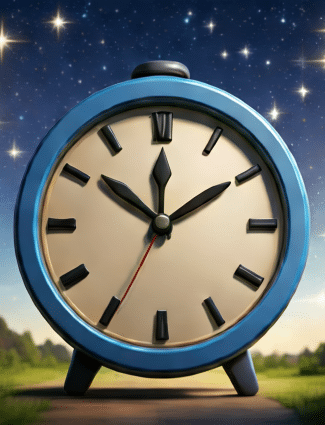
As the end of October approaches, my morning walks either begin in darkness or I wait for the first rays of sunlight to peek above the treetops. In just over three days, thanks to Benjamin Franklin’s concept of moving morning daylight to the evening in the summer, it will be darker at night, allowing for sunnier morning walks. While I may benefit temporarily from the semi-annual clock change, I wish we could spend less time adjusting the clocks and more time contemplating the meaning of life and how to make the most of the time we have.
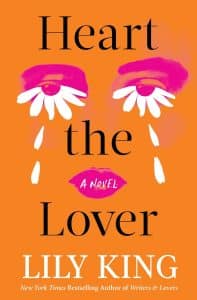
Heart the LoverFinding meaning in life has always been a priority for me. Regular readers know that I attribute my survival after loss to discovering purpose through faith, community, volunteering, walking, reading, and striving to be the best version of myself. Being human, I leave the determination of my success to others.

In my view, time is non-linear and therefore difficult to quantify. Last week, I read “Heart the Lover” by Lily King, and the narrator, Jordan, struggles with the concepts of the past, present, and future. Specifically, she mentions:

“Eternalism is the belief that everything that is, has been, and will be exists right now and forever, all at once. Presentism is the belief that only what exists in the present exists at all. Nothing before and nothing after. No exceptions,” muses Jordan in “Heart the Lover.”

I do not find either perspective entirely satisfying. Eternalism, often referred to as the Block Universe theory, posits that the past, present, and future are all equally real and hold equal importance. According to this view, the universe is a unified entity that spans both space and time. In this scenario, are our lives predetermined? If we had complete knowledge of the world, could we predict future events? Would it be possible because specific, consistently applicable underlying laws govern occurrences in the universe?

On the other hand, presentism, also known as the Growing Block Universe theory, asserts that only present events truly exist. According to this idea, the future has not yet occurred and remains undetermined, while the past has departed but still influences the present.

I find this viewpoint more comfortable, as I agree with William Faulkner’s statement: “The past is never dead. It’s not even past. All of us labor in webs spun long before we were born—webs of heredity and environment, of desire and consequence, of history and eternity.”
The Amen EffectAccepting that the past is an integral part of us explains the complexity of time and how we live in the only day we are guaranteed to have. Too many of us, knowing that the present is all that exists, focus on the short term rather than on how our lives shape the future.

Having found meaning after loss, I take comfort in the thought that, as Rabbi Uri Allen shared during the High Holidays, our shadow represents our effort to bring God into the world.

For me, in the present moment, to see and hear others as Rabbi Sharon Brous defines the word “Amen” in “The Amen Effect” is essential. Not only does this allow me to bring the holy into my day-to-day life, but it also enables me to shape the future, one day and one person at a time.

Let me know your thoughts.

Amen.
The Amen Effect is a Book for Our Moment!

On Tuesday, March 18th, I attended the Kol Tzedek Speakers Series at Temple Emanu-El in Westfield. I was captivated by an inspiring presentation from Rabbi Sharon Brous, the author of "The Amen Effect: Ancient Wisdom to Heal Our Hearts and Mend Our Broken World." From the moment she spoke her first words, my eyes brimmed with tears, a testament to the deep emotional connection she stirred within me.

The Jan Lilien Education Fund!

Understanding Time: Is It Eternalism or Presentism?
×
The Bookstore Sisters: A Short Story

Read: October 2022

Get this book

The Bookstore Sisters: A Short Story

by Alice Hoffman

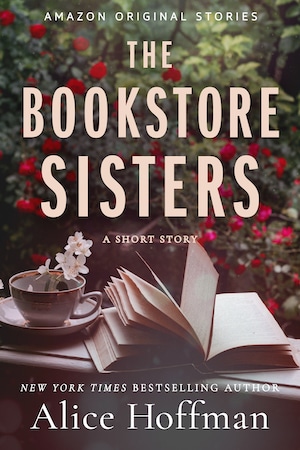
The Bookstore Sisters: A Short Story by Alice Hoffman is a heartfelt short story about family, independence, and finding your place in the world. The overview should be enough to encourage everyone to read the book. I recommend this short story without any reservations. Ms. Hoffman has written a moving story that helped me to grapple with grief and reminded me that love is the highest and most important goal that humans can aspire.

Isabel Gibson has all but perfected the art of forgetting. She’s a New Yorker now, with nothing left to tie her to Brinkley’s Island, Maine. Her parents are gone, the family bookstore is all but bankrupt, and her sister, Sophie, will probably never speak to her again.

But when a mysterious letter arrives in her mailbox, Isabel feels drawn to the past. After years of fighting for her independence, she dreads the thought of going back to the island. What she finds there may forever alter her path—and change everything she thought she knew about her family, home, and herself.

Isabel sums up the power of love in this paragraph,

She was thinking about the way a fish loved a river, and a bird loved the sky, and a mother loved her daughters. She was remembering everything. How love could change a person, how it could cause you the greatest sorrow or shelter you from harm. There were moths hitting against the windowpanes. A night heron called in the marshland as if its heart were breaking.

I have always fantasized about working in or owning a small bookstore.

The Bookstore Sisters: A Short Story rekindled that dream and reminded me of the power of love.


The Jan Lilien Education Fund sponsors ongoing sustainability and environmental awareness programs. Gifts made this month; I will match dollar-for-dollar. All donations are tax-deductible.

Subscribe

Contact Us

I receive a commission when you buy a book or product using a link on this page. Thank you for supporting Sharing Jan’sJan’s Love blog.

×
Remarkably Bright Creatures

Read: January 2024

Get this book

Remarkably Bright Creatures

by Shelby Van Pelt

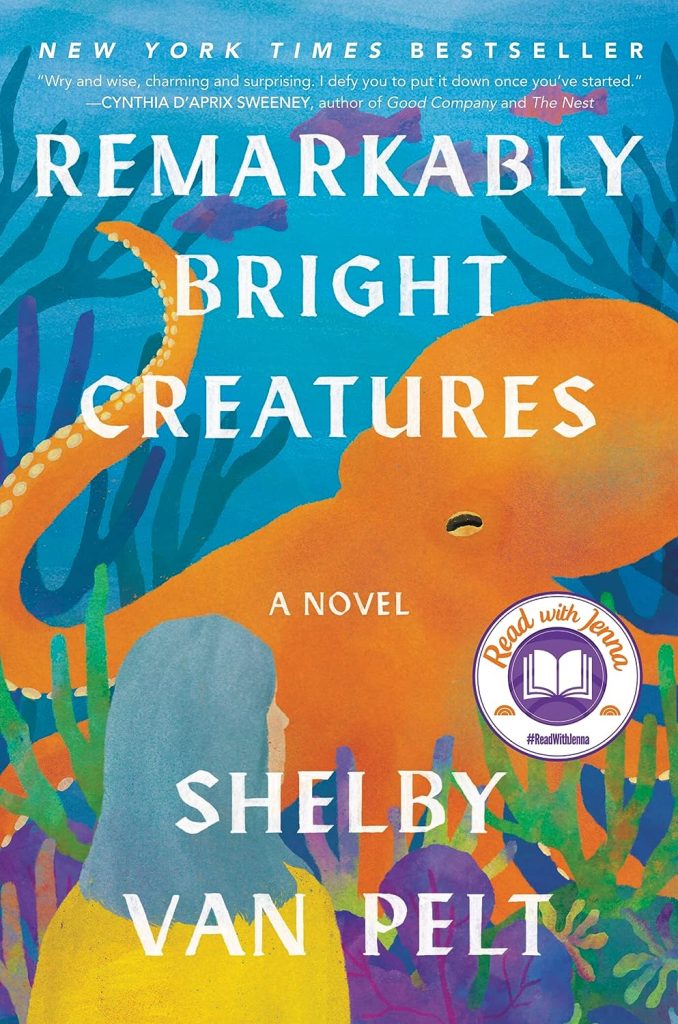
Today, I recommended reading “Remarkably Bright Creatures” by Shelby Van Pelt. It’s a charming, witty, and compulsively readable exploration of friendship, reckoning, and hope. The novel traces the unlikely connection of a widow with a giant Pacific octopus, making it perfect for fans of “A Man Called Ove.” Shelby Van Pelt’s debut novel is a gentle reminder that sometimes, looking at the past can help uncover a future that once felt impossible.

The story follows Tova Sullivan, who works the night shift at the Sowell Bay Aquarium after her husband dies. Tova has been coping with loss since her eighteen-year-old son, Erik, mysteriously vanished on a boat in Puget Sound over thirty years ago.

While at the aquarium, Tova becomes acquainted with Marcellus, a grumpy giant Pacific octopus who refuses to cooperate with his human captors. However, Marcellus forms a remarkable friendship with Tova and helps her uncover the truth about her son’s disappearance.

As a detective, Marcellus uses his invertebrate body to deduce what happened when Tova’s son disappeared. Together, they embark on a journey to unearth the truth before it’s too late.


The Jan Lilien Education Fund sponsors ongoing sustainability and environmental awareness programs. Gifts made this month; I will match dollar-for-dollar. All donations are tax-deductible.

Subscribe

Contact Us

I receive a commission when you buy a book or product using a link on this page. Thank you for supporting Sharing Jan’s Love blog.


×
An Assassin in Utopia: The True Story of a Nineteenth-Century Sex Cult and a President's Murder

Read: February 2023

Get this book

An Assassin in Utopia

by Susan Wels

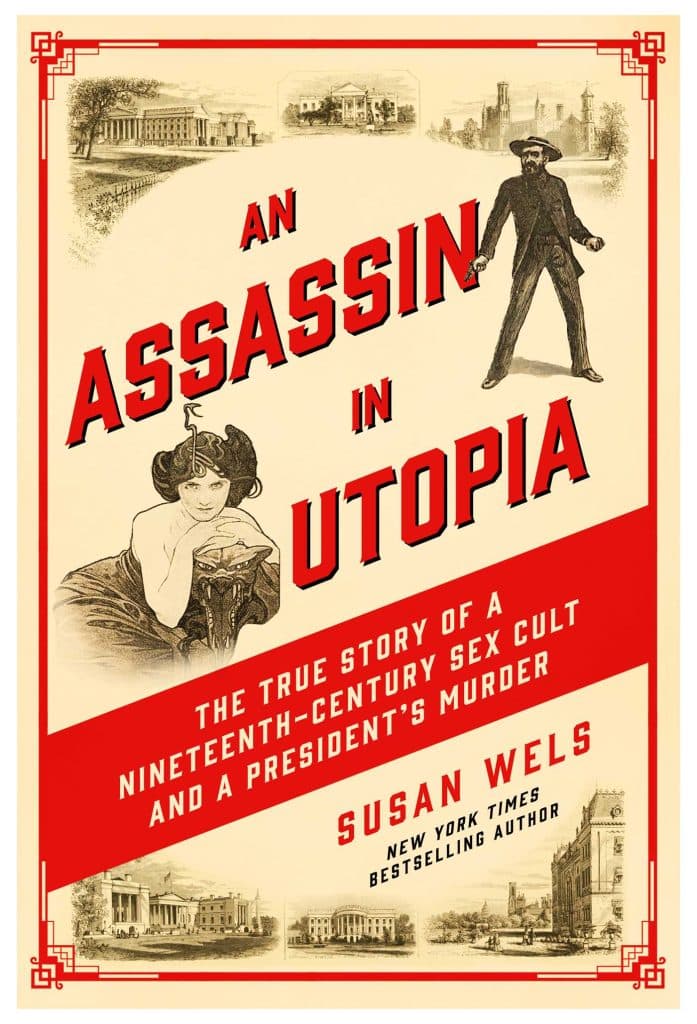
An Assassin in Utopia: The True Story of a Nineteenth-Century Sex Cult and a President’s Murder by Susan Wels is a true crime odyssey that explores a forgotten, astonishing chapter of American history, leading the reader from a free-love community in upstate New York to the shocking assassination of President James Garfield. I had read about this historical period in several other books, most recently Civil War by Other Means.

Susan Wels has written an excellent historical overview of a period we often overlook. I highly recommend An Assassin in Utopia: The True Story of a Nineteenth-Century Sex Cult and a President’s Murder.

The Oneida Community, even though it was the most successful utopian community, is often overlooked. Ms. Wels connects the dots and places the experiment in the center of a transitional period. It is not merely the connection between Charles Julius Guitea and his assassination of President James Garfield, albeit a brutal crime, that shook America to its core, but all of the other linkages. These include “John Humphrey Noyes; his idol, the eccentric newspaper publisher Horace Greeley (founder of the New Yorker and the New York Tribune).”

She also resurrects the importance of the Wormely Compromise and the African-American family that was an instrumental part of public society.

I have found fiction to be something I enjoy, but I knew it was time for a non-fiction book to balance my reading. The New York Times and other publications highly rated An Assassin in Utopia.

The Goodreads summary provides an overview,

It was heaven on earth—and, some whispered, the devil’s garden.

Thousands came by trains and carriages to see this new Eden, carved from hundreds of acres of wild woodland. They marveled at orchards bursting with fruit, thick herds of Ayrshire cattle and Cotswold sheep, and whizzing mills. They gaped at the people who lived in this place—especially the women, with their queer cropped hair and shamelessly short skirts. The men and women of this strange outpost worked and slept together—without sin, they claimed.

From 1848 to 1881, a small utopian colony in upstate New York—the Oneida Community—was known for its shocking sexual practices, from open marriage and free love to the sexual training of young boys by older women. And in 1881, a one-time member of the Oneida Community—Charles Julius Guiteau—assassinated President James Garfield in a brutal crime that shook America to its core.

An Assassin in Utopia is the first book that weaves together these explosive stories in a tale of utopian experiments, political machinations, and murder. This deeply researched narrative—by bestselling author Susan Wels—tells the true, interlocking stories of the Oneida Community and its radical founder, John Humphrey Noyes; his idol, the eccentric newspaper publisher Horace Greeley (founder of the New Yorker and the New York Tribune); and the gloomy, indecisive President James Garfield—who was assassinated after his first six months in office.

Juxtaposed to their stories is the odd tale of Garfield’s assassin, the demented Charles Julius Guiteau, who was connected to all of them in extraordinary, surprising ways.

Against a vivid backdrop of ambition, hucksterism, epidemics, and spectacle, the book’s interwoven stories fuse together in the climactic murder of President Garfield in 1881—at the same time as the Oneida Community collapsed.

Colorful and compelling, An Assassin in Utopia is a page-turning odyssey through America’s nineteenth-century cultural and political landscape.


The Jan Lilien Education Fund sponsors ongoing sustainability and environmental awareness programs. Gifts made this month; I will match dollar-for-dollar. All donations are tax-deductible.

Subscribe

Contact Us

I receive a commission when you buy a book or product using a link on this page. Thank you for supporting Sharing Jan’s Love blog.


×
When I'm Gone, Look for Me in the East

Read: January 2023

Get this book

When I’m Gone, Look for Me in the East

by Quan Barry

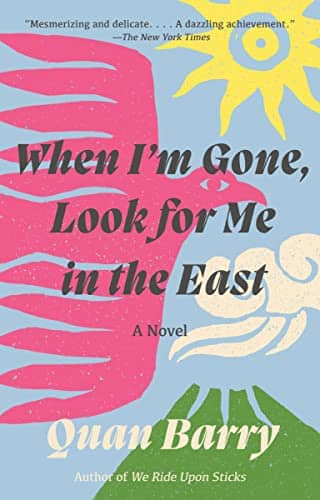
When I’m Gone, Look for Me in the East by Quan Barry is a luminous novel that moves across a windswept Mongolia as a pair of estranged twin brothers make a journey of duty, conflict, and renewed understanding. Since Jan died, I have been sharing her love and not looking for her, so this novel attracted me as it was a counter-narrative. Are our lives our own, or do we belong to something more significant?

When I’m Gone, Look for Me in the East is a stunningly far-flung examination of our struggle to retain our convictions and discover meaning in a fast-changing world, as well as a meditation on accepting what is.

Although I know only a limited amount about Buddhism and even less about Mongolia, I found When I’m Gone, Look for Me in the East a fascinating page-turner of a novel.

Coincidently, while en route to see Memorial, we stopped to eat at a Mexican-Peruvian restaurant on Tenth Avenue in NYC. On the television was a continuous loop of a travelogue on Mongolia.

I found several quotes that I have used in other posts already.

  • “Sometimes faith is the only medicine available.”
  • “When the only hope is a boat and there is no boat, I will be the boat.”

I plan to use others in future posts.

Love never dies, and this quote echoed my belief.

“Love is neither created nor destroyed. It exists at all times and in all dimensions. Love is not something we create—it is something that wells up in us, like sap in a tree. It is an element in the fabric of the universe. Even on that distant day when sentient beings no longer exist, Love carries on. Perhaps our personal relationship to Love is impermanent, but Love itself is not.”

I highly recommend When I’m Gone, Look for Me in the East.

The Goodreads summary provides an overview,

Tasked with finding the reincarnation of a great lama somewhere in the vast Mongolian landscape, the young monk Chuluun seeks the help of his identical twin, Mun, who was recognized as a reincarnation himself as a child but has since renounced their once shared monastic life.

Harking back to her vivid and magical first novel set in Vietnam, Quan Barry carries us across a landscape as unforgiving as it is beautiful and culturally varied, from the stark Gobi Desert to the ancient capital of Chinggis Khan. As their country stretches before them, questions of the immortal soul, along with more earthly matters of love, sex, and brotherhood, haunt the twins, who can hear each other’s thoughts.


The Jan Lilien Education Fund sponsors ongoing sustainability and environmental awareness programs. Gifts made this month; I will match dollar-for-dollar. All donations are tax-deductible.

Subscribe

Contact Us

I receive a commission when you buy a book or product using a link on this page. Thank you for supporting Sharing Jan’s Love blog.


×
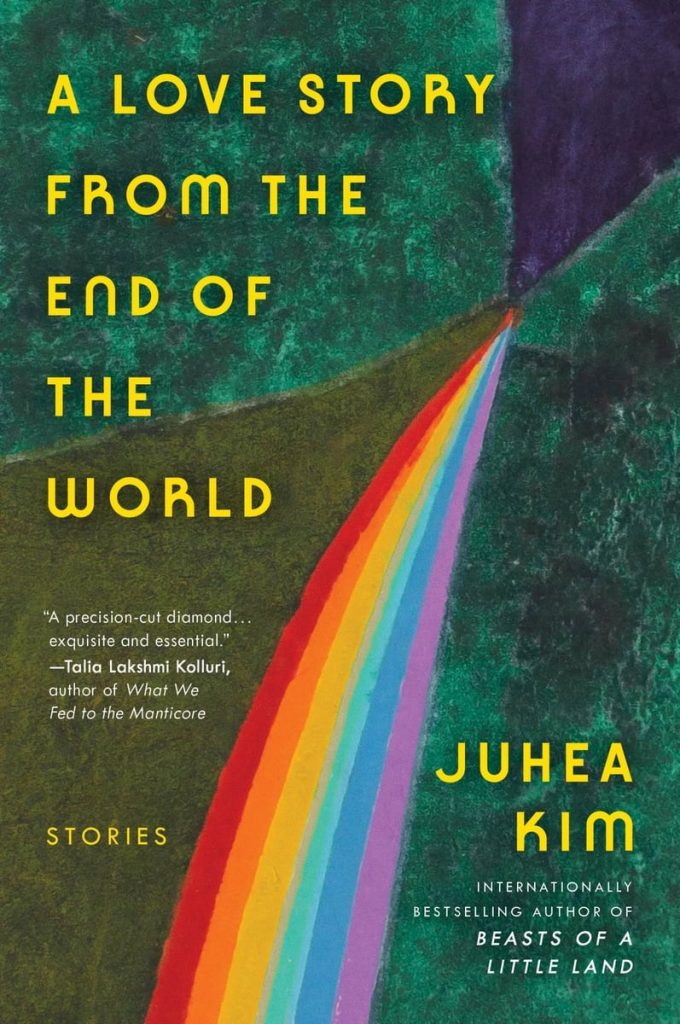
A Love Story from the End of the World

Read: January 2026

Get this book

A Love Story from the End of the World

by Juhea Kim

Juhea Kim, the acclaimed author of Beasts of a Little Land and City of Night Birds, presents an exquisite collection of stories that explores the delicate balance between humans and the natural world. With the clear-eyed reverence of Richard Powers and the sparkling sincerity of George Saunders, her first story collection, A Love Story from the End of the World, offers a breathtaking view of our fractured world—and our broken hearts. Through its passionate narrative, the collection serves as a poignant reminder that, as humans, we are nothing without nature.

Spanning multiple locales and time periods, and rendered in fine detail and vivid color, this transportive collection illustrates what it means to live as human inhabitants of our singular, miraculous planet.

Lyrical, at times hilarious, and always heartfelt, each of these ten stories reflects individual choices in the face of “man-made” apocalypses. In a near-future Seoul, where air pollution has become so severe that a translucent biodome has covered the city, a civil engineer responsible for its upkeep considers an arranged marriage. A painter, disenchanted with New York City, travels to the South of France and becomes romantically involved with an entrepreneur who claims to have invented a new color. Meanwhile, on an island where the Indian and Pacific Oceans converge, and where foreign countries have dumped their waste, causing a landfill mountain to form, a local boy facing daily hardships gains internet fame for his K-pop-inspired dances.


Juhea Kim is the author of the novel Beasts of a Little Land, which was a finalist for the Dayton Literary Peace Prize and the winner of the Yasnaya Polyana Literary Award, Russia’s most significant annual award in literature. It has been translated into many languages and is for television. She is also the author of City of Night Birds, which was a Reese’s Book Club pick.

A graduate of Princeton University, her writing has been published in Granta, the Times Literary Supplement, the Independent, Zyzzyva, Guernica<, and other outlets. She is an advocate for wildlife conservation, animal rights, and education and aid in Africa. Born in Korea and raised in Portland, Oregon, Kim now lives in London.


Discover your next favorite book and dive into a world of curated, exciting reads by purchasing through my links. You’ll have access to a diverse selection of books that I’ve personally vetted to ensure quality and enjoyment. Additionally, by supporting these selections, you’ll help me continue to provide you with more personalized recommendations. I earn a small commission from your purchase, which allows me to buy and share even more books with you. Your support truly makes a difference!


×
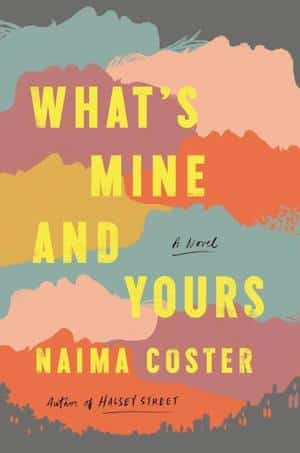
What's Mine and Yours

Read: February 2022

Get this book

What’s Mine and Yours

by Naima Coster

What’s Mine and Yours by Naima Coster is one of the best books I have read in the last few years. At this moment in my life, family means more than ever. This book explores how families can collapse and find ways to reunite. Although my life circumstances are the polar opposite of the protagonists, the book’s central themes resonated with me.

The focus on integration in this Millenium is a subject that needs to be discussed openly and honestly. The racist response of some of the parents is told in a way that clarifies the pain that that can cause.

Even the parents who favor integration have their flaws, which are passed on to their children.

The children, especially Noelle and Gee, oppose their parent’s actions. The sins of their parents are sowed upon them as well.

I have placed this book on my list of novels for reading later this year or n 2023. Its themes are so strong that a second reading is required to engage with its multiple levels fully.

This is a Goodreads summary.

A community in the Piedmont of North Carolina rises in outrage as a county initiative draws students from the primarily Black east side of town into predominantly white high schools on the west. For two students, Gee and Noelle, the integration sets off a chain of events that will tie their two families together in unexpected ways over the next twenty years.

The debate is Jade, Gee’s steely, ambitious mother, on one side of the integration. In the aftermath of a severe loss, she is determined to give her son the tools he’ll need to survive in America as a sensitive, anxious, young Black man. On the other side is Noelle’s headstrong mother, Lacey May, a white woman who refuses to see her half-Latina daughters as anything but white. She strives to protect them as she couldn’t protect herself from the influence of their charming but unreliable father, Robbie.

When Gee and Noelle join the school play meant to bridge the divide between new and old students, their paths collide, and their two seemingly disconnected families begin to form deeply knotted, messy ties that will shape the trajectory of their adult lives. And their mothers-each determined to see her child inherit a better life-will make choices that will haunt them for decades to come.

As love is built and lost, and the past never too far behind, What’s Mine and Yours is an expansive, vibrant tapestry that moves between the years, from the foothills of North Carolina to Atlanta, Los Angeles, and Paris. It explores every family’s unique organism: what breaks them apart and how they come back together.

Subscribe

Contact Us

When you buy a book or product using a link on this page, I receive a commission. Thank you for supporting Sharing Jan’s Love blog.

×