
The Metromaniacs Was the Farce I Needed!

The Metromaniacs Was the Farce I Needed!

Estimated reading time: 1 minute, 8 seconds
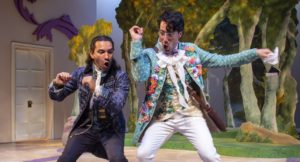
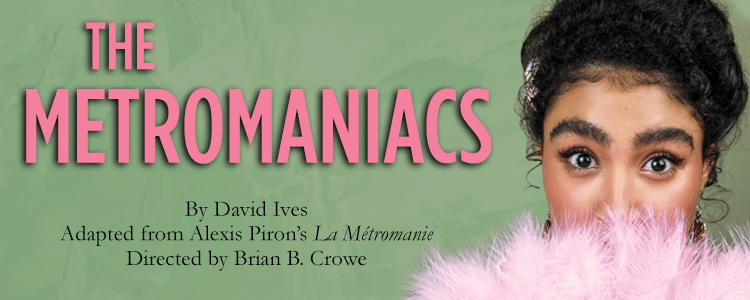
The Metromaniacs Was the Farce I Needed!Today, I went to the Shakespeare Theatre of NJ to see The Metromaniacs!

As the Star-Ledger‘s Patrick Maley wrote, The Metromaniacs “is a farce for the sake of farce, and where there is a story here, it is only a vehicle for the gags.”

After sixteen months as a widow, I needed a good laugh and a relaxing afternoon.

The Shakespeare Theatre described the play as,

This outrageous and hilarious play from the 1700s gives Molière a run for his money. David Ives’ superb translation and adaptation of Piron’s original will have you grinning with delight over the nimble word play and clever wit that dominates every moment of this wonderful farce.

I went with my friend Arnold and had a wonderful time.

Would I have preferred to have Jan sitting next to me? Yes.

However, in this new phase of my life, I know one self-evident truth, the love Jan and I shared will never die!


The Jan Lilien Education Fund sponsors ongoing sustainability and environmental awareness programs. Gifts made this month; I will match dollar-for-dollar. All donations are tax-deductible.

Subscribe

Contact Us

I receive a commission when you buy a book or product using a link on this page. Thank you for supporting Sharing Jan’s Love blog.
Much Ado About Everything

Last night, I enjoyed watching the NJ Shakespeare Theatre‘s outdoor performance of Much Ado About Nothing. The final performance of the season is Sunday, July 31. Nick, my oldest grandson and a friend of his, joined me for a lovely evening. It was the first time I had attended the outdoor stage since Jan died. […]

Share your thoughts and ideas

This site uses Akismet to reduce spam. Learn how your comment data is processed.

The Jan Lilien Education Fund!

The Metromaniacs Was the Farce I Needed!
×
Living With Loss, One Day at a Time

Read: September 2021

Get this book

Living With Loss, One Day at a Time

by Rachel Blythe Kodanaz

Living With Loss, One Day at a Time by Rachel Blythe Kodanaz is the book I would recommend for anyone beginning or in the early stages of grief. It should be on the griever’s nightstand so they can start and end their day with reading.

Ms. Kodanaz has presented at my bereavement groups and has been an inspiration. She encouraged me not only to continue writing but also to share my thoughts publicly.

Usually, I only write a review once I have finished the book. However, this is a collection of thoughts for each day of the journey. Over the first weekend, I read up to the number of days since my wife died. Now I will read the daily message each day. When I get to the end of the year, I will start over.

There are many essential gems in the daily readings. The one for Day 9, Love Never Dies, jumped off the page due to my writings on the same theme.

Love Never Dies. Your loved one has passed away, but the love you shared has not died. The memories you created, the connection you built together, and your affection toward one another will live forever.

Embrace the love and cherish the memories, as they will always be a part of you remain in your heart.

There are at least a dozen others that I have earmarked for future streams or even the basis of future posts.

Subscribe

Contact Us

×
Neruda on the Park: A Novel

Read: May 2023

Get this book

Neruda on the Park: A Novel

by Cleyvis Natera

Neruda on the Park is a novel by Cleyvis Natera that beautifully depicts the complexities of family, friendship, and ambition. The story highlights the community’s efforts to protect their neighborhood amidst the gentrification and the tension between a mother and her daughter.

The Guerreros have lived in Nothar Park, a Dominican neighborhood in New York City, for twenty years. When a neighboring tenement faces demolition, Eusebia, an elder of the community, takes matters into her own hands and devises a series of increasingly dangerous schemes to halt the construction of luxury condos. Meanwhile, Eusebia’s daughter, Luz, a rising associate at a Manhattan law firm, becomes distracted by a passionate romance with the handsome white developer working on the project her mother opposes.

As Luz’s father, Vladimir, designs their retirement home in the Dominican Republic, mother and daughter clash, escalating tensions in Nothar Park and leading to a near-fatal climax. Overall, Neruda on the Park is a captivating story that weaves a rich, vivid tapestry of community and sacrifice to protect what matters most.


The Jan Lilien Education Fund sponsors ongoing sustainability and environmental awareness programs. Gifts made this month; I will match dollar-for-dollar. All donations are tax-deductible.

Subscribe

Contact Us

I receive a commission when you buy a book or product using a link on this page. Thank you for supporting Sharing Jan’s Love blog.


×
Funny Story

Read: November 2024

Get this book

Funny Story: A Novel

by Emily Henry

Today, I began reading Emily Henry‘s Funny Story, a delightful new novel about a pair of opposites connected by an unexpected bond. It was featured in The New York Times 100 Notable Books of 2024. The narrator, Daphne, finds herself single after being dumped following her fiancé’s bachelor party, and she ends up moving in with her ex-fiancé’s former boyfriend.

Daphne always enjoyed how her fiancé, Peter, told their love story: they met on a blustery day, fell in love over an errant hat, and moved back to his lakeside hometown to start their life together. He was great at telling their story—until he realized he was in love with his childhood best friend, Petra.

This is where Daphne begins her new chapter: stranded in beautiful Waning Bay, Michigan, without friends or family, but with a dream job as a children’s librarian (which barely pays the bills). She proposes to room with the only person who might understand her situation: Miles Nowak, Petra’s ex.

Miles is scruffy and chaotic, finding comfort in the sounds of heartbreak ballads. He is the opposite of practical, buttoned-up Daphne, whose coworkers know so little about her that they have a running bet whether she is in the FBI or witness protection. The two roommates initially avoid each other, but one day, while mourning their circumstances, they develop a fragile friendship and devise a plan. Their plan includes posting misleading photos of their summer adventures together—who could blame them for wanting to create a better story?

But it’s all just for show, of course, because there’s no way Daphne would start this new chapter by falling in love with her ex-fiancé’s new fiancée’s ex… right?


When you purchase a book through one of my links, I earn a small commission that helps support my passion for reading. This contribution allows me to buy even more books to share with you, creating an incredible cycle of discovering great reads together! Your support truly makes a difference!


×
Invisible Child

Read: December 2021

Get this book

Invisible Child: Poverty, Survival & Hope in an American City

by Andrea Elliott

Invisible Child: Poverty, Survival & Hope in an American City by Andrea Elliott was a gift from my son Jon. The New York Times selected “Invisible Child” as one of the best books published this year. It is indeed one of the top books on my all-time list.

GoodReads summary provides a good overview,

The riveting, unforgettable story of a girl whose indomitable spirit is tested by homelessness, poverty, and racism in an unequal America—from Pulitzer Prize-winning journalist Andrea Elliott of The New York Times

Invisible Child follows eight dramatic years in the life of Dasani Coates, a child with imagination as soaring as the skyscrapers near her Brooklyn homeless shelter. Born at the turn of a new century, Dasani is named for the bottled water that comes to symbolize Brooklyn’s gentrification and the shared aspirations of a divided city. As Dasani grows up, moving with her tight-knit family from shelter to shelter, this story goes back to trace the passage of Dasani’s ancestors from slavery to the Great Migration north. When Dasani comes of age, New York City’s homeless crisis explodes as the chasm deepens between rich and poor.

In the shadows of this new Gilded Age, Dasani must lead her seven siblings through a thicket of problems: hunger, parental drug addiction, violence, housing instability, segregated schools, and the constant monitoring of the child-protection system. When, at age thirteen, Dasani enrolls at a boarding school in Pennsylvania, her loyalties are tested like never before. As she learns to “code switch” between the culture she left behind and the norms of her new town, Dasani starts to feel like a stranger in both places. Ultimately, she faces an impossible question: What if leaving poverty means abandoning the family you love?

By turns heartbreaking and revelatory, provocative and inspiring, Invisible Child tells an astonishing story about the power of resilience, the importance of family, and the cost of inequality. Based on nearly a decade of reporting, this book vividly illuminates some of the most critical issues in contemporary America through the life of one remarkable girl.

Jan and I were involved and knew that child poverty and homelessness needed repair. In addition, Jan lived on Washington Park across from Ft. Greene Park in 1974-75. We knew the neighborhood where much of the book’s story takes place. 

Before meeting Jan in 1973, I was both a community/tenant organizer and a youth worker. In the latter role, I made weekly hostel trips for eight to ten young boys from East Williamsburg during 1973. The trips were the first the boys had ever been outside of their neighborhood.

Many of them had imaginations like Dasani. They also had her instinct to fight. One of my first tasks was to check for any weapons.

Decades later, when I would see any of them, now adults, they would ask when we were going on another trip. I wish I had met Jan when I made those trips. She would have helped me improve them and document the impact. If I could re-write history, I would have her join me as the second adult on the hostel trips.

After that summer, it was clear my primary skills were as a community/tenant organizer. Over the next few years, my work focused on creating affordable and supportive housing.

Jan and I did meaningful work that made a difference, yet the need for a permanent solution to the crisis remains. The book highlights the crucial role of resilience, the importance of family, and the cost of inequality. As a nation, we cannot undermine those values by breaking up families, impeding resilience, and maintaining racial and economic inequality. 

The current debate in Washington over the Build Back Better legislation needs to focus not on how much we spend but on its impact on children and families

David Brooks, a conservative commentator, has supported these expenditures for what they can do to address this country’s cultural and economic crisis. 

These packages say to the struggling parents and the warehouse workers: I see you. Your work has dignity. You are paving your way. You are at the center of our national vision.

This is how you fortify a compelling moral identity, which is what all of us need if we’re going to be able to look in the mirror with self-respect. This is the cultural transformation that good policy can sometimes achieve. Statecraft is soulcraft.

If you can only read one book this year, this is the one to read. Child poverty, homelessness, and inequality impact all of us. Ending child poverty and homelessness will make us a healthier and more inclusive nation. It is time for a compelling moral call to action!

Subscribe

Contact Us

When you buy a book or product using a link on this page, I receive a commission. Thank you for supporting Sharing Jan’s Love blog.
×
The Rest Is Memory: A Novel

Read: January 2025

Get this book

The Rest Is Memory: A Novel

by Lily Tuck

Today, I dove into “The Rest Is Memory: A Novel” by Lily Tuck, and it’s already leaving a powerful impression. This poignant tale follows a young Catholic girl’s harrowing journey to Auschwitz, woven in a captivating Rashomon-style narrative showcasing Tuck’s brilliance as a storyteller. Esquire has rightly placed it on their list of Best Books for Fall 2024, and I can see why.

In Tuck‘s skilled hands, “The Rest Is Memory” transforms into an unforgettable piece of historical reclamation, breathing life into an innocent soul who has long been remembered only through a haunting triptych of photographs. It’s a journey that promises to linger in my thoughts long after I’ve turned the last page.

In this mesmerizing novel by Lily Tuck, we first glimpse fourteen-year-old Czeslawa riding on the back of a boy’s motorcycle. Tuck imagines Czeslawa’s upbringing in a small Polish village before her world imploded in late 1942. Stripped of her modest belongings, she arrives at Auschwitz shorn and bearing the tattoo number 26947. Shortly after, she is photographed. Three months later, she is dead.

How did this happen to an ordinary Polish citizen? This is the question Tuck grapples with in this haunting narrative, which frames Czeslawa’s story within the tragic context of the six million Poles who perished during the German occupation. A decade before writing The Rest Is Memory“, Tuck read an obituary of the photographer Wilhelm Brasse, who took over 40,000 pictures of Auschwitz prisoners—including three of Czeslawa Kwoka, a Catholic girl from rural southeastern Poland. Tuck cut out these photos and kept them, determined to learn more about Czeslawa. However, she could only gather the barest facts: the village she came from, the transport she was on, that she was accompanied by her mother and neighbors, her tattoo number, and the date of her death. Tuck crafts a remarkable kaleidoscope of imagination from this scant evidence, something only our greatest novelists can achieve.

Susanna Moore described the novel as “Beautifully written, all the while instilling a sense of horror.” Tuck’s language swirls around the reader, yet no word is out of place. The subtly rotating images tumble forth, accelerating as we learn about Czeslawa’s tragic time in Auschwitz, as well as the lives of real individuals, including the brutal Commandant Rudolf Höss, his unconscionable wife Hedwig, psychiatrist and child rescuer Janusz Korczak, and the sharp Polish short story writer Tadeusz Borowski. Although we know Czeslawa’s fate, we must keep turning the pages, thoroughly captivated by Tuck’s nearly otherworldly prose.


When you purchase a book through one of my links, I earn a small commission that helps support my passion for reading. This contribution allows me to buy even more books to share with you, creating an incredible cycle of discovering great reads together! Your support truly makes a difference!


×
Atonement: A Novel

Read: August 2024

Get this book

Atonement: A Novel

by Ian McEwan

Today, I started reading “Atonement: A Novel” by Ian McEwan, an acclaimed Booker Prize-winning author. This symphonic novel explores complex themes, including love and war, childhood and class, guilt and forgiveness. It has been recognized as one of the New York Times’s 100 Best Books of the 21st Century, making it a must-read for those interested in these profound themes.

The story begins on a scorching summer day in 1935, when thirteen-year-old Briony Tallis witnesses a moment of flirtation between her older sister, Cecilia, and Robbie Turner, the son of a servant and Cecilia’s childhood friend. Briony’s incomplete understanding of adult motives and her literary gifts lead to a crime that significantly impacts their lives, taking them on an emotional journey of love, guilt, and forgiveness.

The narrative tracks the repercussions of this crime through the chaos and carnage of World War II, a vivid historical backdrop that immerses the reader into the twentieth century’s close. “Atonement” has been acclaimed for engaging readers on multiple levels, marking it a genuine masterpiece from the Booker Prize-winning, internationally bestselling author Ian McEwan.


Ian McEwan is a critically acclaimed author known for his nineteen novels and two short story collections. His first published work, a collection of short stories titled “First Love, Last Rites,” won the Somerset Maugham Award.

His notable novels include “The Child in Time,” which won the Whitbread Novel of the Year Award in 1987; “The Cement Garden“; “Enduring Love;” “Amsterdam;” which won the Booker Prize in 1998; “Atonement;” “Saturday;” “On Chesil Beach;” “Solar;” “Sweet Tooth;” “The Children Act;” “Nutshell;” and “Machines Like Me,” which became a number-one bestseller.

Several of his works, including “Atonement,” “Enduring Love,” “The Children Act;,” and “On Chesil Beach,” have been adapted into films.


Discover your next favorite book and dive into a world of curated, exciting reads by purchasing through my links. You’ll have access to a diverse selection of books that I’ve personally vetted to ensure quality and enjoyment. Additionally, by supporting these selections, you’ll help me continue to provide you with more personalized recommendations. I earn a small commission from your purchase, which allows me to buy and share even more books with you. Your support truly makes a difference!


×