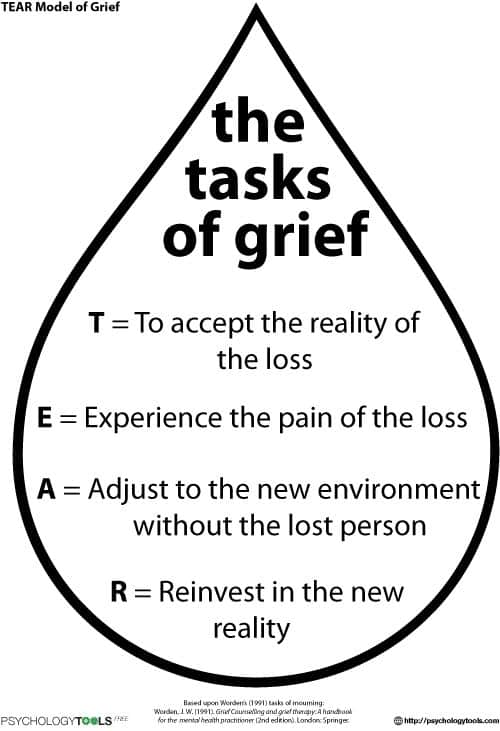

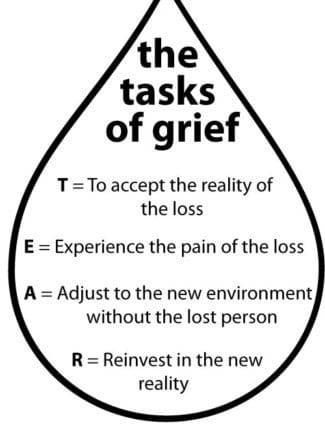
Grief Tasks

The Best Grief Hacks (For Now)

Estimated reading time: 0 minutes, 54 seconds
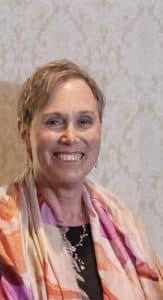
Jan LilienI read David Brooks’s column on The Greatest Life Hacks in the World (for Now) and thought about the best grief hacks I have learned over the last year.

Two of Mr. Brooks’s lists resonated with me. I will add new ones in multiple threads.

Marriage is a 50-year conversation. Marry someone you want to talk with for the rest of your life. Jan and I fell in love during a conversation when we met. That conversation has not and will not end!

If you’ve lost your husband (or wife), sleep on his (or her) side of the bed, and it won’t feel so empty. I sleep on my side of the bed Sunday thru Wednesday and on Jan’s side the rest of the week. 

Grief hacks are how I ensure our love will never die!


Subscribe

Contact Us

I receive a commission when you buy a book or product using a link on this page. Thank you for supporting Sharing Jan’s Love blog.

Share your thoughts and ideas

This site uses Akismet to reduce spam. Learn how your comment data is processed.

The Jan Lilien Education Fund!

Grief Tasks
×
Tenth of December: Stories

Read: July 2024

Get this book

Tenth of December: Stories

by George Saunders

One of the most important and blazingly original writers of his generation, George Saunders, is an undisputed master of the short story. The Tenth of December is his most honest, accessible, and moving collection yet. It is one of the New York Times’ 100 Best Books of the Century. The book is structured as a collection of short stories, each offering a unique and compelling narrative.

In the taut opener, “Victory Lap,” a boy witnesses the attempted abduction of the girl next door and is faced with a harrowing choice: Does he ignore what he sees or override years of smothering advice from his parents and act?

In “Home,” a combat-damaged soldier moves back in with his mother and struggles to reconcile the world he left behind with the one he has returned to.

In the title story, a stunning meditation on imagination, memory, and loss, a middle-aged cancer patient walks into the woods to commit suicide, only to encounter a troubled young boy who, throughout a fateful morning, gives the dying man a final chance to recall who he is.

An unfortunate, deluded owner of an antique store; two mothers struggling to do the right thing; a teenage girl whose idealism is challenged by a brutal brush with reality; a man tormented by a series of pharmaceutical experiments that force him to lust, to love, to kill—the unforgettable characters that populate the pages of Tenth of December are vividly and lovingly infused with Saunders’s signature blend of exuberant prose, deep humanity, and stylistic innovation.

Writing brilliantly and profoundly about class, sex, love, loss, work, despair, and war, Saunders cuts to the core of the contemporary experience. These stories take on the big questions and explore the fault lines of our morality, delving into what makes us suitable and what makes us human. They are not just stories but profound explorations that will stimulate your intellect and make you ponder.

Unsettling, insightful, and hilarious, the stories in Tenth of December—through their manic energy, their focus on what is redeemable in human beings, and their generosity of spirit—not only entertain and delight but also fulfill Chekhov’s dictum that art should “prepare us for tenderness.” The humor in these stories will keep you entertained and laughing, even as they delve into profound themes.


George Saunders is the author of thirteen books, including the novel Lincoln in the Bardo, which won the Booker Prize, and five collections of stories, including Tenth of December, which was a finalist for the National Book Award, and the recent collection Liberation Day (selected by former President Obama as one of his ten favorite books of 2022).

Three of Saunders’s books—Pastoralia, Tenth of December, and Lincoln in the Bardo—were chosen for The New York Times’s list of the 100 Best Books of the 21st Century. Saunders hosts the popular Story Club on Substack, which grew out of his book, A Swim in a Pond in the Rain. In 2013, he was named one of Time’s 100 Most Influential People. He teaches in the creative writing program at Syracuse University.


When you purchase a book through one of my links, I earn a small commission that helps support my passion for reading. This contribution allows me to buy even more books to share with you, creating an incredible cycle of discovering great reads together! Your support truly makes a difference!


×
A Parish Chronicle

Read: February 2026

Get this book

A Parish Chronicle

by Halldór Laxness

In “A Parish Chronicle,” celebrated novelist Halldór Laxness weaves an essayistic tale about the unlikely miracles that keep a church—destined to disappear time and again—rooted on the same hillside. Laxness explores the minutiae of history, from the location of the ancient burial mound of national hero Egill Skallagrímsson to the end of the 19th century, where weak-sighted Ólafur and boisterous farmhand Gunna each play unexpected roles in the parish’s enduring survival.

1882. In the still of morning, Ólafur sharpens his scythe on the bone-dry pavestones that separate his farmhouse from the rest of Mosfell Valley, where life revolves around sheep. The sound of his hammer rings out like a high-pitched bell over the tussocky fields. Across the valley, perched on a hill that receives more sunshine than others, stands Mosfell Church. Nearby, the parish priest’s maid Gunna pours her “slosh,” a weak cup of coffee. Further afield in Reykjavík (“down south” as the locals say), the general assembly decides to revisit an old plan to cut costs by consolidating small parishes and calls for the demolition of Mosfell. Yet today a church stands on that same hillside—its sharp steeple silhouetted against the clouds, its crown bell hanging to the left of the altar.

This intimate tribute to life in Laxness‘s home valley also offers a thoughtful commentary on how the peculiarities of certain individuals can shape history. “A Parish Chronicle” is rich with life and detail.


Halldór Laxness (1902-1998) is the undisputed master of modern Icelandic fiction. He was awarded the Nobel Prize in Literature in 1955, “for his vivid epic power which has renewed the great narrative art of Iceland.” His body of work includes novels, essays, poems, plays, stories, and memoirs: more than sixty books in all. His works available in English include Independent People, The Fish Can Sing, World Light, Under the Glacier, Iceland’s Bell, and Paradise Reclaimed.

Philip Roughton has translated the work of Halldór Laxness, Jón Kalman Stefánsson, Kristín Marja Baldursdóttir, and many others. He has twice been awarded the American-Scandinavian Foundation Translation Prize for his renderings of Halldór Laxness‘s work, in 2001 for Iceland’s Bell and in 2015 for Wayward Heroes. He also received the 2016 Oxford-Weidenfeld Prize for his translation of Jón Kalman Stefánsson’s The Heart of Man. He lives in Iceland. Translator Residence: Akureyri, Iceland

Salvatore Scibona is the recipient of a Mildred and Harold Strauss Living Award from the American Academy of Arts and Letters. His first novel, The End, was a finalist for the National Book Award and winner of the Young Lions Fiction Award. His second novel, The Volunteer, was called a “masterpiece” by the New York Times and won the Ohioana Book Award. His books have been translated into ten languages. His work has won a Guggenheim Fellowship, a Pushcart Prize, an O. Henry Award, and a Whiting Award, and the New Yorker named him one of its “20 Under 40” fiction writers. He is the Sue Ann and John Weinberg Director of the Cullman Center for Scholars and Writers at the New York Public Library.


Discover your next favorite book and dive into a world of curated, exciting reads by purchasing through my links. You’ll have access to a diverse selection of books I’ve personally vetted for quality and enjoyment. Additionally, by supporting these selections, you’ll help me continue to provide you with more personalized recommendations. I earn a small commission from your purchase, which allows me to buy and share even more books with you. Your support truly makes a difference!


×
Working

Read: October 2019

Get this book

Working

by Robert A. Caro

Working by Robert A. Caro is a book of evocatively written essays on his life and work. Among the many valuable words of wisdom is his case that one needs to look at every piece of information, not just what we know when we begin. Far too often, people jump to conclusions without having learned all of the facts.

He describes what it was like to interview the mighty Robert Moses and to begin discovering the extent of the political power Moses wielded; the combination of discouragement and exhilaration he felt confronting the vast holdings of the Lyndon B. Johnson Library in Austin, Texas; his encounters with witnesses, including longtime residents wrenchingly displaced by the construction of Moses’ Cross-Bronx Expressway and Lady Bird Johnson acknowledging the beauty and influence of one of LBJ‘s mistresses. He gratefully remembers how, after years of working in solitude, he found a writers’ community at the New York Public Library, and details the ways he goes about planning and composing his books.

Caro recalls the moments at which he came to understand that he wanted to write not just about the men who wielded power but about the people and the politics that were shaped by that power. And he talks about the importance to him of the writing itself, of how he tries to infuse it with a sense of place and mood to bring characters and situations to life on the page. Taken together, these reminiscences–some previously published, some written expressly for this book–bring into focus the passion, the wry self-deprecation, and the integrity with which this brilliant historian has always approached his work.

I found this one of the best books I have read and recommend it to all readers.

Subscribe

Contact Us

×
Ghostroots: Stories

Read: October 2024

Get this book

Ghostroots: Stories

by ’Pemi Aguda

Today, I started reading Ghostroots: Stories by ‘Pemi Aguda, a finalist for the 2024 National Book Award for Fiction. This collection features twelve imaginative stories set in Lagos, Nigeria, in which ‘Pemi Aguda explores the tension between our desire to be individuals and the influence of our past. One of the stories, “Breastmilk,” was shortlisted for the 2024 Caine Prize for African Writing.

The story “Manifest” depicts a woman who sees the ghost of her abusive mother in her daughter’s face, which leads to her daughter exhibiting destructive behavior. In “Breastmilk,” a wife forgives her husband for infidelity. Still, she later struggles with producing milk for her newborn, feeling like she’s failed to uphold her mother’s feminist values and doubts her ability as a mother. Things Boys Do” follows a trio of fathers who sense something unnatural about their infant sons, leading to their lives falling apart as they fear their sons are the cause of their troubles. Lastly, “24, Alhaji Williams Street” tells the story of a teenage boy living in the shadow of a mysterious disease that’s killing the boys on his street.

These stories in “Ghostroots” delve into the emotional and physical worlds, unveiling the profound impact of family, myth, tradition, gender, and modernity in Nigerian society. Pemi Aguda’s storytelling, infused with empathy and humor, showcases her as a significant new literary talent. Her deep understanding of human emotions and thorough exploration of these societal influences will leave you feeling enlightened and informed, eager to explore more of her work.


When you purchase a book through one of my links, I earn a small commission that helps support my passion for reading. This contribution allows me to buy even more books to share with you, creating an incredible cycle of discovering great reads together! Your support truly makes a difference!


×
Stony The Road

Read: October 2019

Get this book

Stony the Road

by Henry Louis Gates Jr

Stony the Road: Reconstruction, White Supremacy, and the Rise of Jim Crow by Henry Louis Gates Jr. is a must-read book, especially with white nationalism on the rise.

I read this book when Jan began her chemotherapy. Although the book’s subject – the retreat from reconstruction – was one I studied in college, at times, I found it hard to focus on the material and my wife’s health at the same time. I stayed on the stony road as it is a subject we need to understand if we are going to correct the past failures.

As The New York Times wrote,

Henry Louis Gates Jr.’s “Stony the Road: Reconstruction, White Supremacy, and the Rise of Jim Crow,” an indispensable guide to the making of our times, addresses 2017’s mystifications. The book sets the Obama era beside Reconstruction and the Trump era beside the white supremacist terrorism of Redemption, the period beginning in 1877 during which Reconstruction’s nascent, biracial democracy was largely dismantled. Gates juxtaposes the optimism of Reconstruction, the despair of Redemption, and the promise of the New Negro movement — the effort by black Americans, starting around the turn of the 20th century, to craft a counternarrative to white supremacy. In doing so, “Stony the Road” presents a bracing alternative to Trump-era white nationalism.

Growing up in the Jim Crow south, I was well aware of white nationalism. This book is an essential read if we are going to make America a multi-racial democracy.

Subscribe

Contact Us

×
All Fours: A Novel

Read: May 2024

Get this book

All Fours: A Novel

by Miranda July

Today, I started reading All Fours: A Novel by Miranda July. A semi-famous artist announces her plan to drive cross-country from LA to NY. Thirty minutes after leaving her husband and child at home, she spontaneously exits the freeway, checks into a nondescript motel, and immerses herself in an entirely different journey.

Miranda July’s second novel, a testament to her unique approach to fiction, confirms the brilliance of her storytelling. With July’s wry voice, perfect comic timing, unabashed curiosity about human intimacy, and palpable delight in pushing boundaries, All Fours tells the story of one woman’s quest for a new kind of freedom. Part absurd entertainment, part tender reinvention of the sexual, romantic, and domestic life of a forty-five-year-old female artist, All Fours transcends expectation while excavating our beliefs about life as a woman. Once again, July hijacks the familiar and turns it into something new and thrillingly, profoundly alive.


When you purchase a book through one of my links, I earn a small commission that helps support my passion for reading. This contribution allows me to buy even more books to share with you, creating an incredible cycle of discovering great reads together! Your support truly makes a difference!


×