New Book: Dogs and Monsters: Stories

Estimated reading time: 0 minutes, 0 seconds
Dogs and Monsters: Stories

Dogs and Monsters: Stories

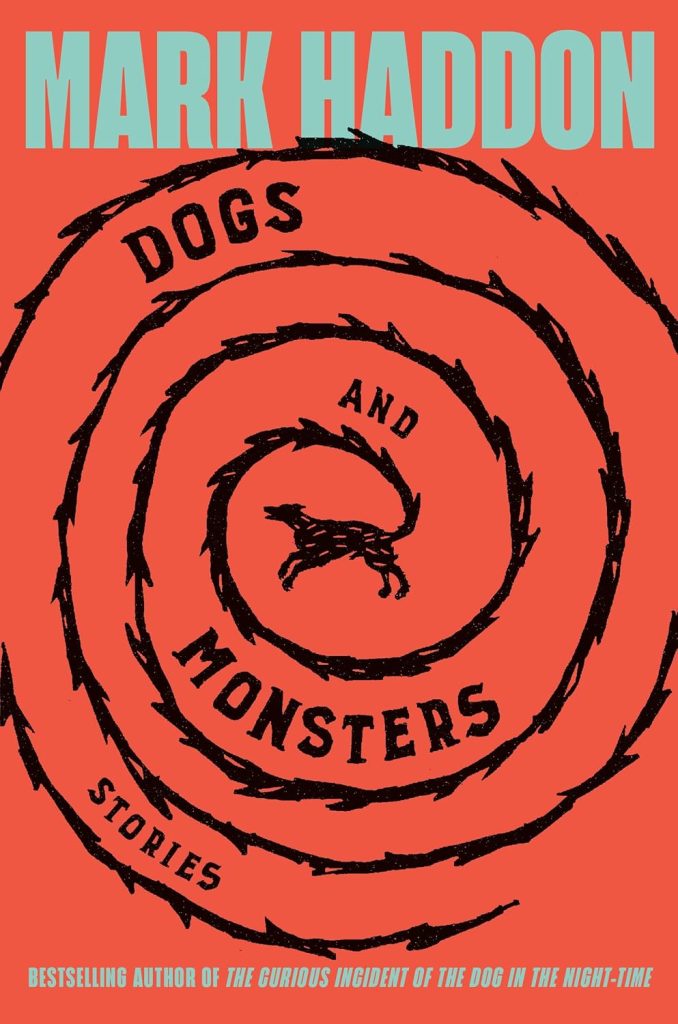
Today, I started reading Dogs and Monsters: Stories by Mark Haddon. The collection features eight captivating and imaginative stories that blend Greek myths with contemporary dystopian narratives. The stories explore themes of mortality, moral choices, and various forms of love, including romantic, familial, and self-love. Haddon's clear-eyed vision is infused with deep empathy..

Read book review Get this book All books

Share your thoughts and ideas

This site uses Akismet to reduce spam. Learn how your comment data is processed.

The Jan Lilien Education Fund!

Dogs and Monsters: Stories

Read: October 2024

Get this book

Dogs and Monsters: Stories

by Mark Haddon

Today, I started reading Dogs and Monsters: Stories by Mark Haddon. The collection features eight captivating and imaginative stories that blend Greek myths with contemporary dystopian narratives. The stories explore themes of mortality, moral choices, and various forms of love, including romantic, familial, and self-love. Haddon’s clear-eyed vision is infused with deep empathy.

In addition, Haddon’s fluid prose showcases his remarkable powers of observation, both of the physical world and the inner workings of the human psyche. Greek myths have fascinated people for millennia with their timeless appeal and enduring lessons about fate, hubris, and life’s uncertainties. In Dogs and Monsters: Stories, Mark Haddon delves into the heart of these ancient fables and presents them in a fresh light. For instance, in one story, the dawn goddess Eos requests that Zeus grant her lover Tithonus eternal life but forgets to ask for eternal youth. In “The Quiet Limit of the World,” Haddon imagines Tithonus’s life as he ages over thousands of years, transforming this cautionary tale about tempting the gods into a spellbinding meditation on observing death from the outside. This tale ultimately explores how carnal love evolves into something more profound and poignant over time.

In “The Mother‘s Story,” Haddon reinterprets the myth of the Minotaur, born of the monstrous lust of King Minos’s wife, Pasiphaë. He turns it into a heartbreaking parable of a mother’s love for a damaged child and the more tangible monstrosities of patriarchy. In “D.O.G.Z.,” the story of Actaeon, who was transformed into a stag after glimpsing the naked goddess Diana and was subsequently torn apart by his hunting dogs, becomes a visceral metaphor for the continuum of human and animal behavior.

Other stories in Dogs and Monsters: Stories play with contemporary mythic tropes—such as genetic engineering, attempts to escape the future, and the cruelty of adolescent ostracism. These stories showcase how modern humans are subject to the same capriciousness that concerned the Greeks but in a fresh and intriguing light. Haddon‘s tales cover a wide range of themes, from the mythic to the domestic, from ancient Greece to the present day, and explore love alongside stories of cruelty. They take readers from battlefields to bed and breakfasts and from dogs in space to doors between worlds, all bound together by profound sympathy and an insight into how human beings think, feel, and act when pushed to their limits.

×
All the Sinners Bleed- A Novel

Read: June 2023

Get this book

All the Sinners Bleed: A Novel

by S. A. Cosby

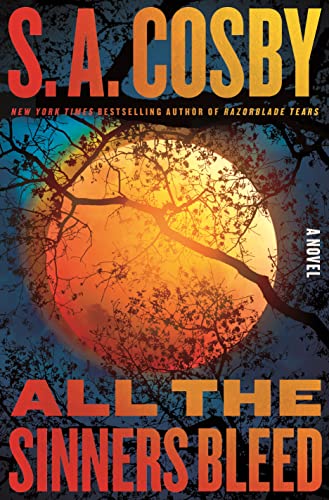
Today, I delved into the gripping pages of “All the Sinners Bleed” by S. A. Cosby. This enthralling novel centers around Titus Crown, the first African American sheriff in Charon County, Virginia. Despite the county’s reputation for traditional customs such as moonshine, cornbread, and honeysuckle, Titus, with his FBI expertise, knows that the peace won’t last forever.

On the first anniversary of Titus’s election, a schoolteacher is murdered by an ex-student, and Titus’s deputies take down the perpetrator. As Titus delves deeper into the case, he uncovers a web of horrendous crimes and finds a serial killer lurking in plain sight, haunting Charon’s dirt roads and woodland clearings.

Titus is determined to solve the case, despite its connection to a nearby church, and he harbors a personal secret that haunts him. However, he faces opposition from a far-right group that wants to hold a parade to honor the town’s Confederate past while he tries to solve the issue.

Despite the challenges, Titus remains resolute in his love for Charon and his commitment to finding justice. The collision of religion and hatred cannot deter him from his duty.


S. A. Cosby is a New York Times bestselling writer from southeastern Virginia. He is the author of All the Sinners Bleed, which was on more than forty Best of the Year lists, including Barack Obama’s, as well as Edgar Award finalist Razorblade Tears and Los Angeles Times Book Prize winner Blacktop Wasteland. He has also won the Anthony Award, ITW Thriller Award, Barry Award, Macavity Award, BCALA Award, and Audie Award. He has been longlisted for the ALA Andrew Carnegie Medal for Excellence.


When you purchase a book through one of my links, I earn a small commission that helps support my passion for reading. This contribution allows me to buy even more books to share with you, creating an incredible cycle of discovering great reads together! Your support truly makes a difference!

Enjoy a limited-time offer of 20% off your next book purchase at Bookshop.org!


×
Sarah's Key

Read: January 2022

Get this book

Sarah’s Key

by Tatiana de Rosnay

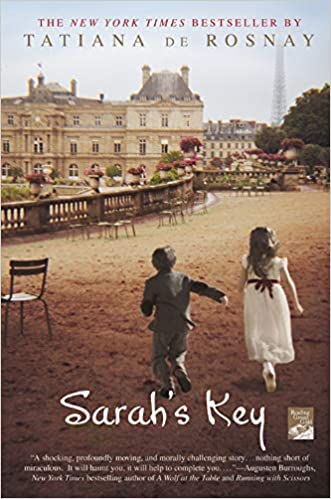
Sarah’s Key by Tatiana de Rosnay is the untold story of the roundup of the Jews in Paris in July 1942. The novel focuses on how the French were complicit in rounding up thousands of Jews in 1942. It is also a reminder that we can never allow another genocide. I finished this book the day before Holocaust Remembrance Day, January 27, the date on which the Auschwitz-Birkenau concentration and death camp complex was liberated in 1945.

Ten-year-old Sarah is brutally arrested with her family in the Vel’ d’Hiv’ roundup, the most notorious act of French collaboration with the Nazis. But before the police come to take them, Sarah locks her younger brother, Michel, in their favorite hiding place, a cupboard in the family’s apartment. She keeps the key, thinking she will be back within a few hours.

Paris, May 2002: On Vel’ d’Hiv’s sixtieth anniversary, Julia Jarmond, an American journalist, is asked by her Paris-based American magazine to write an article about this black day in France’s past. Julia has lived in Paris for nearly twenty-five years and married a Frenchman, and she is shocked both by her ignorance about the event and the silence that still surrounds it.

The twin narratives of Sarah and Julia hold the first two-thirds of the book together and make it a page-turner. Sarah’s memory reminds us during the final third of the book and ensures that the complete story of the Vel’ d’Hiv’ roundup and its lasting impact are told.

As Goodreads describes the novel,

In the course of her investigation, she stumbles onto a trail of long-hidden family secrets that connects her to Sarah. Julia finds herself compelled to retrace the girl’s ordeal, from the terrible days spent shut in at the Vel’ d’Hiv’ to the camps and beyond. As she probes into Sarah’s past, she begins to question her own place in France and to reevaluate her marriage and her life.

Writing about the fate of her country with a pitiless clarity, Tatiana de Rosnay offers us a brilliantly subtle, compelling portrait of France under occupation and reveals the taboos and denial surrounding this painful episode in French history.

I highly recommend the book.

Subscribe

Contact Us

When you buy a book or product using a link on this page, I receive a commission. Thank you for supporting Sharing Jan’s Love blog.

×
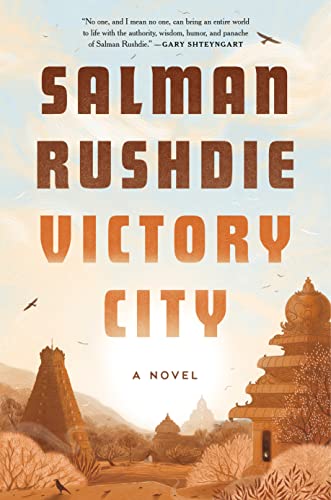
Victory City: A Novel

Read: February 2023

Get this book

Victory City: A Novel

by Salman Rushdie

Victory City: A Novel by Salman Rushdie is an epic tale of a woman who breathes a fantastical empire into existence, only to be consumed by it over the centuries from the transcendent imagination of Booker Prize-winning, internationally bestselling author Salman Rushdie. It is well written and was a page-turner from page one to the end. I highly recommend this novel and encourage everyone to read it.

Brilliantly styled as a translation of an ancient epic, this is a saga of love, adventure, and myth that is a testament to storytelling’s power. After witnessing her mother’s death, the grief-stricken Pampa Kampana becomes a vessel for the goddess Parvati, who begins to speak out of the girl’s mouth. I was hooked when Pampa Kampana provided the seeds that created Victory City out of thin air.

David Remnick’s interview with Salman Rushdie in The New Yorker provided background I would have missed.

“The first kings of Vijayanagara announced, quite seriously, that they were descended from the moon,” Rushdie said. “So when these kings, Harihara and Bukka, announce that they’re members of the lunar dynasty, they’re associating themselves with those great heroes. It’s like saying, ‘I’ve descended from the same family as Achilles.’ Or Agamemnon. And so I thought, Well, if you could say that, I can say anything.”

Above all, the book is buoyed by the character of Pampa Kampana, who, Rushdie says, “just showed up in my head” and gave him his story, his sense of direction. Rushdie’s pleasure in writing the novel was in “world building” and, at the same time, writing about a character building that world: “It’s me doing it, but it’s also her doing it.” The pleasure is infectious. “Victory City” is an immensely enjoyable novel. It is also an affirmation. At the end, with the great city in ruins, what is left is not the storyteller but her words:

I, Pampa Kampana, am the author of this book.
I have lived to see an empire rise and fall.
How are they remembered now, these kings, these queens?
They exist now only in words . . .
I myself am nothing now. All that remains is this city of words.
Words are the only victors.

The Goodreads summary provides a brief overview,

In the wake of an insignificant battle between two long-forgotten kingdoms in fourteenth-century southern India, a nine-year-old girl has a divine encounter that will change the course of history. After witnessing her mother’s death, the grief-stricken Pampa Kampana becomes a vessel for the goddess Parvati, who begins to speak out of the girl’s mouth. Granting her powers beyond Pampa Kampana’s comprehension, the goddess tells her that she will be instrumental in the rise of a great city called Bisnaga–literally victory city–the wonder of the world.

Over the next two hundred and fifty years, Pampa Kampana’s life becomes deeply interwoven with Bisnaga’s, from its literal sowing out of a bag of magic seeds to its tragic ruination in the most human of ways: the hubris of those in power. Whispering Bisnaga and its citizens into existence, Pampa Kampana attempts to make good on Parvati’s task: giving women equal agency in a patriarchal world. But all stories have a way of getting away from their creator, and Bisnaga is no exception. As years pass, rulers come and go, battles are won and lost, and allegiances shift, the very fabric of Bisnaga becomes an ever more complex tapestry–with Pampa Kampana at its center.


The Jan Lilien Education Fund sponsors ongoing sustainability and environmental awareness programs. Gifts made this month; I will match dollar-for-dollar. All donations are tax-deductible.

Subscribe

Contact Us

I receive a commission when you buy a book or product using a link on this page. Thank you for supporting Sharing Jan’s Love blog.


×
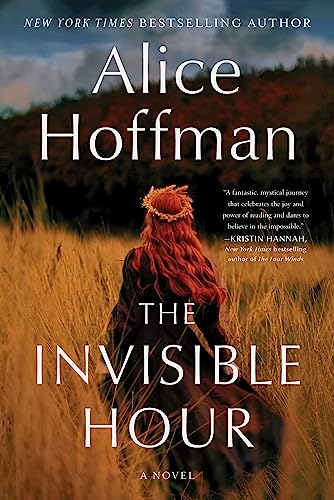
The Invisible Hour: A Novel

Read: August 2023

Get this book

The Invisible Hour: A Novel

by Alice Hoffman

Today I started reading The Invisible Hour by Alice Hoffman. It’s a story about love, heartbreak, self-discovery, and the magic of books. The Invisible Hour is the story of one woman’s dream. For a little while, it came true. Nathaniel Hawthorne wrote: “A single dream is more powerful than a thousand realities.

Mia Jacob finds hope in the power of words on a brilliant June day. She reads The Scarlet Letter, a novel written almost two hundred years earlier, which mirrors her life. Mia and her mother, Ivy, live inside an oppressive cult in western Massachusetts called the Community, where contact with the outside world is forbidden, and books are considered evil. Nathaniel Hawthorne’s words perfectly capture the pain and loss that Mia carries inside her.

As Mia journeys through heartbreak and time, she breaks free from the rules of her Community. Along the way, she discovers the power of reading to transport and connect people, the fluidity of time, and the strength of love to overcome any obstacle.

As a young girl, Mia fell in love with a book. Now as a woman, she falls for a writer as she travels back in time. But what if Nathaniel Hawthorne never wrote “The Scarlet Letter”? What if Mia never found the book on the day she planned to end her life?


The Jan Lilien Education Fund sponsors ongoing sustainability and environmental awareness programs. Gifts made this month; I will match dollar-for-dollar. All donations are tax-deductible.

Subscribe

Contact Us

I receive a commission when you buy a book or product using a link on this page. Thank you for supporting Sharing Jan’s Love blog.


×
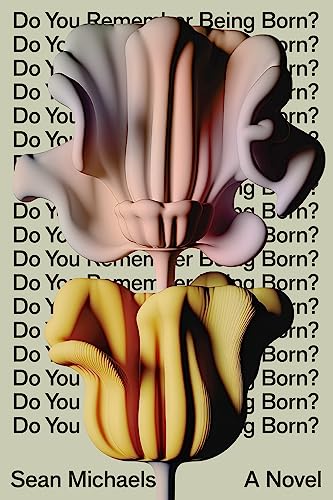
Do You Remember Being Born?: A Novel

Read: September 2023

Get this book

Do You Remember Being Born?

by Sean Michaels

I started reading “Do You Remember Being Born?” by Sean Michaels, a writer who won the Scotiabank Giller Prize. The novel is about an aging poet named Marian Ffarmer, a legend in the world of poetry. However, despite her success, she struggles with financial issues and her son’s inability to buy a house. Marian has sacrificed her personal relationships and happiness to pursue her career but questions whether it is worth it.

One day, she receives an invitation from a Tech Company to travel to California and work with their poetry AI, Charlotte. The company wants her to co-author a poem with their bot in a historic partnership, which clashes with Marian’s beliefs about the individual pursuit of art. However, she decides to take this opportunity, even though it makes her feel like a sell-out and a skeptic. The encounter in California changes her life, work, and understanding of kinship.

The book explores the nature of language, art, labor, capital, family, and community. It’s a response to some of the most disquieting questions of our time. The author, Sean Michaels, is a winner of the Scotiabank Giller Prize, and his book is a love letter to and interrogation of the creative legacy. It’s a joyful recognition that belonging to one’s art must mean belonging to the world to survive meaningfully.


The Jan Lilien Education Fund sponsors ongoing sustainability and environmental awareness programs. Gifts made this month; I will match dollar-for-dollar. All donations are tax-deductible.

Subscribe

Contact Us

I receive a commission when you buy a book or product using a link on this page. Thank you for supporting Sharing Jan’s Love blog.


×
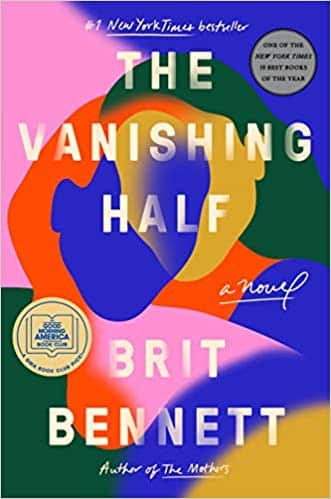
The Vanishing Half

Read: September 2021

Get this book

The Vanishing Half

by Brit Bennett

The Vanishing Half by Brit Bennett was a true page-turner, and I did not want to stop reading it even when I got to the last page. I am not a fan of sequels, but if I was ever going to change my mind, this is the book I would want to read a sequel.

Ms. Bennett focuses on two twins who run away from home at age 16. They have grown up in Mallard, a fictional town in Louisiana. “In Mallard, nobody married dark,” Bennett writes starkly. Over time, its prejudices deepened as its population became lighter and lighter, “like a cup of coffee steadily diluted with cream.” The twins, with their “creamy skin, hazel eyes, wavy hair,” would have delighted the town’s founder. One of the women chooses to pass as white while the other does not.

The Vignes twin sisters will always be identical. But after growing up together in a small, southern black community and running away at age sixteen, it’s not just the shape of their daily lives that is different as adults, it’s everything: their families, their communities, their racial identities. Many years later, one sister lives with her black daughter in the same southern town she once tried to escape. The other passes for white, and her white husband knows nothing of her past. Still, even separated by so many miles and just as many lies, the fates of the twins remain intertwined. What will happen to the next generation, when their own daughters’ storylines intersect?

Weaving together multiple strands and generations of this family, from the Deep South to California, from the 1950s to the 1990s, Brit Bennett produces a story that is at once a riveting, emotional family story and a brilliant exploration of the American history of passing. Looking well beyond issues of race, The Vanishing Half considers the lasting influence of the past as it shapes a person’s decisions, desires, and expectations, and explores some of the multiple reasons and realms in which people sometimes feel pulled to live as something other than their origins.

The question of why people choose to live differently than their origins is one that I often ponder. Growing up in a small town and living in a metropolis raises questions for me as to what my life is now and what was once.

I strongly recommend this book.

Subscribe

Contact Us

×