
April Showers Set the Stage for Jan's Birthday

Gratitude Heals My Soul!

Thanking Those Who Attended Jan's Funeral

Estimated reading time: 3 minutes, 19 seconds

As I arrived at Beth Israel Cemetery and parked my car, I was deeply moved by the large number of people who had braved the inclement weather to pay their last respects to my beloved wife, Jan. Even though I was going through a period of grief, I felt immensely grateful to everyone who had come to honor and remember her. This outpouring of love and support reminded me that Jan had touched many hearts with her kindness and compassion. Knowing that love and empathy still exist is heartwarming despite our difficult times.

For three weeks, my sons, their partners, and I cared for my wife during her hospice stay at home. As I made my way from one group to the next, thanking those who had come to offer their support, I felt utterly drained and running on fumes, but I was like a Jack Rabbit on steroids as I tried to speak to everyone. I worried my gratitude would start to lose significance, so I tried to use fresh phrases to convey how much I valued their presence, particularly since they had only received two days’ notice. As I was leaving a group of young women to whom I had expressed my appreciation, I overheard one of them whisper, “That’s Jan’s husband.

Despite hearing several people call my name, I initially ignored them, preoccupied with a sense of purpose, driving me to thank everyone who had shown up. The rain had slowed, and I was rushing around, knocking on car windows, determined to express my gratitude to everyone who had come to pay their respects. However, as the voice calling my name grew louder, I realized it was Rabbi Renee‘s voice, and I stopped in my tracks, turning around to see her standing by the hearse with my sons. At that moment, the significance of the occasion hit me like a ton of bricks, and I felt a mix of emotions wash over me – sadness, gratitude, and a sense of closure all at once.

It was then that she explained the funeral home’s request for me to take a final look at my wife’s open casket before the funeral home staff sealed it forever. Without hesitation, I leaned into the back of the hearse and kissed her forehead, making sure not to disturb her. As my Yarmulke fell into the coffin, I whispered, “I love you.” The weight of my grief felt unbearable, but I was grateful for the support of my loved ones during this difficult time.

On that emotional day, Rabbi Renee led an immaculate graveside service to bid farewell to my beloved wife. As the service concluded, the Rabbi suggested that only family members could toss dirt into the grave due to the muddy conditions. Disagreeing with her, I quietly signaled to my friends to help me with the final act of burying my wife. To my relief, my friend Danny, who had researched the correct way to do it the night before, stepped forward to assist me. Despite the COVID restrictions, I hugged Danny and others who helped me complete this final ritual. As I left the cemetery, I noticed my muddy shoes and pants were damp with brown streaks, reminding me of the bittersweet end of a life.


It’s been three years since I buried my beloved wife, but the memories of that day remain vivid. Looking back, I realize my actions were my only option. Expressing my gratitude to family, friends, neighbors, and colleagues reminded me of our interconnectedness and the importance of finding strength in the community. Though living alone, I’m still part of this interconnected world where we’re all cousins and must help each other heal. That day marked the beginning of my journey towards healing and recovery; I used my ears to listen, my arms to embrace, and tentatively took the first step towards walking into the future.

The Day Jan and I Married!

Our wedding day was a beautiful celebration of love and commitment, shared with our closest family and friends. The special memories we made on that day will always be kept close to our hearts, reminding us of the strong bond between Jan and me.

Show thread (1)

My Apolytus Moment

Thanking Those Who Attended Jan's Funeral

Estimated reading time: 3 minutes, 19 seconds

My Apolytus Moment

Despite the deep and abiding pain of missing my beloved wife daily, I have come to understand that it is essential that I continue living and finding joy in the present moment.

3 comments add your comment

Share your thoughts and ideas

This site uses Akismet to reduce spam. Learn how your comment data is processed.

The Jan Lilien Education Fund!

April Showers Set the Stage for Jan's Birthday
×
20 Under 40

Read: January 2019

Get this book

20 Under 40 Fiction

by Various Writers Under 40

Short Stories that Will Define the Future of American Letters

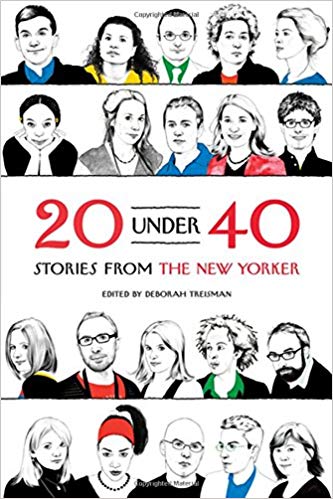
The New Yorker’s collection of short stories – 20 Under 40 – is a collection of twenty writers “whose work will help define the future of American letters.”

Some of these I had read in The New Yorker and others I had missed. Either way, they were a pleasure to read.

As The New Yorker wrote,

The range of voices is extraordinary. There is the lyrical realism of Nell Freudenberger, Philipp Meyer, C. E. Morgan, and Salvatore Scibona; the satirical comedy of Joshua Ferris and Gary Shteyngart; and the genre-bending tales of Jonathan Safran Foer, Nicole Krauss, and Téa Obreht. David Bezmozgis and Dinaw Mengestu offer clear-eyed portraits of immigration and identity; Sarah Shun-lien Bynum, ZZ Packer, and Wells Tower offer voice-driven, idiosyncratic narratives. Then there are the haunting sociopolitical stories of Chimamanda Ngozi Adichie, Daniel Alarcón, and Yiyun Li, and the metaphysical fantasies of Chris Adrian, Rivka Galchen, and Karen Russell.

Each of these writers reminds us why we read. And each is aiming for greatness: fighting to get and to hold our attention in a culture that is flooded with words, sounds, and pictures; fighting to surprise, to entertain, to teach, and to move not only us but generations of readers to come. A landmark collection, 20 Under 40 stands as a testament to the vitality of fiction today.

I recommend this collection of short stories.

Subscribe

Contact Us

×
The Singing Word

Read: September 2025

Get this book

The Singing Word

by Walt Hunter

The Singing Word: 168 Years of Atlantic Poetry, edited by Walt Hunter, celebrates the people, land, and spirit of America. This remarkable collection showcases a wide range of contemporary and historical poetry from the 168-year archive of The Atlantic magazine. Since its first issue in 1857, the poetry published in The Atlantic has drawn attention to the nation’s ongoing journey of self-discovery.

The magazine’s verse has featured odes to American leaders and landscapes, laments for the dead, and calls for change, appealing to the enduring ideals of Atlantic readers.

This one-of-a-kind collection selects poems of rousing optimism, clear-eyed realism, and moving lyricism—poems infused with the language of America’s songs, myths, and history, from the Civil War up through the present in three rich parts: National Anthems, Natural Lines, and Personal Mythologies.

Curated by The Atlantic’s Poetry Editor, this anthology features both world-famous poets—from Longfellow to Limón, including Robert Frost, W. S. Merwin, Sylvia Plath, and Adrienne Rich—as well as poets whose work has never before been published outside of the magazine.

Offering readers an essential understanding of American canon and the evolving nation, its poets have yearned to capture—the poetry of The Atlantic is the poetry of America.


Walt Hunter is a professor of twentieth- and twenty-first-century literature and chair of the English department at Case Western Reserve University. He is also the fiction and poetry editor for The Atlantic.


Discover your next favorite book and dive into a world of curated, exciting reads by purchasing through my links. You’ll have access to a diverse selection of books that I’ve personally vetted to ensure quality and enjoyment. Additionally, by supporting these selections, you’ll help me continue to provide you with more personalized recommendations. I earn a small commission from your purchase, which allows me to buy and share even more books with you. Your support truly makes a difference!


×
Beautiful World, Where Are You

Read: July 2022

Get this book

Beautiful World, Where Are You

by Sally Rooney

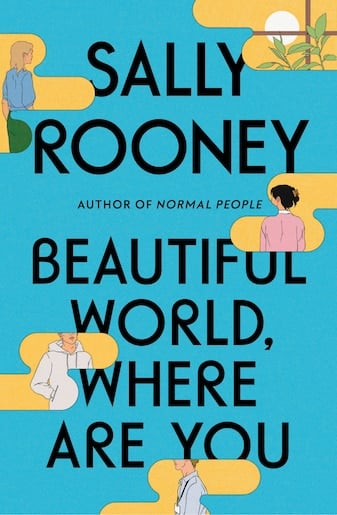
Beautiful World, Where Are You by Sally Rooney, a writer recommended to me, but I have always kept them on the to-read list, not the current reading. Does a beautiful word exist? Is it possible to live in a beautiful world despite the loss of the love of my life? Perhaps reading  Beautiful World, Where Are You, will help me in my grief journey.

Ms. Rooney’s book was a page-turner, and I highly recommend it.

One of the quotes from the book echoed my dream of a beautiful world.

“When I try to picture for myself what a happy life might look like, the picture hasn’t changed very much since I was a child – a house with flowers and trees around it, and a river nearby, and a room full of books, and someone there to love me, that’s all. Just to make a home there, and to care for my parents when they grow older. Never to move, never to board a plane again, just to live quietly and then be buried in the earth.” ― Sally Rooney, Beautiful World, Where Are You

It also helped remind me how unique and memorable the love that Jan and I shared was. We could quickly fall into a life lived separately as friends, or we might not have ever fallen in love and married.

As Sally Rooney in Beautiful World, Where Are You, wrote:

“If God wanted me to give you up, he wouldn’t have made me who I am.”

The Goodreads summary provides an overview.

Alice, a novelist, meets Felix, who works in a warehouse, and asks him if he’d like to travel to Rome with her. In Dublin, her best friend, Eileen, is getting over a breakup and slips back into flirting with Simon, a man she has known since childhood. Alice, Felix, Eileen, and Simon are still young—but life is catching up with them. They desire each other, they delude each other, they get together, and they break apart. They have sex, they worry about sex, and they worry about their friendships and the world they live in. Are they standing in the last lighted room before the darkness, bearing witness to something? Will they find a way to believe in a beautiful world?


Subscribe

Contact Us

×
Worry: A Novel

Read: May 2024

Get this book

Worry: A Novel

by Alexandra Tanner

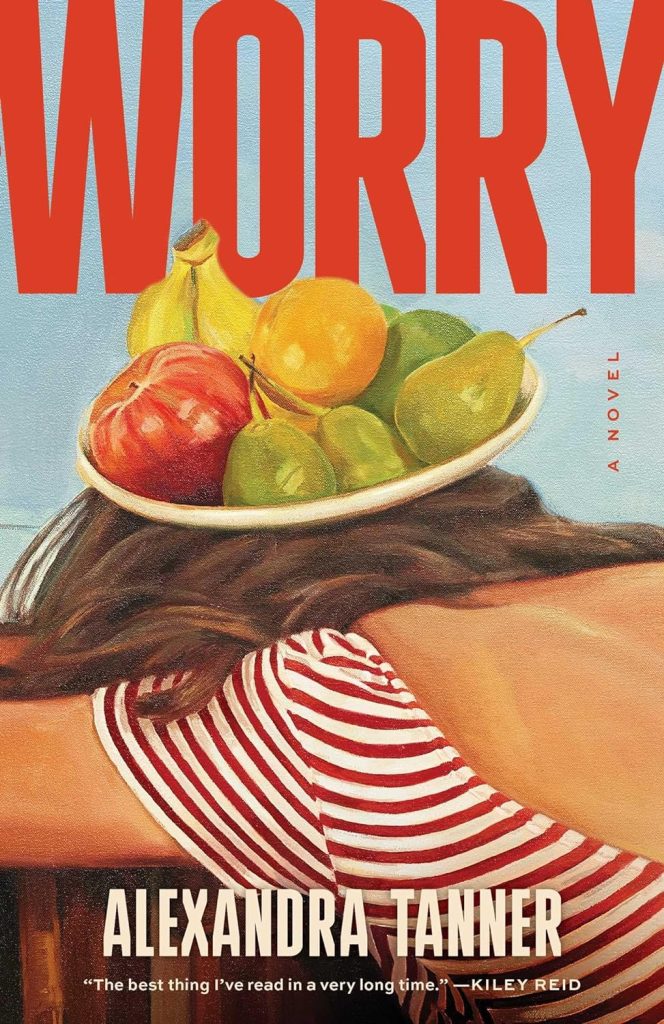
Today, I began reading Alexandra Tanner‘s debut novel, Worry: A Novel. The New Yorker praised it as “dryly witty,” The New York Times Book Review called it “fabulously revealing.” The story follows two siblings-turned-roommates who try to navigate an absurd world on the verge of calamity. It explores existentialism and sisterhood in a Seinfeldian style.

In March 2019, Jules Gold, a 28-year-old woman, felt anxious, frustrated with her art, and addicted to the internet. She lives alone in the apartment she used to share with her ex-fiancé. Her younger sister Poppy unexpectedly comes to stay with her indefinitely. Poppy, who attempted suicide a year and a half ago, is looking for work and purpose in Brooklyn. Meanwhile, Jules spends her days scrolling through the feeds of Mormon mommy bloggers and waiting for something to happen in her life.

Poppy’s hives, which she has had since childhood, flare up again. Jules has health problems with her uterus. Poppy adopts a poorly behaved-rescue dog named Amy Klobuchar. Poppy’s mother, who recently became a devout Messianic Jew, starts believing in the same deep-state conspiracy theories as Jules’ online mommies. Jules half-heartedly tries to find the source of her ennui and cruelly blames Poppy for not being a good enough friend, writer, or sister. As the year progresses and a new decade approaches, a disastrous trip back to Florida forces Jules and Poppy to question their futures and whether they want to spend them together or apart.

Worry is a darkly funny and deadpan portrayal of two sisters struggling through anxiety and uncertainty in America. A bold new voice in contemporary fiction writes it.

×
Stone Yard Devotional: A Novel

Read: February 2025

Get this book

Stone Yard Devotional: A Novel

by Charlotte Wood

Today, I dove into Charlotte Wood‘s captivating novel, “Stone Yard Devotional.” I couldn’t resist picking it up after discovering a glowing review by Joumana Khatib. She expressed her fondness for the book in the New York Times Book Review Newsletter, saying, “I’m still so enamored of Charlotte Wood’s novel.” It’s impressive that this work was a finalist for the Booker Prize last year! I’m eager to read the book to determine if it is a “love story,” as Ms. Khatib believes.

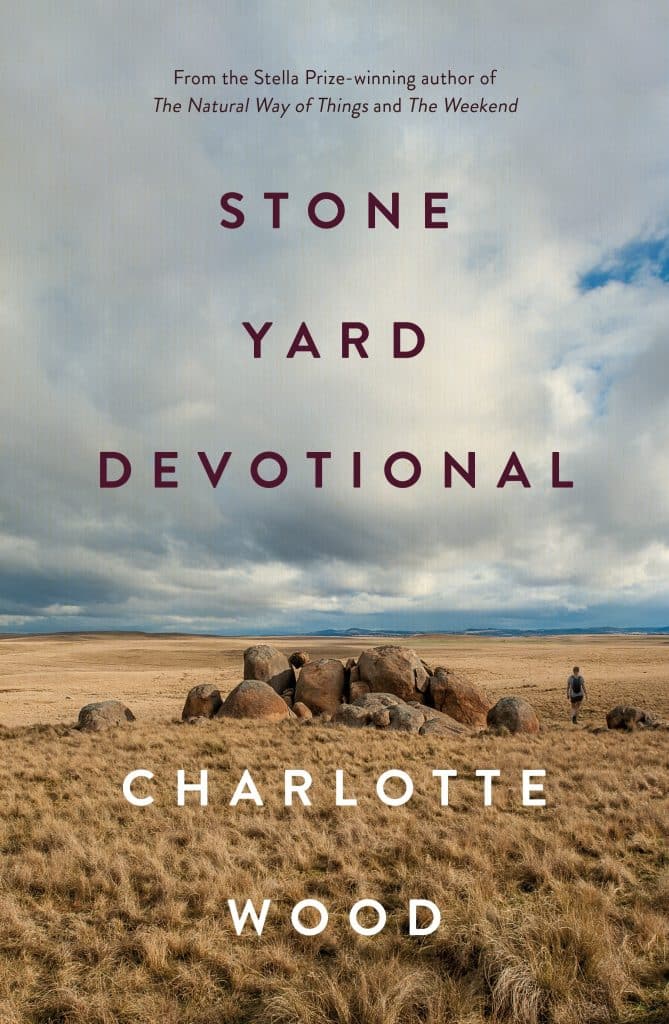
Burnt out and needing a retreat, a middle-aged woman leaves Sydney to return to her childhood home, taking refuge in a small religious community hidden away on the stark plains of rural Australia. She does not believe in God and is unfamiliar with the concept of prayer, finding herself living this strange, reclusive existence almost by accident.

However, her secluded life is disrupted by three significant events. First, a terrible mouse plague marks a new battle against the growing infestation daily. Second, the skeletal remains of a sister who disappeared decades ago and was presumed murdered return. Finally, a troubling visitor brings her further into her past.

Meditative, moving, and finely observed, “Stone Yard Devotional” is a seminal novel from a writer of rare power. It explores the meaning of retreating from the world, forgiveness’s true nature, and grief‘s lasting effects on the human soul.


When you purchase a book through one of my links, I earn a small commission that helps support my passion for reading. This contribution allows me to buy even more books to share with you, creating an incredible cycle of discovering great reads together! Your support truly makes a difference!


×
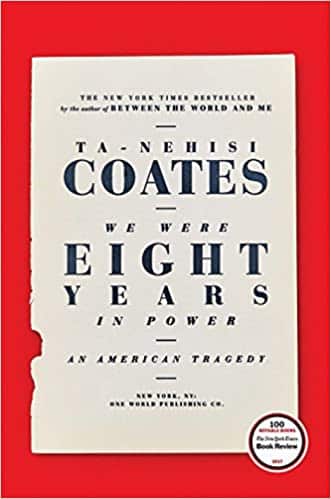
We Were Eight Years in Power

Read: September 2020

Get this book

We Were Eight Years in Power

by Ta-Nehisi Coates

We Were Eight Years in Power by Ta-Nehisi Coates is a collection featuring the landmark essay The Case for Reparations he wrote for The Atlantic. Even though I am a subscriber to The Atlantic and have read many of the pieces, this is a must-read book as it reflects on race, Barack Obama’s presidency, and its jarring aftermath, including the election of Donald Trump.

We were eight years in power as the lament of Reconstruction-era black politicians as the American experiment in multiracial democracy ended with the return of white supremacist rule in the South. In this sweeping collection of new and selected essays, Ta-Nehisi Coates explores the tragic echoes of that history in our own time: the unprecedented election of a black president followed by a vicious backlash that fueled the election of the man Coates argues is America’s first white president.

But the story of these present-day eight years is not just about presidential politics. This book also examines the new voices, ideas, and movements for justice that emerged over this period and the effects of the persistent, haunting shadow of our nation’s old and unreconciled history. Coates powerfully examines the events of the Obama era from his intimate and revealing perspective:” the point of view of a young writer who begins the journey in an unemployment office in Harlem and ends it in the Oval Office, interviewing a president.

We Were Eight Years in Power features Coatesa’s iconic essays first published in The Atlantic, including Fear of a Black President, The Case for Reparations, and The Black Family in the Age of Mass Incarceration, along with eight fresh essays that revisit each year of the Obama administration through Coate’s own experiences, observations, and intellectual development, capped by a bracingly original assessment of the election that fully illuminated the tragedy of the Obama era. We Were Eight Years in Power is a vital account of modern America, from one of the definitive voices of this historic moment.

I recommend this book to all readers.

Subscribe

Contact Us

×