
The Letter Carrier: A Novel

Estimated reading time: 2 minutes, 31 seconds

In the bestselling novel that has captivated readers in Italy, The Letter Carrier by Francesca Giannone depicts a small town in southern Italy that reflects the experiences of many others. It portrays the lives of women and men—husbands and wives, fathers and sons, mothers and daughters—as they strive to navigate the world while remaining true to their hearts. The Letter Carrier explores the universal theme of connection and examines the consequences that arise when those connections occur at the wrong time.

Salento, Italy, June 1934: A coach stops in the main square of Lizzanello, a tight-knit village where everyone knows each other. A couple gets off: The man, Carlo, a Southerner, is happy to be back home after a long time away; the woman, Anna—his wife—is a Northerner. Carlo’s brother is there to meet them, and he, along with everyone else, can’t help but notice that Anna is as beautiful as a Greek statue.

But Anna is not like the other wives. She doesn’t gossip or attend church. She reads books no one else has ever heard of, exploring ideas that some find threatening. She even wears pants, just like a man, and thinks a woman should have rights, just like a man.

There aren’t many options for a woman with Anna’s sensibilities, so when she learns that the post office is hiring, she leaps at the opportunity. A female letter carrier? It is unthinkable! But Anna passes the postal exam and soon becomes the invisible thread connecting the town as she delivers letters between clandestine lovers, families waiting to hear news of loved ones away at war, and even helps those who can’t read.

Letters connect people, conveying both information and emotion. But for some in Lizzanello, letters are too little and too late.


Francesca Giannone holds a degree in communication science and studied at the CSC, the oldest film school in Europe, located in Rome. She has published several short stories in literary magazines, both in print and online. Currently, Giannone resides in Milan, but her heart remains in her hometown of Lizzanello, a seaside town in the Salento region of Italy. She hopes to return there to live one day.


Elettra Pauletto translated The Letter Carrier. After earning her MFA from Columbia University, she has split her time between writing about her experiences in Africa—specifically in the Democratic Republic of the Congo, Rwanda, and Senegal—and translating fiction and nonfiction works from Italian and French into English. In both her writing and translations, she heavily relies on her background as a former political risk analyst who covered Sub-Saharan Africa, the Middle East, and Europe.


When you purchase a book through one of my links, I earn a small commission that helps support my passion for reading. This contribution allows me to buy even more books to share with you, creating an incredible cycle of discovering great reads together! Your support truly makes a difference!

Enjoy a limited-time offer of 20% off your next book purchase at Bookshop.org!


The Jan Lilien Education Fund!

Maggie; or, A Man and a Woman Walk Into a Bar

Read: December 2025

Get this book

Maggie, or A Man and a Woman Walk Into a Bar

by Katie Yee

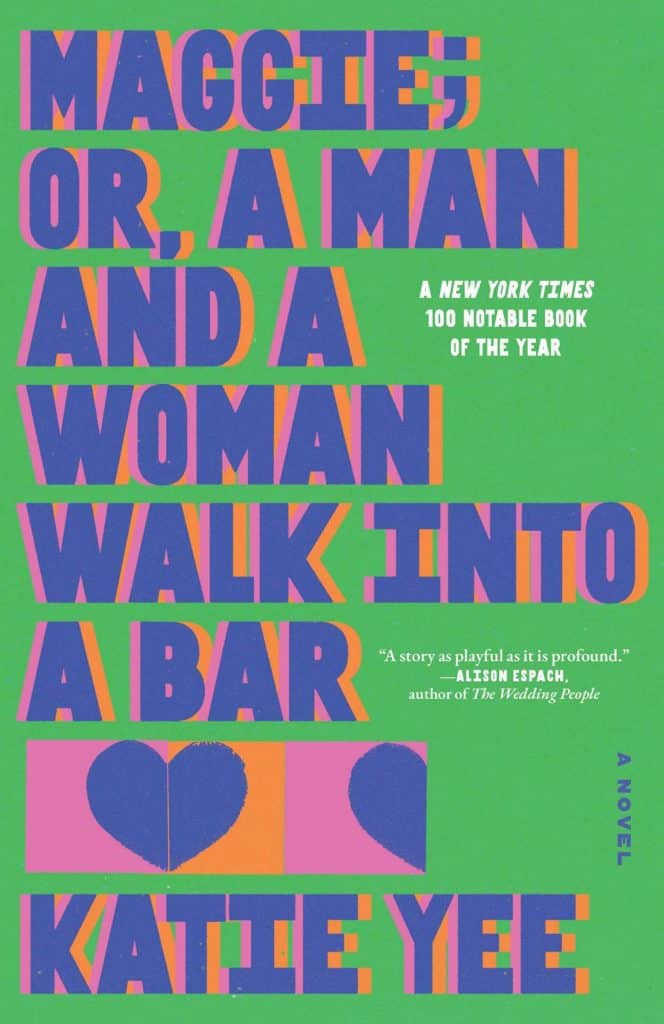
In the style of Jenny Offill and inspired by Nora Ephron‘s humorous and poignant writing on heartbreak and womanhood, “Maggie, or A Man and a Woman Walk Into a Bar” by Katie Yee is a masterclass in transforming personal tragedy into bold comedy. This debut novel has been recognized as a New York Times Notable Book and in Time’s list of 100 Must-Read Books of 2025, along with features in many other publications.

A man and a woman walk into a restaurant. The woman expects a lovely night filled with endless plates of samosas. Instead, she finds out her husband is having an affair with a woman named Maggie.

A short while after, her chest starts to ache. She walks into an examination room, where she finds out the pain in her breast isn’t just heartbreak—it’s cancer. She decides to call the tumor Maggie.

Unfolding in fragments over the following months, Maggie, or a Man and a Woman Walk Into a Bar follows the narrator as she embarks on a journey of grief, healing, and reclamation. She starts talking to Maggie (the tumor), getting acquainted with her body’s new inhabitant. She overgenerously creates a “Guide to My Husband: A User’s Manual” for Maggie (the other woman), hoping to ease the process of discovering her ex-husband’s whims and quirks. She turns her children’s bedtime stories into retellings of Chinese folklore passed down by her mother, in an attempt to help them fall in love with their shared culture—and perhaps save herself in the process.


Katie Yee is a writer based in Brooklyn. She has received fellowships from the Center for Fiction, the Asian American Writers’ Workshop, and Kundiman. Her work has been published in the Los Angeles Review of Books, No Tokens, The Believer, Washington Square Review, Triangle House, Epiphany, and Literary Hub. During the day, she works at the Brooklyn Museum, and at night, she writes—often under the watchful eye of her judgmental rescue dog, Ollie.


Discover your next favorite book and dive into a world of curated, exciting reads by purchasing through my links. You’ll have access to a diverse selection of books that I’ve personally vetted to ensure quality and enjoyment. Additionally, by supporting these selections, you’ll help me continue to provide you with more personalized recommendations. I earn a small commission from your purchase, which allows me to buy and share even more books with you. Your support truly makes a difference!


×
The Secrets we Left Behind

Read: March 2022

Get this book

The Secrets We Left Behind

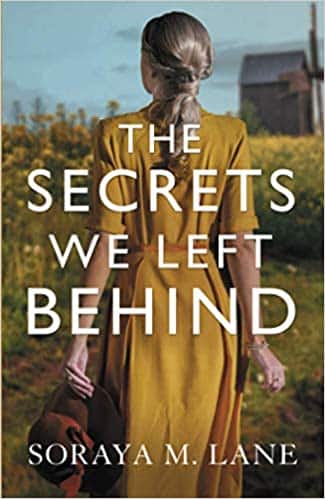
The Secrets We Left Behind by Soraya M. Lane is a historical fiction that raises the question, where were the women after Dunkirk and the fall of France? When World War II appeared to have been lost with a Nazi victory. Ms. Lane watched the movie Dunkirk and then researched that time and the women’s possible roles during that difficult moment in history.

She connected the evacuation at Dunkirk to the Massacre at Le Paradis, fifty miles away, to connect a British nurse and two French women whose strength helps them survive Nazi-occupied France. Three British male soldiers, two of whom survived the massacre and one who escaped Dunkirk, have secondary roles in the novel. 

The Secrets We Left Behind is the story of the three strong women and their efforts to survive the occupation while hiding the three soldiers. This focus on the role of women has been long overdue in history. Ms. Lane, who studied to be a lawyer, has found a career as a writer. The Secrets We Left Behind is the first book I have read, but it will not be the last one by Ms. Lane that I read.

I strongly recommend this book!

The Goodreads synopsis provides an overview of the novel.

How far will they go for family, friendship, and love? Occupied France, 1940. When the staff at a field hospital draw straws to find out who will join the evacuation from Dunkirk, Nurse Cate is left behind. But when the Nazis arrive to claim prisoners of war, she takes her chance and flees into the night, taking one patient with her.

Fifty miles away, the surrendering soldiers of the Royal Norfolk Regiment are shot dead by the advancing Germans. Beneath the pile of bodies, two men survive, crawling to the safety of a nearby farmhouse, where sisters Elise and Adelaide risk their lives to take them in. When Cate, too, arrives at their door with her injured soldier, the pressure mounts.

The sisters are risking everything to keep their visitors safe. But with the Nazis coming ever closer and relationships in the farmhouse intensifying, they must all question the sacrifices they are willing to make for the lives of others. How far will they go for family, friendship, and love?

Register to Attend Celebrate Jan Day

Subscribe

Contact Us

When you buy a book or product using a link on this page, I receive a commission. Thank you for supporting Sharing Jan’s Love blog.

×
The Fraud: A Novel

Read: December 2023

Get this book

The Fraud: A Novel

by Zadie Smith

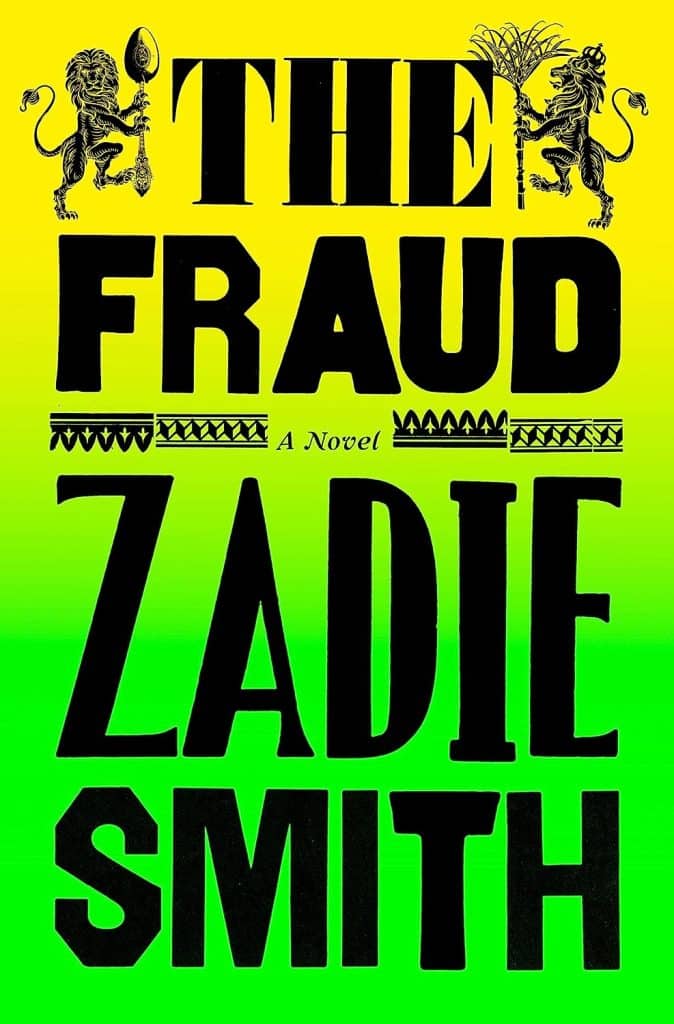
I started reading The Fraud: A Novel by Zadie Smith today. The book is a kaleidoscopic work of historical fiction that revolves around a legal trial that divided Victorian England. The story is set in 1873, where Mrs. Eliza Touchet, a Scottish housekeeper and cousin by marriage of a once-famous novelist, William Ainsworth, lives with him for thirty years. Mrs. Touchet is interested in literature, justice, abolitionism, class, and her cousin’s wives.

However, she is skeptical of her cousin’s talent, Mr. Charles Dickens’ character, and England’s facades, in which nothing is as it seems.

On the other hand, Andrew Bogle grew up enslaved on the Hope Plantation in Jamaica. He knows that every lump of sugar comes at a human cost, that the rich deceive the poor, and that people are more easily manipulated than they realize. When Bogle finds himself in London, a star witness in a celebrated case of imposture, he knows that his future depends on telling the right story.

The “Tichborne Trial” captivates Mrs. Touchet and all of England. The trial involves a lower-class butcher from Australia who claimed he was the rightful heir of a sizable estate and title. The question is whether Sir Roger Tichborne is genuinely who he says he is or whether he’s a fraud. In a world of hypocrisy and self-deception, deciding what’s real is complicated for Mrs. Touchet and Mr. Bogle.

The Fraud is a dazzling novel about truth and fiction, Jamaica and Britain, fraudulence and authenticity, and the mystery of “other people.” It’s based on historical events.


The Jan Lilien Education Fund sponsors ongoing sustainability and environmental awareness programs. Gifts made this month; I will match dollar-for-dollar. All donations are tax-deductible.

Subscribe

Contact Us

I receive a commission when you buy a book or product using a link on this page. Thank you for supporting Sharing Jan’s Love blog.


×
Sun City

Read: February 2025

Get this book

Sun City by Tove Jansson

by Tove Jansson

Today, I began reading “Sun City” by Tove Jansson, translated by Thomas Teal. I found this book mentioned in Maya Chung‘s review in The Atlantic’s Book Briefings, and as an older man, it seemed like the perfect choice for me. In “The Summer Book” and “The True Deceiver,” as well as in her many short stories, Tove Jansson consistently explores the everyday lives of older adults.

She portrays them not as a separate group but as fully fleshed individuals who experience the same jealousies, desires, and joys as any other demographic. It’s no wonder that in her travels through America in the 1970s, she became fascinated with what was then a particularly American institution, the retirement home, where older people lived in their tightly knit worlds.

In Sun City, Jansson depicts these worlds in a group portrait of residents and employees at the Berkeley Arms in St. Petersburg, Florida. As the narrative moves from character to character, the characters move through an America riven by cultural divides, facing the death of its dream. The Berkeley Arms’s newest resident finds a place among the rocking chairs and endless chatter on the veranda while other residents long for past glories, mourning their losses and killing time. Meanwhile, one of their attendants, Bounty Joe, is eagerly awaiting a letter, or even just a postcard, alerting him to the imminent return of Jesus Christ. Nobody’s normal anymore,” the bartender says, “not the old geezers and not the newborn kids.”


When you purchase a book through one of my links, I earn a small commission that helps support my passion for reading. This contribution allows me to buy even more books to share with you, creating an incredible cycle of discovering great reads together! Your support truly makes a difference!


×
Breathe

Read: September 2021

Get this book

Breathe

by Joyce Carol Oates

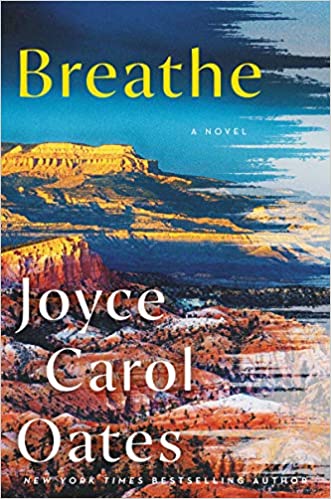
Celebrate JanReading Breathe by Joyce Carol Oates was a book I knew I needed to read once Jan was diagnosed. Although the book might trigger negative memories, I finally read Breathe. It was what I needed to read at this point in my journey.

Ms. Oates wrote the book in 2019 after her husband, Charlie Gross, died. The novel is a story of love, loss, and loneliness, topics that I write about on this blog. I needed to read the book both for my mental health and for the readers of Sharing Jan’s Love.

The protagonist, Michaela, loses her husband while they are on a sabbatical in New Mexico. Her husband, Gerard, writes a book and teaches a class on memories. Jan and I never considered relocating before her illness, but this book convinced me that it would have aggravated my grief journey.

One of the parallels I observed while reading the novel is the similarity between Gerard’s reluctance to let family, friends, and co-workers know of his illness. Jan shared that reluctance in the early days, but I convinced her that the only chance of beating cancer was with the help of family and friends.

This dialogue could easily be one that Jan and I had.

Of course you want to summon his family—his (adult) children—but quickly, he says no.

Still waiting.

But – When?

Just not yet.

He is not an alarmist. (You are the alarmist.)

The novel is written in two parts – The Vigil and the Post-Mortem.

The opening paragraphs set the tone.

A Hand is gripping yours. Warm, dry hand gripping your slippery, humid hand.

Whoever it is urging you – Breathe!

Leaning over you begging you – Breathe!

As one mourning the death of the love of his life, I found several phrases in the book helpful in understanding what I have gone through and will continue to confront.

Among them is grief-vise, which I have written about in this stream.

In the grip of the grief vise, all that you will do, all that you even imagine doing, will require many times more effort.. Hardly daring to breathe for the grief-vise will tighten around your chest, squeezing the very air out of your lungs.

In the early stages of grief, the vise was strangling me. Breathing was impossible, and weeping was constant at times.

Michaela struggles with her grief. Seeing her husband every time she sees a man alone, even if they are older or younger than he was. I know I have felt Jan’s presence and still expect her to walk into our apartment.

Her struggles with a grief counselor and overly helpful friends are an experience I have not had but are familiar to those suffering from losing a loved one.

The last chapters are ones in which time becomes confusing and chaotic. At times, I was uncertain about which were real or imagined. The end, like all good novels, was ambiguous.

These are some of the other phrases I have found useful and will include in posts.

  • If there is no one to love, do we merit existence?
  • Never come to the end of kissing.
  • The first principle of life is; Breathe.
  • Shy in the language of intimacy.
  • As if a life lived with strangers could compensate for the emptiness in your heart.
  • No purpose in your life. No compass.

What you love most, that you will lose. The price of your love is your loss.

I recommend this book to all readers, even those struggling with grief.

Subscribe

Contact Us

When you buy a book or product using a link on this page, I receive a commission. Thank you for supporting Sharing Jan’s Love blog.

×
Other People's Fun

Read: November 2025

Get this book

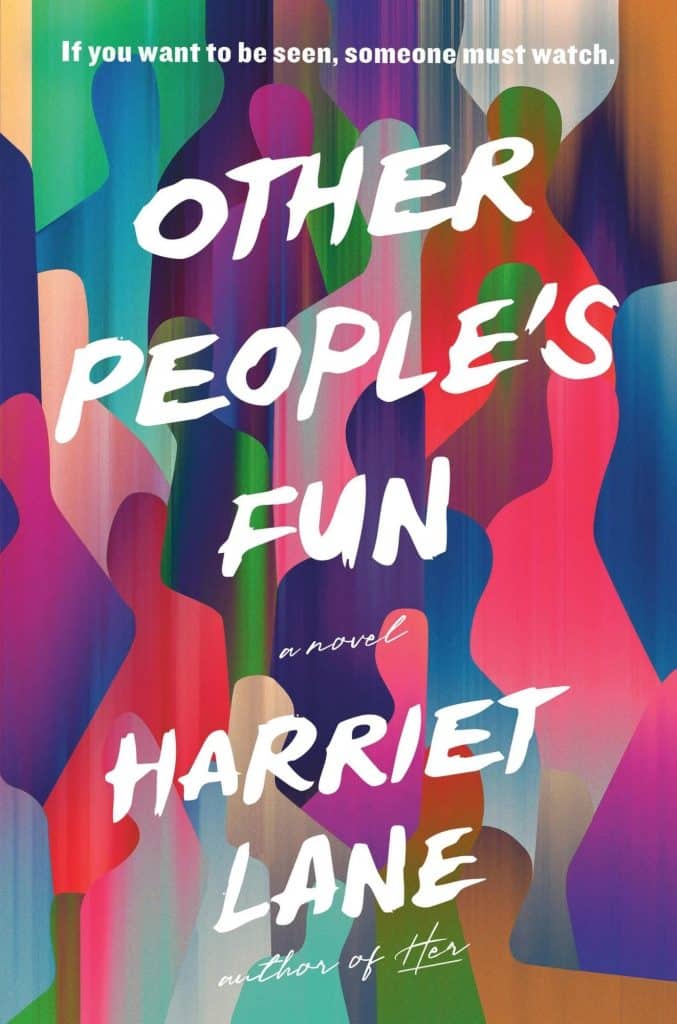
Other People’s Fun

by Harriet Lane

Other People’s Fun” by Harriet Lane is an engaging, thought-provoking novel that explores modern life, including the small lies we tell our neighbors, friends, families, and even ourselves, as well as the distorted reality of social media. Known for her signature blend of creeping unease and keen observation, Lane’s page-turner delves into our deep desire for others to truly see us as we are—and the consequences that arise when that happens.

“I look. I can’t stop looking. That’s the deal, isn’t it? We all know that’s how it works. If someone wants to be seen–and oh, how they want to be seen–then someone has to watch.”

Ruth is alone, unnoticed, and at a loss: her marriage has ended, her daughter is leaving home, and her job is leading nowhere.

But luckily, Sookie is back in her life, the vivid, self-assured Sookie who never spared time for Ruth when they were teenagers, but who now seems to want to be friends. But as Ruth becomes entangled in Sookie’s life, she realizes that everything is not as Instagrammable as Sookie would have her believe. As the truth about Sookie becomes clearer, so too does the choice Ruth will have to make.


Harriet Lane has experience as an editor and staff writer for Tatler and the Observer. She has contributed articles to The Guardian, Vogue, and The New York Times. Additionally, she is the author of two novels, Alys, Always, and Her. Lane resides in North London.


Discover your next favorite book and dive into a world of curated, exciting reads by purchasing through my links. You’ll have access to a diverse selection of books that I’ve personally vetted to ensure quality and enjoyment. Additionally, by supporting these selections, you’ll help me continue to provide you with more personalized recommendations. I earn a small commission from your purchase, which allows me to buy and share even more books with you. Your support truly makes a difference!


×