
Perplexed But Devoted

Estimated reading time: 14 minutes, 46 seconds
Lifetime Income Comparison

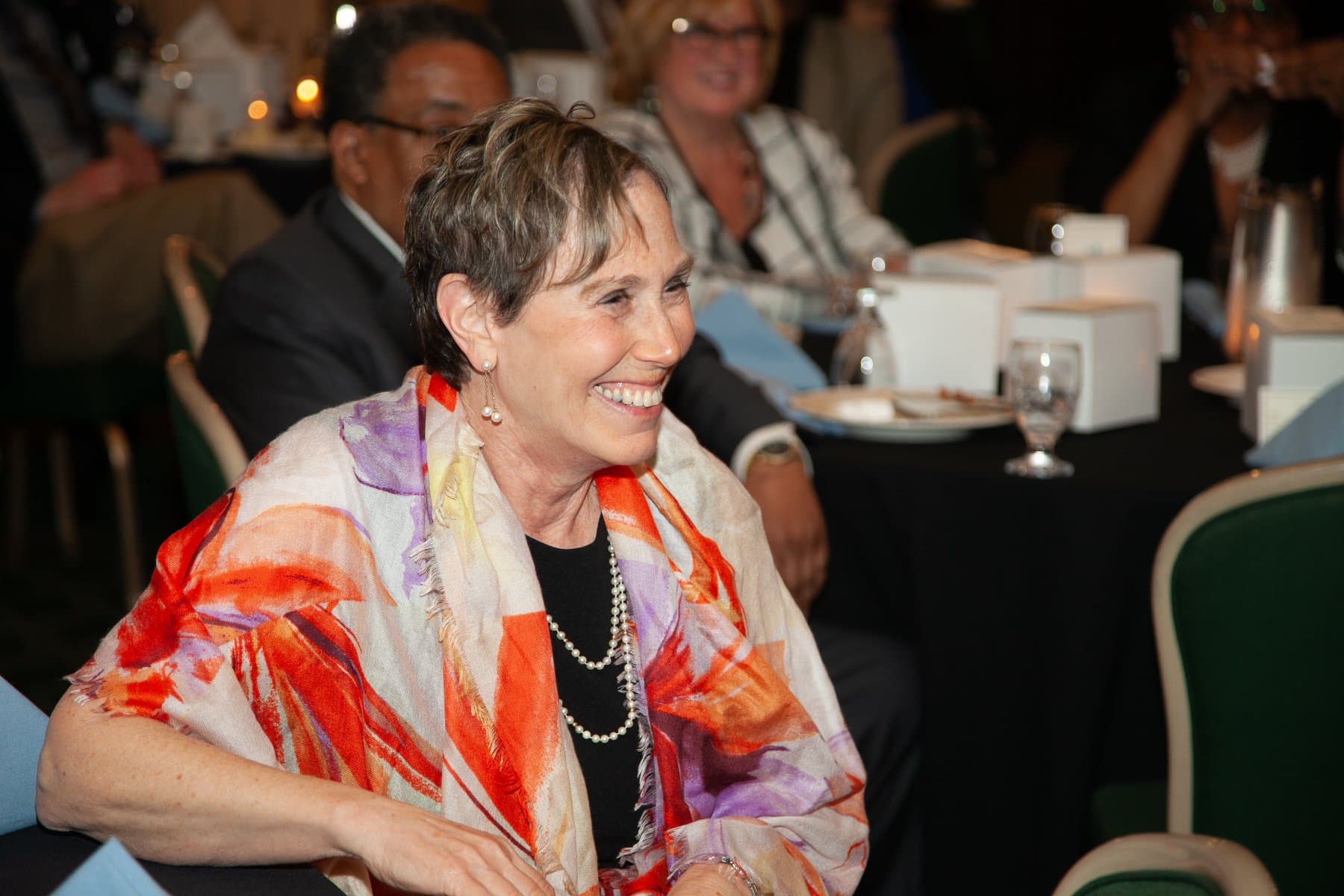
“Yes, this is Richard,” I said into my phone. I had scheduled a call with Social Security to see if I qualified for the lump sum death benefit of $255. I hope you are doing OK today,” said the woman from Social Security. “Losing a spouse is the most difficult challenge we will ever face. I only have a few questions to ask to help me determine your eligibility for the death benefit. Are you OK if I start the interview now?”

I started to nod my head but told her I was ready. 

“I will need your permission to record our call. Do I have your permission?”

I said yes. 

The questions were easy to answer, such as where and when did we marry? 

I answered them honestly and quickly. 

Mr. Brown, you qualify for the death benefit and should receive it in the next two weeks.

Assuming the call was over, I thanked her. 

“While I have you on the phone, let me check and ensure you receive the largest social security payment. If your wife’s benefits were greater than yours, you could receive her benefits instead of yours.”

That’s fine if you have time to review our accounts.

I paced around our home office while she checked the records. 

“Your benefits were slightly higher than your wife ‘s. I rarely see a couple where the Social Security payments were almost identical. Your benefit was only $30 a month more than hers.”

I thanked her and ended the call. 

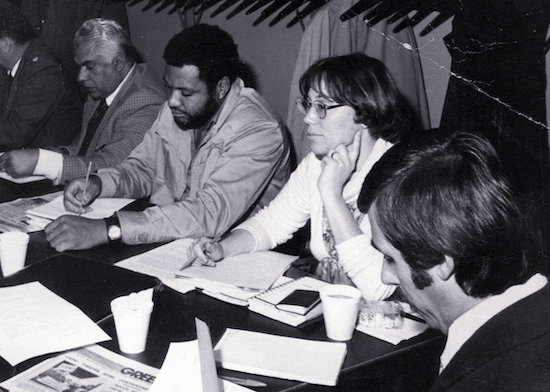
I remember when Jan called me to ask if I would be upset if she made more money than I did. I told her no then, as it did not matter. 

Every year when I did our taxes, I would sit down with her and show her who had made more the previous year. Sometimes she earned more, and in other years, I did. 

After forty-five years, Jan and I had earned almost the same. Our love had always been more important than money. It never mattered to either of us.

Walking downstairs for lunch, I decided the $255 death benefit should go to our grandson’s college fund. The death benefit will not make a difference in my life but will help the next generation

At the bottom of the stairs, I looked at Jan’s photo on the coffee table. 

Jan, do you agree with my suggestion to deposit the death benefit check into the college fund?

Of course, I knew she could not speak, but I could hear her whispering affirmatively in my ears. 

Looking at the photo, I said, “Jan, I love you and always will love you!”


The Jan Lilien Education Fund sponsors ongoing sustainability and environmental awareness programs. All donations are tax-deductible.


Contact Us
Subscribe

Creative Commons License

This work is licensed under a Creative Commons Attribution-NonCommercial 4.0 International License.

Pages: 1 2 3 4 5 6

12 comments add your comment

  1. Excellent story…I never heard of any couple making almost the same salary!!

    Funny and sad story, but I enjoyed it!!

    • Thanks, Hugo, for your comment.

      Jan and I chose similar work focused on repairing the world. As a result, our salaries were both modest. That we ended with wages almost the same at the end is not all that surprising. If Jan had lived and continued to work at the YWCA for the last two years, her total compensation would have surpassed mine.

      I agree that the story, like life, is humorous and sad simultaneously. I write from my heart, and the articles reflect the complexity of the lives Jan and I lived and how life is complicated.

      The love that Jan and I shared will never die.

      In closing I wanted to share share a poem from Evergreen by Kirsten Robinson. Her poems are a tribute to the enduring resilience of human nature as we cycle through times of light and darkness, much like nature itself.

        Give thanks for all
        that is good and beautiful;
        the gifts you carry
        people who lift you up
        your big, big love
        faith and trust that your life
        is unfolding as it should

        Give thanks for all
        that has been difficult and hard;
        trials tribulations tears
        tests of self strength fears
        all of the unknowns and days
        that broke you

        Without the darkness
        you would not have
        learned to appreciate the light

      Thanks for your friendship and support.

Share your thoughts and ideas

This site uses Akismet to reduce spam. Learn how your comment data is processed.

Previous Post:

Next Post:

The Jan Lilien Education Fund!

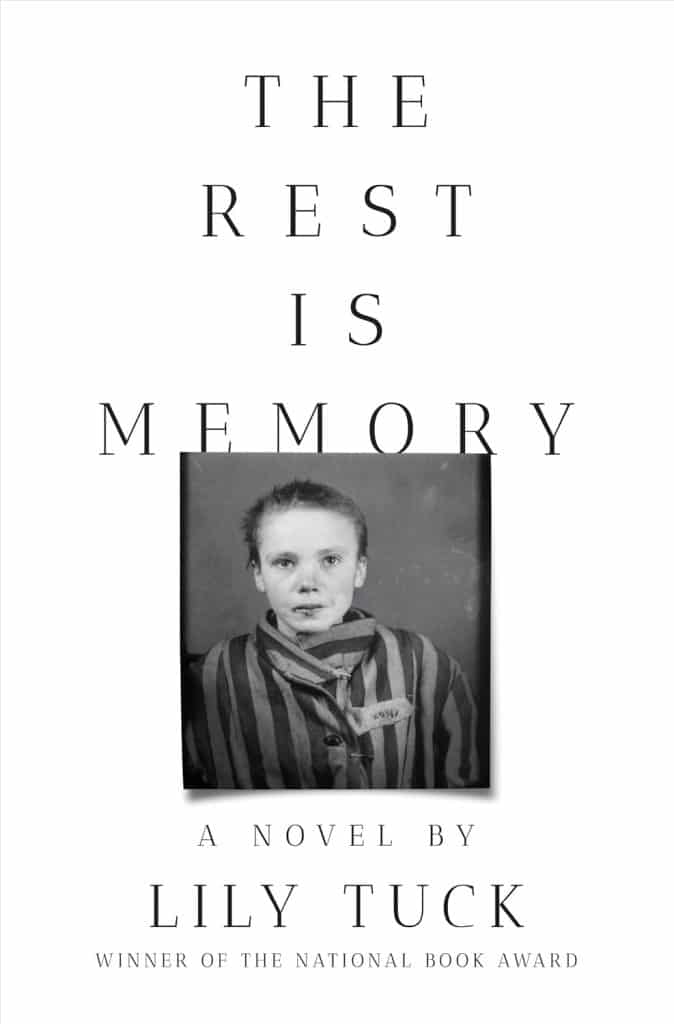
The Rest Is Memory: A Novel

Read: January 2025

Get this book

The Rest Is Memory: A Novel

by Lily Tuck

Today, I dove into “The Rest Is Memory: A Novel” by Lily Tuck, and it’s already leaving a powerful impression. This poignant tale follows a young Catholic girl’s harrowing journey to Auschwitz, woven in a captivating Rashomon-style narrative showcasing Tuck’s brilliance as a storyteller. Esquire has rightly placed it on their list of Best Books for Fall 2024, and I can see why.

In Tuck‘s skilled hands, “The Rest Is Memory” transforms into an unforgettable piece of historical reclamation, breathing life into an innocent soul who has long been remembered only through a haunting triptych of photographs. It’s a journey that promises to linger in my thoughts long after I’ve turned the last page.

In this mesmerizing novel by Lily Tuck, we first glimpse fourteen-year-old Czeslawa riding on the back of a boy’s motorcycle. Tuck imagines Czeslawa’s upbringing in a small Polish village before her world imploded in late 1942. Stripped of her modest belongings, she arrives at Auschwitz shorn and bearing the tattoo number 26947. Shortly after, she is photographed. Three months later, she is dead.

How did this happen to an ordinary Polish citizen? This is the question Tuck grapples with in this haunting narrative, which frames Czeslawa’s story within the tragic context of the six million Poles who perished during the German occupation. A decade before writing The Rest Is Memory“, Tuck read an obituary of the photographer Wilhelm Brasse, who took over 40,000 pictures of Auschwitz prisoners—including three of Czeslawa Kwoka, a Catholic girl from rural southeastern Poland. Tuck cut out these photos and kept them, determined to learn more about Czeslawa. However, she could only gather the barest facts: the village she came from, the transport she was on, that she was accompanied by her mother and neighbors, her tattoo number, and the date of her death. Tuck crafts a remarkable kaleidoscope of imagination from this scant evidence, something only our greatest novelists can achieve.

Susanna Moore described the novel as “Beautifully written, all the while instilling a sense of horror.” Tuck’s language swirls around the reader, yet no word is out of place. The subtly rotating images tumble forth, accelerating as we learn about Czeslawa’s tragic time in Auschwitz, as well as the lives of real individuals, including the brutal Commandant Rudolf Höss, his unconscionable wife Hedwig, psychiatrist and child rescuer Janusz Korczak, and the sharp Polish short story writer Tadeusz Borowski. Although we know Czeslawa’s fate, we must keep turning the pages, thoroughly captivated by Tuck’s nearly otherworldly prose.


When you purchase a book through one of my links, I earn a small commission that helps support my passion for reading. This contribution allows me to buy even more books to share with you, creating an incredible cycle of discovering great reads together! Your support truly makes a difference!


×
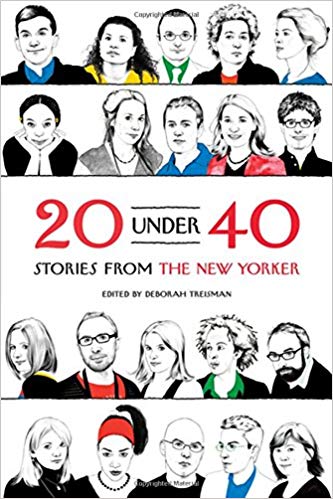
20 Under 40

Read: January 2019

Get this book

20 Under 40 Fiction

by Various Writers Under 40

Short Stories that Will Define the Future of American Letters

The New Yorker’s collection of short stories – 20 Under 40 – is a collection of twenty writers “whose work will help define the future of American letters.”

Some of these I had read in The New Yorker and others I had missed. Either way, they were a pleasure to read.

As The New Yorker wrote,

The range of voices is extraordinary. There is the lyrical realism of Nell Freudenberger, Philipp Meyer, C. E. Morgan, and Salvatore Scibona; the satirical comedy of Joshua Ferris and Gary Shteyngart; and the genre-bending tales of Jonathan Safran Foer, Nicole Krauss, and Téa Obreht. David Bezmozgis and Dinaw Mengestu offer clear-eyed portraits of immigration and identity; Sarah Shun-lien Bynum, ZZ Packer, and Wells Tower offer voice-driven, idiosyncratic narratives. Then there are the haunting sociopolitical stories of Chimamanda Ngozi Adichie, Daniel Alarcón, and Yiyun Li, and the metaphysical fantasies of Chris Adrian, Rivka Galchen, and Karen Russell.

Each of these writers reminds us why we read. And each is aiming for greatness: fighting to get and to hold our attention in a culture that is flooded with words, sounds, and pictures; fighting to surprise, to entertain, to teach, and to move not only us but generations of readers to come. A landmark collection, 20 Under 40 stands as a testament to the vitality of fiction today.

I recommend this collection of short stories.

Subscribe

Contact Us

×
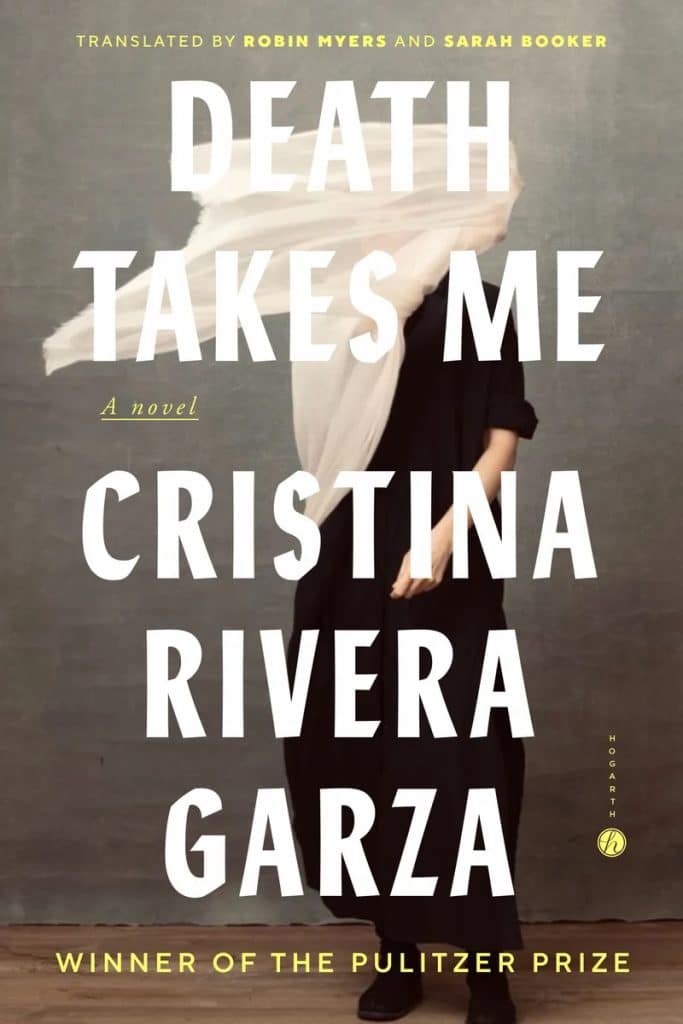
Death Takes Me

Read: December 2025

Get this book

Death Takes Me: A Novel

by Cristina Rivera Garza

Originally written in Spanish by Cristina Rivera Garza, Death Takes Me is a thrilling masterpiece of literary fiction that turns the traditional crime narrative of gendered violence on its head. As sharp as the cuts on the bodies of the victims, the story unfolds with the dreamlike logic of a surreal experience, transitioning from the police station to a professor’s classroom and through the intricate worlds of Latin American poetry and art. It invites readers to explore the unstable terrains of desire and sexuality.

A city is always a cemetery.

In the narrative, a professor named Cristina Rivera Garza stumbles upon the corpse of a mutilated man in a dark alley and promptly reports it to the police. When shown a crime scene photo, she discovers a stark warning written in tiny print with coral nail polish on the brick wall beside the body: “Beware of me, my love / beware of the silent woman in the desert.”

The professor becomes the primary informant in the case, which is led by a detective who is newly obsessed with poetry and haunted by a list of past failures. But what has the professor truly witnessed? As more bodies of castrated men alongside lines of verse, the detective attempts to decipher the meaning of the poems in hopes of stopping the spreading violence throughout the city.


Cristina Rivera Garza is an acclaimed author known for works such as The Taiga Syndrome and The Iliac Crest. Her memoir, Liliana’s Invincible Summer, won the Pulitzer Prize and was a finalist for the National Book Award. She has received the MacArthur Fellowship and the Sor Juana Inés de la Cruz Prize. Currently, Rivera Garza holds the Hugh Roy and Lillie Cranz Cullen Distinguished Chair and serves as director of the PhD program in Creative Writing in Spanish at the University of Houston.

Sarah Booker is a teacher and a literary translator. Her translations include novels by Mónica Ojeda, Cristina Rivera Garza, and Gabriela Ponce. She is also an associate editor at Southwest Review.

Robin Myers is a poet and translator. Her translations encompass Andrés Neuman’s Bariloche, Claudia Peña Claros’s The Trees, Isabel Zapata’s In Vitro, Eliana Hernández-Pachón’s The Brush, and Cristina Rivera Garza’s The Restless Dead: Necrowriting and Disappropriation.


Discover your next favorite book and dive into a world of curated, exciting reads by purchasing through my links. You’ll have access to a diverse selection of books I’ve personally vetted for quality and enjoyment. Additionally, by supporting these selections, you’ll help me continue to provide you with more personalized recommendations. I earn a small commission from your purchase, which allows me to buy and share even more books with you. Your support truly makes a difference!


×
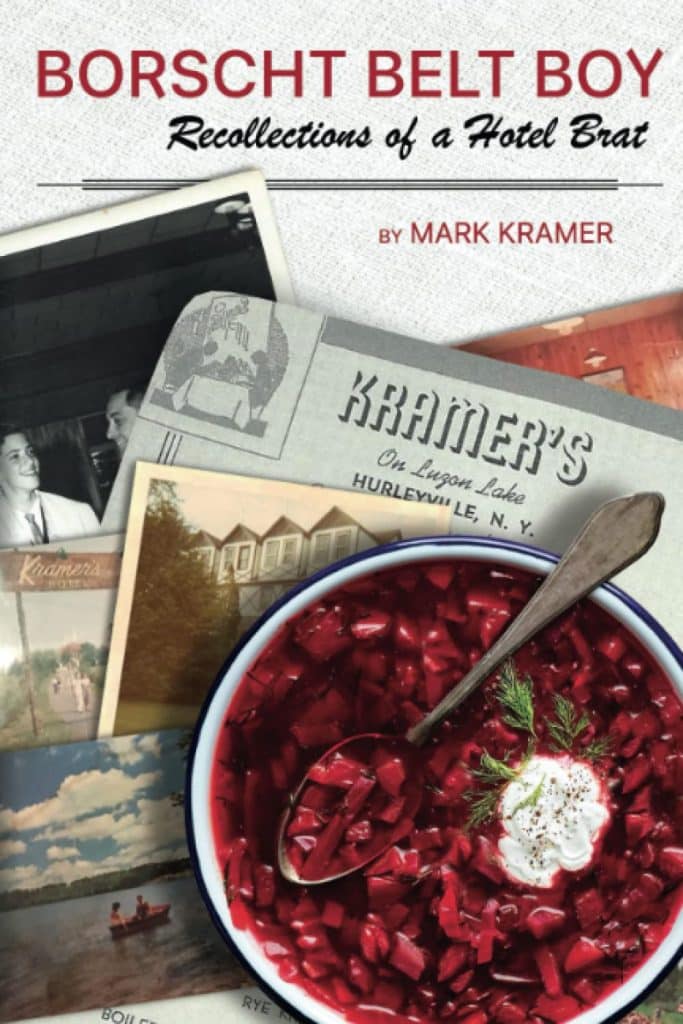
Borscht Belt Boy: Recollections of a Hotel Brat

Read: January 2024

Get this book

Borscht Belt Boy

by Mark Kramer

I started reading Borscht Belt Boy: Recollections of a Hotel Brat by Mark Kramer today. The book is the story of a young man who grew up in the heyday of the Borscht Belt. The author sent me a copy when I shared my 2023 reading accomplishments. I found joy in reading his memoir as the author, and I are almost the same age.

The author, the son of a Catskills Mountain resort hotel owner, describes his experiences growing up when hotels, bungalow colonies, and sleep-away camps were booming. Learn about the characters that populated this world, from the kids who worked in the dining rooms, the handymen recruited from the Bowery, to the chefs and maitre d’s.

Enjoy the author’s humorous description of the different kinds of people who summered in the mountains. Read fascinating tales of entertainers, including Buddy Hackett and Lenny Bruce’s experiences at the family hotel. There is a brief history of Catskills’ institutions, how the influx of Jews changed the landscape, and how the resort trade influenced race, religion, and class.

This lighthearted memoir will return fond memories to those who visited the Borscht Belt in their youth and enlighten those not lucky enough to have shared this particular time and place in history.


The Jan Lilien Education Fund sponsors ongoing sustainability and environmental awareness programs. Regarding gifts made this month, I will match dollar for dollar. All donations are tax-deductible.

Subscribe

Contact Us

I receive a commission when you buy a book or product using a link on this page. Thank you for supporting Sharing Jan’s Love blog.


×
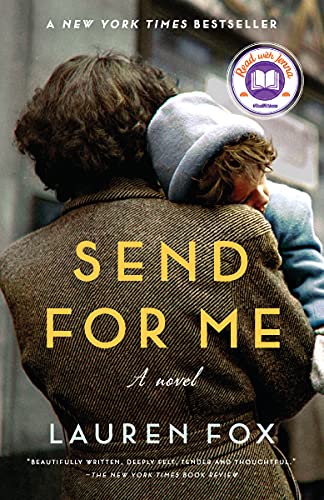
Send for Me

Read: January 2022

Get this book

Send for Me

by Lauren Fox

Send for Me by Lauren Fox. Send for Me is an achingly beautiful work of historical fiction that moves between Germany on the eve of World War II and present-day Wisconsin, unspooling a thread of love, longing, and the constant push and pull of family. Annelise is a dreamer: imagining her future while working at her parents’ famous bakery in Feldenheim, Germany, anticipating all the delicious possibilities yet to come. There are rumors that anti-Jewish sentiment is on the rise, but Annelise and her parents can’t quite believe that it will affect them; they’re hardly religious at all. But as Annelise falls in love, marries, and gives birth to her daughter, the dangers grow closer: a brick was thrown through her window; a childhood friend who cuts ties with her; customers refuse to patronize the bakery.

This novel explores mothers and daughters, duty and obligation, hope and forgiveness of four generations of mothers and daughters – Klara, Annelise, Ruth, and Clare.

Klara is the matriarch who remains in Germany, where she dies at the beginning of the war. Annelise is her daughter who becomes a refugee in Milwaukee. The poignant letters from her mother ask for help to leave Germany and reunite with her daughter and granddaughter Ruthie, tying together the four generations.

The letters are found by Clara, who pays to have them translated. Can we ever escape from the past, and how does it shape our futures.

I enjoyed reading this book as I prefer historical fiction, especially about the rise of Germany and antisemitism.

Send for Me is also a reminder that we are refugees.

Our lives are forever intertwined between two cultures, the past and the future.

I highly recommend Send for Me.


Subscribe

Contact Us

When you buy a book or product using a link on this page, I receive a commission. Thank you for supporting Sharing Jan’s Love blog.

×
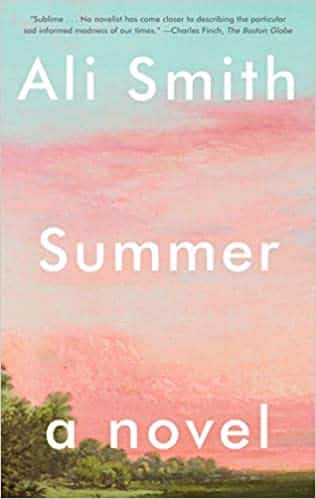
Summer a Novel

Read: October 2021

Get this book

Summer: A Novel

by Ali Smith

Summer: A Novel by Ali Smith is a fascinating book about the times in which we live.

In the present, Sacha knows the world’s in trouble. Her brother Robert just is trouble. Their mother and father are having trouble. Meanwhile the world’s in meltdown – and the real meltdown hasn’t even started yet.

In the past, a lovely summer. A different brother and sister know they’re living on borrowed time.

This is a story about people on the brink of change.

They’re family, but they think they’re strangers.

So: where does family begin? And what do people who think they’ve got nothing in common have in common?

Summer.

Because of the two different periods and the multiple characters, I had some difficulty following the plot until about halfway to the end. Suddenly it all fit together and made sense.

The book revealed information about the internments during World War II in England that I had not fully comprehended.

Sacha’s focus on the environmental degradation augmented by the COVID pandemic provided an emotional undertow in the book.

I now must begin to read the other three novels in this Seasonal Quartet.

Subscribe

Contact Us

×

Discover more from Sharing Jan’s Love

Subscribe now to keep reading and get access to the full archive.

Continue reading