
Home for Hospice

Estimated reading time: 11 minutes, 53 seconds

Home for Hospice

Hello, sweetheart; how are you today?” I had arrived at the hospital for Wednesday’s visit knowing that I could not tell Jan about hospice. I have never been a poker player because I cannot hide my feelings. Today would be difficult, but I had no choice but to hold back my emotions and keep the information to myself. 

I am happy to see you, but I am tired of the hospital. I can’t wait until I am home with you.”

Holding back tears, I kissed her lips.

Almost as soon as I arrived, they came in to give her another blood transfusion. 

I stepped out of the way, but there was not much space in this room. It was a small hospital room as the bed filled up almost of the space. The sitting area was minimal.How will we fit everyone in when we tell her about hospice?

Once the transfusion started, I sat next to her and handed her the milkshake. 

“This is so good!”

“I love you,” I said. “We got this one from Vanilla Bean Creamery.”

I tried to help her best, but COVID rules would not allow me to go out of the room to get ice chips or ask for anything.

After lunch, she napped, and I nervously watched the time. We had agreed on 2 pm for the meeting with Jan. 

“Did you have a good nap?” It was now 1:45 pm.

I got up to stretch and look down the hallway. 

As happy as I was to see Mike and Jon, I felt my stomach drop to my ankles.

“It’s my sons!”

I was able to get them in today as a special treat for you,” I said while still hiding the truth.

Jon sat on her right side and Mike on the other. Any other moment in our lives and this would have been a joyous reunion. 

Rabbi Renee walked in just after them. 

“Jan, how are you feeling?”

“This is a real surprise. My sons and my Rabbi!”

While she greeted everyone, I stepped toward the doorway to catch my breath and wipe away tears. I must be fully present for Jan. I have to love her more now than ever. She would hear the news that she only had weeks to live in a few moments.

I looked up, and Dr. Saksena was standing in the doorway. 

“It looks like you have a full house today! How are you feeling,” Dr. Saksena asked.

The Rabbi was on the far end of the couch by the window. Dr. Saksena sat in the middle, and I stood next to her. 

“Jan, as I said, I consulted with Dr. Strair about the next steps.”

Jan smiled and waited on the news.

“What would you like to do? If you were cancer-free.

“Finish re-building my office, travel, and spend time with my sons.”

As you know, we have done three treatments, and the lymphoma is still inside you and very aggressive.

Jan nodded her head.

We cannot treat the lymphoma because of COVID and cannot treat the COVID because of the lymphoma. Unfortunately, we only have one option left. Our recommendation is hospice care.

Jan looked straight ahead, and I wanted to leap across the bed and hold her. 

After what seemed like an hour but was only a minute, Jan asked, “How much time do I have left?”

“Only a few weeks.”

The tension in the room was unbearable. I tried to work my way next to Jon to hold her hand, but there was not enough room. 

“OK. I know an agency that does hospice care.

“You are coming home or to my house,” said Mike. 

“Is there enough room?”

Mike and I have already started to talk to the hospice team in the hospital,” said Jon. 

“Home is where you need to be, honey. Home with all of us,” I said.

Dr. Saksena left, and we talked about logistics. I could not focus on the logistics.All I could think about was whether could I live without the love of my life?

After an hour, everyone left except for me. 

All I could say to her was how much I loved her. 

Jan was serene and had accepted hospice easier than I had. 

When I left Jan to go home in the evening, I stood in the parking deck and wept openly. 

I looked at my phone and saw this text message from Dr. Strair. 

Best wishes to Janice and your family for peace and comfort.

April 7, 6:05 pm

“God grant me the strength to love Jan more than ever and help her find peace and comfort,” I screamed as I got into the car. 


The Jan Lilien Education Fund sponsors ongoing sustainability and environmental awareness programs. All donations are tax-deductible.


Subscribe
Contact Us
Creative Commons License

This work is licensed under a Creative Commons Attribution-NonCommercial 4.0 International License.

Pages: 1 2 3 4 5

27 comments add your comment

Share your thoughts and ideas

This site uses Akismet to reduce spam. Learn how your comment data is processed.

Previous Post:

Next Post:

The Jan Lilien Education Fund!

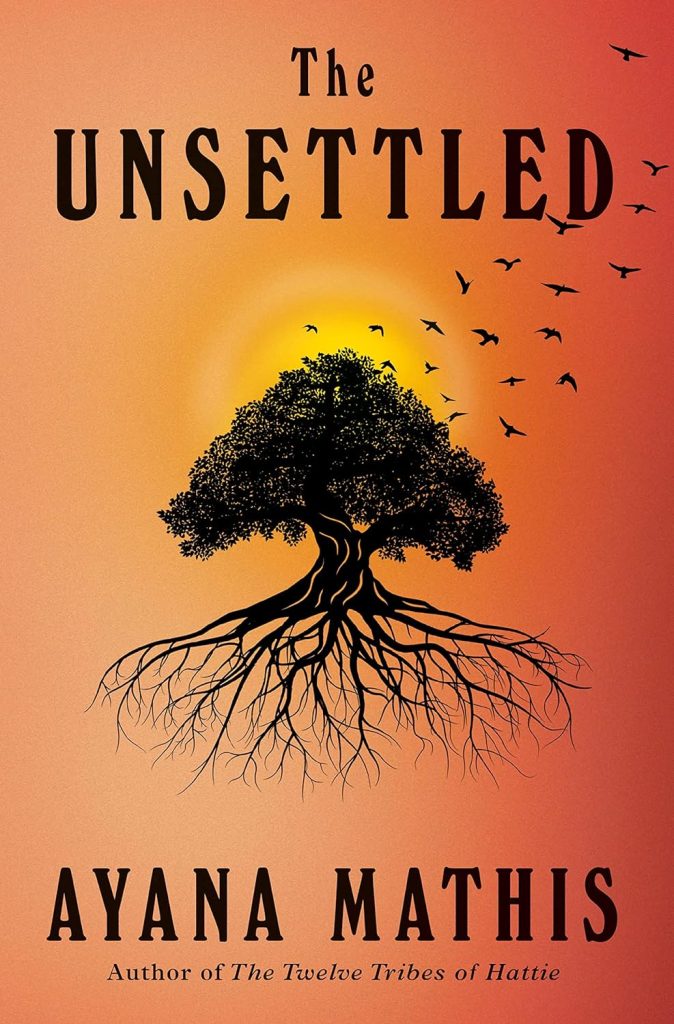
The Unsettled: A Novel

Read: October 2023

Get this book

The Unsettled: A Novel

by Ayana Mathis

I highly recommend reading “The Unsettled: A Novel” by Ayana Mathis. It’s a brilliant, explosive, and vitally crucial new work from one of America’s most fiercely talented storytellers. The story follows Ava Carson and her ten-year-old son, Toussaint, arriving at the Glenn Avenue family shelter in Philadelphia in 1985. From the outset, Ava is already thinking of a way to escape.

She is disgusted by the shelter’s squalid conditions, including a room infested with cockroaches, barely edible food, and an untrustworthy night security guard. She is resolute in her mission to rescue her son from the shelter’s dangers and humiliations and free herself from the complex past that led them there.

Ava and her mother, Dutchess, have been estranged for many years since Ava left her Alabama home as a young woman. Despite the miles between them, mother and daughter are still deeply connected. However, Ava finds it hard to forgive her mother for her sharp tongue, intractability, and bouts of despair that led to neglect and hunger during her childhood.

Ava wants to be a better mother to her son, Toussaint. However, when Toussaint’s father, Cass, suddenly reappears, Ava is drawn to his charisma and radical vision to dismantle systems of racial injustice and establish a new communal living.

Meanwhile, in Alabama, Dutchess is facing a difficult challenge. She is struggling to prevent the sale of Bonaparte to white developers, who are rapidly encroaching on the land. Bonaparte has been a beacon of Black freedom and self-determination, and it is now in the hands of its last five Black residents – families who have lived there for generations. Dutchess is fighting to preserve the venerable history of Bonaparte and the land, which she has worked hard to keep as Ava’s inheritance.

As Ava approaches Cass, Toussaint begins to sense danger around him. He worries about his mother’s erratic behavior and his father’s intense and volatile nature. Toussaint dreams of returning to Bonaparte and Dutchess, where he was born and raised. He hopes to find his way back there soon.


The Jan Lilien Education Fund sponsors ongoing sustainability and environmental awareness programs. Gifts made this month; I will match dollar-for-dollar. All donations are tax-deductible.

Subscribe

Contact Us

I receive a commission when you buy a book or product using a link on this page. Thank you for supporting Sharing Jan’s Love blog.


×
Autocorrect

Read: August 2025

Get this book

Autocorrect: Stories

by Etgar Keret

“Autocorrect” by Etgar Keret, a prominent figure in Israeli literature and film, is a darkly humorous collection of stories that delves into themes of identity, reality, and meaning. These narratives resonate with our current times, characterized by uncertainty and fragility, marked by misunderstandings and miscommunications, as we seek reasons and the strength to foster hope.

Etgar Keret‘s stories reveal the fault lines and uncomfortable truths in our society, all delivered in a style that is uniquely his own. He is the world’s most renowned living Israeli writer, known for his lean and accessible short stories that often blend whimsy, surrealism, and dark humor. Keret’s work explores the most minor and seemingly mundane aspects of life in profound and unusual ways.

The characters in his fiction face relatable challenges in work and relationships. They inhabit a world filled with rapidly advancing technology, yet the base nature of human passions and brutality repeatedly undermines this world. For instance, one character’s partner is a reality show contestant from a parallel dimension. At the same time, another discovers that the asteroid he paid to have named after his wife is on a collision course with Earth. In another story, an elderly widow persuades a popular AI program to commit suicide.


Etgar Keret, born in Ramat Gan in 1967, is a prominent figure in Israeli literature and film. Translated into more than forty languages, his writing has appeared in well-known publications such as The New York Times, Le Monde, and The New Yorker. He has received several prestigious awards, including the Caméra d’Or at the Cannes Film Festival in 2007, the Charles Bronfman Prize in 2016, and the esteemed Sapir Prize in 2018.

More than a hundred captivating short films and several remarkable feature films have brought his stories to life on the big screen. Keret teaches creative writing at Ben-Gurion University of the Negev. Since 2021, he has also been publishing a weekly newsletter titled “Alphabet Soup” on Substack.


When you purchase a book through one of my links, I earn a small commission that helps support my passion for reading. This contribution allows me to buy even more books to share with you, creating an incredible cycle of discovering great reads together! Your support truly makes a difference!

Enjoy a limited-time offer of 20% off your next book purchase at Bookshop.org!


×
People Collide: A Novel

Read: October 2023

Get this book

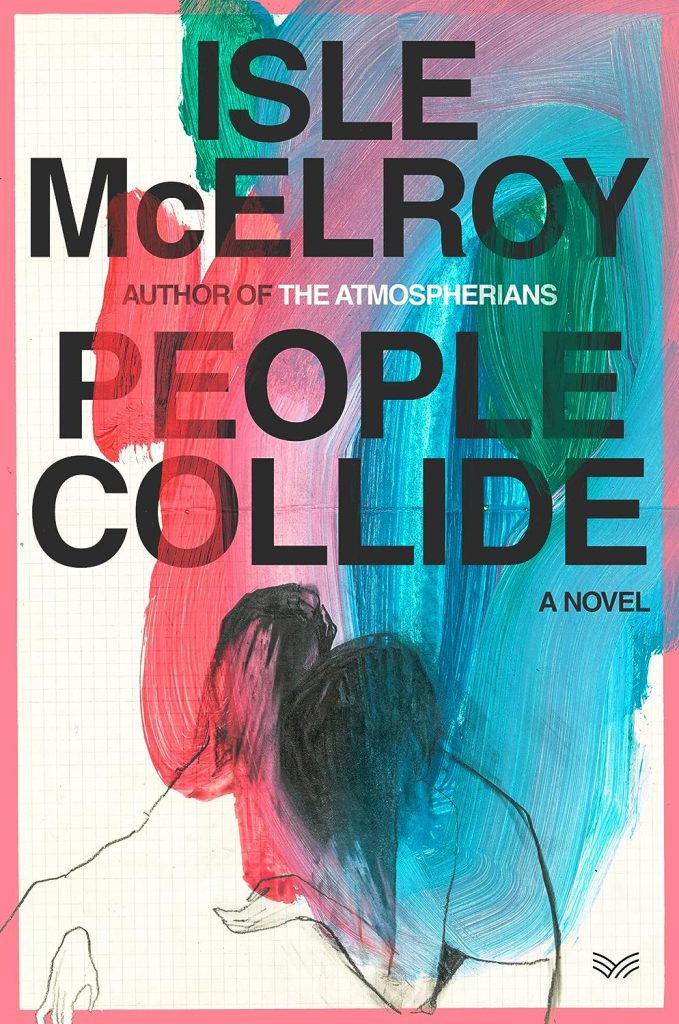
People Collide: A Novel

by Isle McElroy

Today, I started reading “People Collide” by Isle McElroy. The book is about a gender-bending, body-switching story that explores the themes of marriage, identity, and sex. “People Collide” is a profound exploration of ambition, sacrifice, desire, and loss. The book sheds a refreshing light on themes of love, sexuality, and the truth of who we are.

The protagonist, Eli, lives with his wife, Elizabeth, in a cramped apartment in Bulgaria. One day, Eli wakes up to find that he has switched bodies with Elizabeth, who has disappeared without a trace. The story follows Eli’s journey across Europe and America to find his missing wife while he learns to exist in her body.

As Eli comes closer to finding Elizabeth, he begins to question the effect of their metamorphosis on their relationship. He wonders how long he can keep up the illusion of living as someone else. Will their marriage wither away entirely in each other’s bodies? Or will this transformation be the key to making their marriage thrive?


The Jan Lilien Education Fund sponsors ongoing sustainability and environmental awareness programs. Gifts made this month; I will match dollar-for-dollar. All donations are tax-deductible.

Subscribe

Contact Us

I receive a commission when you buy a book or product using a link on this page. Thank you for supporting Sharing Jan’s Love blog.


×
Invisible Child

Read: December 2021

Get this book

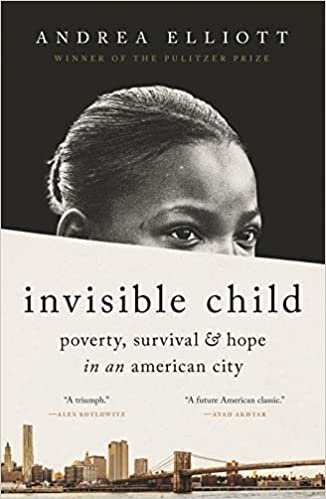
Invisible Child: Poverty, Survival & Hope in an American City

by Andrea Elliott

Invisible Child: Poverty, Survival & Hope in an American City by Andrea Elliott was a gift from my son Jon. The New York Times selected “Invisible Child” as one of the best books published this year. It is indeed one of the top books on my all-time list.

GoodReads summary provides a good overview,

The riveting, unforgettable story of a girl whose indomitable spirit is tested by homelessness, poverty, and racism in an unequal America—from Pulitzer Prize-winning journalist Andrea Elliott of The New York Times

Invisible Child follows eight dramatic years in the life of Dasani Coates, a child with imagination as soaring as the skyscrapers near her Brooklyn homeless shelter. Born at the turn of a new century, Dasani is named for the bottled water that comes to symbolize Brooklyn’s gentrification and the shared aspirations of a divided city. As Dasani grows up, moving with her tight-knit family from shelter to shelter, this story goes back to trace the passage of Dasani’s ancestors from slavery to the Great Migration north. When Dasani comes of age, New York City’s homeless crisis explodes as the chasm deepens between rich and poor.

In the shadows of this new Gilded Age, Dasani must lead her seven siblings through a thicket of problems: hunger, parental drug addiction, violence, housing instability, segregated schools, and the constant monitoring of the child-protection system. When, at age thirteen, Dasani enrolls at a boarding school in Pennsylvania, her loyalties are tested like never before. As she learns to “code switch” between the culture she left behind and the norms of her new town, Dasani starts to feel like a stranger in both places. Ultimately, she faces an impossible question: What if leaving poverty means abandoning the family you love?

By turns heartbreaking and revelatory, provocative and inspiring, Invisible Child tells an astonishing story about the power of resilience, the importance of family, and the cost of inequality. Based on nearly a decade of reporting, this book vividly illuminates some of the most critical issues in contemporary America through the life of one remarkable girl.

Jan and I were involved and knew that child poverty and homelessness needed repair. In addition, Jan lived on Washington Park across from Ft. Greene Park in 1974-75. We knew the neighborhood where much of the book’s story takes place. 

Before meeting Jan in 1973, I was both a community/tenant organizer and a youth worker. In the latter role, I made weekly hostel trips for eight to ten young boys from East Williamsburg during 1973. The trips were the first the boys had ever been outside of their neighborhood.

Many of them had imaginations like Dasani. They also had her instinct to fight. One of my first tasks was to check for any weapons.

Decades later, when I would see any of them, now adults, they would ask when we were going on another trip. I wish I had met Jan when I made those trips. She would have helped me improve them and document the impact. If I could re-write history, I would have her join me as the second adult on the hostel trips.

After that summer, it was clear my primary skills were as a community/tenant organizer. Over the next few years, my work focused on creating affordable and supportive housing.

Jan and I did meaningful work that made a difference, yet the need for a permanent solution to the crisis remains. The book highlights the crucial role of resilience, the importance of family, and the cost of inequality. As a nation, we cannot undermine those values by breaking up families, impeding resilience, and maintaining racial and economic inequality. 

The current debate in Washington over the Build Back Better legislation needs to focus not on how much we spend but on its impact on children and families. 

David Brooks, a conservative commentator, has supported these expenditures for what they can do to address this country’s cultural and economic crisis. 

These packages say to the struggling parents and the warehouse workers: I see you. Your work has dignity. You are paving your way. You are at the center of our national vision.

This is how you fortify a compelling moral identity, which is what all of us need if we’re going to be able to look in the mirror with self-respect. This is the cultural transformation that good policy can sometimes achieve. Statecraft is soulcraft.

If you can only read one book this year, this is the one to read. Child poverty, homelessness, and inequality impact all of us. Ending child poverty and homelessness will make us a healthier and more inclusive nation. It is time for a compelling moral call to action!

Subscribe

Contact Us

When you buy a book or product using a link on this page, I receive a commission. Thank you for supporting Sharing Jan’s Love blog.

×
All the Water in the World

Read: January 2025

Get this book

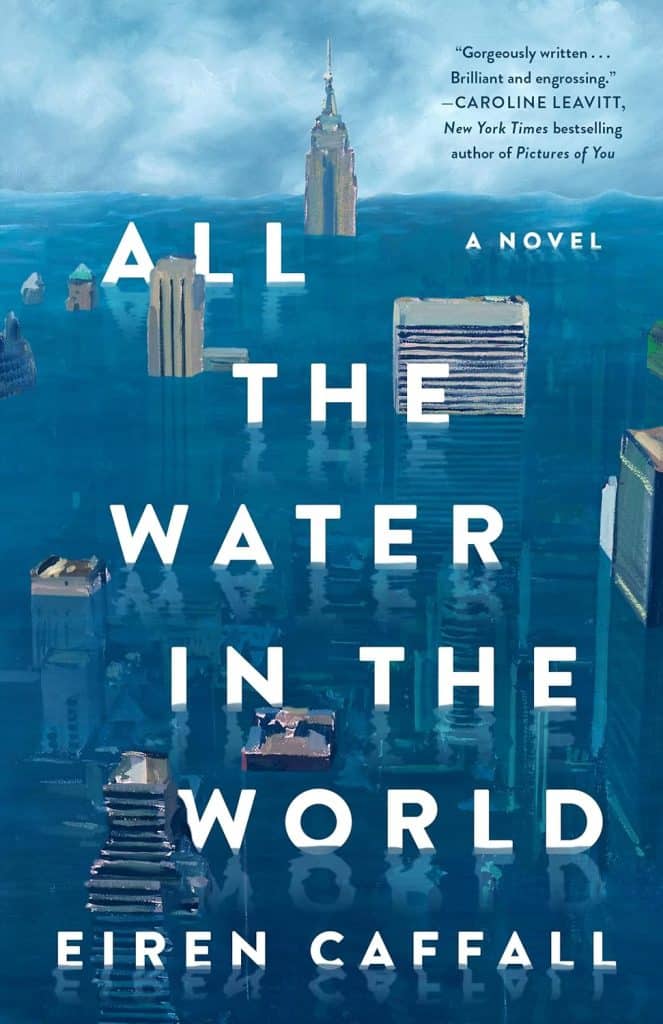
All the Water in the World

by Eiren Caffall

Today, I began reading “All the Water in the World” by Eiren Caffall. Like Station Eleven, this novel is a literary thriller set partly in New York’s American Museum of Natural History in a flooded future. In the spirit of “From the Mixed-Up Files of Mrs. Basil E. Frankweiler” and “Parable of the Sower,” this adventurous journey offers hope that the most important things—love, work, community, and knowledge—will endure.

“All the Water in the World” is narrated by a girl who profoundly appreciates water. In the years following the melting of the glaciers, Nonie, along with her older sister, parents, and their researcher friends, remains in a nearly deserted New York City. They have established a settlement on the roof of the American Museum of Natural History with a strict rule: they may only take from the exhibits in cases of dire need. They hunt and grow their food in Central Park while also working to preserve the collections of human history and science.

When a superstorm breaches the city’s flood walls, Nonie and her family must escape northward along the Hudson River. They carry a book containing records of the lost collections. As they race down the swollen river for safety, they encounter communities that have adapted in various, sometimes frightening, ways to the new reality. Despite the challenges, they are determined to create a new world that honors everything they have saved.

Inspired by the stories of curators in Iraq and Leningrad who worked to protect their collections during wartime, “All the Water in the World” mediates what we strive to preserve from collapse and an adventure filled with danger, storms, and a fight for survival.


When you purchase a book through one of my links, I earn a small commission that helps support my passion for reading. This contribution allows me to buy even more books to share with you, creating an incredible cycle of discovering great reads together! Your support truly makes a difference!


×
Camp Zero

Read: April 2023

Get this book

Camp Zero: A Novel

by Michelle Min Sterling

I recently read an incredible novel called Camp Zero by Michelle Min Sterling. The book tells the story of several climate change survivors in a near-future northern settlement and explores the intersection of gender, class, and migration. The novel is a page-turner and a masterful exploration of who and what will survive in a warming world.

The story follows Rose, a young woman who agrees to spy on the architect of an American building project in exchange for housing. She arrives at the same time as Grant, a college professor who is trying to escape his wealthy family’s dark legacy. As they begin to investigate the mysterious architect, they uncover a disturbing mystery lurking beneath the surface of the camp.

One of the most fascinating aspects of the novel is the inclusion of an elite group of women soldiers living and working at a nearby Cold War-era climate research station. The rumors surrounding their presence add more intrigue to an already compelling story.

If you’re looking for a captivating novel that will keep you on the edge of your seat, I highly recommend Camp Zero. The book is a mesmerizing and transportive read, perfect for fans of Station Eleven and The Power.


The Jan Lilien Education Fund sponsors ongoing sustainability and environmental awareness programs. Gifts made this month; I will match dollar-for-dollar. All donations are tax-deductible.

Subscribe

Contact Us

I receive a commission when you buy a book or product using a link on this page. Thank you for supporting Sharing Jan’s Love blog.


×

Discover more from Sharing Jan’s Love

Subscribe now to keep reading and get access to the full archive.

Continue reading