
Summer Clocks Falling Back

Summer Clocks Falling Back

Estimated reading time: 1 minute, 17 seconds
Remembering Jan at Camp Widow!When Jan and I lived in Brooklyn, I always told her I needed to change the clocks at the beginning of the week before the switch would occur.

My rationale was the subway clocks changed that early.

Of course, I never did make the changes that early. Finally, Jan would say it was OK on the Saturday before moving ahead or falling back.

In Apartment 3B, I have minimized the number of chronometers that require me to change them manually.

Despite the easier task, the November change is always the most difficult.

Neither Jan nor I would “gain” the extra hour of sleep.

It could be weeks before our bodies would adjust to regular time.

Both of us, mostly me, are impacted by Seasonal affective disorder (SAD).

Summer-like weather complicates this time adjustment. How can the upper seventies be happening in November?

My allergies, which I never had when Jan was next to me, are aggravated by summer in November.

As much as I wish I could adjust the timepieces with Jan, all I can do is take one step at a time into my life without Jan.


The Jan Lilien Education Fund sponsors ongoing sustainability and environmental awareness programs. Gifts made this month; I will match dollar-for-dollar. All donations are tax-deductible.

Subscribe

Contact Us

I receive a commission when you buy a book or product using a link on this page. Thank you for supporting Sharing Jan’s Love blog.

Illuminate the Path of Our Life

My reading was a contemporary Avinu Malkeinu that presented a series of questions acknowledging our responsibility for our lives. It was the ideal lesson for me as I began a year of growth and change. Was it merely luck that I was assigned this passage? Or was it another divine intervention like the one I had experienced after the fire?

Share your thoughts and ideas

This site uses Akismet to reduce spam. Learn how your comment data is processed.

The Jan Lilien Education Fund!

Summer Clocks Falling Back
×
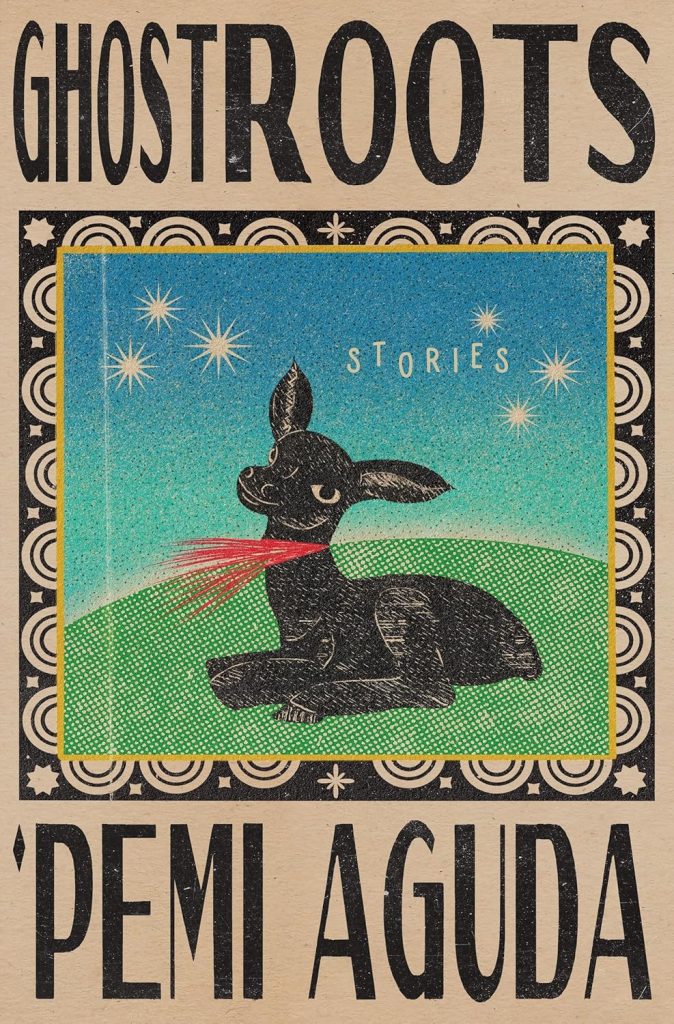
Ghostroots: Stories

Read: October 2024

Get this book

Ghostroots: Stories

by ’Pemi Aguda

Today, I started reading Ghostroots: Stories by ‘Pemi Aguda, a finalist for the 2024 National Book Award for Fiction. This collection features twelve imaginative stories set in Lagos, Nigeria, in which ‘Pemi Aguda explores the tension between our desire to be individuals and the influence of our past. One of the stories, “Breastmilk,” was shortlisted for the 2024 Caine Prize for African Writing.

The story “Manifest” depicts a woman who sees the ghost of her abusive mother in her daughter’s face, which leads to her daughter exhibiting destructive behavior. In “Breastmilk,” a wife forgives her husband for infidelity. Still, she later struggles with producing milk for her newborn, feeling like she’s failed to uphold her mother’s feminist values and doubts her ability as a mother. Things Boys Do” follows a trio of fathers who sense something unnatural about their infant sons, leading to their lives falling apart as they fear their sons are the cause of their troubles. Lastly, “24, Alhaji Williams Street” tells the story of a teenage boy living in the shadow of a mysterious disease that’s killing the boys on his street.

These stories in “Ghostroots” delve into the emotional and physical worlds, unveiling the profound impact of family, myth, tradition, gender, and modernity in Nigerian society. Pemi Aguda’s storytelling, infused with empathy and humor, showcases her as a significant new literary talent. Her deep understanding of human emotions and thorough exploration of these societal influences will leave you feeling enlightened and informed, eager to explore more of her work.


When you purchase a book through one of my links, I earn a small commission that helps support my passion for reading. This contribution allows me to buy even more books to share with you, creating an incredible cycle of discovering great reads together! Your support truly makes a difference!


×
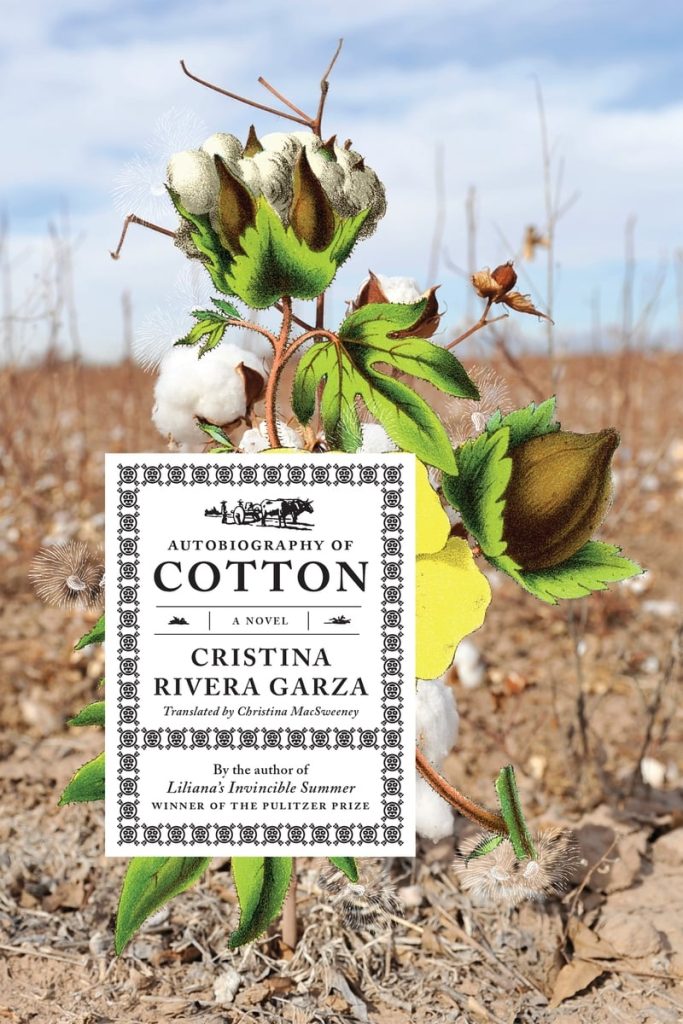
Autobiography of Cotton

Read: February 2026

Get this book

Autobiography of Cotton

by Cristina Rivera Garza

In 1934, a young José Revueltas traveled to Tamaulipas to support the cotton workers’ strike in Estación Camarón, which would later serve as the foundation for his landmark novel, Human Mourning. In her groundbreaking novel Autobiography of Cotton, Cristina Rivera Garza recounts her grandparents’ journey from mining towns to those same cotton fields. Her narrative intersects with Revueltas’s life and offers a vivid and evocative account of the history of cotton cultivation along the Mexico-U.S. border.

Through archival research and personal narrative, Rivera Garza explores how cotton transformed the borderlands by recounting the story of the cotton workers’ strike. She reveals how cycles of deprivation and environmental destruction continue to affect generations. Rivera Garza skillfully creates a new kind of border novel that illustrates how a fragile landscape drastically changed her grandparents’ lives and the territories they helped to develop. In this intimate fictionalization, Autobiography of Cotton offers a rich social history that encompasses agricultural colonization, labor activism, environmental degradation, and cross-border migration.

I recommend “Autobiography of Cotton,” but readers should be patient as the book shifts back and forth in time. Everything becomes clear as you continue reading.


Cristina Rivera Garza is the Pulitzer Prize–winning author of Liliana’s Invincible Summer. A MacArthur Fellow, she is the Hugh Roy and Lillie Cranz Cullen Distinguished Chair and founder of the University of Houston’s PhD in Creative Writing in Spanish.

Christina MacSweeney is the award-winning literary translator of works by Julián Herbert, Valeria Luiselli, and Elvira Navarro. She received the 2024 Sundial Literary Translation Award for her translation of Verónica Gerber Bicecci‘s The Company.


Discover your next favorite book and dive into a world of curated, exciting reads by purchasing through my links. You’ll have access to a diverse selection of books that I’ve personally vetted to ensure quality and enjoyment. Additionally, by supporting these selections, you’ll help me continue to provide you with more personalized recommendations. I earn a small commission from your purchase, which allows me to buy and share even more books with you. Your support truly makes a difference!


×
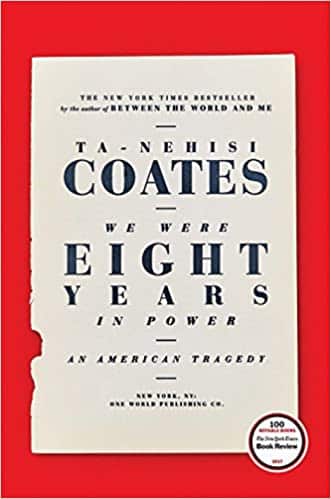
We Were Eight Years in Power

Read: September 2020

Get this book

We Were Eight Years in Power

by Ta-Nehisi Coates

We Were Eight Years in Power by Ta-Nehisi Coates is a collection featuring the landmark essay The Case for Reparations he wrote for The Atlantic. Even though I am a subscriber to The Atlantic and have read many of the pieces, this is a must-read book as it reflects on race, Barack Obama’s presidency, and its jarring aftermath, including the election of Donald Trump.

We were eight years in power as the lament of Reconstruction-era black politicians as the American experiment in multiracial democracy ended with the return of white supremacist rule in the South. In this sweeping collection of new and selected essays, Ta-Nehisi Coates explores the tragic echoes of that history in our own time: the unprecedented election of a black president followed by a vicious backlash that fueled the election of the man Coates argues is America’s first white president.

But the story of these present-day eight years is not just about presidential politics. This book also examines the new voices, ideas, and movements for justice that emerged over this period and the effects of the persistent, haunting shadow of our nation’s old and unreconciled history. Coates powerfully examines the events of the Obama era from his intimate and revealing perspective:” the point of view of a young writer who begins the journey in an unemployment office in Harlem and ends it in the Oval Office, interviewing a president.

We Were Eight Years in Power features Coatesa’s iconic essays first published in The Atlantic, including Fear of a Black President, The Case for Reparations, and The Black Family in the Age of Mass Incarceration, along with eight fresh essays that revisit each year of the Obama administration through Coate’s own experiences, observations, and intellectual development, capped by a bracingly original assessment of the election that fully illuminated the tragedy of the Obama era. We Were Eight Years in Power is a vital account of modern America, from one of the definitive voices of this historic moment.

I recommend this book to all readers.

Subscribe

Contact Us

×
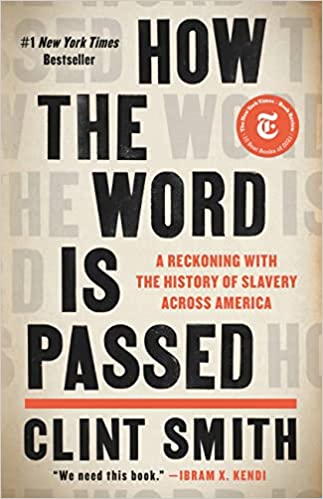
How the Word is Passed

Read: December 2021

Get this book

How the Word Is Passed: A Reckoning with the History of Slavery Across America

by Clint Smith

How the Word Is Passed: A Reckoning with the History of Slavery Across America by Clint Smith. This book was a gift from my son Jon. The New York Times selected How the Word is Passed as one of the best books published this year. Beginning in his hometown of New Orleans, Clint Smith leads the reader on an unforgettable tour of monuments and landmarks—those that are honest about the past and those that are not—that offer an intergenerational story of how slavery has been central in shaping our nation’s collective history, and ourselves.

How the Word is Passed is one of the best books I have read in 2021. I had read an excerpt in The Atlantic on the Whitney Plantation, one of the only former plantations devoted to preserving the experience of the enslaved people whose lives and work sustained it. Like most of us, I had placed the book on my to-read list, where it remained lost in the cobwebs. Fortunately, my son Jon purchased the book for me.

Secondly, the book rekindled my long-lost dream of being an American Studies professor. As soon as Jan and I met, I dropped plans to leave Brooklyn and start graduate school in the fall of 1974. I made that decision primarily because of how much I loved Jan. But it was also partly that I did not have a clear vision of what my life would be like as a professor. The book provided clear examples of people like Yvonne Holden at The Whitney Plantation redefining history to be more accurate and inclusive. I probably could not have done as well as she did, but I can now see that it might have resulted in a career for me that could have been impactful.

Goodreads provides this overview for those who still need to be convinced to read this book.

It is the story of the Monticello Plantation in Virginia, the estate where Thomas Jefferson wrote letters espousing the urgent need for liberty while enslaving over 400 people on the premises. It is the story of the Whitney Plantation, one of the only former plantations devoted to preserving the experience of the enslaved people whose lives and work sustained it. It is the story of Angola Prison in Louisiana, a former plantation named for the country from which most of its enslaved people arrived and which has since become one of the most gruesome maximum-security prisons in the world. And it is the story of Blandford Cemetery, the final resting place of tens of thousands of Confederate soldiers.

In a deeply researched and transporting exploration of the legacy of slavery and its imprint on centuries of American history, How the Word Is Passed illustrates how some of our country’s most essential stories are hidden in plain view-whether in places we might drive by on our way to work, holidays such as Juneteenth, or entire neighborhoods—like downtown Manhattan—on which the brutal history of the trade in enslaved men, women and children has been deeply imprinted.

Informed by scholarship and brought alive by the story of people living today, Clint Smith’s debut work of nonfiction is a landmark work of reflection and insight that offers a new understanding of the hopeful role that memory and history can play in understanding our country.

How the Word is Passed is one of the best books I have read this year and many prior ones. I encourage you to read it and share your comments.

Subscribe

Contact Us

When you buy a book or product using a link on this page, I receive a commission. Thank you for supporting Sharing Jan’s Love blog.

×
Judaism Is About Love

Read: October 2024

Get this book

Judaism Is About Love

by Rabbi Shai Held

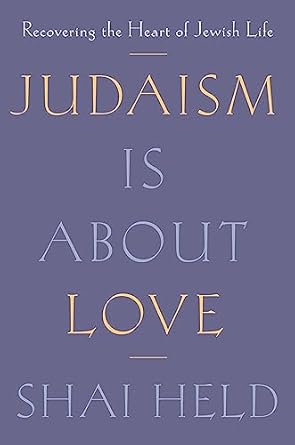
Today, I embarked on a transformative journey with Rabbi Shai Held’s book, “Judaism Is About Love.” Rav Uri‘s mention of this book during this year’s Yom Kippur service at Temple Sha’arey Shalom sparked a profound connection to the Divine, as echoed in my writings “Love Can Conquer Even Death” and “High Holiday Meditation Cleanses My Soul.” Rabbi Held’s book, which focuses on love, meaning, purpose, and faith, has guided my quest to become the best version of myself.

“Judaism Is About Love” is a beacon of understanding, offering a profound and groundbreaking perspective on Jewish life. It challenges a long-standing misinterpretation that has shaped the Western narrative: Christianity is the religion of love, while Judaism is the religion of law. Rabbi Shai Held, a leading Jewish thinker in America, passionately argues for correcting this misconception. He asserts that love is not just a part of Judaism but a fundamental aspect, thus reclaiming the heart of the Jewish tradition.

With a unique blend of intellectual rigor, respect for tradition, and a vibrant Judaism, Held’s aim is clear: to reclaim Judaism in its authentic form. He illustrates that love is the foundation of the true Jewish faith, influencing our unique perspectives on injustice, protest, grace, family life, responsibilities toward neighbors and enemies, and chosenness.

“Judaism Is About Love” is a work of ambition and revelation. It serves as a beacon, illuminating the true essence of Judaism. More than just a book, it is an act of restoration from within, reclaiming the authentic form of Judaism.


When you purchase a book through one of my links, I earn a small commission that helps support my passion for reading. This contribution allows me to buy even more books to share with you, creating an incredible cycle of discovering great reads together! Your support truly makes a difference!


×
The Lion's Den

Read: January 2023

Get this book

The Lion’s Den

by Anthony Marra

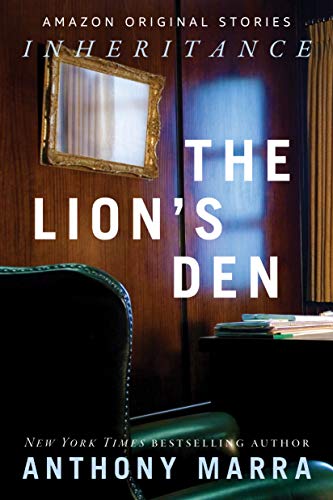
Today, I read The Lion’s Den by Anthony Marra. After a four and one-half Zoom meeting, I was looking for a book I could finish tonight, and the third book in the Inheritance, a collection of five stories about secrets, unspoken desires, and dangerous revelations between loved ones, seemed like the book to read. The Lion’s Den is the story of Michael, a son, his father’s transgressions in a tell-all were the ethical, righteous—and profitable—thing to do. What’s left but to slink back home for a humbling face-to-face with the man whose secrets he sold?

It was the perfect novel to read this evening. In the opening paragraph, when Michael’s father describes the automated customer service computer voice.” Siri’s dimwitted stepsister,” I knew I could enjoy this book.

Michael’s last-minute invitation to be the Ethics Symposium speaker at his parochial school was written in a way that was both bluntly honest and humorous.

Michael’s visits with his father to the lion’s den at the National Zoo were profoundly moving, and when the wheelchair was left there after his father’s death brought tears to my eyes.

I highly recommend The Lion’s Den, part of Inheritance, a collection of five stories about secrets, unspoken desires, and dangerous revelations between loved ones. Each Inheritance piece can be read or listened to in a single setting. By yourself, behind closed doors, or shared with someone you trust. This is the third one in the series I have read. The previous two were Everything My Mother Taught Me and Can You Feel This?

I have enjoyed all three and look forward to reading the final two.

The Goodreads summary provides an overview,

Exposing his father’s transgressions in a tell-all was the ethical, righteous—and profitable—thing to do. What’s left but to slink back home for a humbling face-to-face with the man whose secrets he sold?

He was a notorious government whistle-blower. Depending on whom you ask, he’s a treasonous felon, a folk hero, a validated patriot, or a national disgrace. To his son, Michael, he’s the father who threw his family into upheaval. Now, having moved back home at thirty-four, Michael is getting to know him as a man and getting nearer to understanding his motivations that have remained a mystery in this darkly humorous short story of sacrifice and betrayal by New York Times bestselling author Anthony Marra.


The Jan Lilien Education Fund sponsors ongoing sustainability and environmental awareness programs. Gifts made this month; I will match dollar-for-dollar. All donations are tax-deductible.

Subscribe

Contact Us

I receive a commission when you buy a book or product using a link on this page. Thank you for supporting Sharing Jan’s Love blog.


×