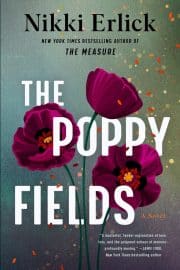

The Poppy Fields by Nikki Erlick is a unique and thought-provoking speculative novel that delves into themes of heartache, hope, and resilience. It explores the complexities of grief and healing, raising essential questions about recovery after loss and the lengths we go to in search of healing. This powerful exploration resonated with me and provided ample food for thought. I'd love to hear your thoughts on it!

Fisherman’s Tales
Embracing Grief to Live Fully!
Estimated reading time: 3 minutes, 8 secondsIt was blisteringly hot as I walked along the pathway in Sperry Park. At first, I didn’t see a single fisherman. On a typical Saturday morning, the Rahway River—stocked with fish in the spring—would usually have men my age patiently casting their lines, hoping to catch dinner or to experience the thrill of fishing. That rush of excitement and adventure was noticeably absent today, but the unpredictable nature of fishing was as intriguing as ever.
As I trudged towards the end of the park, my feet feeling heavier than usual, I spotted a man in a lawn chair with his fishing rods firmly planted in the ground. “Good morning,” I greeted him. His surprise at seeing me was palpable. “How’s the fishing today?” I asked. He replied, equally surprised, “It’s slow fishing. I’m about to leave. It’s too hot to sit here waiting for a fish to forget and go for the bait.” His unexpected response not only piqued my interest but also left me intrigued and engaged.
His words sparked my curiosity. Why did you say ‘forget’ about the fish?” I asked, genuinely intrigued. He responded with unwavering conviction, “A fish’s memory only lasts for thirty seconds. They might have seen another fish pulled from the water, so I am waiting for them to forget that the bait is attached to a hook.” His unwavering belief in this theory was palpable, and it left me even more intrigued and engaged in our conversation.
His explanation was so convincing that it lingered with me long after our conversation, sparking a cascade of thoughts. If a fish has such a short memory, it might be the only creature capable of truly living in the present. This idea of living in the present, free from the burden of past experiences, resonated with me in the context of grief and healing. His words had a profound impact on my understanding of these concepts, leaving me feeling enlightened and thoughtful, inspiring me to delve deeper into these ideas.
 After a breakfast of granola and a refreshing shower, I decided to verify the myth about a fish’s memory. The fisherman’s explanation had intrigued me, and I was curious to see if it held any truth. I typed ‘fish memory‘ into DuckDuckGo and found a page of links that debunked the belief that fish have limited memory.
In Live Science, I found, “In reality, goldfish have such impressive memories, they’re often used as a common model for studying memory and learning in fishes, Brown said. As a result, ‘there are thousands of studies [on goldfish] that show fish have excellent memories,” Culum Brown, an expert in fish cognition at Macquarie University in Australia, said. And the rate at which these studies are being published is growing exponentially.’
Closing my browser, I picked up my current book, “The Poppy Fields” by Nikki Erlick. The novel presents a unique solution that allows patients to sleep through their pain and continue resting. However, when they eventually awaken from this prolonged slumber, the griever will emerge healed. This exploration of a non-traditional approach to healing is an intriguing premise, but it does not align with my own experiences of grief and healing.
Would I have chosen to sleep away my grief? Better sleep in the early days of loss, undoubtedly, but not for a month or more to forget both the joy of love and its loss. As I mentioned recently, I have learned to live and grieve while emphasizing the importance of living. If life were free of sorrow and pain, how would we be able to experience love and joy truly?
This realization empowers me to live fully and navigate my grief with resilience, and I hope it can do the same for you.

I am believed and seen. I believe in others and recognize their true selves. Though I may reside in my home, I live, grieve, and thrive within my community.