
Invisible Child: Poverty, Survival & Hope in an American City

Estimated reading time: 4 minutes, 7 seconds

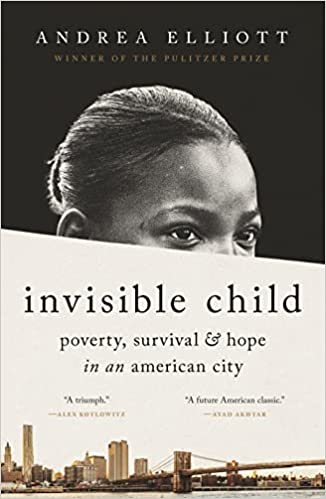
Invisible Child: Poverty, Survival & Hope in an American City by Andrea Elliott was a gift from my son Jon. The New York Times selected “Invisible Child” as one of the best books published this year. It is indeed one of the top books on my all-time list.

GoodReads summary provides a good overview,

The riveting, unforgettable story of a girl whose indomitable spirit is tested by homelessness, poverty, and racism in an unequal America—from Pulitzer Prize-winning journalist Andrea Elliott of The New York Times

Invisible Child follows eight dramatic years in the life of Dasani Coates, a child with imagination as soaring as the skyscrapers near her Brooklyn homeless shelter. Born at the turn of a new century, Dasani is named for the bottled water that comes to symbolize Brooklyn’s gentrification and the shared aspirations of a divided city. As Dasani grows up, moving with her tight-knit family from shelter to shelter, this story goes back to trace the passage of Dasani’s ancestors from slavery to the Great Migration north. When Dasani comes of age, New York City’s homeless crisis explodes as the chasm deepens between rich and poor.

In the shadows of this new Gilded Age, Dasani must lead her seven siblings through a thicket of problems: hunger, parental drug addiction, violence, housing instability, segregated schools, and the constant monitoring of the child-protection system. When, at age thirteen, Dasani enrolls at a boarding school in Pennsylvania, her loyalties are tested like never before. As she learns to “code switch” between the culture she left behind and the norms of her new town, Dasani starts to feel like a stranger in both places. Ultimately, she faces an impossible question: What if leaving poverty means abandoning the family you love?

By turns heartbreaking and revelatory, provocative and inspiring, Invisible Child tells an astonishing story about the power of resilience, the importance of family, and the cost of inequality. Based on nearly a decade of reporting, this book vividly illuminates some of the most critical issues in contemporary America through the life of one remarkable girl.

Jan and I were involved and knew that child poverty and homelessness needed repair. In addition, Jan lived on Washington Park across from Ft. Greene Park in 1974-75. We knew the neighborhood where much of the book’s story takes place. 

Before meeting Jan in 1973, I was both a community/tenant organizer and a youth worker. In the latter role, I made weekly hostel trips for eight to ten young boys from East Williamsburg during 1973. The trips were the first the boys had ever been outside of their neighborhood.

Many of them had imaginations like Dasani. They also had her instinct to fight. One of my first tasks was to check for any weapons.

Decades later, when I would see any of them, now adults, they would ask when we were going on another trip. I wish I had met Jan when I made those trips. She would have helped me improve them and document the impact. If I could re-write history, I would have her join me as the second adult on the hostel trips.

After that summer, it was clear my primary skills were as a community/tenant organizer. Over the next few years, my work focused on creating affordable and supportive housing.

Jan and I did meaningful work that made a difference, yet the need for a permanent solution to the crisis remains. The book highlights the crucial role of resilience, the importance of family, and the cost of inequality. As a nation, we cannot undermine those values by breaking up families, impeding resilience, and maintaining racial and economic inequality. 

The current debate in Washington over the Build Back Better legislation needs to focus not on how much we spend but on its impact on children and families

David Brooks, a conservative commentator, has supported these expenditures for what they can do to address this country’s cultural and economic crisis. 

These packages say to the struggling parents and the warehouse workers: I see you. Your work has dignity. You are paving your way. You are at the center of our national vision.

This is how you fortify a compelling moral identity, which is what all of us need if we’re going to be able to look in the mirror with self-respect. This is the cultural transformation that good policy can sometimes achieve. Statecraft is soulcraft.

If you can only read one book this year, this is the one to read. Child poverty, homelessness, and inequality impact all of us. Ending child poverty and homelessness will make us a healthier and more inclusive nation. It is time for a compelling moral call to action!

Subscribe

Contact Us

When you buy a book or product using a link on this page, I receive a commission. Thank you for supporting Sharing Jan’s Love blog.

The Jan Lilien Education Fund!

The Book of I

Read: October 2025

Get this book

The Book of I: A Novel

by David Greig

The Book of I” by David Greig is a remarkable debut novel from Scotland, shortlisted for both the Highland Book Prize and the Bookmark Book Festival Book of the Year. This unique work offers a philosophical exploration of themes such as guilt, redemption, humanity, love, and the beliefs we hold dear. Told with humor and enhanced by sharply vivid dialogue, David Greig skillfully bridges the gap between our contemporary world and the past.

Set in the year 825 CE, the story unfolds in the aftermath of a brutal attack by northern raiders, leaving an unlikely trio as the sole survivors on a remote Scottish island. The survivors include Brother Martin, a young monk who is the only member of the local monastery to escape martyrdom; Una, a beekeeper and mead maker who has freed herself from her violent husband during the chaos; and Grimur, an aging Norseman who digs himself out of a makeshift grave where his fellow raiders had left him, believing him to be dead.

As the seasons change in this wild and isolated environment, their initial distrust of one another evolves into a complex exploration of the distances and connections among them. “The Book of I” is a unique novel that serves as a philosophical commentary on guilt, redemption, humanity, love, and the beliefs we choose to embrace.


David Greig is a renowned Scottish writer whose plays have been performed extensively across the UK and internationally. His notable works for the theatre include The Strange Undoing of Prudencia Hart, Touching the Void, Midsummer, The Events, Charlie and the Chocolate Factory, Local Hero, and Macbeth (also known as Dunsinane). He served as the Artistic Director of Edinburgh’s Lyceum Theatre from 2015 to 2025. The Book of I marks his debut novel.


Discover your next favorite book and dive into a world of curated, exciting reads by purchasing through my links. You’ll have access to a diverse selection of books that I’ve personally vetted to ensure quality and enjoyment. Additionally, by supporting these selections, you’ll help me continue to provide you with more personalized recommendations. I earn a small commission from your purchase, which allows me to buy and share even more books with you. Your support truly makes a difference!


×
The Kitchen House

Read: August 2021

Get this book

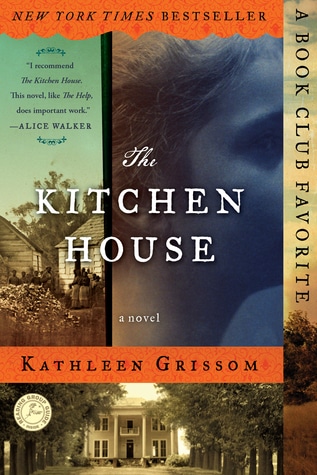
The Kitchen House

by Kathleen Grisson

The Kitchen House by Kathleen Grissom was a book that I knew very little about who I took from our bookshelf. My wife had encouraged me to read it as it focused on the south, and she knew I ofter read both about that place and enjoyed history.

From the opening pages, It became a book that I could not put down.

Two characters narrate the book. One is Lavinia, an Irish girl orphaned and brought to the plantation by the master, a ship’s captain. She is assigned to the kitchen house to work with Belle, who is the illegitimate child of the master of the estate.

As Lavinia grows under the tutelage of Belle, the story highlights the struggles of a plantation. Lavinia finds family and love from the enslaved even though she is only indentured. The distinction that skin color would have on their lives is one that Lavinia only learns at the end.

Through the unique eyes of Lavinia and Belle, Grissom’s debut novel unfolds in a heartbreaking and ultimately hopeful story of class, race, dignity, deep-buried secrets, and familial bonds.

The Kitchen House is Ms. Grissom’s first novel and impressed me and inspired me even though I have no skills as a writer.

I strongly recommend this book.

Subscribe

Contact Us

×
Old Babes in the Wood: Stories

Read: March 2023

Get this book

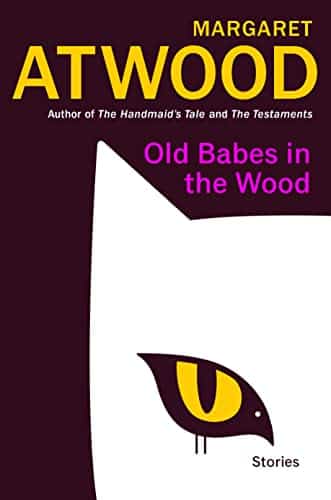
Old Babes in the Wood: Stories

by Margaret Atwood

Old Babes in the Wood: Stories by Margaret Atwood is a collection of remarkable tales, which delight, illuminate, and are quietly devastating. I especially found the stories about Nell and Tig compelling and engaging. Widow describes a letter Nell almost wrote to a friend after Tig is gone. Nell sounded like me when she said, “the warping or folding of time. In some parts of this refolded time, Tig still exists, as much as he ever did.”

The letter Nell is writing to a friend she will never be sent because it speaks to the harsh reality that grief imposes upon us.

Margaret Atwood writes as Nell,

Have I gone into the dark tunnel, dressed in mourning black with gloves and a veil, and come out the other end, all cheery and wearing bright colors and loaded for bear?

No. Because it’s not a tunnel. There isn’t any other end. Time has ceased to be linear, with life events and memories in a chronological row, like beads on a string. It’s the strangest feeling, or experience, or rearrangement. I’m not sure I can explain it to you.

As much as it might have appeared that I was in a dark tunnel after Jan died, I was not and am not now. There is indeed no defined end to the grief journey.

We all must learn how to live without our loved ones. The pathway I have chosen may not work for anyone else.

The earlier Nell and Tig stories are memories about their lives, reminding me of how I wrote about how Jan and I met and eventually married.

I have always enjoyed reading Atwood‘s writing, including The Handmaid’s Tale and The Testaments. I highly recommend Old Babes in the Wood: Stories by Margaret Atwood!

Old Babes in the Wood was my twenty-third book of the year and fulfilled my Goodreads 2023 Reading Challenge, but it will not end my reading this year. 

The Goodreads summary provides an overview,

Margaret Atwood has established herself as one of the world’s most visionary and canonical authors. This collection of fifteen extraordinary stories–some of which have appeared in The New Yorker and The New York Times Magazine–explores the full warp and weft of experience, speaking to our unique times with Atwood’s characteristic insight, wit, and intellect.

The two brave sisters of the title story grapple with loss and memory on a perfect summer evening; “Impatient Griselda” explores alienation and miscommunication with a fresh twist on a folkloric classic; and “My Evil Mother” touches on the unbelievable, examining a mother-daughter relationship in which the mother purports to be a witch. At the heart of the collection are seven extraordinary stories that follow a married couple across the decades, the moments big and small that make up a long life of uncommon love–and what comes after.


The Jan Lilien Education Fund sponsors ongoing sustainability and environmental awareness programs. Gifts made this month; I will match dollar-for-dollar. All donations are tax-deductible.

Subscribe

Contact Us

I receive a commission when you buy a book or product using a link on this page. Thank you for supporting Sharing Jan’s Love blog.


×
A Mercy

Read: November 2024

Get this book

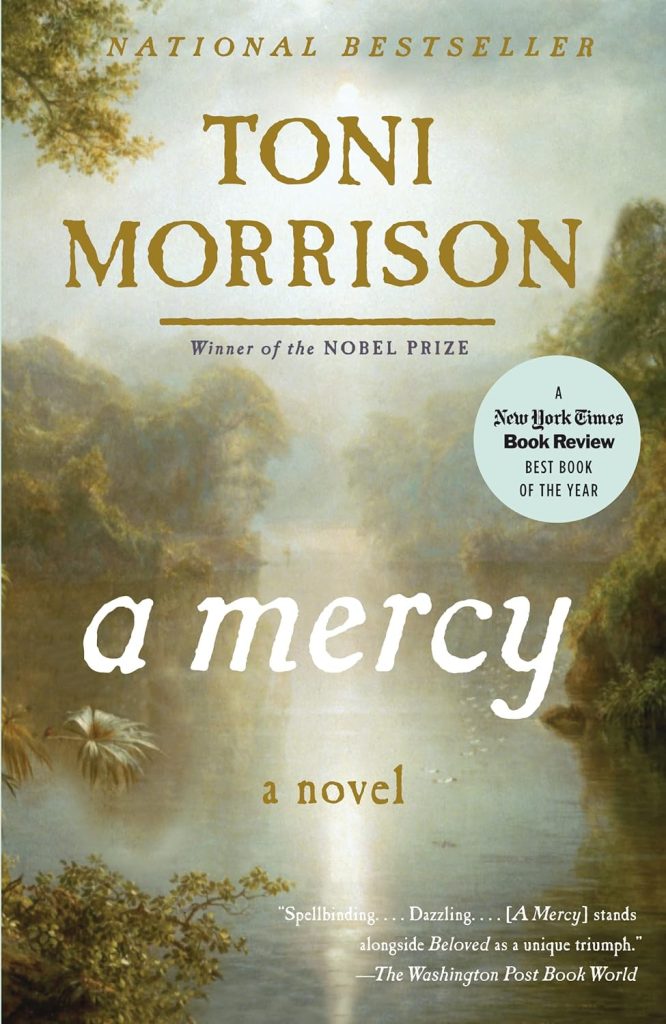
A Mercy a Novel

by Toni Morrison

Today, I started reading “A Mercy” by Toni Morrison. The acclaimed Nobel Prize winner explores the complexities of slavery in this novel. Like “Beloved,” it tells the poignant story of a mother and her daughter—a mother who abandons her child to protect her and a daughter who struggles with that abandonment. “A Mercy” is also recognized as one of The New York Times’s 100 Best Books of the 21st Century.

In the 1680s, a tumultuous period in the Americas, the slave trade is still in its infancy. Jacob Vaark, an Anglo-Dutch trader and adventurer, navigates this harsh landscape with a small holding in the North. Despite his distaste for dealing in “flesh,” he takes a small slave girl in part payment for a bad debt from a plantation owner in Catholic Maryland. She is Florens, a girl who can read and write and might be helpful on his farm. Rejected by her mother, Florens embarks on a journey for love, first seeking it from Lina, an older servant woman at her new master’s house, and later from the handsome blacksmith, an African, never enslaved, who comes riding into their lives.

×
The Extinction of Irena Rey

Read: April 2024

Get this book

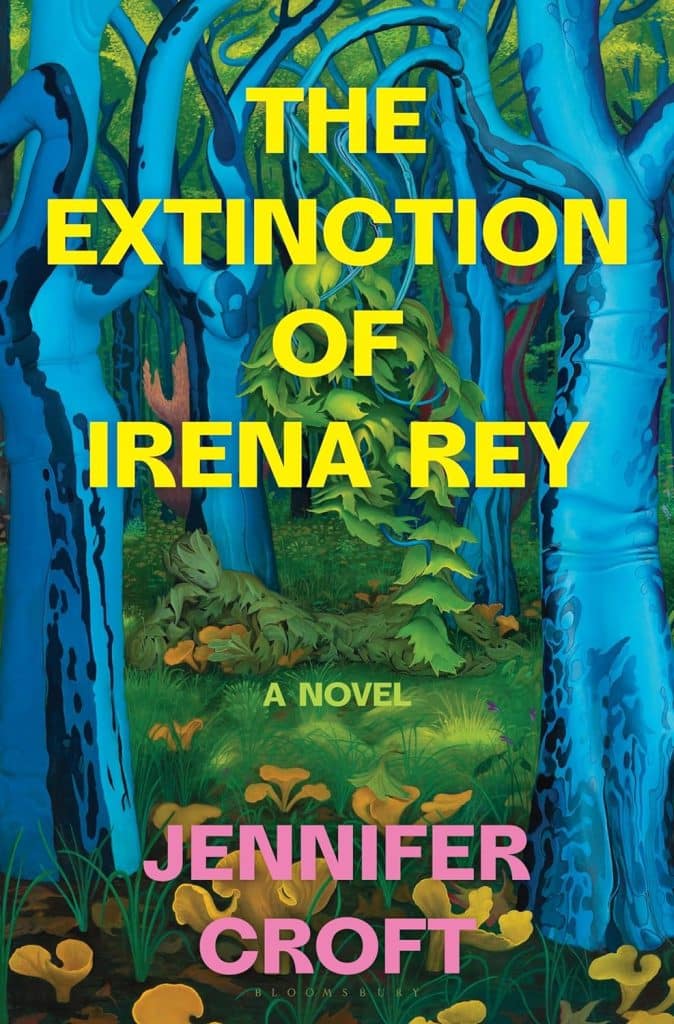
The Extinction of Irena Rey

by Jennifer Croft

I began reading “The Extinction of Irena Rey” by Jennifer Croft today. The novel is about eight translators searching for a world-famous author, Irena Rey, who has gone missing in a primeval Polish forest. The translators have come from eight different countries and share a deep admiration for Irena Rey. Their mission is to translate her masterpiece, “Gray Eminence,” but their task takes an unexpected turn when Irena disappears within days of their arrival.

The translators begin to investigate where Irena may have gone while continuing to work on her book. They explore the ancient wooded refuge, with its intoxicating slime molds and lichens, and study Irena’s exotic belongings and layered texts for clues. However, their search reveals secrets and deceptions that they are unprepared for. As they grow increasingly paranoid in this isolated and obsessive fever dream, the translators are forced to confront their differences, and their rivalries and desires threaten not only their work but also the fate of Irena Rey herself.

This debut novel is a brilliant exploration of art, celebrity, the natural world, and the power of language. It is a thought-provoking narrative blends humor and adventure, taking readers on an unforgettable journey with a small yet diverse cast of characters. These characters, shaken by the shocks of love, destruction, and creation, find themselves in one of Europe’s last great wildernesses, where the fate of their beloved author hangs in the balance.

×
How Democracies Die

Read: January 2021

Get this book

How Democracies Die: What History Reveals About Our Future

by Steven Levitsky and Daniel Ziblatt

How Democracies Die: What History Reveals About Our Future by Steven Levitsky and Daniel Ziblatt was on my reading list for almost a year. In late December of last year, I started reading it and was in the final chapter on January 6, 2021. Like many of us, I never in my life expected to see a day like that in our country.

This type of event is one the authors talk about in their book.

According to the overview in GoodReads,

Donald Trump’s presidency has raised a question that many of us never thought we’d be asking: Is our democracy in danger? Harvard professors Steven Levitsky and Daniel Ziblatt have spent more than twenty years studying the breakdown of democracies in Europe and Latin America, and they believe the answer is yes. Democracy no longer ends with a bang–in a revolution or military coup–but with a whimper: the slow, steady weakening of critical institutions, such as the judiciary and the press, and the gradual erosion of long-standing political norms. The good news is that there are several exit ramps on the road to authoritarianism. The bad news is that, by electing Trump, we have already passed the first one.

Drawing on decades of research and a wide range of historical and global examples, from 1930s Europe to contemporary Hungary, Turkey, and Venezuela, to the American South during Jim Crow, Levitsky and Ziblatt show how democracies die–and how ours can be saved.

Our democracy is too valuable for us to have it die. We all need to work to preserve and strengthen it. How Democracies Die is a book that everyone needs to read!

Subscribe

Contact Us

×