
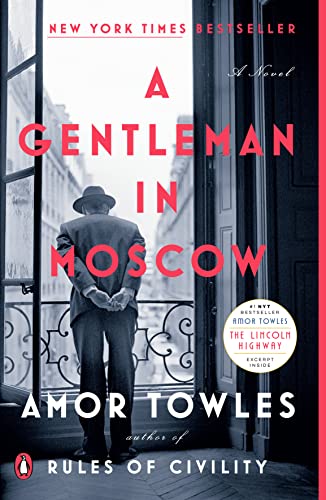
A Gentleman in Moscow

Estimated reading time: 2 minutes, 16 seconds

A Gentleman in Moscow by Amor Towles is a transporting novel about a man sentenced by the government to spend the rest of his life inside a luxury hotel. In 1922, a Bolshevik tribunal deemed Count Alexander Rostov an unrepentant aristocrat. His house arrest in the Metropol, a grand hotel across the street from the Kremlin. Rostov, an indomitable man of erudition and wit, has never worked a day and must now live in an attic room while some of the most tumultuous decades in Russian history are unfolding outside the hotel’s doors.

During my grief journey, I have on occasion felt as if I was a prisoner in my apartment, so I found this novel to be one that provided me an alternative to understanding what it would have been like to be under house arrest as Count Rostov was.

A Gentleman in Moscow was a page-turner. The plot captures a unique historical time and how Count Rostov makes the best of a bad situation. I highly recommend this novel.

The Goodreads summary provides an overview.

With his breakout debut novel, Rules of Civility, Amor Towles established himself as a master of absorbing, sophisticated fiction, bringing late 1930s Manhattan to life with a splendid atmosphere and an excellent command of style. As NPR commented, readers and critics were enchanted, “Towles writes with grace and verve about the mores and manners of a society on the cusp of radical change.”

A Gentleman in Moscow immerses us in another elegantly drawn era with the story of Count Alexander Rostov. When, in 1922, he is deemed an unrepentant aristocrat by a Bolshevik tribunal, the count is sentenced to house arrest in the Metropol, a grand hotel across the street from the Kremlin. Rostov, an indomitable man of erudition and wit, has never worked a day. He must now live in an attic room while some of the most tumultuous decades in Russian history are unfolding outside the hotel’s doors. Unexpectedly, his reduced circumstances provide him a doorway into a much larger world of emotional discovery.

Brimming with humor, a glittering cast of characters, and one beautifully rendered scene after another, this singular novel casts a spell as it relates to the count’s endeavor to gain a deeper understanding of what it means to be a man of purpose.


The Jan Lilien Education Fund sponsors ongoing sustainability and environmental awareness programs. Gifts made this month; I will match dollar-for-dollar. All donations are tax-deductible.

Subscribe

Contact Us

I receive a commission when you buy a book or product using a link on this page. Thank you for supporting Sharing Jan’s Love blog.

The Jan Lilien Education Fund!

Stories: The Collected Short Fiction

Read: March 2026

Get this book

Stories: The Collected Short Fiction

by Helen Garner

Stories: The Collected Short Fiction by Helen Garner, one of Australia’s most cherished writers, is featured as a Most Anticipated Book of the Year by The New Yorker. This collection presents a finely crafted assortment of short stories showcasing Garner’s “generous, category-defying imagination,” as noted by the New York Times Book Review. Helen Garner is best known for her frank, unsparing, and intricate portraits of Australian life.

A woman sends postcards from the beautiful Gold Coast to a former lover. A chorus of voices from her hometown gossips about a friend who has returned after going astray. A young girl discovers a hidden box filled with frightening secrets.

In Stories, you will find a collection of short fiction from a unique literary voice. These tales explore the complexities of love and longing, capturing the pain, darkness, and joy of life, all conveyed with Garner’s characteristic sharpness, honesty, and humor. Each story stands on its own as a perfect piece, but together they showcase the remarkable talent of a master of various literary forms.


Helen Garner is an accomplished writer known for her novels, short stories, screenplays, and non-fiction works. In 2006, she received the inaugural Melbourne Prize for Literature. A decade later, in 2016, she was honored with the prestigious Windham-Campbell Literature Prize for Non-Fiction. In 2019, she received the Australia Council Award for Lifetime Achievement in Literature.

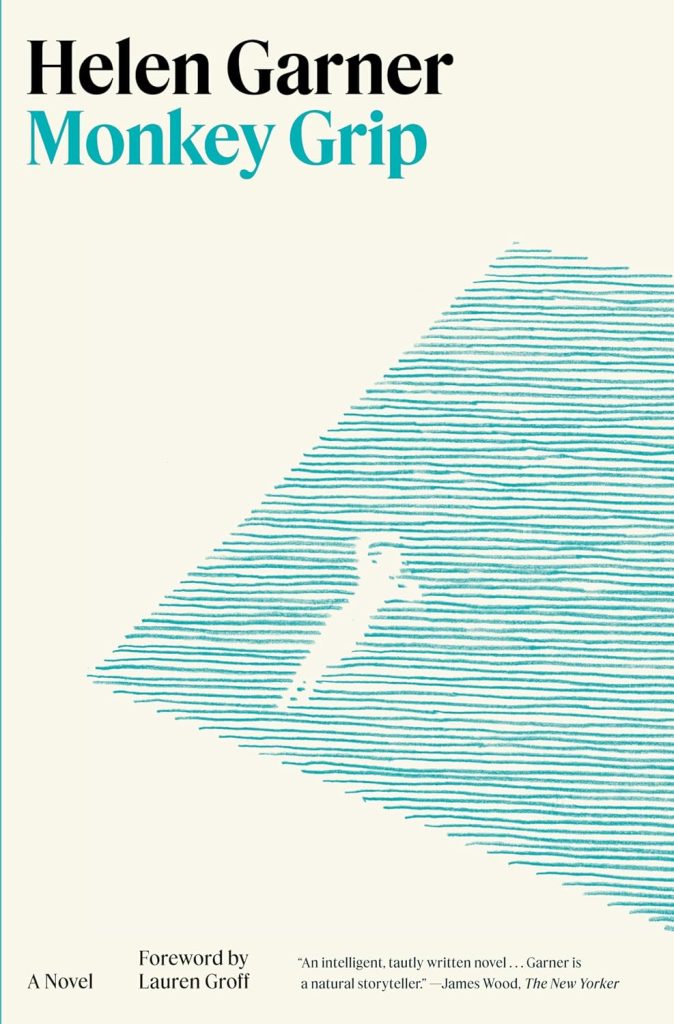
Among her notable works are Monkey Grip, The Children’s Bach, Cosmo Cosmolino, The Spare Room, The First Stone, This House of Grief, and Everywhere I Look. Her diaries, titled Yellow Notebook, One Day I’ll Remember This, and How to End a Story, were published together as a single volume in the United States.


Discover your next favorite book and dive into a world of curated, exciting reads by purchasing through my links. You’ll have access to a diverse selection of books I’ve personally vetted for quality and enjoyment. Supporting these selections not only helps me continue to provide you with personalized recommendations but also ensures you have access to meaningful stories that enrich your life. Your support truly makes a difference in helping me share more books and insights with you!


×
More Than Enough

Read: April 2026

Get this book

More Than Enough

by Anna Quindlen

In “More Than Enough,” Anna Quindlen demonstrates her trademark warmth, humor, and insight as she delves into how our relationships shape our identities. The story follows a woman who, after receiving surprising results from an ancestry test, begins to question the true meaning of family and friendship. This wise and tender novel, filled with vibrant life, comes from the bestselling author of “After Annie.”

No one knows you like your book club.

High school English teacher Polly Goodman can talk about everything and anything with the women in her book club, which is why they’ve become her closest friends and, along with her veterinarian husband, the bedrock of her life. Her students, her fraught relationship with her mother, her struggles with IVF—Polly’s book club friends have heard about it all.

But when they give Polly an ancestry test kit as a joke, the results match her with a stranger. It is clear to Polly that this match is a mistake, but still she cannot help but comb through her family history for answers. Then, when it seems that the book club circle of four will become three, Polly learns how friendships can change your life in the most profound ways.


Anna Quindlen is the author of numerous books, including the #1 New York Times bestselling novel “Rise and Shine”, the bestselling memoir “Lots of Candles, Plenty of Cake“, and the acclaimed guide “A Short Guide to a Happy Life“. She is also the author of the Oprah’s Book Club selection “Black and Blue“. Additionally, her other novels include “Blessings“, “One True Thing”. “Still Life with Bread Crumbs,” and “After Annie“.


Discover your next favorite book and dive into a world of curated, exciting reads by purchasing through my links. You’ll have access to a diverse selection of books that I’ve personally vetted to ensure quality and enjoyment. Supporting these selections not only helps me continue providing you with personalized recommendations but also ensures you get access to meaningful stories that enrich your life. Your support truly makes a difference in helping me share more books and insights with you!


×
The Spoiled Heart: A Novel

Read: May 2024

Get this book

The Spoiled Heart: A Novel

by Sunjeev Sahota

Today, I started reading The Spoiled Heart: A Novel by Sunjeev Sahota. Nayan Olak has been seeing Helen Fletcher around town. She has returned to live in the run-down house at the end of the lane with her teenage son. Though she seems guarded, Nayan cannot help but be drawn to her. He has not risked love since losing his young family in a terrible accident twenty years ago.

After Nayan’s tragedy, his labor union, a pillar of his community, became his refuge and purpose. It was his way of striving for a better and fairer world. Now, Nayan wants to become the leader of the union, a decision that sets the stage for a gripping conflict. His opponent, Megha, a newcomer, is a more formidable challenger than he could have anticipated. Nayan is now in a battle that could redefine his life and community. The differences between Nayan and Megha escalate and threaten the ideals he holds dear. He finds solace in his growing bond with Helen. Unbeknownst to him, their connection is not just a product of their present circumstances but a thread that weaves through their lives, holding secrets that could shatter them. The suspense builds, leaving the readers on the edge of their seats and eager to uncover the truth.

In one sense, The Spoiled Heart is a tragedy in the classic mold, tracing one man’s seemingly inevitable fall. However, it is also an explosively contemporary story of how a few words or a single action, which may appear careless to one person, can be charged for another, triggering a cascade of unimaginable consequences. It is a blazing achievement from one of Britain’s foremost living writers, a vivid and multilayered exploration of the mysteries of the heart, how community is forged and broken, and the shattering impact of secrets and assumptions alike.

×
Breathe

Read: September 2021

Get this book

Breathe

by Joyce Carol Oates

Celebrate JanReading Breathe by Joyce Carol Oates was a book I knew I needed to read once Jan was diagnosed. Although the book might trigger negative memories, I finally read Breathe. It was what I needed to read at this point in my journey.

Ms. Oates wrote the book in 2019 after her husband, Charlie Gross, died. The novel is a story of love, loss, and loneliness, topics that I write about on this blog. I needed to read the book both for my mental health and for the readers of Sharing Jan’s Love.

The protagonist, Michaela, loses her husband while they are on a sabbatical in New Mexico. Her husband, Gerard, writes a book and teaches a class on memories. Jan and I never considered relocating before her illness, but this book convinced me that it would have aggravated my grief journey.

One of the parallels I observed while reading the novel is the similarity between Gerard’s reluctance to let family, friends, and co-workers know of his illness. Jan shared that reluctance in the early days, but I convinced her that the only chance of beating cancer was with the help of family and friends.

This dialogue could easily be one that Jan and I had.

Of course you want to summon his family—his (adult) children—but quickly, he says no.

Still waiting.

But – When?

Just not yet.

He is not an alarmist. (You are the alarmist.)

The novel is written in two parts – The Vigil and the Post-Mortem.

The opening paragraphs set the tone.

A Hand is gripping yours. Warm, dry hand gripping your slippery, humid hand.

Whoever it is urging you – Breathe!

Leaning over you begging you – Breathe!

As one mourning the death of the love of his life, I found several phrases in the book helpful in understanding what I have gone through and will continue to confront.

Among them is grief-vise, which I have written about in this stream.

In the grip of the grief vise, all that you will do, all that you even imagine doing, will require many times more effort.. Hardly daring to breathe for the grief-vise will tighten around your chest, squeezing the very air out of your lungs.

In the early stages of grief, the vise was strangling me. Breathing was impossible, and weeping was constant at times.

Michaela struggles with her grief. Seeing her husband every time she sees a man alone, even if they are older or younger than he was. I know I have felt Jan’s presence and still expect her to walk into our apartment.

Her struggles with a grief counselor and overly helpful friends are an experience I have not had but are familiar to those suffering from losing a loved one.

The last chapters are ones in which time becomes confusing and chaotic. At times, I was uncertain about which were real or imagined. The end, like all good novels, was ambiguous.

These are some of the other phrases I have found useful and will include in posts.

  • If there is no one to love, do we merit existence?
  • Never come to the end of kissing.
  • The first principle of life is; Breathe.
  • Shy in the language of intimacy.
  • As if a life lived with strangers could compensate for the emptiness in your heart.
  • No purpose in your life. No compass.

What you love most, that you will lose. The price of your love is your loss.

I recommend this book to all readers, even those struggling with grief.

Subscribe

Contact Us

When you buy a book or product using a link on this page, I receive a commission. Thank you for supporting Sharing Jan’s Love blog.
×
Chess Story

Read: April 2026

Get this book

Chess Story: A Novella

by Stefan Zweig

Chess Story,” also known as “The Royal Game,” is the final work of Austrian author Stefan Zweig. He completed it while in exile in Brazil and sent it to his American publisher just days before his suicide in 1942. This story is unique as it is the only one in which Zweig directly examines Nazism, portraying it through his characteristic focus on psychological themes.

The narrative follows travelers aboard a ship bound for Buenos Aires, where they encounter an arrogant, unfriendly world chess champion. Attempting to challenge him, they find themselves thoroughly defeated. However, a mysterious passenger steps forward to offer them advice, dramatically shifting their fortunes. The story delves into how this enigmatic figure acquired his extraordinary chess skills and the personal toll that it entailed.

This new translation of “Chess Story” highlights the work’s distinctive blend of high suspense and poignant reflection.


Stefan Zweig (1881–1942), novelist, biographer, poet, and translator, was born in Vienna into a wealthy Austrian Jewish family. During the 1930s, he was one of the best-selling writers in Europe and was among the most translated German-language writers before the Second World War. With the rise of Nazism, he moved from Salzburg to London (taking British citizenship), to New York, and finally to Brazil, where he committed suicide with his wife. New York Review Books has published Zweig’s novels The Post-Office Girl and Beware of Pity, as well as the novella Chess Story.

Peter Gay was Director of the Center for Scholars and Writers at the New York Public Library. He wrote Schnitzler’s Century: The Making of Middle-Class Culture, 1815–1914.


Discover your next favorite book and dive into a world of curated, exciting reads by purchasing through my links. You’ll have access to a diverse selection of books I’ve personally vetted for quality and enjoyment. Supporting these selections not only helps me continue to provide you with personalized recommendations but also ensures you have access to meaningful stories that enrich your life. Your support truly makes a difference in helping me share more books and insights with you!


×
The Once and Future Witches

Read: March 2022

Get this book

The Once and Future Witches

by Alix E. Harrow

The Once and Future Witches by Alix E. Harrow was on hold at my library for several weeks. It arrived today, and I could not imagine a better book to read for Women’s History Month. An homage to women’s invincible power and persistence, The Once and Future Witches reimagines stories of revolution, motherhood, and women’s suffrage—the lost ways are calling.

Although I found the book at times a slow read, I enjoyed it very much and highly recommend it. My only regret is that it had less to do with the suffrage movement than expected. In the late 1800s, three sisters used witchcraft to change the course of history in this powerful novel of magic, family, and the suffragette movement.

Goodreads summary provides an overview.

In 1893, there was no such thing as witches. There used to be, in the wild, dark days before the burnings began, but now witching is nothing but tidy charms and nursery rhymes. If the modern woman wants any measure of power, she must find it at the ballot box.

But when the Eastwood sisters―James Juniper, Agnes Amaranth, and Beatrice Belladonna―join the suffragists of New Salem, they begin to pursue the forgotten words and ways that might turn the women’s movement into the witch’s movement. Stalked by shadows and sickness, hunted by forces who will not suffer a witch to vote―and perhaps not even to live―the sisters will need to delve into the oldest magics, draw new alliances, and heal the bond between them if they want to survive.

There’s no such thing as witches. But there will be.

Register to Attend Celebrate Jan Day

Subscribe

Contact Us

When you buy a book or product using a link on this page, I receive a commission. Thank you for supporting Sharing Jan’s Love blog.
×